19th Century
Height 15 1/4" Width 11"
Provenance: London Trade
Alan Mann, London
Over the past 1600 years, the symbol of the cross has permeated everyday life in Ethiopia: it is seen worn around the neck as a pendant and is frequently used as a motif in tattoos. According to some sources, one type in particular—a rough-carved, soft wood, traditionally blue-painted pendant thought to ward off evil—dates to as far back as the 5th century A.D. Another group is composed of pendants made of metal. More conspicuous than the former type, metal crosses are also more expensive and require a higher level of craftsmanship to produce.
A second category of wood, silver, bronze, or brass cross is produced in a hand-held size suited to use by Ethiopian priests and other holy persons for liturgicul purposes. From the 19th century onward, such pieces were often manufactured from the silver obtained from melting down silver coins, in particular ‘Maria Theresa thalers’. Hand-held crosses are characterised, among other things, by the rectangular decoration on their lower arms, a symbol for the Ark of the Covennant. The most spectacular are the large-sized specimens paraded ceremoniously before the faithful in religious processions, the earliest specimens likely dating to the 12th century. Processional crosses often feature swaths of fabric symbolising the clothing of the crucified Christ looped through their lower arms.
A special type of Ethiopian cross is seen on the roofs of churches, frequently paired with an ostrich-egg motif. Symbolising fertility, the ostrich egg represents the survival of considerably more ancient beliefs within Christianity.
INQUIRE HERE
19th Century
Height 15 1/4" Width 11"
Provenance: London Trade
Alan Mann, London
Over the past 1600 years, the symbol of the cross has permeated everyday life in Ethiopia: it is seen worn around the neck as a pendant and is frequently used as a motif in tattoos. According to some sources, one type in particular—a rough-carved, soft wood, traditionally blue-painted pendant thought to ward off evil—dates to as far back as the 5th century A.D. Another group is composed of pendants made of metal. More conspicuous than the former type, metal crosses are also more expensive and require a higher level of craftsmanship to produce.
A second category of wood, silver, bronze, or brass cross is produced in a hand-held size suited to use by Ethiopian priests and other holy persons for liturgicul purposes. From the 19th century onward, such pieces were often manufactured from the silver obtained from melting down silver coins, in particular ‘Maria Theresa thalers’. Hand-held crosses are characterised, among other things, by the rectangular decoration on their lower arms, a symbol for the Ark of the Covennant. The most spectacular are the large-sized specimens paraded ceremoniously before the faithful in religious processions, the earliest specimens likely dating to the 12th century. Processional crosses often feature swaths of fabric symbolising the clothing of the crucified Christ looped through their lower arms.
A special type of Ethiopian cross is seen on the roofs of churches, frequently paired with an ostrich-egg motif. Symbolising fertility, the ostrich egg represents the survival of considerably more ancient beliefs within Christianity.
INQUIRE HERE


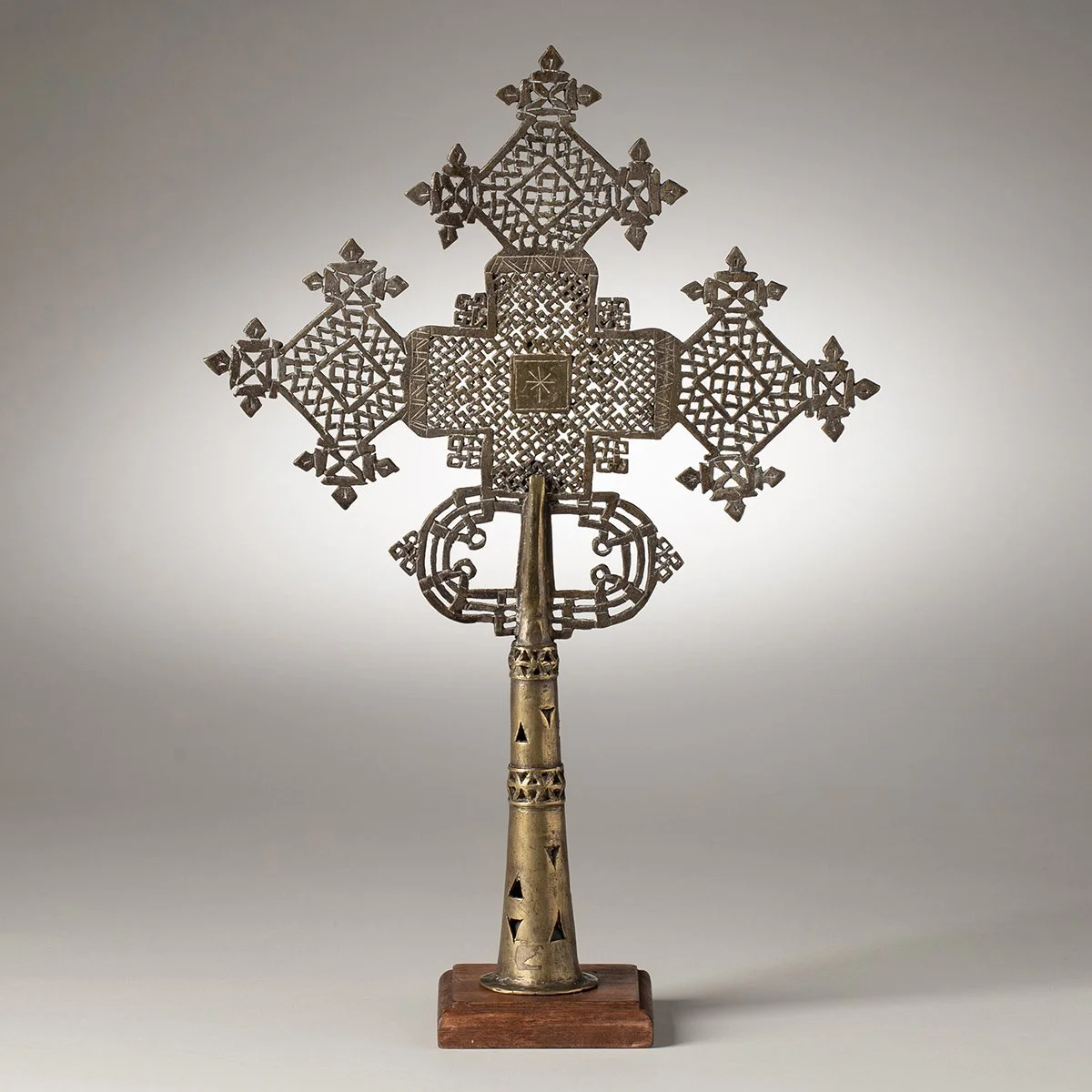 Image 1 of 7
 Image 2 of 7
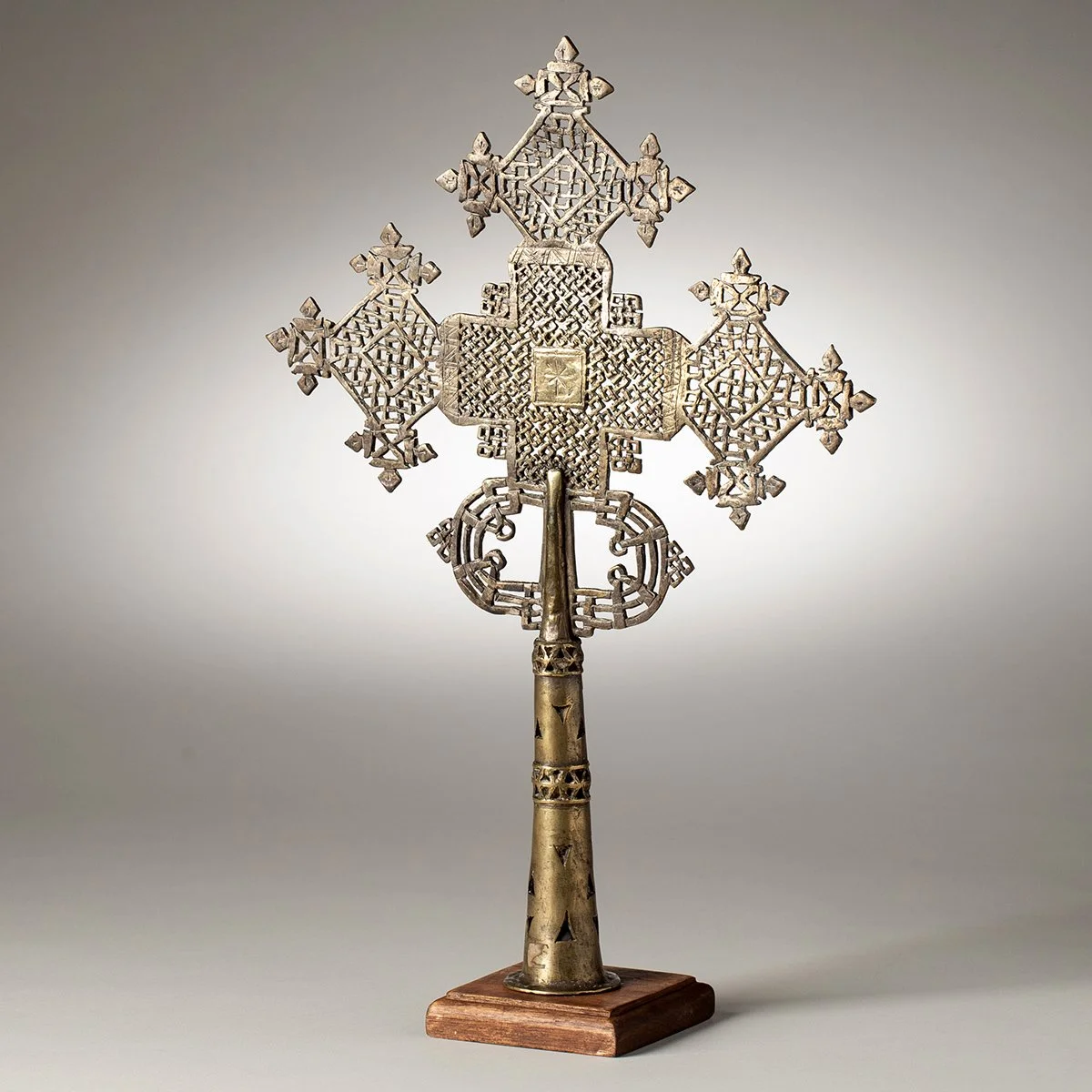 Image 3 of 7
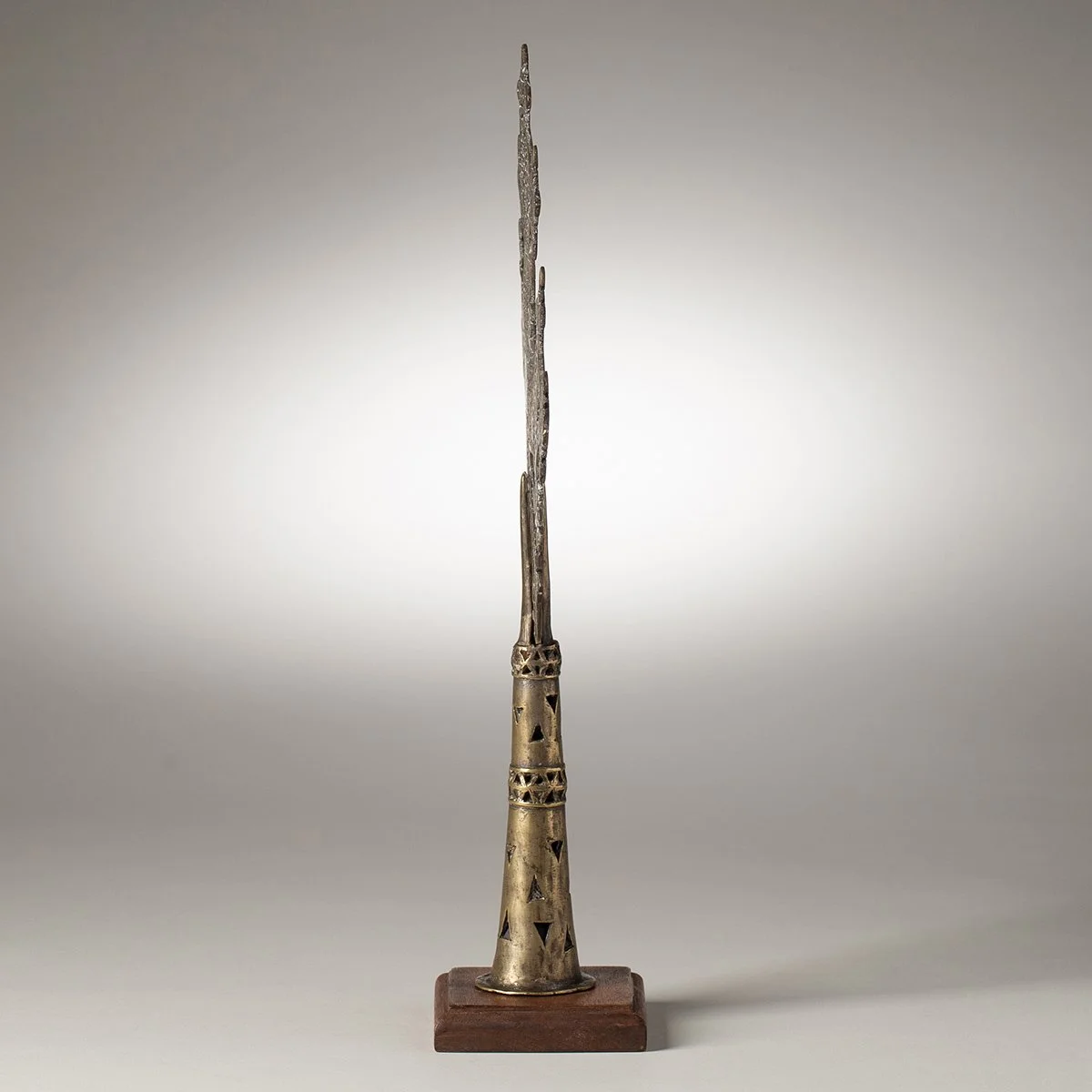 Image 4 of 7
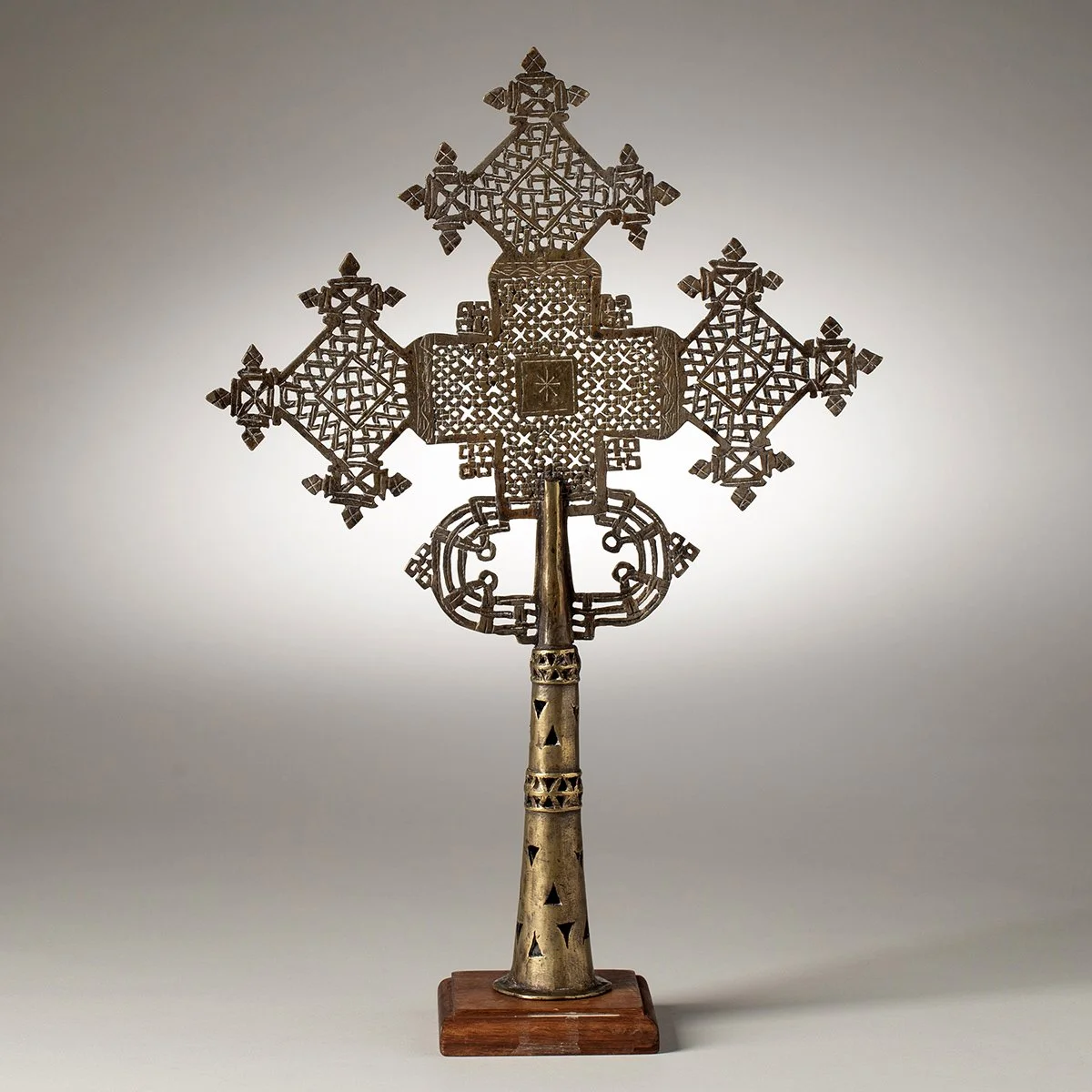 Image 5 of 7
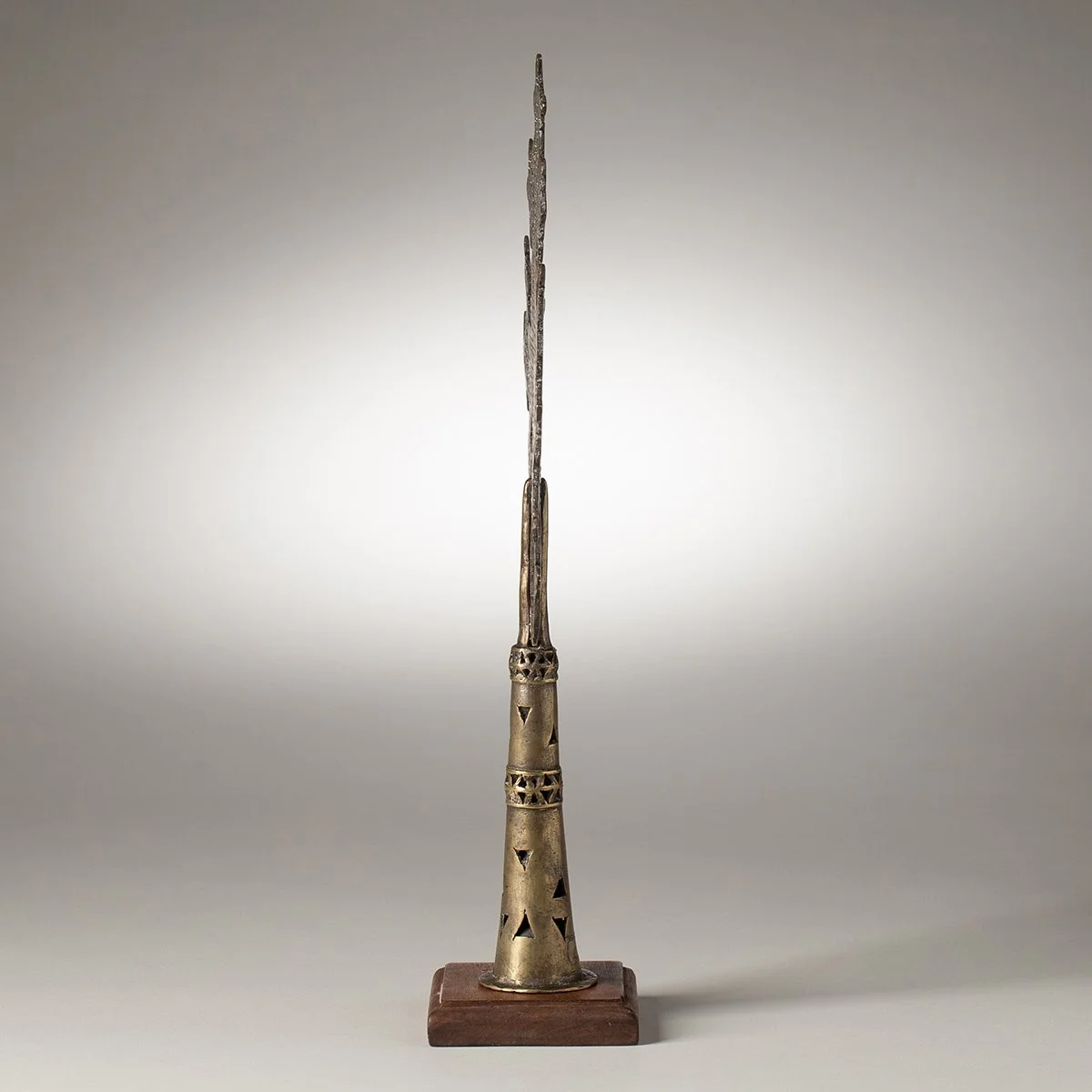 Image 6 of 7
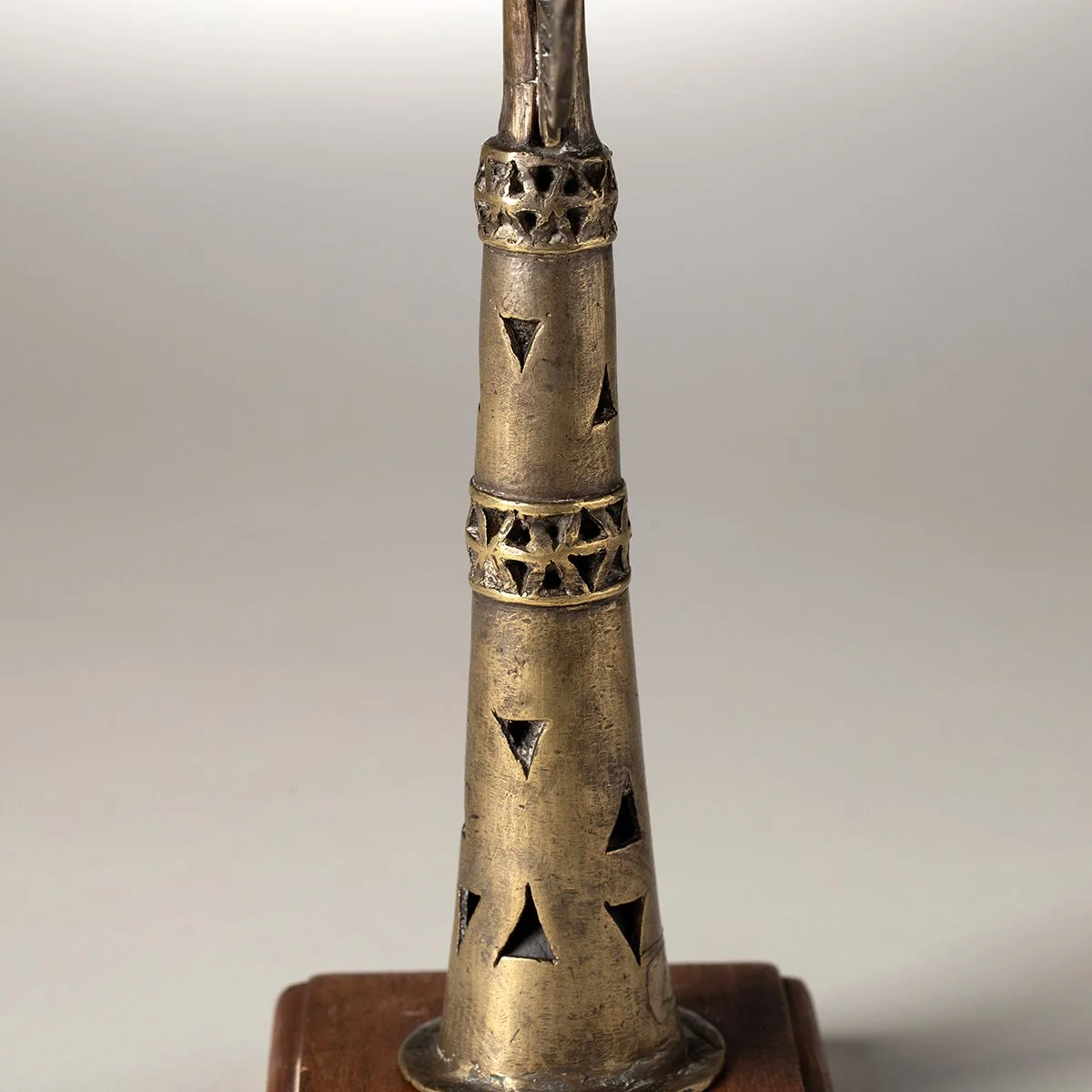 Image 7 of 7