Democratic Republic of the Congo
1900 - 1920
Height 7" Width 6 1/4"
Provenance: Joel Greene, San Francisco, CA
Alexandra Claes, Brussels
To become recognized as men in their communities, pre-adolescent boys undergo rites of passage during their initiations into manhood. Generally, men’s initiations among the Chokwe and related peoples include the separation of boys from their mothers, circumcision and healing from the procedure, instruction from men, and reincorporation into the larger community through coming-out ceremonies. Men’s initiations serve to move boys from the sphere of women and children to the sphere of men. While men’s initiations highlight gender-based divisions in the community, they rely on the participation of both men and women—especially the mothers of the boys.
In men’s initiations, masquerade characters appear in the community to educate, entertain, and keep women away from places where men’s initiations occur. Among the Chokwe and related peoples, masquerade characters are usually perceived as spirits of the deceased that take physical form through masked and costumed performers. Only men are allowed to perform as masquerade characters. One of these masquerade characters is Mwana Pwo(young woman), who portrays a young, fertile woman who has undergone women’s initiation ceremonies and is ready to marry and bear children. [1] While Mwana Pwo is sometimes abbreviated simply to Pwo (woman) and used interchangeably, some scholars interpret Pwo as a female ancestor or as a young woman who has already given birth to children. Despite these different interpretations, Mwana Pwo and Pwo present ideal womanhood among the Chokwe and related peoples. Similarly, groups in other parts of Africa, such as the Baga in Guinea, historically taught young men and women about ideal womanhood with the D’mba headdress.
Mwana Pwo masks are carved from wood (or sometimes made with resin) by men. A songi (professional sculptor) who is commissioned to create a Mwana Pwo mask might model it on a particular woman in the community whose beauty he admires. Since he references a specific individual, there might be variations in the mask’s scarification patterns or tattoos, hairstyle, jewelry, and mouth. In the example at the Minneapolis Institute of Art, the Mwana Pwomask has an oval-shaped face and symmetrical facial scarification marks (tattoos) on the middle of her forehead, underneath her eyes, and on her cheeks. Her eyebrows join together and form her slender nose bridge and nose. On the top of her forehead, she wears a braided headband or crown with beads made from plant fibers (likely raffia palm), and has intricately braided hair. Her mouth is partially open, revealing pointy, filed teeth (considered to be a marker of feminine beauty).
As the atmosphere in the community can be tense during men’s initiations, masquerade characters like Mwana Pwo serve to “play with” and entertain the women and honor the mothers of the boys undergoing initiation. In addition to being made by a man, Mwana Pwo is danced by a man in front of an audience of women. The dancer outfits himself with the mask, as well as a tight-fitting crocheted costume, wooden breasts, skirts tied around the hips, and scarves. As part of the performance, the dancer might also carry objects such as a whistle or a flywhisk. Since the dancer is covered nearly or completely from head-to-toe, the dancers’ identity is concealed from the audience (though, women often know who is dancing).
Mwana Pwo engages the audience with hand gestures, dances, and songs. Through graceful and elegant speech and movements, Mwana Pwo models ideal feminine beauty and behavior. However, if women do not feel that a dancer performs well, they might chase away that dancer. Despite their interactions with the audience, Mwana Pwo and other masquerade characters are considered dangerous. If a masquerade character touches a person, it is believed that the individual will become sick, infertile, or suffer from other misfortunes.
INQUIRE HERE
Democratic Republic of the Congo
1900 - 1920
Height 7" Width 6 1/4"
Provenance: Joel Greene, San Francisco, CA
Alexandra Claes, Brussels
To become recognized as men in their communities, pre-adolescent boys undergo rites of passage during their initiations into manhood. Generally, men’s initiations among the Chokwe and related peoples include the separation of boys from their mothers, circumcision and healing from the procedure, instruction from men, and reincorporation into the larger community through coming-out ceremonies. Men’s initiations serve to move boys from the sphere of women and children to the sphere of men. While men’s initiations highlight gender-based divisions in the community, they rely on the participation of both men and women—especially the mothers of the boys.
In men’s initiations, masquerade characters appear in the community to educate, entertain, and keep women away from places where men’s initiations occur. Among the Chokwe and related peoples, masquerade characters are usually perceived as spirits of the deceased that take physical form through masked and costumed performers. Only men are allowed to perform as masquerade characters. One of these masquerade characters is Mwana Pwo(young woman), who portrays a young, fertile woman who has undergone women’s initiation ceremonies and is ready to marry and bear children. [1] While Mwana Pwo is sometimes abbreviated simply to Pwo (woman) and used interchangeably, some scholars interpret Pwo as a female ancestor or as a young woman who has already given birth to children. Despite these different interpretations, Mwana Pwo and Pwo present ideal womanhood among the Chokwe and related peoples. Similarly, groups in other parts of Africa, such as the Baga in Guinea, historically taught young men and women about ideal womanhood with the D’mba headdress.
Mwana Pwo masks are carved from wood (or sometimes made with resin) by men. A songi (professional sculptor) who is commissioned to create a Mwana Pwo mask might model it on a particular woman in the community whose beauty he admires. Since he references a specific individual, there might be variations in the mask’s scarification patterns or tattoos, hairstyle, jewelry, and mouth. In the example at the Minneapolis Institute of Art, the Mwana Pwomask has an oval-shaped face and symmetrical facial scarification marks (tattoos) on the middle of her forehead, underneath her eyes, and on her cheeks. Her eyebrows join together and form her slender nose bridge and nose. On the top of her forehead, she wears a braided headband or crown with beads made from plant fibers (likely raffia palm), and has intricately braided hair. Her mouth is partially open, revealing pointy, filed teeth (considered to be a marker of feminine beauty).
As the atmosphere in the community can be tense during men’s initiations, masquerade characters like Mwana Pwo serve to “play with” and entertain the women and honor the mothers of the boys undergoing initiation. In addition to being made by a man, Mwana Pwo is danced by a man in front of an audience of women. The dancer outfits himself with the mask, as well as a tight-fitting crocheted costume, wooden breasts, skirts tied around the hips, and scarves. As part of the performance, the dancer might also carry objects such as a whistle or a flywhisk. Since the dancer is covered nearly or completely from head-to-toe, the dancers’ identity is concealed from the audience (though, women often know who is dancing).
Mwana Pwo engages the audience with hand gestures, dances, and songs. Through graceful and elegant speech and movements, Mwana Pwo models ideal feminine beauty and behavior. However, if women do not feel that a dancer performs well, they might chase away that dancer. Despite their interactions with the audience, Mwana Pwo and other masquerade characters are considered dangerous. If a masquerade character touches a person, it is believed that the individual will become sick, infertile, or suffer from other misfortunes.
INQUIRE HERE


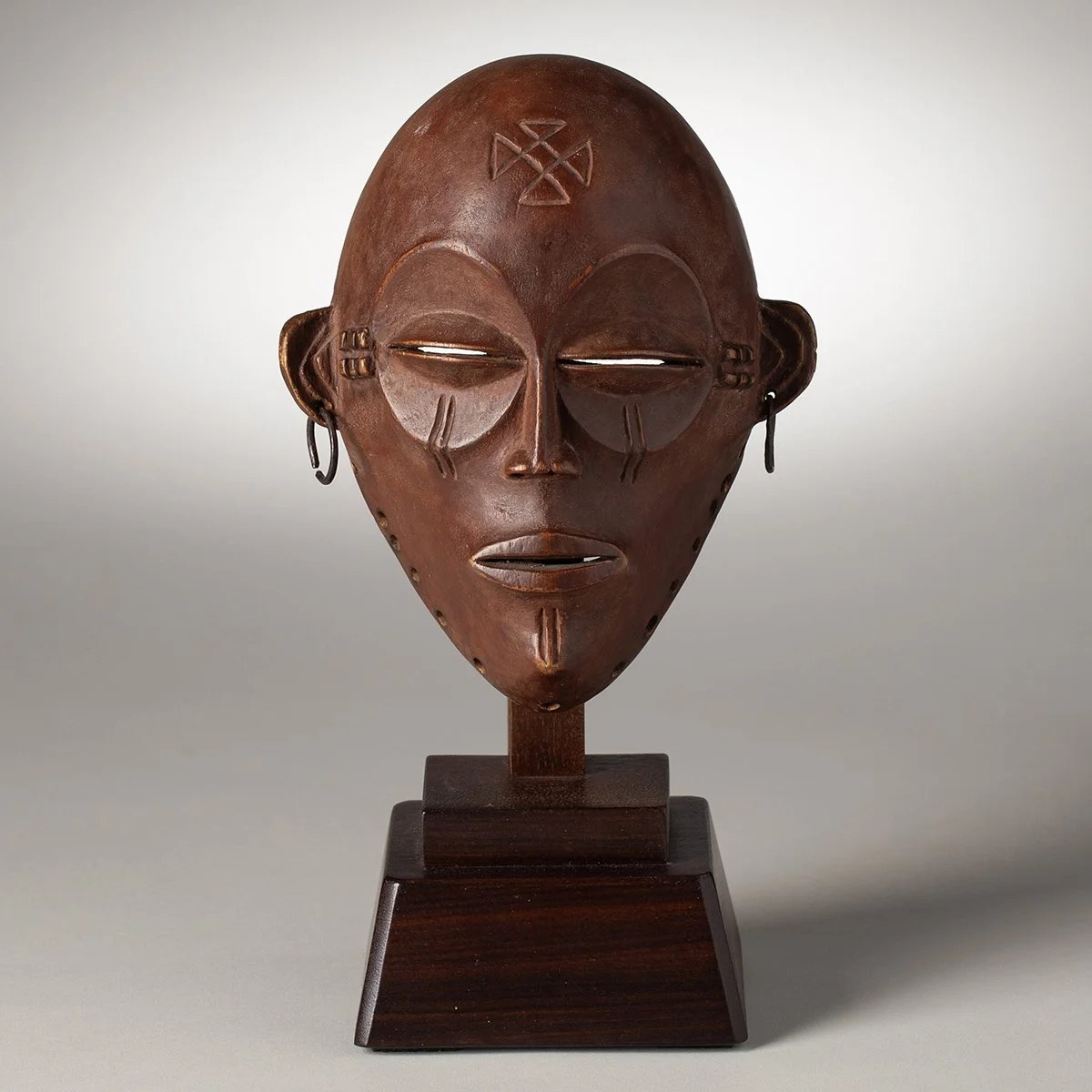 Image 1 of 6
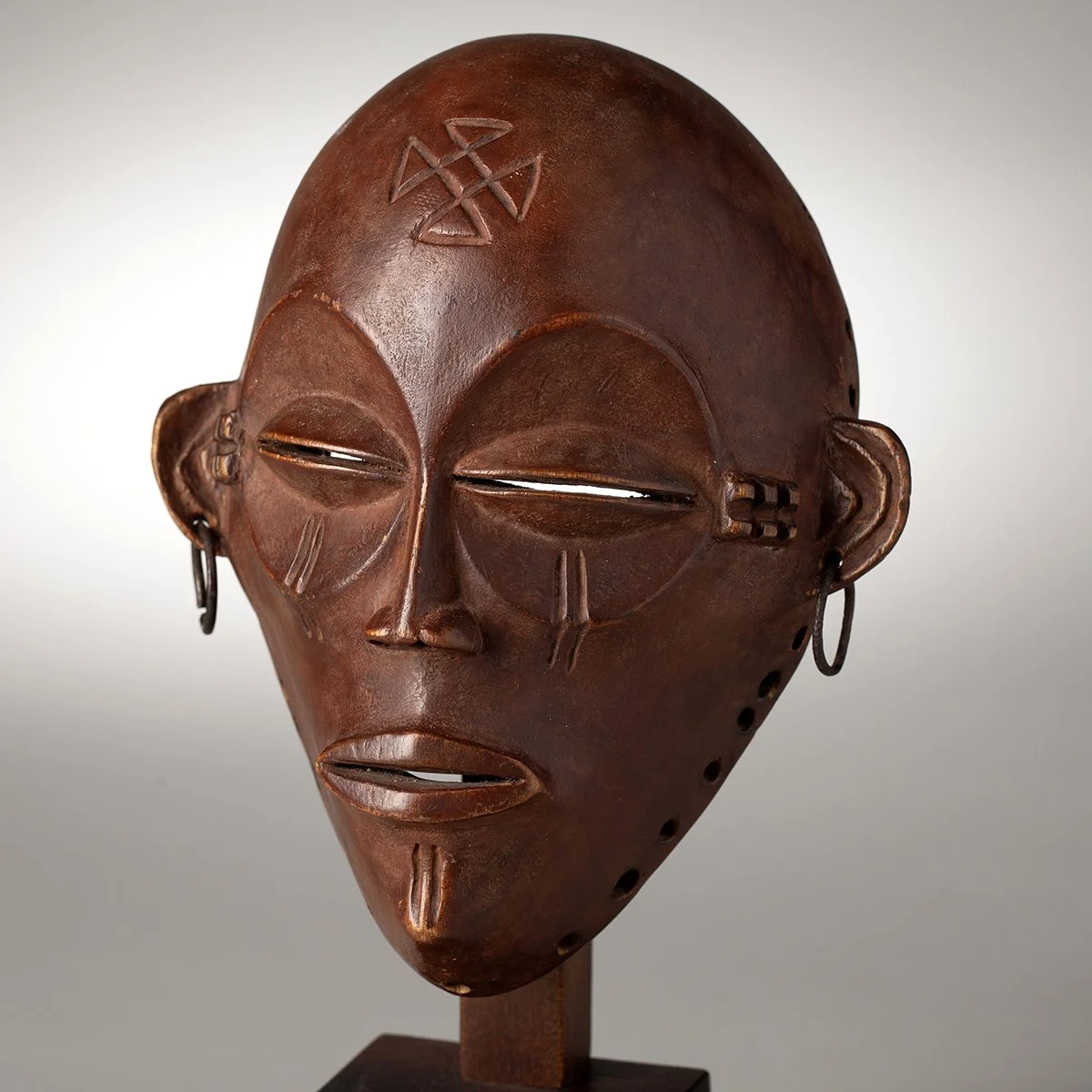 Image 2 of 6
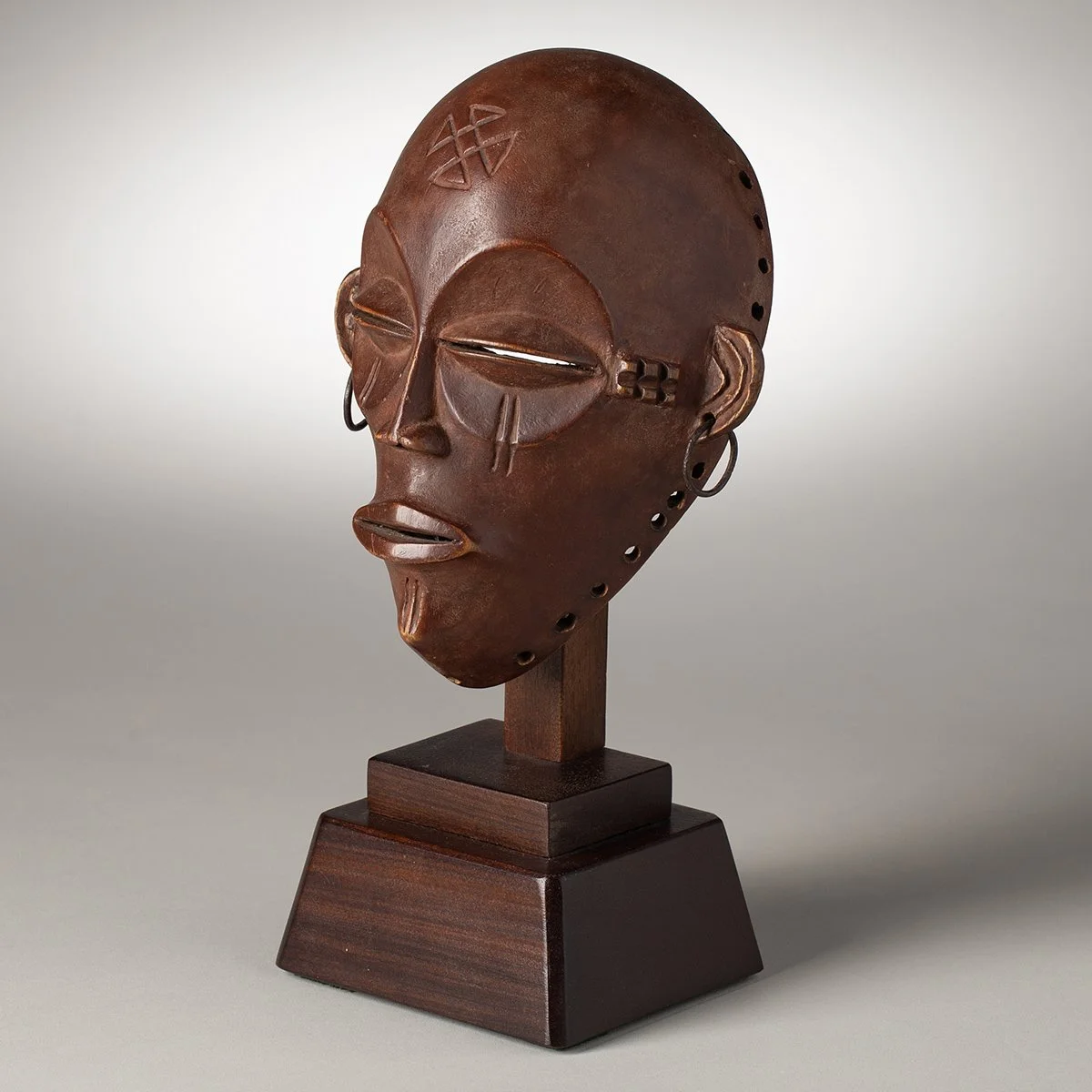 Image 3 of 6
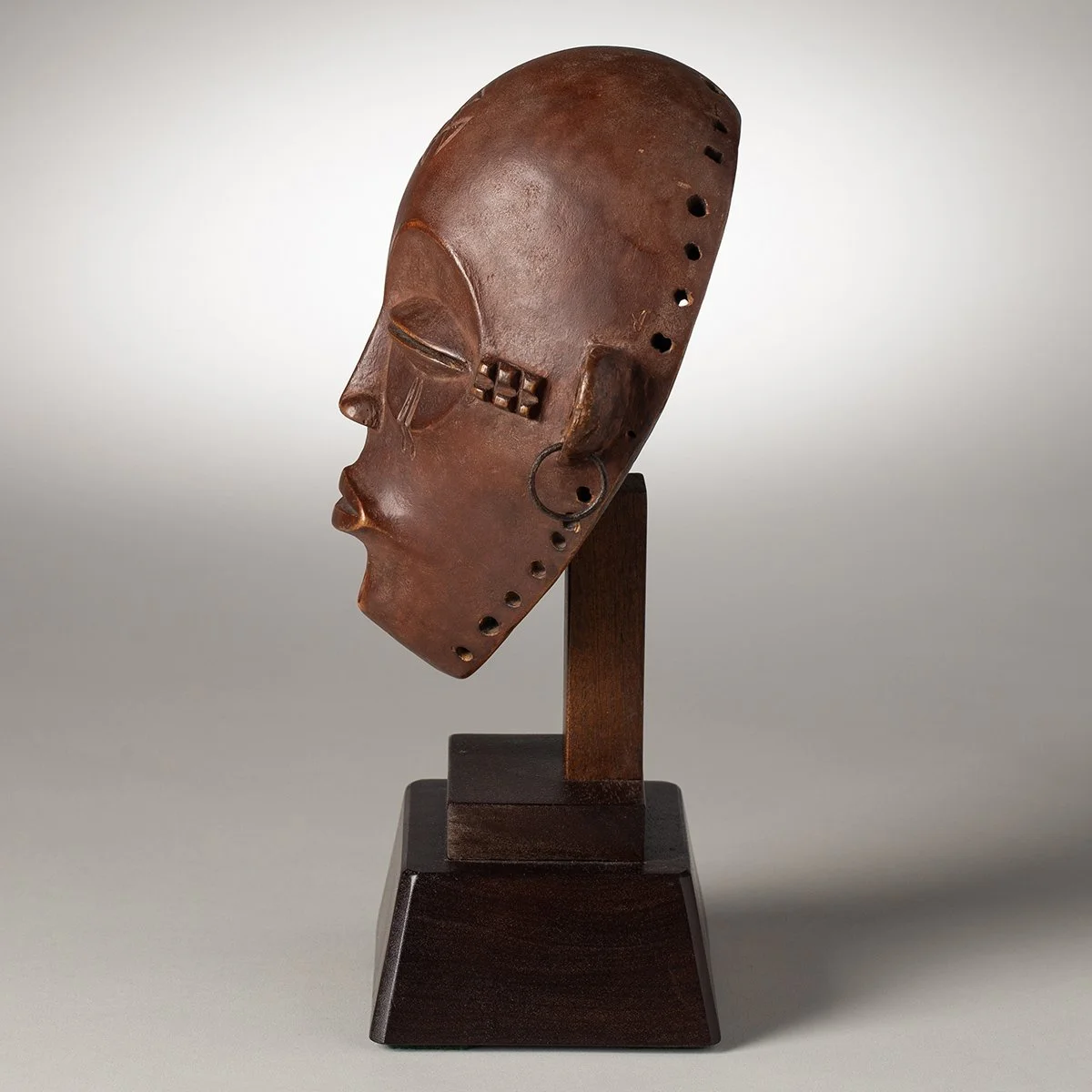 Image 4 of 6
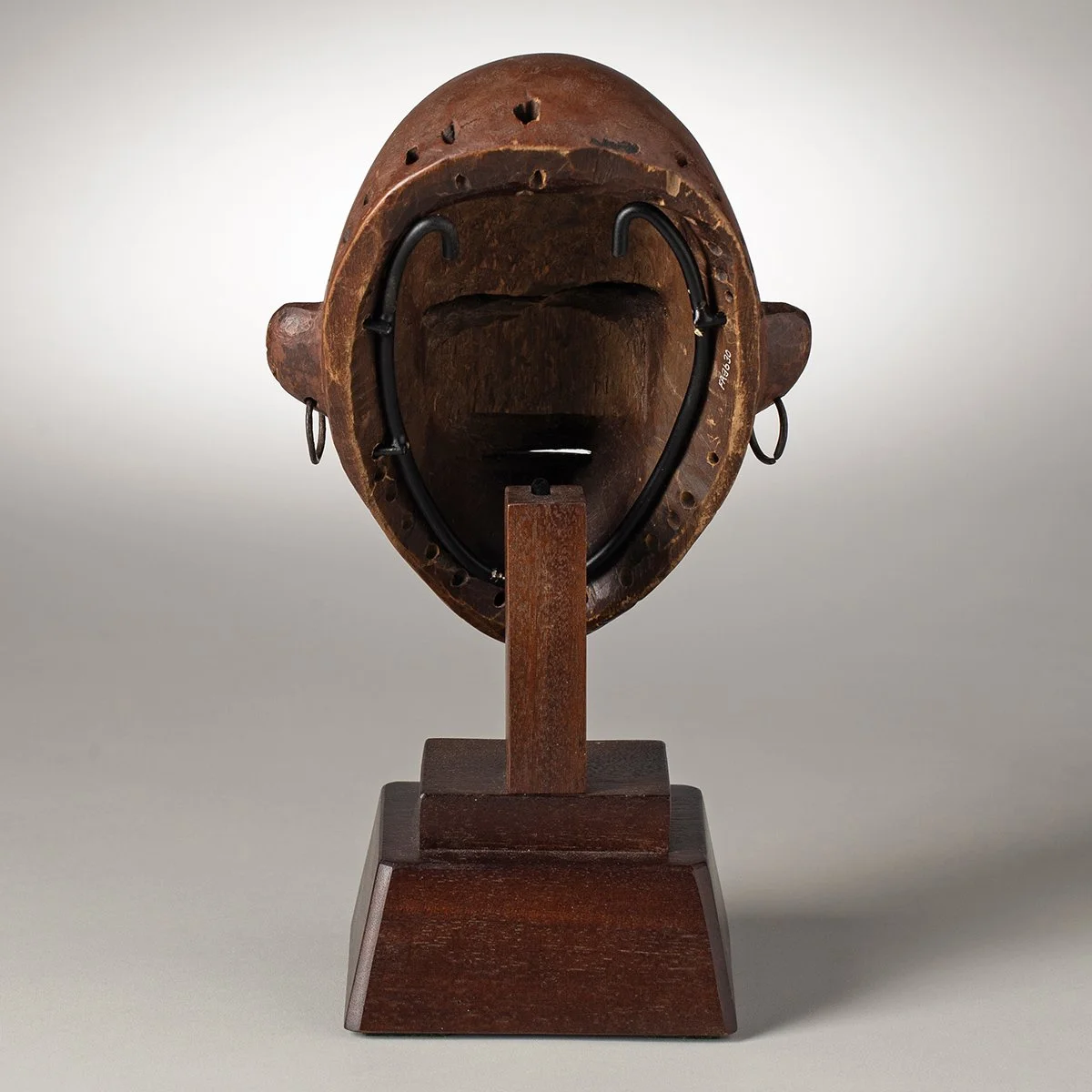 Image 5 of 6
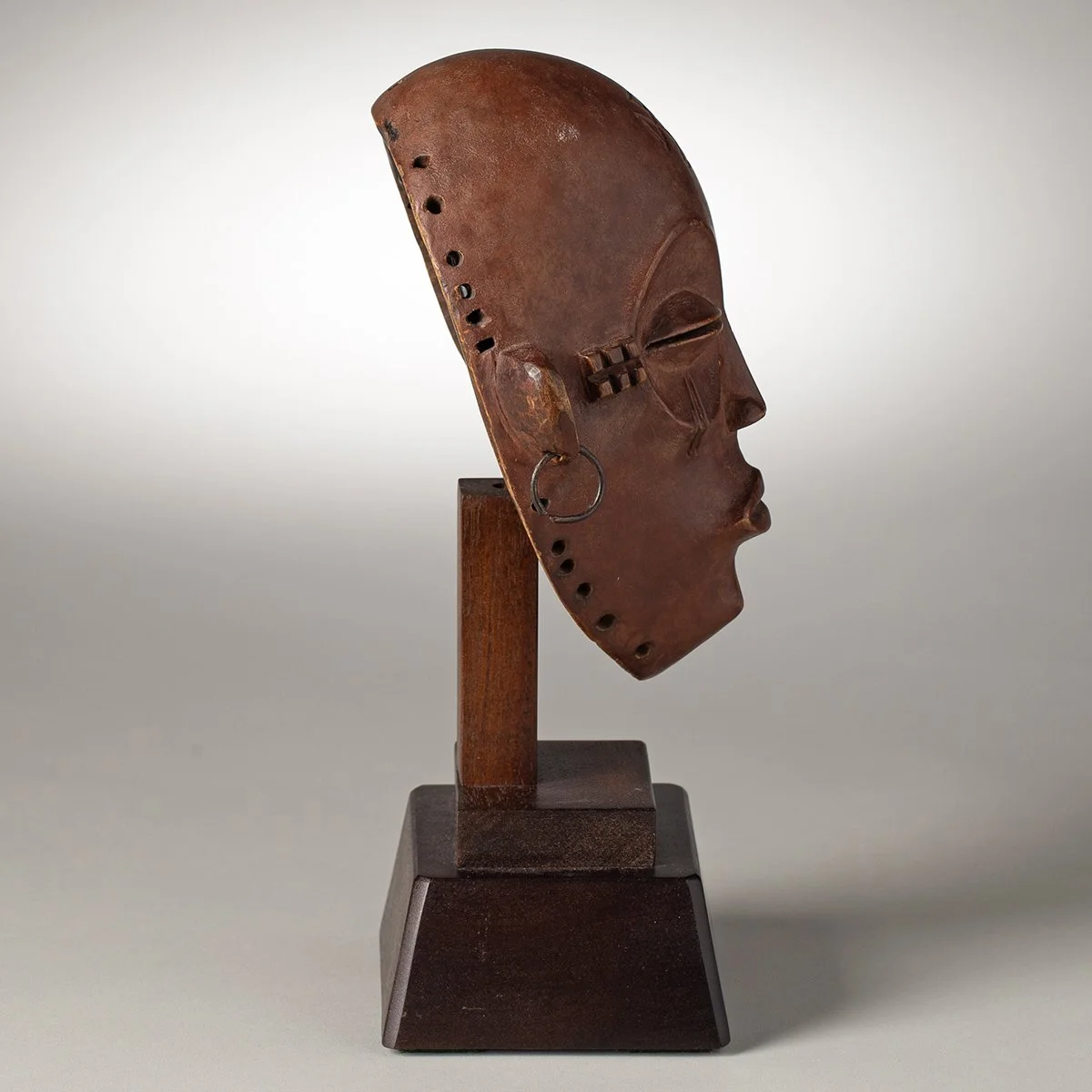 Image 6 of 6