400 - 500 BC
Height 8 1/4"
Diameter 6 1/2"
Provenance: Martha Pillard, Honolulu docent of Academy of Arts, obtained from her private collection in 1999
Christian Rub, Santa Barbara, father of Martha Pillard; actor and antique shop owner in the 1930's and fried of Taos artist Joseph Henry Sharp
South Italian vases are ceramics, mostly decorated in the red - figure technique, that were produced by Greek colonists in southern Italy and Sicily, the region often referred to as Magna Graecia, or “Great Greece.” Indigenous production of vases in imitation of red-figure wares of the Greek mainland occurred sporadically in the early fifth century B.C. within the region. However, around 440 B.C., a workshop of potters and painters appeared at Metapontum in Lucania and soon after at Tarentum (modern-day Taranto) in Apulia. It is unknown how the technical knowledge for producing these vases traveled to southern Italy. Theories range from Athenian participation in the founding of the colony of Thurii in 443 B.C. to the emigration of Athenian artisans, perhaps encouraged by the onset of the Peloponnesian War in 431 B.C. The war, which lasted until 404 B.C., and the resulting decline of Athenian vase exports to the west were certainly important factors in the successful continuation of red-figure vase production in Magna Graecia. The manufacture of South Italian vases reached its zenith between 350 and 320 B.C., then gradually tapered off in quality and quantity until just after the close of the fourth century B.C. Re glued small fragment on rim mentioned for the sake of accuracy.
INQUIRE HERE
400 - 500 BC
Height 8 1/4"
Diameter 6 1/2"
Provenance: Martha Pillard, Honolulu docent of Academy of Arts, obtained from her private collection in 1999
Christian Rub, Santa Barbara, father of Martha Pillard; actor and antique shop owner in the 1930's and fried of Taos artist Joseph Henry Sharp
South Italian vases are ceramics, mostly decorated in the red - figure technique, that were produced by Greek colonists in southern Italy and Sicily, the region often referred to as Magna Graecia, or “Great Greece.” Indigenous production of vases in imitation of red-figure wares of the Greek mainland occurred sporadically in the early fifth century B.C. within the region. However, around 440 B.C., a workshop of potters and painters appeared at Metapontum in Lucania and soon after at Tarentum (modern-day Taranto) in Apulia. It is unknown how the technical knowledge for producing these vases traveled to southern Italy. Theories range from Athenian participation in the founding of the colony of Thurii in 443 B.C. to the emigration of Athenian artisans, perhaps encouraged by the onset of the Peloponnesian War in 431 B.C. The war, which lasted until 404 B.C., and the resulting decline of Athenian vase exports to the west were certainly important factors in the successful continuation of red-figure vase production in Magna Graecia. The manufacture of South Italian vases reached its zenith between 350 and 320 B.C., then gradually tapered off in quality and quantity until just after the close of the fourth century B.C. Re glued small fragment on rim mentioned for the sake of accuracy.
INQUIRE HERE


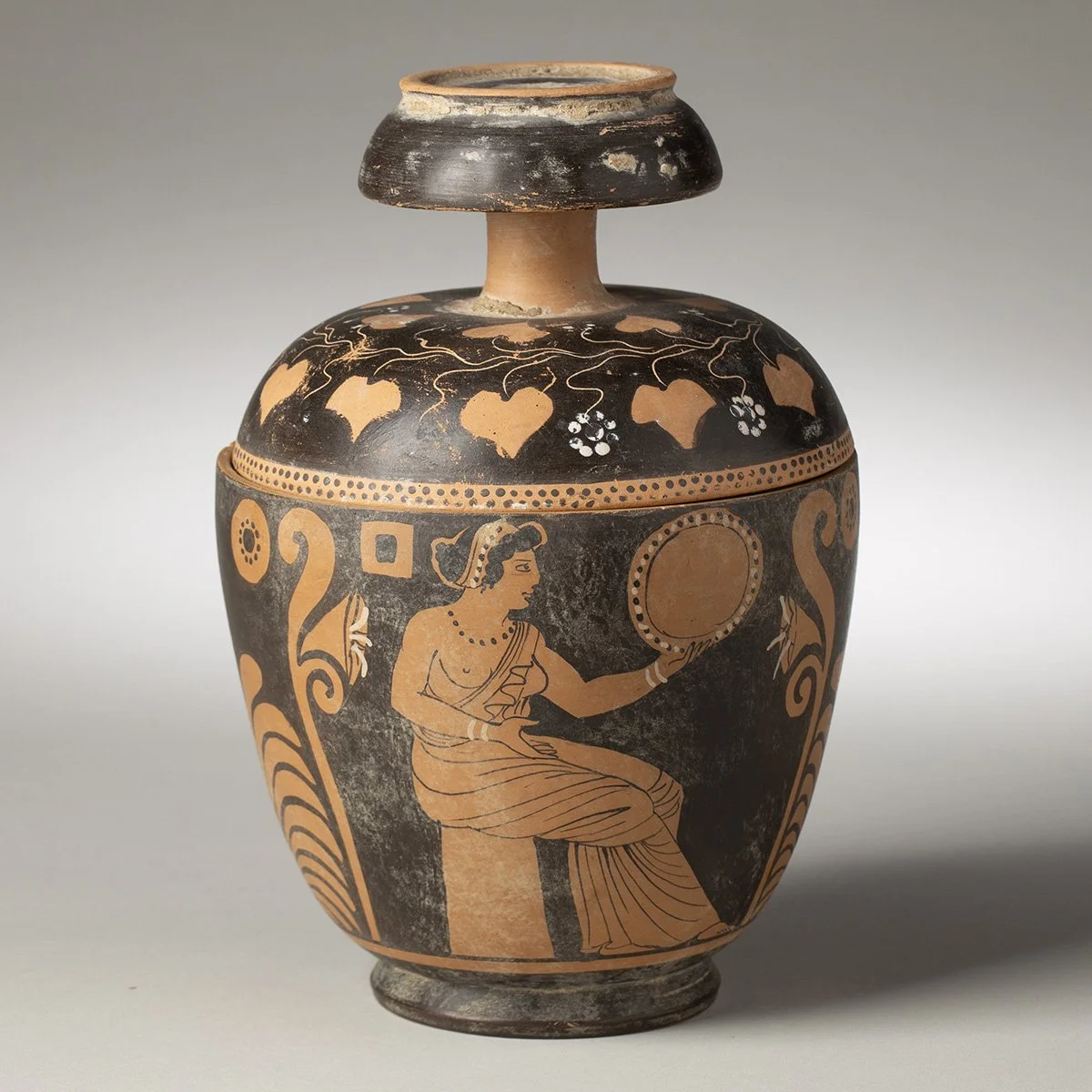 Image 1 of 10
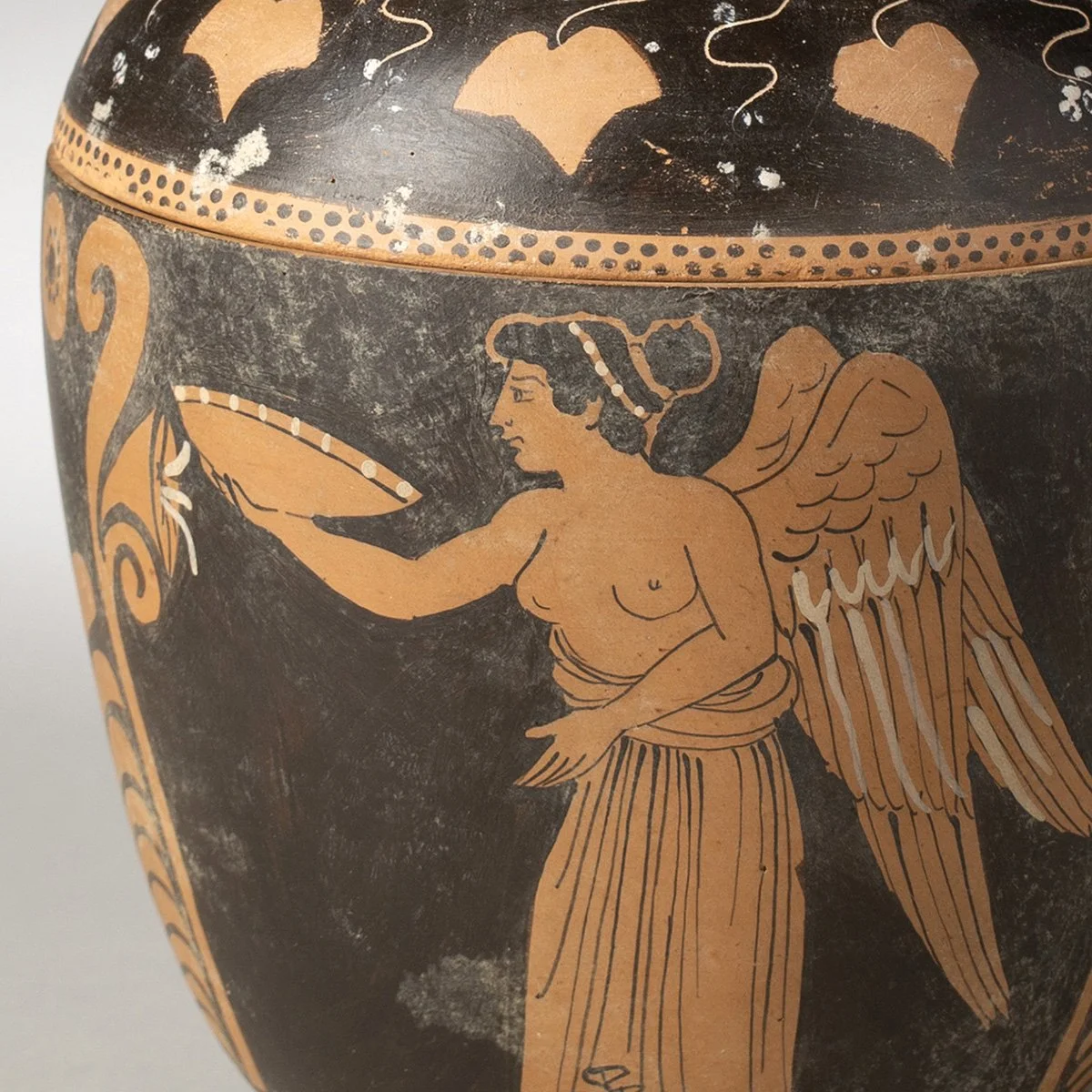 Image 2 of 10
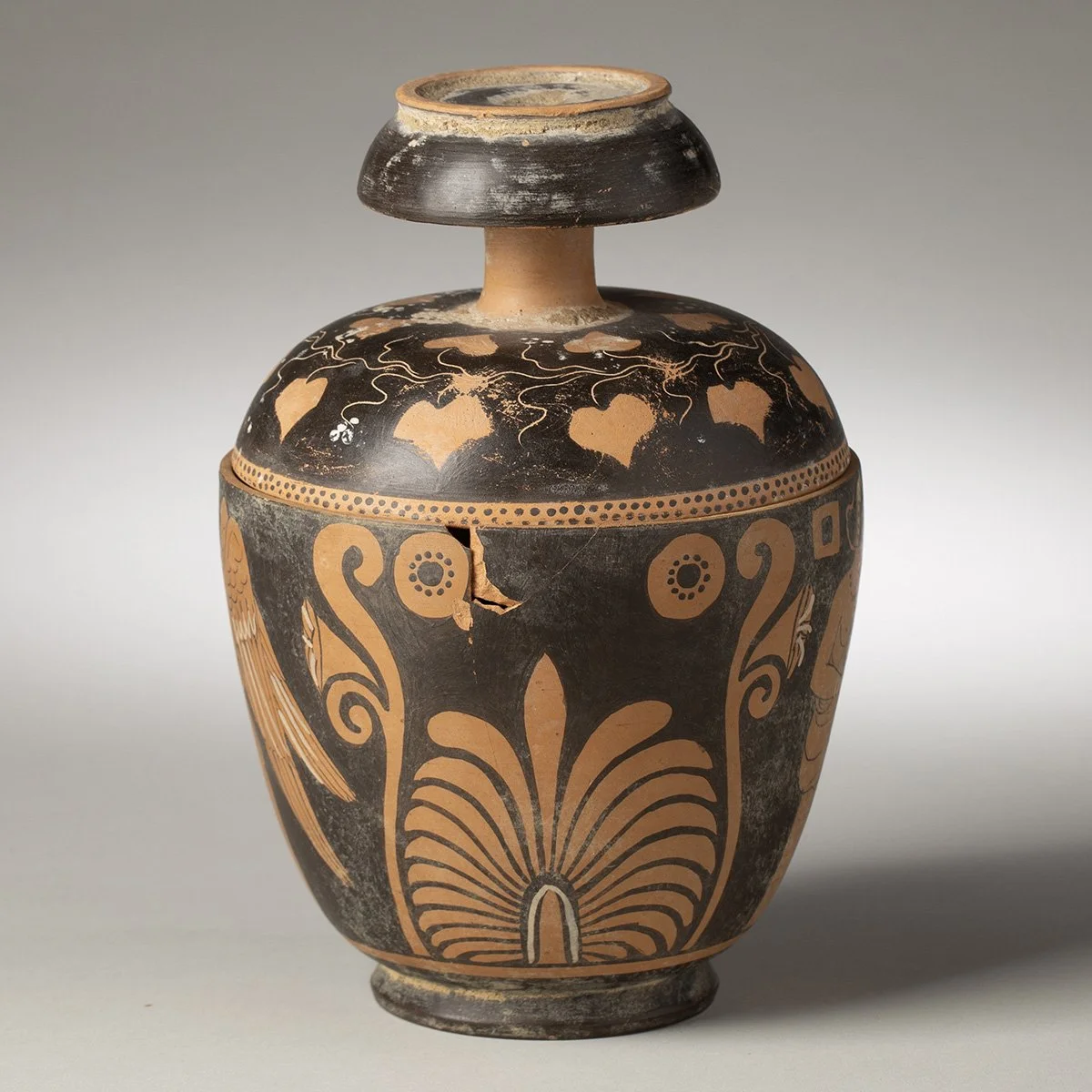 Image 3 of 10
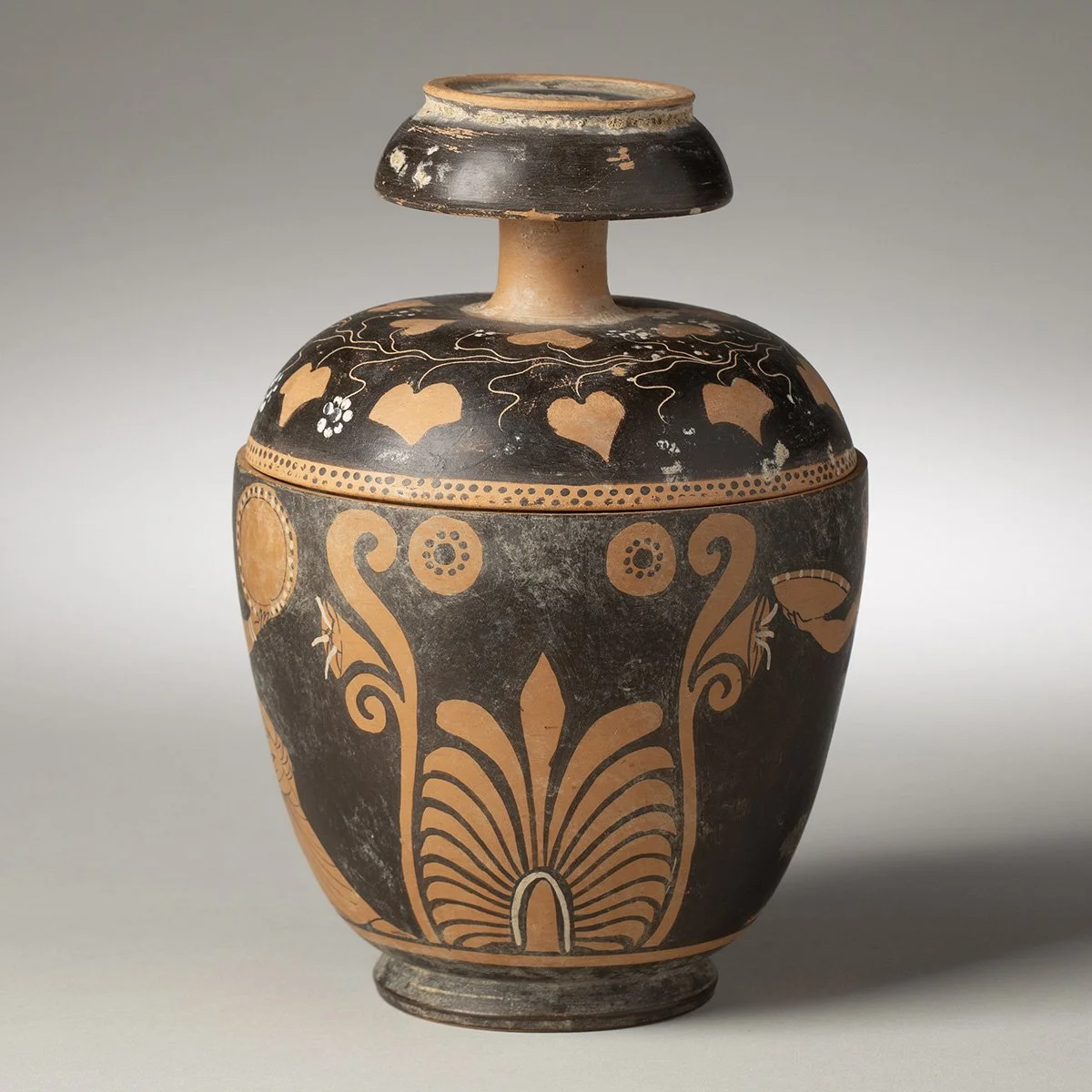 Image 4 of 10
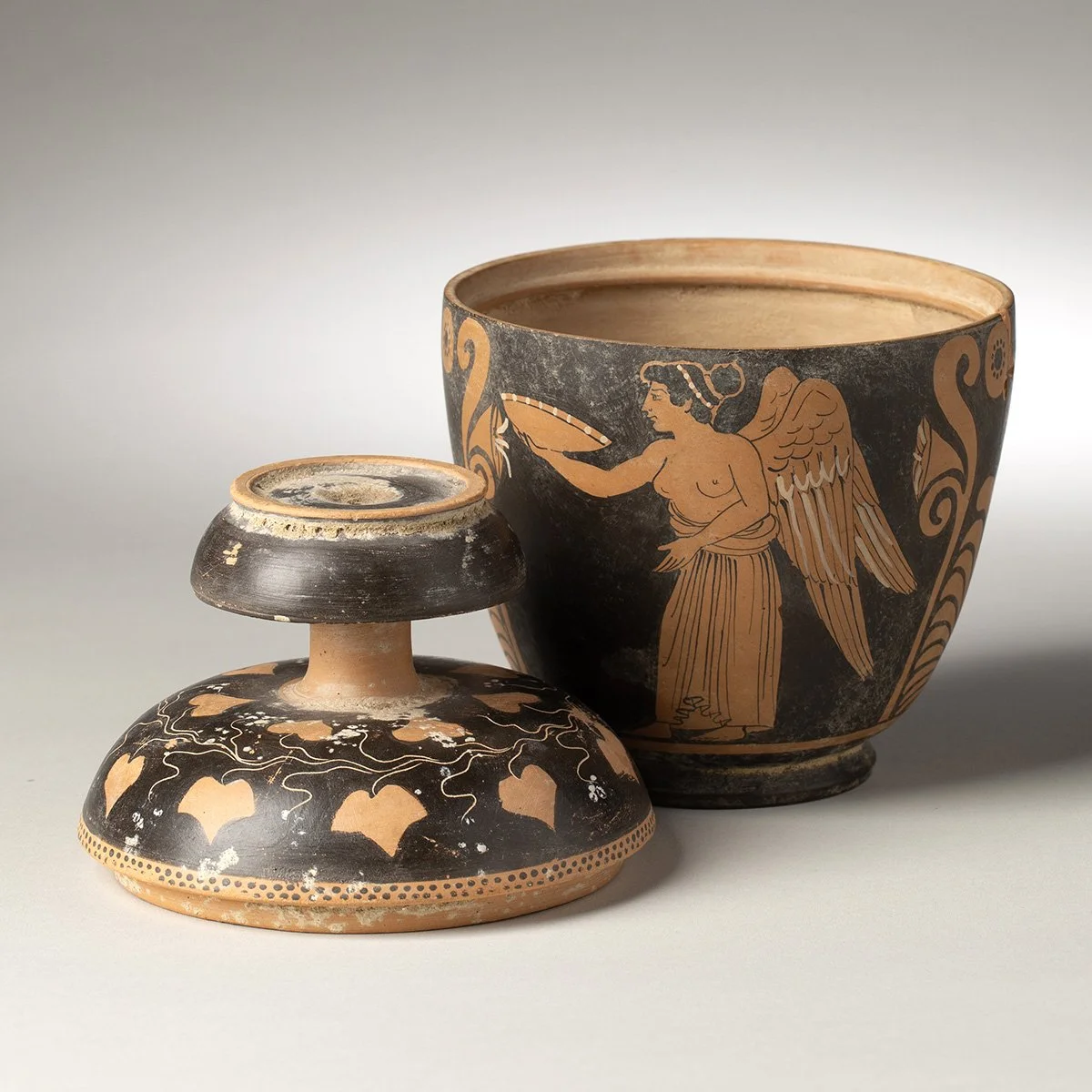 Image 5 of 10
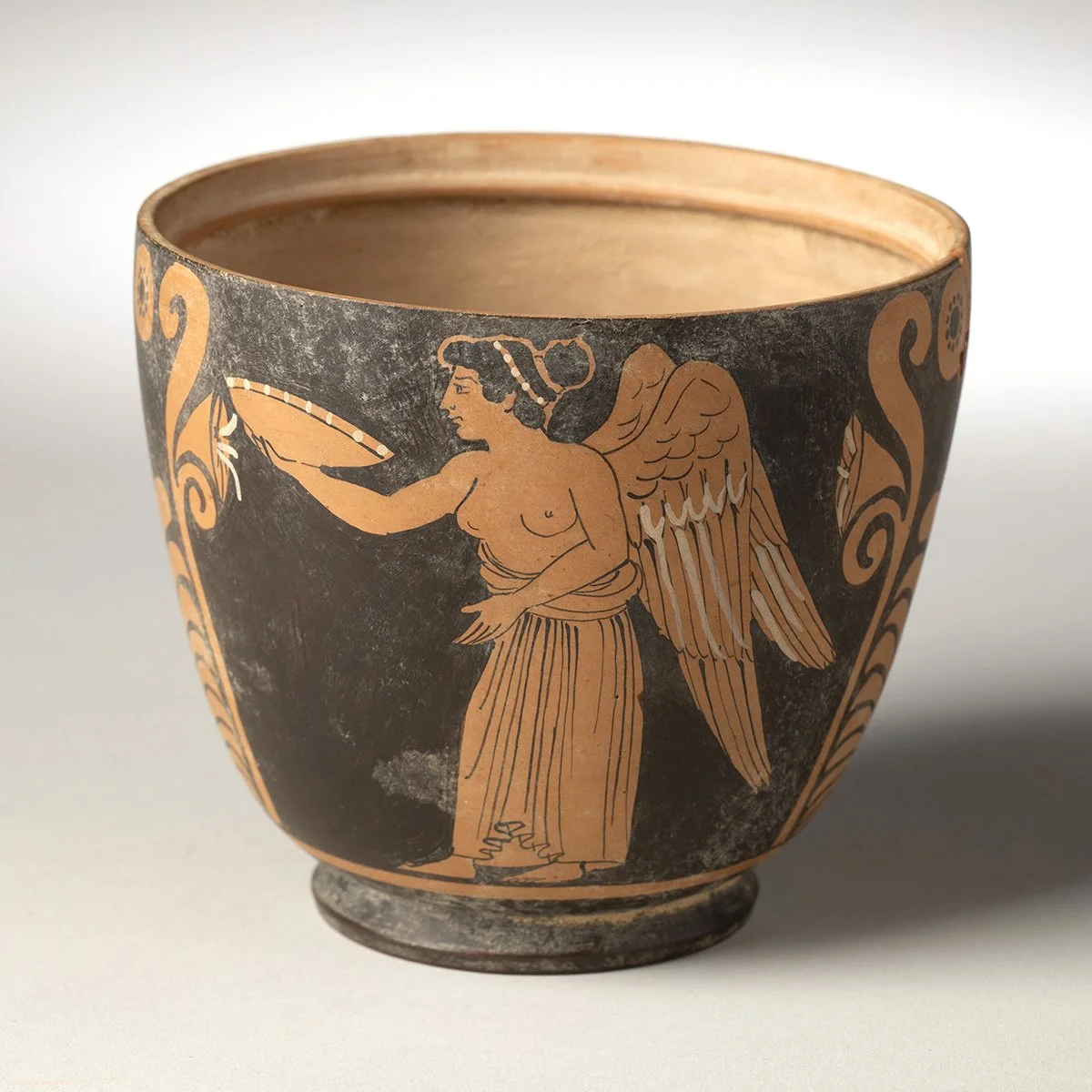 Image 6 of 10
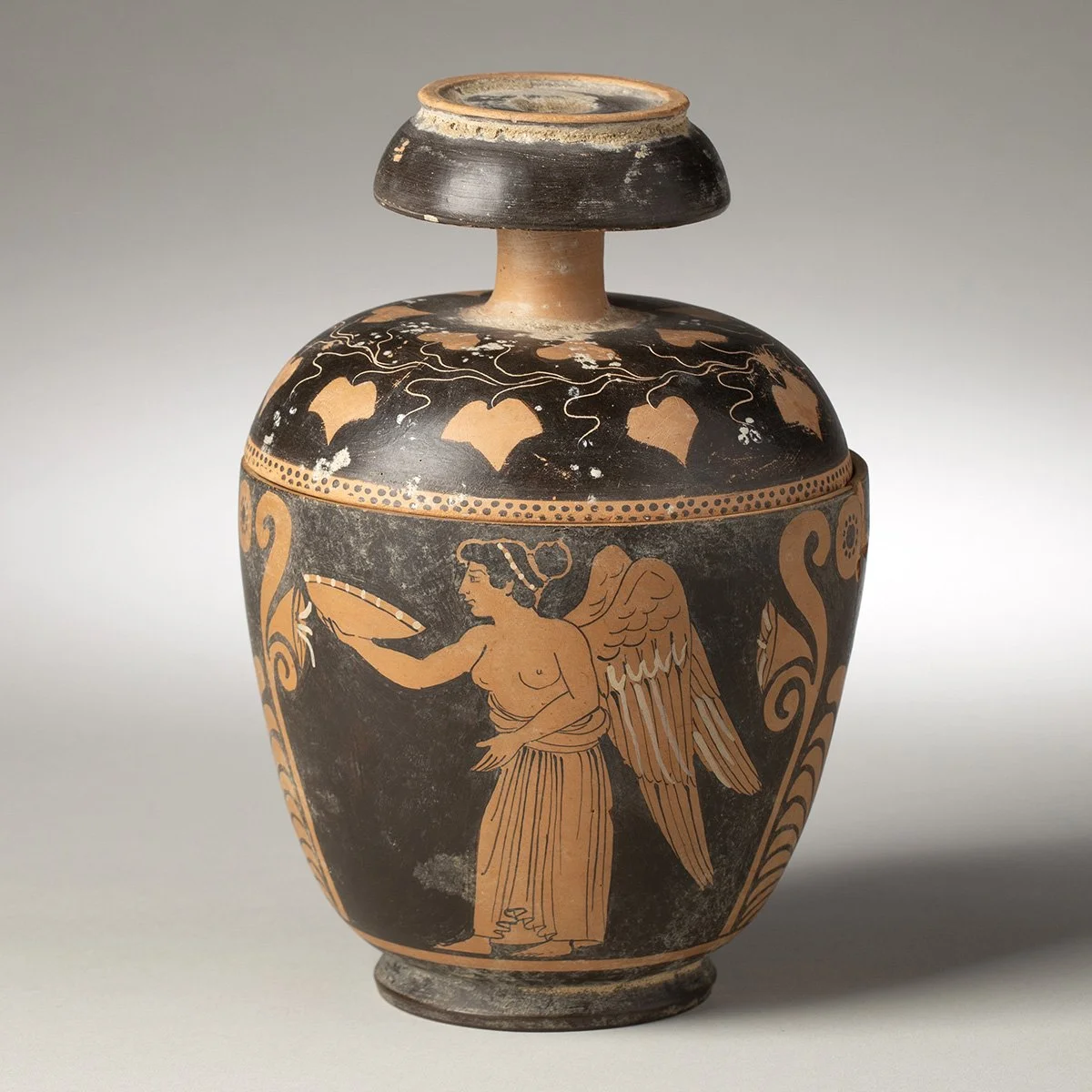 Image 7 of 10
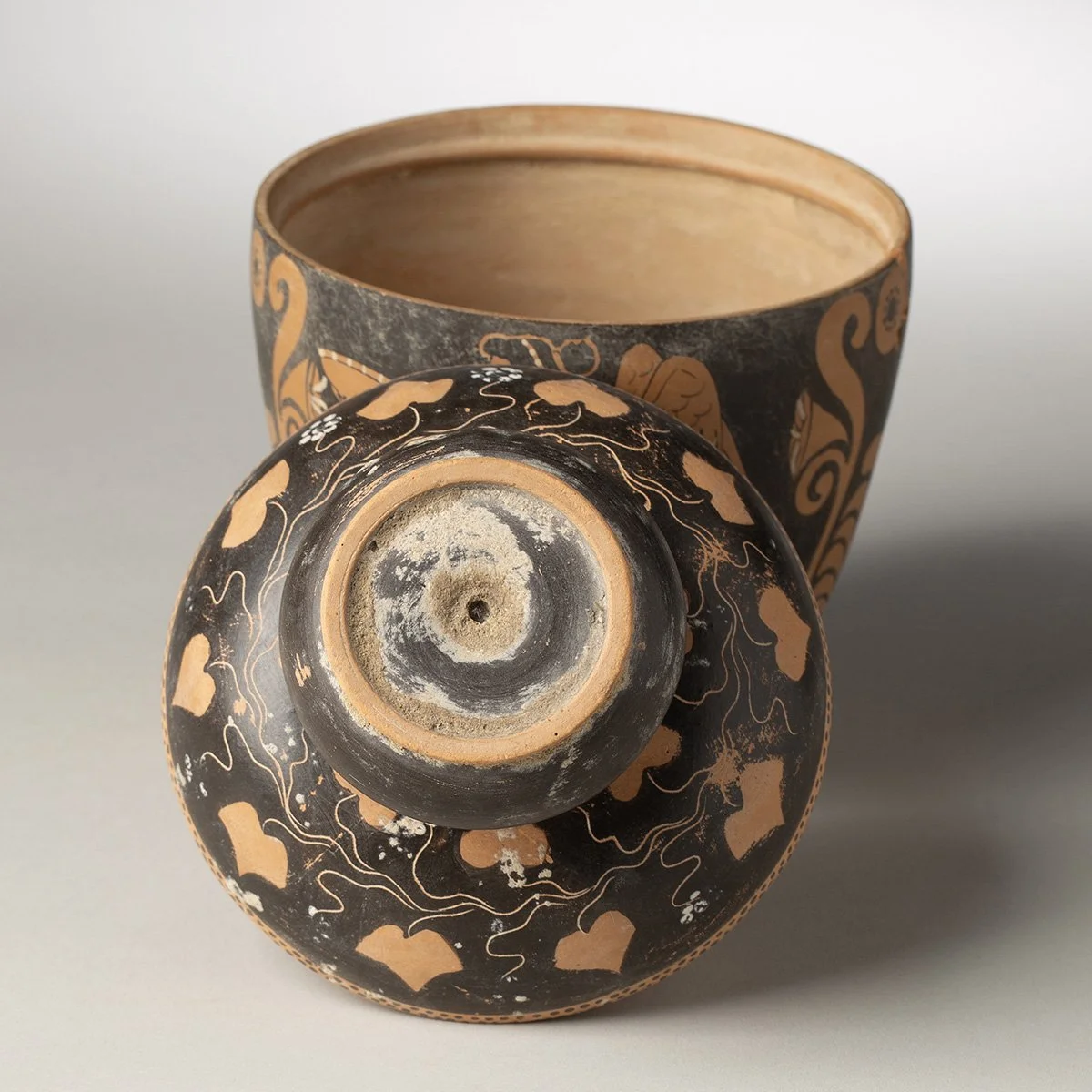 Image 8 of 10
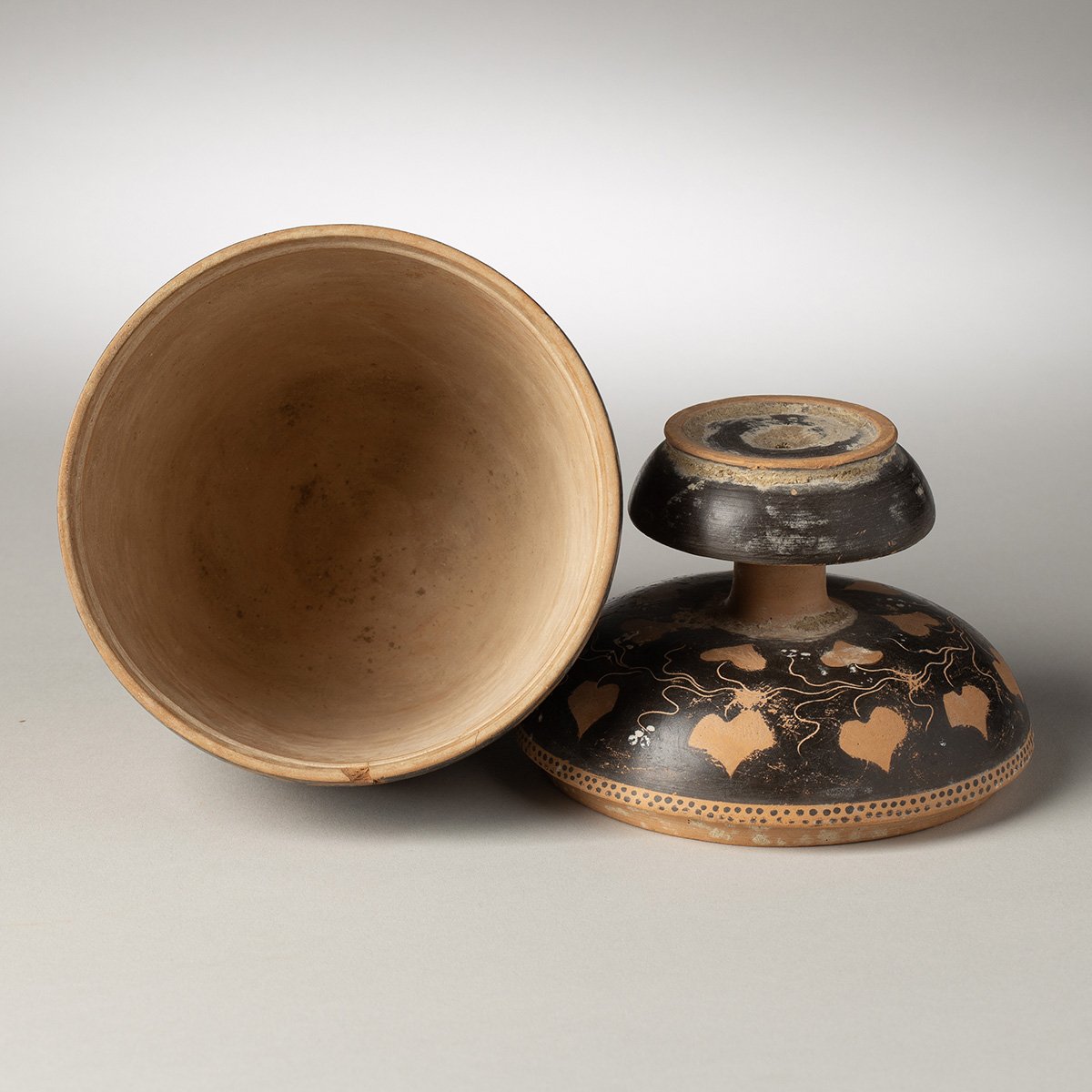 Image 9 of 10
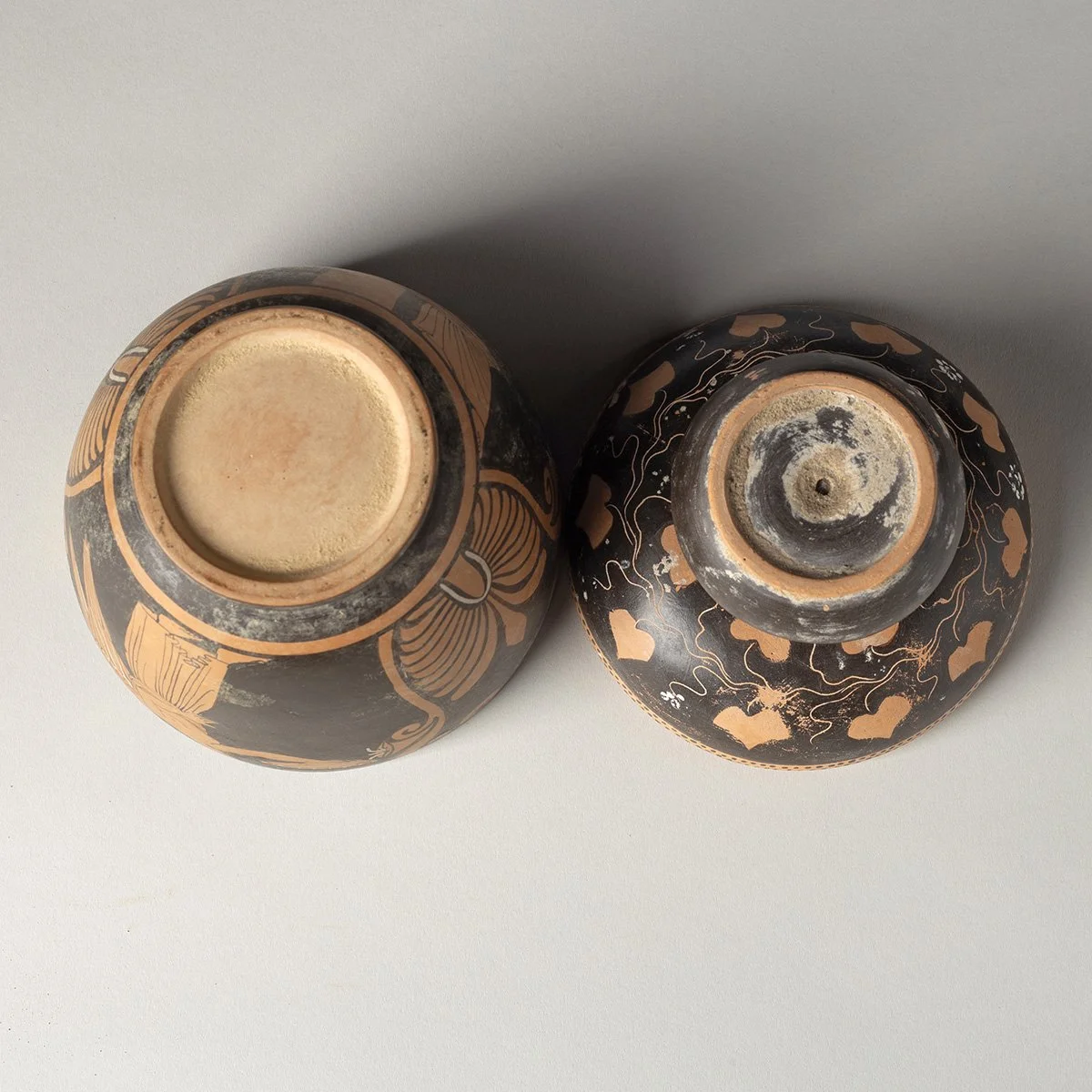 Image 10 of 10