Kamakura Period 1185-1333 AD
Height 10 1/2"
Provenance: Private collection, Yokohama, Japan
Originally, Shinto kami (Japanese deities or spirits) were not represented in human form as they were rather associated with natural phenomena or sacred objects. However, the strong influence of Buddhism introduced the anthropomorphic depiction of them, which we can trace starting from the Heian period.
This ancient statue dates to the Kamakura period, when people were portrayed incredibly realistically, especially in Nara. This male Shinto deity has rather smooth, non-distinctive facial features. The clothes and pose are also neutral, offering no hints to a social status or a lifestyle. The peacefulness of his face aligns with the Buddhist tradition of depicting gods, which is not unconventional: the new and the Indigenous religions in Japan had been intertwining with each other since the Heian period. For instance, Shinto shrines could be found within Buddhist monasteries, and Buddhist and Shinto gods could be worshipped alongside each other. Shinto deities, even though embodied in the human-shaped statue, nevertheless were not supposed to be openly displayed. Presumably, this ancient male Shinto figure was not demonstrated to the public in the shrine, but was kept in the moveable shrine cabinet to be privately worshipped.
INQUIRE HERE
Kamakura Period 1185-1333 AD
Height 10 1/2"
Provenance: Private collection, Yokohama, Japan
Originally, Shinto kami (Japanese deities or spirits) were not represented in human form as they were rather associated with natural phenomena or sacred objects. However, the strong influence of Buddhism introduced the anthropomorphic depiction of them, which we can trace starting from the Heian period.
This ancient statue dates to the Kamakura period, when people were portrayed incredibly realistically, especially in Nara. This male Shinto deity has rather smooth, non-distinctive facial features. The clothes and pose are also neutral, offering no hints to a social status or a lifestyle. The peacefulness of his face aligns with the Buddhist tradition of depicting gods, which is not unconventional: the new and the Indigenous religions in Japan had been intertwining with each other since the Heian period. For instance, Shinto shrines could be found within Buddhist monasteries, and Buddhist and Shinto gods could be worshipped alongside each other. Shinto deities, even though embodied in the human-shaped statue, nevertheless were not supposed to be openly displayed. Presumably, this ancient male Shinto figure was not demonstrated to the public in the shrine, but was kept in the moveable shrine cabinet to be privately worshipped.
INQUIRE HERE


 Image 1 of 7
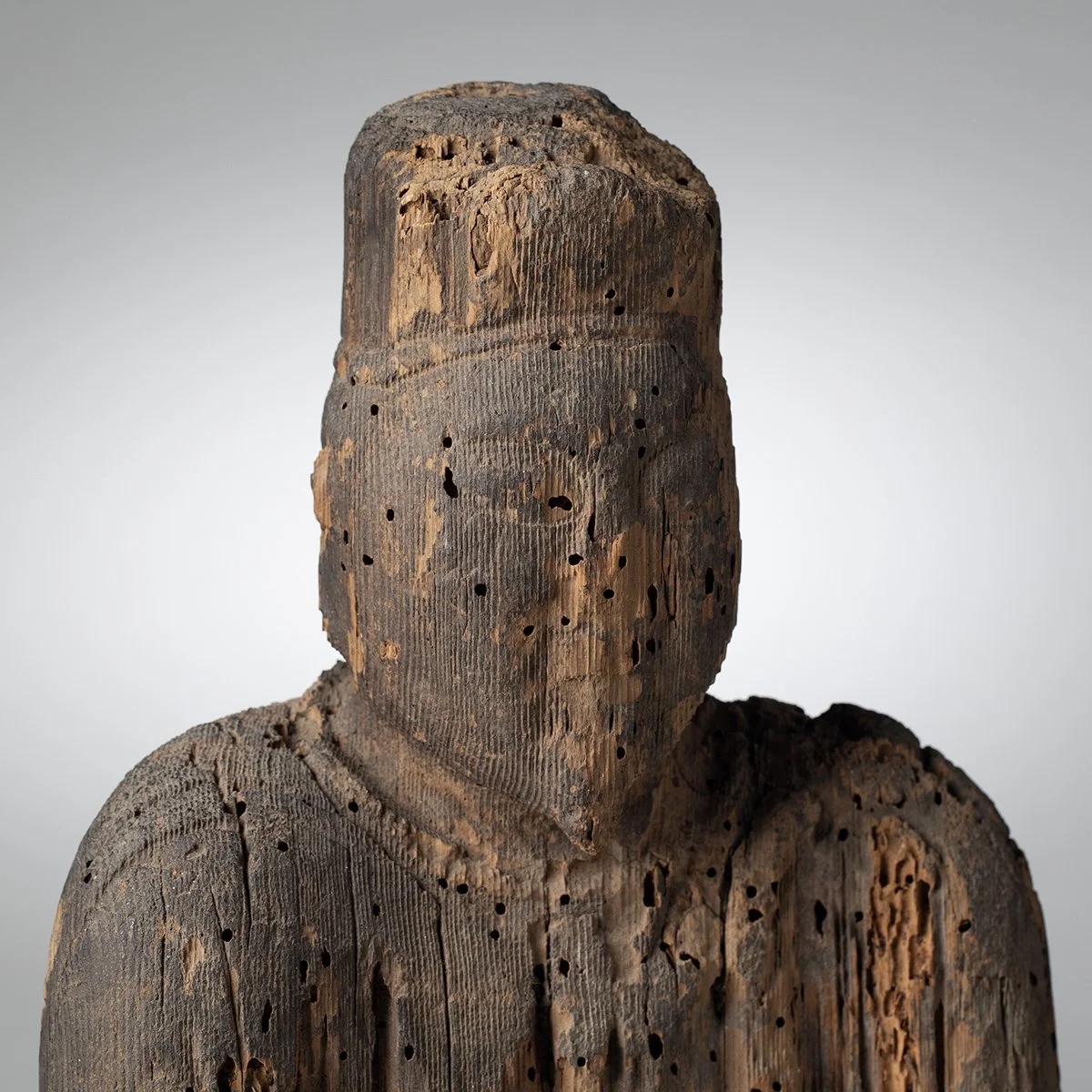 Image 2 of 7
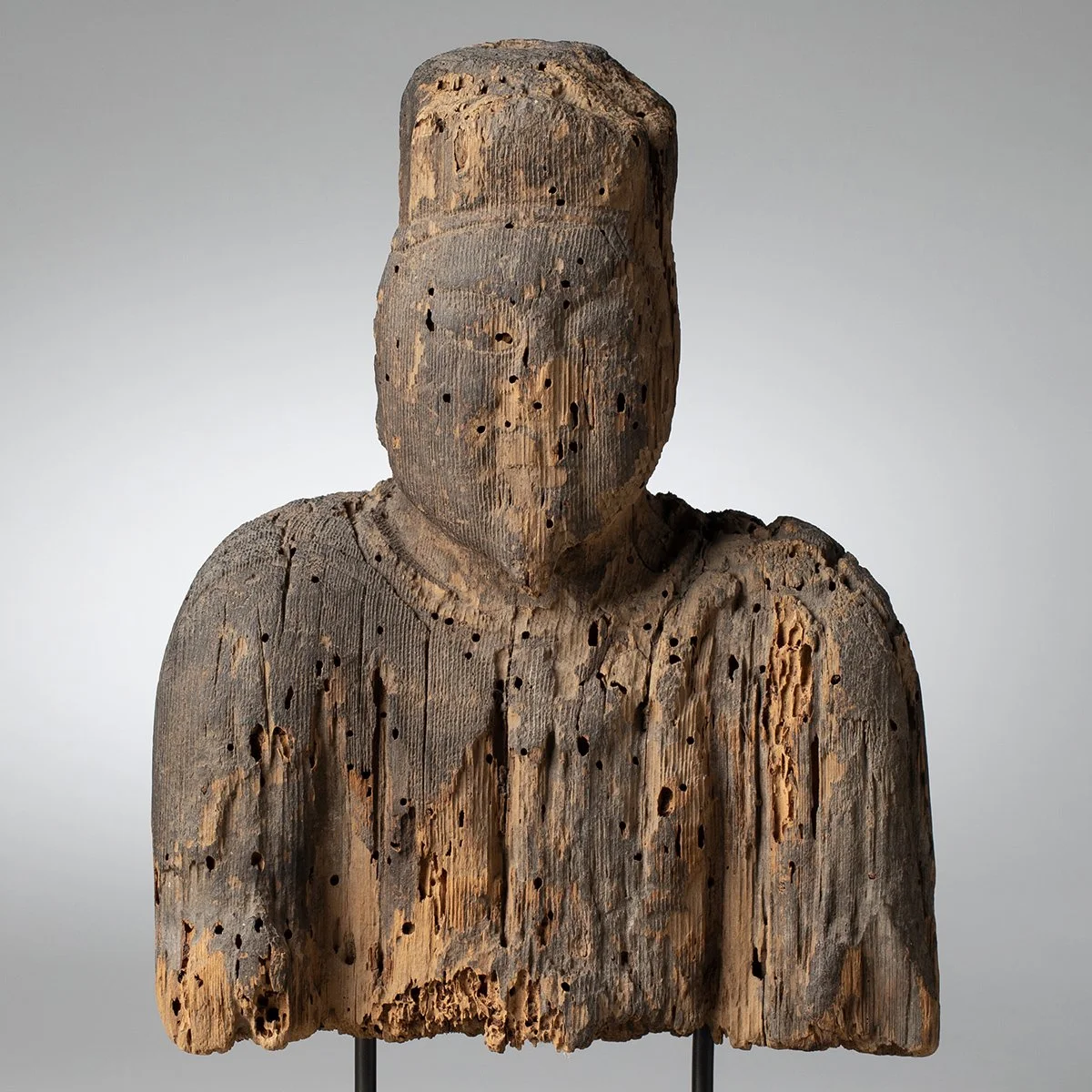 Image 3 of 7
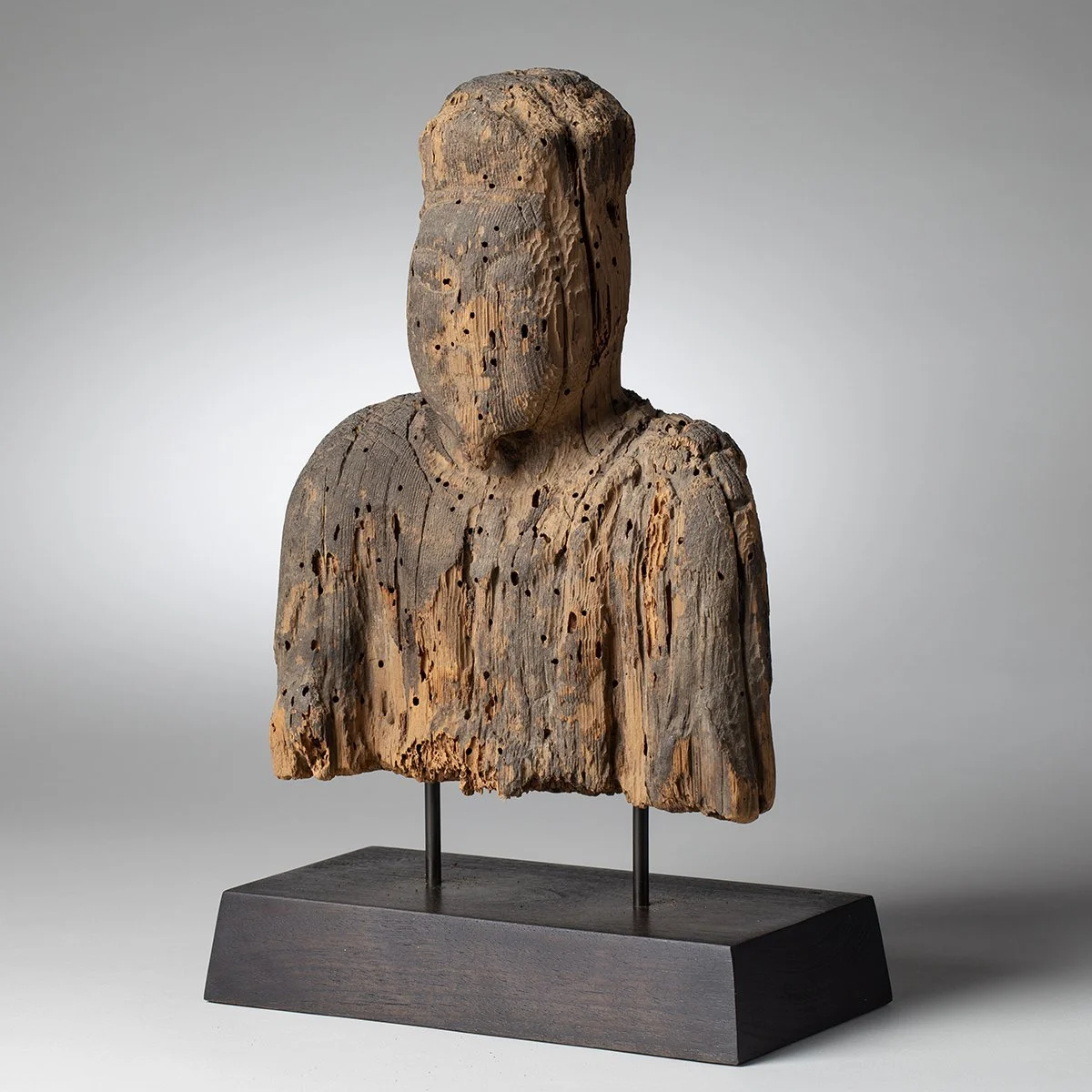 Image 4 of 7
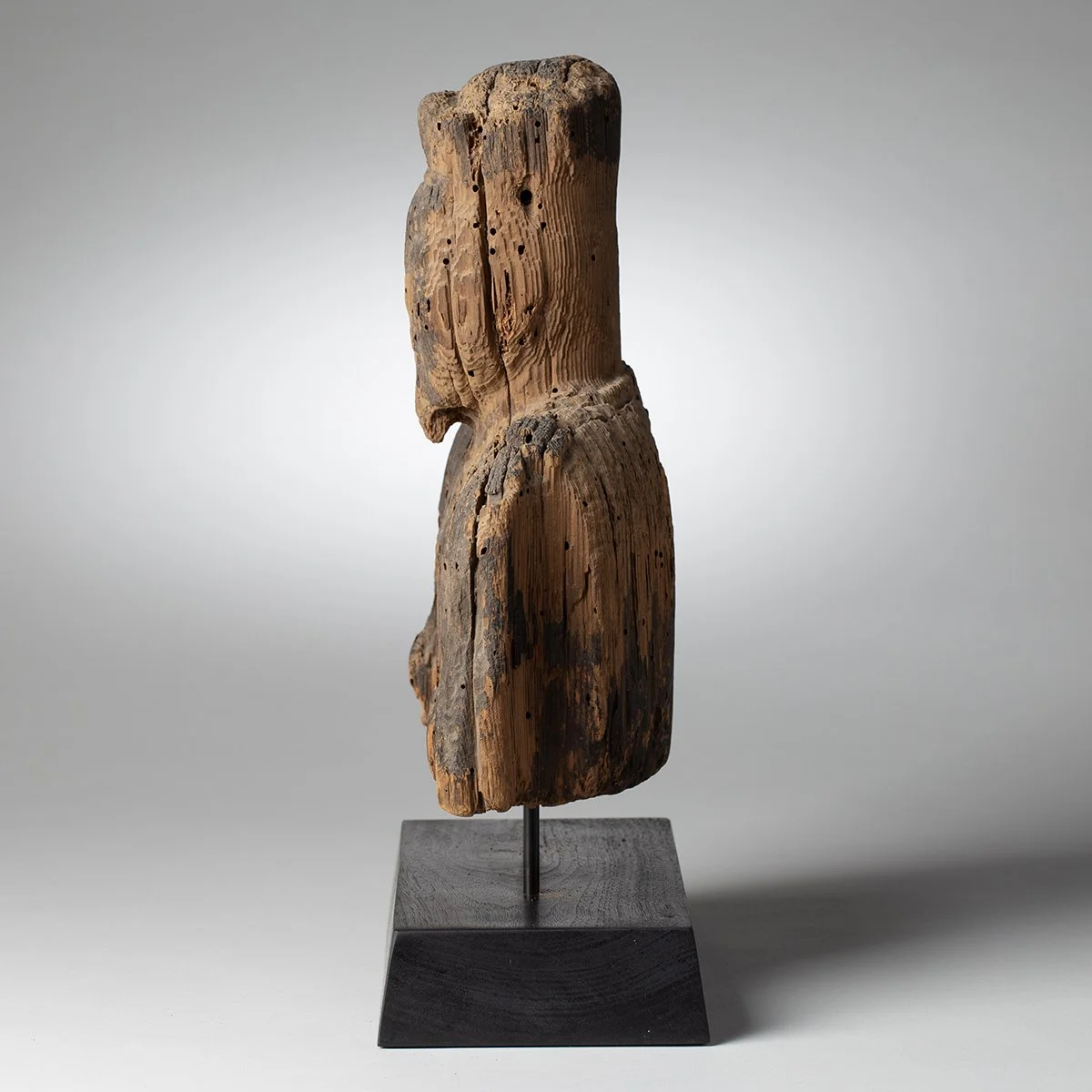 Image 5 of 7
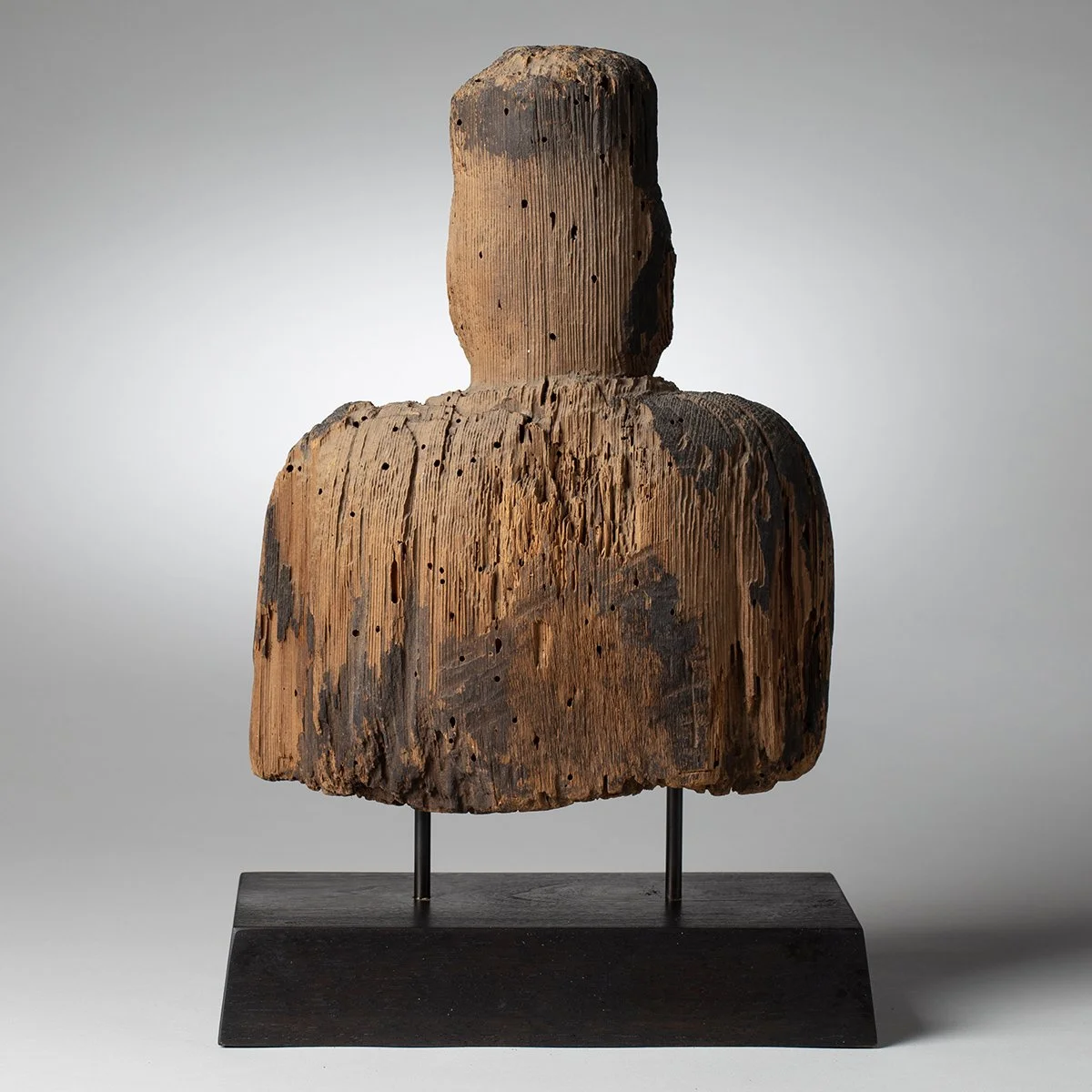 Image 6 of 7
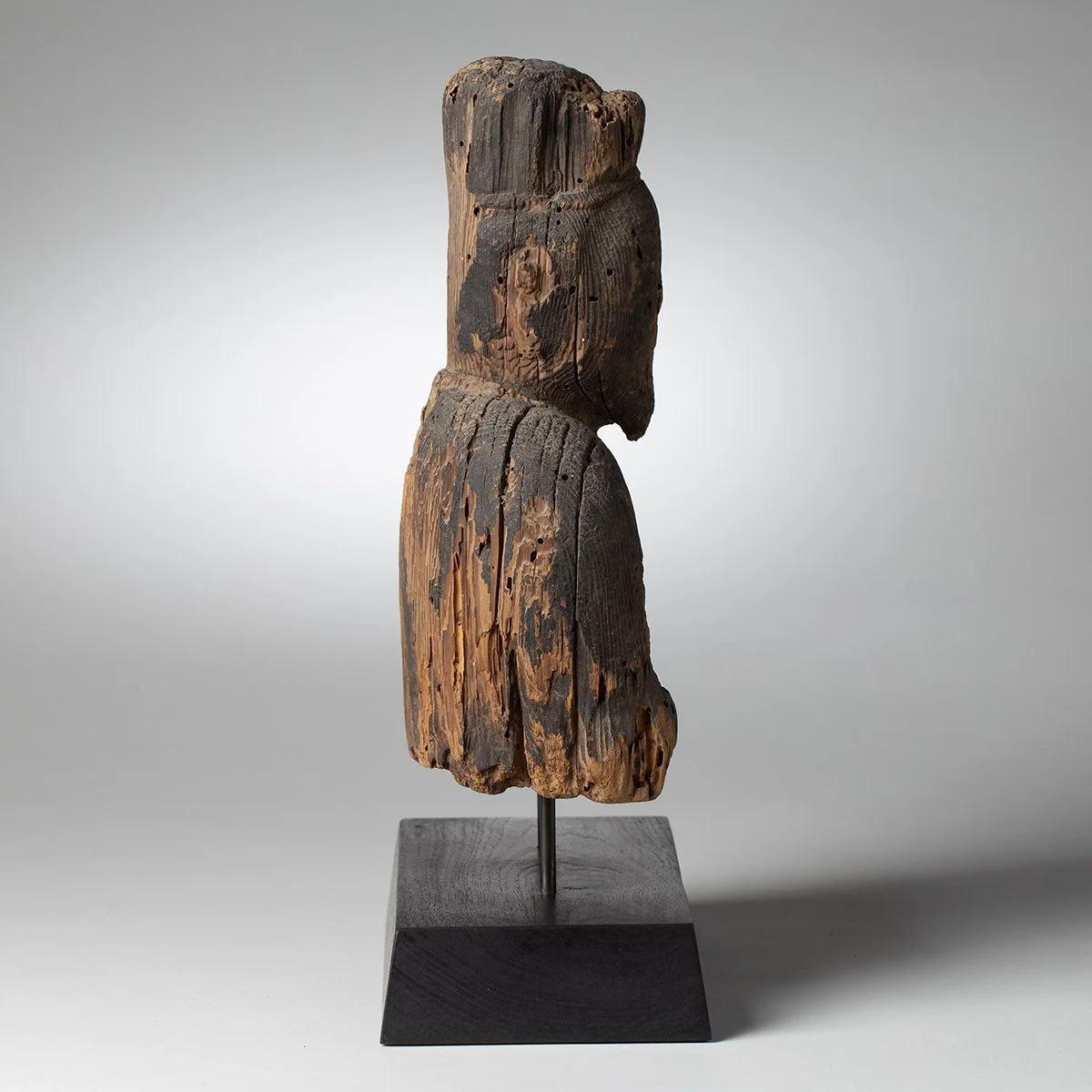 Image 7 of 7