Gilt Bronze
Mongolia
18th century
Height 6"
Provenance: English Trade
Ian Triay, Madrid
This beautiful richly gilded and jewel - inset image is noteworthy for the precise casting and modeling of the garlands of jewels suspended from their bodies and most particularly both their waists, as well as the precise rendering of the lotus petals around the dias on which the couple sit, as well as other details.
Samvara is one of the great tuletray or patron deities of Tibeto - Mongolian Budddhism. Usually, he is depicted in angry form with a fierce menacing face, and multiple arms and heads together with his equally angry consort Vajjravarahi joined in tantric. blissful (yab - yum) pose, Samvara is known as Paramasukha Chakraamvara. The pose symbolizes the merging of wisdom and compassion.
Samvara sits on a double - lotus pedestal with his legs in the lotus position.
Vajravarahi sita on Samvara's arms which are crossed over in the diamond hum - sound gesture, right over left, a pose she mimics behind is neck.
In his hands are two ambrosial jars (that hold the elixir of immortality) topped with flower - form finials. She holds in each of hers skull cups or kapalas.
Both deities wear ample jewelry and are beautifully crowned, with crowns and jewels inset with small tiurquoise and coral cabochons. Both have very intricate hairstyles, coloured with black and blue pigment.
The consecration of this figure is intact, the base is enclosed with a copper plate engraved with a double vajira motif.The image shows influence from the Mongolian Zanabazar school, with its double vajra engraved to the base, ample, finely cast strings of jewelry, rich gilding, and well articulated lotus petals to the base. This beautiful sculpture is in very fine condition and untouched.
INQUIRE HERE
Gilt Bronze
Mongolia
18th century
Height 6"
Provenance: English Trade
Ian Triay, Madrid
This beautiful richly gilded and jewel - inset image is noteworthy for the precise casting and modeling of the garlands of jewels suspended from their bodies and most particularly both their waists, as well as the precise rendering of the lotus petals around the dias on which the couple sit, as well as other details.
Samvara is one of the great tuletray or patron deities of Tibeto - Mongolian Budddhism. Usually, he is depicted in angry form with a fierce menacing face, and multiple arms and heads together with his equally angry consort Vajjravarahi joined in tantric. blissful (yab - yum) pose, Samvara is known as Paramasukha Chakraamvara. The pose symbolizes the merging of wisdom and compassion.
Samvara sits on a double - lotus pedestal with his legs in the lotus position.
Vajravarahi sita on Samvara's arms which are crossed over in the diamond hum - sound gesture, right over left, a pose she mimics behind is neck.
In his hands are two ambrosial jars (that hold the elixir of immortality) topped with flower - form finials. She holds in each of hers skull cups or kapalas.
Both deities wear ample jewelry and are beautifully crowned, with crowns and jewels inset with small tiurquoise and coral cabochons. Both have very intricate hairstyles, coloured with black and blue pigment.
The consecration of this figure is intact, the base is enclosed with a copper plate engraved with a double vajira motif.The image shows influence from the Mongolian Zanabazar school, with its double vajra engraved to the base, ample, finely cast strings of jewelry, rich gilding, and well articulated lotus petals to the base. This beautiful sculpture is in very fine condition and untouched.
INQUIRE HERE


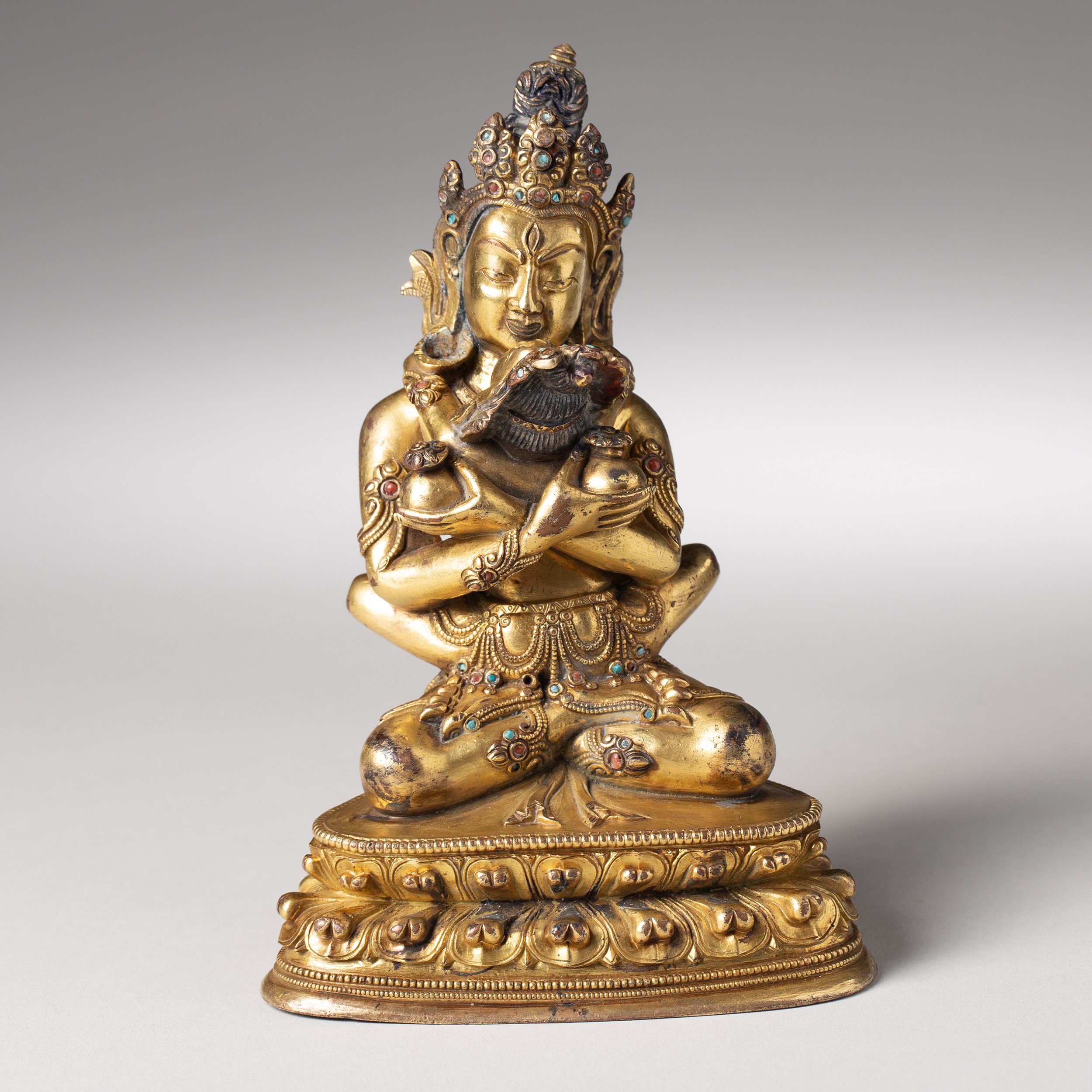 Image 1 of 8
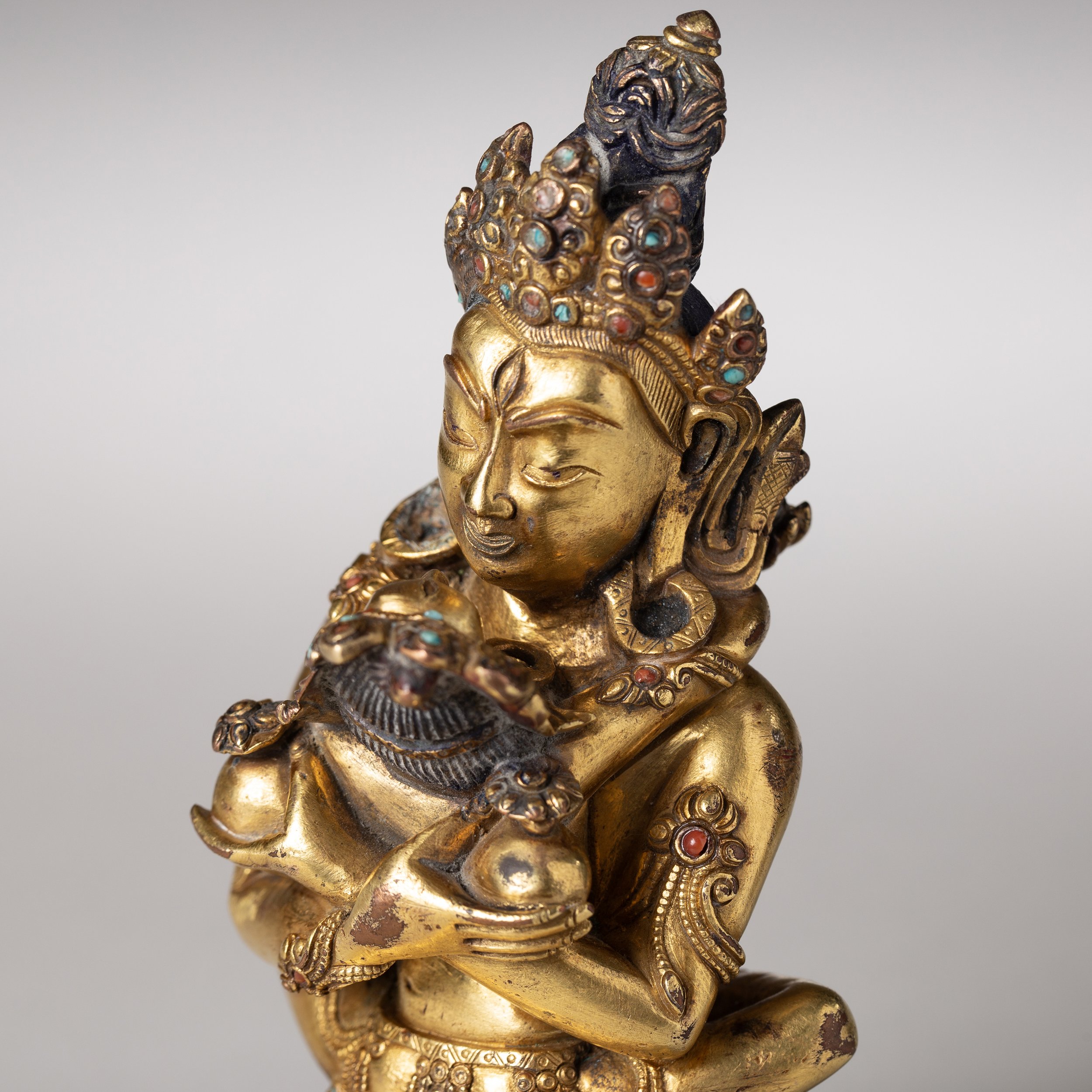 Image 2 of 8
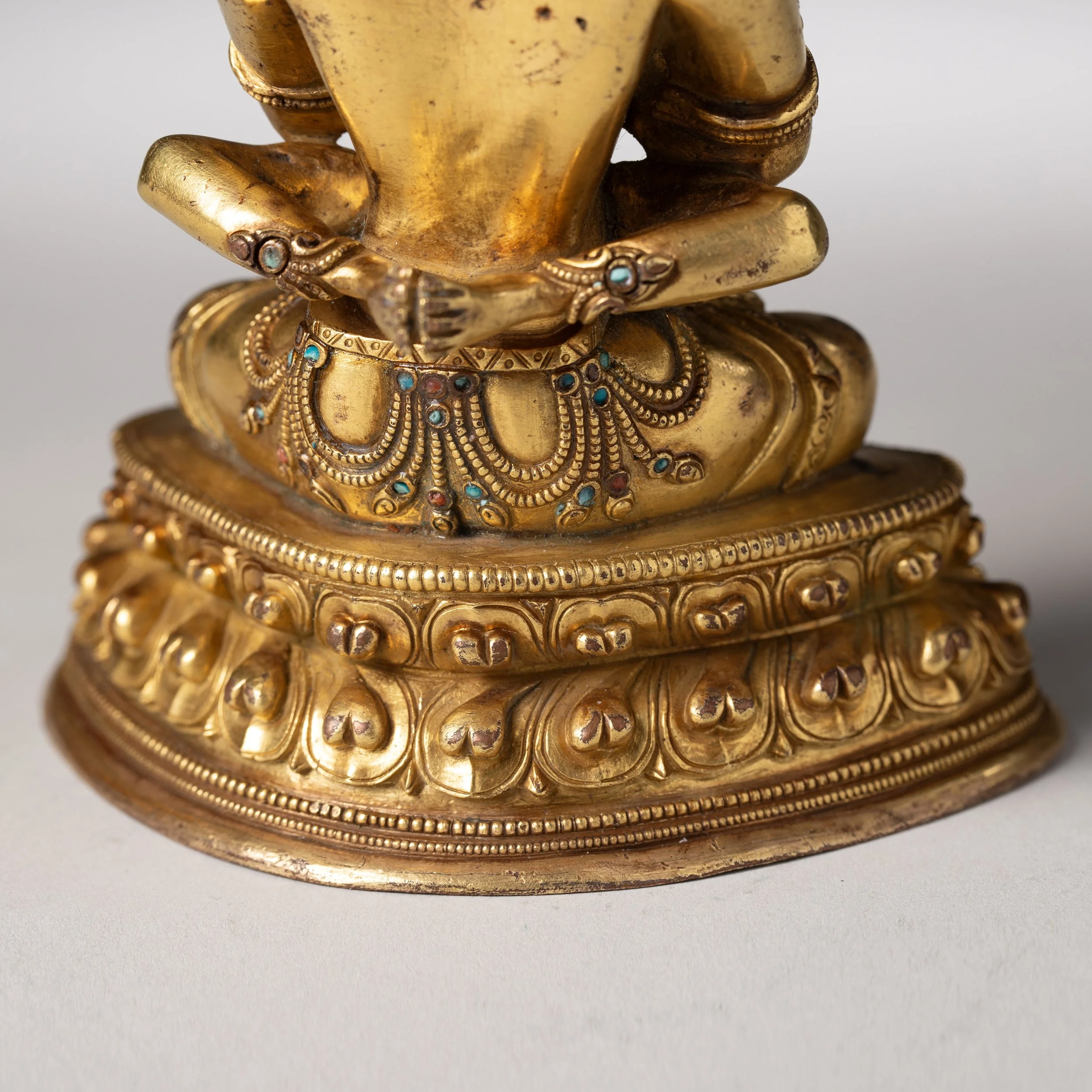 Image 3 of 8
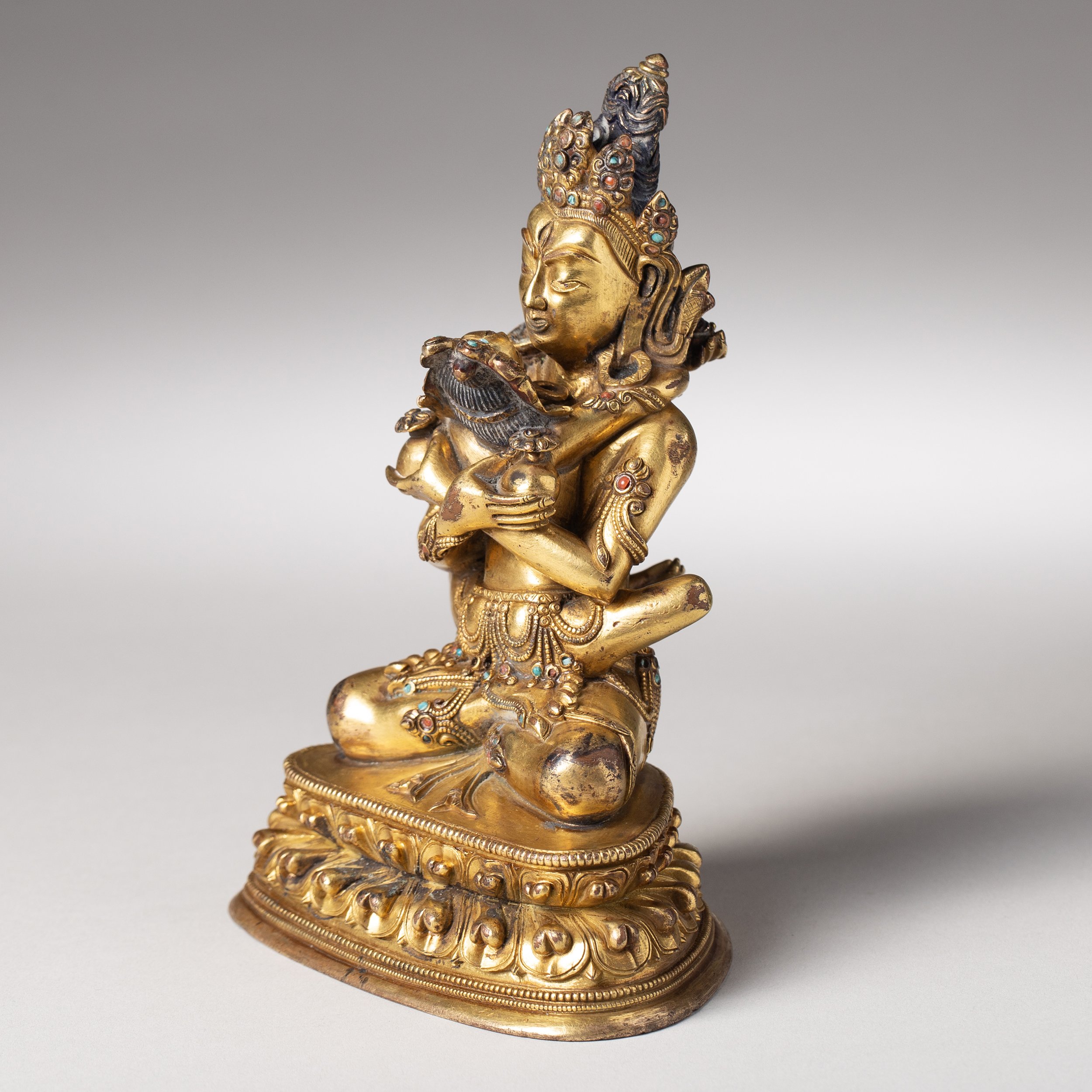 Image 4 of 8
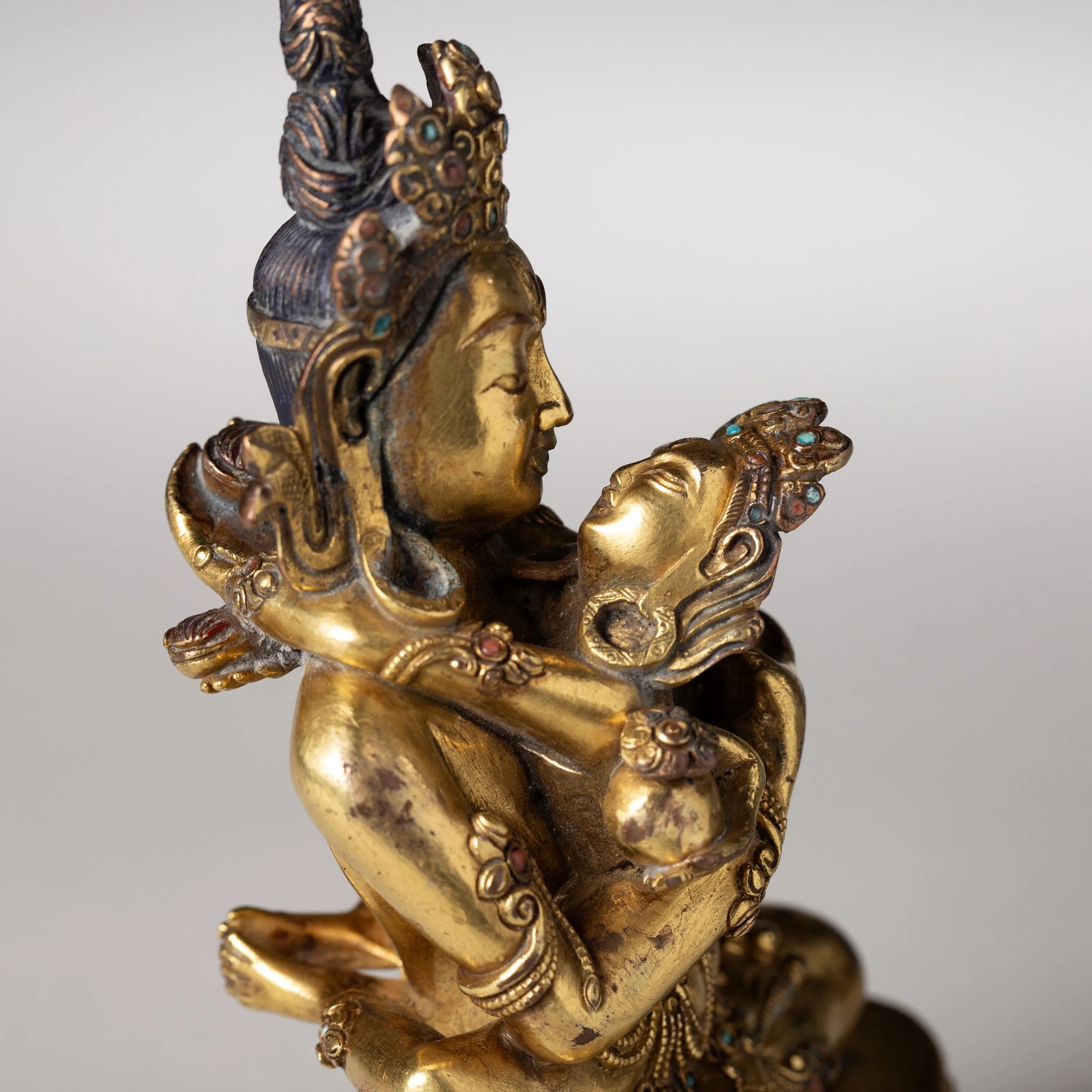 Image 5 of 8
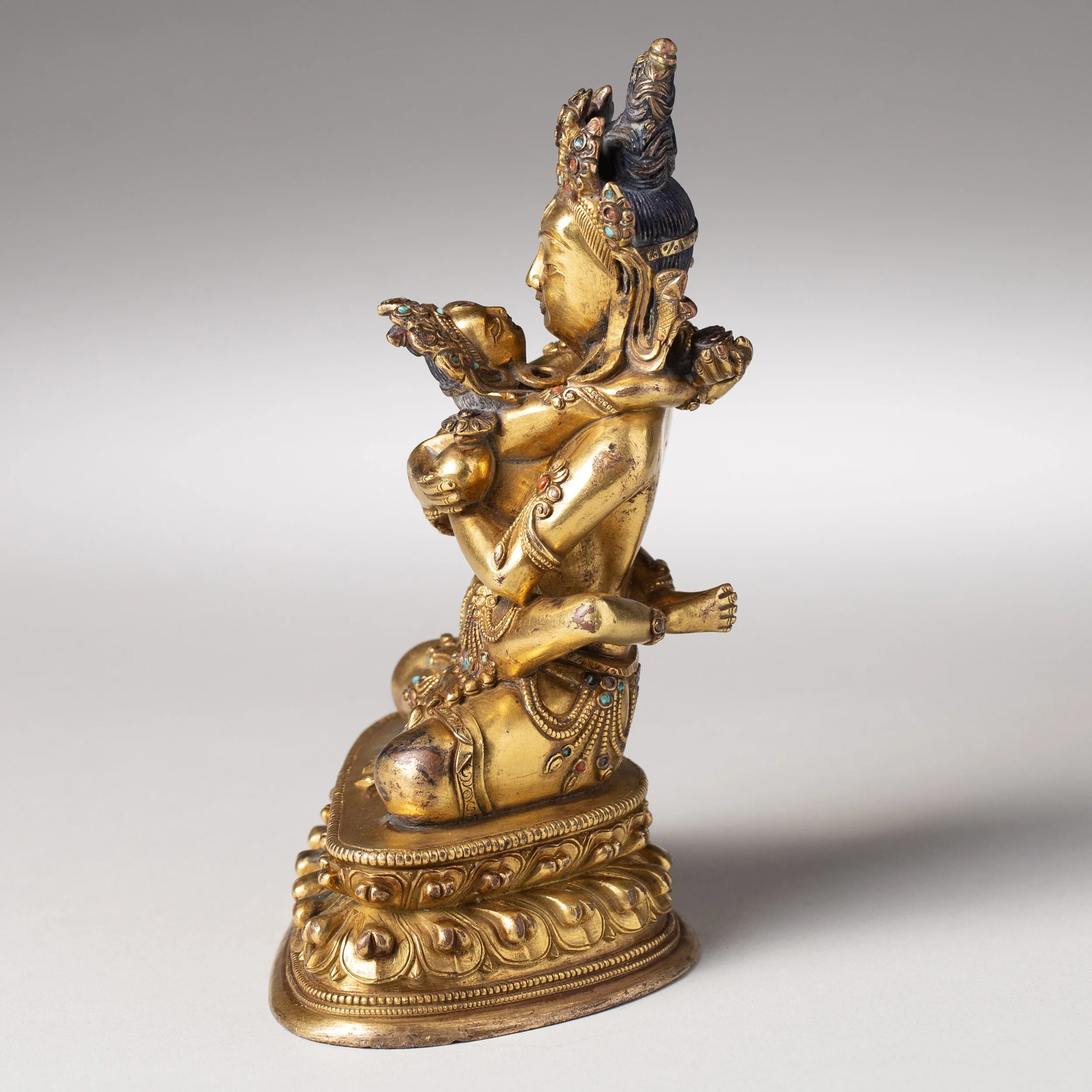 Image 6 of 8
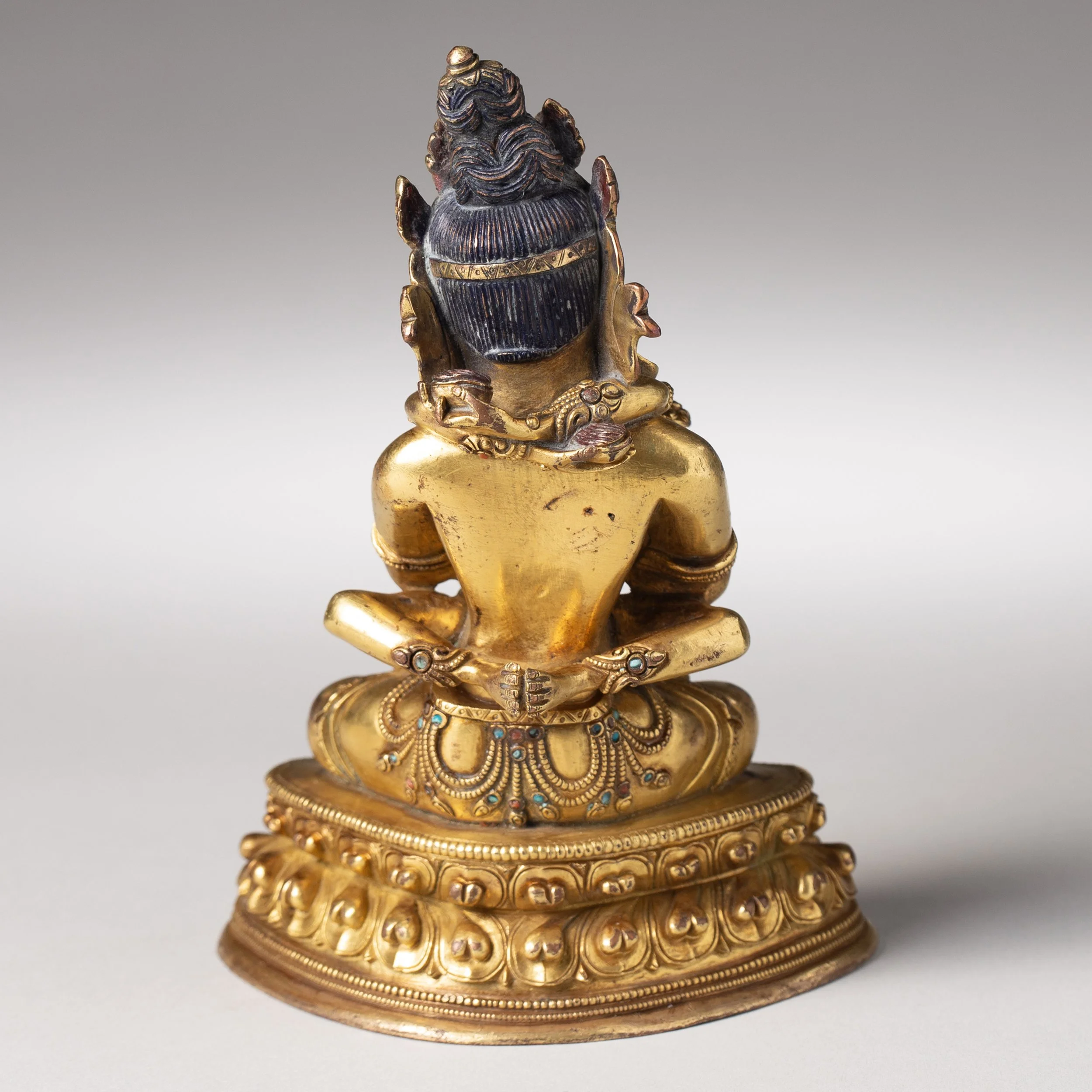 Image 7 of 8
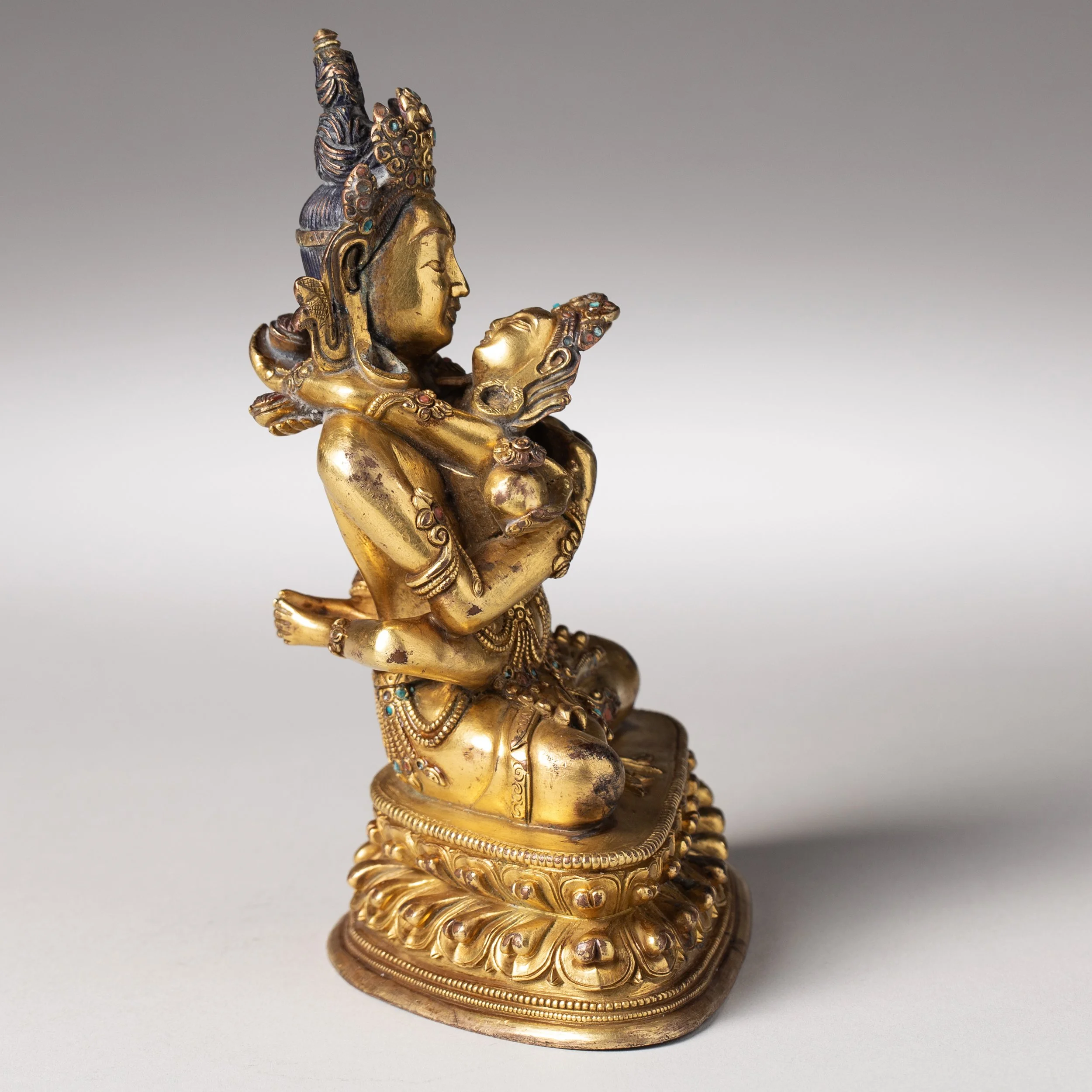 Image 8 of 8