Colony of New South Wales, Australia
Bullock Horn
Circa 1830
Length 19 1/2”
Provenance: English Trade
Private collection Channel Islands
This bullock horn engraved with imagery from the Australian colony of New South Wales is part of a small group of such horns which were either carved as powder horns or horn to be blown. Each is carved with similar imagery and seems to be the work of a small group of British soldiers sent to New South Wales in the early 19th, when the colony was in its early years – the British Crown Colony of New South Wales had been formally proclaimed on 7 February 1788.
The horn has been etched with a scrimshaw technique. The tip has been cut off and carved with graduated tiers, and serves as a stopper. The other end has been plugged with wood, and the edge of the horn has been carved with zig-zag serrations.
The decoration over the horn is complex and extensive. The two main elements are a coat of arms topped by a crown on which stands a lion (taken from the Royal Coat of Arms of Great Britain); and a roundel, the lower part of which is engraved with the words ‘New South Wales’, and enclosing a caduceus symbol comprised of a pair of snakes, with an emu on each side and three palm-like fronds emerging from the top.
Around these two main elements are many other emblems and motifs such as a splendid three-masted barque in full sail, a church, profiles of two, men possibly soldiers, a winged male angel blowing a trumpet, a clock showing 11 o’clock, a sun motif, two kangaroos, more birds, a dragonfly, and a lizard.
Several related examples in important Australian public collections, including one in Canberra’s National Museum Australia, and another in the Australian War Memorialcollection also in Canberra, the top of which bears the name ‘J.BALL 39th Rt’ and the bottom ‘R.HASLAM 39TH Regt.’ It is probable that one of these was the carver and presented it to the other as a gift. It is highly likely given the similarities between the engraving on that horn and the example here that they are by the same hand.
Private John Ball, was born in 1804 near Leicester, and enlisted in the 39th Regiment in 1822. He sailed with his regiment to New South Wales in 1826. He was posted mainly at Parramatta and supervised convicts working on the Great North Road. He served in the colony for six years before returning to England and died in 1875.
Private Richard Wright Haslam, from Lancashire, was born in 1798 and enlisted in the regiment in 1820 and so arrived in New South Wales also in 1826. He also supervised convicts building the Great North Road between Parramatta and Newcastle. Later he served on Norfolk Island, and then in India in Poonamallee and Bangalore. He returned to England in 1841 and died in 1858.
The horn here is in excellent condition other than some chipping to the serrations at the lower edge.
INQUIRE HERE
Colony of New South Wales, Australia
Bullock Horn
Circa 1830
Length 19 1/2”
Provenance: English Trade
Private collection Channel Islands
This bullock horn engraved with imagery from the Australian colony of New South Wales is part of a small group of such horns which were either carved as powder horns or horn to be blown. Each is carved with similar imagery and seems to be the work of a small group of British soldiers sent to New South Wales in the early 19th, when the colony was in its early years – the British Crown Colony of New South Wales had been formally proclaimed on 7 February 1788.
The horn has been etched with a scrimshaw technique. The tip has been cut off and carved with graduated tiers, and serves as a stopper. The other end has been plugged with wood, and the edge of the horn has been carved with zig-zag serrations.
The decoration over the horn is complex and extensive. The two main elements are a coat of arms topped by a crown on which stands a lion (taken from the Royal Coat of Arms of Great Britain); and a roundel, the lower part of which is engraved with the words ‘New South Wales’, and enclosing a caduceus symbol comprised of a pair of snakes, with an emu on each side and three palm-like fronds emerging from the top.
Around these two main elements are many other emblems and motifs such as a splendid three-masted barque in full sail, a church, profiles of two, men possibly soldiers, a winged male angel blowing a trumpet, a clock showing 11 o’clock, a sun motif, two kangaroos, more birds, a dragonfly, and a lizard.
Several related examples in important Australian public collections, including one in Canberra’s National Museum Australia, and another in the Australian War Memorialcollection also in Canberra, the top of which bears the name ‘J.BALL 39th Rt’ and the bottom ‘R.HASLAM 39TH Regt.’ It is probable that one of these was the carver and presented it to the other as a gift. It is highly likely given the similarities between the engraving on that horn and the example here that they are by the same hand.
Private John Ball, was born in 1804 near Leicester, and enlisted in the 39th Regiment in 1822. He sailed with his regiment to New South Wales in 1826. He was posted mainly at Parramatta and supervised convicts working on the Great North Road. He served in the colony for six years before returning to England and died in 1875.
Private Richard Wright Haslam, from Lancashire, was born in 1798 and enlisted in the regiment in 1820 and so arrived in New South Wales also in 1826. He also supervised convicts building the Great North Road between Parramatta and Newcastle. Later he served on Norfolk Island, and then in India in Poonamallee and Bangalore. He returned to England in 1841 and died in 1858.
The horn here is in excellent condition other than some chipping to the serrations at the lower edge.
INQUIRE HERE


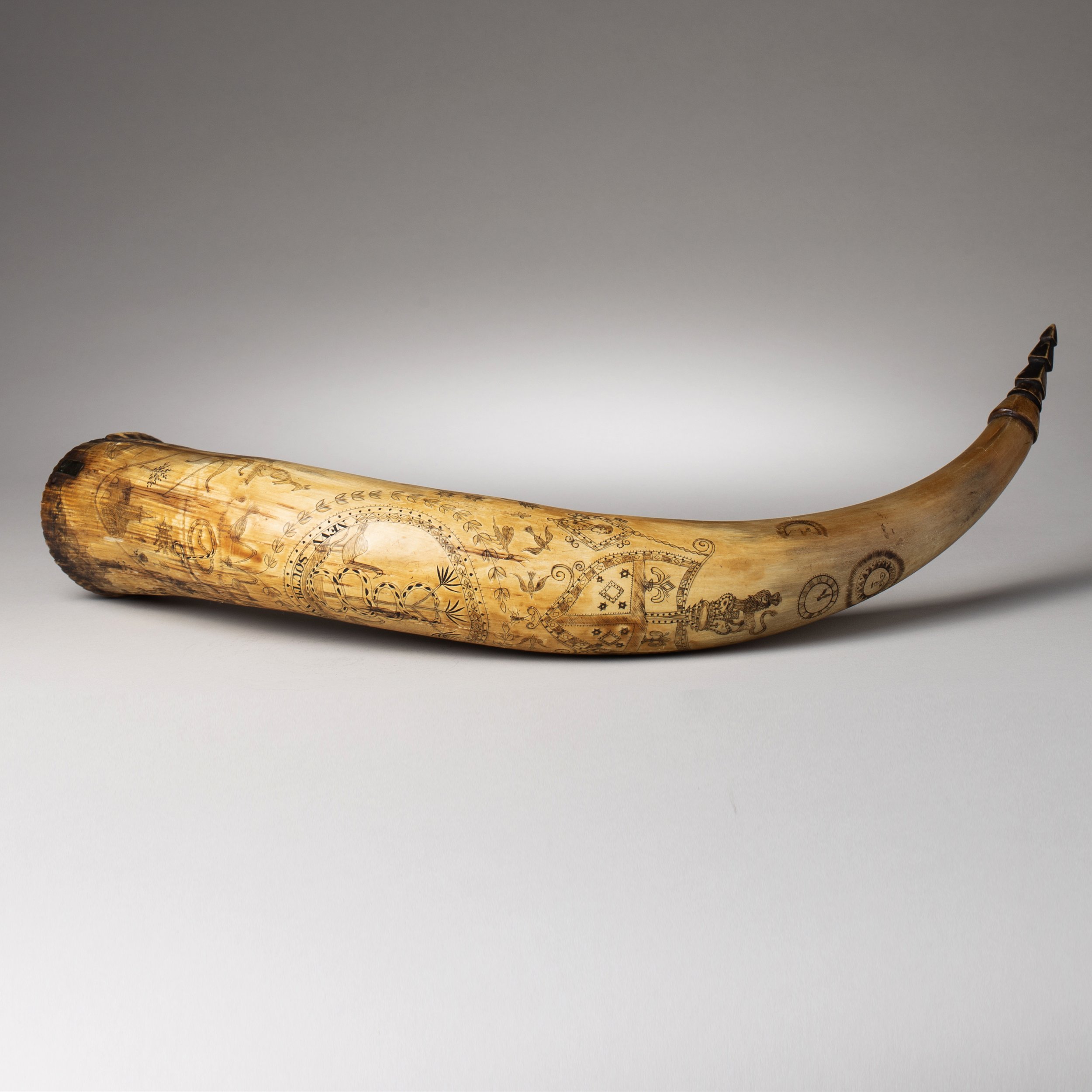 Image 1 of 10
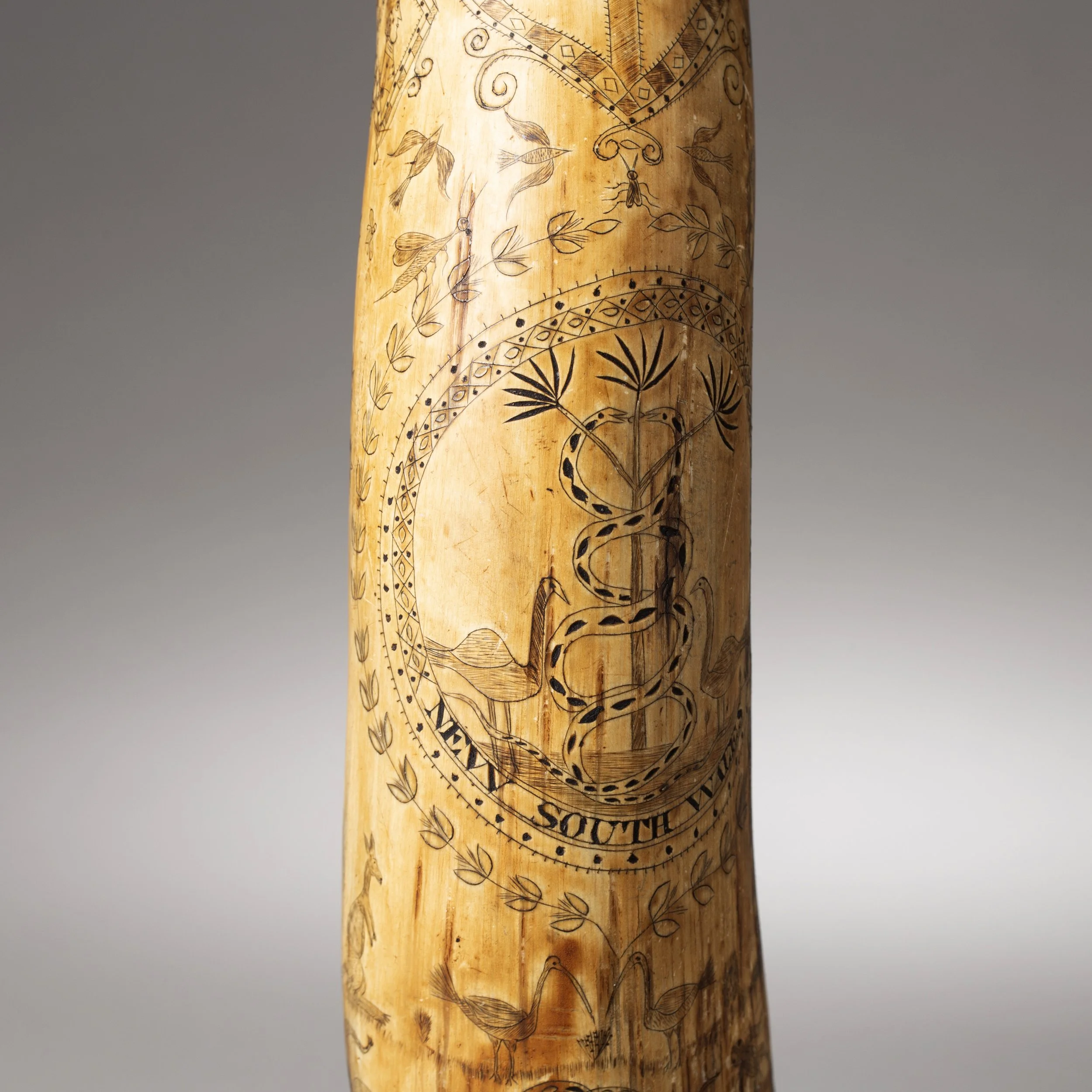 Image 2 of 10
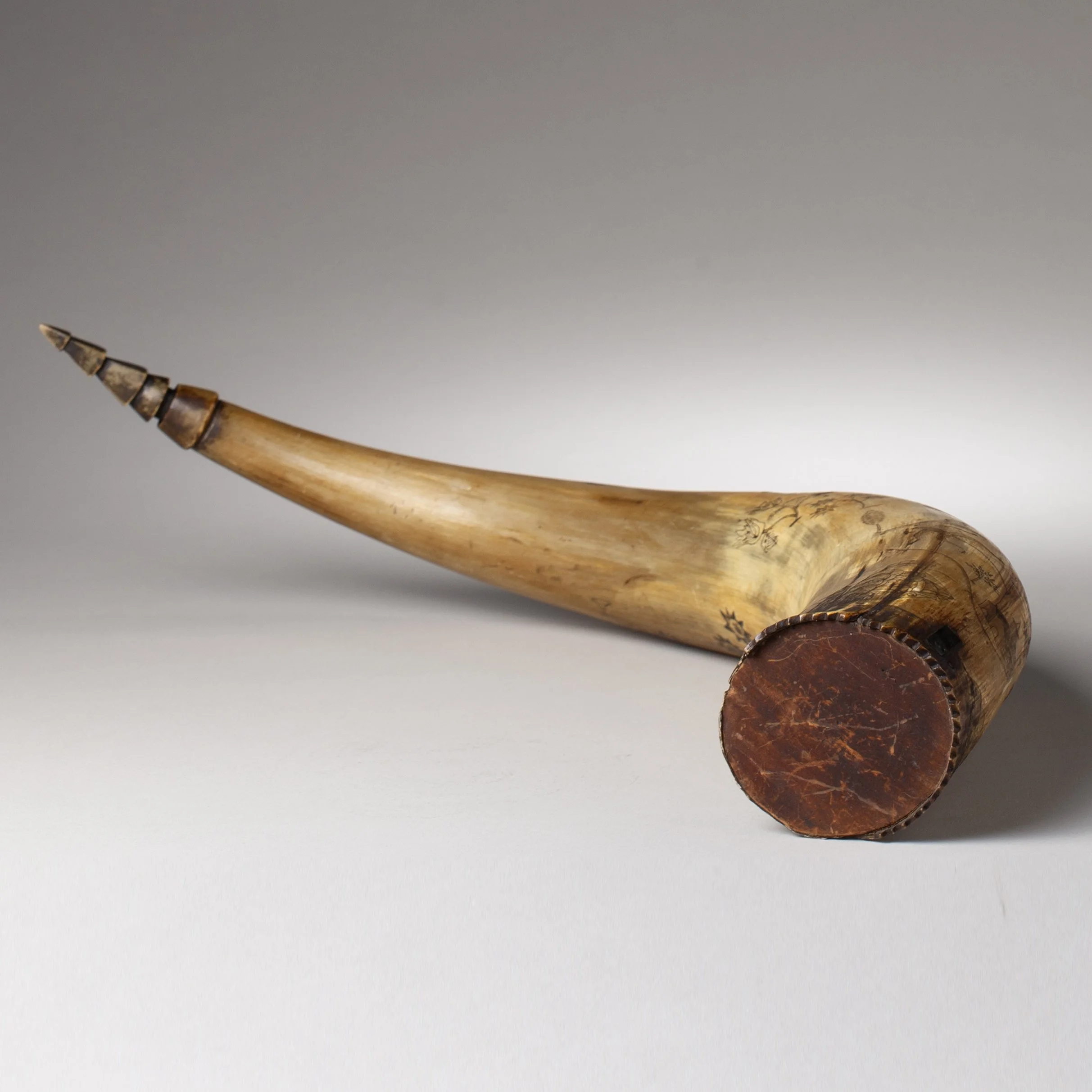 Image 3 of 10
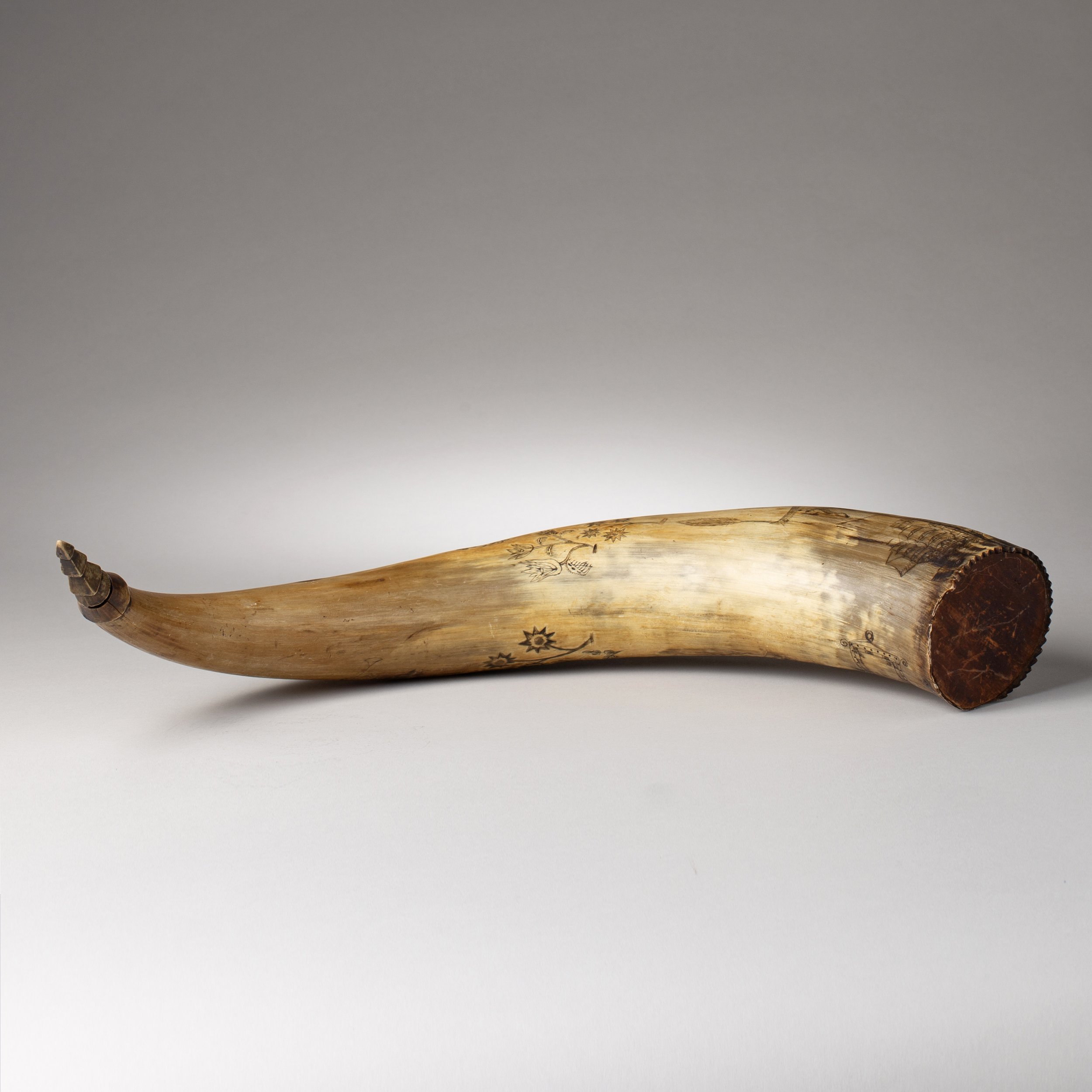 Image 4 of 10
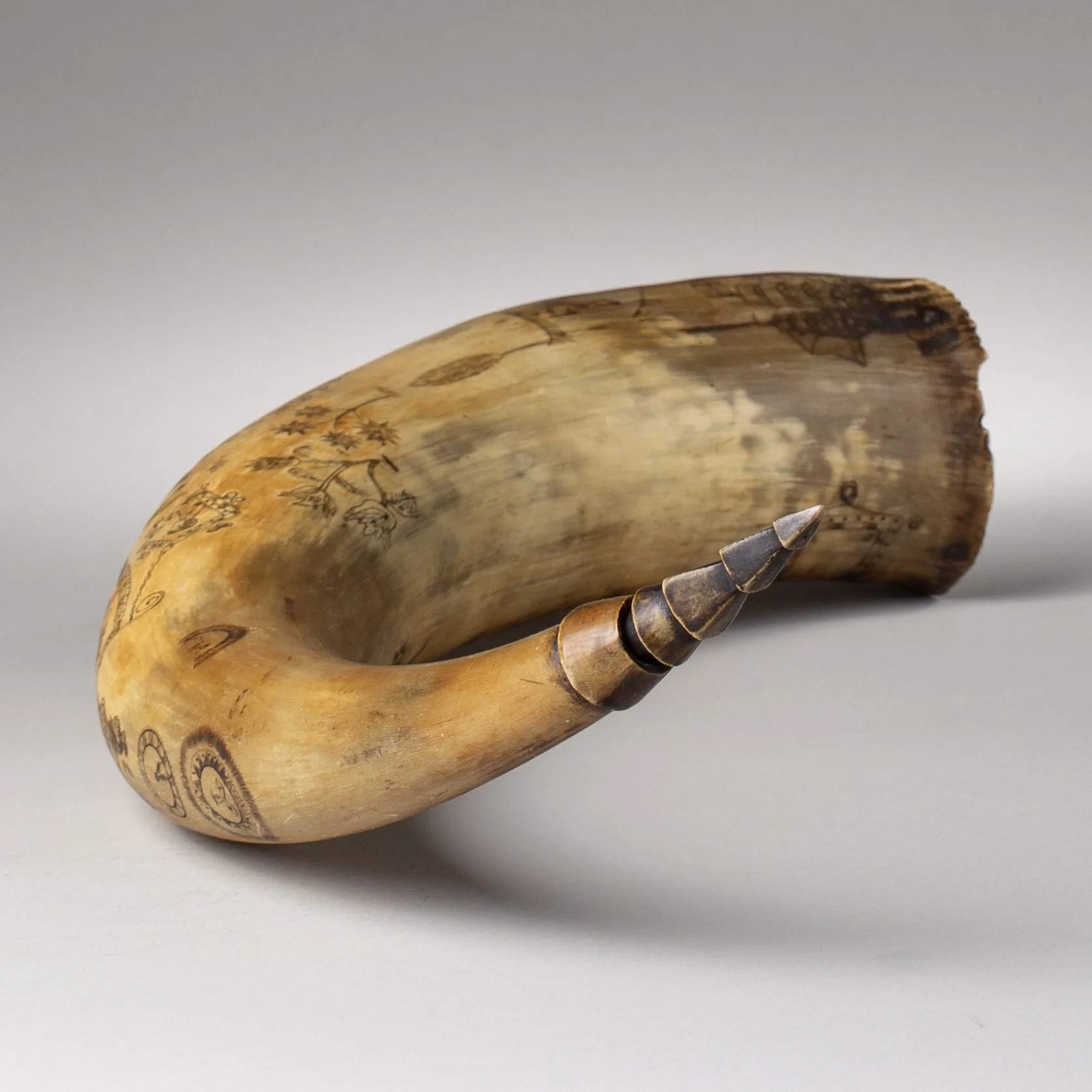 Image 5 of 10
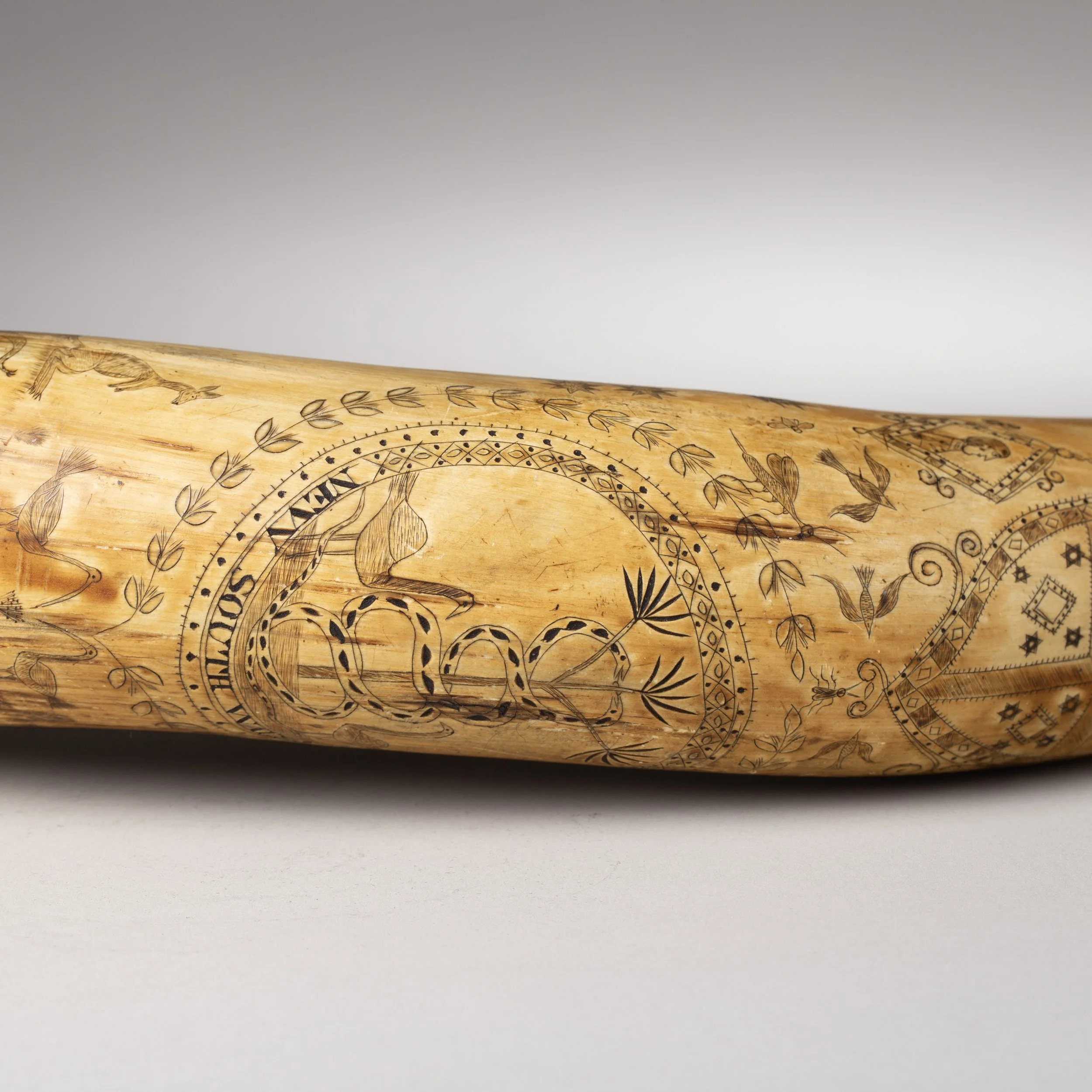 Image 6 of 10
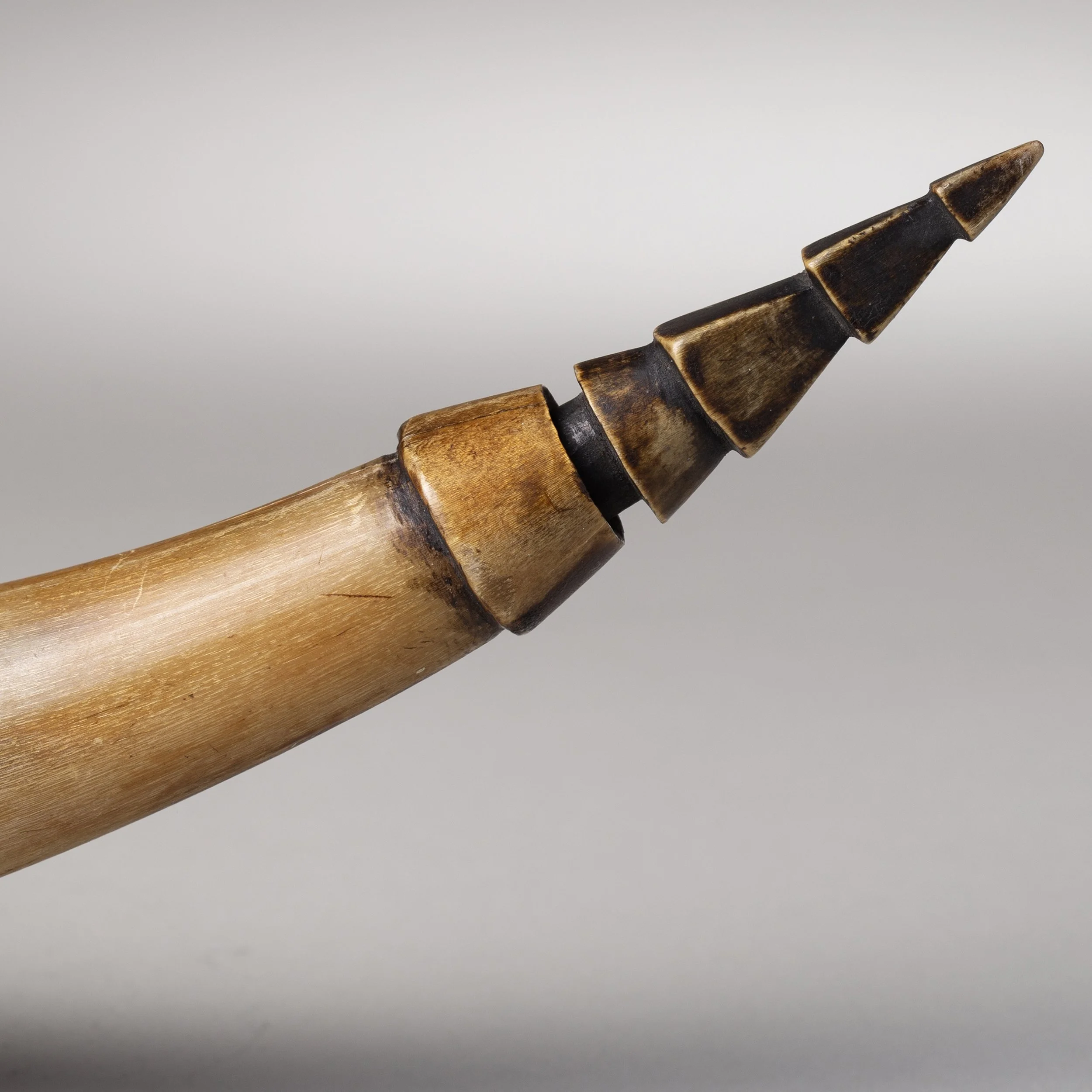 Image 7 of 10
 Image 8 of 10
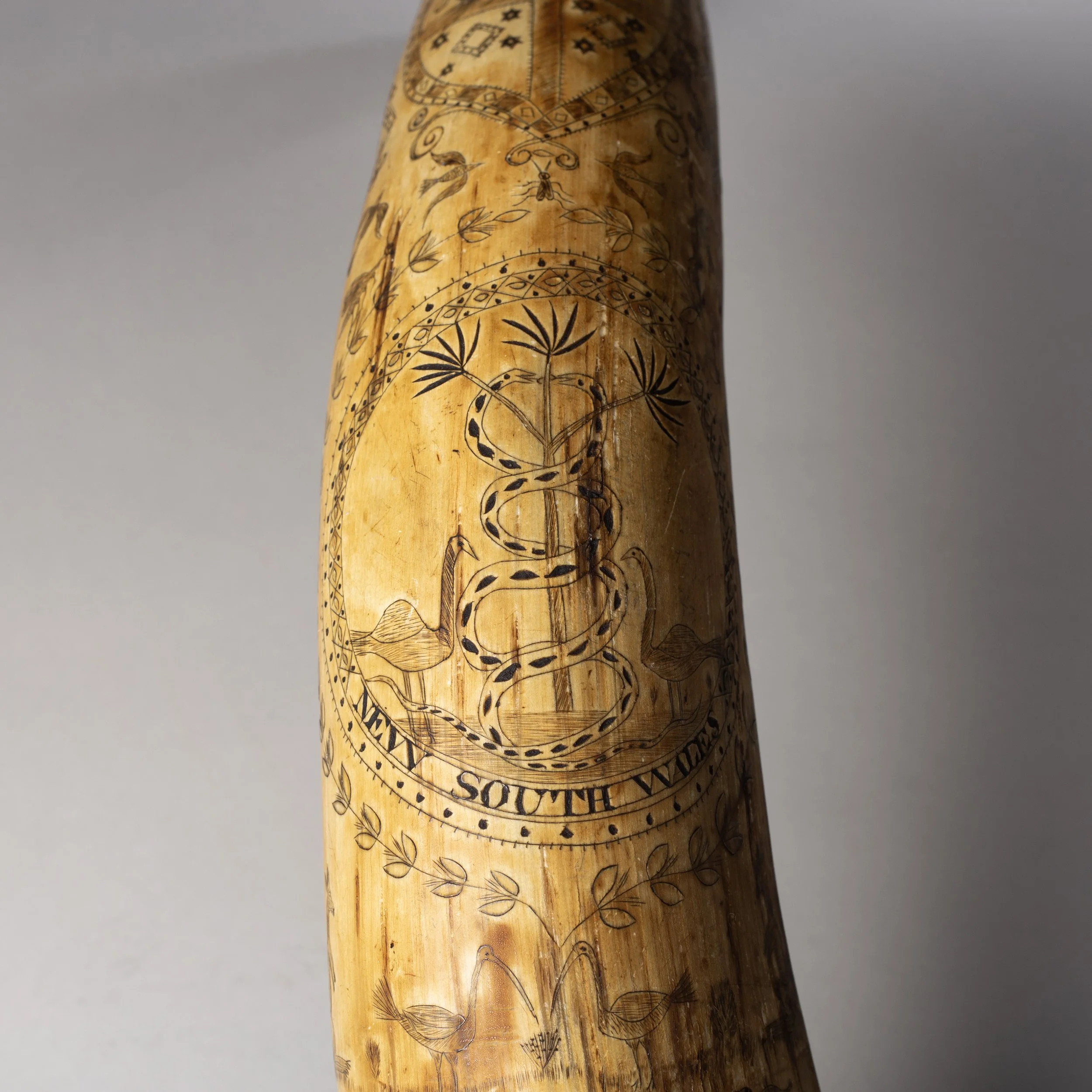 Image 9 of 10
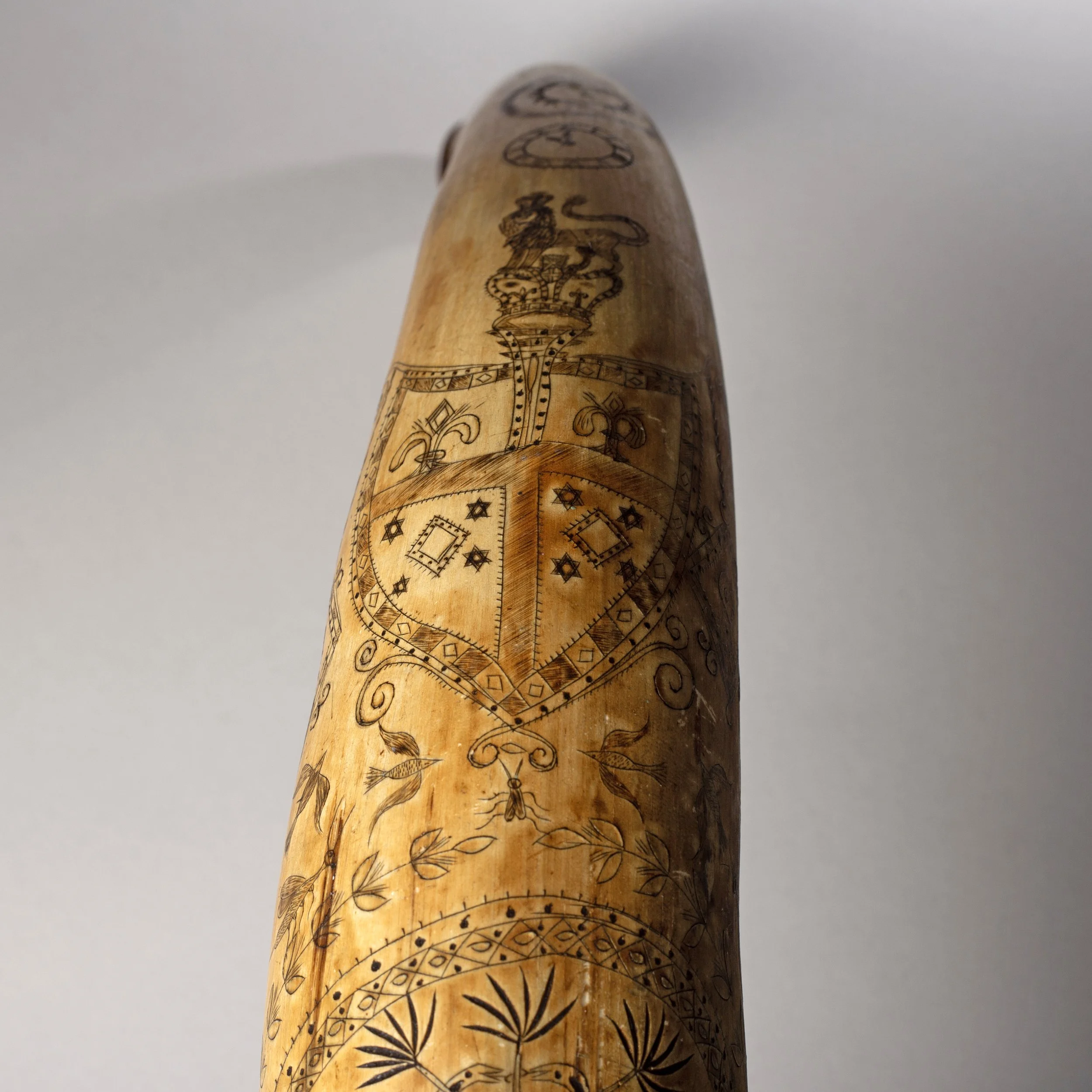 Image 10 of 10