Red River Valley, Manitoba, Canada
Early 19th century - acquired 1832
Tanned deerskin, dyed porcupine quills, trade beads, cast brass button
Length: 41 inches (104 cm)
Provenance: Collected before or during the 1832 Black Hawk War by Zachary Taylor, twelfth President of the United States, who gave it to his son, Richard Taylor. In appreciation for kindness while a student at Yale University (Class of 1845), the younger Taylor gifted the coat to Professor James Luce Kingsley. Descended in the Kingsley family until June 1931, when it was gifted to the New Haven Colony Historical Society.
Fashioned in the style of a Euro-American frockcoat, this splendid garment was produced by an indigenous Cree-Metis woman closely associated with the fur trading post of Red River Settlement, located at what is today the city of Winnepeg. Established in 1811 at the confluence of the Assiniboine River and Red River, this frontier fur trading post served as an important cultural crossroads from which the Metis Nation emerged, the product of marriages between French and Scottish fur traders and local Cree women. The resulting Metis culture was a rich and inspired blend of indigenous and European traditions, evident in their music, dance, unique language and storytelling, and their exuberant and beautifully crafted clothing.
A fascinating aspect of Cree-Metis material culture was its synthesis of native artistic ability, technical accomplishments, and keen ingenuity evident in the people’s ability to replicate foreign items. Trade goods, especially ready-made garments, were expensive during the era, yet they exerted a strong appeal. Resourceful Metis artists created facsimiles of prized items such as the frockcoat presented here, giving them a decidedly indigenous twist. Utilizing little more than native materials, along with finely tanned deerskins, and vegetal dyed porcupine quills – that ancient and uniquely North American Indian decorative medium, the skilled makers of these prized coats copied and beautifully elaborated upon a European garment type wholly alien to the Indian people’s tradition. The distinctive floral style of Metis quillwork exemplifies another phenomenon that emerged quite suddenly during the early 19th century, a graceful artistic element likely inspired by imported cotton fabrics printed with intricate floral, foliate, and curvilinear motifs that were made available to Indian peoples through trade. These elegant floral quillwork motifs departed radically from the traditional body of native decorative arts comprised almost entirely of geometric forms and embodied an intense period of artistic efflorescence among the Metis people.
The exceptional quilled buckskin frockcoat presented here is a beautiful example of Cree-Metis artistry. The pristine condition of the coat, and it’s perfectly preserved vibrant colors, gives us a sense of the coat having been just handed to us by its maker. The palette of vibrant colors used to highlight the flattened porcupine quills were obtained from native-made vegetal dyes that predate the invention of aniline colorants invented in the 1850’s. Rendered in yellow, orange, red, blue, and light brown, the quills retained their bright coloration by the addition of native acidic mordants derived from currants and gooseberry and applied during the traditional dyeing process. The front of the coat and adjoining sleeves are finely decorated with a series of scrolling designs and stylized floral motifs above, with a single brass button sewn to the coat at the waist. The shoulders are embellished with quill-wrapped fringe and a small assortment of blue pony trade beads. A pair of celestial rosettes adorn the shoulder blades on the back of the coat, with quill wrapped fringe emerging from their centers. The raised collar makes visible an assortment of additional floral and foliate motifs. The primary central back panel is decorated with an upwards floral motif cleverly reminiscent of the Tree of Life in Cree cosmology. Below, a rectangular panel of quill-wrapped fringe spaced with blue pony beads adorns the back pleat and the bottom edge of the coat is trimmed with short lengths of vibrant quill-wrapped fringe.
No doubt Zachary Taylor was captivated by this splendid quilled frockcoat when he chose to return east with it as a treasured souvenir of his military sojourns against the Indians of the Northwest Territory, likely during his final engagement, the Black Hawk War of 1832 in which Taylor was appointed colonel with some four hundred troops under his charge. Led by Black Hawk, a Sauk tribal chief, the war was the result of the Sauk and Fox tribes' refusal to abandon their ancestral lands in Illinois and Wisconsin, despite treaties ceding those lands to the United States. Following the devastating Battle of Bad Axe on August 2, 1832, where many of Black Hawk's followers were killed trying to cross the Mississippi, Black Hawk and other leaders managed to escape, though their freedom was short-lived. A few weeks later, on August 27th 1832, Black Hawk presented himself for surrender to Colonel Zachary Taylor at Fort Crawford in Prairie du Chien. Under Taylor’s direct custody, Black Hawk was transported to Jefferson Barracks near St. Louis, Missouri, before being taken on a tour of eastern cities, where he was notably greeted with great admiration and respect by city officials and the public, though ultimately imprisoned at Fort Monroe in Virginia. Shortly before being released from custody in July of 1833, Black Hawk told his life story to an interpreter. Aided also by a newspaper reporter, he published his autobiography titled Ma-Ka-Tai-Me-She-Kia-Kiak or “Black Hawk – Embracing the Traditions of His Nation.” In the popular book, Black Hawk described the several weeks he spent with allied tribes at Prairie La Cross, intending to recover his strength and to make his preparations for surrender to American troops stating “During my stay in the village, the squaws made me a white dress of deer skin. I then started with several Winnebago, and went to their agent, at Prairie du Chien, and gave myself up”.
How Zachary Taylor came into possession of this frockcoat during the war is uncertain, but the garment may well have belonged to Black Hawk himself and acquired by Taylor upon his surrender. It is reasonable to consider that the rare white deer skin dress described by Black Hawk is the quilled frockcoat of prized white deer skin presented here, so beautifully crafted by Metis women. There was a small but active Metis presence in the area, with a number of Metis Indians documented as travelling south to participate in the Black Hawk War. The more fitted and smaller tailored cut of the frockcoat further suggests that its owner was of indigenous origin, and the pristine condition of the frockcoat also befits a garment worn for only a singular occasion. Additionally, several painted portraits, made during his tour of Eastern cities, reflect the Sauk leader’s preference for Metis style buckskin frockcoats, which served as fashionable statements of prestige among city gentlemen and Indian leaders alike during that time.
We know assuredly that Colonel Zachary Taylor, who was later to become the 12th President of the United States in 1849, regarded this remarkable Cree-Metis frockcoat as a treasured souvenir, collected by him during his military sojourns against the Indians of the Northwest Territory. The frockcoat is in fact, to the best of my knowledge, the only Native American artifact to have ever been field collected by an American president, and embodies the rare convergence of artistic masterpiece and history that speaks so powerfully to us across two centuries.
INQUIRE HERE
Red River Valley, Manitoba, Canada
Early 19th century - acquired 1832
Tanned deerskin, dyed porcupine quills, trade beads, cast brass button
Length: 41 inches (104 cm)
Provenance: Collected before or during the 1832 Black Hawk War by Zachary Taylor, twelfth President of the United States, who gave it to his son, Richard Taylor. In appreciation for kindness while a student at Yale University (Class of 1845), the younger Taylor gifted the coat to Professor James Luce Kingsley. Descended in the Kingsley family until June 1931, when it was gifted to the New Haven Colony Historical Society.
Fashioned in the style of a Euro-American frockcoat, this splendid garment was produced by an indigenous Cree-Metis woman closely associated with the fur trading post of Red River Settlement, located at what is today the city of Winnepeg. Established in 1811 at the confluence of the Assiniboine River and Red River, this frontier fur trading post served as an important cultural crossroads from which the Metis Nation emerged, the product of marriages between French and Scottish fur traders and local Cree women. The resulting Metis culture was a rich and inspired blend of indigenous and European traditions, evident in their music, dance, unique language and storytelling, and their exuberant and beautifully crafted clothing.
A fascinating aspect of Cree-Metis material culture was its synthesis of native artistic ability, technical accomplishments, and keen ingenuity evident in the people’s ability to replicate foreign items. Trade goods, especially ready-made garments, were expensive during the era, yet they exerted a strong appeal. Resourceful Metis artists created facsimiles of prized items such as the frockcoat presented here, giving them a decidedly indigenous twist. Utilizing little more than native materials, along with finely tanned deerskins, and vegetal dyed porcupine quills – that ancient and uniquely North American Indian decorative medium, the skilled makers of these prized coats copied and beautifully elaborated upon a European garment type wholly alien to the Indian people’s tradition. The distinctive floral style of Metis quillwork exemplifies another phenomenon that emerged quite suddenly during the early 19th century, a graceful artistic element likely inspired by imported cotton fabrics printed with intricate floral, foliate, and curvilinear motifs that were made available to Indian peoples through trade. These elegant floral quillwork motifs departed radically from the traditional body of native decorative arts comprised almost entirely of geometric forms and embodied an intense period of artistic efflorescence among the Metis people.
The exceptional quilled buckskin frockcoat presented here is a beautiful example of Cree-Metis artistry. The pristine condition of the coat, and it’s perfectly preserved vibrant colors, gives us a sense of the coat having been just handed to us by its maker. The palette of vibrant colors used to highlight the flattened porcupine quills were obtained from native-made vegetal dyes that predate the invention of aniline colorants invented in the 1850’s. Rendered in yellow, orange, red, blue, and light brown, the quills retained their bright coloration by the addition of native acidic mordants derived from currants and gooseberry and applied during the traditional dyeing process. The front of the coat and adjoining sleeves are finely decorated with a series of scrolling designs and stylized floral motifs above, with a single brass button sewn to the coat at the waist. The shoulders are embellished with quill-wrapped fringe and a small assortment of blue pony trade beads. A pair of celestial rosettes adorn the shoulder blades on the back of the coat, with quill wrapped fringe emerging from their centers. The raised collar makes visible an assortment of additional floral and foliate motifs. The primary central back panel is decorated with an upwards floral motif cleverly reminiscent of the Tree of Life in Cree cosmology. Below, a rectangular panel of quill-wrapped fringe spaced with blue pony beads adorns the back pleat and the bottom edge of the coat is trimmed with short lengths of vibrant quill-wrapped fringe.
No doubt Zachary Taylor was captivated by this splendid quilled frockcoat when he chose to return east with it as a treasured souvenir of his military sojourns against the Indians of the Northwest Territory, likely during his final engagement, the Black Hawk War of 1832 in which Taylor was appointed colonel with some four hundred troops under his charge. Led by Black Hawk, a Sauk tribal chief, the war was the result of the Sauk and Fox tribes' refusal to abandon their ancestral lands in Illinois and Wisconsin, despite treaties ceding those lands to the United States. Following the devastating Battle of Bad Axe on August 2, 1832, where many of Black Hawk's followers were killed trying to cross the Mississippi, Black Hawk and other leaders managed to escape, though their freedom was short-lived. A few weeks later, on August 27th 1832, Black Hawk presented himself for surrender to Colonel Zachary Taylor at Fort Crawford in Prairie du Chien. Under Taylor’s direct custody, Black Hawk was transported to Jefferson Barracks near St. Louis, Missouri, before being taken on a tour of eastern cities, where he was notably greeted with great admiration and respect by city officials and the public, though ultimately imprisoned at Fort Monroe in Virginia. Shortly before being released from custody in July of 1833, Black Hawk told his life story to an interpreter. Aided also by a newspaper reporter, he published his autobiography titled Ma-Ka-Tai-Me-She-Kia-Kiak or “Black Hawk – Embracing the Traditions of His Nation.” In the popular book, Black Hawk described the several weeks he spent with allied tribes at Prairie La Cross, intending to recover his strength and to make his preparations for surrender to American troops stating “During my stay in the village, the squaws made me a white dress of deer skin. I then started with several Winnebago, and went to their agent, at Prairie du Chien, and gave myself up”.
How Zachary Taylor came into possession of this frockcoat during the war is uncertain, but the garment may well have belonged to Black Hawk himself and acquired by Taylor upon his surrender. It is reasonable to consider that the rare white deer skin dress described by Black Hawk is the quilled frockcoat of prized white deer skin presented here, so beautifully crafted by Metis women. There was a small but active Metis presence in the area, with a number of Metis Indians documented as travelling south to participate in the Black Hawk War. The more fitted and smaller tailored cut of the frockcoat further suggests that its owner was of indigenous origin, and the pristine condition of the frockcoat also befits a garment worn for only a singular occasion. Additionally, several painted portraits, made during his tour of Eastern cities, reflect the Sauk leader’s preference for Metis style buckskin frockcoats, which served as fashionable statements of prestige among city gentlemen and Indian leaders alike during that time.
We know assuredly that Colonel Zachary Taylor, who was later to become the 12th President of the United States in 1849, regarded this remarkable Cree-Metis frockcoat as a treasured souvenir, collected by him during his military sojourns against the Indians of the Northwest Territory. The frockcoat is in fact, to the best of my knowledge, the only Native American artifact to have ever been field collected by an American president, and embodies the rare convergence of artistic masterpiece and history that speaks so powerfully to us across two centuries.
INQUIRE HERE


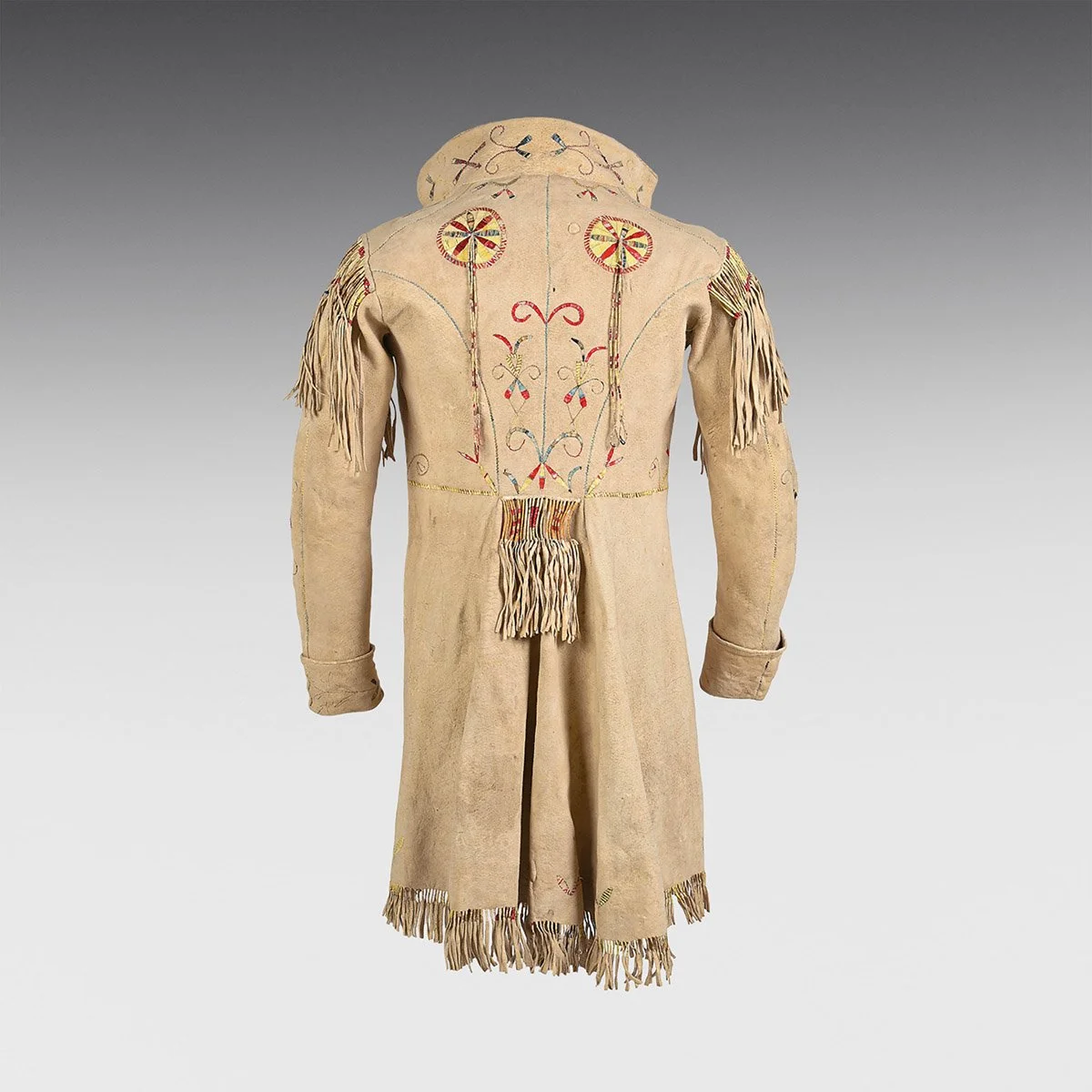 Image 1 of 13
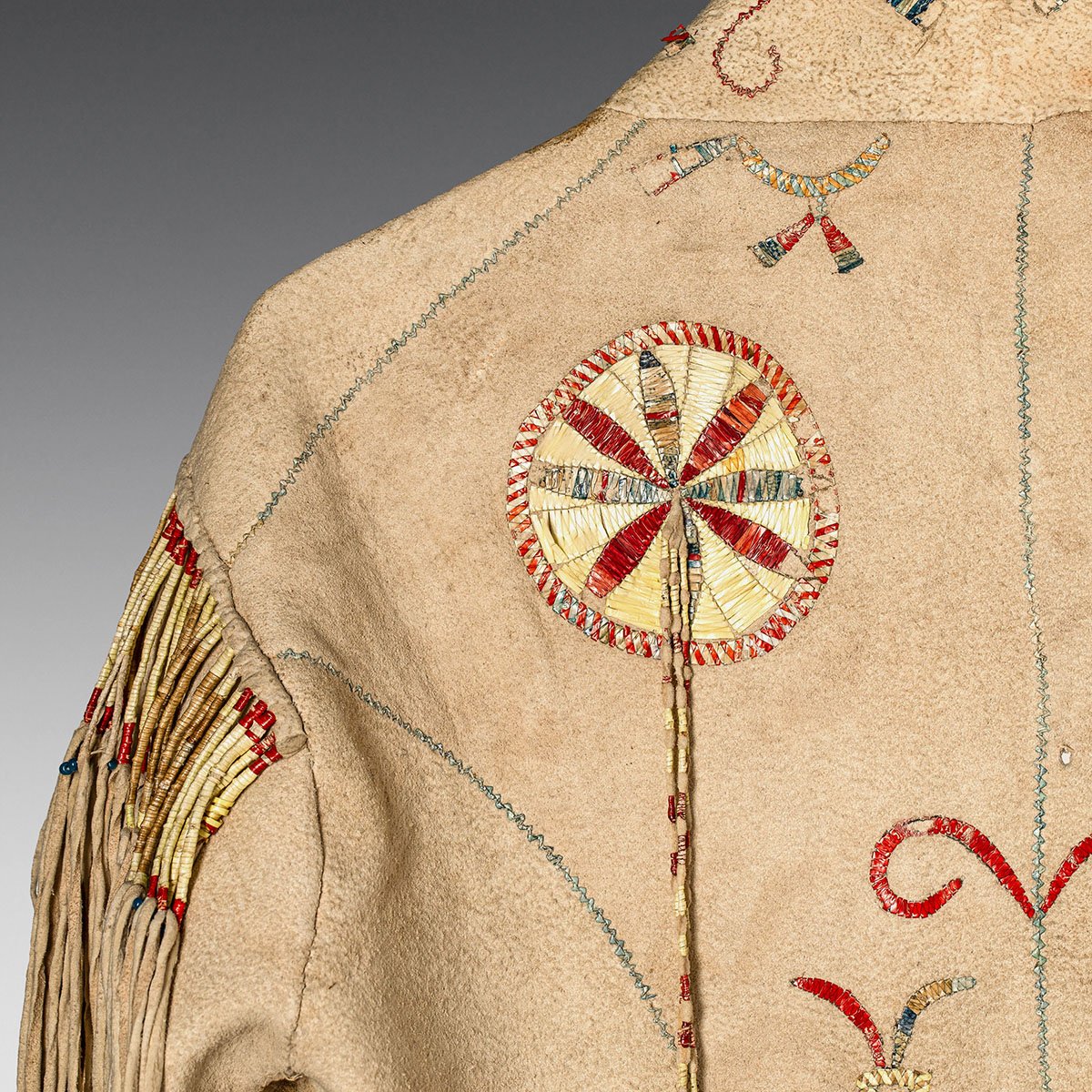 Image 2 of 13
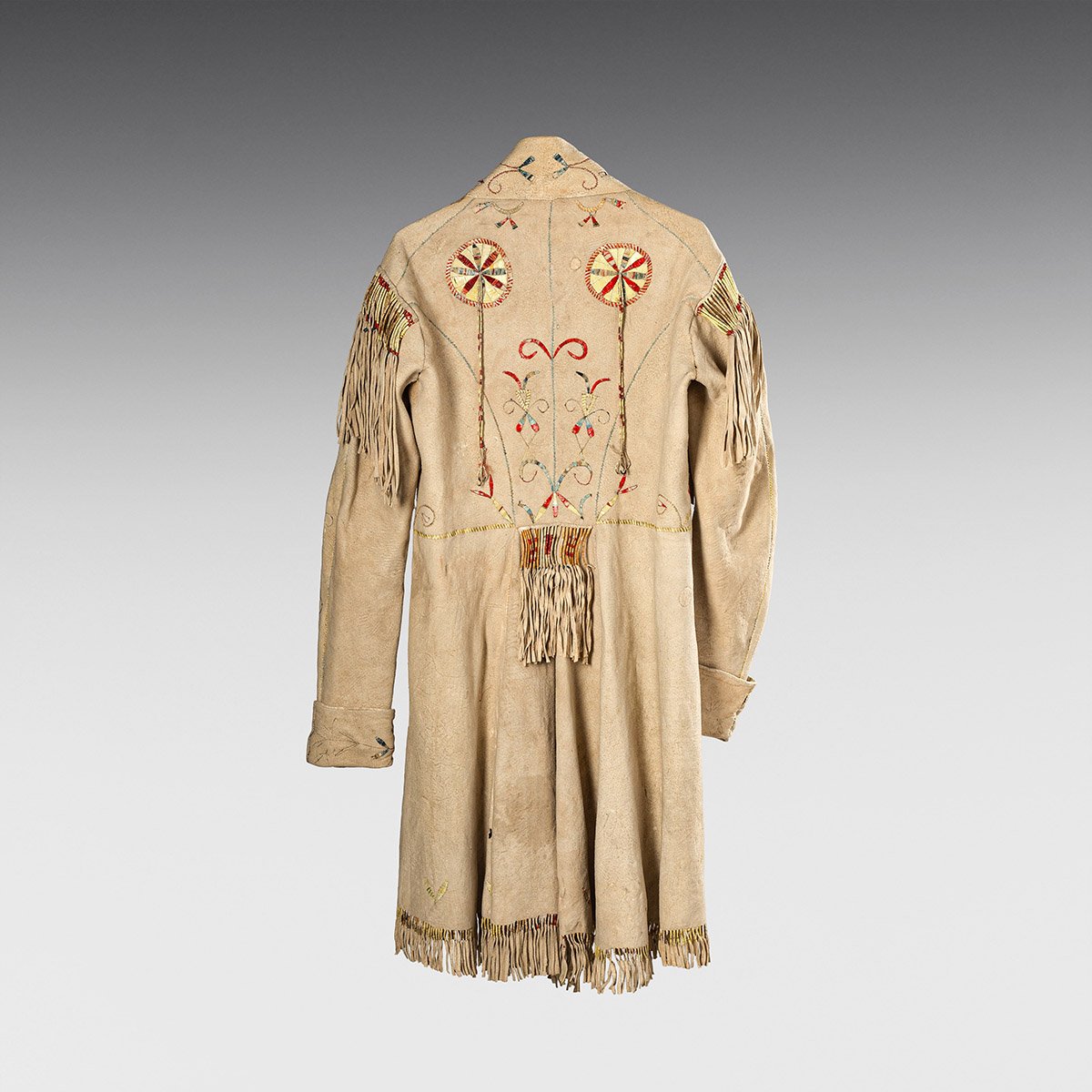 Image 3 of 13
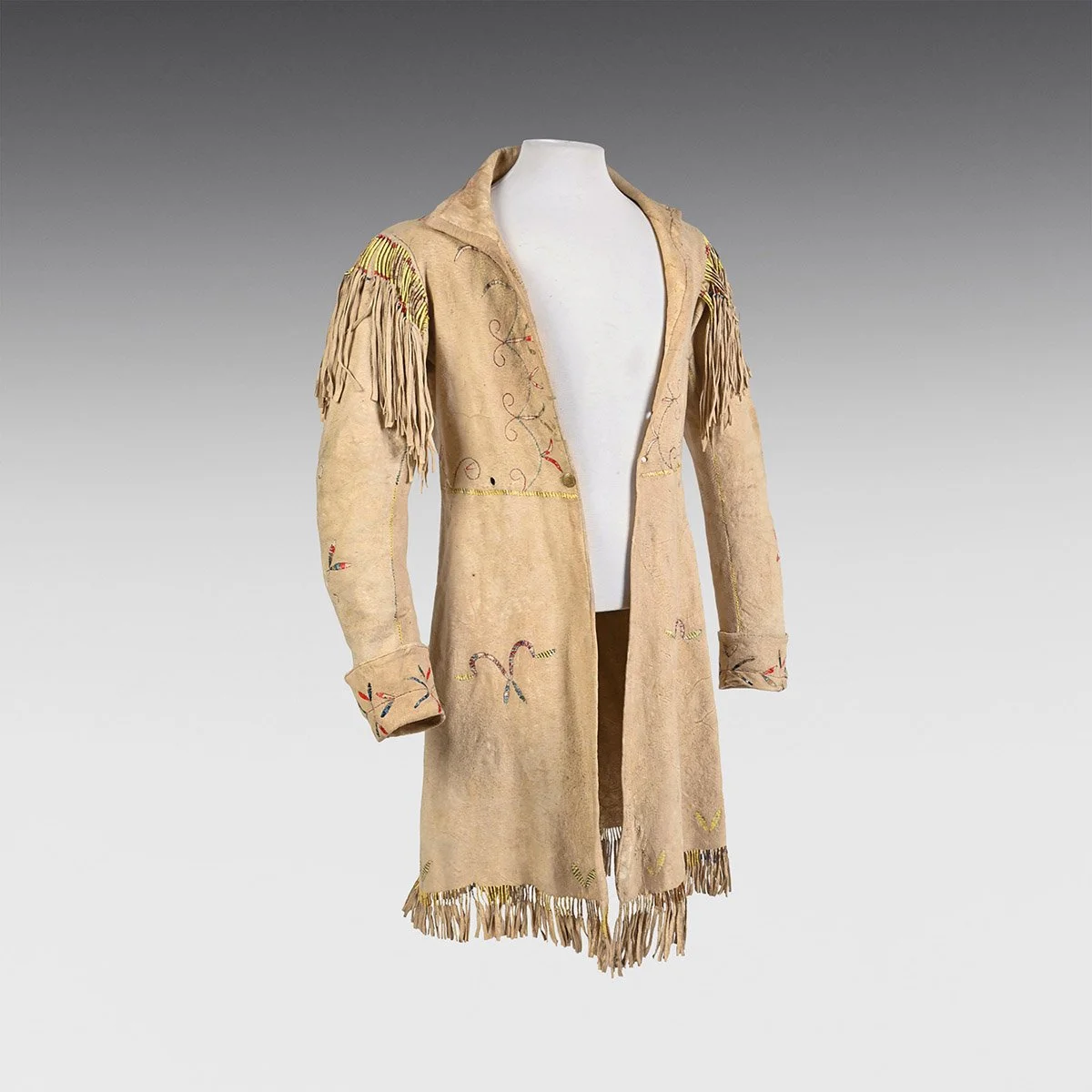 Image 4 of 13
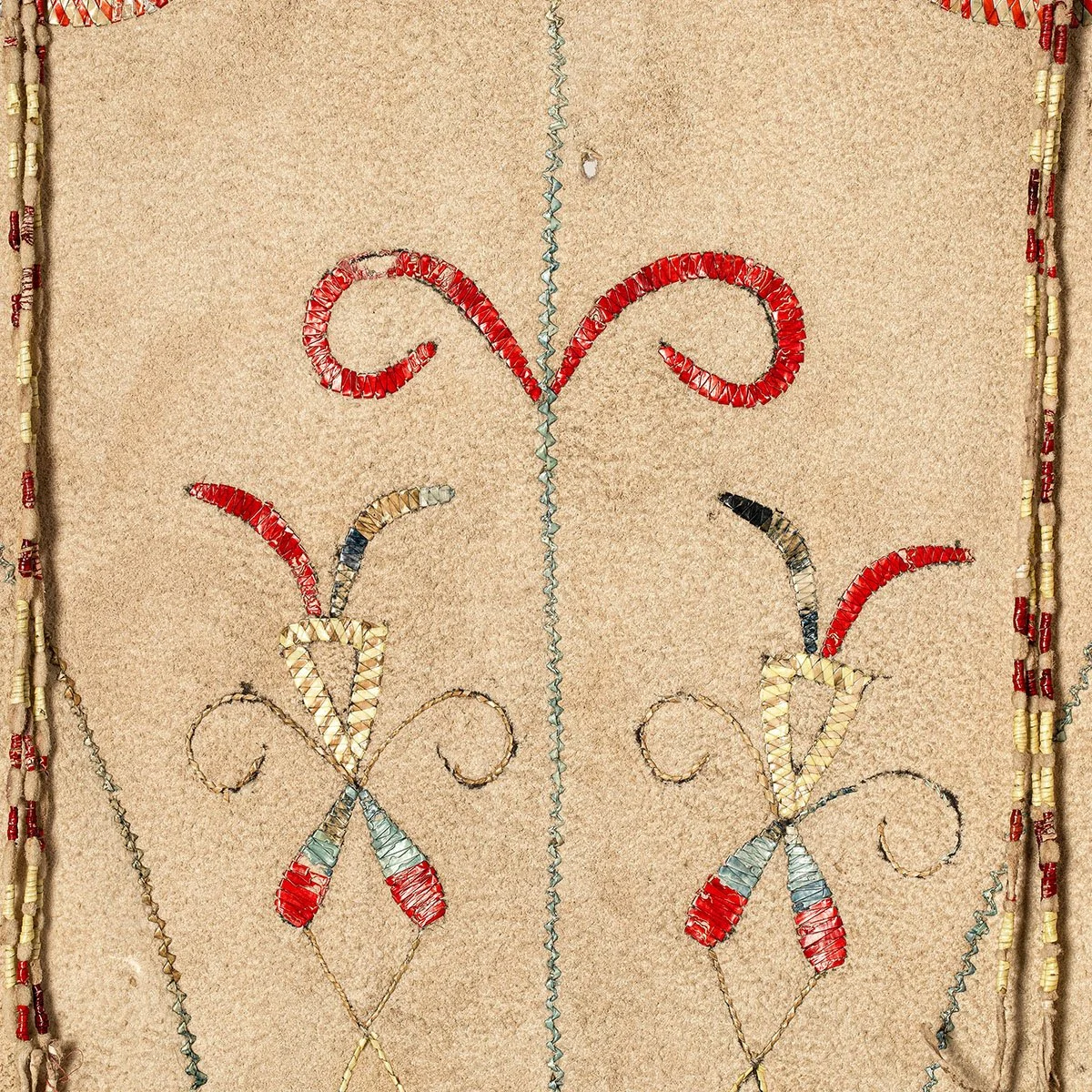 Image 5 of 13
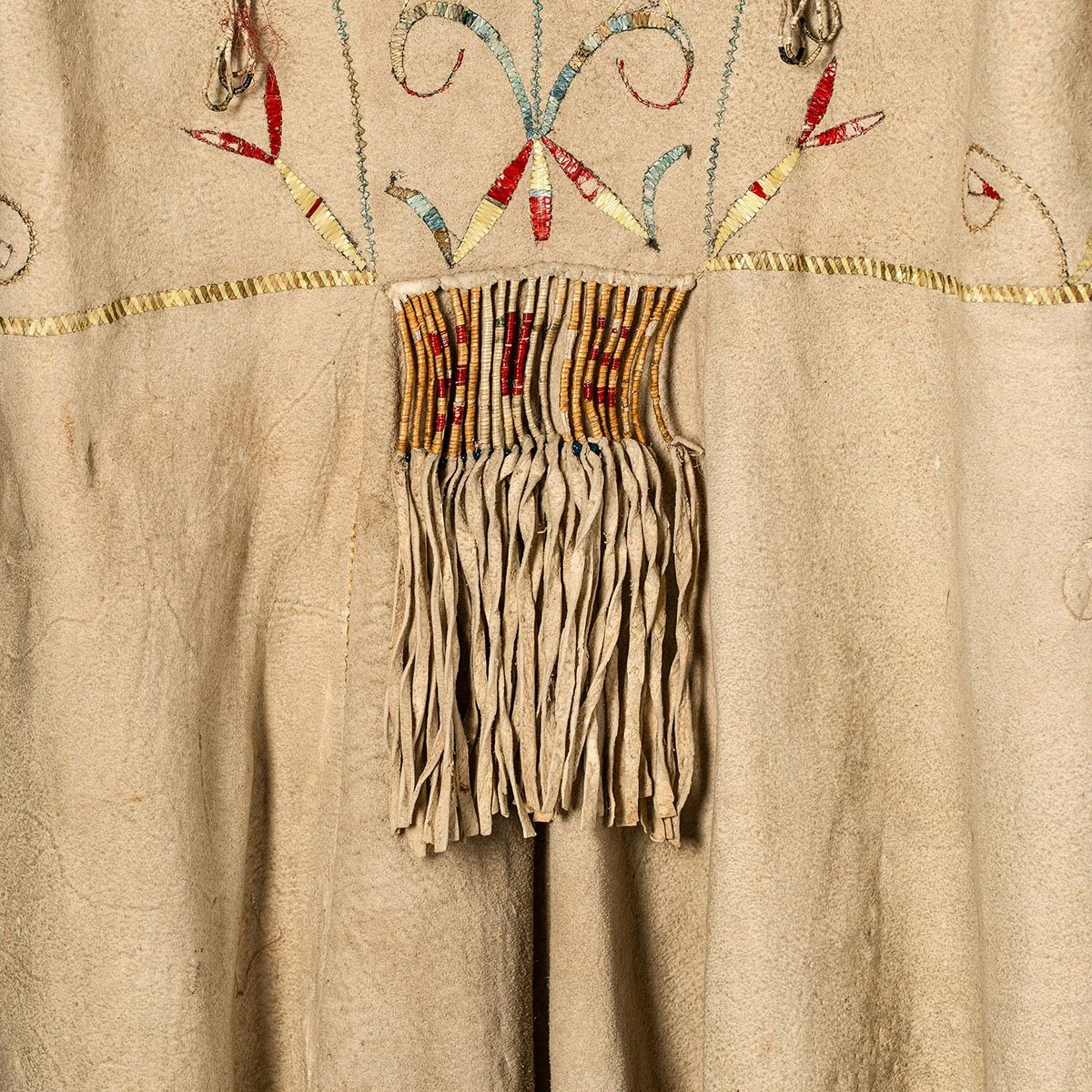 Image 6 of 13
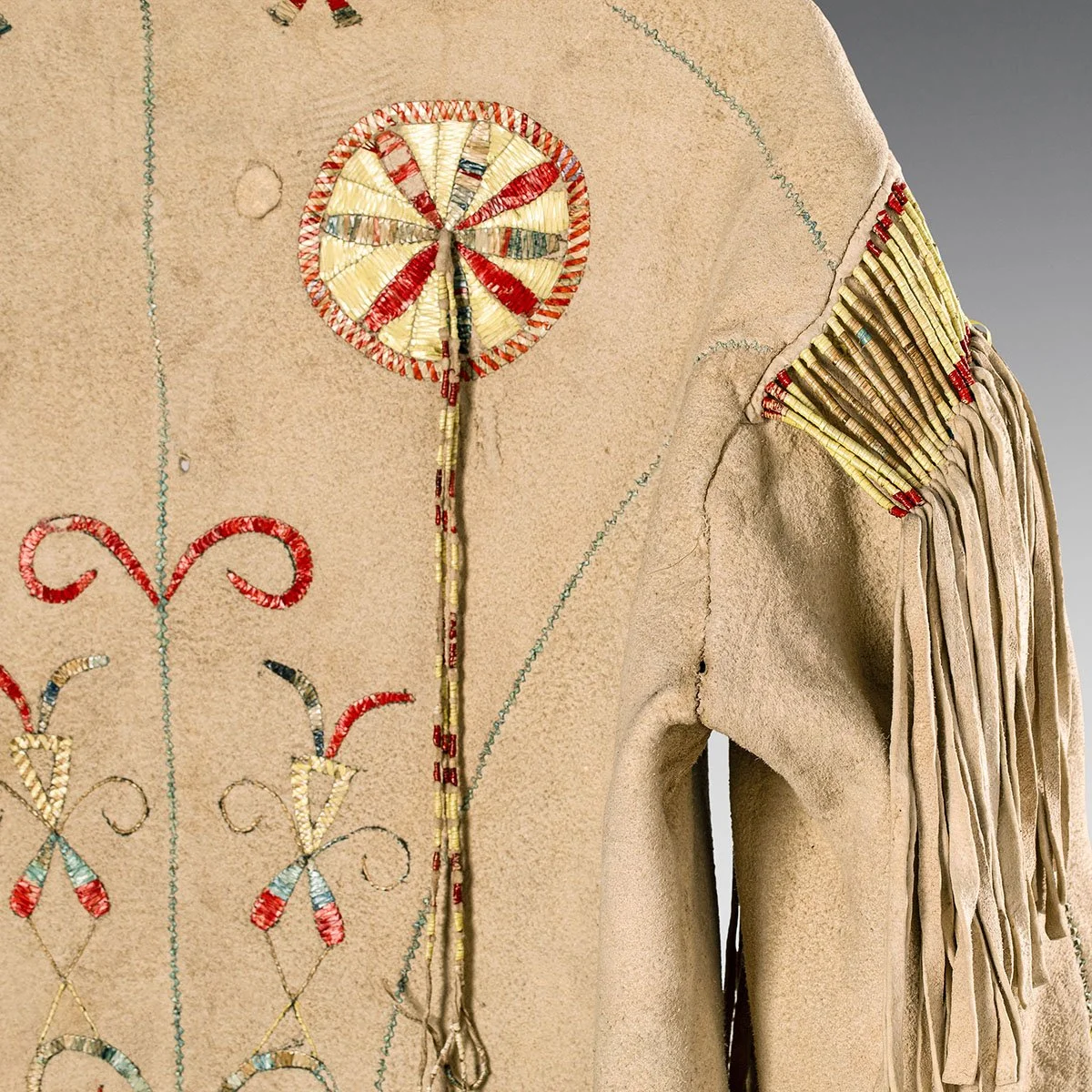 Image 7 of 13
 Image 8 of 13
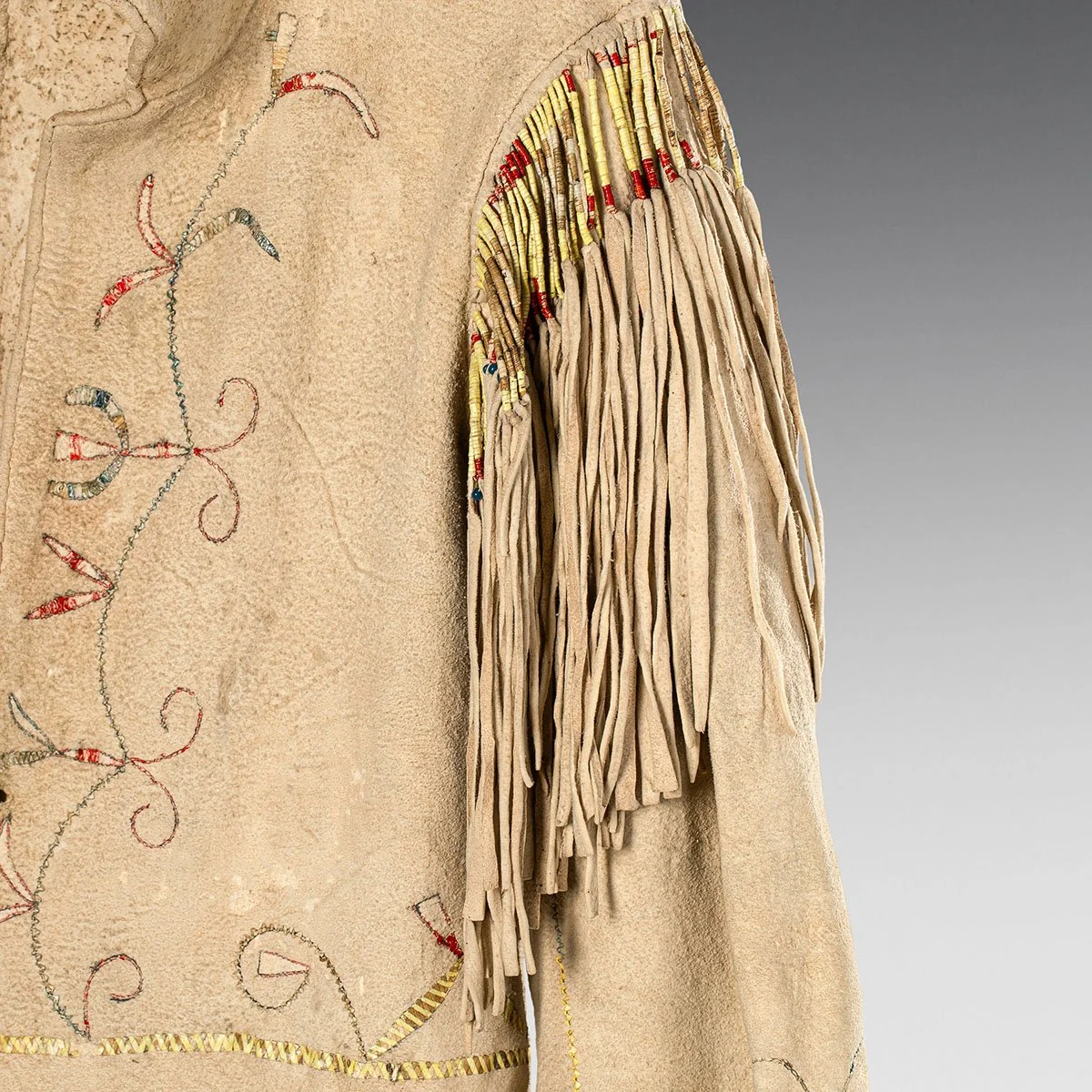 Image 9 of 13
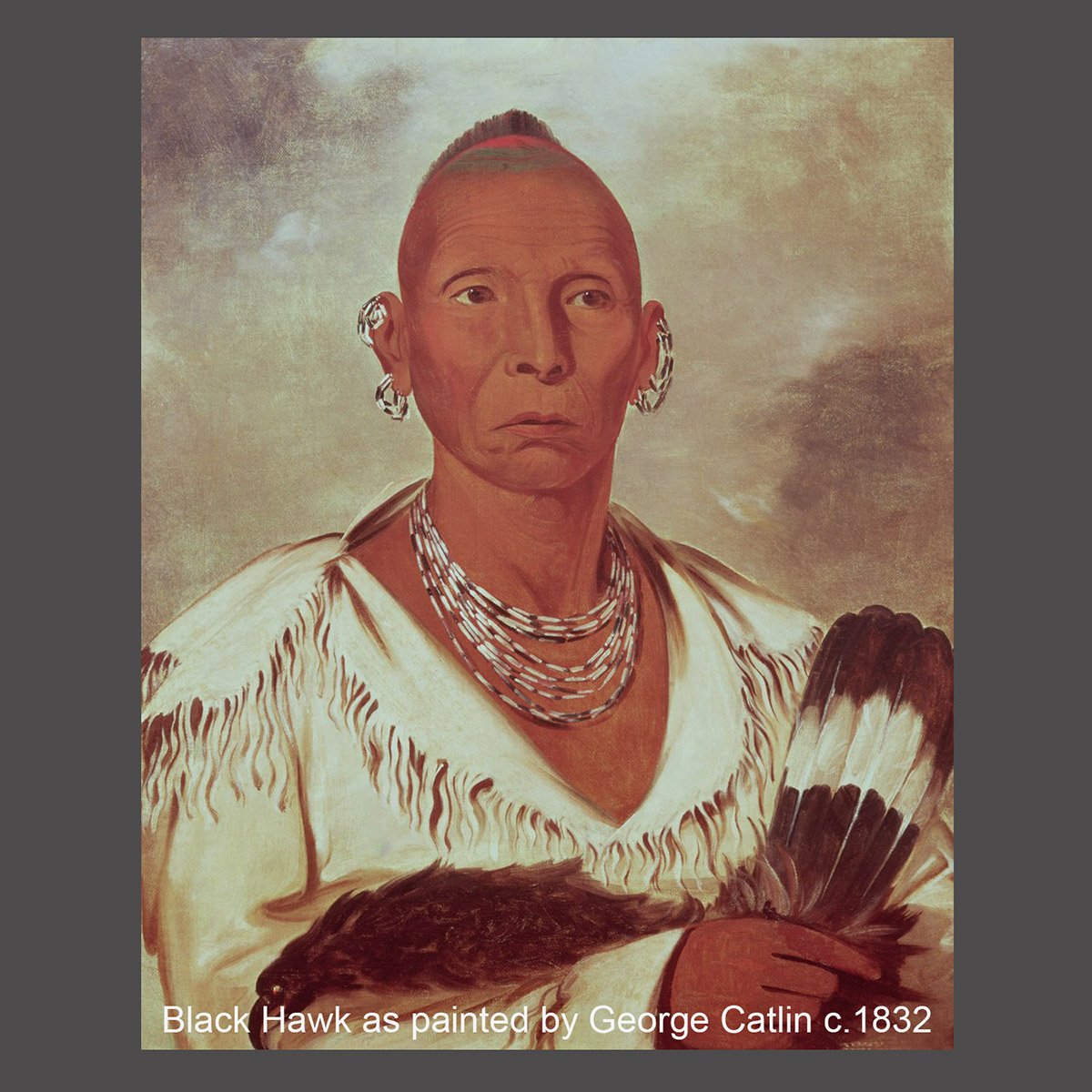 Image 10 of 13
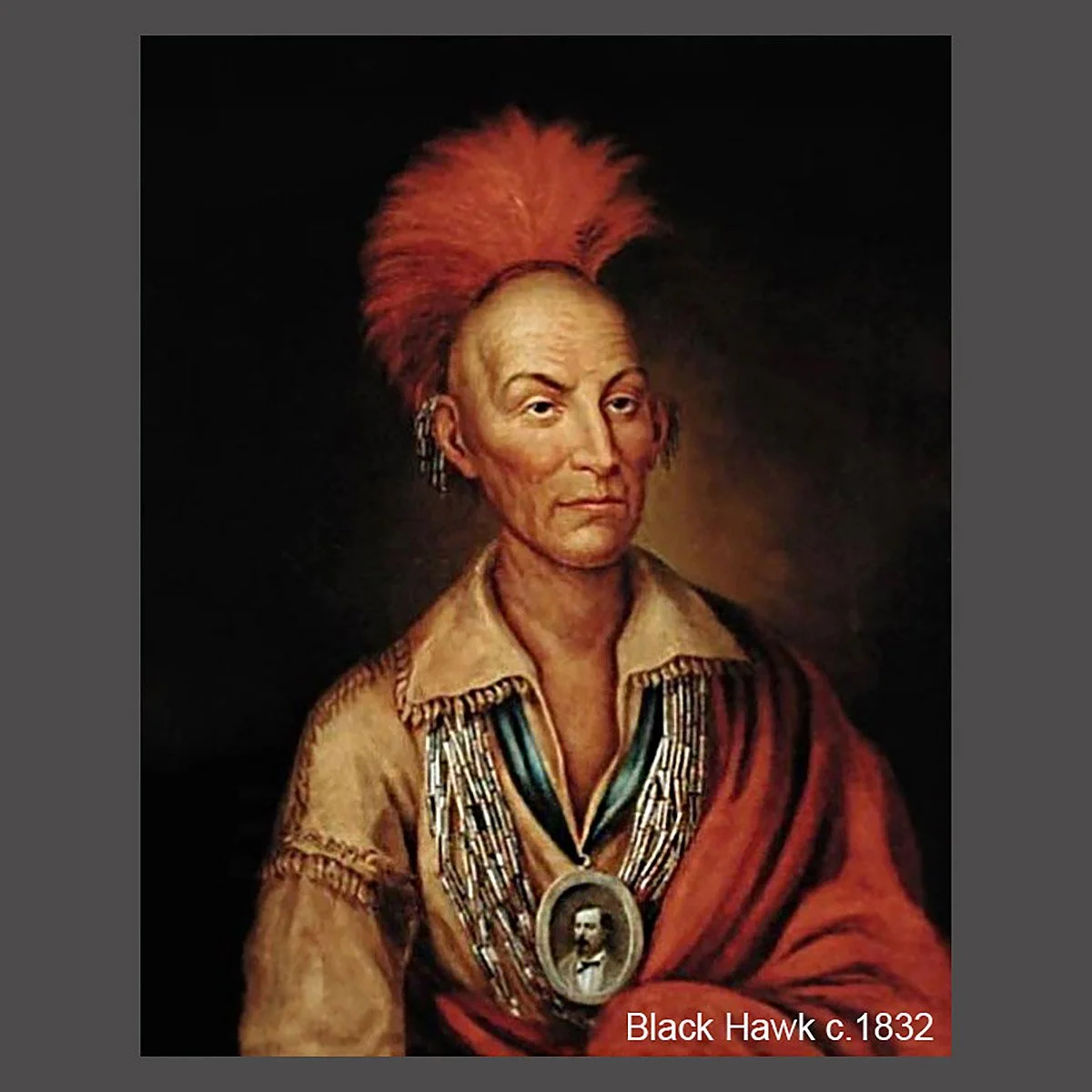 Image 11 of 13
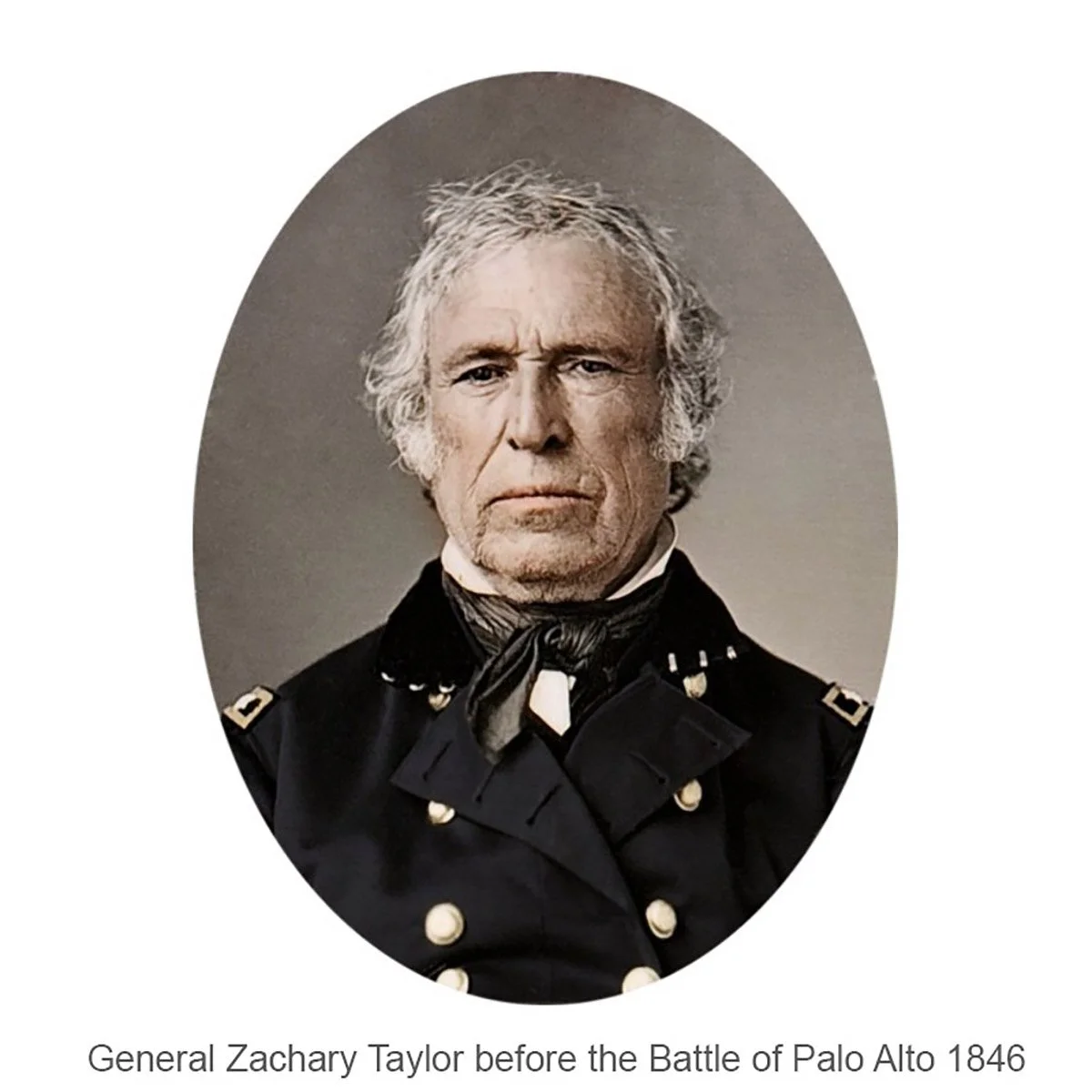 Image 12 of 13
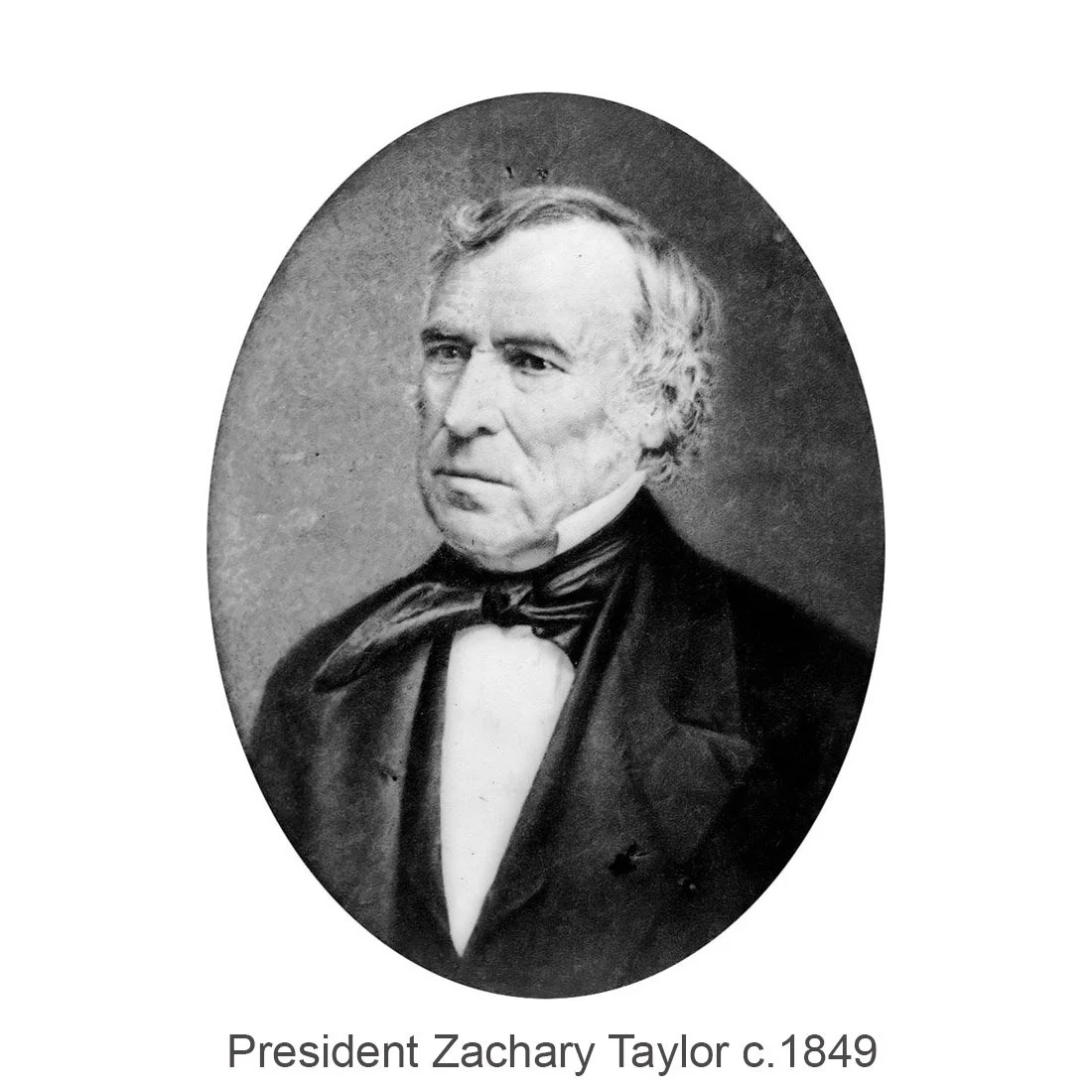 Image 13 of 13