Mexico
100 BC - 250 AD
Height 15 7/8” Length 17 1/4”
Provenance: Howard Rose, New York
Walter Knox. Arizona
Dogs are the most well-known of the Colima zoomorphic figures, playing an active role in the lives of ancient communities and believed to represent a trusted companion into the Underworld.
The fine burnish and orange brown slip color of this canine is not only elegant but truly amazing. Its alert, expressive head and finely wrinkled, plump body are from the hand of a master ceramic artist. It has characteristics of the hairless species known as xoloitzcuintli, the Aztec name combining the canine deity xolotl and itzcuintle for dog. As Jacki Gallagher notes, “even naturalistic animal effigies carry symbolic and mythological connotations. Commonly depicted animals [...] were probably the most polysemic, playing a variety of important roles in the cosmology of ancient Colimans” (Companions of the Dead, Ceramic Tomb Sculpture from Ancient West Mexico, Los Angeles, 1983, p. 410).
Cf. For a highly similar wrinkled dog, see the figure in the Proctor Stafford Collection of the Los Angeles County Museum of Art, in Michael Kan, Clement Meighan and H.B. Nicholson, Sculpture of Ancient West Mexico, Nayarit, Jalisco, Colima, The Proctor Stafford Collection, Los Angeles, 1970, p. 94, fig. 152; reprinted 1989, p. 150, fig. 148, and p. 64 [color plate].
INQUIRE HERE
Mexico
100 BC - 250 AD
Height 15 7/8” Length 17 1/4”
Provenance: Howard Rose, New York
Walter Knox. Arizona
Dogs are the most well-known of the Colima zoomorphic figures, playing an active role in the lives of ancient communities and believed to represent a trusted companion into the Underworld.
The fine burnish and orange brown slip color of this canine is not only elegant but truly amazing. Its alert, expressive head and finely wrinkled, plump body are from the hand of a master ceramic artist. It has characteristics of the hairless species known as xoloitzcuintli, the Aztec name combining the canine deity xolotl and itzcuintle for dog. As Jacki Gallagher notes, “even naturalistic animal effigies carry symbolic and mythological connotations. Commonly depicted animals [...] were probably the most polysemic, playing a variety of important roles in the cosmology of ancient Colimans” (Companions of the Dead, Ceramic Tomb Sculpture from Ancient West Mexico, Los Angeles, 1983, p. 410).
Cf. For a highly similar wrinkled dog, see the figure in the Proctor Stafford Collection of the Los Angeles County Museum of Art, in Michael Kan, Clement Meighan and H.B. Nicholson, Sculpture of Ancient West Mexico, Nayarit, Jalisco, Colima, The Proctor Stafford Collection, Los Angeles, 1970, p. 94, fig. 152; reprinted 1989, p. 150, fig. 148, and p. 64 [color plate].
INQUIRE HERE


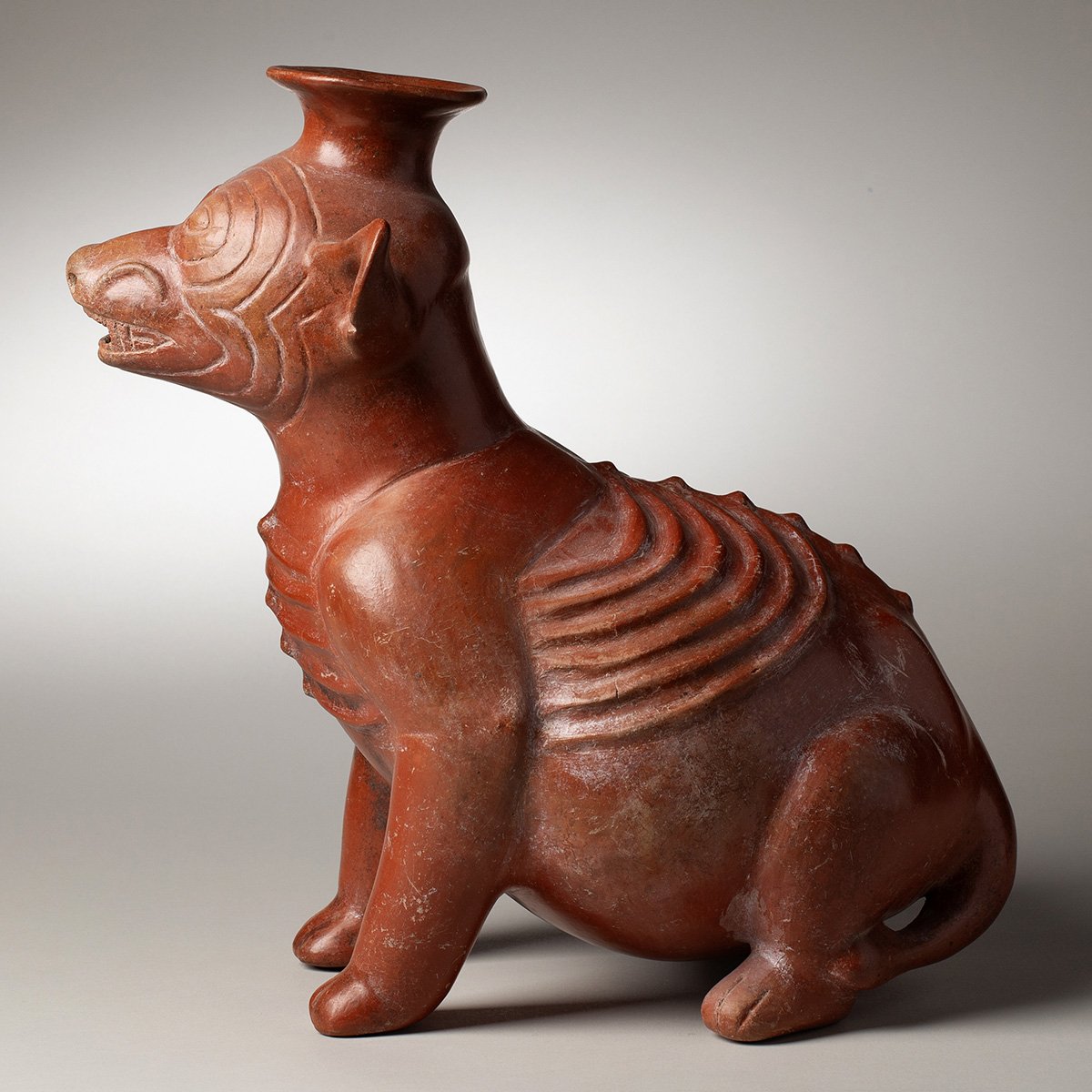 Image 1 of 9
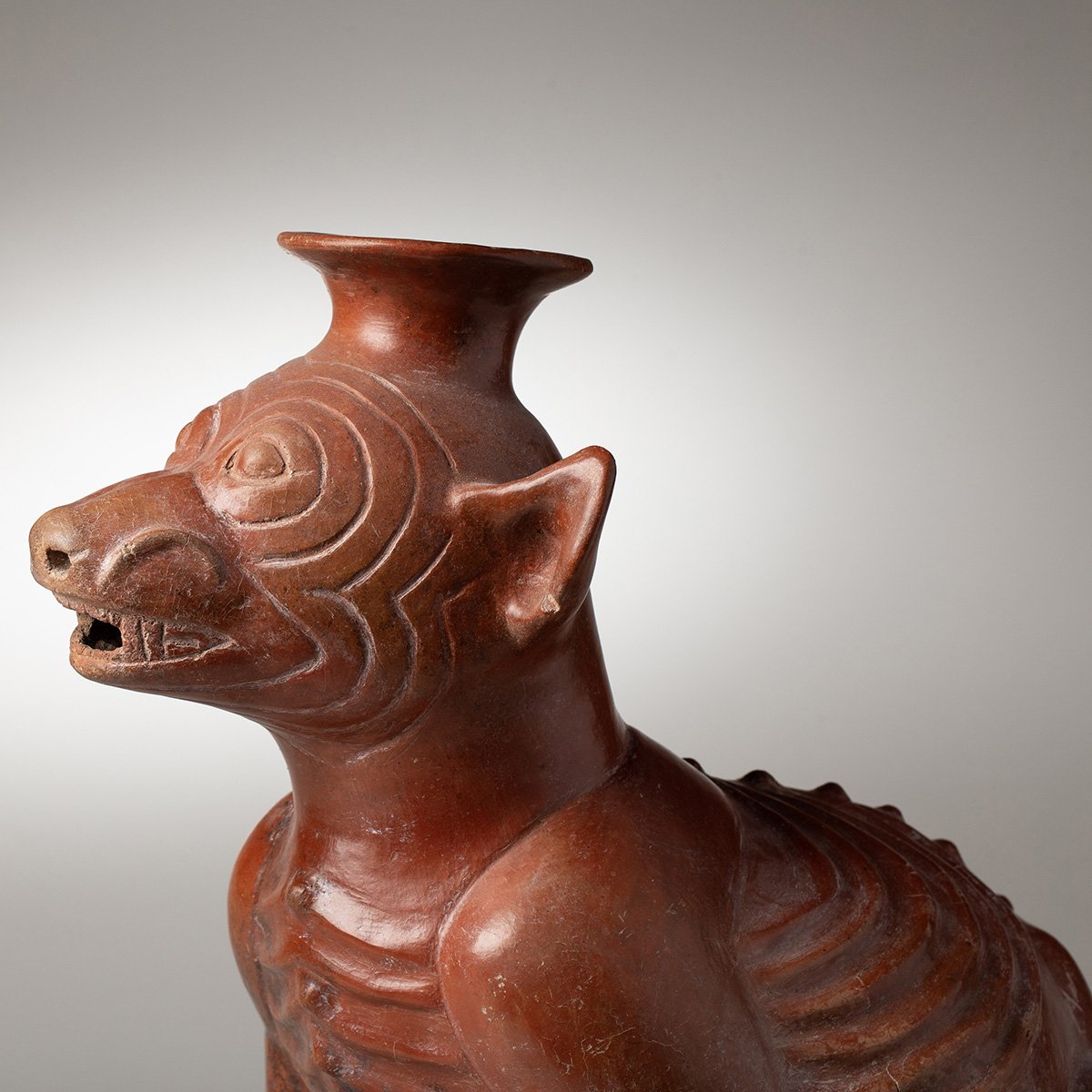 Image 2 of 9
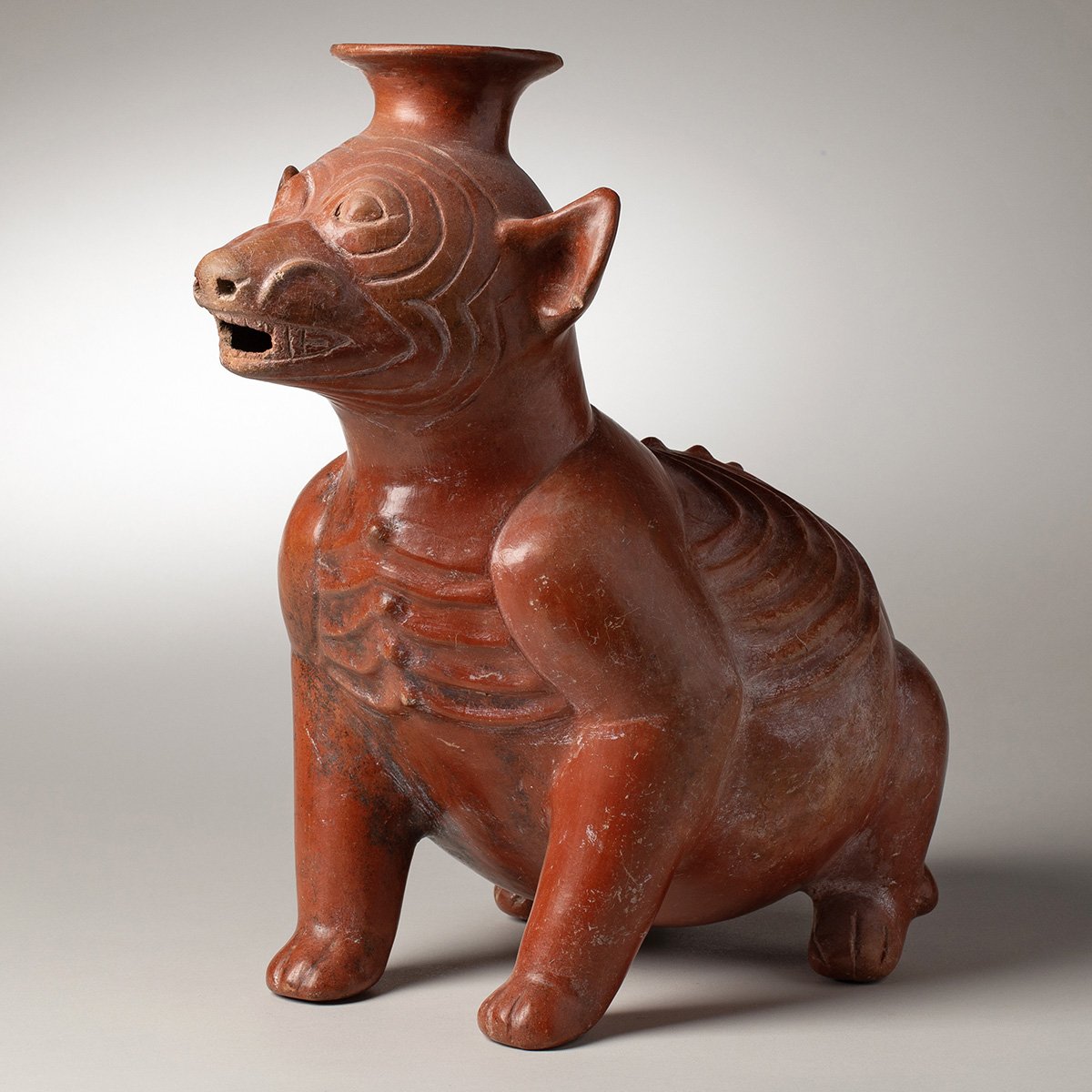 Image 3 of 9
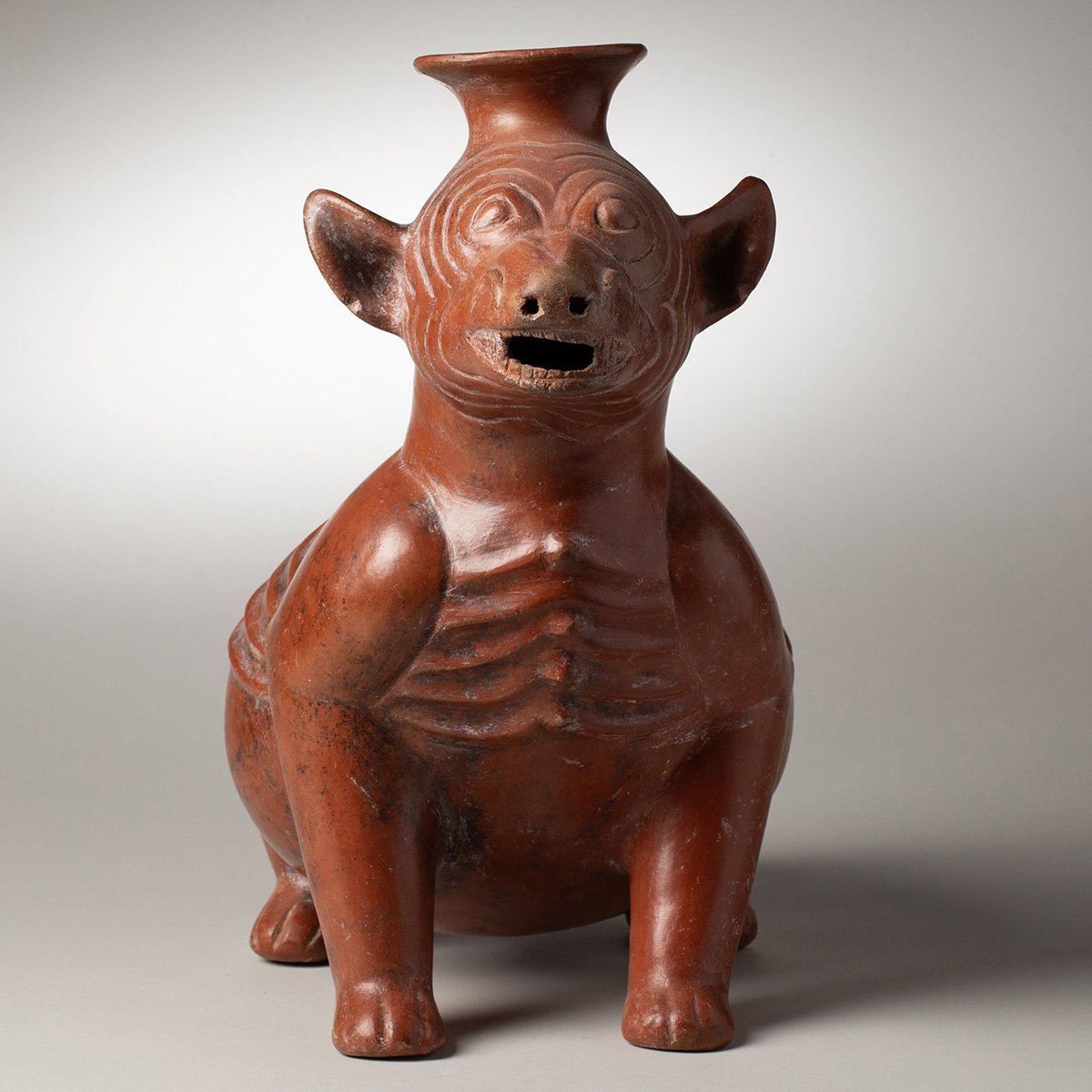 Image 4 of 9
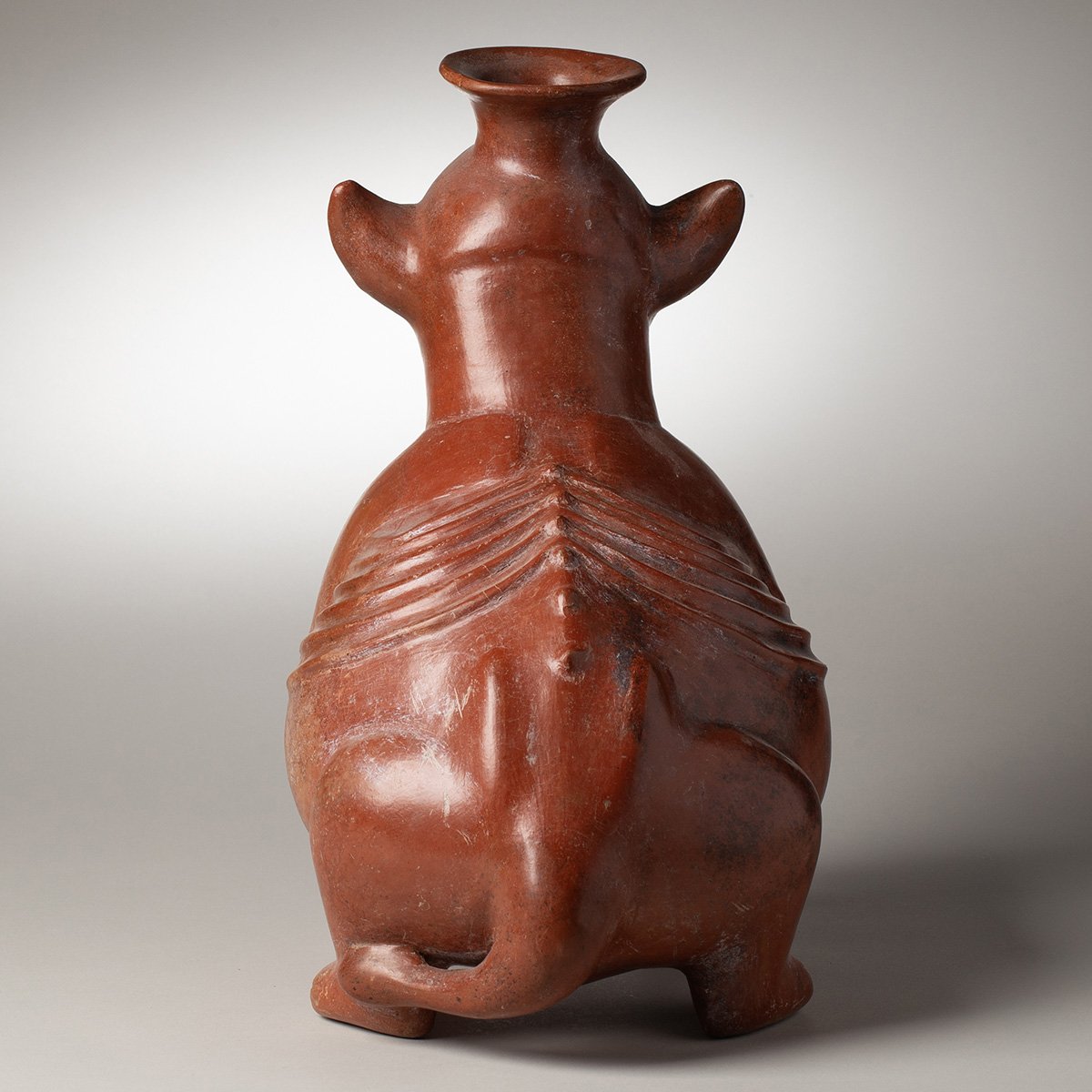 Image 5 of 9
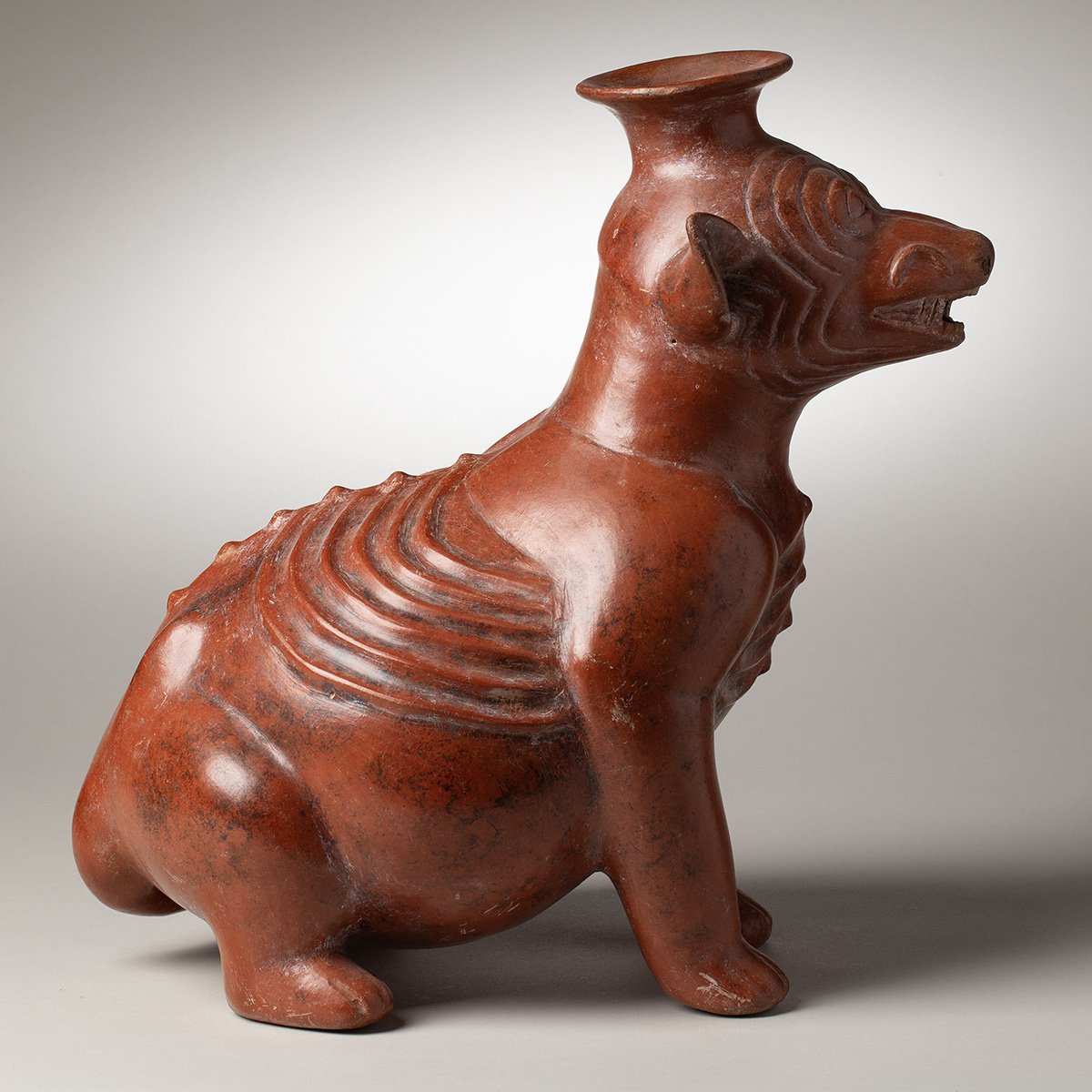 Image 6 of 9
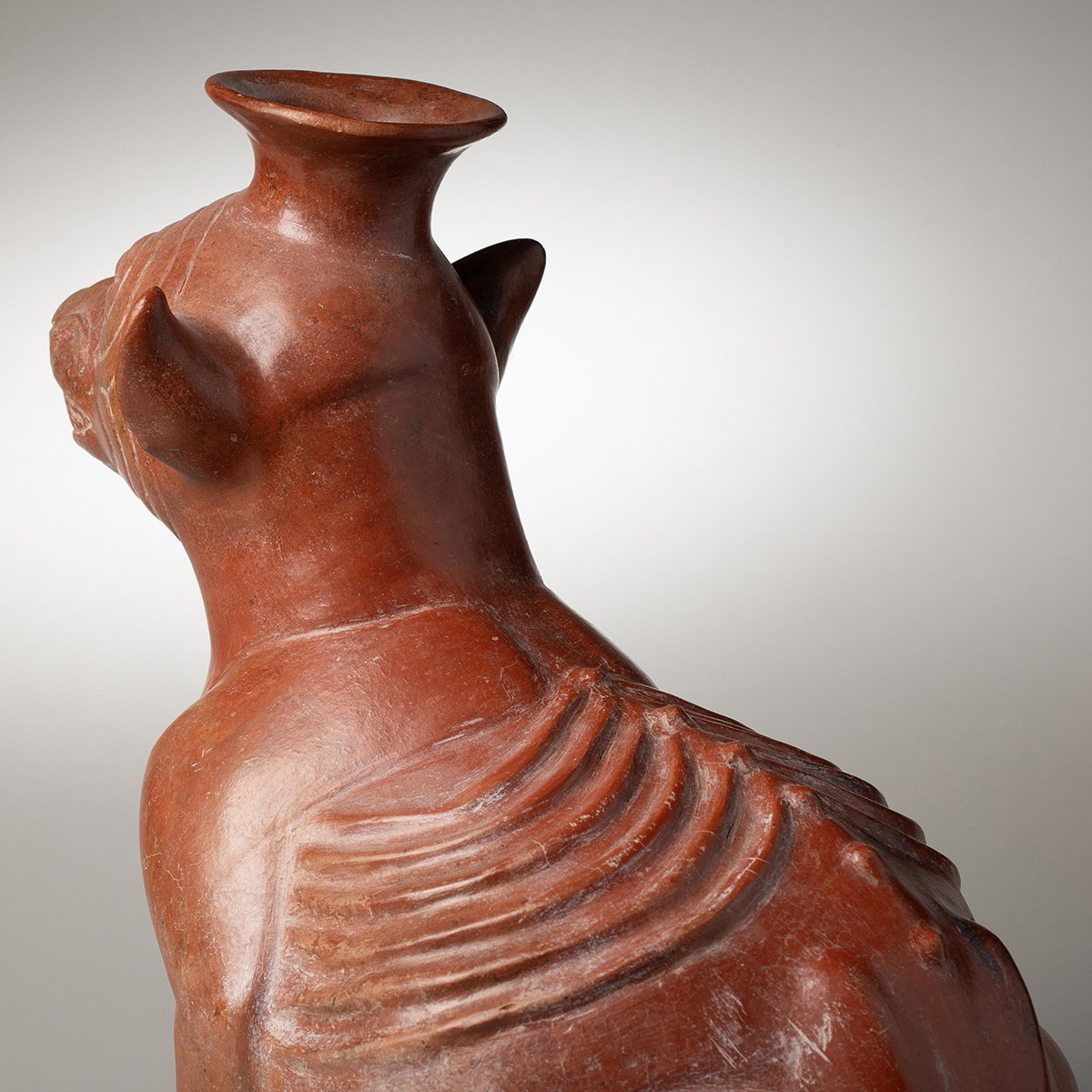 Image 7 of 9
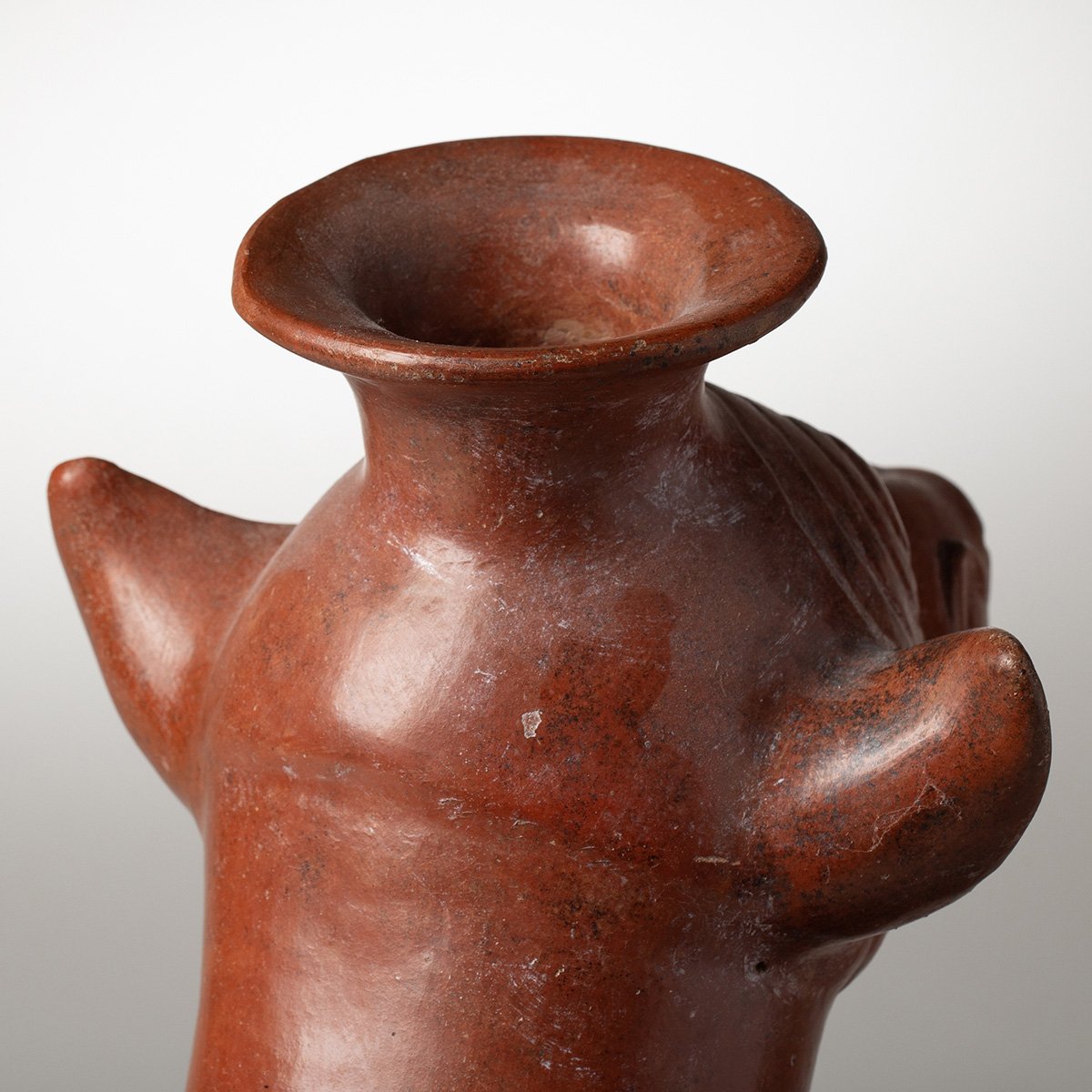 Image 8 of 9
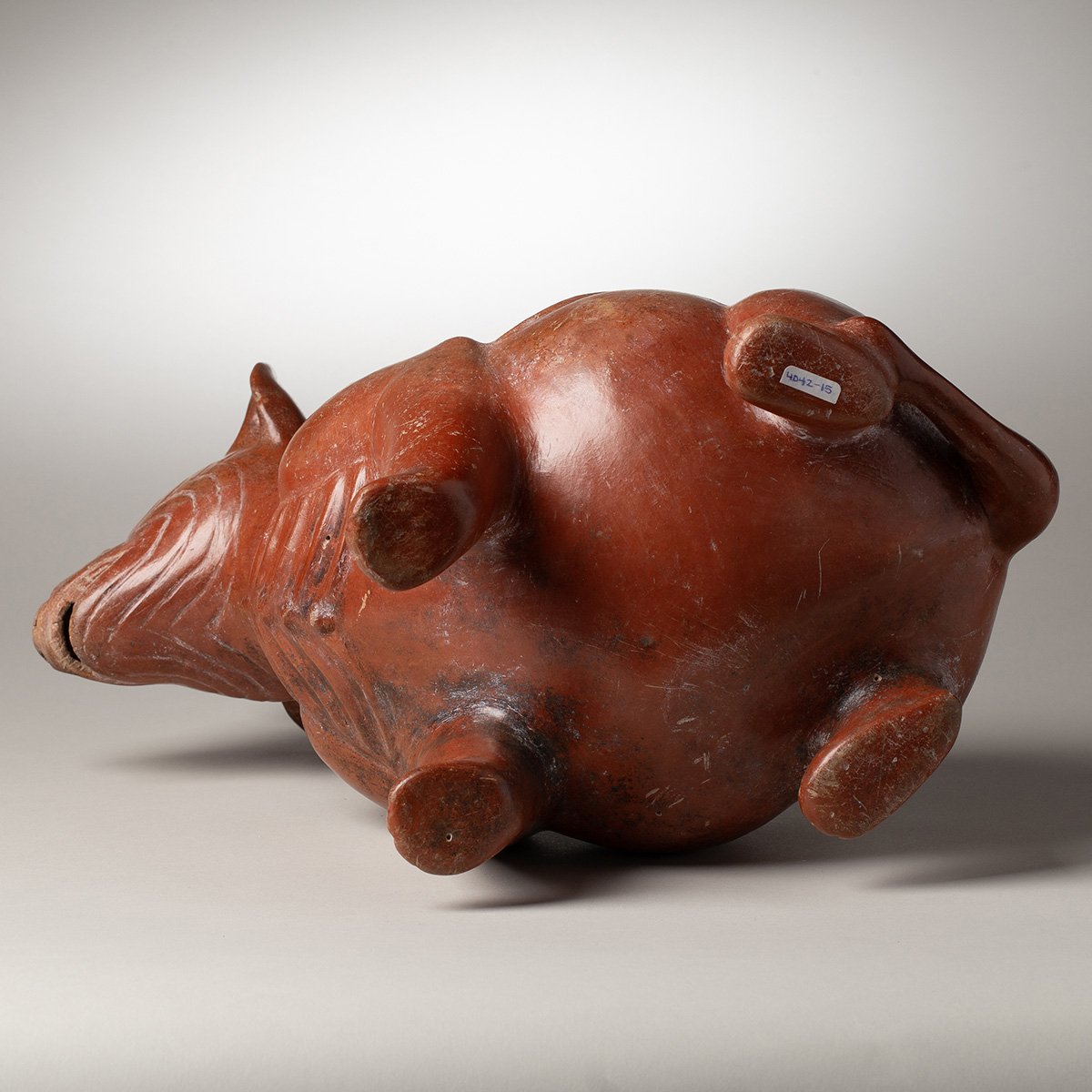 Image 9 of 9