

 Image 1 of 5
 Image 2 of 5
 Image 3 of 5
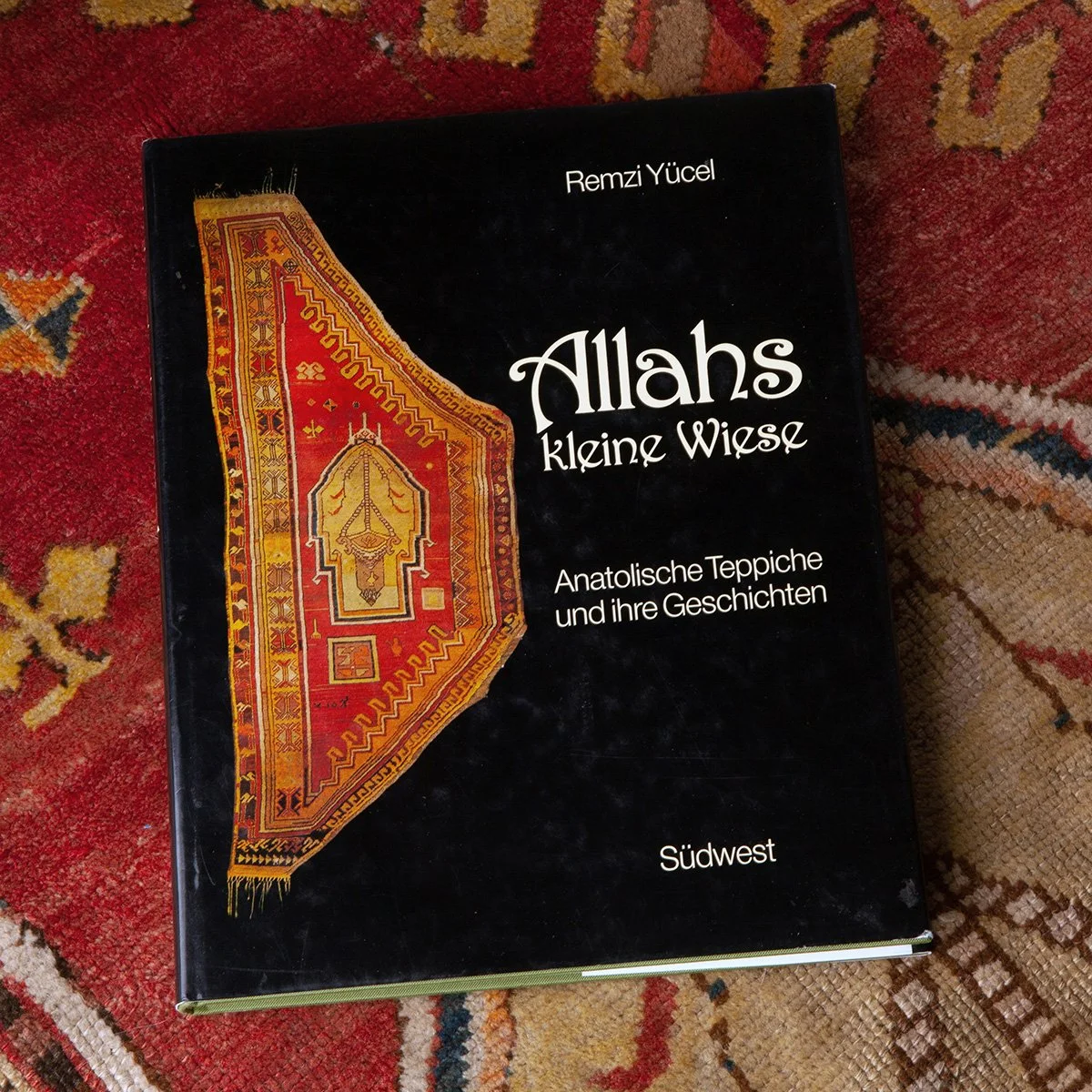 Image 4 of 5
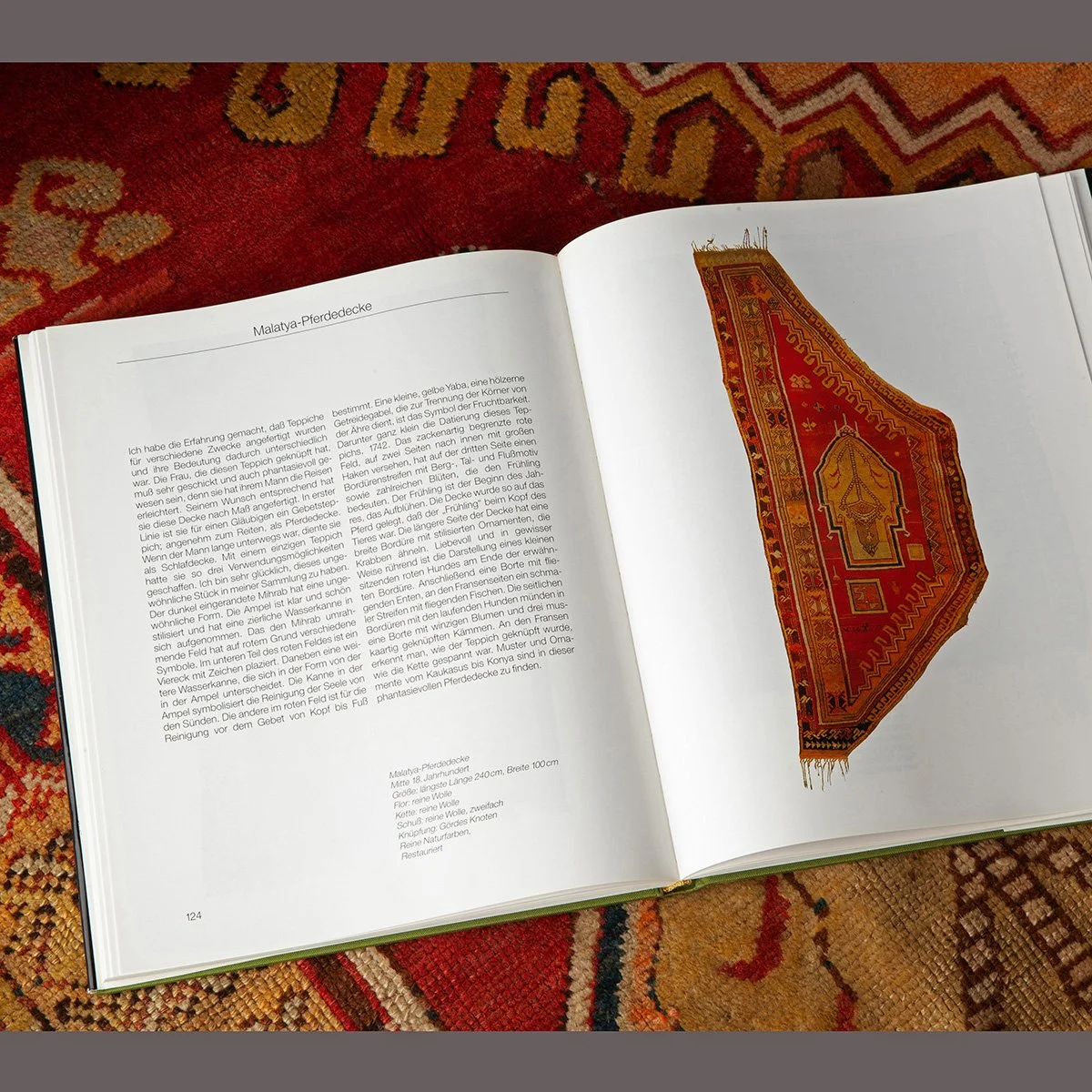 Image 5 of 5
Turkey
Dated 1742
Length 7'11" Width 3' 4"
Provenance: Andreas Achmann, Munich
A fine dated example and the front cover of Allah's Little Meadow
Anatolian Rugs and their Stories
Published by Sudwest, Munich 1987 Remzi Yucel Author, pg 124
Translated below from German:
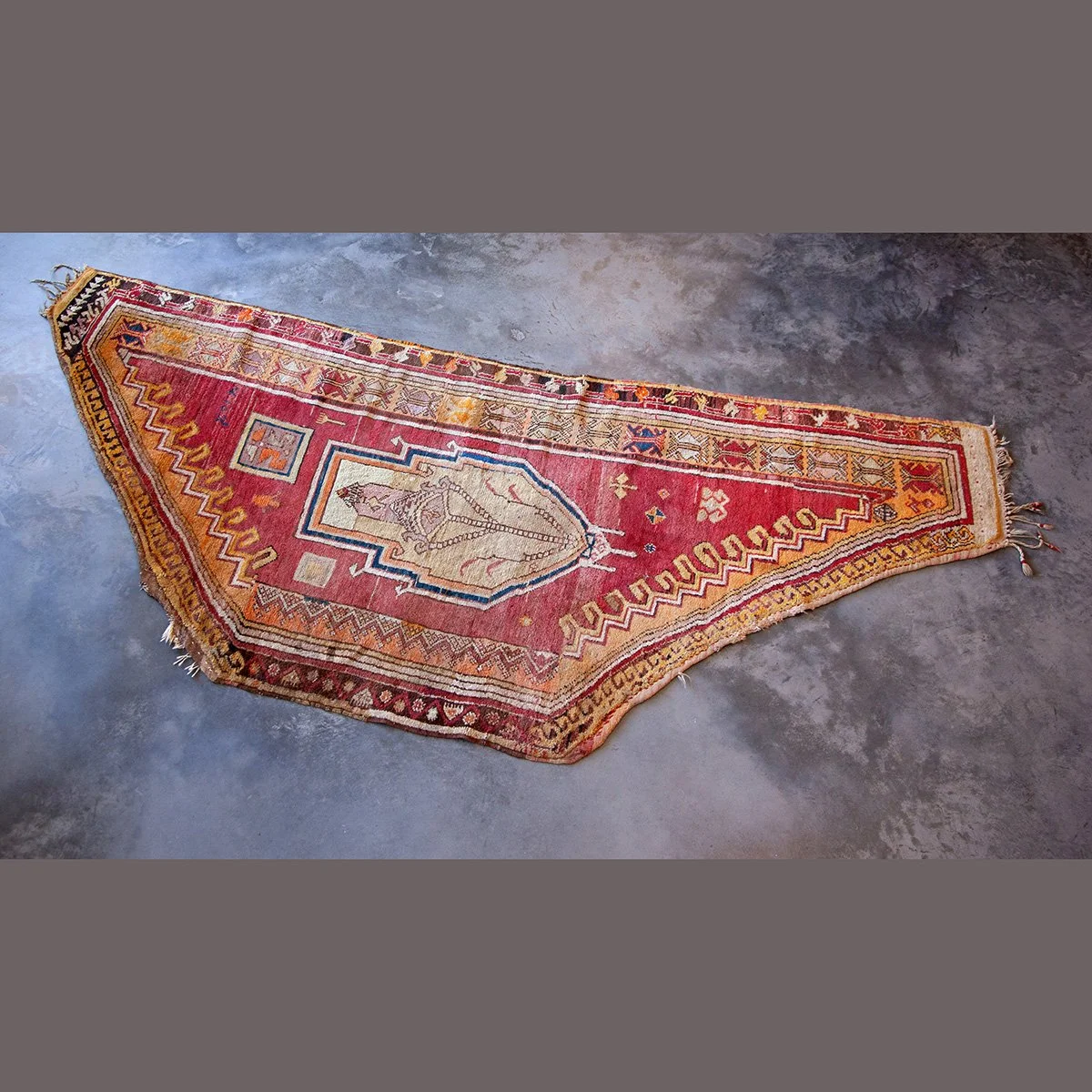
I've learned that rugs were made with different purposes in mind and that they had therefore different meanings. The woman who hand-knotted this rug must have been very skilled and creative – she certainly made her husband's travels easier. As per his wishes she custom made this spread to a specific shape. For a religious man it was first and foremost a prayer rug, but also convenient as a horse blanket for riding. On long journeys it would be useful as a cover at night. One rug was created to have three different purposes. I am very happy to have this uncommon piece in my collection. The dark-framed Mihrab has an unusual shape. Clearly and beautifully stylized, the Mihrab's "mosque light" has a dainty water jug incorporated. The field surrounding the Mihrab has various symbols on a red background. A square with characters is placed in the lower part of the red background. Next to the square is yet another water jug, which differs in shape from the one in the "mosque light". The jug in the light symbolizes the purification of the soul from sins. The one on the red background is meant for head-to-toe cleansing before prayer. A small, yellow Yaba, a wooden grain fork used to separate the grain from the ear, is the symbol of fertility. Underneath it a very small 1742 indicates the date of the rug. The jagged red field, with inwards looking large hooks on two sides, has a border stripe with mountain, valley and river motifs and numerous flowers on the third side, which signify spring. Spring is the blossoming beginning of the year. The blanket was placed on the horse so that the "spring" was at the animal's head. The longer side of the cover has a wide border with stylized ornaments resembling crabs. Cute and touching in a way is the depiction of a small sitting red dog at the end of that border. Then there is a stripe with flying ducks and along the fringed sides with flying fish. The side borders with the running dogs end in a stripe with tiny flowers and three combs knotted like Muska. The fringes show how the carpet was knotted and how the wrap was stretched. Patterns and ornaments from the Caucasus to Konya can be found in this imaginative horse blanket.
Turkey
Dated 1742
Length 7'11" Width 3' 4"
Provenance: Andreas Achmann, Munich
A fine dated example and the front cover of Allah's Little Meadow
Anatolian Rugs and their Stories
Published by Sudwest, Munich 1987 Remzi Yucel Author, pg 124
Translated below from German:
I've learned that rugs were made with different purposes in mind and that they had therefore different meanings. The woman who hand-knotted this rug must have been very skilled and creative – she certainly made her husband's travels easier. As per his wishes she custom made this spread to a specific shape. For a religious man it was first and foremost a prayer rug, but also convenient as a horse blanket for riding. On long journeys it would be useful as a cover at night. One rug was created to have three different purposes. I am very happy to have this uncommon piece in my collection. The dark-framed Mihrab has an unusual shape. Clearly and beautifully stylized, the Mihrab's "mosque light" has a dainty water jug incorporated. The field surrounding the Mihrab has various symbols on a red background. A square with characters is placed in the lower part of the red background. Next to the square is yet another water jug, which differs in shape from the one in the "mosque light". The jug in the light symbolizes the purification of the soul from sins. The one on the red background is meant for head-to-toe cleansing before prayer. A small, yellow Yaba, a wooden grain fork used to separate the grain from the ear, is the symbol of fertility. Underneath it a very small 1742 indicates the date of the rug. The jagged red field, with inwards looking large hooks on two sides, has a border stripe with mountain, valley and river motifs and numerous flowers on the third side, which signify spring. Spring is the blossoming beginning of the year. The blanket was placed on the horse so that the "spring" was at the animal's head. The longer side of the cover has a wide border with stylized ornaments resembling crabs. Cute and touching in a way is the depiction of a small sitting red dog at the end of that border. Then there is a stripe with flying ducks and along the fringed sides with flying fish. The side borders with the running dogs end in a stripe with tiny flowers and three combs knotted like Muska. The fringes show how the carpet was knotted and how the wrap was stretched. Patterns and ornaments from the Caucasus to Konya can be found in this imaginative horse blanket.