

 Image 1 of 14
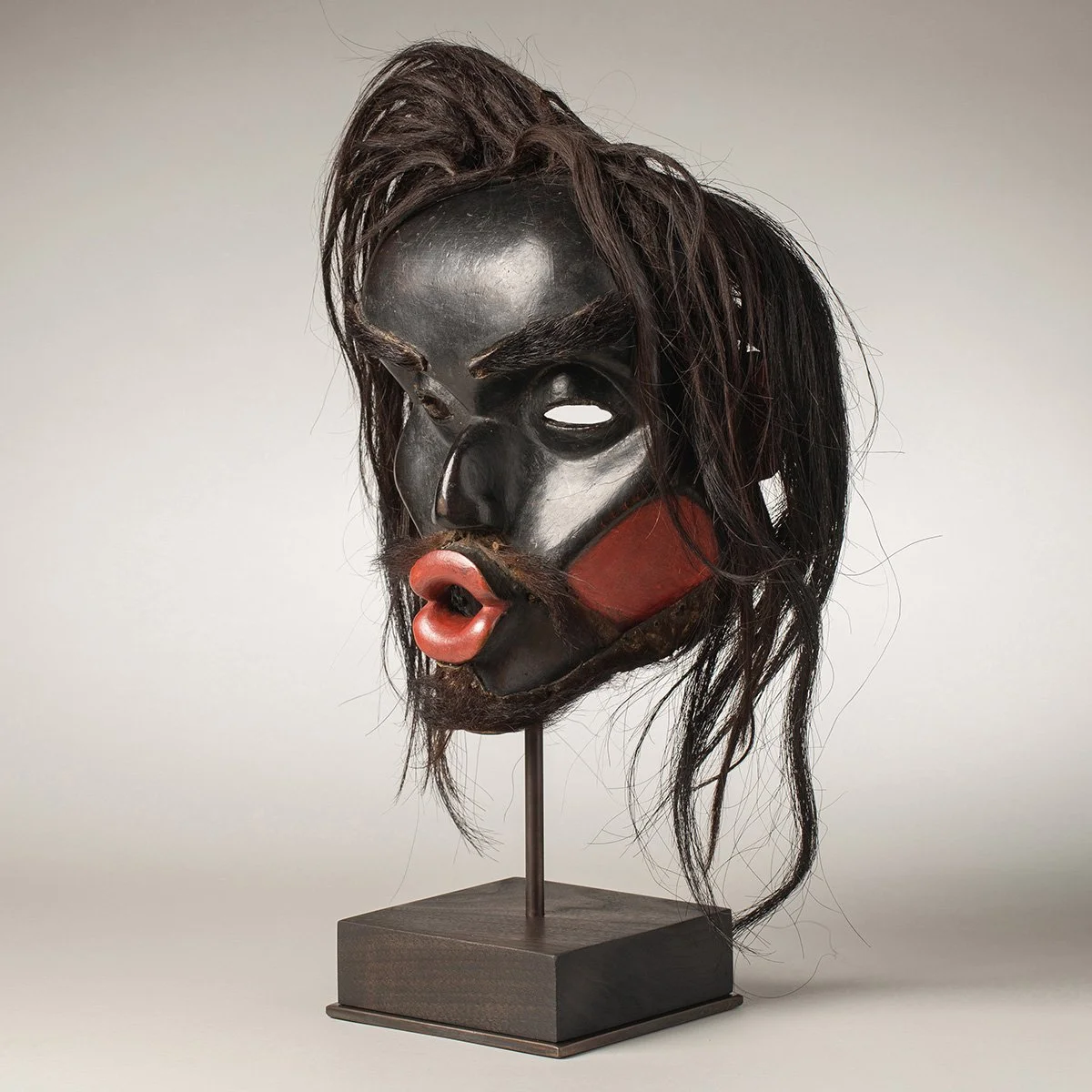 Image 2 of 14
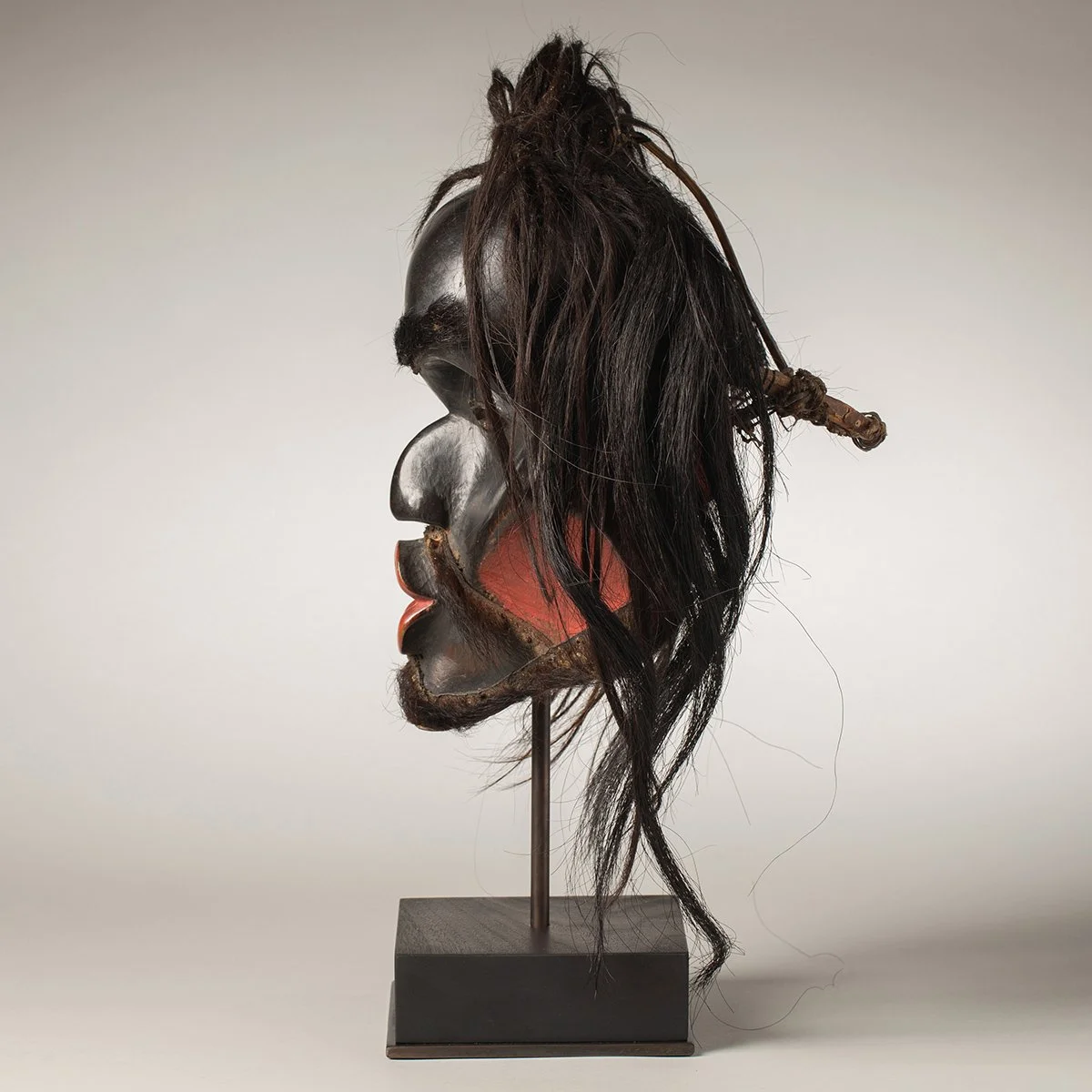 Image 3 of 14
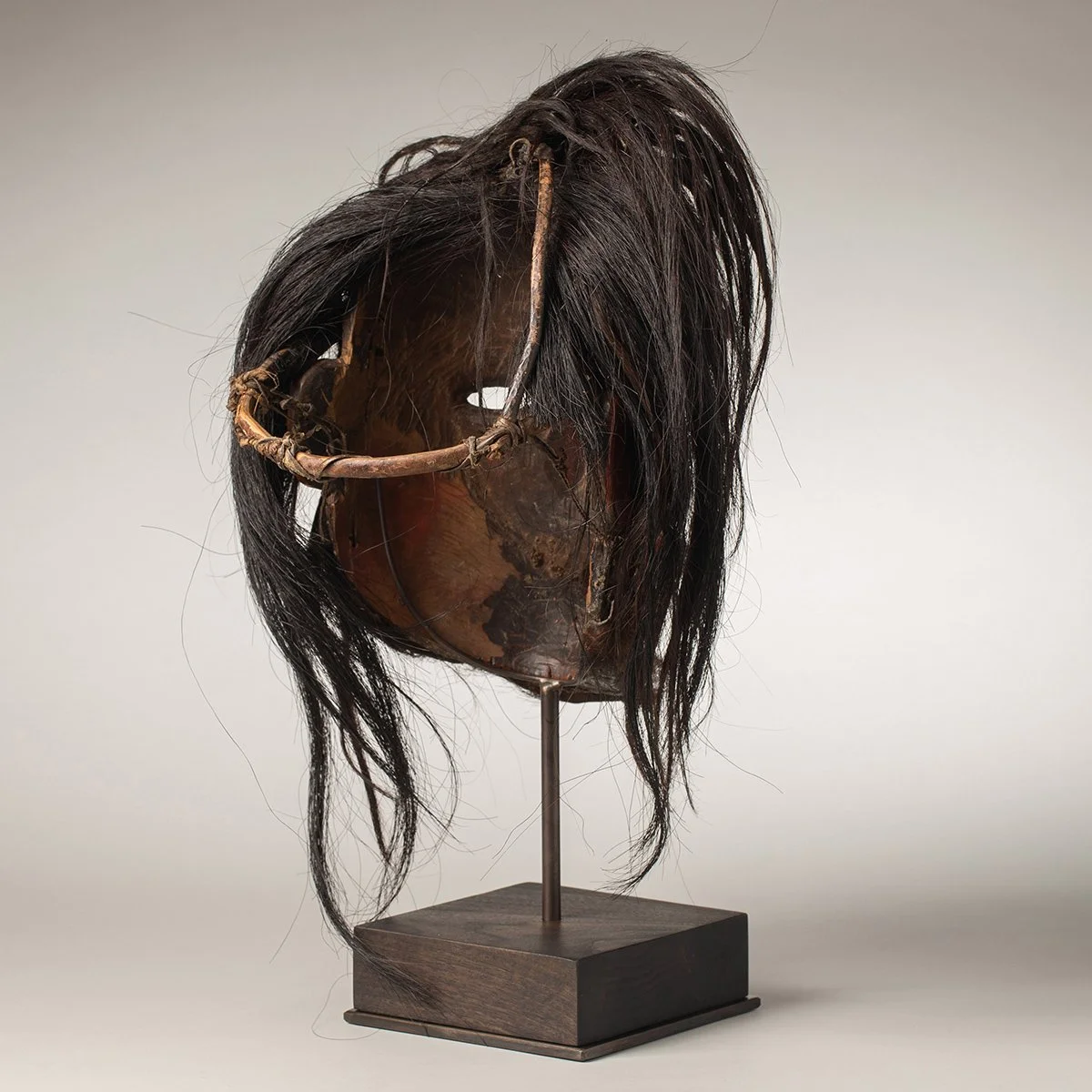 Image 4 of 14
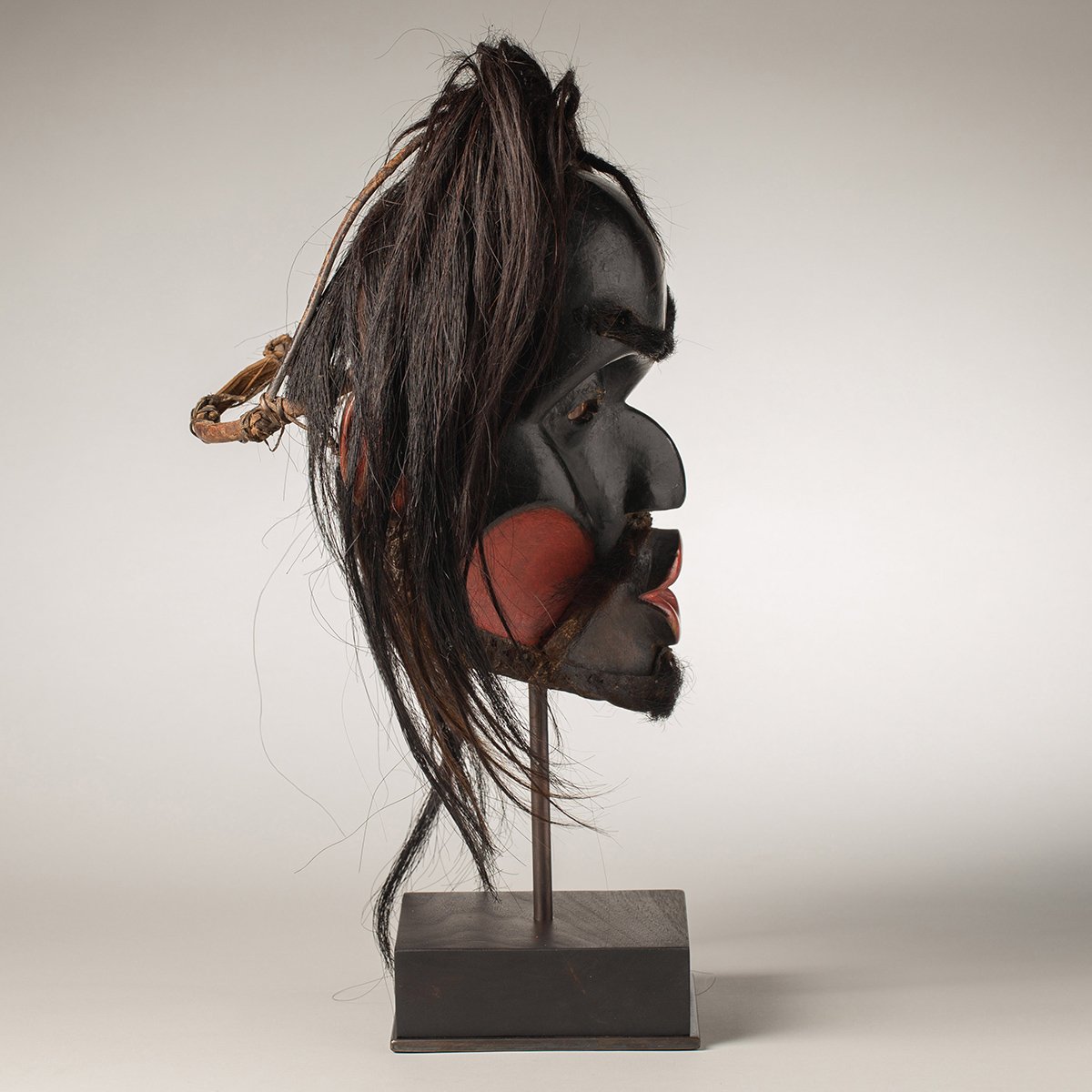 Image 5 of 14
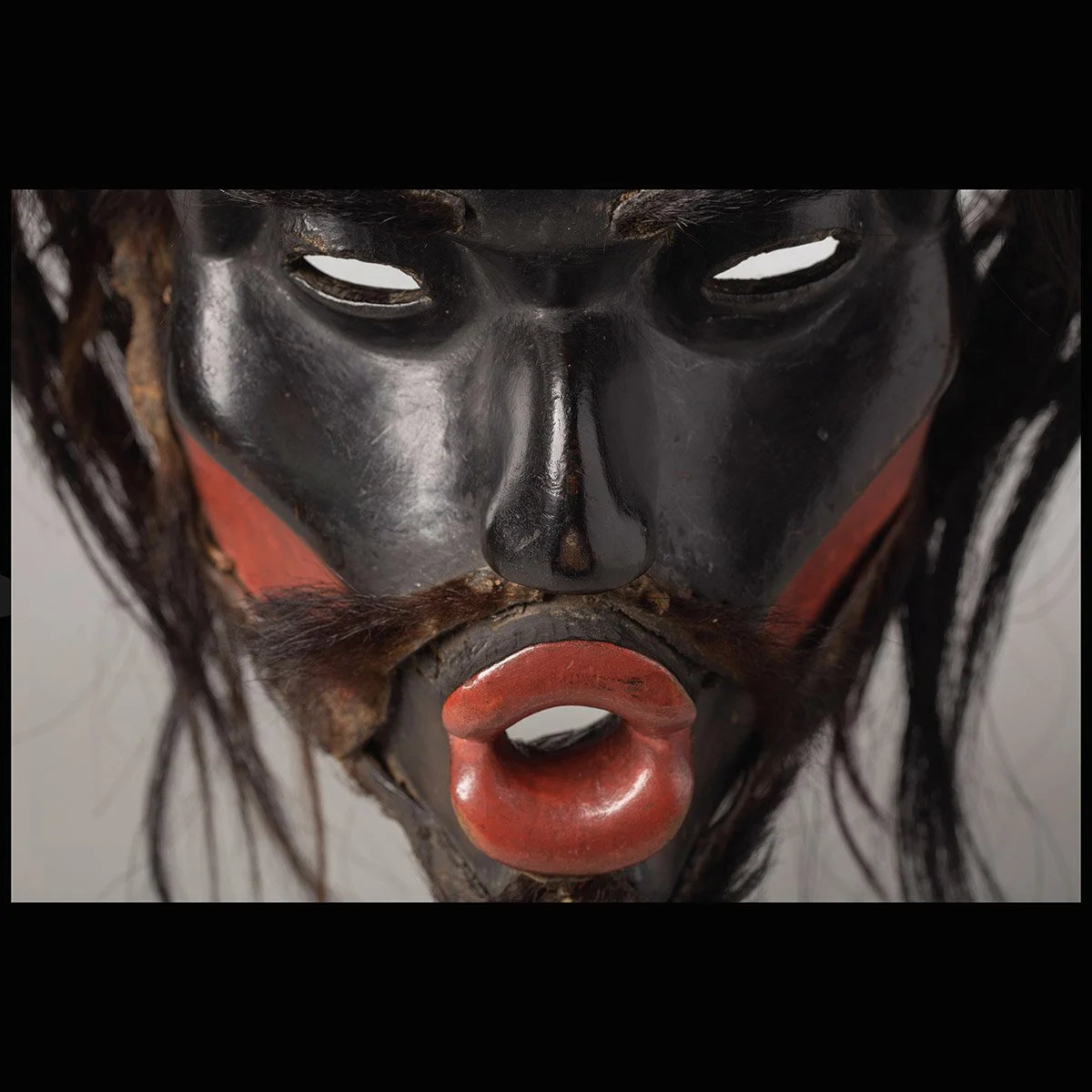 Image 6 of 14
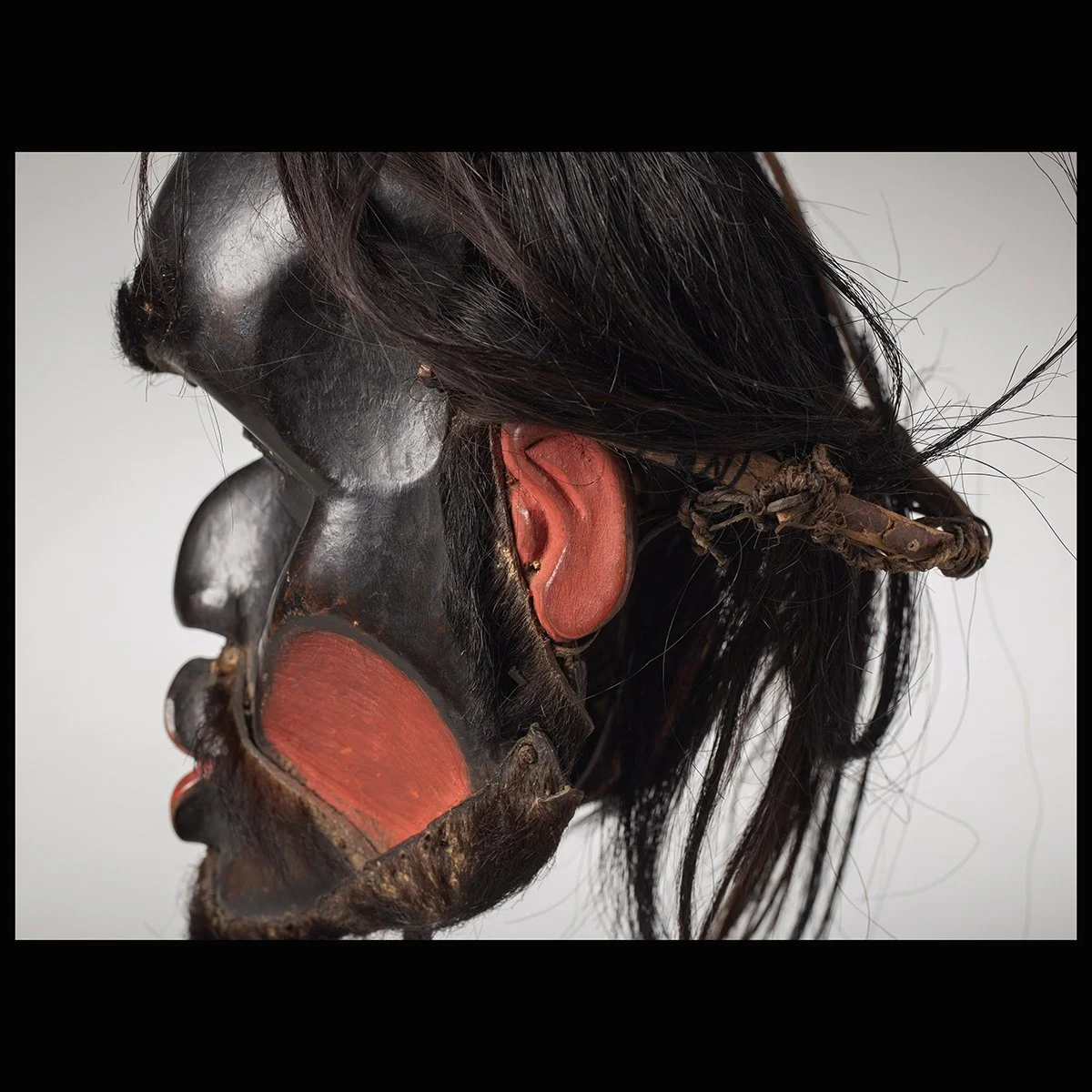 Image 7 of 14
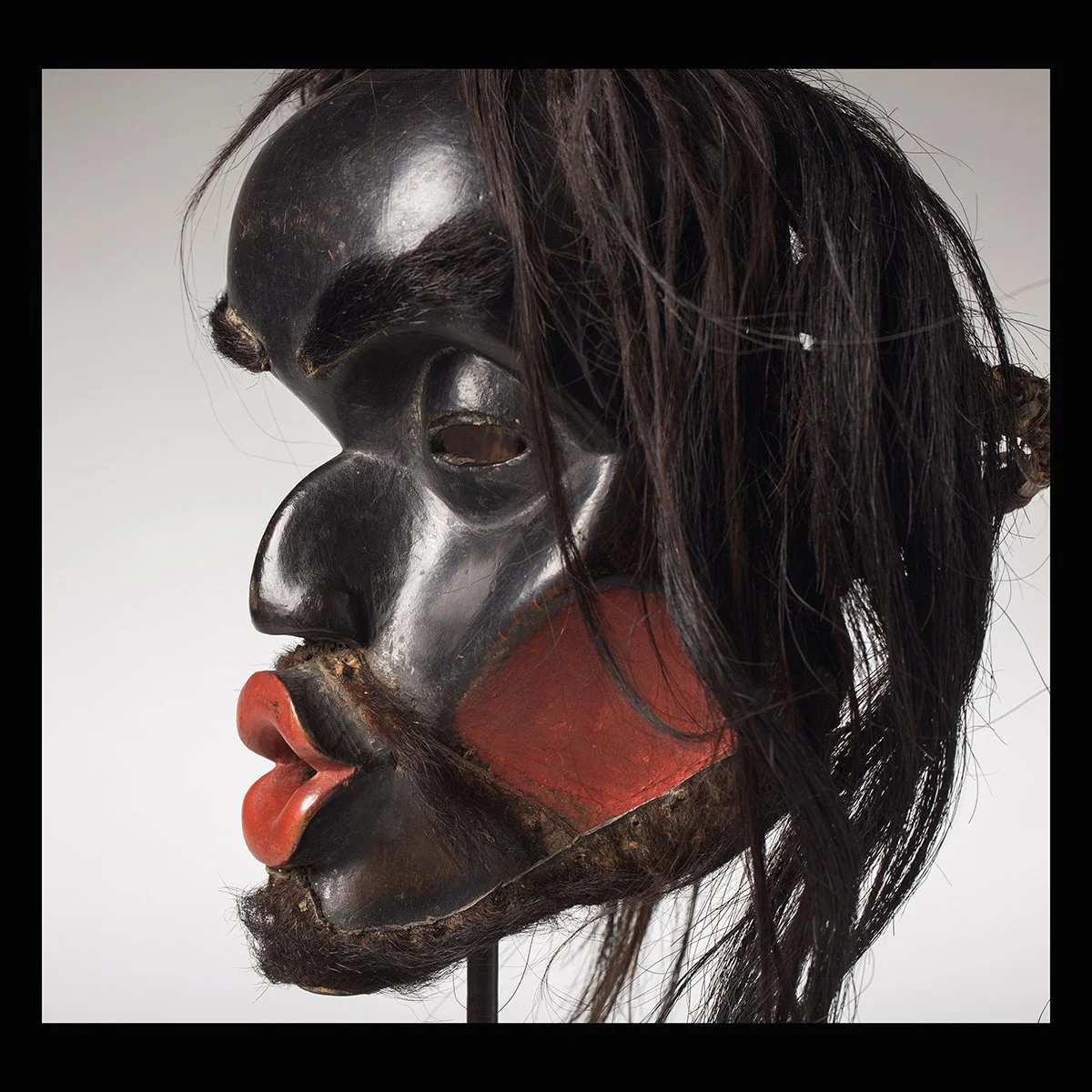 Image 8 of 14
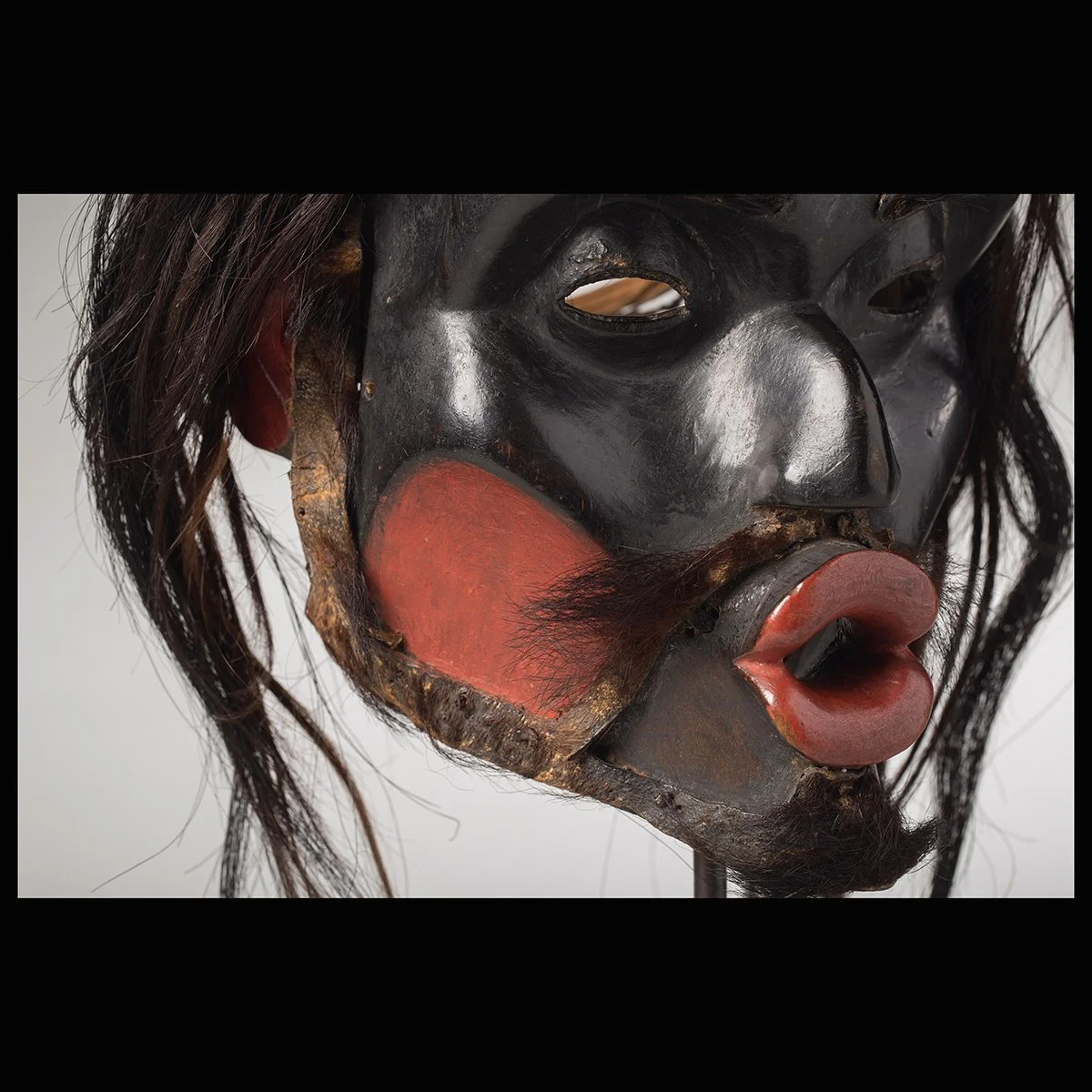 Image 9 of 14
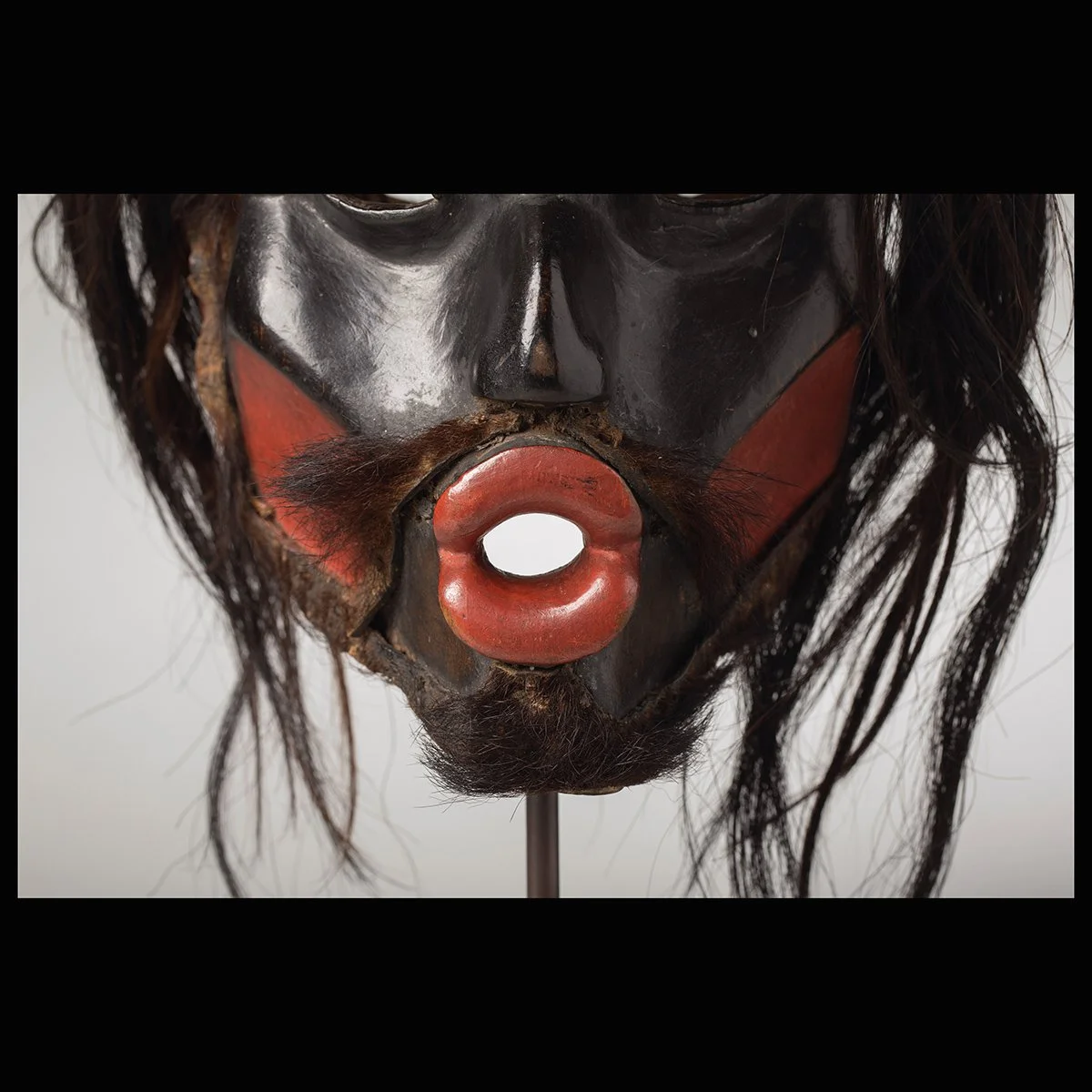 Image 10 of 14
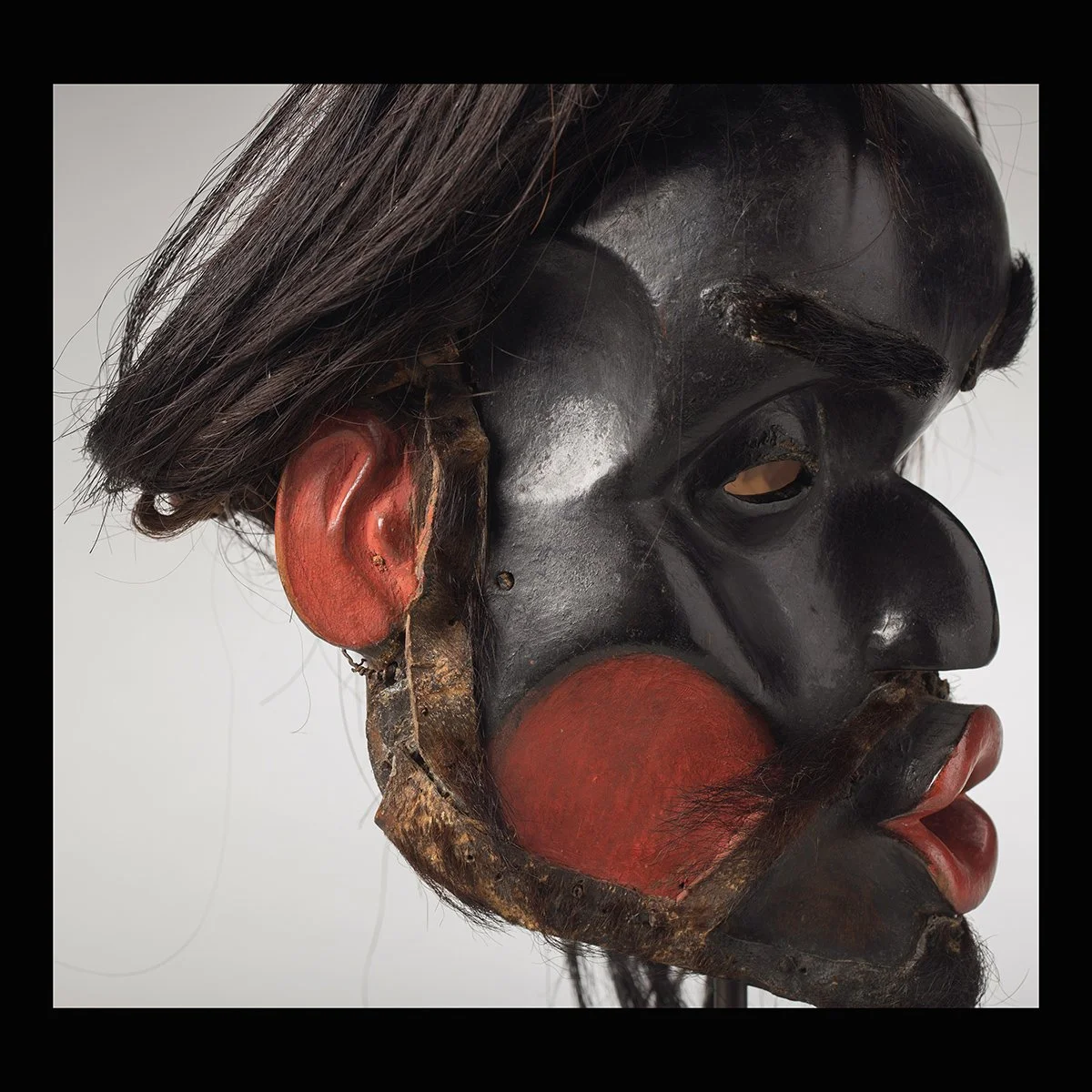 Image 11 of 14
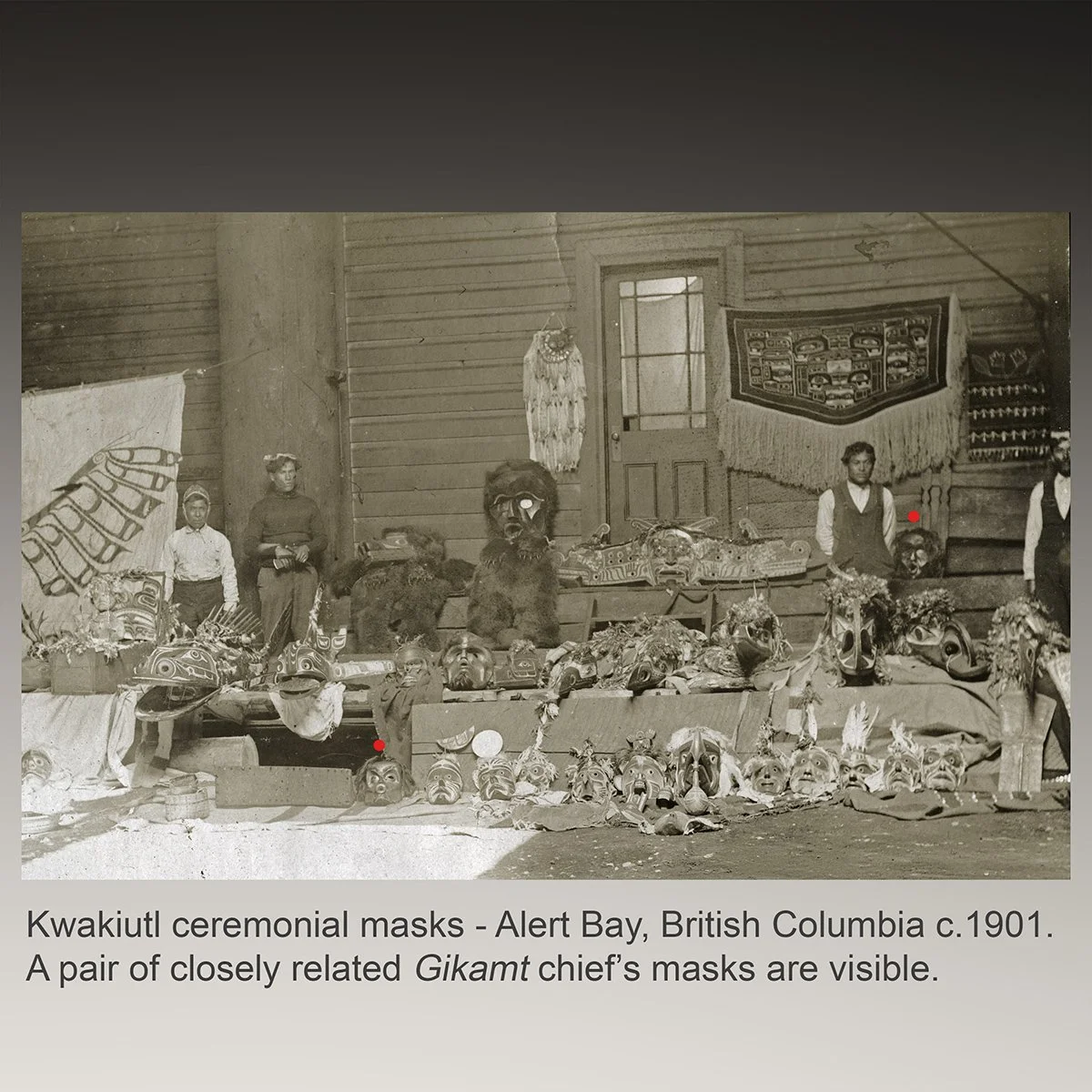 Image 12 of 14
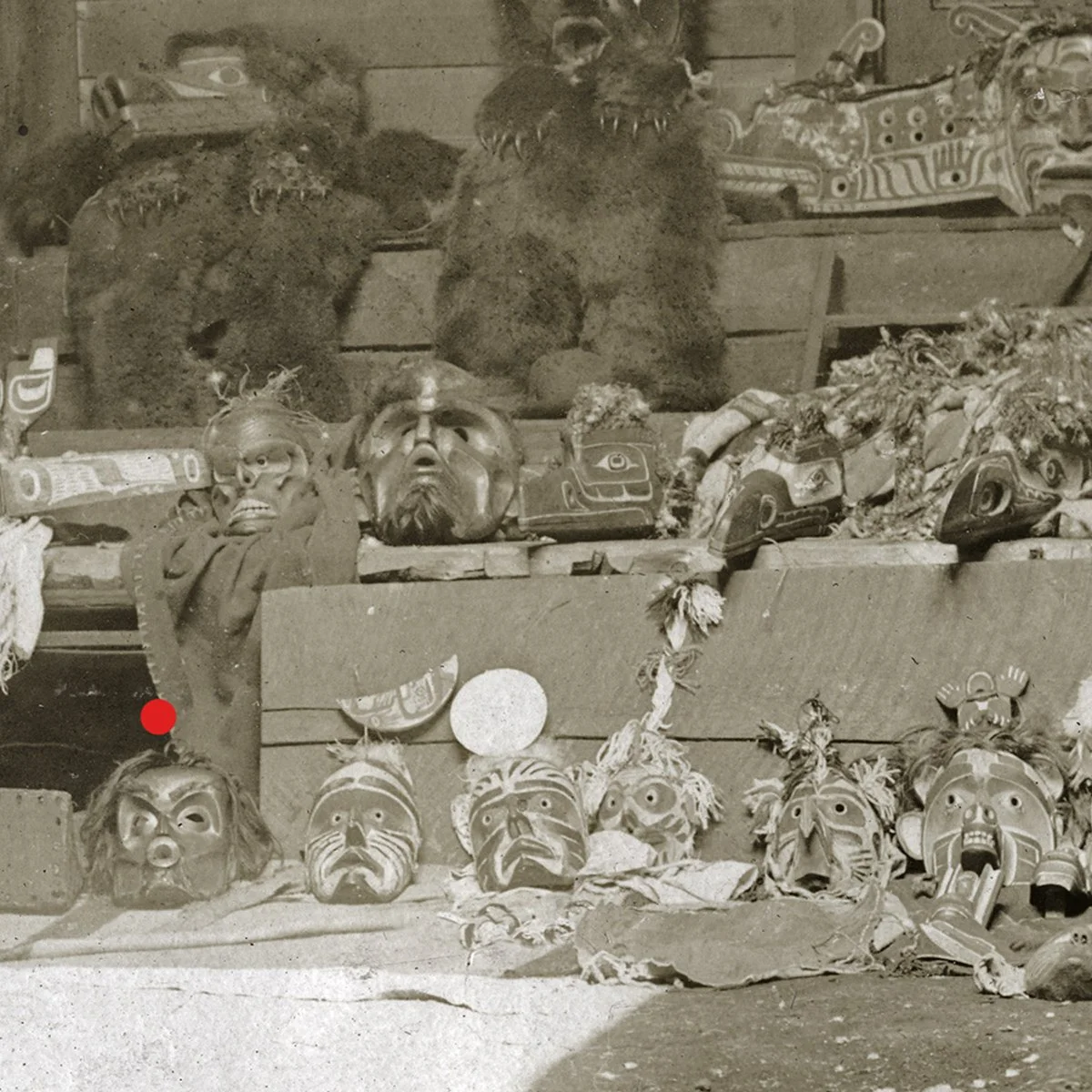 Image 13 of 14
Image 14 of 14
Image 13 of 14
Image 14 of 14
Extraordinary Kwakiutl Gikamt Chief’s Mask
Alert Bay, Cormorant Island, Northeast Vancouver Island. British Columbia, Canada
Circa 1820-1840
Alder wood, bear skin, human hair and horsehair, black graphite native pigment, red vermilion trade pigment
Mask height: 10.75 inches (27.25 cm) Mask width: 7.75 inches (19.7 cm)
Total height including hair 18.5 inches (47 cm)
Provenance: Collected in the late 19th century by French mining engineer Hippolyte Thiry in Alert Bay, British Columbia. By descent to his son, architect Paul Thiry (1904-1993) and Mary Thiry – Seattle, Wahington USA.
The Kwakiutl historically lived along the shorelines of northern Vancouver Island and the adjacent coastal mainland, in a region of dramatic fjords and inlets, and innumerable smaller islands. Kwakiutl ceremonial life was extremely elaborate, sophisticated, and complex and was based upon an equally elaborate mythology that reflected and reinforced the Kwakiutl world view. Kwakiutl creation myths, known as transformation stories, tell of ancient ancestors traveling the world transforming nature or themselves into new beings, some taking off their animal masks to reveal their human selves. These ancestors imparted their animal masks as crests for their numaym – or lineages, thus identifying some numaym with specific animals, such as the killer whale, wolf, bear, or raven. Rank and wealth were also important components of Kwakiutl social life, yet for the Kwakiutl, these forms of status took on a distinct form of social practice and were perhaps most explicit in the inheritance and performance of masks and dances.
The year was generally divided into two ceremonial periods, summer and winter, which consisted of a series of dance cycles that culminated in a potlatch ceremony. During this ceremony, noble families invited guests to celebrate special events and to witness a display of wealth and status of the host’s family lineage. These special events could include the transfer of marriage privileges and the naming of children, the acquisition of new rank, or the initiation of a dancer into a dancing society. The chief or head of the lineage distributed an array of gifts including blankets and copper, to friends and neighboring clans in a display of generosity that helped establish bonds and social obligations between attendants and the wealthy chief. The potlatch ceremony could sometimes create significant tensions owing to the indebtedness of attendants to the chief, who expected some form of future repayments for his generosity. This repayment could include high rates of interest that might take years to repay and could outweigh the value of the initial gift, though it was this custom of ever-increasing reciprocity that served as an important foundation for the community’s cohesion. Later, it was the growing threat of colonial conflict that encouraged Kwakiutl communities to create new alliances with other Kwakiutl clans, and thus prompted the expansion of the potlatch and joint winter season ceremonies.
Masks featured prominently in both potlatch and seasonal ceremonies and were highly valued by the Kwakiutl, for they served as potent embodiments of ancestral spirits and supernatural beings and provided these entities a way of communication through dance and other modes of performance. Masks also enabled the wearer to undergo spiritual and social renewal and so they served as an outward manifestation of the wearer’s inner transformation. Each mask and accompanying dance were owned by a particular family and were passed down by elders and chiefs to their immediate and extended families to be used in future ceremonies. Thus, these masks accumulated social histories that transformed and enhanced their value. The magnificent variety of masks produced by the Kwakiutl permits us a glimpse into the diverse array of characters and ideas that constituted the heart of their social, religious, and political life.
The elite chief’s mask, or gikamt, presented here powerfully portrays one of these supernatural characters, called Dzunukwa or Tsonoqua by the Kwakiutl; an important mythological creature for which they had developed a rich folklore, much of which was recorded and compiled by the renowned German American anthropologist Franz Boas during his extensive field work among the Kwakiutl beginning in 1885. Known as the “Cannibal Giant of the Woods” or the “Wild Woman of the Forest”, Dzunukwa was believed to be a member of a large family of giants that made their home in the distant mountains and forests. Unlike many Kwakiutl mythological characters that were thought to have fled the physical world, retreating from the machinations of human society, Dzunukwa was thought to still be physically present in the world. Towering in height and dark in color with bushy, unkempt hair resembling that of a bear, and a distinct pursed mouth through which she uttered the cry “Hu Hu!”, she was often viewed as a terrifying and threatening creature and was described as carrying a large basket on her back in which she placed disobedient children that she stole, taking them to her home to eat them. However, in the various stories, the children often outwitted her, as she was said to be vain, stupid and clumsy. In another aspect, Dzunukwa carried a large basin of Kwala’sta, or the Water of Life, that could magically revive the dead or transform the ugly to beautiful; one of the many gifts that she would bestow on people fortunate enough to encounter and befriend her. The Kwakiutl considered her most important role to be the bringer of wealth and good fortune, granted to those who could outwit her. Portrayed with this complex dualistic nature, Dzunukwa can be considered the embodiment of Kwakiutl thought in that she represented both parsimony and generosity, fear and mirth, ignorance and astuteness, and power with her limitless sources of wealth.
During the winter season ceremonies, the dancer’s portrayal of Dzunukwa was performed primarily within the Tseka ceremonies. The word Tseka implies imitation, double meanings, trickery, deceit, and hidden meanings obscured by surface appearances. The Dzunukwa perfectly embodied these ideas and so was the most important figure portrayed during the winter ceremonies. Dzunukwa additionally made appearances during potlatch ceremonies and during the Ta’sala “Peace Dances”. In each of these ceremonial contexts, a dancer would appear, supporting an oversized mask portraying the cannibal giant Dzunukwa, paired with a long-haired full-bodied costume comprised of bear skin, and often carrying a large basket strapped to their back. With eyes set deep within round sockets, and hollowed cheeks and pursed lips rendered to evoke the sounds of her haunting cry, the masks made a powerful impression. Oversized hands, either carved or woven, were often worn by the dancer to help mimic the great size of the cannibal giant and to add to the theatrics of the costume. The dancer in deep trance, often aided by other Hamatsa Society members to help support the mask and guide him, appeared from behind a curtain which signified emergence from the forest. The dancer would then move about very slowly and lumbering and would rub the eyes of the mask, portraying Dzunukwa as visibly tired and narcoleptic. Embodying popular stories, the dancer would motion to the floor as if picking up children and placing them in her basket. Dzunukwa was thought not alert enough to dance the standard four circuits around the fire, so rather she staggered in the wrong direction, and when escorted to her seat by the assistants, she proceeded to fall asleep. These Dzunukwa or “cannibal giant” dances could last for as long as five days, during which she was portrayed reenacting various mythical stories. Franz Boas noted a song performed during these ceremonial appearances of Dzunukwa in which attendees chanted “Great bringer of nightmares; Great one who makes us faint; Terrible Dzunukwa.” In an important role performed at the finale of the potlatch ceremonies, Dzunukwa was portrayed carrying a basket of copper wealth that she generously gives away to the chief. The chief, while wearing a special gikamt mask portraying Dzunukwa like the mask presented here, would in turn gift this copper wealth to his guests, emphasizing Dzunukwa’s role as keeper of the wealth of the forest and reinforcing the gikamt mask’s association with wealth and power. Franz Boas recorded such an event during his fieldwork among the Kwakiutl in 1897 noting the exchange “Let me see you that I may look up to you Chief! Now call your name Dzunukwa, you Chief, who knows how to buy that great copper. You cannot be equaled by anybody, you great mountain from which wealth is rolling down…wa, wa! That is what I say my tribe! Then the chief arose, and through his gikamt mask uttered the cry of Dzunukwa “hu hu hu” and he acted as though he was lifting the heavy weight of the copper from the ground.
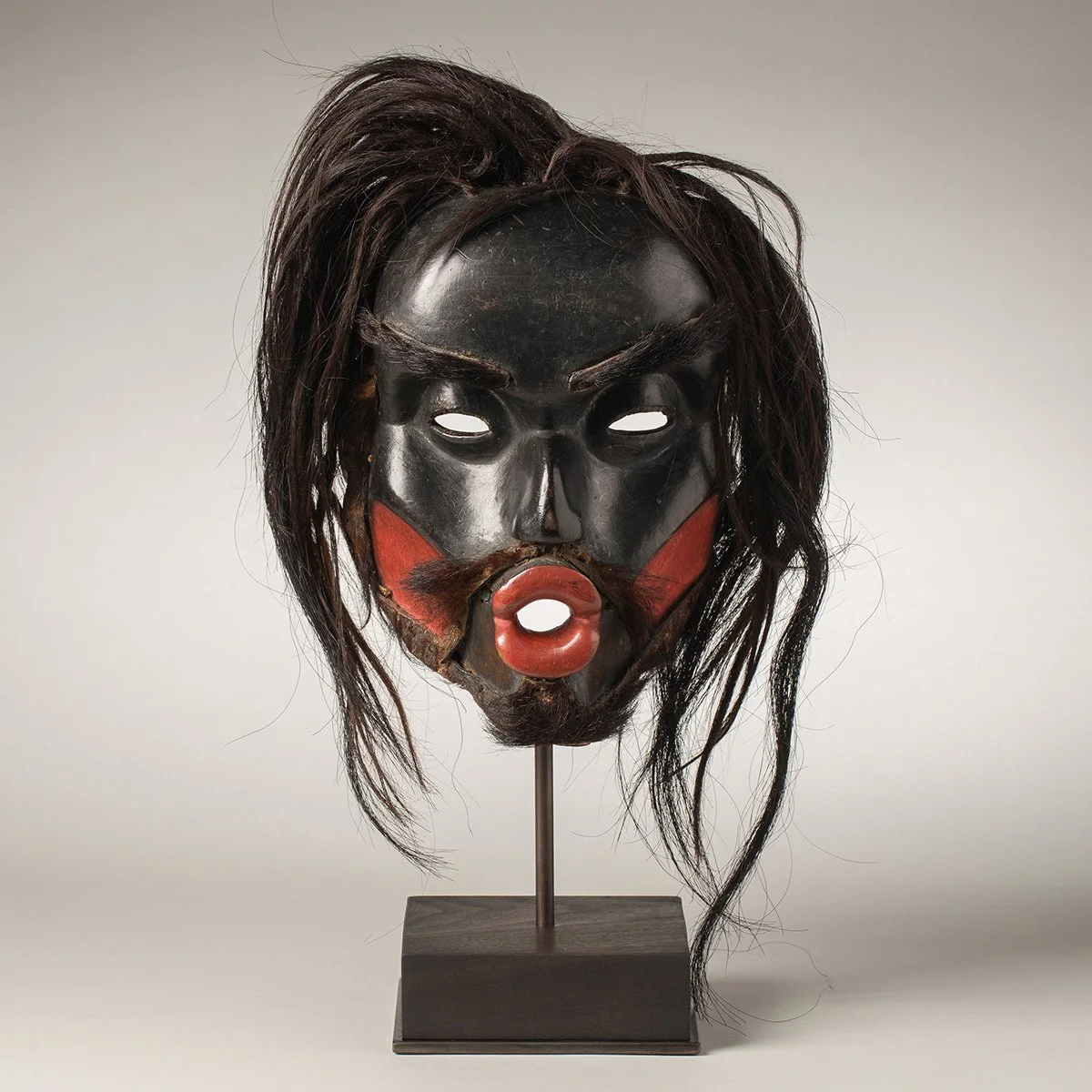
Embodying a powerful portrayal of Dzunukwa, the distinctive style, refined carving, and smaller size of this elite mask indicates that it was not intended to be danced, but rather was worn exclusively as a gikamt chief’s mask, at the end of the Winter Ceremonial, during which the chief was called upon to speak, as described by Boas, extolling his status and great copper wealth, and recounting the family’s history to his guests. Crafted from alder wood, the mask was masterfully carved with the use of indigenous soft metal tools fashioned by the Kwakiutl from trade iron. The mask’s highly sculpted features are defined by contrasting planes and elegant contours. The prominent forehead features a bearskin brow secured with wooden pegs and intertwined human hair and horsehair springs energetically from the head, behind which a pair of cupped ears are affixed. The pursed mouth is deep and tubular, and the emaciated cheeks are deeply hollowed, together evoking the haunting cry of Dzunukwa. Bordering the mouth is a moustache and beard comprised of bearskin also secured with wooden pegs. The swollen almond shaped eyes are set deep within large eye sockets. The complex facial planes of the mask are cleverly highlighted by the addition of graphite and powdered mica flakes embedded within the indigenous black paint, causing light to magically shimmer across the surfaces, further contributing to an exaggerated sense of depth. A bold application of Chinese vermillion highlights the mouth, cheeks and ears. Introduced during the Transatlantic fur trade in the 18th century, this vivid opaque red trade pigment was highly prized by the tribes of the Northwest Coast and was reserved for the most sacred of objects. Distributed by fur traders in small paper envelopes, a single packet of vermillion could be traded for a canoe load of valuable furs and pelts destined for European markets. The mask still retains its original arched Alderwood branch, used to secure the mask to the wearer. This remarkable mask was acquired in Alert Bay by French mining engineer Hippolyte Thiry, during his travels through British Columbia in the late 19th century. Dating circa 1820-1840, this elite gikamt chief’s mask is simply the finest and earliest example known to exist among the small corpus of early masks.
Other related examples can be found in notable institutions including the British Museum, Cat. No. Am1949,22.63 (among several others), the Saint Louis Art Museum, Cat. No. 269:1982, the Nelson-Atkins Museum of Art, Kansas City, MO. (Ex. Collection Estelle and Morton Sosland), Cat. No. 2009.41.1, the Milwaukee Public Museum, Cat. No. 17359, and the Museum of Anthropology, University of British Columbia, Cat. No. A6374 and A4034.
Additionally, a related late 19th century gikamt mask was sold at Sotheby’s Paris on June 11th in 2008 (lot 6) realizing $299,888 USD. More recently, a contemporary revival mask inspired by 19th century gikamt chief’s masks was sold at Sothebys New York on December 4th, 2020 (lot 80). That mask, carved in 1940 by contemporary Alert Bay artist Chief Willie Seaweed, sold for $201,600 USD, an extraordinary price for a modern replica mask and illustrating the demand for these elite gikamt chief’s masks.
Alert Bay, Cormorant Island, Northeast Vancouver Island. British Columbia, Canada
Circa 1820-1840
Alder wood, bear skin, human hair and horsehair, black graphite native pigment, red vermilion trade pigment
Mask height: 10.75 inches (27.25 cm) Mask width: 7.75 inches (19.7 cm)
Total height including hair 18.5 inches (47 cm)
Provenance: Collected in the late 19th century by French mining engineer Hippolyte Thiry in Alert Bay, British Columbia. By descent to his son, architect Paul Thiry (1904-1993) and Mary Thiry – Seattle, Wahington USA.
The Kwakiutl historically lived along the shorelines of northern Vancouver Island and the adjacent coastal mainland, in a region of dramatic fjords and inlets, and innumerable smaller islands. Kwakiutl ceremonial life was extremely elaborate, sophisticated, and complex and was based upon an equally elaborate mythology that reflected and reinforced the Kwakiutl world view. Kwakiutl creation myths, known as transformation stories, tell of ancient ancestors traveling the world transforming nature or themselves into new beings, some taking off their animal masks to reveal their human selves. These ancestors imparted their animal masks as crests for their numaym – or lineages, thus identifying some numaym with specific animals, such as the killer whale, wolf, bear, or raven. Rank and wealth were also important components of Kwakiutl social life, yet for the Kwakiutl, these forms of status took on a distinct form of social practice and were perhaps most explicit in the inheritance and performance of masks and dances.
The year was generally divided into two ceremonial periods, summer and winter, which consisted of a series of dance cycles that culminated in a potlatch ceremony. During this ceremony, noble families invited guests to celebrate special events and to witness a display of wealth and status of the host’s family lineage. These special events could include the transfer of marriage privileges and the naming of children, the acquisition of new rank, or the initiation of a dancer into a dancing society. The chief or head of the lineage distributed an array of gifts including blankets and copper, to friends and neighboring clans in a display of generosity that helped establish bonds and social obligations between attendants and the wealthy chief. The potlatch ceremony could sometimes create significant tensions owing to the indebtedness of attendants to the chief, who expected some form of future repayments for his generosity. This repayment could include high rates of interest that might take years to repay and could outweigh the value of the initial gift, though it was this custom of ever-increasing reciprocity that served as an important foundation for the community’s cohesion. Later, it was the growing threat of colonial conflict that encouraged Kwakiutl communities to create new alliances with other Kwakiutl clans, and thus prompted the expansion of the potlatch and joint winter season ceremonies.
Masks featured prominently in both potlatch and seasonal ceremonies and were highly valued by the Kwakiutl, for they served as potent embodiments of ancestral spirits and supernatural beings and provided these entities a way of communication through dance and other modes of performance. Masks also enabled the wearer to undergo spiritual and social renewal and so they served as an outward manifestation of the wearer’s inner transformation. Each mask and accompanying dance were owned by a particular family and were passed down by elders and chiefs to their immediate and extended families to be used in future ceremonies. Thus, these masks accumulated social histories that transformed and enhanced their value. The magnificent variety of masks produced by the Kwakiutl permits us a glimpse into the diverse array of characters and ideas that constituted the heart of their social, religious, and political life.
The elite chief’s mask, or gikamt, presented here powerfully portrays one of these supernatural characters, called Dzunukwa or Tsonoqua by the Kwakiutl; an important mythological creature for which they had developed a rich folklore, much of which was recorded and compiled by the renowned German American anthropologist Franz Boas during his extensive field work among the Kwakiutl beginning in 1885. Known as the “Cannibal Giant of the Woods” or the “Wild Woman of the Forest”, Dzunukwa was believed to be a member of a large family of giants that made their home in the distant mountains and forests. Unlike many Kwakiutl mythological characters that were thought to have fled the physical world, retreating from the machinations of human society, Dzunukwa was thought to still be physically present in the world. Towering in height and dark in color with bushy, unkempt hair resembling that of a bear, and a distinct pursed mouth through which she uttered the cry “Hu Hu!”, she was often viewed as a terrifying and threatening creature and was described as carrying a large basket on her back in which she placed disobedient children that she stole, taking them to her home to eat them. However, in the various stories, the children often outwitted her, as she was said to be vain, stupid and clumsy. In another aspect, Dzunukwa carried a large basin of Kwala’sta, or the Water of Life, that could magically revive the dead or transform the ugly to beautiful; one of the many gifts that she would bestow on people fortunate enough to encounter and befriend her. The Kwakiutl considered her most important role to be the bringer of wealth and good fortune, granted to those who could outwit her. Portrayed with this complex dualistic nature, Dzunukwa can be considered the embodiment of Kwakiutl thought in that she represented both parsimony and generosity, fear and mirth, ignorance and astuteness, and power with her limitless sources of wealth.
During the winter season ceremonies, the dancer’s portrayal of Dzunukwa was performed primarily within the Tseka ceremonies. The word Tseka implies imitation, double meanings, trickery, deceit, and hidden meanings obscured by surface appearances. The Dzunukwa perfectly embodied these ideas and so was the most important figure portrayed during the winter ceremonies. Dzunukwa additionally made appearances during potlatch ceremonies and during the Ta’sala “Peace Dances”. In each of these ceremonial contexts, a dancer would appear, supporting an oversized mask portraying the cannibal giant Dzunukwa, paired with a long-haired full-bodied costume comprised of bear skin, and often carrying a large basket strapped to their back. With eyes set deep within round sockets, and hollowed cheeks and pursed lips rendered to evoke the sounds of her haunting cry, the masks made a powerful impression. Oversized hands, either carved or woven, were often worn by the dancer to help mimic the great size of the cannibal giant and to add to the theatrics of the costume. The dancer in deep trance, often aided by other Hamatsa Society members to help support the mask and guide him, appeared from behind a curtain which signified emergence from the forest. The dancer would then move about very slowly and lumbering and would rub the eyes of the mask, portraying Dzunukwa as visibly tired and narcoleptic. Embodying popular stories, the dancer would motion to the floor as if picking up children and placing them in her basket. Dzunukwa was thought not alert enough to dance the standard four circuits around the fire, so rather she staggered in the wrong direction, and when escorted to her seat by the assistants, she proceeded to fall asleep. These Dzunukwa or “cannibal giant” dances could last for as long as five days, during which she was portrayed reenacting various mythical stories. Franz Boas noted a song performed during these ceremonial appearances of Dzunukwa in which attendees chanted “Great bringer of nightmares; Great one who makes us faint; Terrible Dzunukwa.” In an important role performed at the finale of the potlatch ceremonies, Dzunukwa was portrayed carrying a basket of copper wealth that she generously gives away to the chief. The chief, while wearing a special gikamt mask portraying Dzunukwa like the mask presented here, would in turn gift this copper wealth to his guests, emphasizing Dzunukwa’s role as keeper of the wealth of the forest and reinforcing the gikamt mask’s association with wealth and power. Franz Boas recorded such an event during his fieldwork among the Kwakiutl in 1897 noting the exchange “Let me see you that I may look up to you Chief! Now call your name Dzunukwa, you Chief, who knows how to buy that great copper. You cannot be equaled by anybody, you great mountain from which wealth is rolling down…wa, wa! That is what I say my tribe! Then the chief arose, and through his gikamt mask uttered the cry of Dzunukwa “hu hu hu” and he acted as though he was lifting the heavy weight of the copper from the ground.
Embodying a powerful portrayal of Dzunukwa, the distinctive style, refined carving, and smaller size of this elite mask indicates that it was not intended to be danced, but rather was worn exclusively as a gikamt chief’s mask, at the end of the Winter Ceremonial, during which the chief was called upon to speak, as described by Boas, extolling his status and great copper wealth, and recounting the family’s history to his guests. Crafted from alder wood, the mask was masterfully carved with the use of indigenous soft metal tools fashioned by the Kwakiutl from trade iron. The mask’s highly sculpted features are defined by contrasting planes and elegant contours. The prominent forehead features a bearskin brow secured with wooden pegs and intertwined human hair and horsehair springs energetically from the head, behind which a pair of cupped ears are affixed. The pursed mouth is deep and tubular, and the emaciated cheeks are deeply hollowed, together evoking the haunting cry of Dzunukwa. Bordering the mouth is a moustache and beard comprised of bearskin also secured with wooden pegs. The swollen almond shaped eyes are set deep within large eye sockets. The complex facial planes of the mask are cleverly highlighted by the addition of graphite and powdered mica flakes embedded within the indigenous black paint, causing light to magically shimmer across the surfaces, further contributing to an exaggerated sense of depth. A bold application of Chinese vermillion highlights the mouth, cheeks and ears. Introduced during the Transatlantic fur trade in the 18th century, this vivid opaque red trade pigment was highly prized by the tribes of the Northwest Coast and was reserved for the most sacred of objects. Distributed by fur traders in small paper envelopes, a single packet of vermillion could be traded for a canoe load of valuable furs and pelts destined for European markets. The mask still retains its original arched Alderwood branch, used to secure the mask to the wearer. This remarkable mask was acquired in Alert Bay by French mining engineer Hippolyte Thiry, during his travels through British Columbia in the late 19th century. Dating circa 1820-1840, this elite gikamt chief’s mask is simply the finest and earliest example known to exist among the small corpus of early masks.
Other related examples can be found in notable institutions including the British Museum, Cat. No. Am1949,22.63 (among several others), the Saint Louis Art Museum, Cat. No. 269:1982, the Nelson-Atkins Museum of Art, Kansas City, MO. (Ex. Collection Estelle and Morton Sosland), Cat. No. 2009.41.1, the Milwaukee Public Museum, Cat. No. 17359, and the Museum of Anthropology, University of British Columbia, Cat. No. A6374 and A4034.
Additionally, a related late 19th century gikamt mask was sold at Sotheby’s Paris on June 11th in 2008 (lot 6) realizing $299,888 USD. More recently, a contemporary revival mask inspired by 19th century gikamt chief’s masks was sold at Sothebys New York on December 4th, 2020 (lot 80). That mask, carved in 1940 by contemporary Alert Bay artist Chief Willie Seaweed, sold for $201,600 USD, an extraordinary price for a modern replica mask and illustrating the demand for these elite gikamt chief’s masks.