

 Image 1 of 8
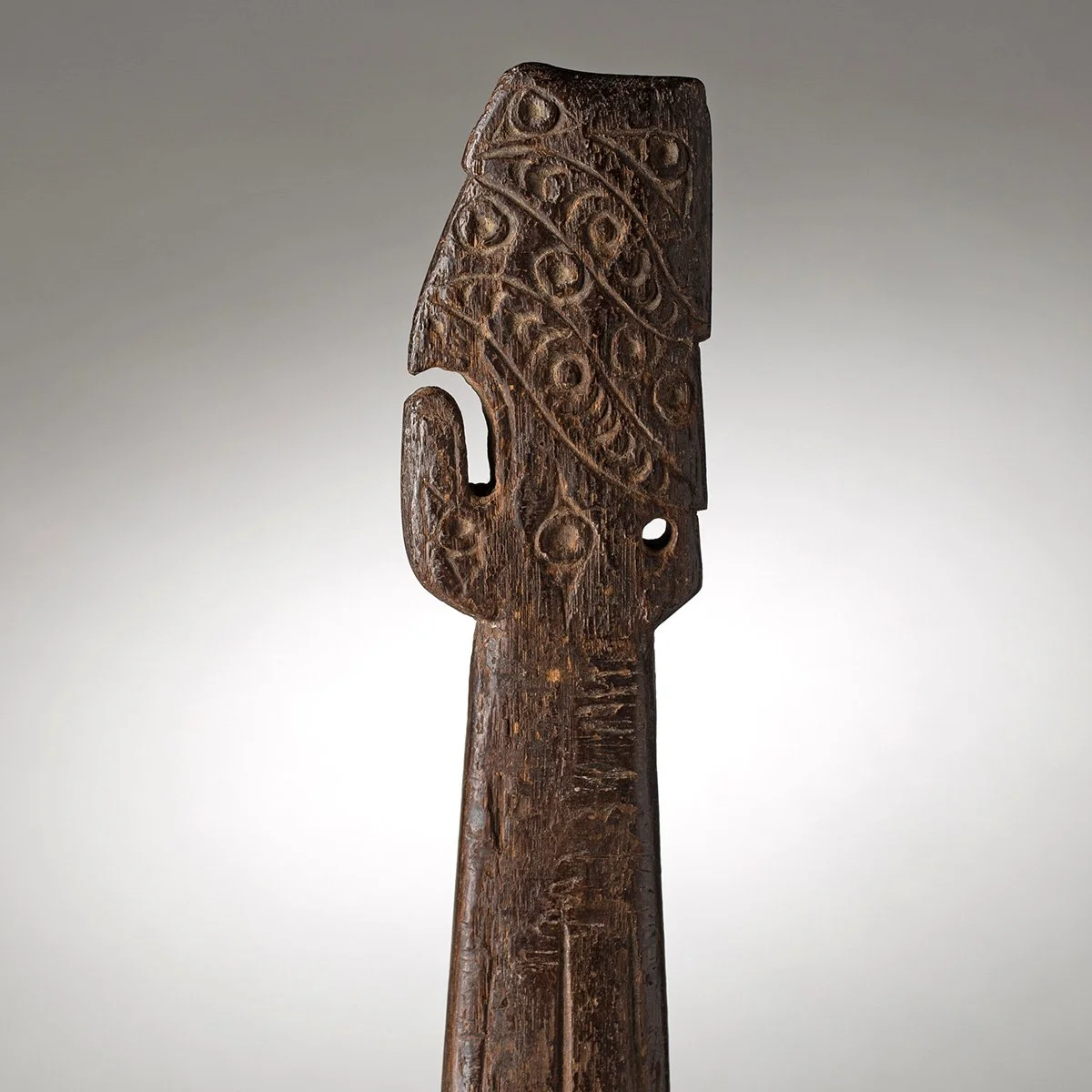 Image 2 of 8
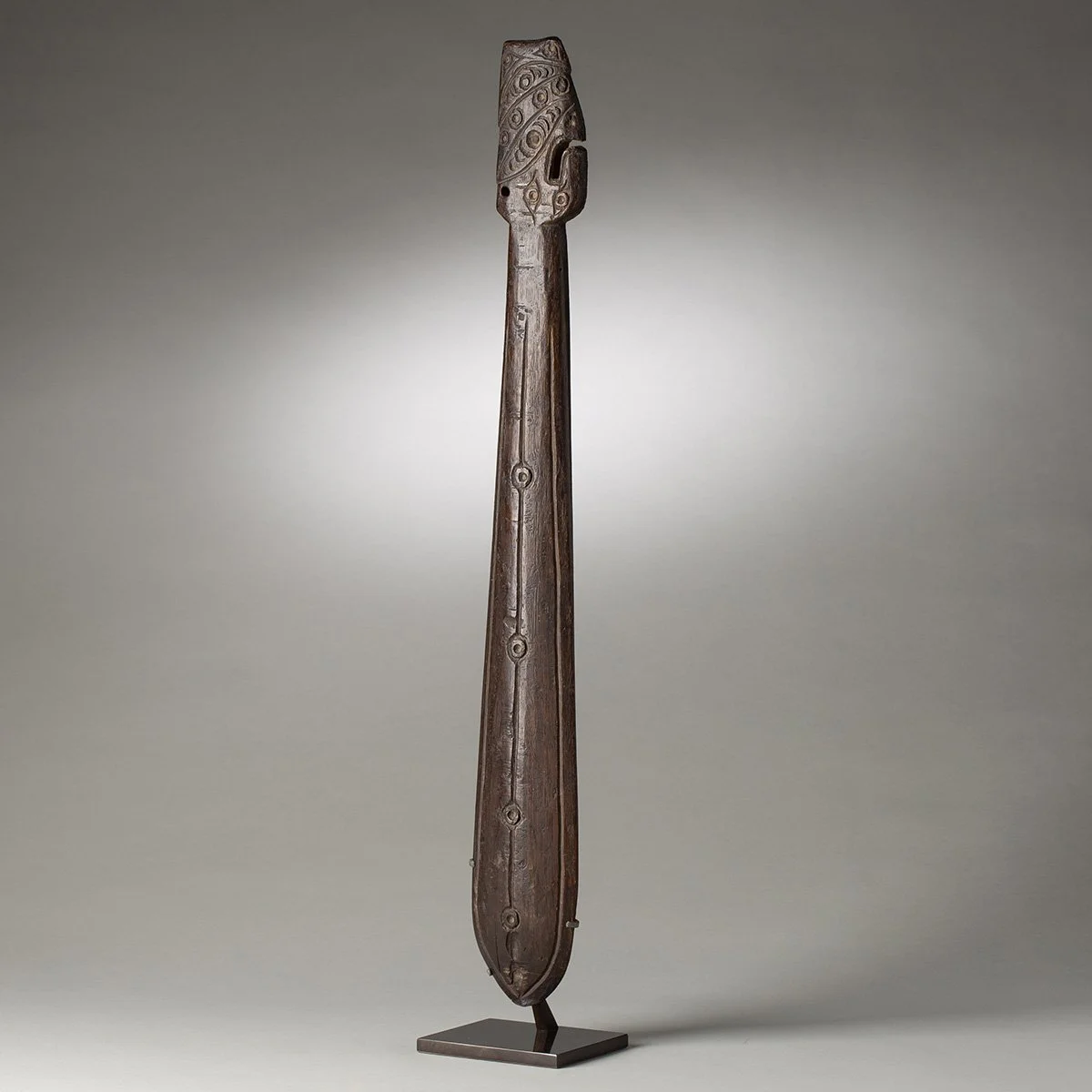 Image 3 of 8
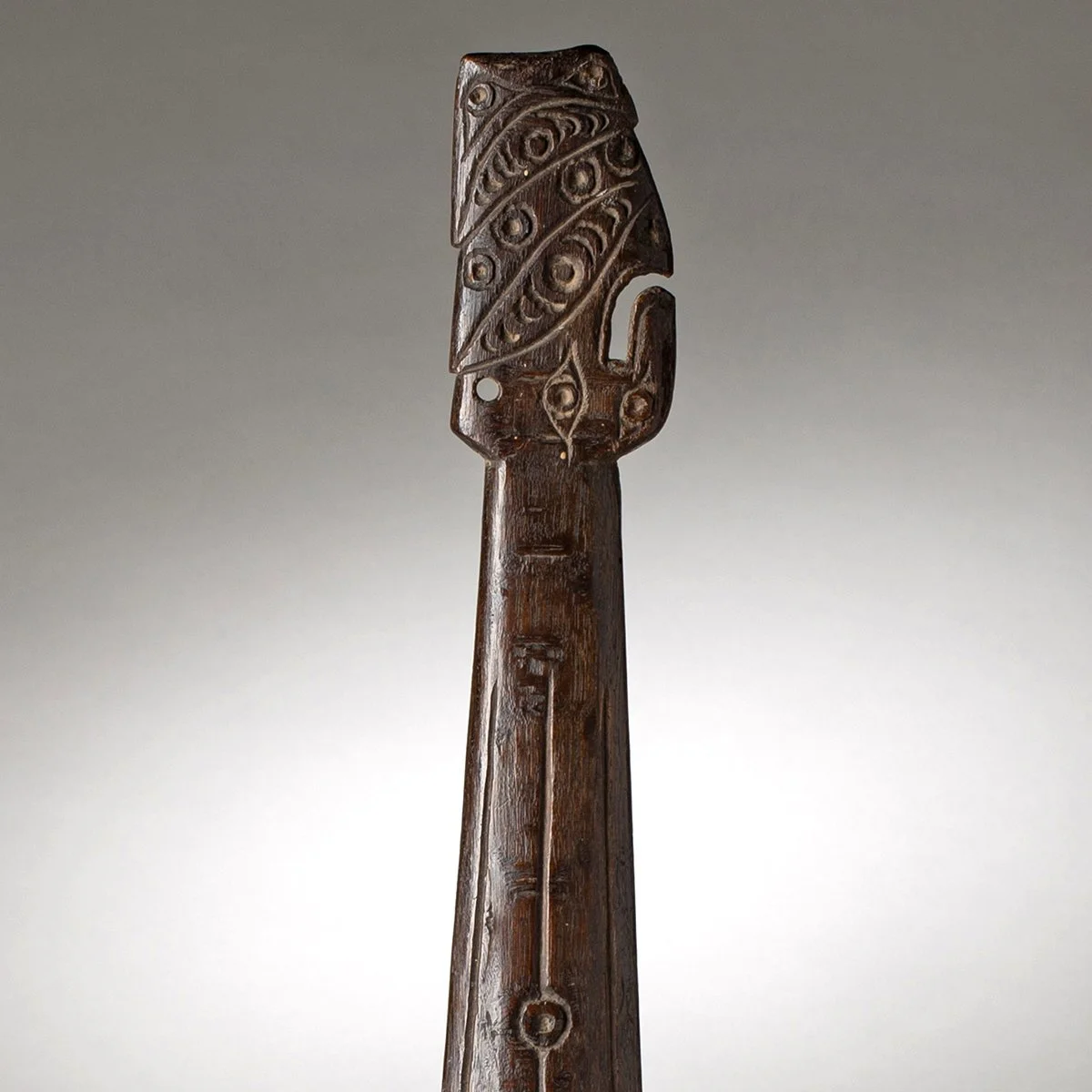 Image 4 of 8
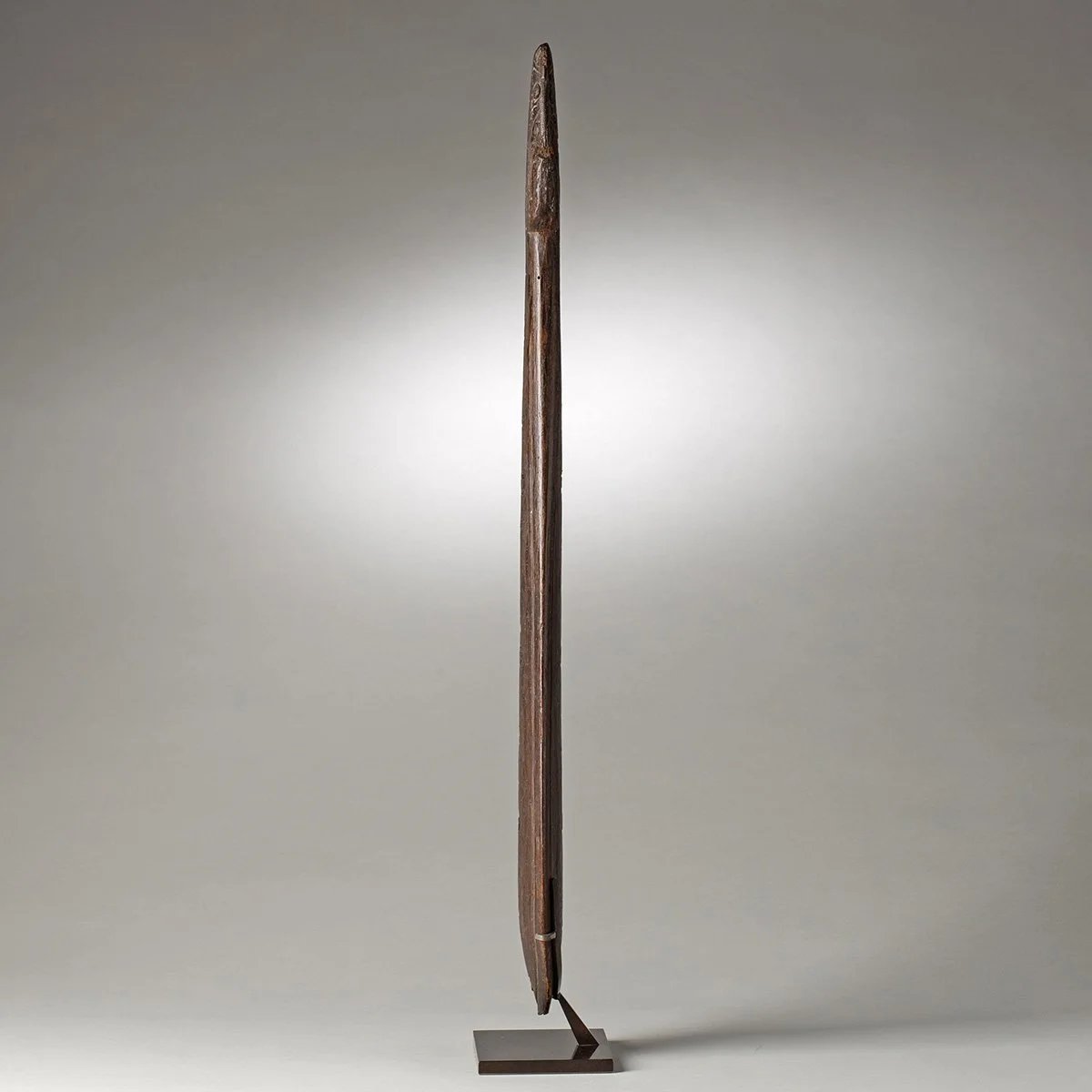 Image 5 of 8
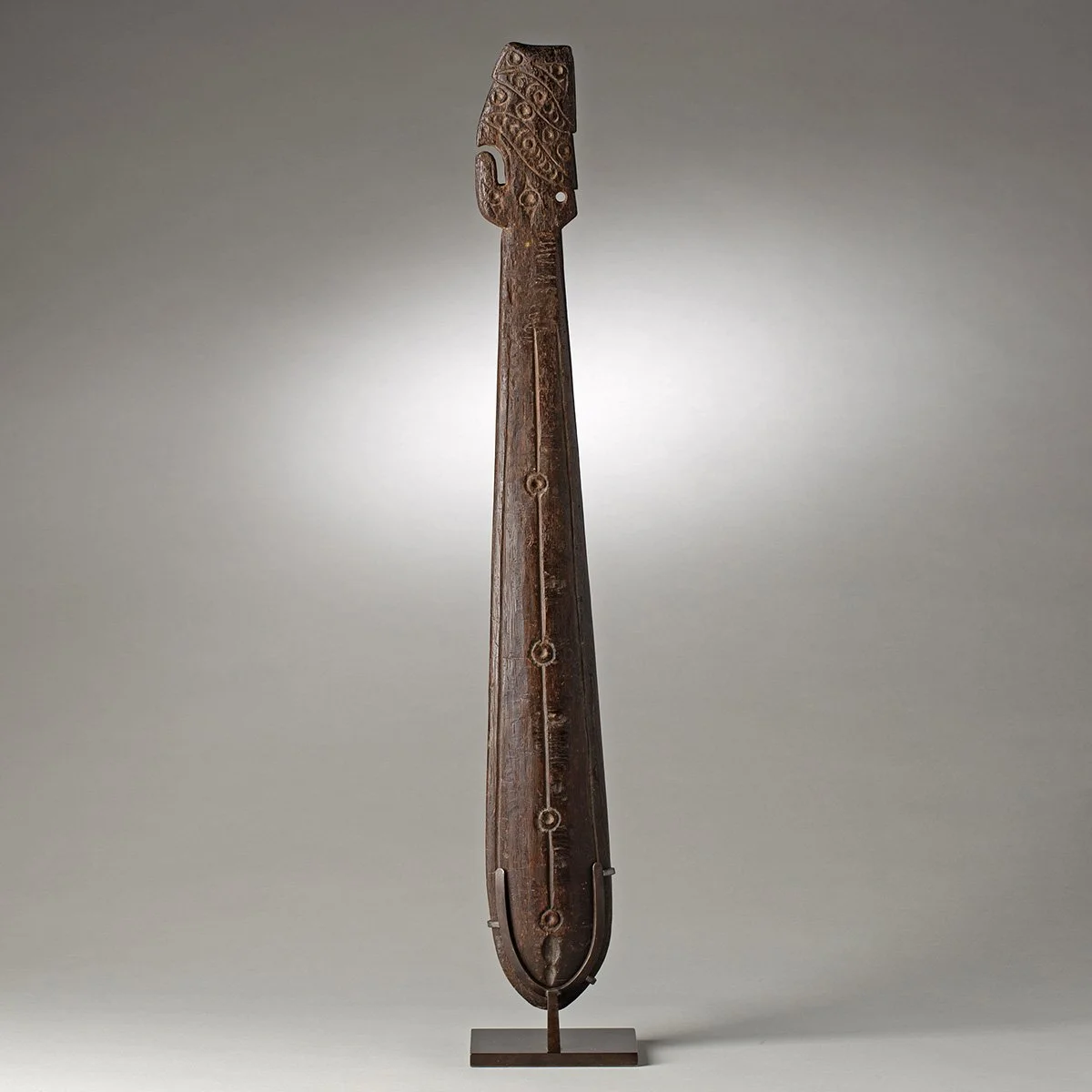 Image 6 of 8
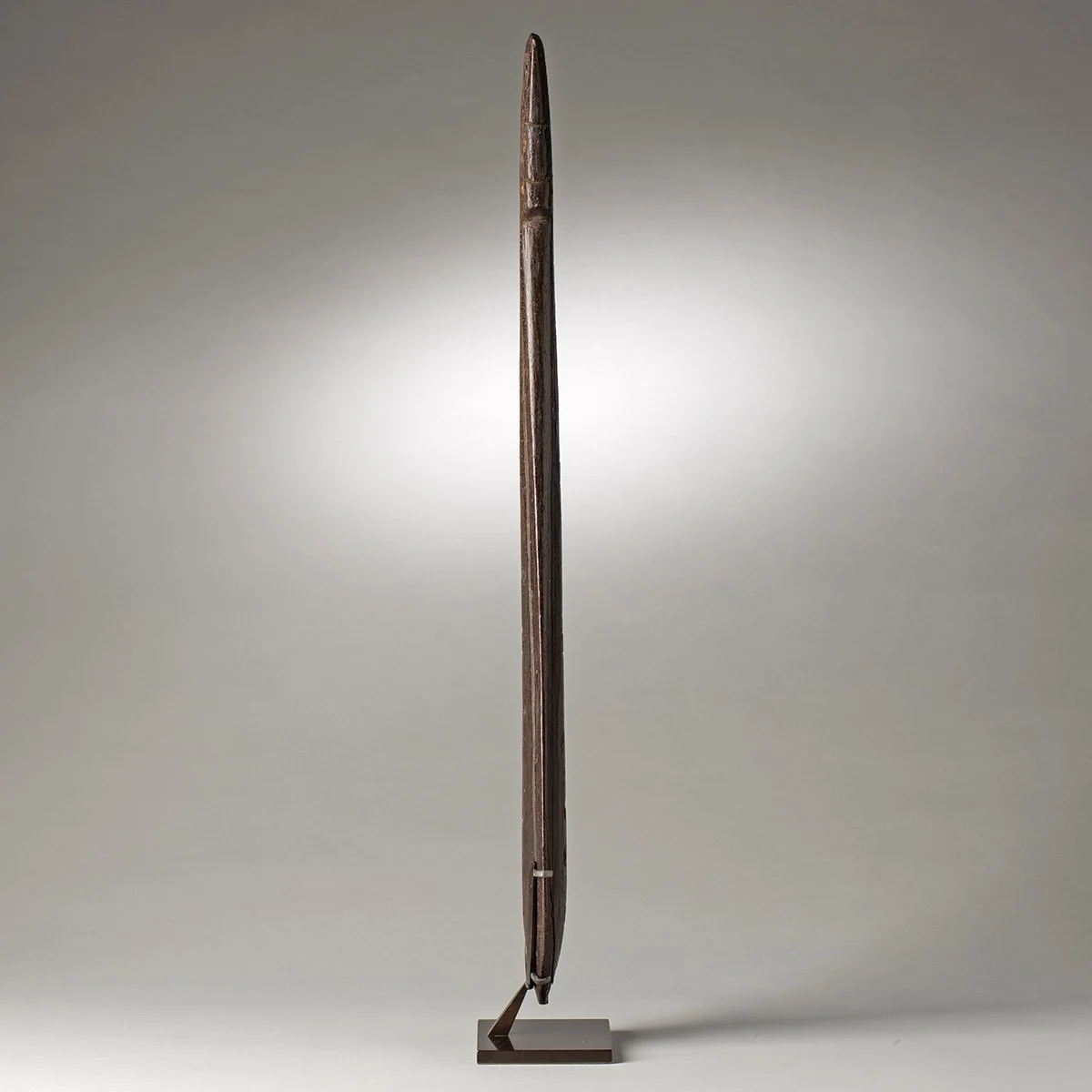 Image 7 of 8
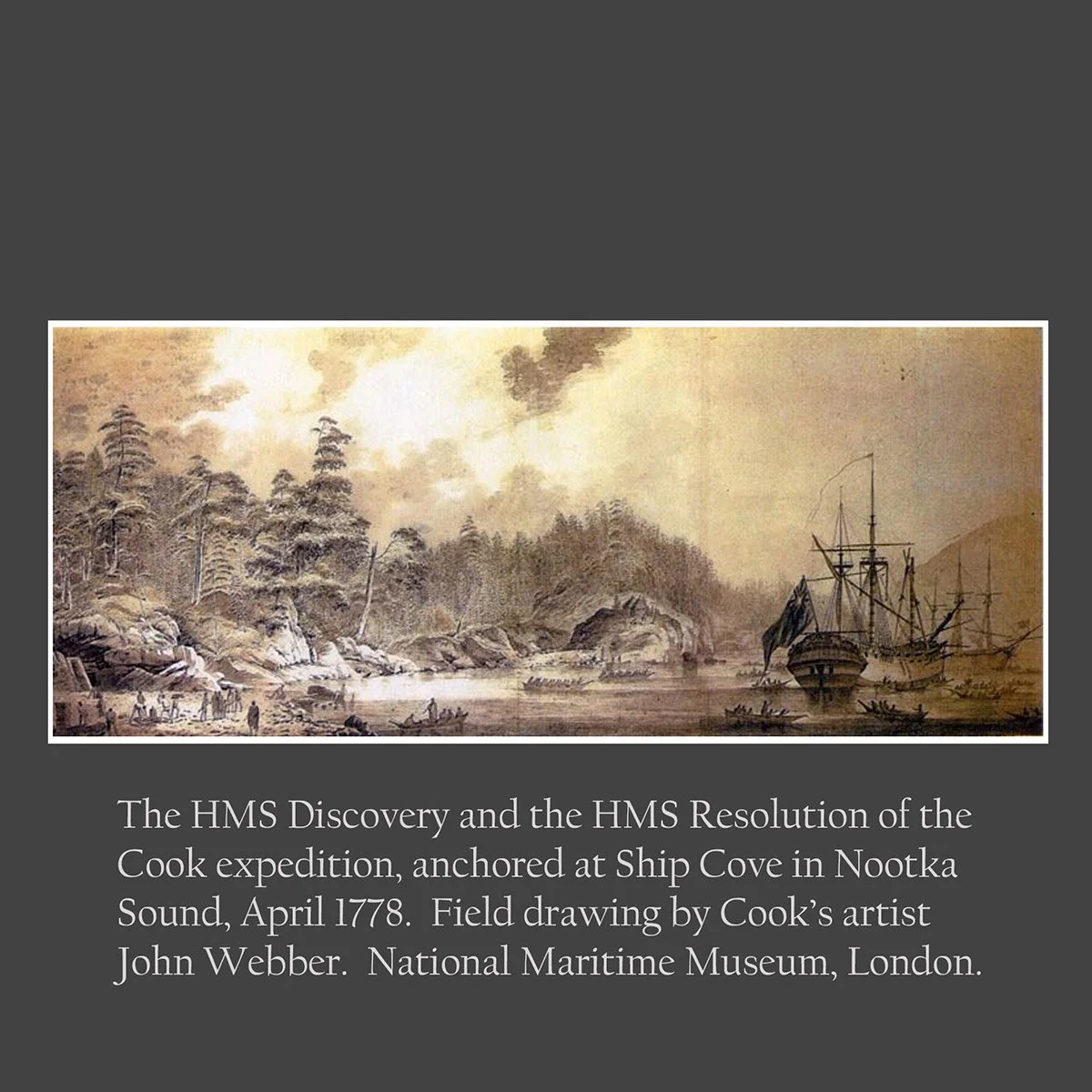 Image 8 of 8
Important Nootka Ch'it'uut War Club
A REDISCOVERED MASTERPIECE FROM CAPTAIN COOK’S THIRD VOYAGE
Nootka Sound, Vancouver Island, British Columbia, Canada
17th-18th century
Wood
Height 23 inches (58.5 cm)
Provenance: Private English collection
See our full page ad for Apollo Magazine here.
The Nootka, known also as Nuu-chah-nulth, historically lived along the shorelines of the rugged west coast of Vancouver Island, in a region of dramatic fjords and inlets, and innumerable smaller islands.Nootka society was elaborate, sophisticated, and complex and its culture was strongly defined by their relationship with the ocean, most notably through their renown as expert whale hunters. Unlike many other coastal groups, Nootka chiefs personally led dangerous expeditions in large cedar dugout canoes to hunt humpback and gray whales, a practice that conferred spiritual and social prestige. This wealth of marine resources supported a complex social hierarchy of nobles, commoners, and slaves, where status was continuously validated through elaborate potlatch ceremonies. These grand ceremonial feasts involved the meticulous distribution of wealth—such as dentalium shells, sea otter pelts, and dried fish—to reinforce ancestral lineages and oral histories. During the late 18th century, Nootka Sound was the center of international diplomacy and the commercial maritime fur trade in the North Pacific. It was the arrival of Captain James Cook to the Northwest Coast of America and the reactions of the indigenous tribes of the region that did much to set the stage for these historic developments.
The Cook expedition arrived off Nootka Sound on March 29, 1778, the two ships, the HMS Resolution and the HMS Discover anchoring in Ship Cove, now known as Resolution Cove, on the southeast side of Bligh Island, where they remained until April 26. The arrival of the Cook expedition was remembered in the oral traditions of the Mowachaht and Muchalaht people of Nootka Sound and its account was described by a descendant of Chief Maquinna…“When the two ships from the Cook expedition arrived at the end of March, the beach keeper from our village went out in a canoe to greet the newcomers, standing up in the canoe and with his best oration welcomed the ships to our territorial waters and invited them to come to the harbor in front of our village.In our history, the words that the chief was calling out were ‘nu.tka…icim, nu.tka…icim’ which translates into English as ‘sail around.’ Of course, there was misunderstanding as the newcomers did not understand our language. The words somehow became the name that was applied to us by the outsiders, the Nootka. The Cook expedition ships did not come in the direction that our chief was beckoning but instead chose an anchorage that was distant from our villages but still in our territory. We considered the ships as adrift on our waters, and according to the traditional ownership rights of our chiefs they were under our control. This meant that we constantly had to be with the ships to prevent any trespass by our neighbors. The month-long visit of the Cook expedition in our territory established an economic and political relationship. We provided the ships with daily supplies of fish, as well as water, wood, oil and furs in trade for metal, a rare material of great value to us.”
The Cook expedition arrived in Nootka Sound not by intent but rather out of necessity, as the ships were in need of repairs and Cook wanted to rest the ships’ crews. The one-month stay of the expedition introduced Cook to traditional cultures and behaviors that were dramatically different from those of the people he had interacted with in the South Pacific on the previous two voyages and in Hawaii on the third voyage. Interactions with the native population occurred initially off the entrance to Nootka Sound and then daily at the anchorage in Ship Cove. Cook also deployed two launches on a one-day exploration around the sound. During this trip, he visited three villages, two occupied and one abandoned. He returned to the first village on another day with the expedition artist, John Webber, who with other expedition artists, produced a series of 42 drawings from Nootka Sound. The images include the ships at anchor in Ship Cove, the scenery at the anchorage, the indigenous people, and, in the words of Cook, “drawings of everything that was curious both within and without doors” at the village at the western entrance to Nootka Sound. The journal entries on Indigenous life are limited to what each writer was able to view from the ships or the shore. As the ships were anchored far from any of the villages, the observations would have been extremely limited if Cook had not undertaken the two visits to the village at the western entrance to the sound. Here the officers had free access to the village and the houses, providing them increased opportunities to observe Indigenous life.
The native artifacts, or “curiosities” purchased by the ships crews during the expedition provide an additional material record of Cook’s visit in Nootka Sound.These were not an official collection made by the expedition but were the result of individual purchases by crew members, native objects brought by canoe to the sides of the ships by Nootka men, eager to trade for highly prized iron.As a result, these various ethnographic items acquired by the ship’s crew dispersed quickly upon the return of the expedition to England. Adrienne Kaeppler has identified nearly 100 artifacts collected by the Cook expedition as coming from Nootka Sound. This is the largest number of artifacts collected from any area visited by the Cook expedition on the Northwest Coast, a result of its extended one stay at Nootka Sound. The inordinate number of deadly Nootka war clubs acquired by the crew reflects the popularity of these clubs among the ship’s crew members.Nearly all of the extant Nootka Ch’it’uut war clubs in museums and private collections today were carved from whale bone, rendered typically from the lower jawbone of the whale, carefully aged before carving for added strength.The Nootka also produced a number of these clubs from native mined copper, though these copper clubs served an exclusively ceremonial function for high-ranking chiefs.
The rarest of the Nootka Ch’it’uut war clubs were carved from hardwood. In fact, only two such clubs were known to exist. One of these clubs was held in the ancient English collection of Richard Cuming, who began assembling his collection in 1782 and who acquired much of his collection from the renown Leverian Museum in 1806, noted for its content of objects collected by Captain Cook, particularly during his 3rd voyage in 1778.That club is now held in the collections of the Southwark Heritage Centre in London. The second surviving example is the exceptional wooden Nootka Ch’it’uut war club presented here. Remarkably, this club, just recently discovered in England, had long escaped attention as it had been misidentified as a common Massim war club from New Guinea’s Trobriand Islands.It’s near certain that this club had also come to England upon the return of Cook’s 3rd voyage in 1778, one of the many items acquired at Nootka Sound by ship’s crew members during the month-long stay.
Intriguingly, a cache of ancient Nootka wooden war clubs was more recently discovered from an exceptional archaeological site known as Ozette, situated at the southernmost range of the Nootka tribe along Washington’s coast.In the winter of 1970, a powerful storm caused the coastal bank at Ozette village location to slump, exposing hundreds of perfectly preserved wooden artifacts buried by a catastrophic mudslide many centuries ago.The village, once inhabited by members of the Nootka’s Makah tribe, was suddenly buried when a portion of the hillside collapsed, sealing Nootka homes and belongings beneath thick layers of mud.Because the site was quickly cut off from air and moisture, thousands of artifacts made of wood, fiber, and other normally fragile materials were astonishingly well preserved. Items such as weapons and tools, household objects, and everyday equipment offered a rare, intimate look at Nootka life before European contact. Nootka oral history told of a “great slide” which buried a portion of Ozette long ago. Archaeologists’ collaboration with the tribe proved this oral history correct. Radiocarbon dating demonstrated that the slide some 500 ± 50 years BP (before present) buried six longhouses and their respective contents, locking the pre-contact wooden artifacts in a shroud of mud. The 11-year excavation produced over 55,000 artifacts, including an assortment of whalebone and wooden clubs, revealing that the basic design of the Ch’it’uut’ war club, with its distinctive thunderbird head carved in profile, had remained remarkably consistent over many centuries. There in fact has been little variation in the shape of these clubs over the past 2000 years, with only the decorative elements differing over time.
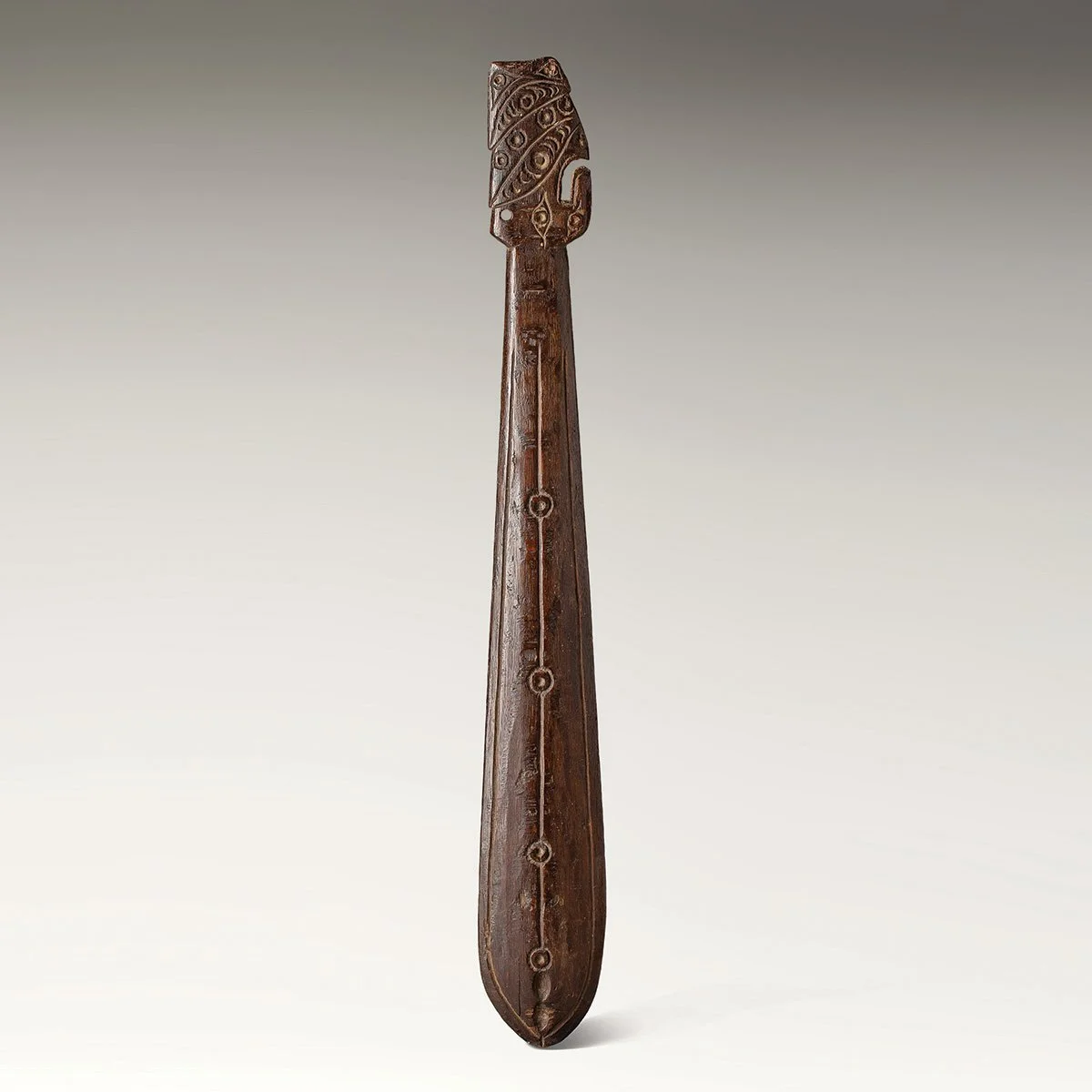
Exceptional for its beautiful form and balance, rare wooden construction, and notable historical significance, the superb Cook Expedition Nootka Ch’it’uut wooden war club presented here features a classically carved pommel portraying a Thunderbird in profile with an accompanying avian depicted above.The notably strong and powerful curve to the beak defines this as the Thunderbird image, symbolic of high rank among the Nootka.These clubs served primarily as weapons but were also symbols of status and prestige associated with the whaling traditions of high-ranking Nootka families.These clubs were often bestowed with ceremonial names and were passed down from generation to generation.Activities for the preparation and consummation of warfare were highly ritualized, and Nootka warriors belonged to special societies and observed sacred protocols. The hole drilled through pommel would have once secured thin lengths of animal hide that were attached to the wrist of the wearer so that the club would not fall away. The row of four incised circles are arranged vertically down the center of the blade and are joined by an incised straight line, and a small round depression is carved within each circle.Two additional ovoidal depressions are carved near the tip of the club, possibly once securing shell inlays. Carved from dense Pacific yew wood or a related species, the club reveals a well-worn glossy patina, the result of handling and care the club received over multiple generations prior to Captain Cook’s pivotal arrival in Nootka Sound.\
A REDISCOVERED MASTERPIECE FROM CAPTAIN COOK’S THIRD VOYAGE
Nootka Sound, Vancouver Island, British Columbia, Canada
17th-18th century
Wood
Height 23 inches (58.5 cm)
Provenance: Private English collection
See our full page ad for Apollo Magazine here.
The Nootka, known also as Nuu-chah-nulth, historically lived along the shorelines of the rugged west coast of Vancouver Island, in a region of dramatic fjords and inlets, and innumerable smaller islands.Nootka society was elaborate, sophisticated, and complex and its culture was strongly defined by their relationship with the ocean, most notably through their renown as expert whale hunters. Unlike many other coastal groups, Nootka chiefs personally led dangerous expeditions in large cedar dugout canoes to hunt humpback and gray whales, a practice that conferred spiritual and social prestige. This wealth of marine resources supported a complex social hierarchy of nobles, commoners, and slaves, where status was continuously validated through elaborate potlatch ceremonies. These grand ceremonial feasts involved the meticulous distribution of wealth—such as dentalium shells, sea otter pelts, and dried fish—to reinforce ancestral lineages and oral histories. During the late 18th century, Nootka Sound was the center of international diplomacy and the commercial maritime fur trade in the North Pacific. It was the arrival of Captain James Cook to the Northwest Coast of America and the reactions of the indigenous tribes of the region that did much to set the stage for these historic developments.
The Cook expedition arrived off Nootka Sound on March 29, 1778, the two ships, the HMS Resolution and the HMS Discover anchoring in Ship Cove, now known as Resolution Cove, on the southeast side of Bligh Island, where they remained until April 26. The arrival of the Cook expedition was remembered in the oral traditions of the Mowachaht and Muchalaht people of Nootka Sound and its account was described by a descendant of Chief Maquinna…“When the two ships from the Cook expedition arrived at the end of March, the beach keeper from our village went out in a canoe to greet the newcomers, standing up in the canoe and with his best oration welcomed the ships to our territorial waters and invited them to come to the harbor in front of our village.In our history, the words that the chief was calling out were ‘nu.tka…icim, nu.tka…icim’ which translates into English as ‘sail around.’ Of course, there was misunderstanding as the newcomers did not understand our language. The words somehow became the name that was applied to us by the outsiders, the Nootka. The Cook expedition ships did not come in the direction that our chief was beckoning but instead chose an anchorage that was distant from our villages but still in our territory. We considered the ships as adrift on our waters, and according to the traditional ownership rights of our chiefs they were under our control. This meant that we constantly had to be with the ships to prevent any trespass by our neighbors. The month-long visit of the Cook expedition in our territory established an economic and political relationship. We provided the ships with daily supplies of fish, as well as water, wood, oil and furs in trade for metal, a rare material of great value to us.”
The Cook expedition arrived in Nootka Sound not by intent but rather out of necessity, as the ships were in need of repairs and Cook wanted to rest the ships’ crews. The one-month stay of the expedition introduced Cook to traditional cultures and behaviors that were dramatically different from those of the people he had interacted with in the South Pacific on the previous two voyages and in Hawaii on the third voyage. Interactions with the native population occurred initially off the entrance to Nootka Sound and then daily at the anchorage in Ship Cove. Cook also deployed two launches on a one-day exploration around the sound. During this trip, he visited three villages, two occupied and one abandoned. He returned to the first village on another day with the expedition artist, John Webber, who with other expedition artists, produced a series of 42 drawings from Nootka Sound. The images include the ships at anchor in Ship Cove, the scenery at the anchorage, the indigenous people, and, in the words of Cook, “drawings of everything that was curious both within and without doors” at the village at the western entrance to Nootka Sound. The journal entries on Indigenous life are limited to what each writer was able to view from the ships or the shore. As the ships were anchored far from any of the villages, the observations would have been extremely limited if Cook had not undertaken the two visits to the village at the western entrance to the sound. Here the officers had free access to the village and the houses, providing them increased opportunities to observe Indigenous life.
The native artifacts, or “curiosities” purchased by the ships crews during the expedition provide an additional material record of Cook’s visit in Nootka Sound.These were not an official collection made by the expedition but were the result of individual purchases by crew members, native objects brought by canoe to the sides of the ships by Nootka men, eager to trade for highly prized iron.As a result, these various ethnographic items acquired by the ship’s crew dispersed quickly upon the return of the expedition to England. Adrienne Kaeppler has identified nearly 100 artifacts collected by the Cook expedition as coming from Nootka Sound. This is the largest number of artifacts collected from any area visited by the Cook expedition on the Northwest Coast, a result of its extended one stay at Nootka Sound. The inordinate number of deadly Nootka war clubs acquired by the crew reflects the popularity of these clubs among the ship’s crew members.Nearly all of the extant Nootka Ch’it’uut war clubs in museums and private collections today were carved from whale bone, rendered typically from the lower jawbone of the whale, carefully aged before carving for added strength.The Nootka also produced a number of these clubs from native mined copper, though these copper clubs served an exclusively ceremonial function for high-ranking chiefs.
The rarest of the Nootka Ch’it’uut war clubs were carved from hardwood. In fact, only two such clubs were known to exist. One of these clubs was held in the ancient English collection of Richard Cuming, who began assembling his collection in 1782 and who acquired much of his collection from the renown Leverian Museum in 1806, noted for its content of objects collected by Captain Cook, particularly during his 3rd voyage in 1778.That club is now held in the collections of the Southwark Heritage Centre in London. The second surviving example is the exceptional wooden Nootka Ch’it’uut war club presented here. Remarkably, this club, just recently discovered in England, had long escaped attention as it had been misidentified as a common Massim war club from New Guinea’s Trobriand Islands.It’s near certain that this club had also come to England upon the return of Cook’s 3rd voyage in 1778, one of the many items acquired at Nootka Sound by ship’s crew members during the month-long stay.
Intriguingly, a cache of ancient Nootka wooden war clubs was more recently discovered from an exceptional archaeological site known as Ozette, situated at the southernmost range of the Nootka tribe along Washington’s coast.In the winter of 1970, a powerful storm caused the coastal bank at Ozette village location to slump, exposing hundreds of perfectly preserved wooden artifacts buried by a catastrophic mudslide many centuries ago.The village, once inhabited by members of the Nootka’s Makah tribe, was suddenly buried when a portion of the hillside collapsed, sealing Nootka homes and belongings beneath thick layers of mud.Because the site was quickly cut off from air and moisture, thousands of artifacts made of wood, fiber, and other normally fragile materials were astonishingly well preserved. Items such as weapons and tools, household objects, and everyday equipment offered a rare, intimate look at Nootka life before European contact. Nootka oral history told of a “great slide” which buried a portion of Ozette long ago. Archaeologists’ collaboration with the tribe proved this oral history correct. Radiocarbon dating demonstrated that the slide some 500 ± 50 years BP (before present) buried six longhouses and their respective contents, locking the pre-contact wooden artifacts in a shroud of mud. The 11-year excavation produced over 55,000 artifacts, including an assortment of whalebone and wooden clubs, revealing that the basic design of the Ch’it’uut’ war club, with its distinctive thunderbird head carved in profile, had remained remarkably consistent over many centuries. There in fact has been little variation in the shape of these clubs over the past 2000 years, with only the decorative elements differing over time.
Exceptional for its beautiful form and balance, rare wooden construction, and notable historical significance, the superb Cook Expedition Nootka Ch’it’uut wooden war club presented here features a classically carved pommel portraying a Thunderbird in profile with an accompanying avian depicted above.The notably strong and powerful curve to the beak defines this as the Thunderbird image, symbolic of high rank among the Nootka.These clubs served primarily as weapons but were also symbols of status and prestige associated with the whaling traditions of high-ranking Nootka families.These clubs were often bestowed with ceremonial names and were passed down from generation to generation.Activities for the preparation and consummation of warfare were highly ritualized, and Nootka warriors belonged to special societies and observed sacred protocols. The hole drilled through pommel would have once secured thin lengths of animal hide that were attached to the wrist of the wearer so that the club would not fall away. The row of four incised circles are arranged vertically down the center of the blade and are joined by an incised straight line, and a small round depression is carved within each circle.Two additional ovoidal depressions are carved near the tip of the club, possibly once securing shell inlays. Carved from dense Pacific yew wood or a related species, the club reveals a well-worn glossy patina, the result of handling and care the club received over multiple generations prior to Captain Cook’s pivotal arrival in Nootka Sound.\