Gaua Island, Banks Islands Group, Northern Vanuatu
18th century or before
Height 27.75 inches (70.5 cm)
Weight 64 lbs (29 kg)
Provenance: Field collected in the 1960’s by Pierre Langlois / Nicolai Michoutouchkine - Noumea, New Caledonia
The archaic stone statues and stone bowls of Gaua Island in Northern Vanuatu have long presented a mystery for ethnographers since their description by Codrington, Harrison, Selwyn, Rivers, Speiser, and others in the 19th and early 20th centuries; for the local native populations they encountered on the island indicated they had no knowledge of the people that had produced these stone artifacts. Swiss ethnographer Felix Speiser was informed of the same by natives during his time on Gaua in 1911 and concluded that these stone artifacts must be the relics of a now long vanished population; a society likely encountered by the Spanish explorer Pedro Fernandes de Quiros, who in 1606 intriguingly interacted with the population of Gaua, estimated at nearly 200,000 individuals, and noted their mastery of stone.
Positioned in the center of this volcanic island within an ancient caldera is Lake Letas, and along the lake’s shoreline can be found the ancient remains of artfully built stone walls as high as a man and organized into a network of passages, that according to Speiser, totaled some several hundred miles in length. Large ancient stone platforms and foundations of pyramidal form were also found in the interior of the island. In addition, massive stone bowls and a limited number of stone figurative statues rendered from volcanic basalt were occasionally discovered near the volcanic lake, partially buried or sometimes incorporated into the base of the great stone walls.
Little has been published about the ancient stone figurative sculptures from the region. The intrepid explorer and astute ethnographer Tom Harrison photographed a related stone figure during his stay in Gaua in 1937 and noted that native informants had given the statues the name turosa. Harrison noted that his informants also had no idea as to the makers of these stone objects, but that they maintained a great reverence for these mysterious artifacts. Galerie Kamer in Paris published and sold a related large stone Qat head in 1966 and the British Museum holds another related, though lesser, example carved from pumice stone.
The archaic stone figure presented here, collected from a long- abandoned village site in Gaua’s interior, likely portrays the ancient creator god Qat. The sculpture was masterfully rendered from dense volcanic basalt utilizing the ancient laborious pecking method, a technique employing the use of dense stone hammers with which the skilled artist would work slowly and deliberately to realize his sacred vision. The sculpture displays the technique’s distinctive subtle contours and gently rounded forms, further highlighted by the interplay of light and shadow, revealing to us a powerful masterwork from a forgotten Pacific people.
INQUIRE HERE
Gaua Island, Banks Islands Group, Northern Vanuatu
18th century or before
Height 27.75 inches (70.5 cm)
Weight 64 lbs (29 kg)
Provenance: Field collected in the 1960’s by Pierre Langlois / Nicolai Michoutouchkine - Noumea, New Caledonia
The archaic stone statues and stone bowls of Gaua Island in Northern Vanuatu have long presented a mystery for ethnographers since their description by Codrington, Harrison, Selwyn, Rivers, Speiser, and others in the 19th and early 20th centuries; for the local native populations they encountered on the island indicated they had no knowledge of the people that had produced these stone artifacts. Swiss ethnographer Felix Speiser was informed of the same by natives during his time on Gaua in 1911 and concluded that these stone artifacts must be the relics of a now long vanished population; a society likely encountered by the Spanish explorer Pedro Fernandes de Quiros, who in 1606 intriguingly interacted with the population of Gaua, estimated at nearly 200,000 individuals, and noted their mastery of stone.
Positioned in the center of this volcanic island within an ancient caldera is Lake Letas, and along the lake’s shoreline can be found the ancient remains of artfully built stone walls as high as a man and organized into a network of passages, that according to Speiser, totaled some several hundred miles in length. Large ancient stone platforms and foundations of pyramidal form were also found in the interior of the island. In addition, massive stone bowls and a limited number of stone figurative statues rendered from volcanic basalt were occasionally discovered near the volcanic lake, partially buried or sometimes incorporated into the base of the great stone walls.
Little has been published about the ancient stone figurative sculptures from the region. The intrepid explorer and astute ethnographer Tom Harrison photographed a related stone figure during his stay in Gaua in 1937 and noted that native informants had given the statues the name turosa. Harrison noted that his informants also had no idea as to the makers of these stone objects, but that they maintained a great reverence for these mysterious artifacts. Galerie Kamer in Paris published and sold a related large stone Qat head in 1966 and the British Museum holds another related, though lesser, example carved from pumice stone.
The archaic stone figure presented here, collected from a long- abandoned village site in Gaua’s interior, likely portrays the ancient creator god Qat. The sculpture was masterfully rendered from dense volcanic basalt utilizing the ancient laborious pecking method, a technique employing the use of dense stone hammers with which the skilled artist would work slowly and deliberately to realize his sacred vision. The sculpture displays the technique’s distinctive subtle contours and gently rounded forms, further highlighted by the interplay of light and shadow, revealing to us a powerful masterwork from a forgotten Pacific people.
INQUIRE HERE


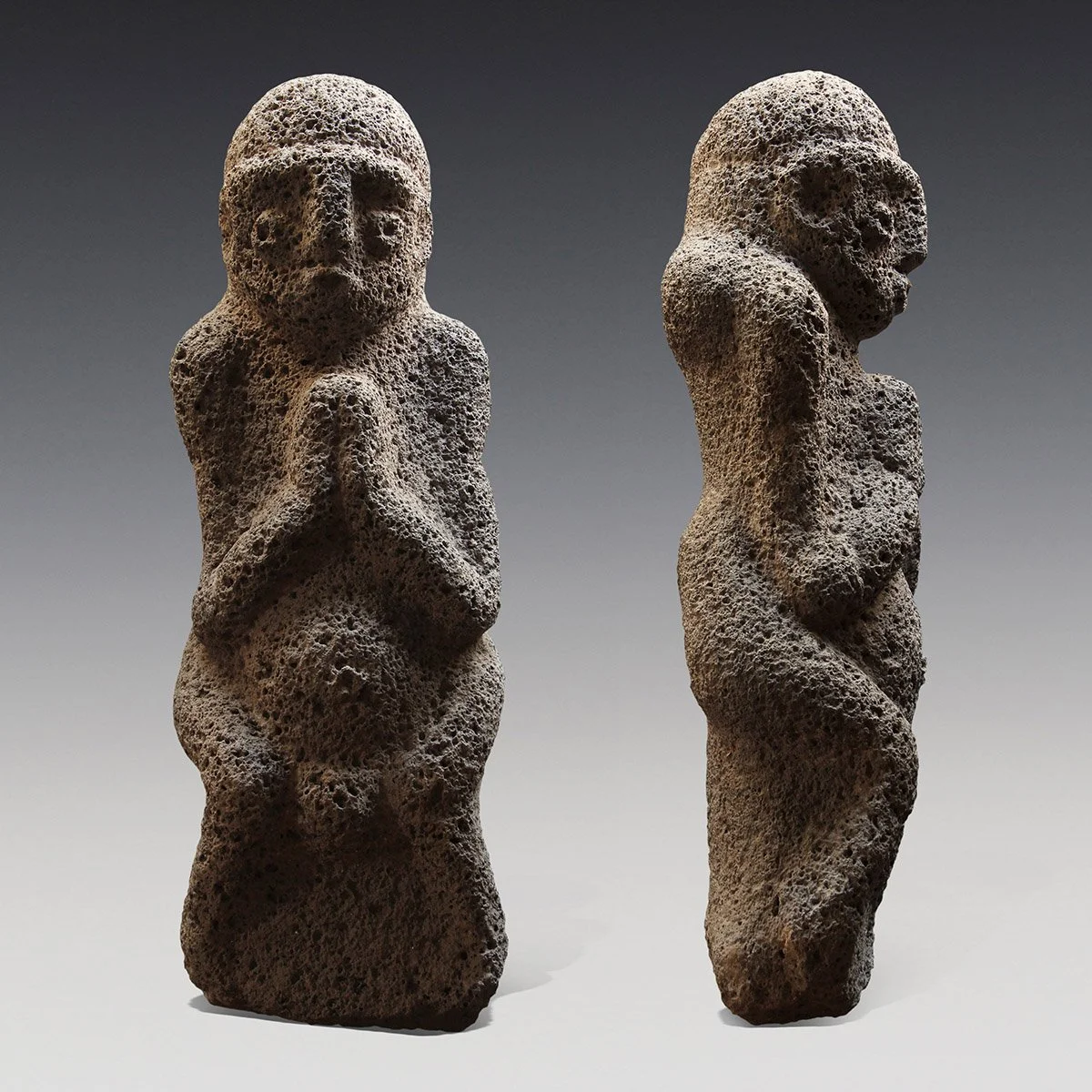 Image 1 of 6
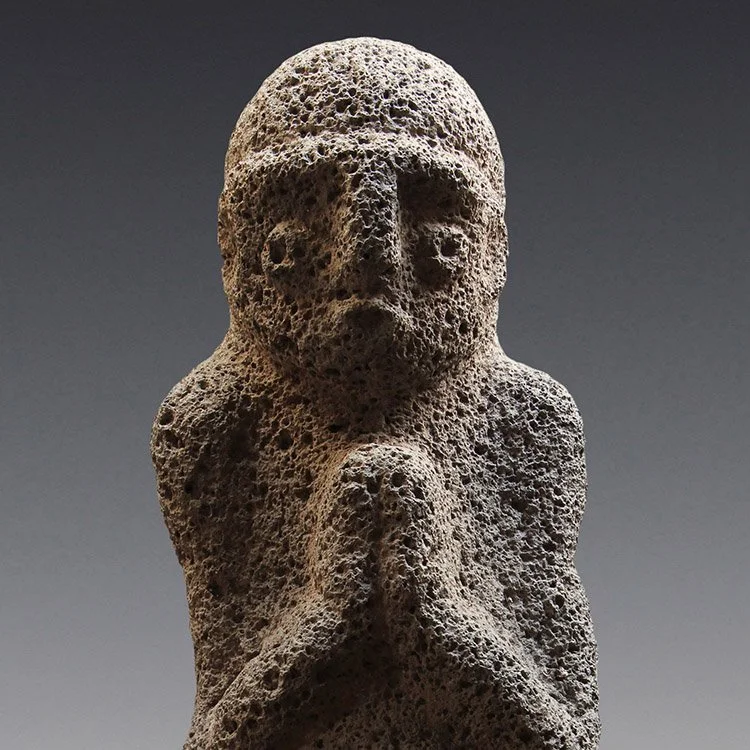 Image 2 of 6
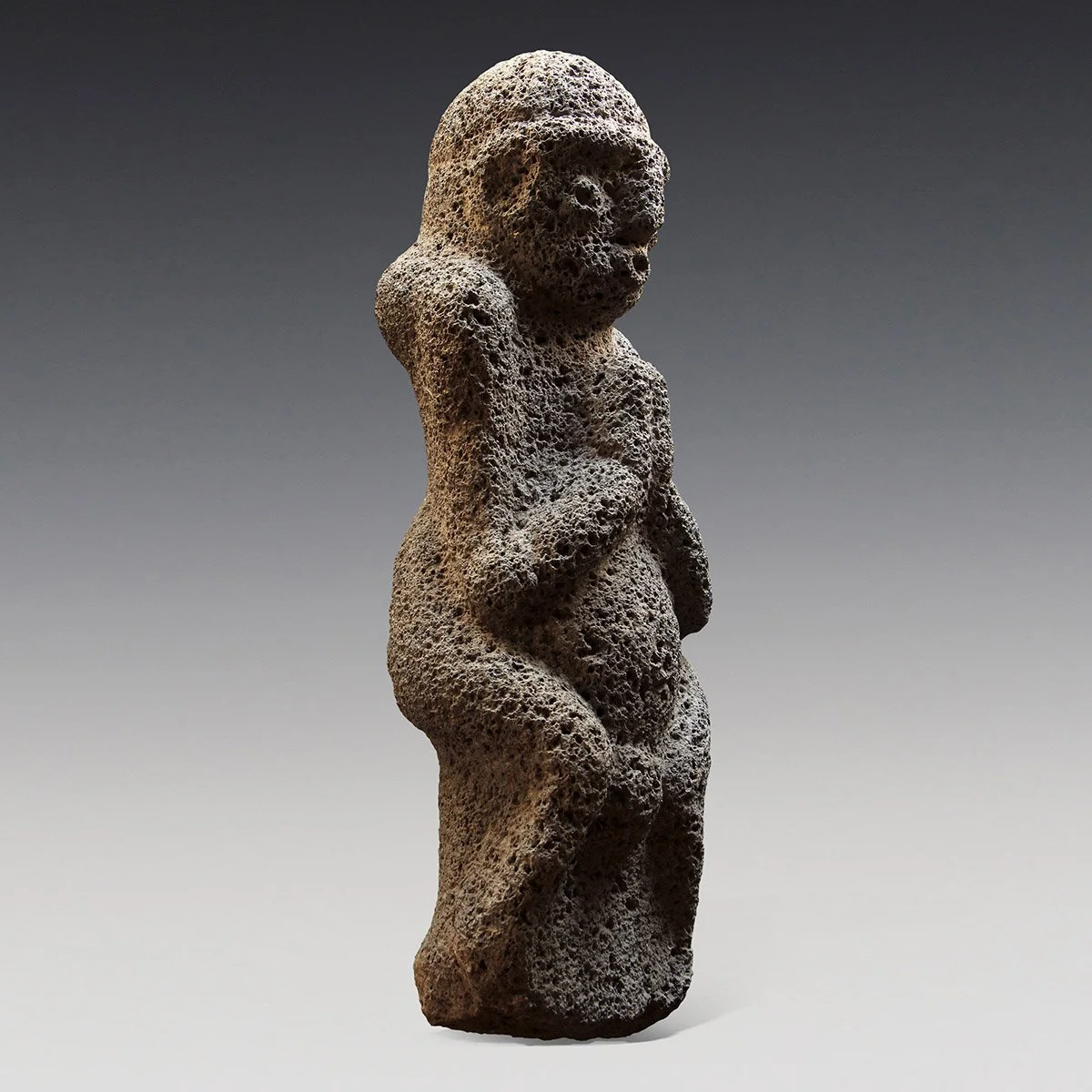 Image 3 of 6
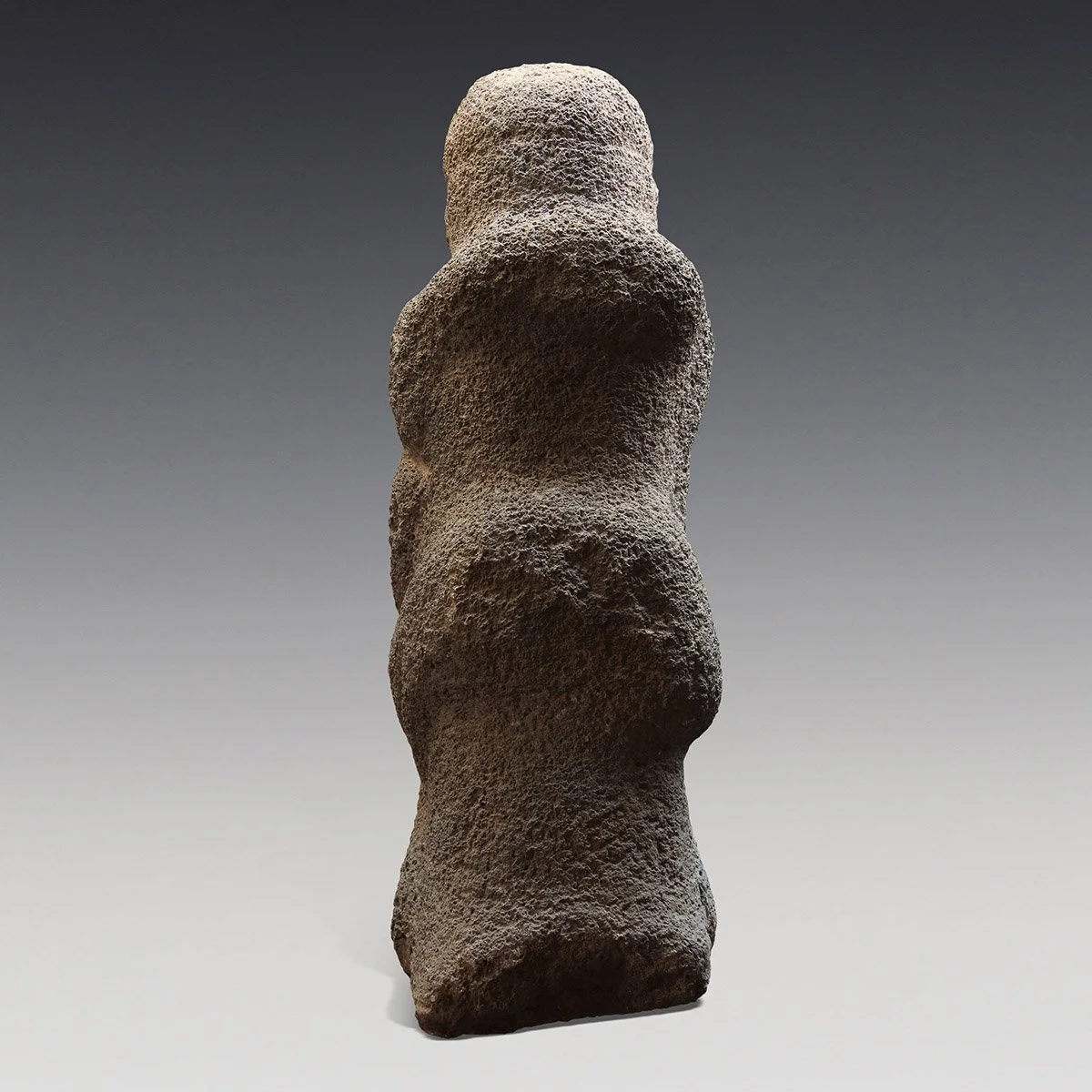 Image 4 of 6
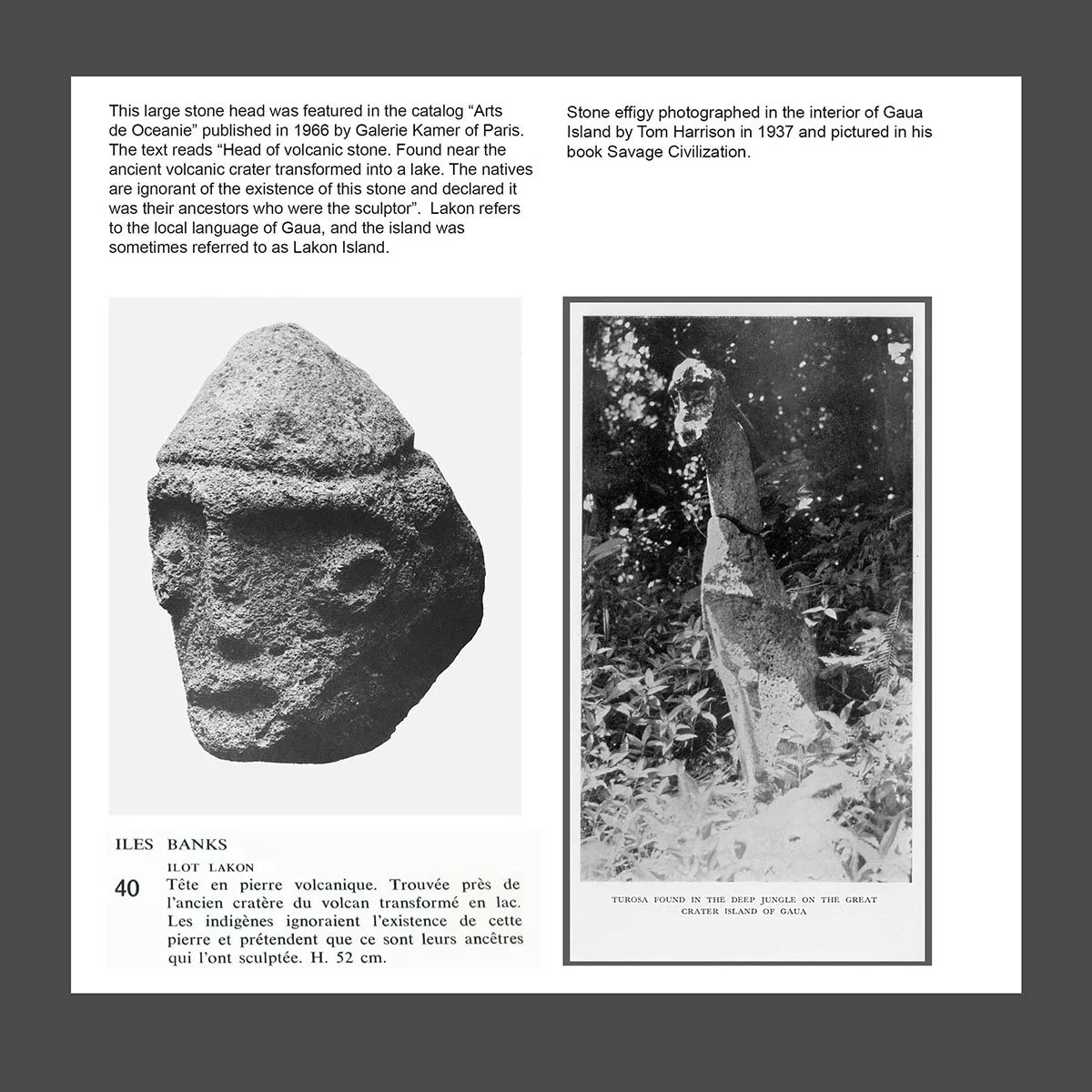 Image 5 of 6
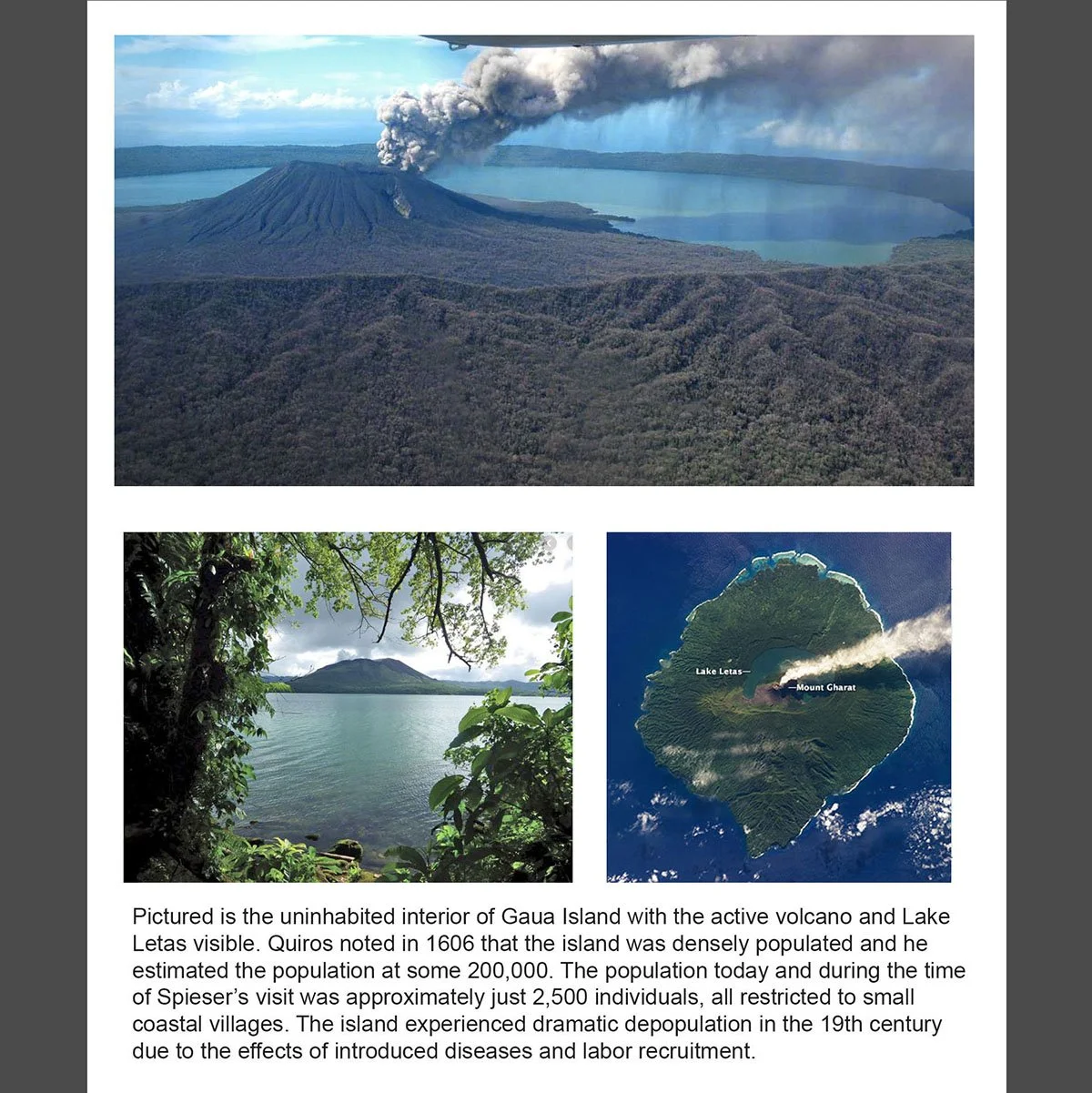 Image 6 of 6