Prince Alexander Mountains, Papua New Guinea
19th century – carved with native stone tools
Height: 38.75 inches (98.5 cm)
Provenance: Barry Hoare – Cairns, Australia / Carl Shipman – Melbourne, Australia
Inhabiting a territory stretching from the grasslands of the north Sepik plains, through the southern foothills and forests of the Prince Alexander Mountains, the Boiken people produced distinctive abstract figurative sculptures, often considered more powerful and stylized than that produced by their Abelam neighbors. Referred to as malingatcha, these wooden statues or cult figures were produced by Boiken carvers in pairs - male and female, and were utilized during male initiation. The figures were kept inside a hut within the initiation enclosure and secretly shown, newly painted, decorated and ritually powerful. Initiates were instructed to stand before the figures, where the ritual guardians of the carvings informed initiates of their new identities, and they were given a list of taboos that must be observed for several months. The figures also were bestowed with personal names. Boiken male initiation involved cutting the penis with sharpened bones, the resulting pain requiring a period of seclusion for recovery after which initiates were ceremonially decorated with loincloth, amulets, red body paint, and parakeet feathers. Initiation was then concluded with a great hworumbowanga celebration, lasting several days and nights.
Boiken figurative sculptures were carved both in flattened form and in the round, as with the fine old example presented here. The female sculpture is rendered in a pleasing elongated form, her carved features softened with the use of pre-contact native stone tooling, giving the sculpture an archaic and organic quality. The arms are tucked back behind the figure and the hands emerge to rest on the hips, emphasizing and visually framing the distinctive diamond shape vulva. The surface is ancient and the smoke encrusted patina is the result of generations spent within the smoke-filled interior of the community men’s house.
INQUIRE HERE
Prince Alexander Mountains, Papua New Guinea
19th century – carved with native stone tools
Height: 38.75 inches (98.5 cm)
Provenance: Barry Hoare – Cairns, Australia / Carl Shipman – Melbourne, Australia
Inhabiting a territory stretching from the grasslands of the north Sepik plains, through the southern foothills and forests of the Prince Alexander Mountains, the Boiken people produced distinctive abstract figurative sculptures, often considered more powerful and stylized than that produced by their Abelam neighbors. Referred to as malingatcha, these wooden statues or cult figures were produced by Boiken carvers in pairs - male and female, and were utilized during male initiation. The figures were kept inside a hut within the initiation enclosure and secretly shown, newly painted, decorated and ritually powerful. Initiates were instructed to stand before the figures, where the ritual guardians of the carvings informed initiates of their new identities, and they were given a list of taboos that must be observed for several months. The figures also were bestowed with personal names. Boiken male initiation involved cutting the penis with sharpened bones, the resulting pain requiring a period of seclusion for recovery after which initiates were ceremonially decorated with loincloth, amulets, red body paint, and parakeet feathers. Initiation was then concluded with a great hworumbowanga celebration, lasting several days and nights.
Boiken figurative sculptures were carved both in flattened form and in the round, as with the fine old example presented here. The female sculpture is rendered in a pleasing elongated form, her carved features softened with the use of pre-contact native stone tooling, giving the sculpture an archaic and organic quality. The arms are tucked back behind the figure and the hands emerge to rest on the hips, emphasizing and visually framing the distinctive diamond shape vulva. The surface is ancient and the smoke encrusted patina is the result of generations spent within the smoke-filled interior of the community men’s house.
INQUIRE HERE


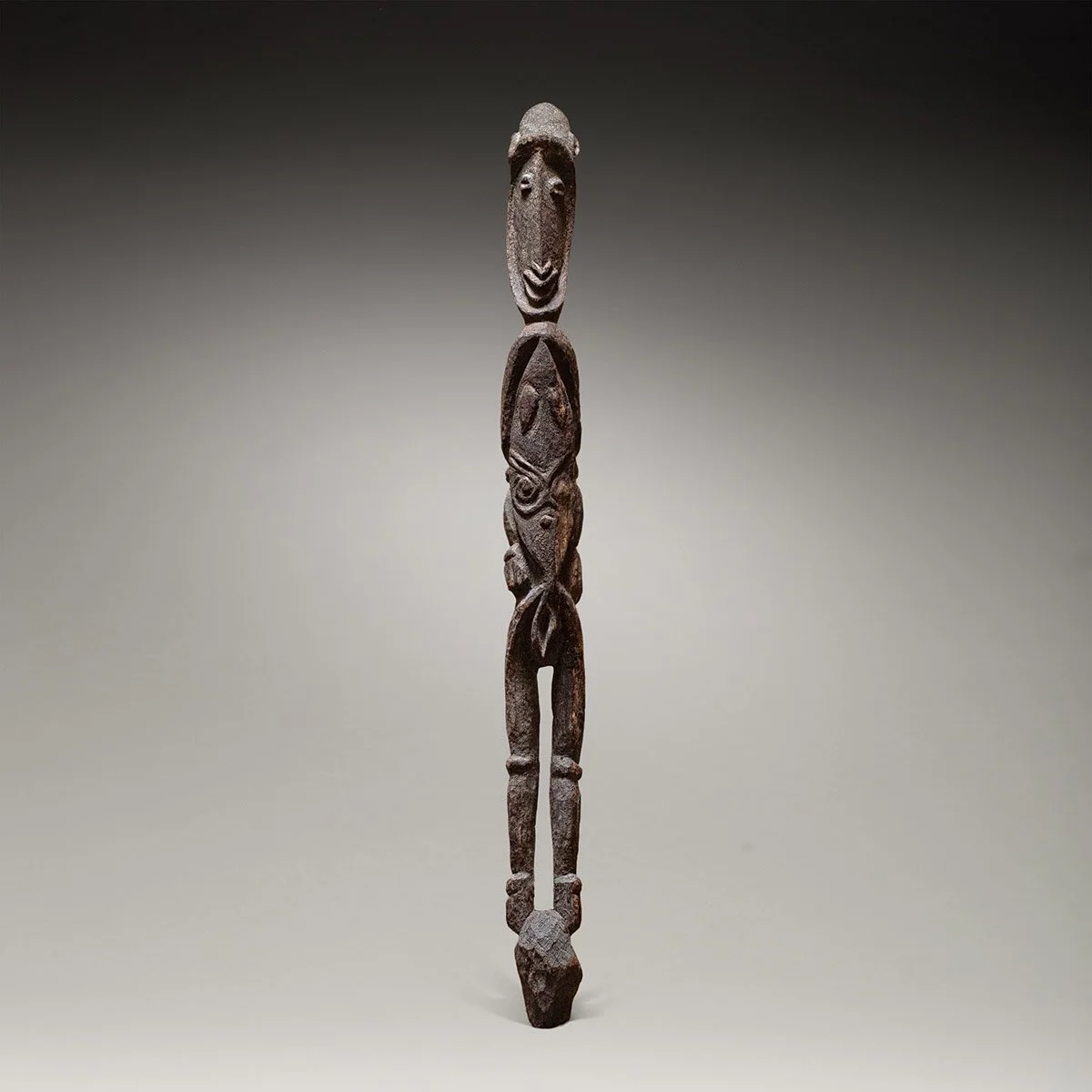 Image 1 of 6
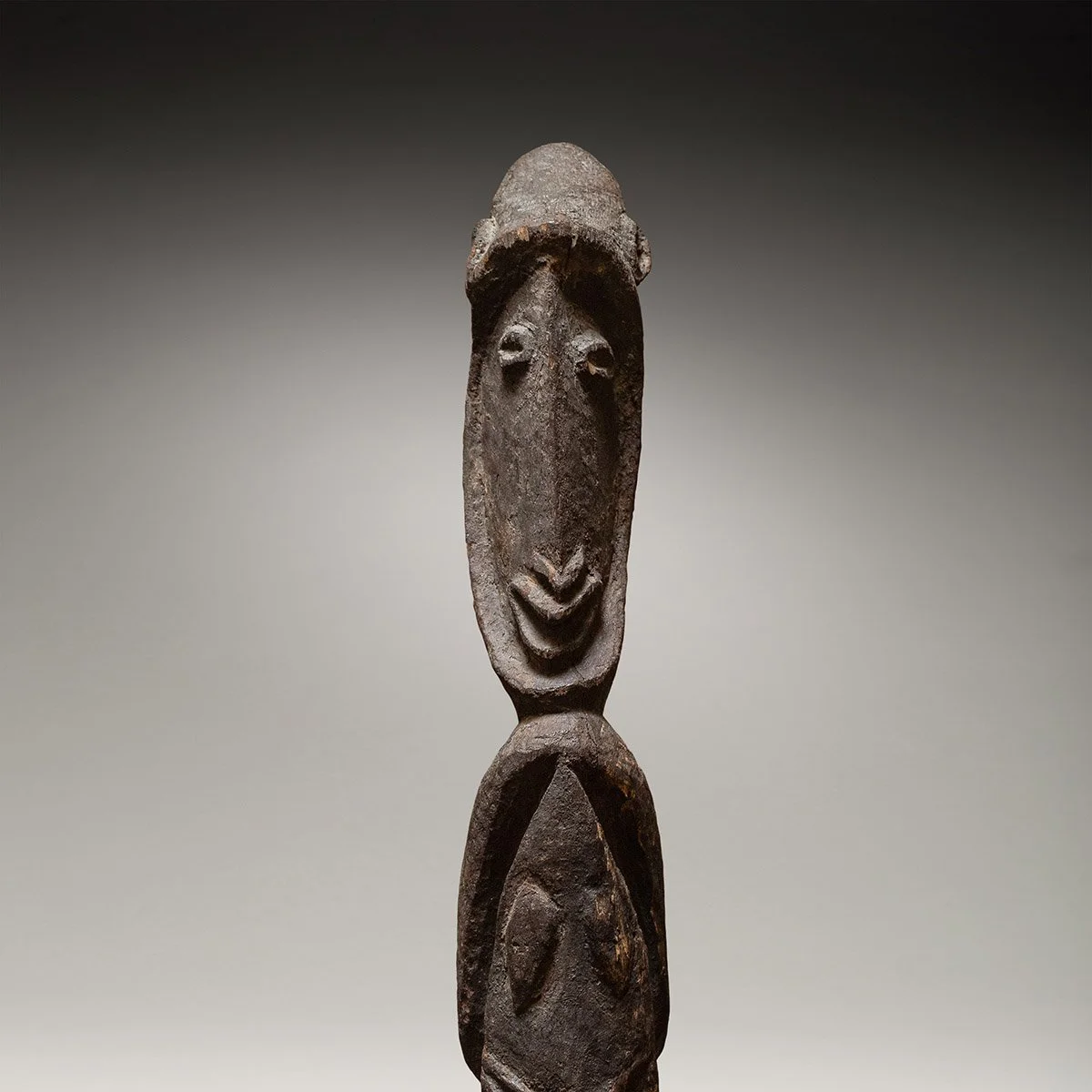 Image 2 of 6
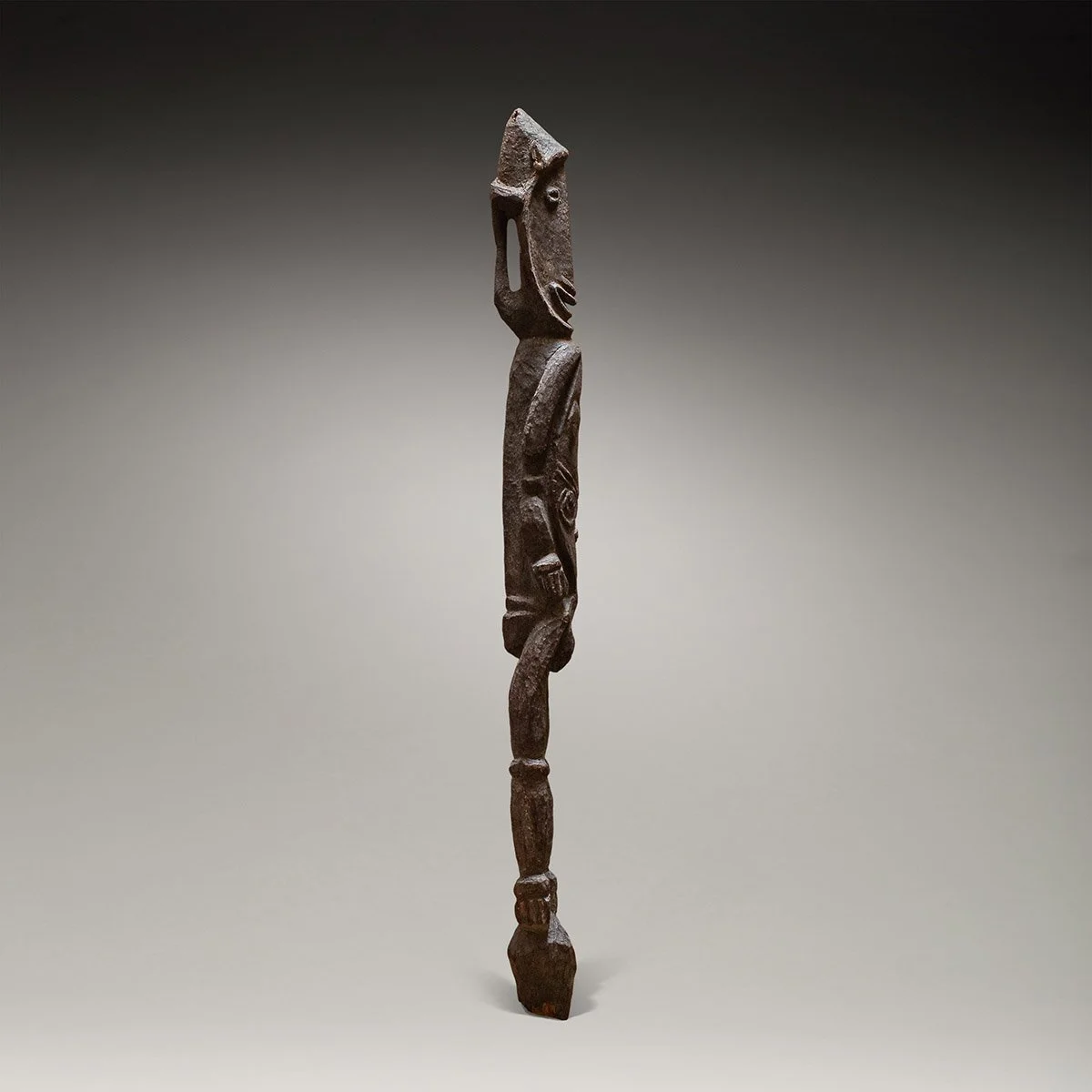 Image 3 of 6
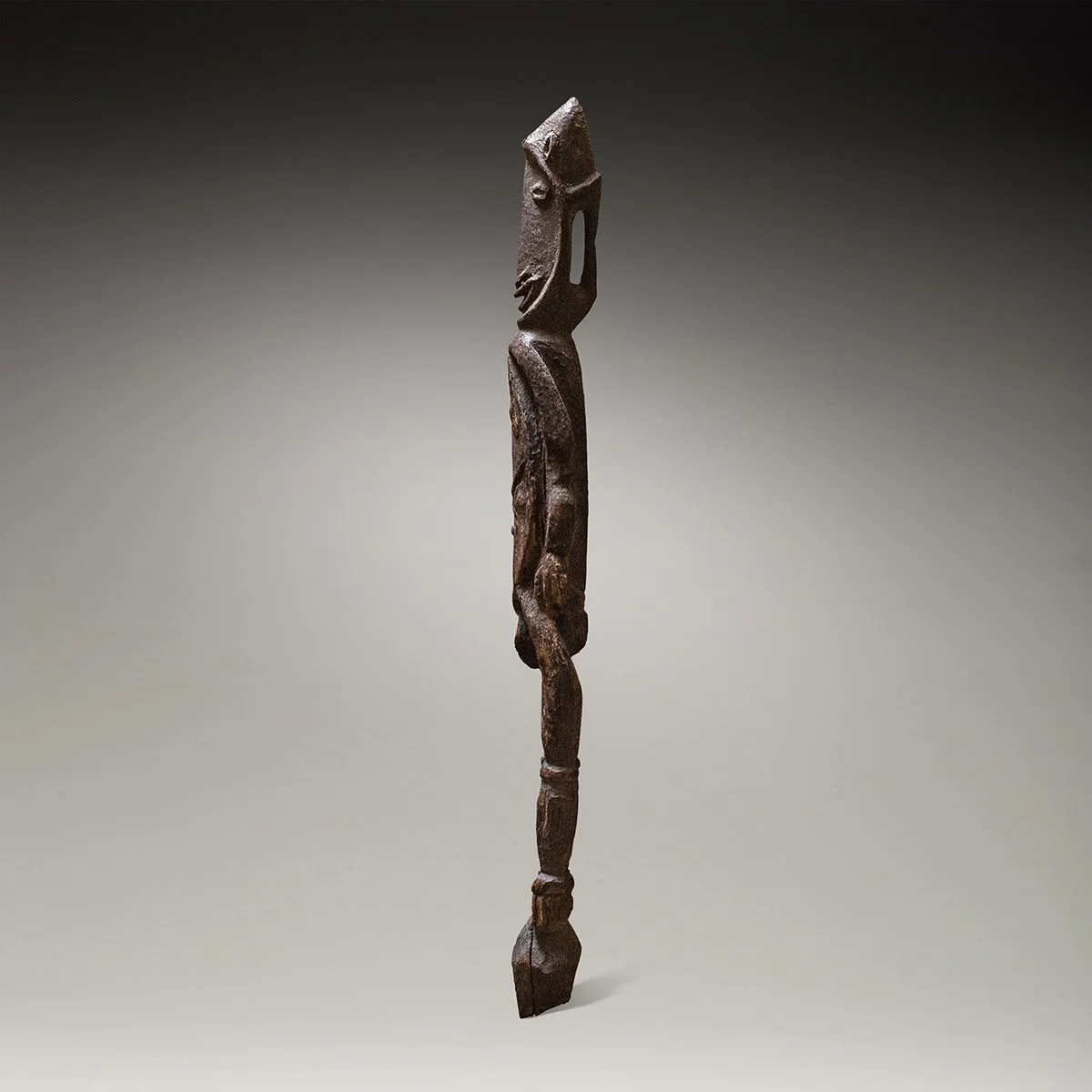 Image 4 of 6
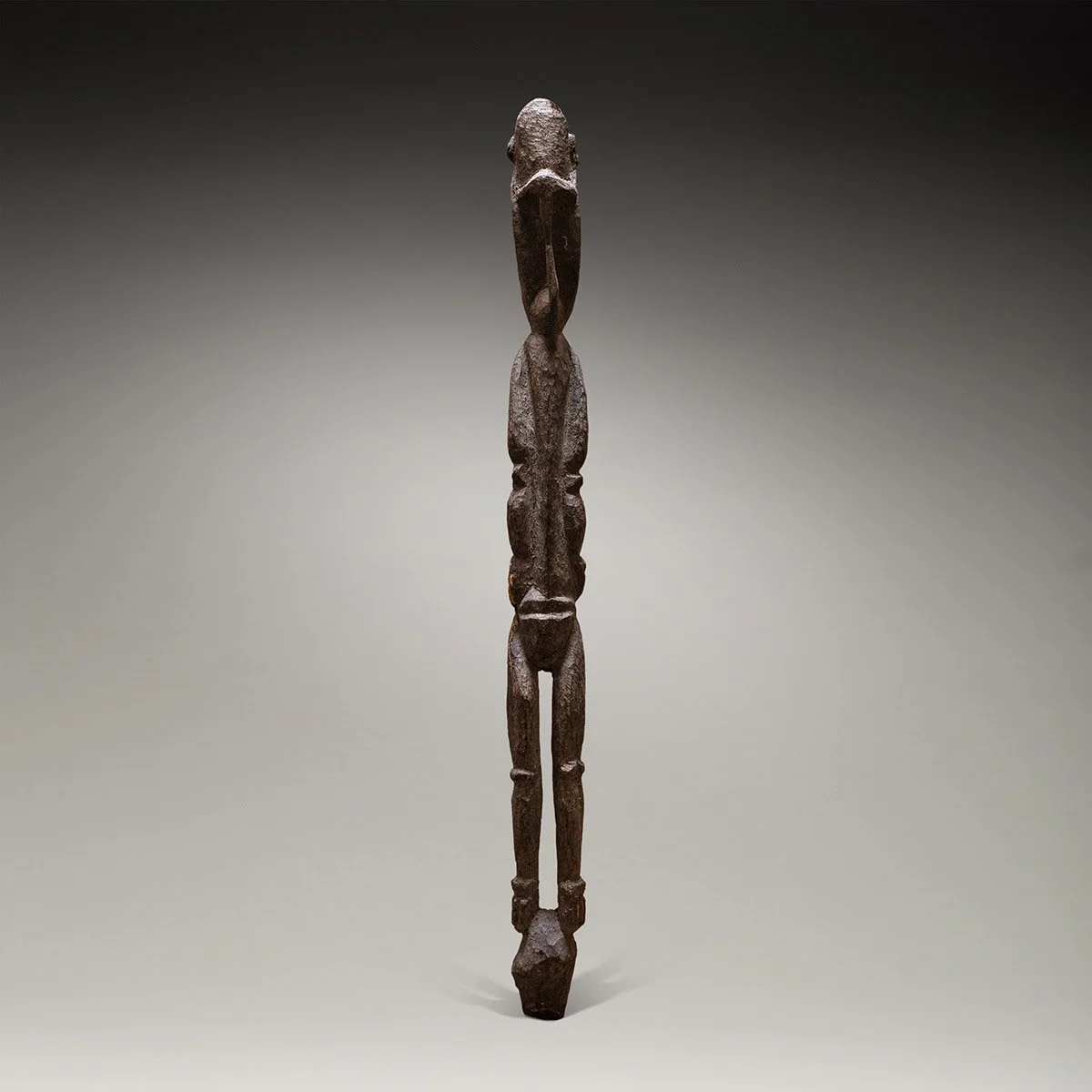 Image 5 of 6
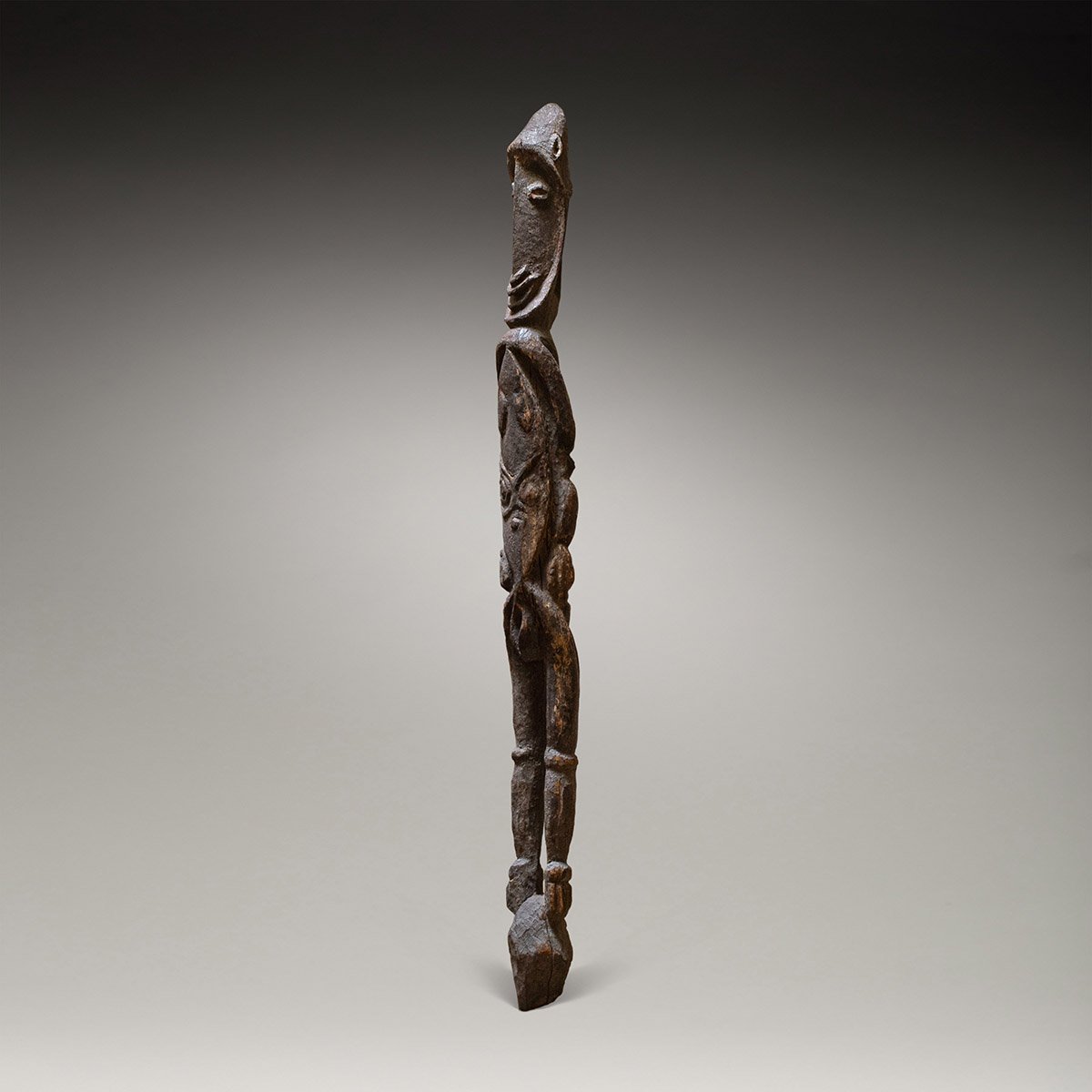 Image 6 of 6