Prince Alexander Mountains, Papua New Guinea
Early 20th century
Height: 27.25 inches (69 cm)
Provenance: Private collection – Cairns, Australia
Inhabiting a territory stretching from the grasslands of the north Sepik plains, through the southern foothills and forests of the Prince Alexander Mountains, the Boiken people produced distinctive abstract figurative sculptures, often considered more powerful and stylized than those produced by their Abelam neighbors. Referred to as malingatcha, these wooden statues or cult figures were produced by Boiken carvers in pairs - male and female, and were utilized during male initiation. The figures were kept inside a special hut within the initiation enclosure and secretly shown, newly painted, decorated, and ritually powerful. Initiates were instructed to stand before the figures, where the ritual guardians of the carvings informed initiates of their new identities, and they were given a list of taboos that must be observed for several months. The figures also were bestowed with personal names. Boiken male initiation involved cutting the penis with sharpened bones, the resulting pain requiring a period of seclusion for recovery after which initiates were ceremonially decorated with loincloth, amulets, red body paint, and parakeet feathers. Initiation was then concluded with a great hworumbowanga celebration, lasting several days and nights.
The female malingatcha figure presented here is carved in classic Boiken form, with her arms and legs bent and hands raised. The surface still bears the orange and pink hued earth pigments typical of early Boiken sculpture and traces of painted decorative highlights consisting of white lime and black charcoal pigments further accentuate the sculptural form. The figure’s female visage is genial and charming and belies the powerful ritual intent imbued within the sculpture, her nose and ears also pierced with suspension holes for ritual adornments. The sculpture’s multiple layers of applied pigments reflect the numerous initiation ceremonies performed with the figure over many decades.
INQUIRE HERE
Prince Alexander Mountains, Papua New Guinea
Early 20th century
Height: 27.25 inches (69 cm)
Provenance: Private collection – Cairns, Australia
Inhabiting a territory stretching from the grasslands of the north Sepik plains, through the southern foothills and forests of the Prince Alexander Mountains, the Boiken people produced distinctive abstract figurative sculptures, often considered more powerful and stylized than those produced by their Abelam neighbors. Referred to as malingatcha, these wooden statues or cult figures were produced by Boiken carvers in pairs - male and female, and were utilized during male initiation. The figures were kept inside a special hut within the initiation enclosure and secretly shown, newly painted, decorated, and ritually powerful. Initiates were instructed to stand before the figures, where the ritual guardians of the carvings informed initiates of their new identities, and they were given a list of taboos that must be observed for several months. The figures also were bestowed with personal names. Boiken male initiation involved cutting the penis with sharpened bones, the resulting pain requiring a period of seclusion for recovery after which initiates were ceremonially decorated with loincloth, amulets, red body paint, and parakeet feathers. Initiation was then concluded with a great hworumbowanga celebration, lasting several days and nights.
The female malingatcha figure presented here is carved in classic Boiken form, with her arms and legs bent and hands raised. The surface still bears the orange and pink hued earth pigments typical of early Boiken sculpture and traces of painted decorative highlights consisting of white lime and black charcoal pigments further accentuate the sculptural form. The figure’s female visage is genial and charming and belies the powerful ritual intent imbued within the sculpture, her nose and ears also pierced with suspension holes for ritual adornments. The sculpture’s multiple layers of applied pigments reflect the numerous initiation ceremonies performed with the figure over many decades.
INQUIRE HERE


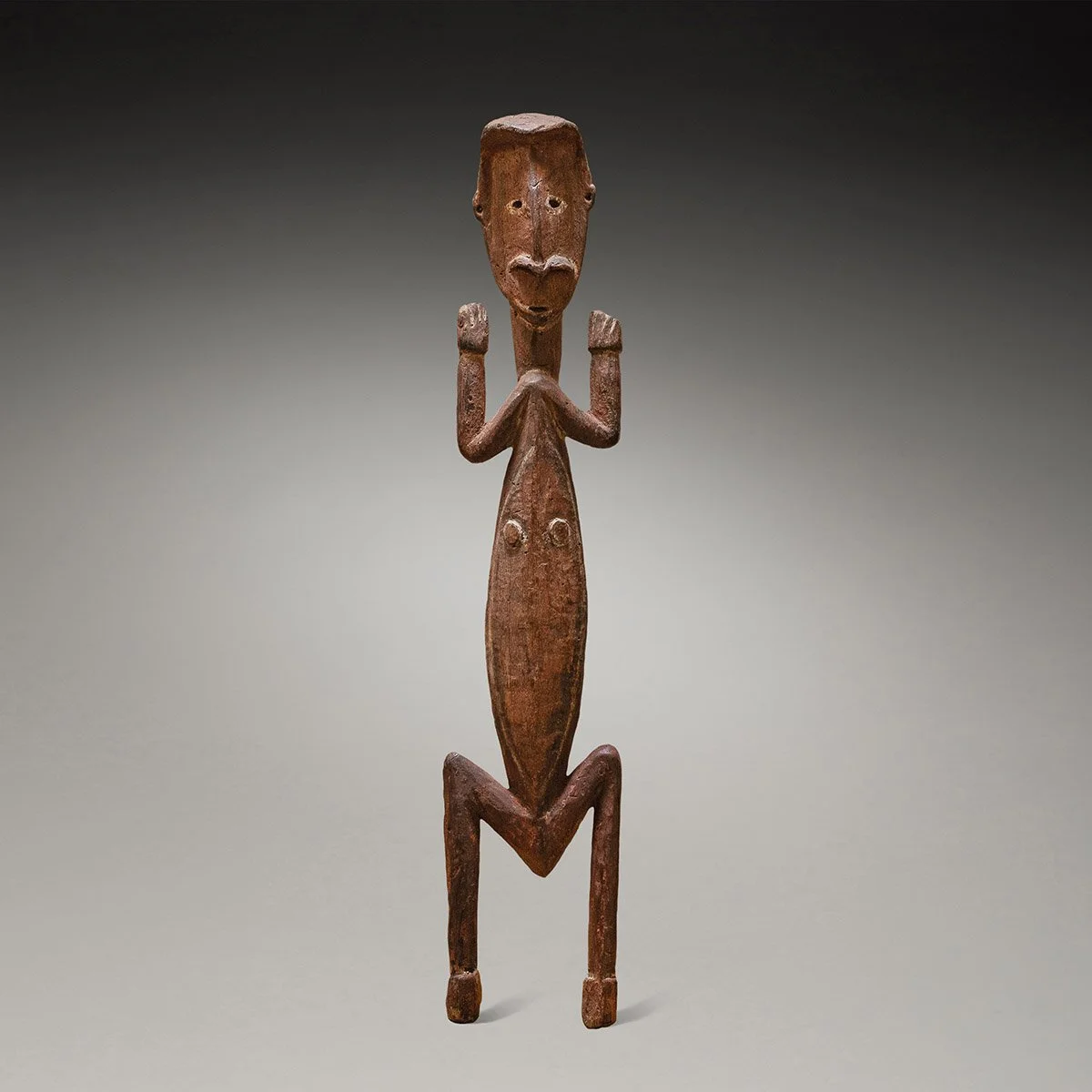 Image 1 of 10
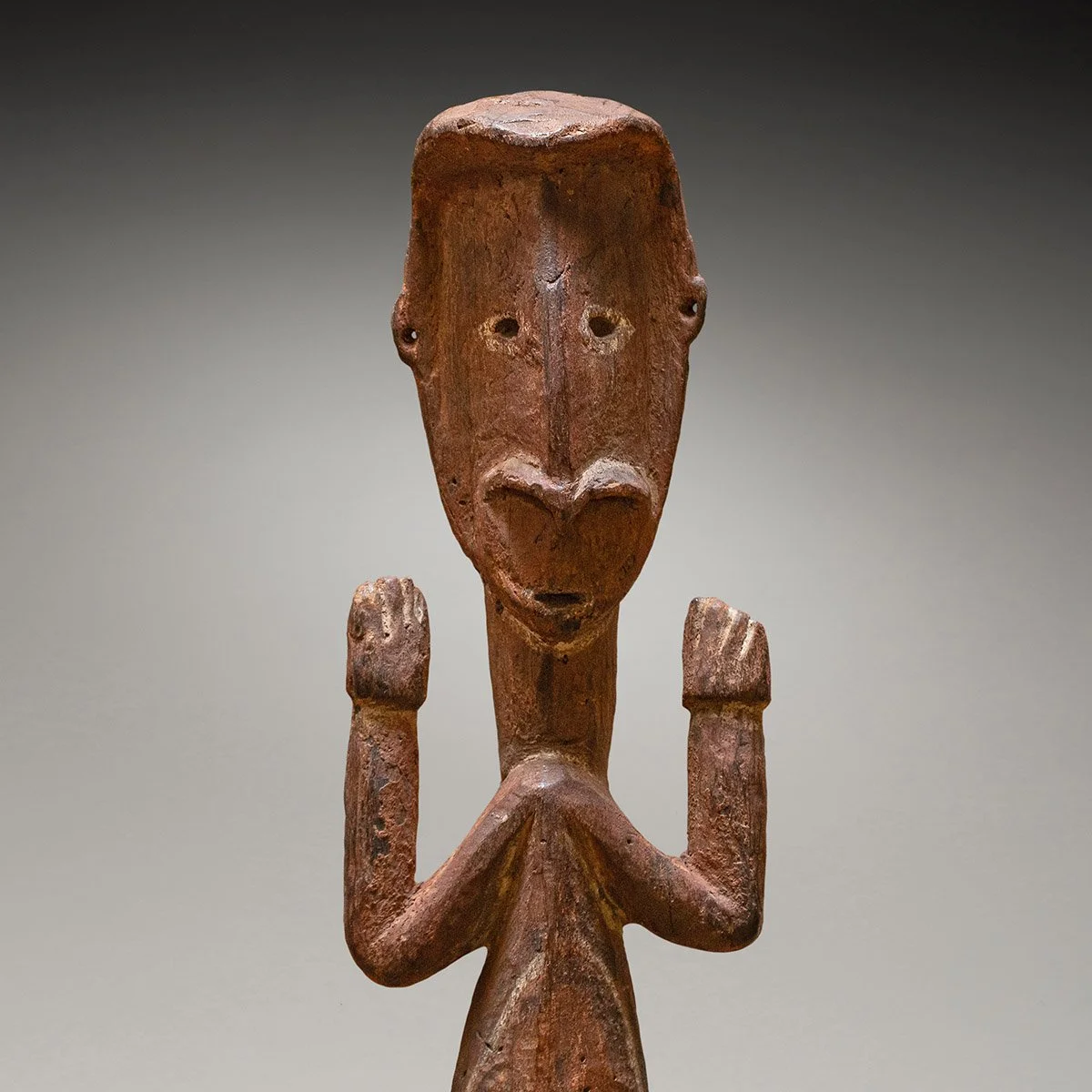 Image 2 of 10
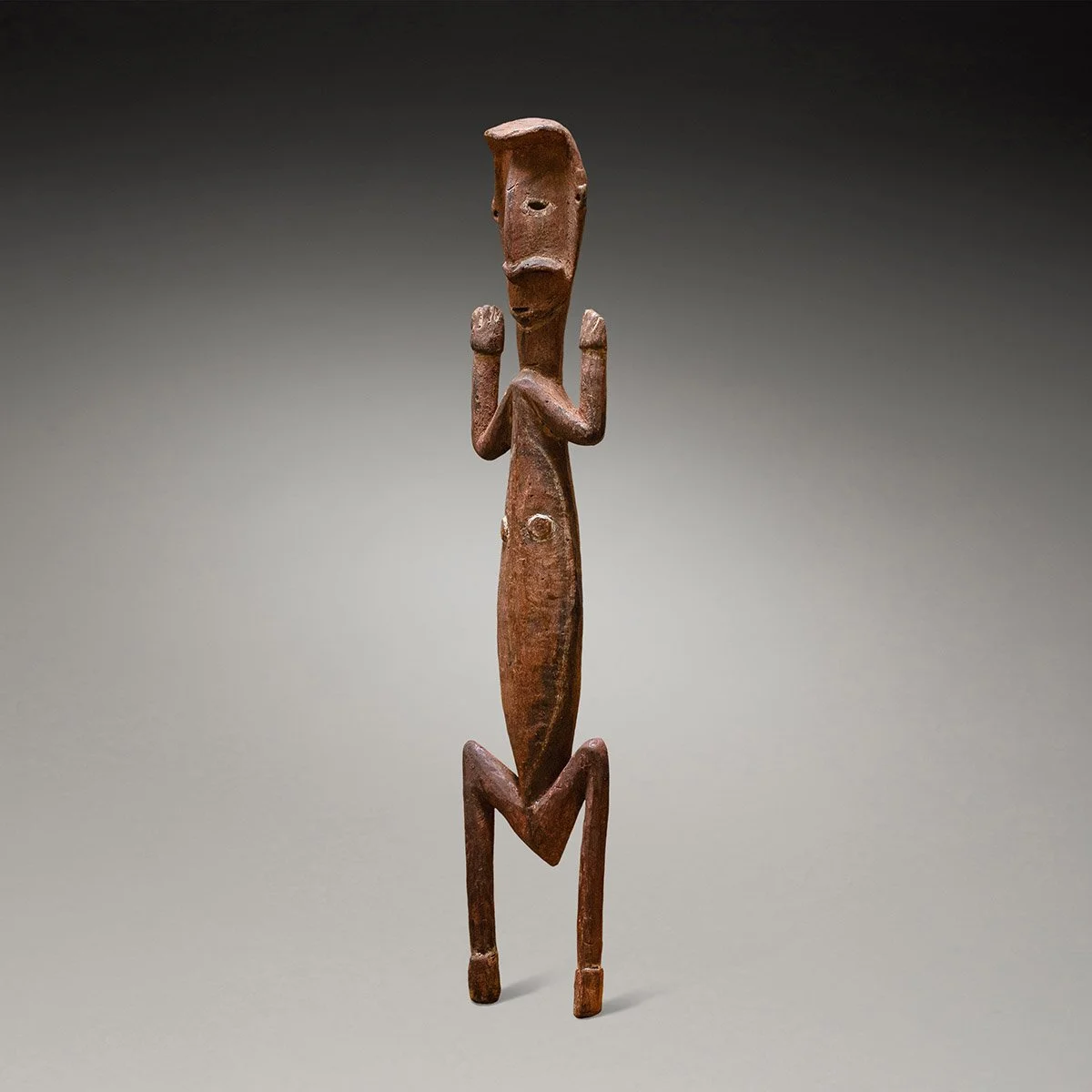 Image 3 of 10
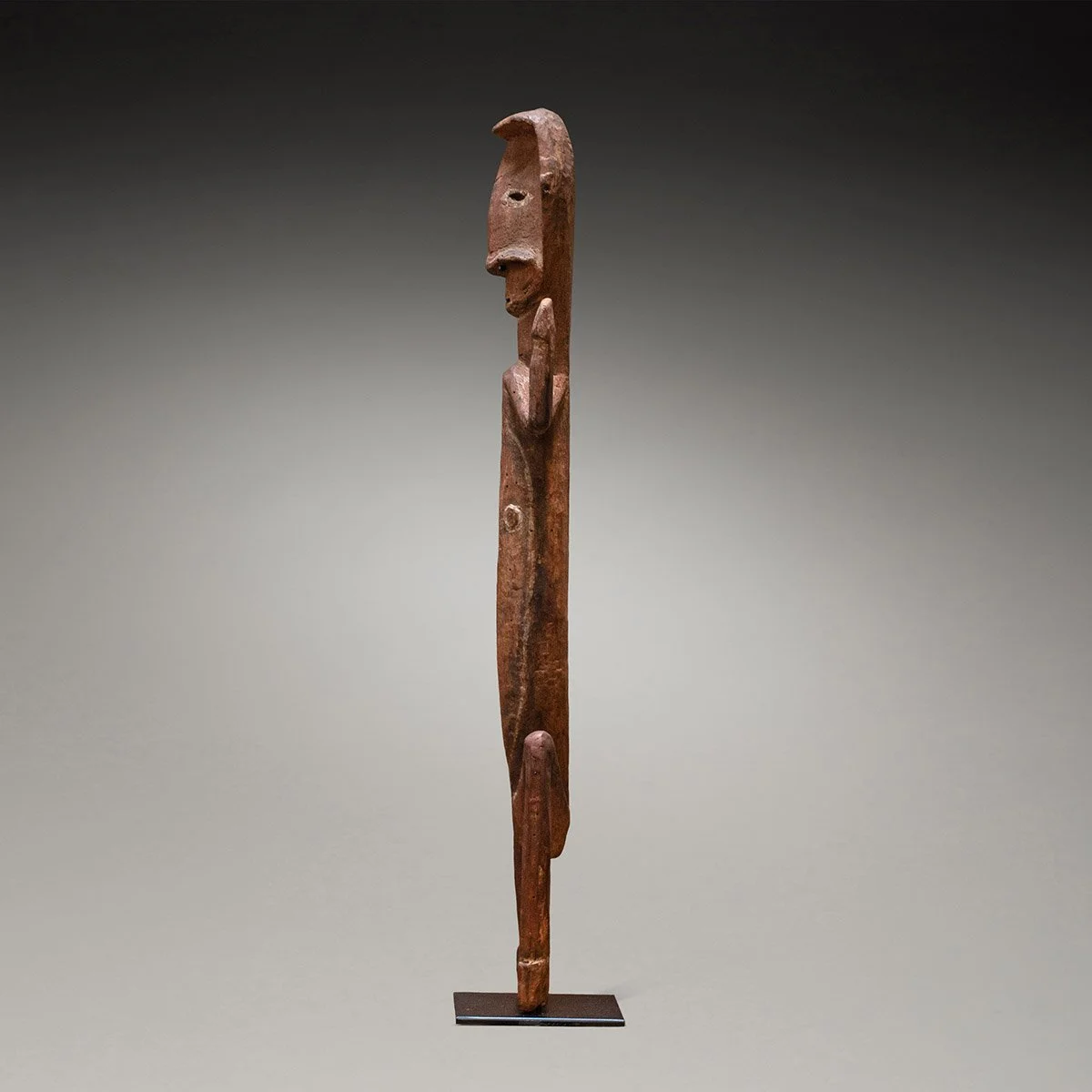 Image 4 of 10
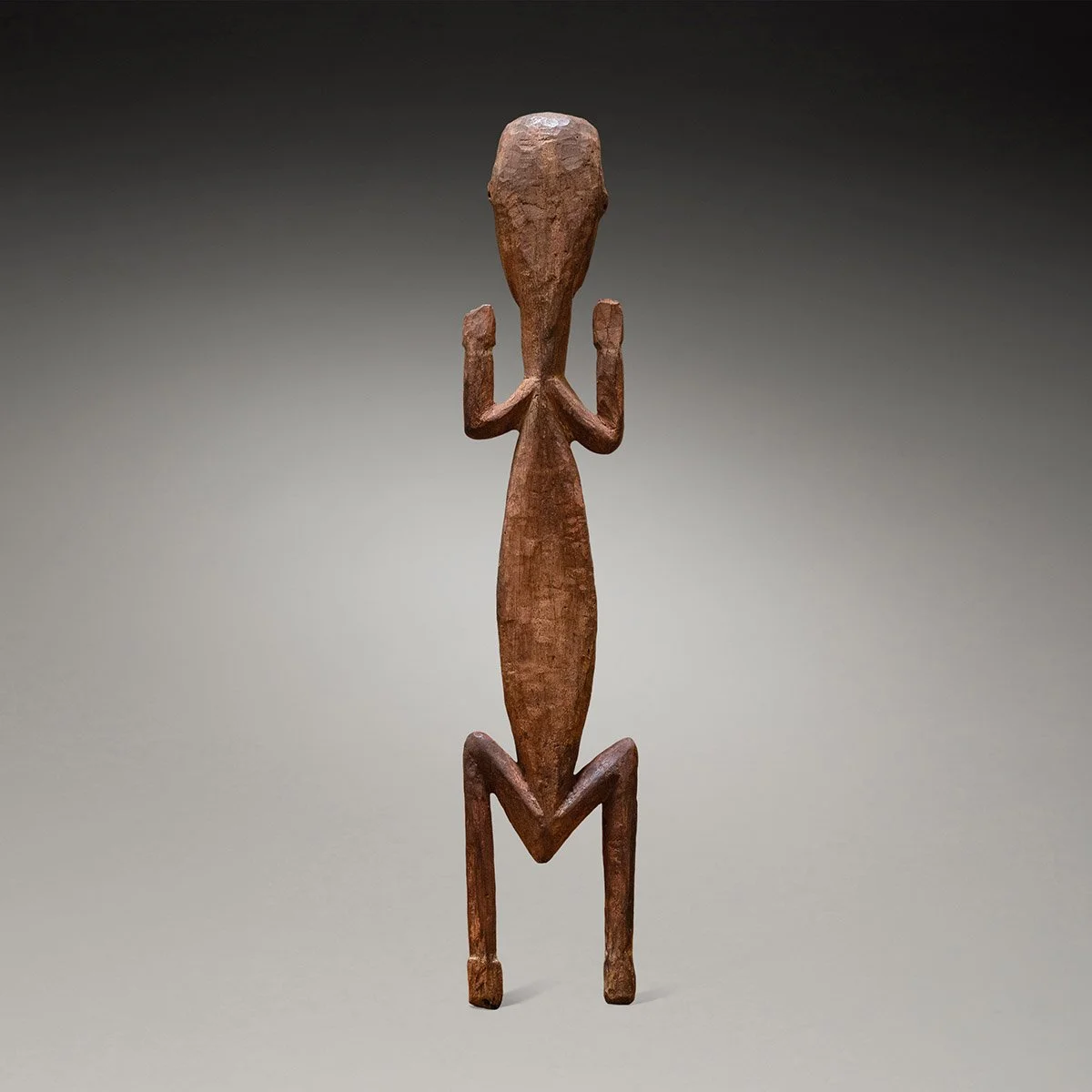 Image 5 of 10