Yuat River, Lower Sepik Basin, Papua New Guinea
19th to early 20th century
Wood, natural pigments
Height: 16.75 inches (42.5 cm)
Provenance: Collected by Reverend Albert Lambton, an Australian missionary stationed at Dogura, Papua New Guinea from 1923-1937 / Bruce Seaman collection – Bora Bora, French Polynesia.
Early masks of the Lower Sepik Basin were carved in an astonishing variety of styles, ranging from naturalistic to highly stylized. The remarkable Yuat mask presented here, with its double-tiered beaklike nose, represents a supernatural bush or water spirit and would have been danced attached to a highly complex basketry framework, inside which the dancer would animatedly parade through the village during important feasts. Powerfully carved with the use of pre-contact native stone tooling, the mask was rendered with a raw vitality only expressed in the earliest examples. The mask’s striking visage is decoratively highlighted with multi-layered painted motifs, the thoughtful application of which the artist considered paramount, for paint was believed to be the magical element that would bring the wooden artifact to life. A series of roughhewn attachment holes pierce the perimeter of the mask, used to secure the mask to the underlying basketry framework. The dry patina of the mask is ancient and well-worn and reflects the care and veneration the mask received while secured inside the ceremonial men’s house.
INQUIRE HERE
Yuat River, Lower Sepik Basin, Papua New Guinea
19th to early 20th century
Wood, natural pigments
Height: 16.75 inches (42.5 cm)
Provenance: Collected by Reverend Albert Lambton, an Australian missionary stationed at Dogura, Papua New Guinea from 1923-1937 / Bruce Seaman collection – Bora Bora, French Polynesia.
Early masks of the Lower Sepik Basin were carved in an astonishing variety of styles, ranging from naturalistic to highly stylized. The remarkable Yuat mask presented here, with its double-tiered beaklike nose, represents a supernatural bush or water spirit and would have been danced attached to a highly complex basketry framework, inside which the dancer would animatedly parade through the village during important feasts. Powerfully carved with the use of pre-contact native stone tooling, the mask was rendered with a raw vitality only expressed in the earliest examples. The mask’s striking visage is decoratively highlighted with multi-layered painted motifs, the thoughtful application of which the artist considered paramount, for paint was believed to be the magical element that would bring the wooden artifact to life. A series of roughhewn attachment holes pierce the perimeter of the mask, used to secure the mask to the underlying basketry framework. The dry patina of the mask is ancient and well-worn and reflects the care and veneration the mask received while secured inside the ceremonial men’s house.
INQUIRE HERE


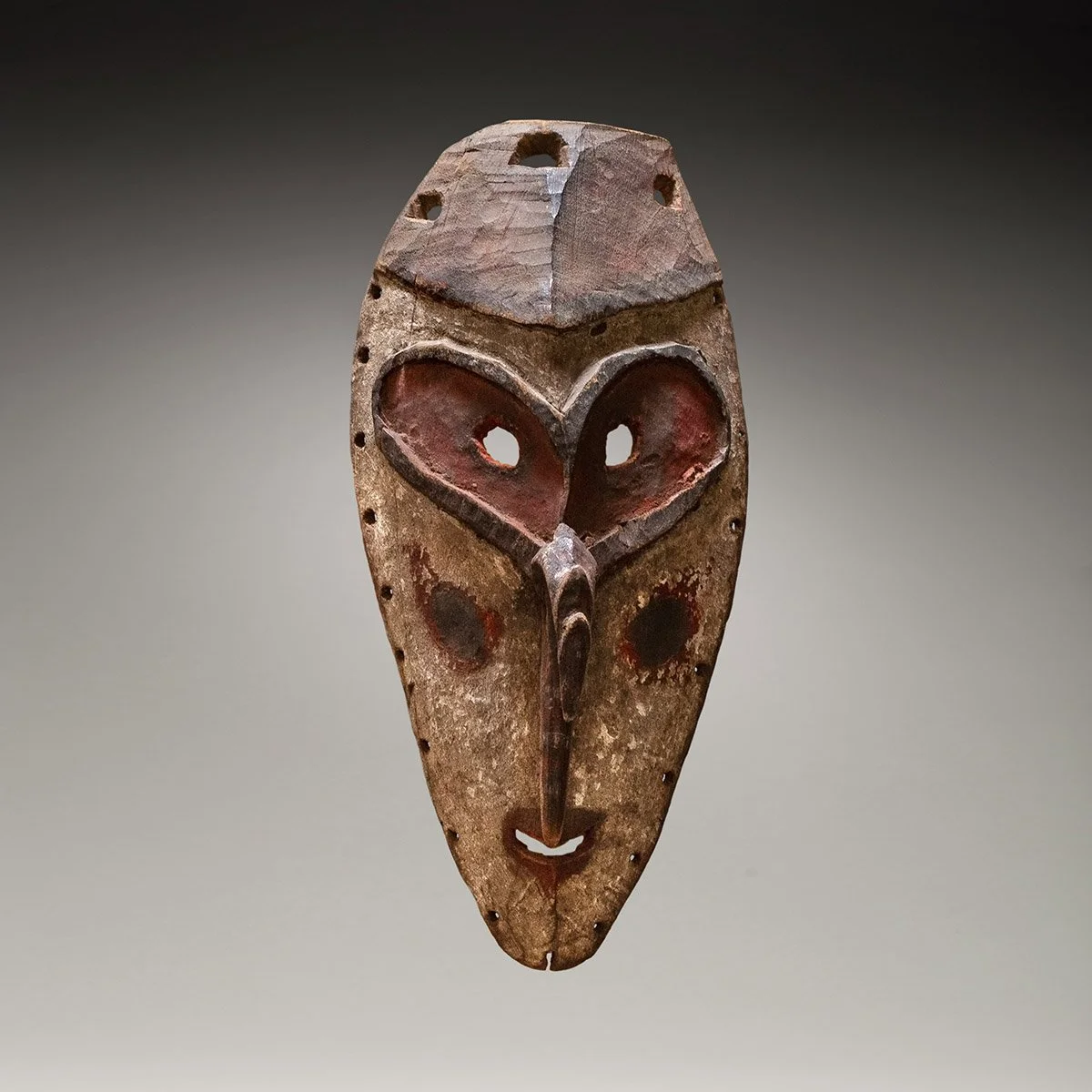 Image 1 of 6
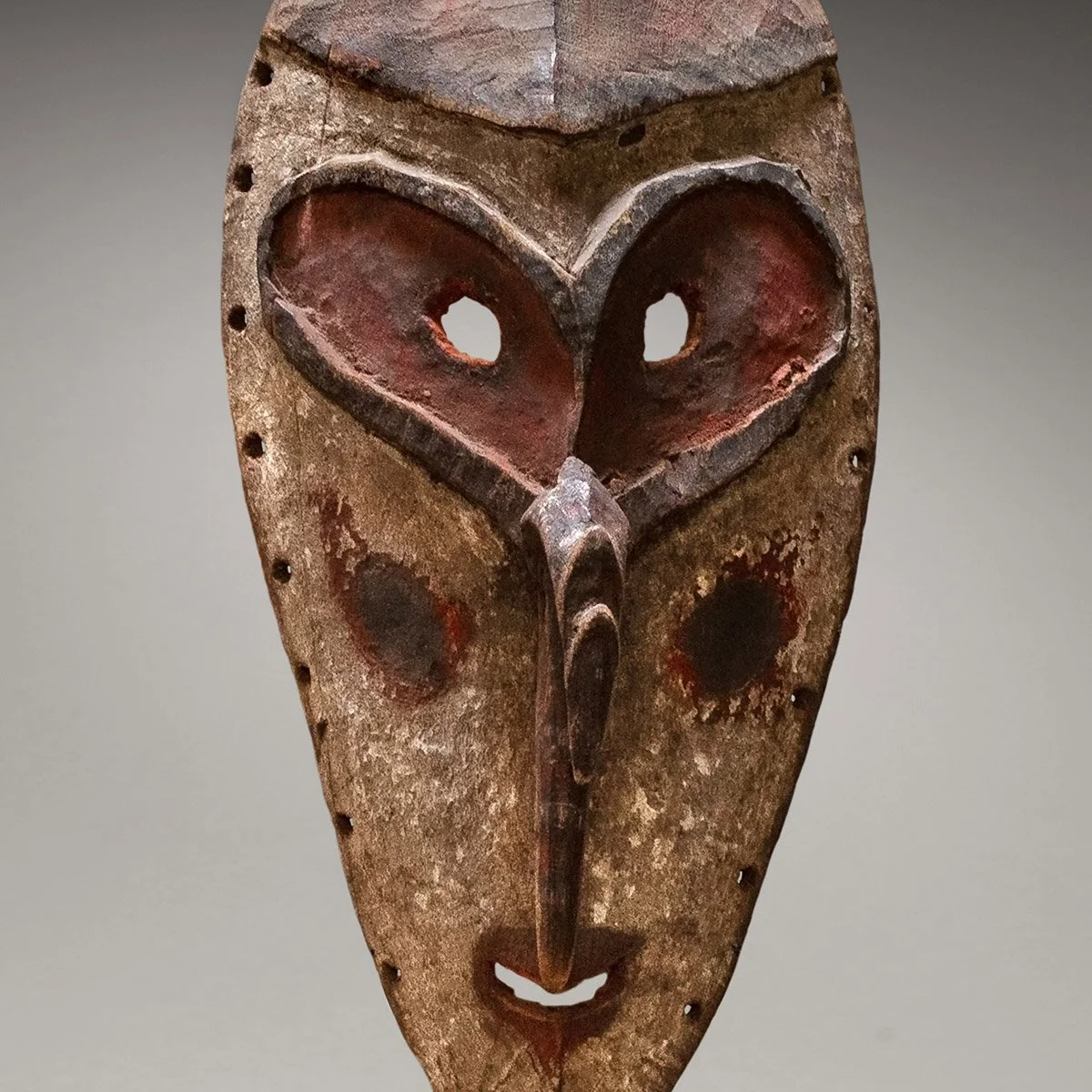 Image 2 of 6
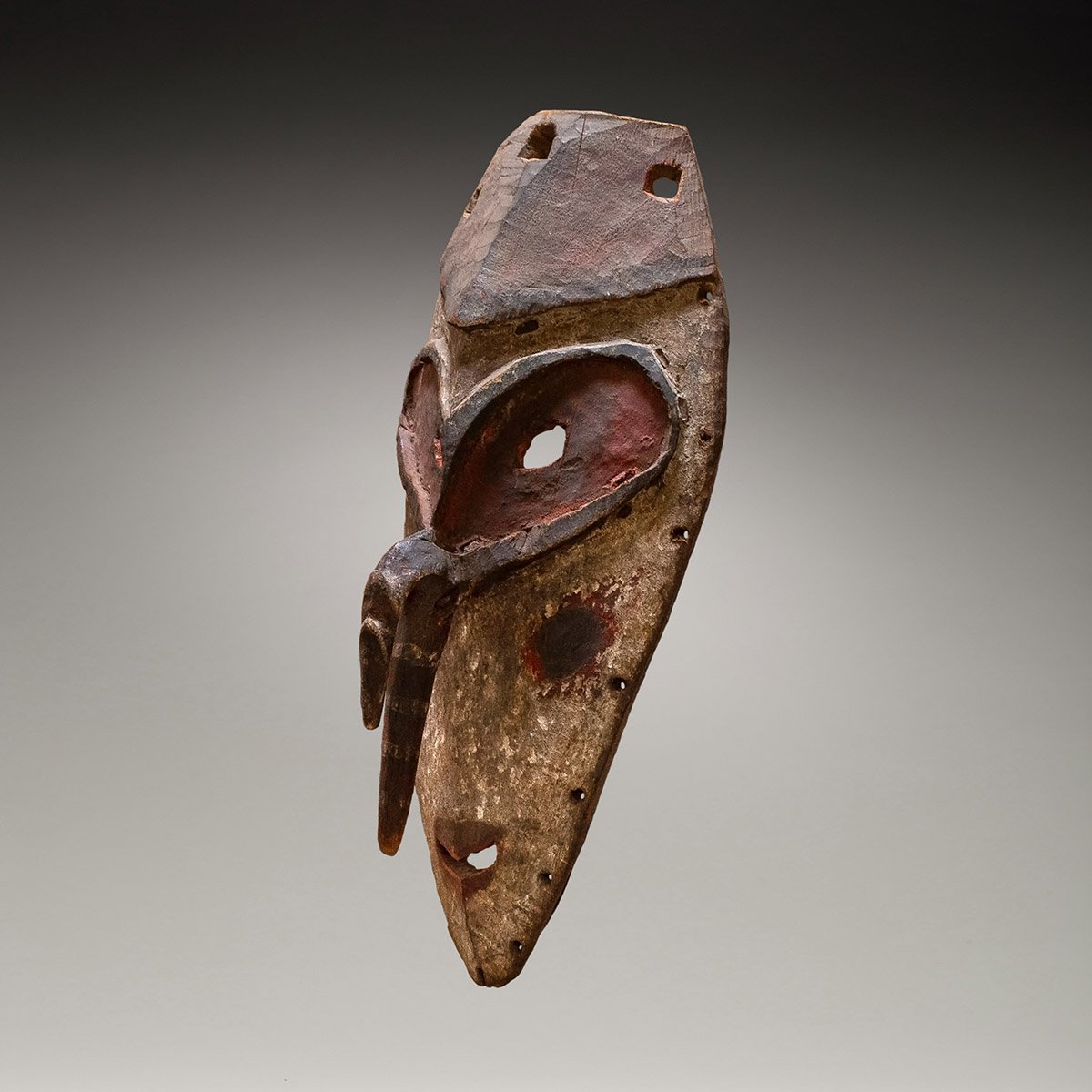 Image 3 of 6
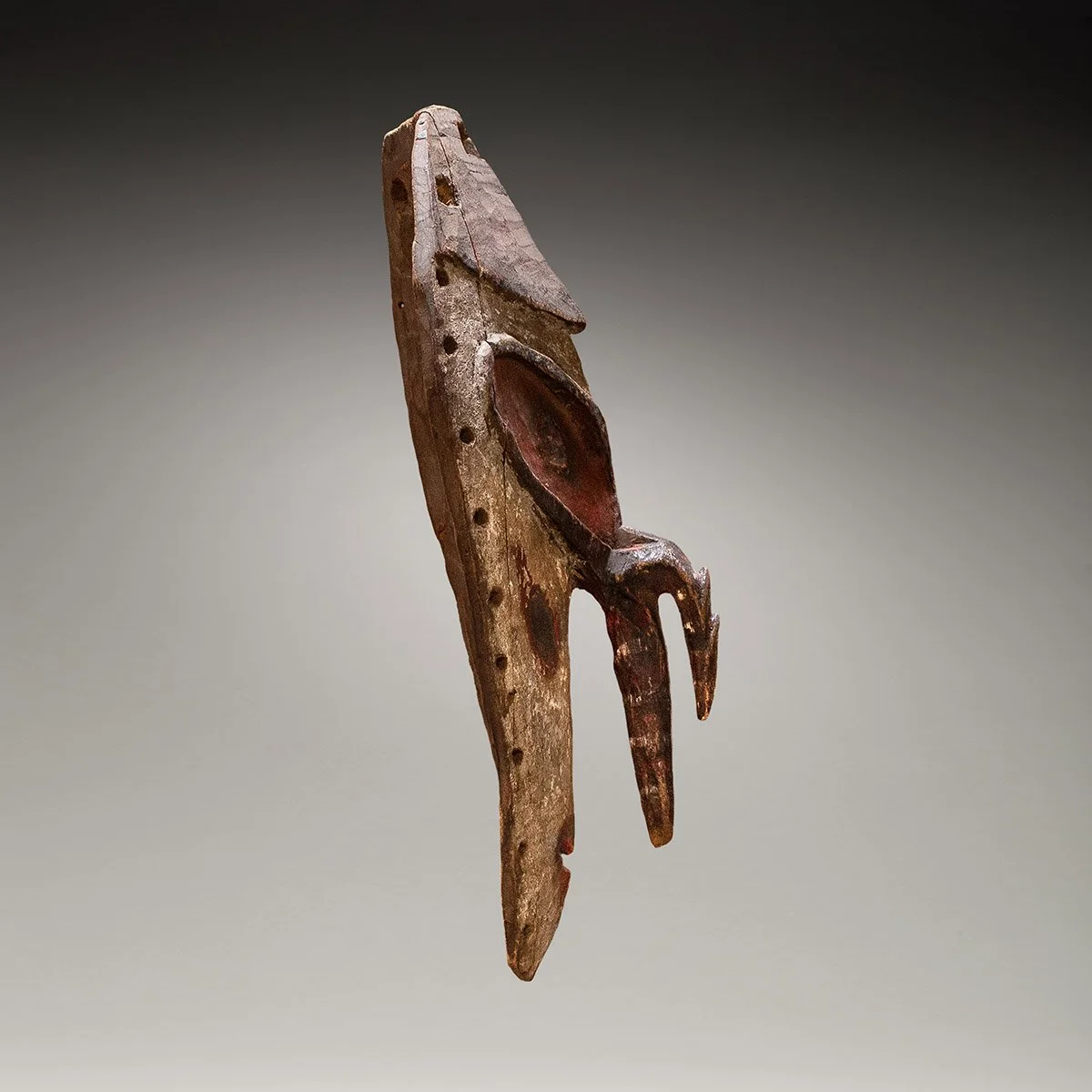 Image 4 of 6
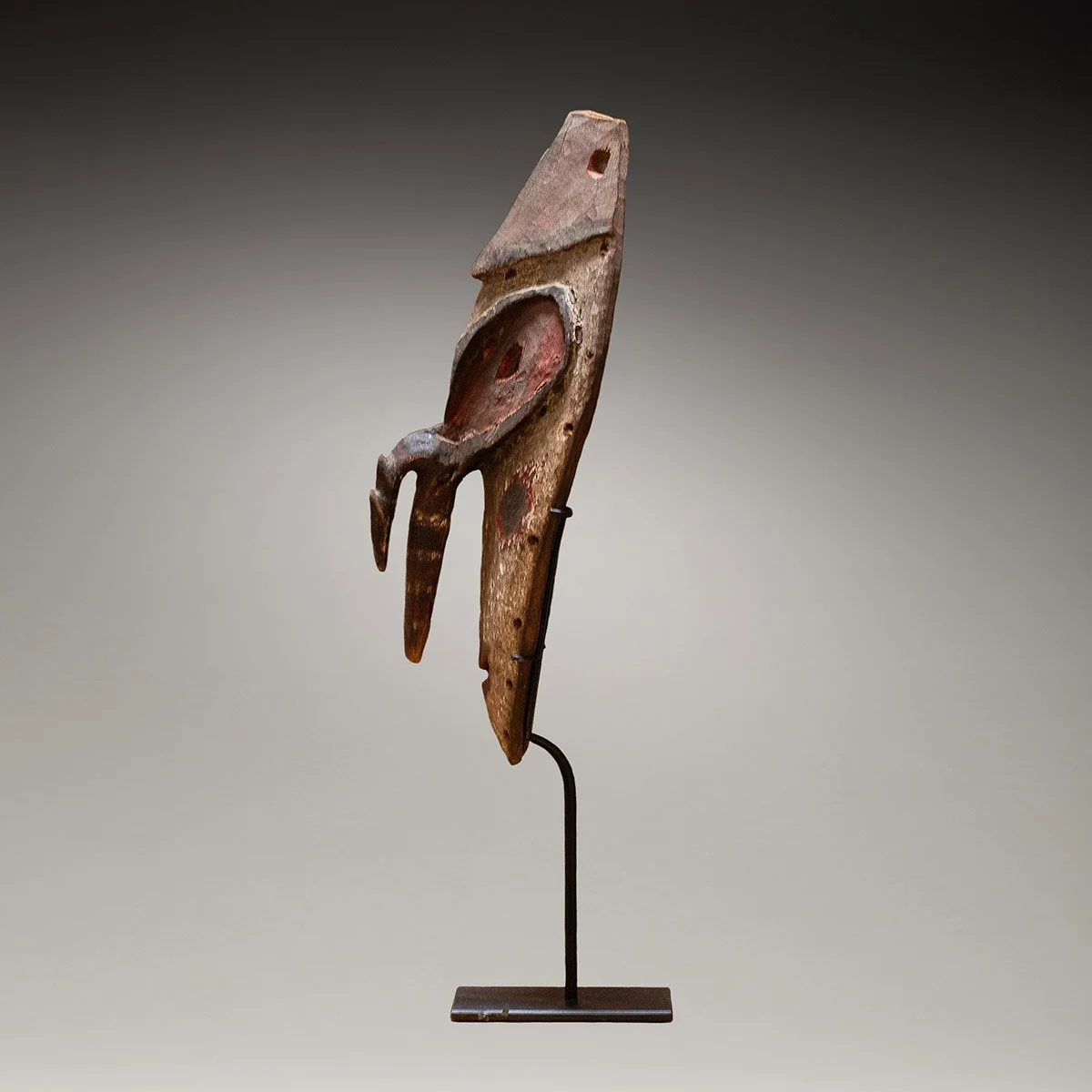 Image 5 of 6
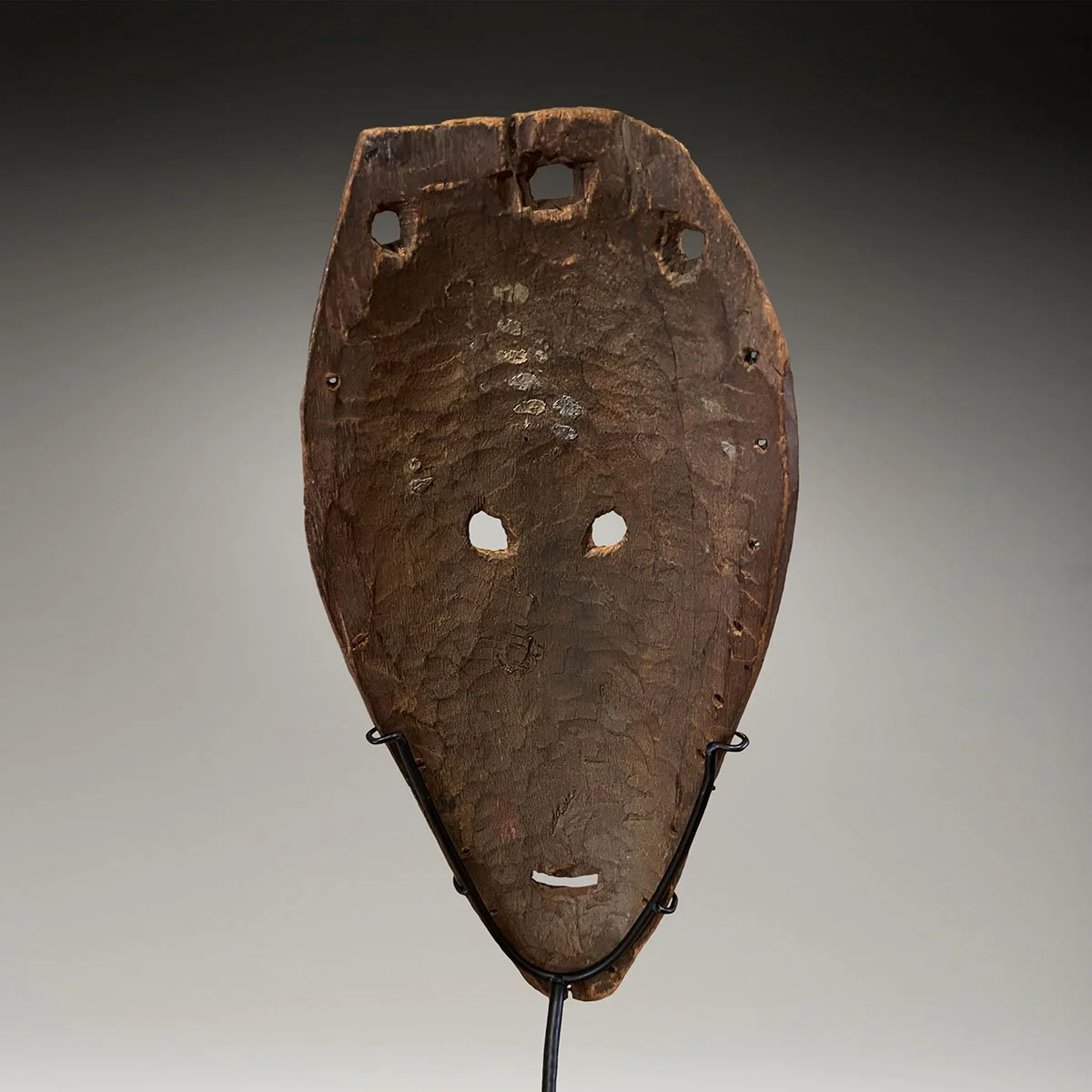 Image 6 of 6