

 Image 1 of 5
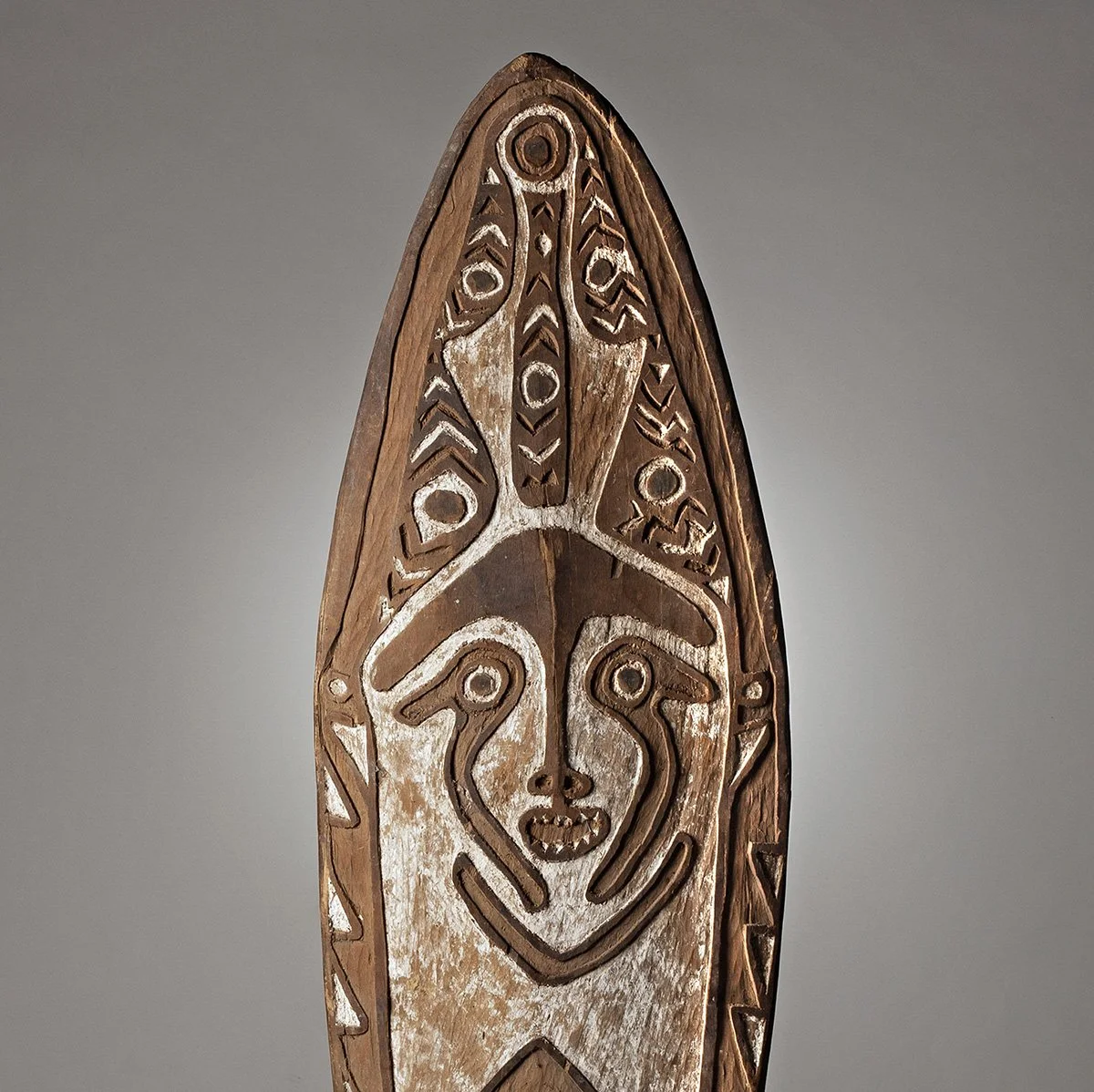 Image 2 of 5
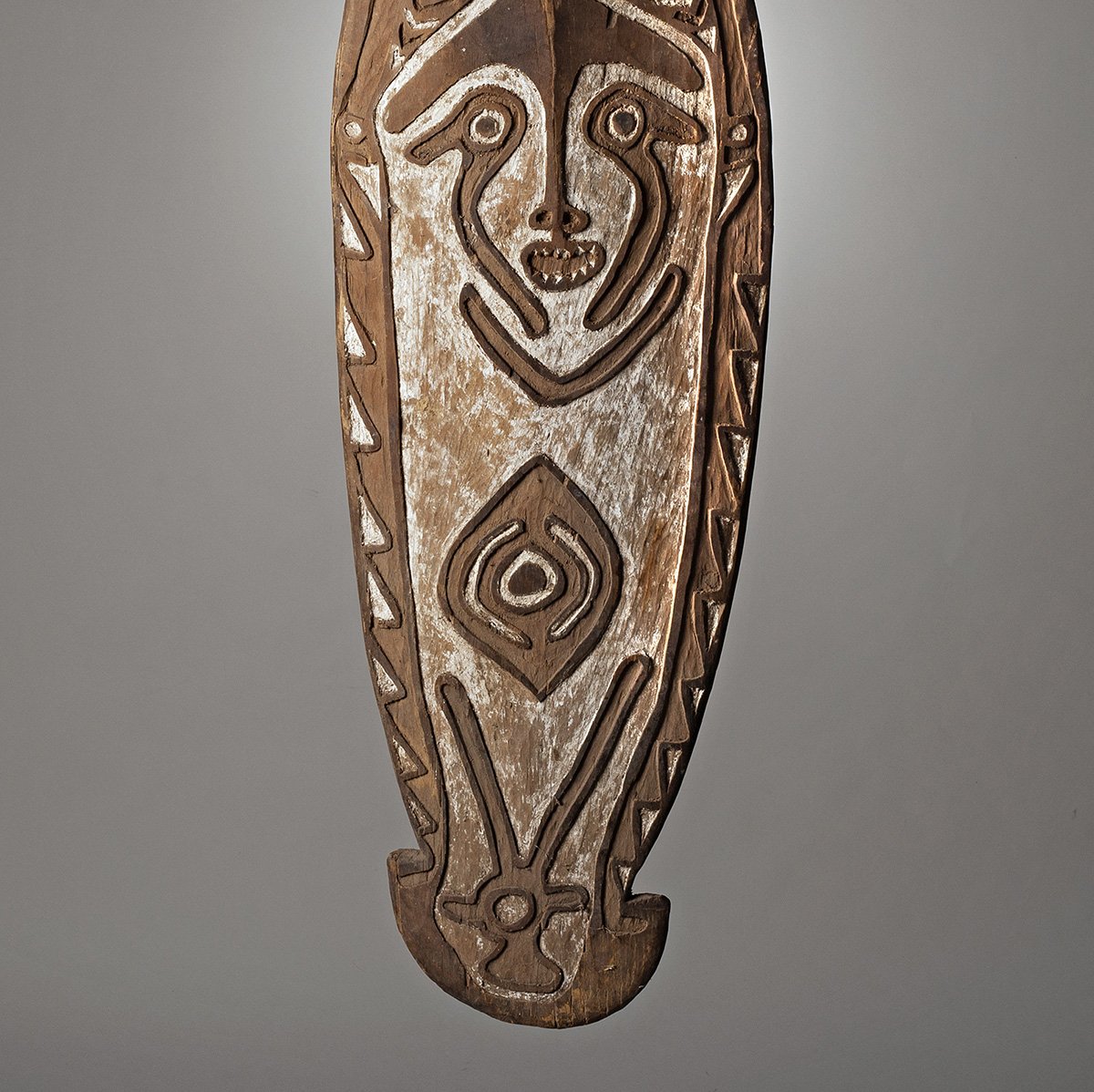 Image 3 of 5
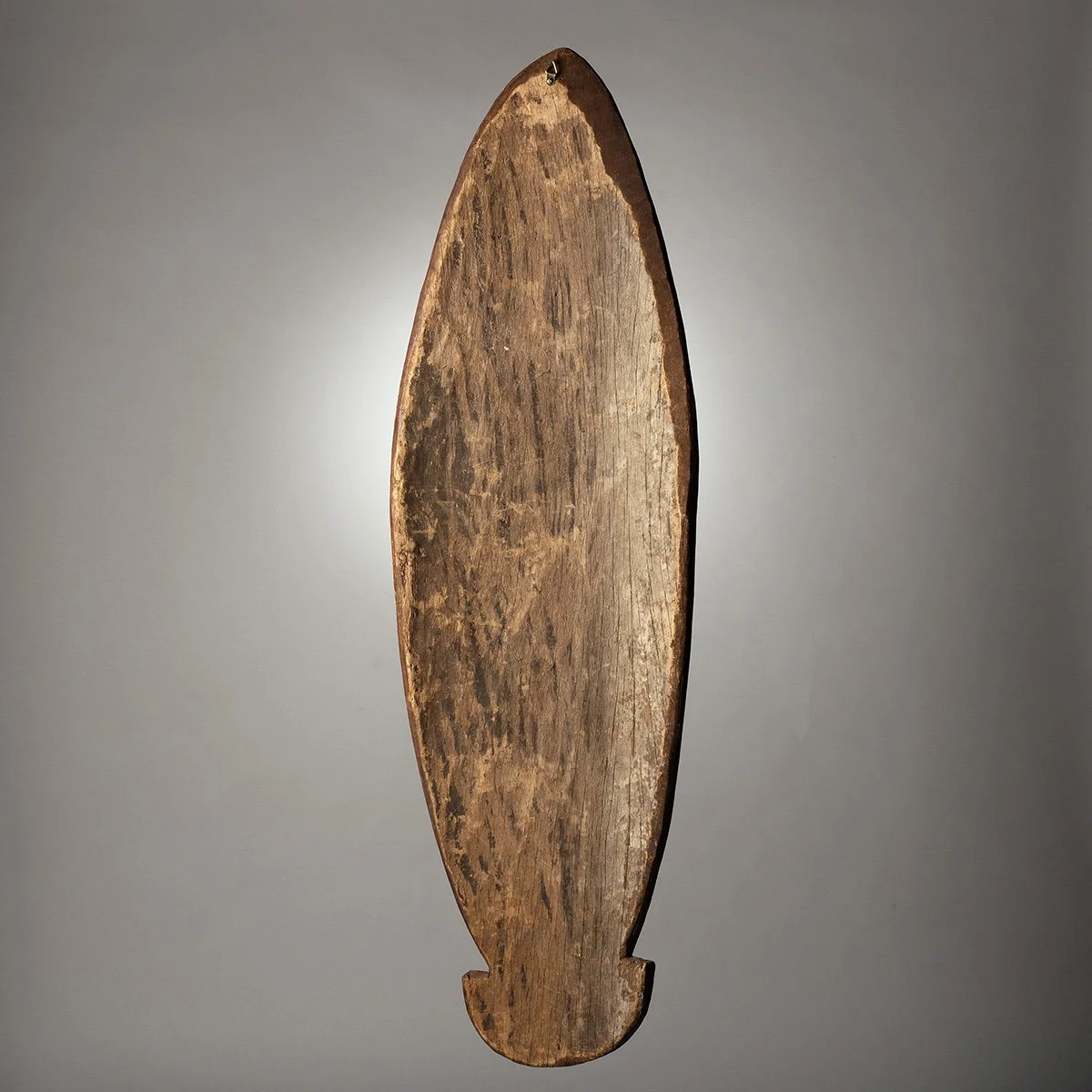 Image 4 of 5
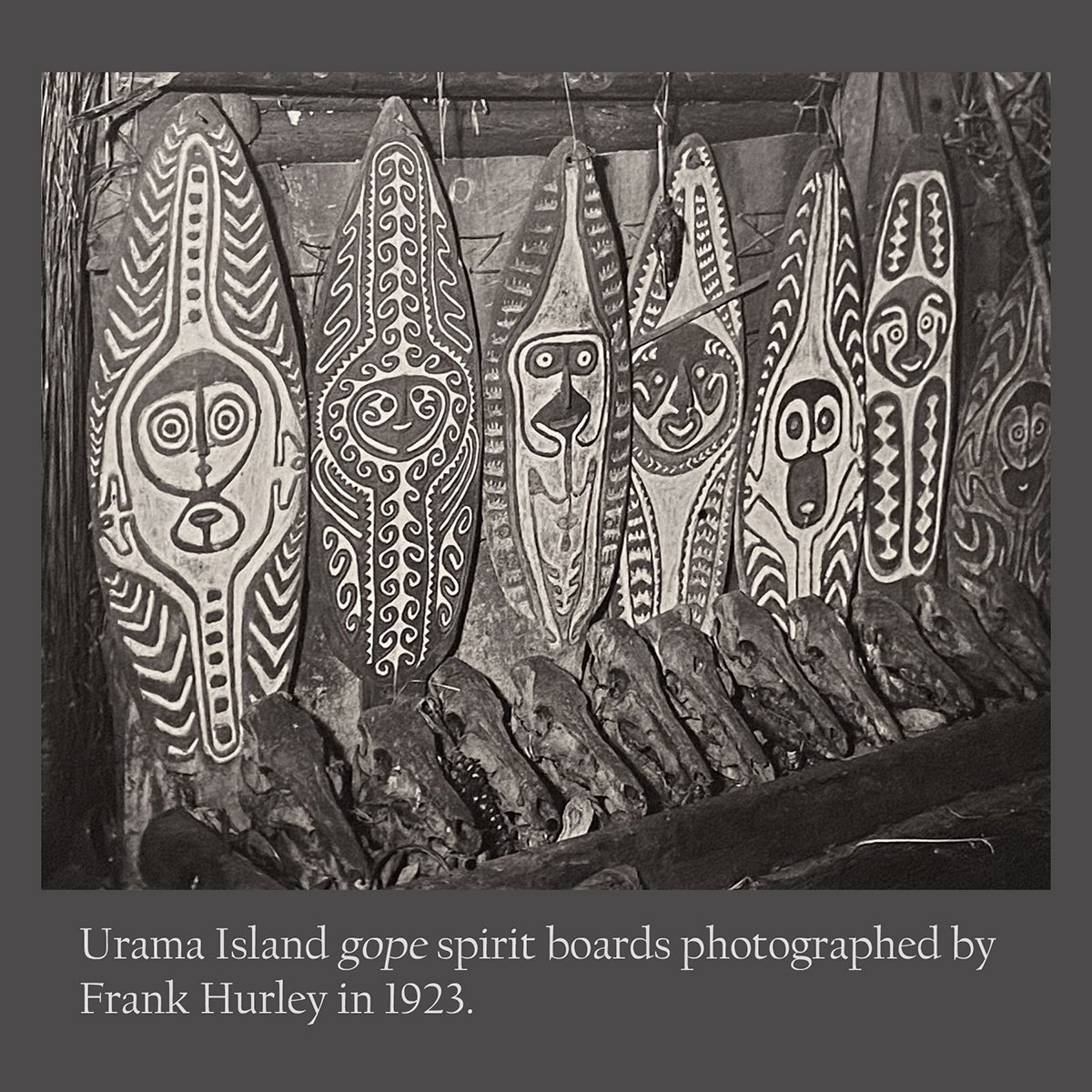 Image 5 of 5
Urama Island, Papuan Gulf, Papua New Guinea
Early 20th century
Wood and native pigments
Height: 47.25 inches (120 cm) Width: 15 inches (38 cm)
Provenance: Private collection – Perth, Australia / Chris and Anna Thorpe personal collection – Sydney, Australia.
The spirit board is the signature art form of the Papuan Gulf. Created and used throughout the region, spirit boards are known by a number of different names. Among the Kerewa, Urama, Era, and Turama peoples of the western gulf they are known as gope; the Purari of the central gulf call them kwoi, and the Elema, in the east, hohao. Often carved from the side of an old canoe, each board was created as the dwelling place of an individual spirit or imunu, whose image appears upon it. In the past the imunu, the focus of virtually all art and ritual activity, were the primary supernatural beings throughout the Papuan Gulf. Each imunu was associated with a specific feature of the landscape or a location in a river or the sea and intimately linked to the clan or gu within whose lands or waters it dwelt. The adult men of each clan lived in a communal longhouse, divided into cubicles, in which the members of each particular clan or subclan slept. In each cubicle the men of the gu constructed a clan shrine containing the spirit boards, figures, and other objects, such as human and animal skulls, embodying or honoring the various imunu associated with their clan. Massed together in the shrine, the spirit boards and other objects gazed down upon the living men below, the supernatural powers of the imunu ensuring the ongoing fertility and prosperity of the clan and its continuing success in war. The form and imagery of spirit boards varied considerably from place to place, depending on local stylistic conventions, as well as on the ways in which the artists conceived the appearance of the individual spirit. All spirit boards, however, consist of oblong plank-like images portraying the face of the imunu and sometimes other elements of its body, such as the arms, torso, and, more rarely, the legs, are shown. Geometric motifs, which in some cases codified aspects of oral traditions that were revealed to novices during initiation, often wholly or partially surround the face and body. Besides the face, the other universal feature of the boards is the navel, which appears at the center of the board. It is often represented, as here, as a circular motif. The navel is said to be the element that supernaturally enlivens the board and likely served as the portal through which the spirit entered the board.
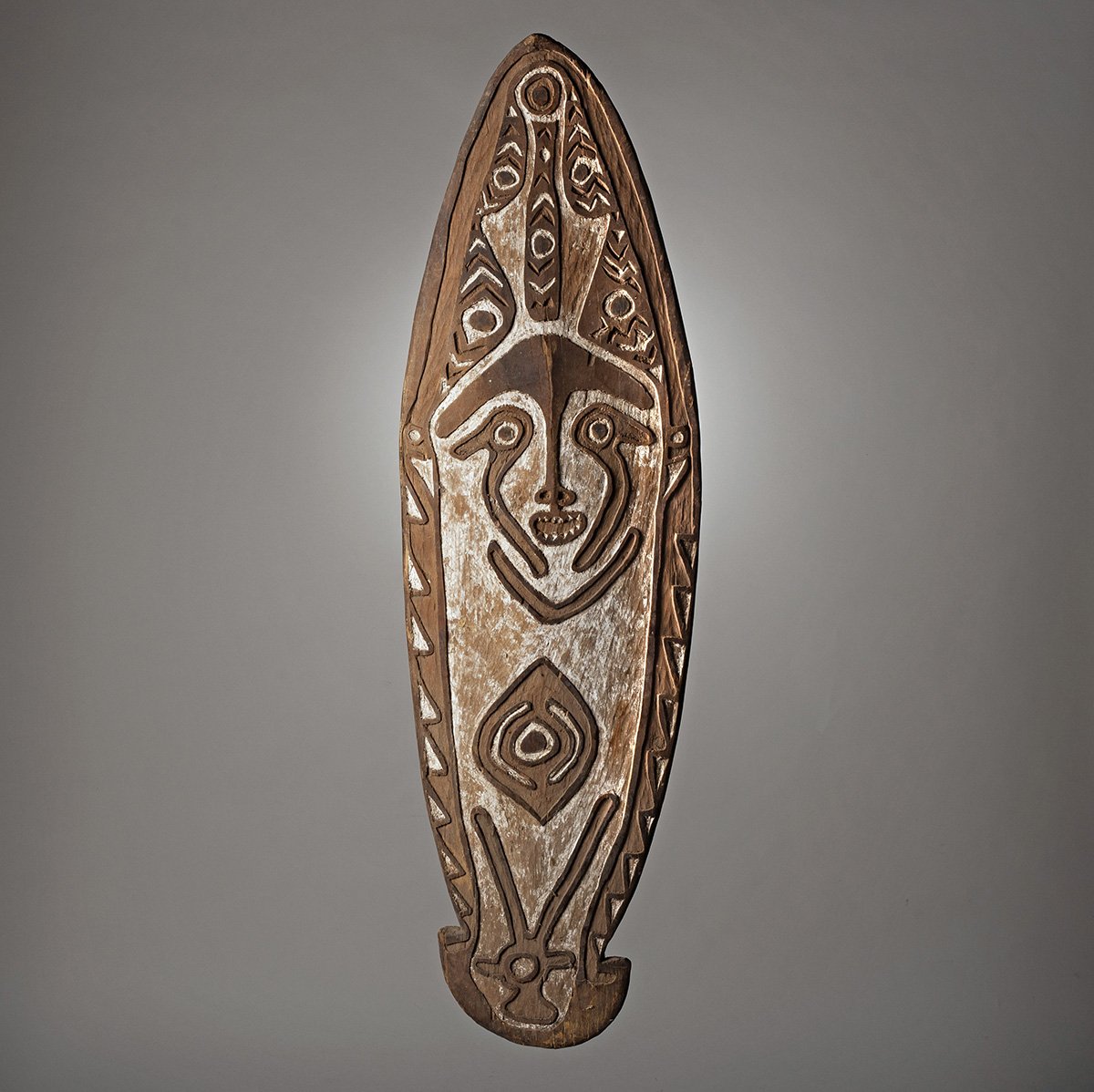
The fine and early gope spirit board presented here was created by the people of Urama Island during the early 20th century. Situated in the Papuan Gulf, Urama Island, and the surrounding Wapo/Era River communities, were traditionally known creating gope boards with a more ovoidal form and abstract style when compared to other Papuan Gulf groups. With its community of highly skilled carvers, Urama Island was formerly a central hub for the production of spirit boards, and many early spirit boards found in collections today were originally traded from Urama Island. Typically carved from old war canoes, which embodied the essence of the clan, the back of these spirit boards often reveals a subtle concave surface. The relief carved geometric motifs of this spirit board are highlighted with native pigments of white lime, ocher, and black charcoal pigment. The prominent navel is framed by concentric arcs, emphasizing the supernatural power of this spiritual portal. Below is rendered an enigmatic v-shaped motif that likely symbolizes reproductive power and prosperity. The notable width of this spirit board lends it an added sculptural power and presence.
Urama Island, Papuan Gulf, Papua New Guinea
Early 20th century
Wood and native pigments
Height: 47.25 inches (120 cm) Width: 15 inches (38 cm)
Provenance: Private collection – Perth, Australia / Chris and Anna Thorpe personal collection – Sydney, Australia.
The spirit board is the signature art form of the Papuan Gulf. Created and used throughout the region, spirit boards are known by a number of different names. Among the Kerewa, Urama, Era, and Turama peoples of the western gulf they are known as gope; the Purari of the central gulf call them kwoi, and the Elema, in the east, hohao. Often carved from the side of an old canoe, each board was created as the dwelling place of an individual spirit or imunu, whose image appears upon it. In the past the imunu, the focus of virtually all art and ritual activity, were the primary supernatural beings throughout the Papuan Gulf. Each imunu was associated with a specific feature of the landscape or a location in a river or the sea and intimately linked to the clan or gu within whose lands or waters it dwelt. The adult men of each clan lived in a communal longhouse, divided into cubicles, in which the members of each particular clan or subclan slept. In each cubicle the men of the gu constructed a clan shrine containing the spirit boards, figures, and other objects, such as human and animal skulls, embodying or honoring the various imunu associated with their clan. Massed together in the shrine, the spirit boards and other objects gazed down upon the living men below, the supernatural powers of the imunu ensuring the ongoing fertility and prosperity of the clan and its continuing success in war. The form and imagery of spirit boards varied considerably from place to place, depending on local stylistic conventions, as well as on the ways in which the artists conceived the appearance of the individual spirit. All spirit boards, however, consist of oblong plank-like images portraying the face of the imunu and sometimes other elements of its body, such as the arms, torso, and, more rarely, the legs, are shown. Geometric motifs, which in some cases codified aspects of oral traditions that were revealed to novices during initiation, often wholly or partially surround the face and body. Besides the face, the other universal feature of the boards is the navel, which appears at the center of the board. It is often represented, as here, as a circular motif. The navel is said to be the element that supernaturally enlivens the board and likely served as the portal through which the spirit entered the board.
The fine and early gope spirit board presented here was created by the people of Urama Island during the early 20th century. Situated in the Papuan Gulf, Urama Island, and the surrounding Wapo/Era River communities, were traditionally known creating gope boards with a more ovoidal form and abstract style when compared to other Papuan Gulf groups. With its community of highly skilled carvers, Urama Island was formerly a central hub for the production of spirit boards, and many early spirit boards found in collections today were originally traded from Urama Island. Typically carved from old war canoes, which embodied the essence of the clan, the back of these spirit boards often reveals a subtle concave surface. The relief carved geometric motifs of this spirit board are highlighted with native pigments of white lime, ocher, and black charcoal pigment. The prominent navel is framed by concentric arcs, emphasizing the supernatural power of this spiritual portal. Below is rendered an enigmatic v-shaped motif that likely symbolizes reproductive power and prosperity. The notable width of this spirit board lends it an added sculptural power and presence.