Sepik River Region
Cassowary and Human Bone
19th - early 20th century
Provenance: Private collection Australia
Cassowary and human bone daggers were formidable weapons and symbols of high social status. Crafted from cassowary leg bones or human thigh bones, these daggers were used in close combat for stabbing. While cassowary daggers represent hunting prowess, human bone daggers were particularly prized, made from the remains of ancestors or slain warriors to inherit their power.
Science | AAASSci RKey D
- Cassowary daggers are crafted from the tibiotarsus of the bird, while human daggers are made from the femur. They were used for fighting, hunting, and rituals.
- Cassowary bone symbolizes speed, strength, and is associated with femininity and nature. Human bone (especially from a father or respected warrior) embodies the prestige and magical power of the deceased.
- Scientific studies have found that human bone daggers are more curved and structurally stronger than cassowary bone daggers. The design of the human bone dagger was likely engineered to maximize its life span due to its immense social value.
A fine collection of importance formed over two decades
Left to right
- Abstract design. Iwam people, May River, West Sepik Province. Pommel relates to the praying mantis. Found in a Australian antique shop in 2010. Height 14" Circa 1930
- Iwam or Wogamusch people, West Sepik Province. Fine binding. Human bone. Found in Bendigo, Victoria 2002. Height 14 1/2" 19th century and a very ancient and beautiful example.
- With facial elements, Murik Lakes people, East Sepik Province. Found in Melbourne Victoria in 2006. Old inscription on reverse "Asor" native name for this type of dagger. Height 15" Early 20th century.
- Facial design, Murik Lakes people, East Sepik Province. Fund in NY in 2006. Darkened reverse at lower blade from ritual use when daggers were placed in the ground of the owners house and shell rings were placed over the dagger. Height 12 1/4" 19th century.
- Fine string binding to pommel. Iwam people, May River, West Sepik Province. Human bone with female designs that relate to headhunting. Height 9 3/4" 19th century.
- Abstract design and human bone. Very fine binding on pommel. Iwam or Wogamusch people, May River West Sepik Province. Height 14 3/4" 19th century.
- Human face design, Boiken people East Sepik Province. Found in Sydney in 2003. Height 12 3/4".
- Abstract face with wonderful ancient patina. Kwoma people, Eask Sepik Province. Collected by Douglas Newton in the 1960's, Ex John Freide collection and given to cover a debt in 2007. Human bone. These type of daggers are called Apa and are always made by the owners father, They are embodiments of the father's spirit and provide supernatural strength. Height 14" 19th century.
- Wonderful abstract face and very deeply carved with ancient patina. Kwoma people, East Sepik Province. Height 14" early 20th century.
- Amazing facial design with ancient patina. Ramu River East Sepik Province. Collected by Christian Claussen between 1934 - 1936. Claussen was a carpenter working in the region who retired to Queensland. Acquired from D'ian Davidson in 2004. Height 12" 19th century.
- Large human bone dagger deep dark patina. Height 12 1/4" 19th century.
INQUIRE HERE
Sepik River Region
Cassowary and Human Bone
19th - early 20th century
Provenance: Private collection Australia
Cassowary and human bone daggers were formidable weapons and symbols of high social status. Crafted from cassowary leg bones or human thigh bones, these daggers were used in close combat for stabbing. While cassowary daggers represent hunting prowess, human bone daggers were particularly prized, made from the remains of ancestors or slain warriors to inherit their power.
Science | AAASSci RKey D
- Cassowary daggers are crafted from the tibiotarsus of the bird, while human daggers are made from the femur. They were used for fighting, hunting, and rituals.
- Cassowary bone symbolizes speed, strength, and is associated with femininity and nature. Human bone (especially from a father or respected warrior) embodies the prestige and magical power of the deceased.
- Scientific studies have found that human bone daggers are more curved and structurally stronger than cassowary bone daggers. The design of the human bone dagger was likely engineered to maximize its life span due to its immense social value.
A fine collection of importance formed over two decades
Left to right
- Abstract design. Iwam people, May River, West Sepik Province. Pommel relates to the praying mantis. Found in a Australian antique shop in 2010. Height 14" Circa 1930
- Iwam or Wogamusch people, West Sepik Province. Fine binding. Human bone. Found in Bendigo, Victoria 2002. Height 14 1/2" 19th century and a very ancient and beautiful example.
- With facial elements, Murik Lakes people, East Sepik Province. Found in Melbourne Victoria in 2006. Old inscription on reverse "Asor" native name for this type of dagger. Height 15" Early 20th century.
- Facial design, Murik Lakes people, East Sepik Province. Fund in NY in 2006. Darkened reverse at lower blade from ritual use when daggers were placed in the ground of the owners house and shell rings were placed over the dagger. Height 12 1/4" 19th century.
- Fine string binding to pommel. Iwam people, May River, West Sepik Province. Human bone with female designs that relate to headhunting. Height 9 3/4" 19th century.
- Abstract design and human bone. Very fine binding on pommel. Iwam or Wogamusch people, May River West Sepik Province. Height 14 3/4" 19th century.
- Human face design, Boiken people East Sepik Province. Found in Sydney in 2003. Height 12 3/4".
- Abstract face with wonderful ancient patina. Kwoma people, Eask Sepik Province. Collected by Douglas Newton in the 1960's, Ex John Freide collection and given to cover a debt in 2007. Human bone. These type of daggers are called Apa and are always made by the owners father, They are embodiments of the father's spirit and provide supernatural strength. Height 14" 19th century.
- Wonderful abstract face and very deeply carved with ancient patina. Kwoma people, East Sepik Province. Height 14" early 20th century.
- Amazing facial design with ancient patina. Ramu River East Sepik Province. Collected by Christian Claussen between 1934 - 1936. Claussen was a carpenter working in the region who retired to Queensland. Acquired from D'ian Davidson in 2004. Height 12" 19th century.
- Large human bone dagger deep dark patina. Height 12 1/4" 19th century.
INQUIRE HERE


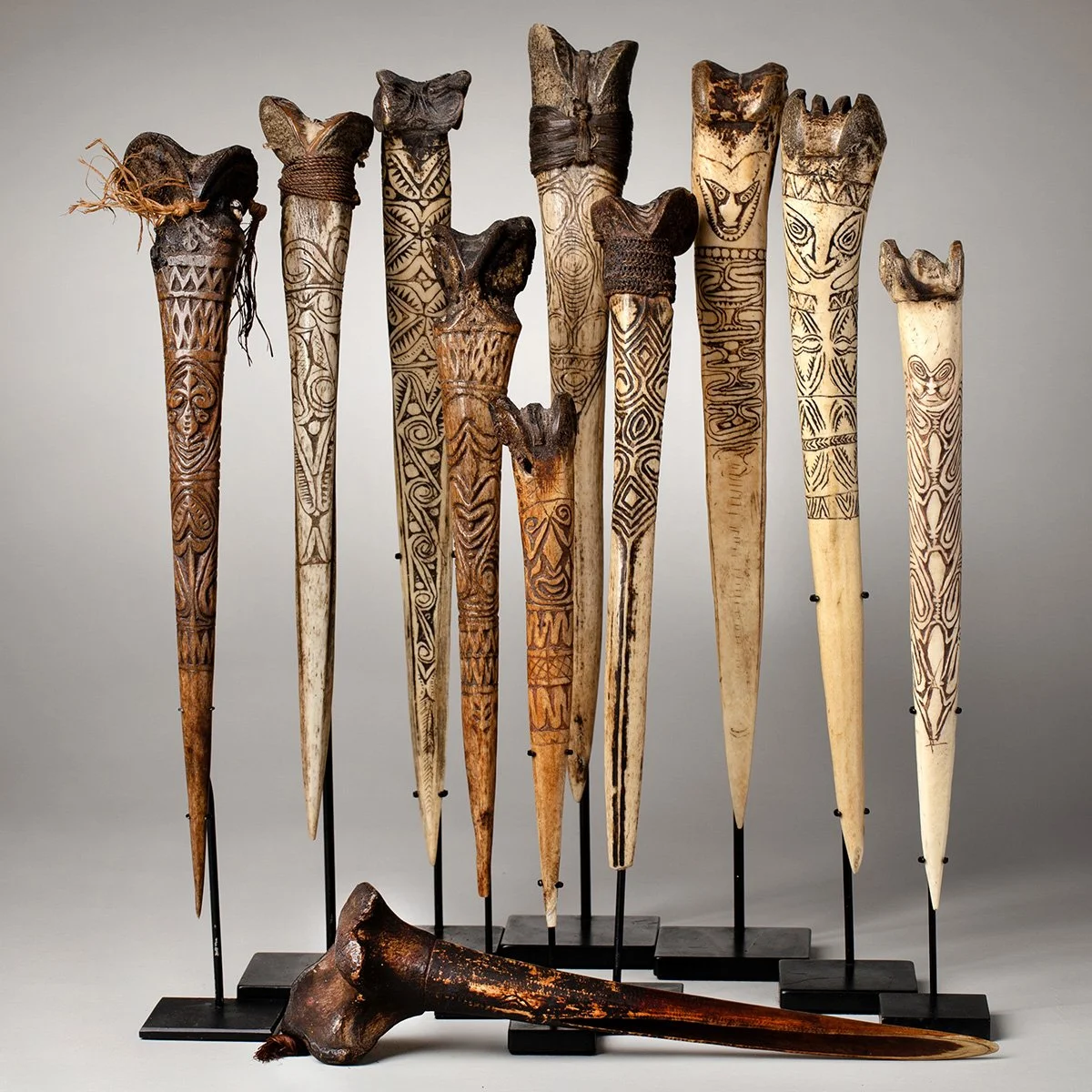 Image 1 of 11
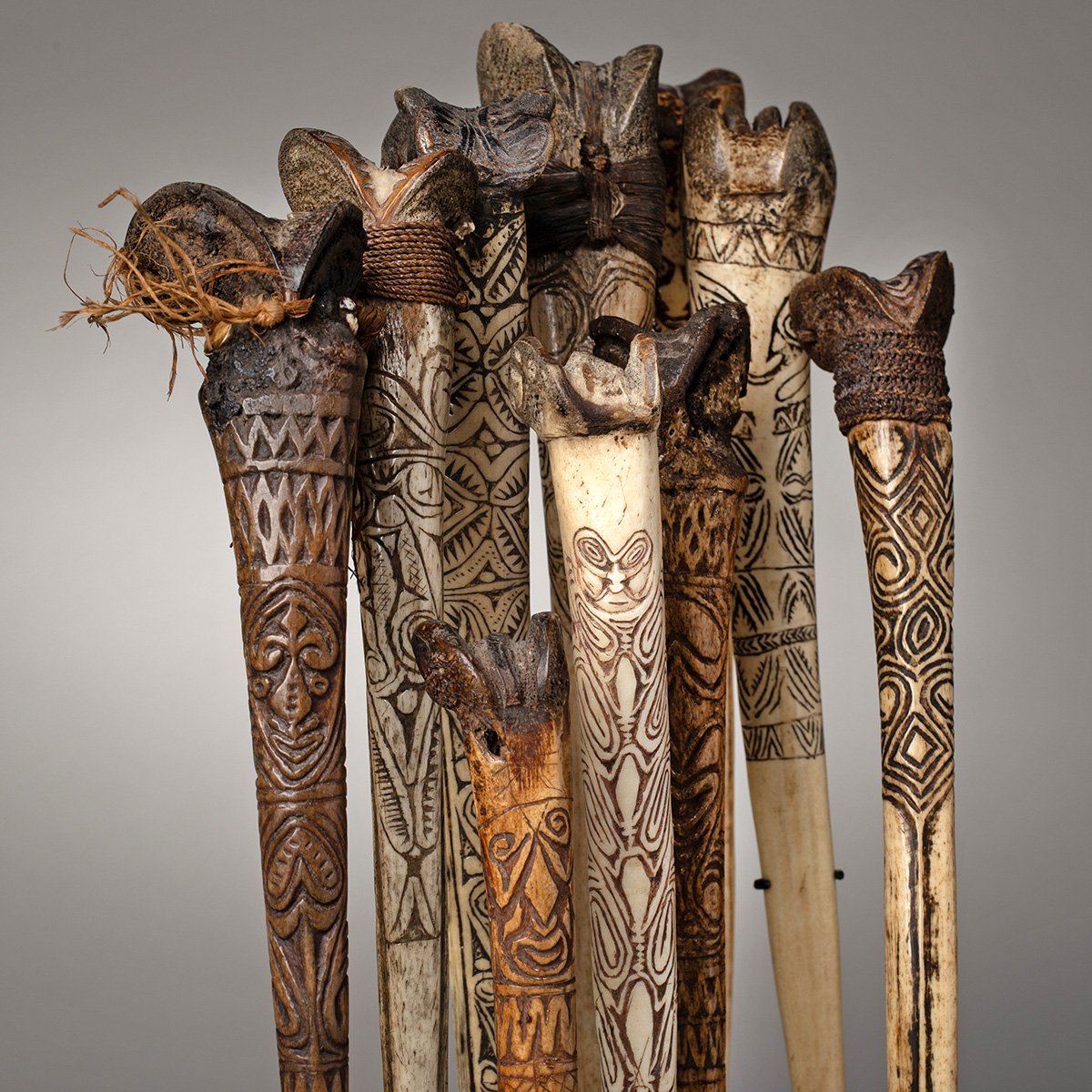 Image 2 of 11
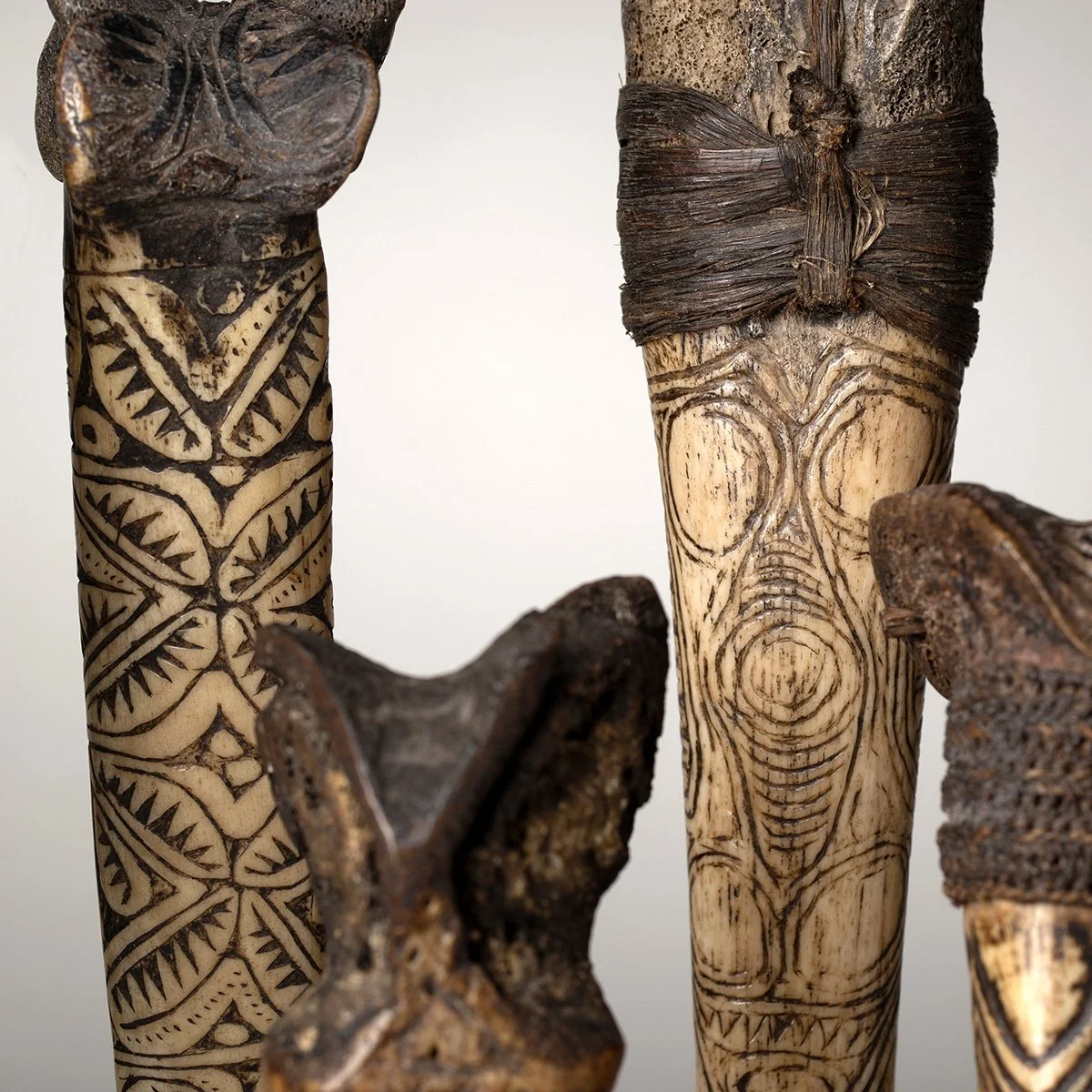 Image 3 of 11
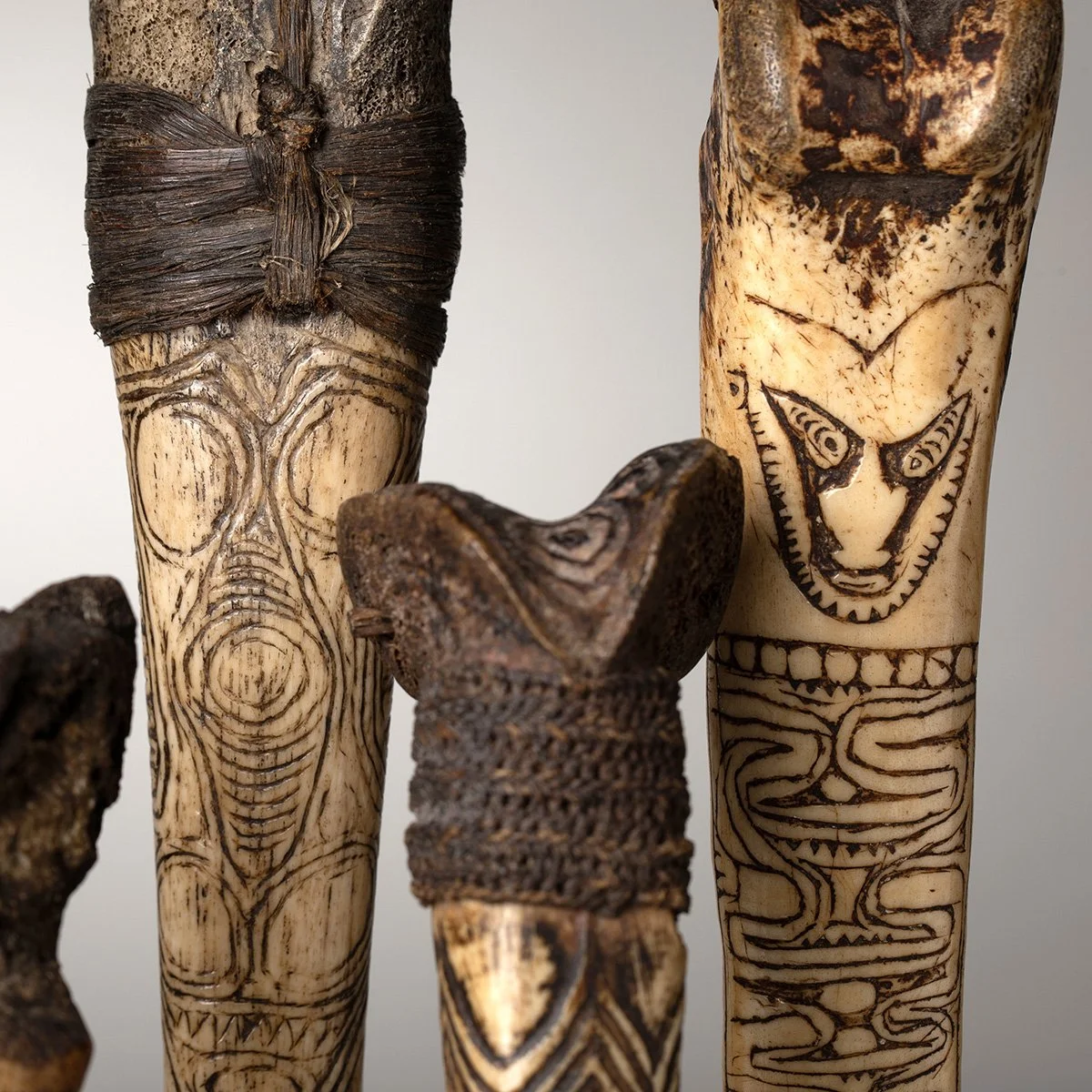 Image 4 of 11
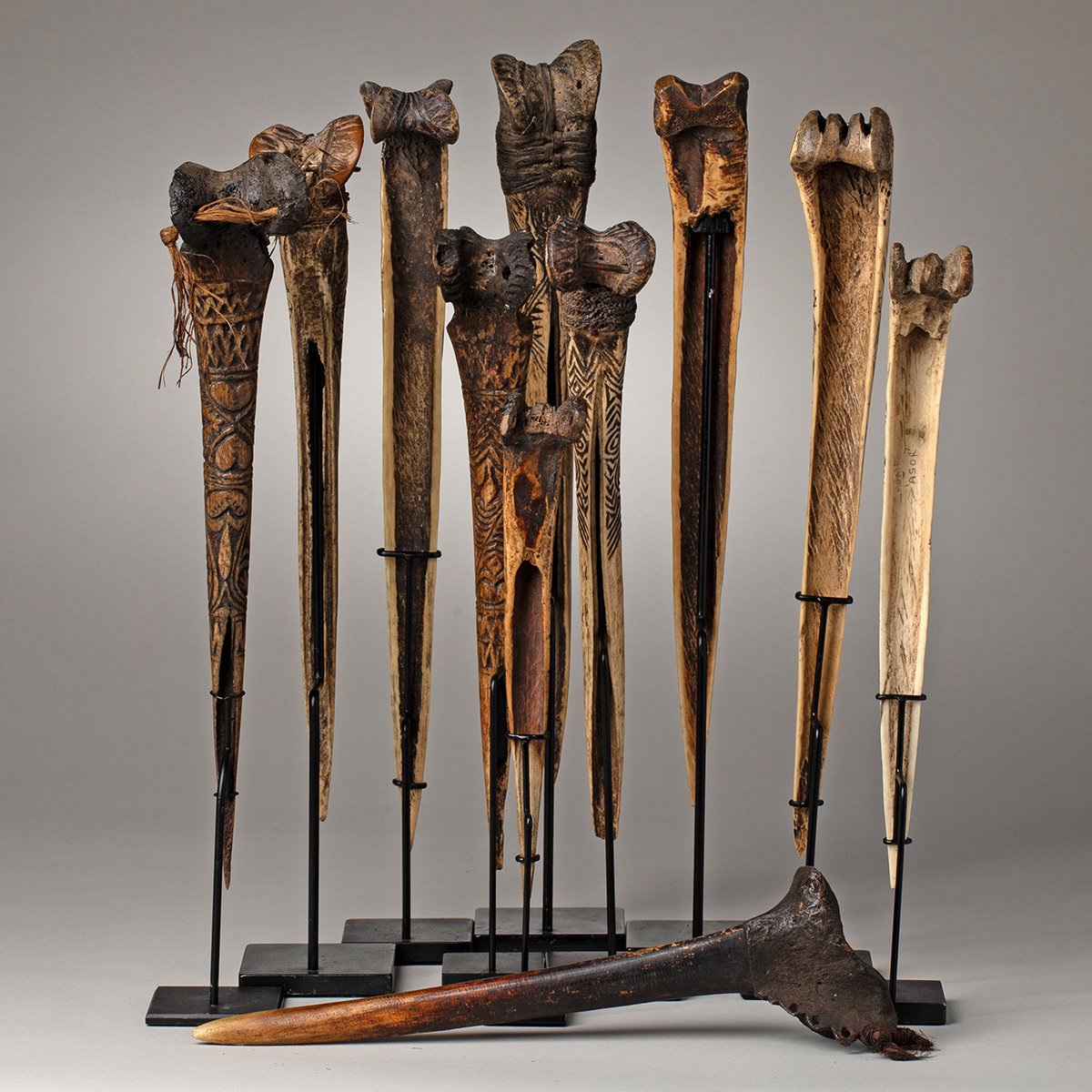 Image 5 of 11
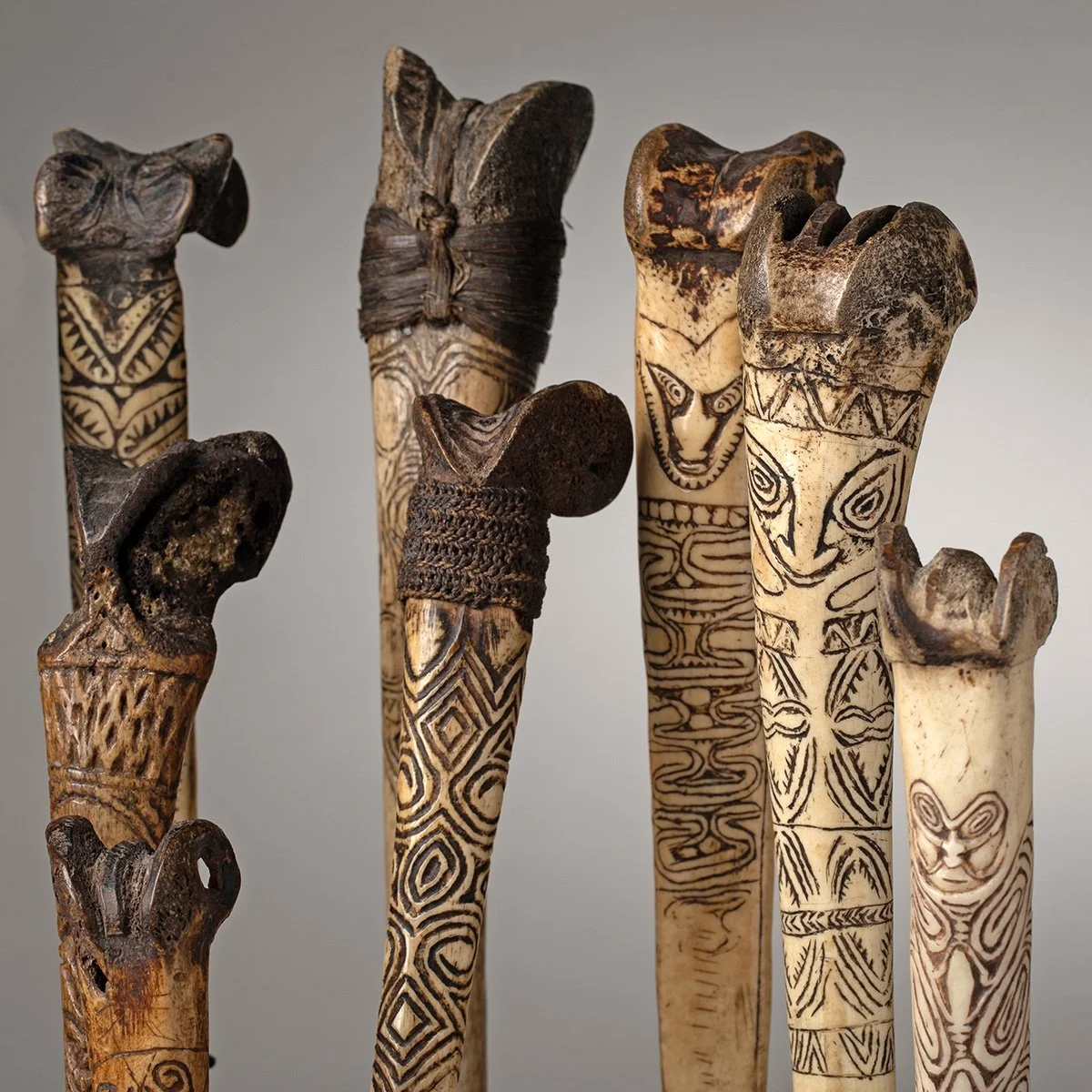 Image 6 of 11
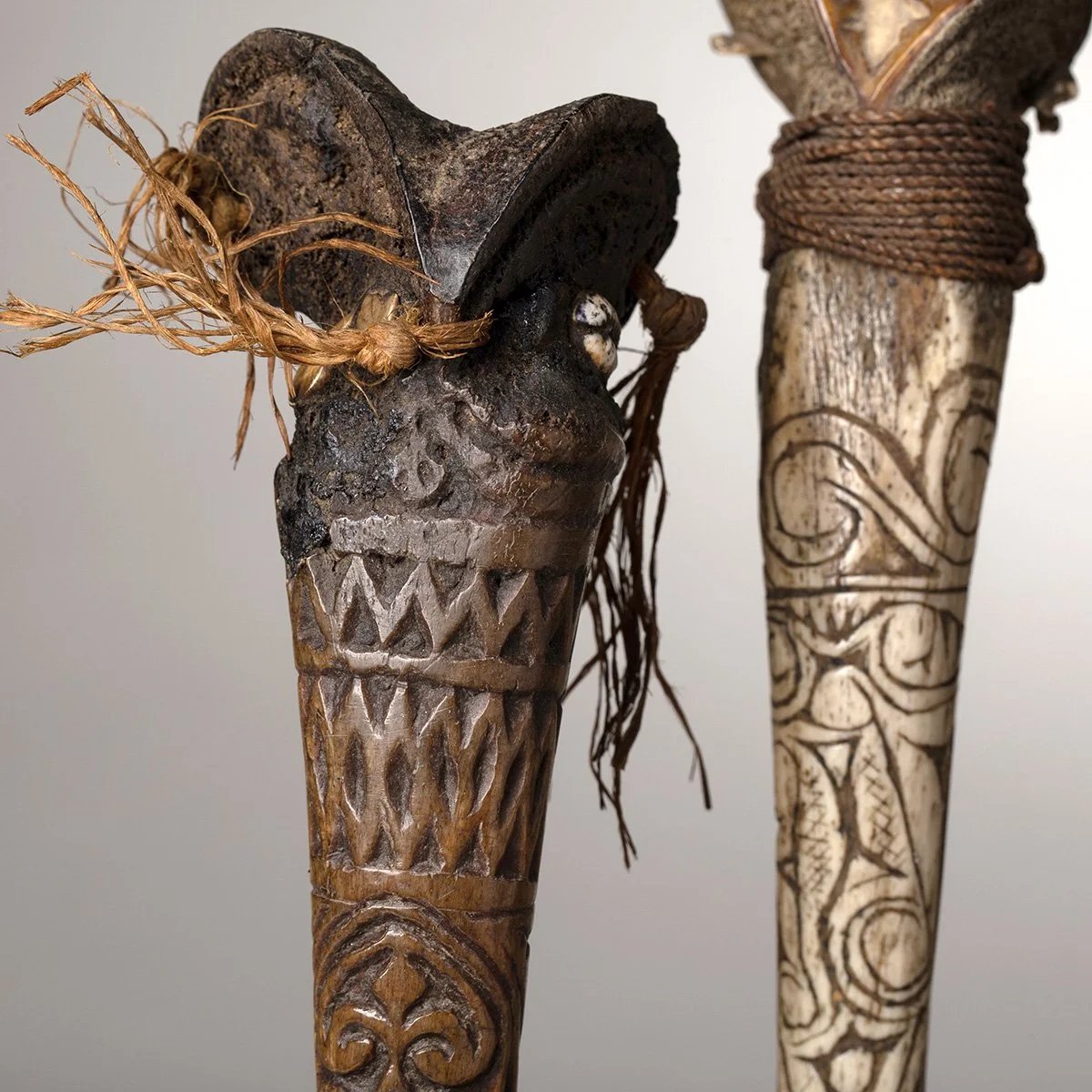 Image 7 of 11
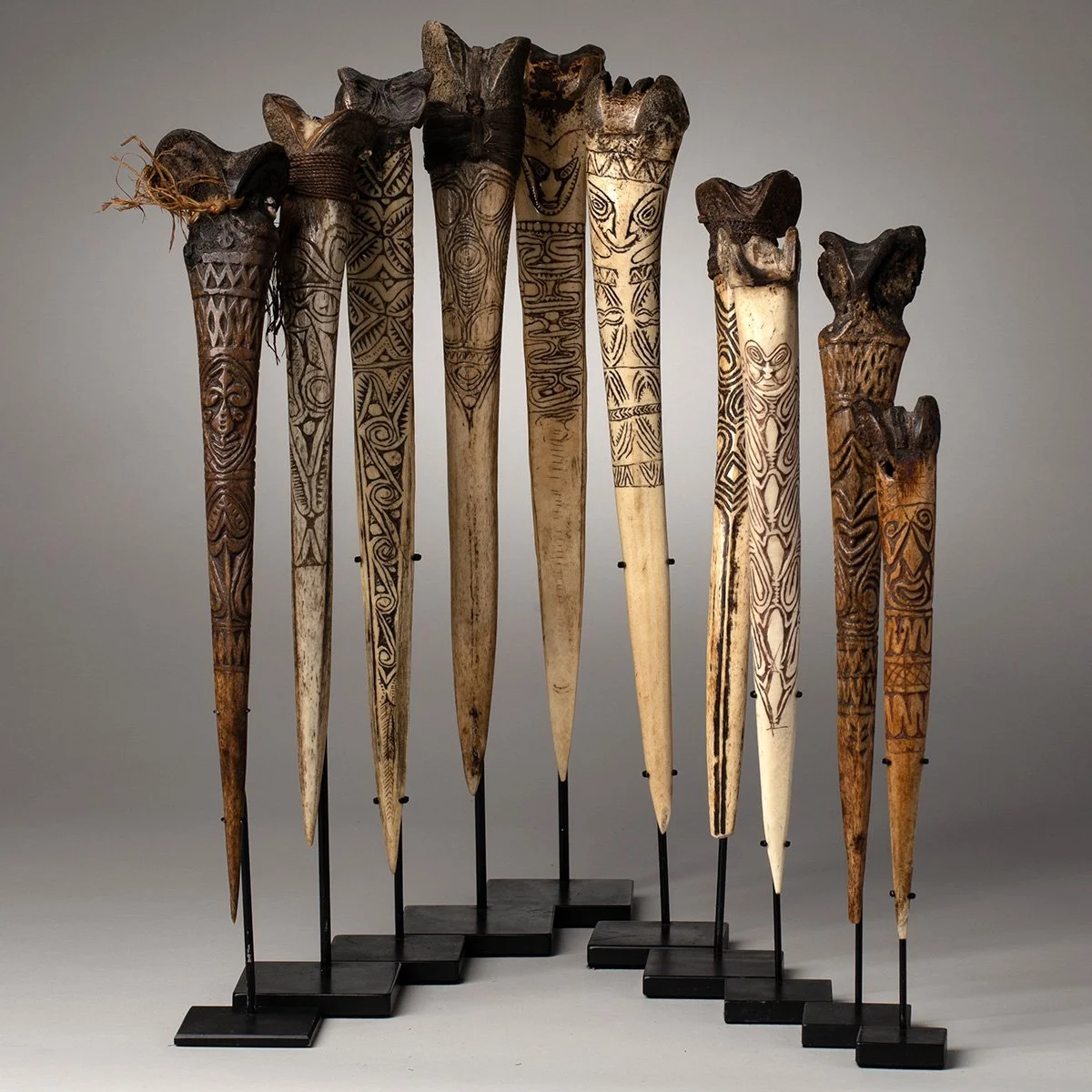 Image 8 of 11
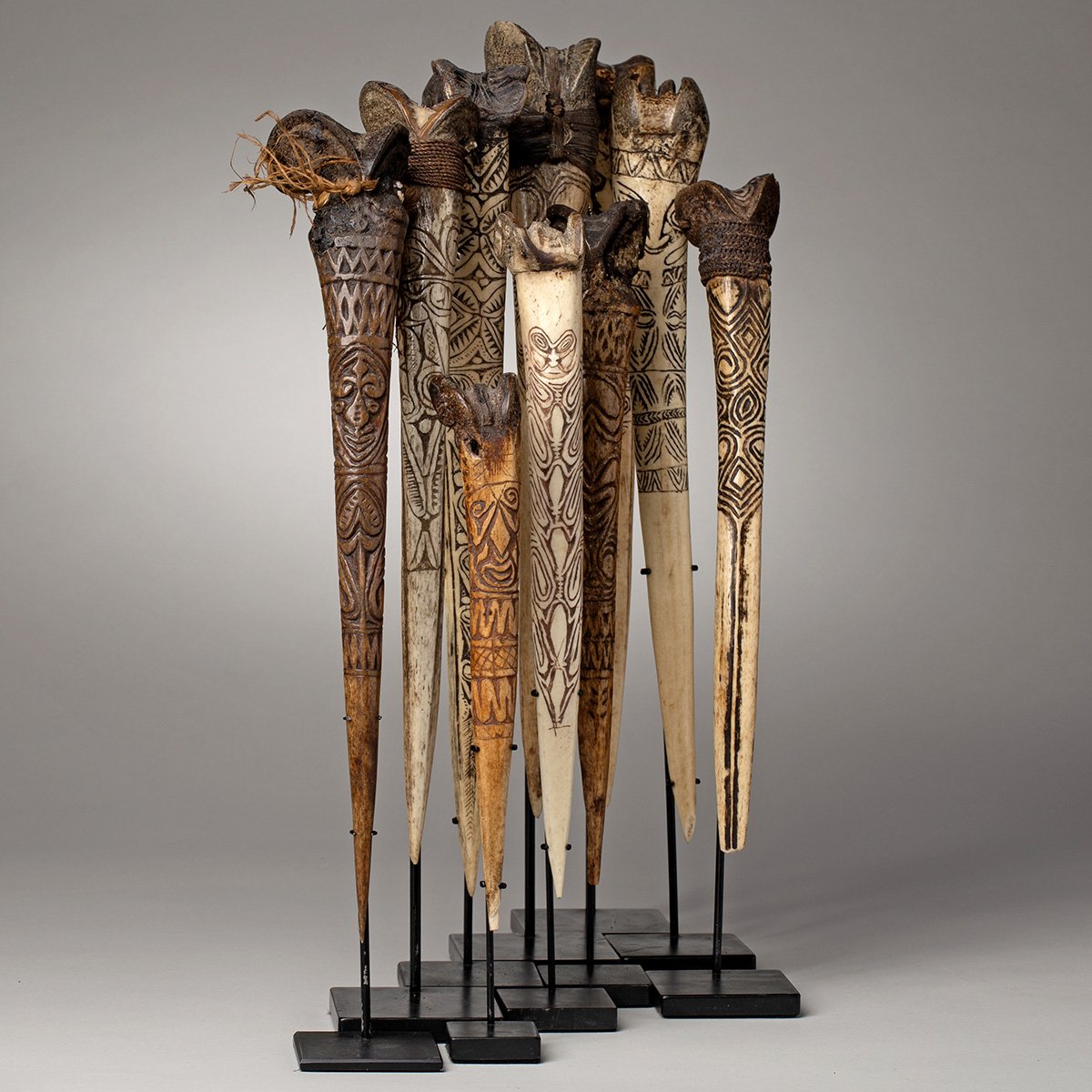 Image 9 of 11
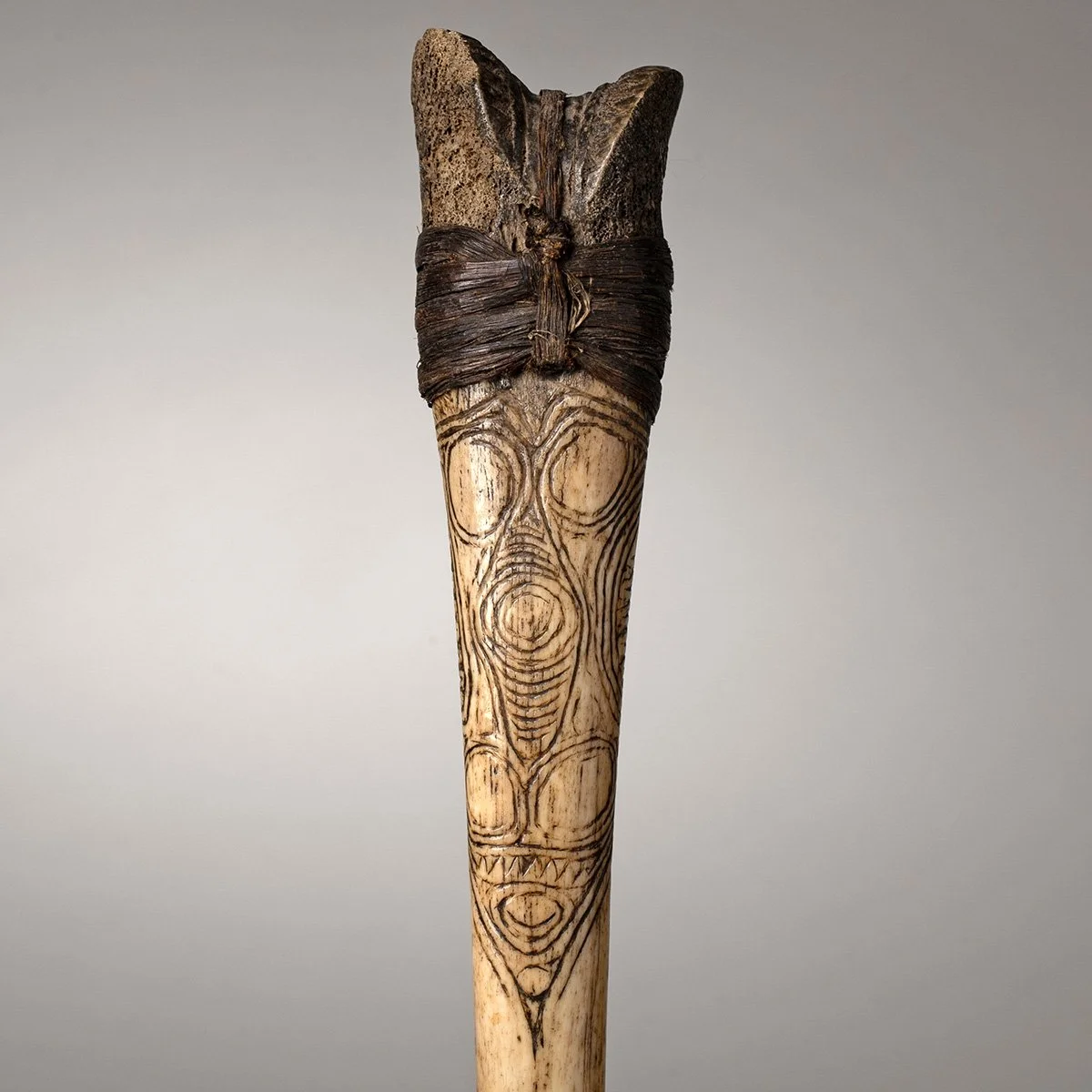 Image 10 of 11
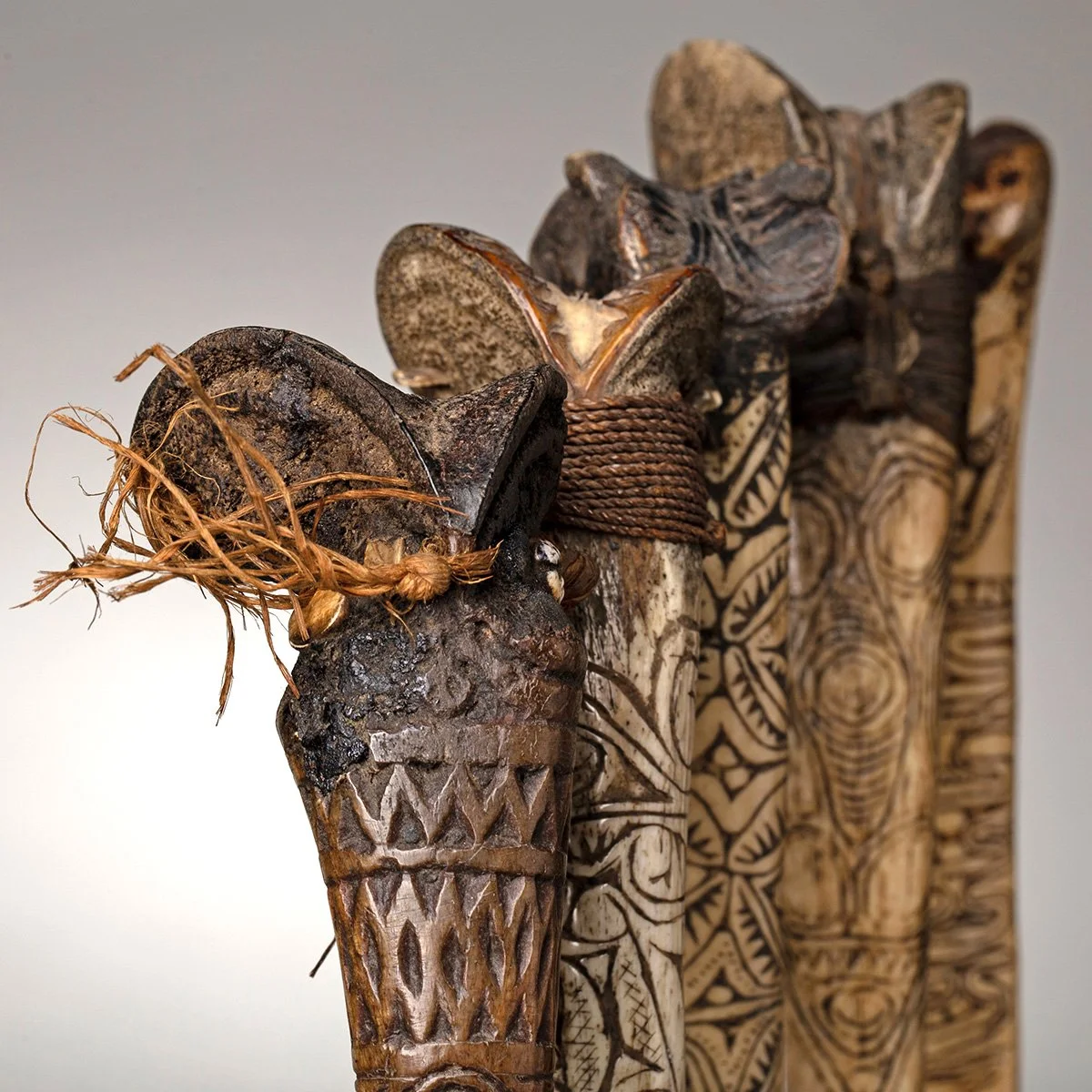 Image 11 of 11