Maori People, North Island, New Zealand
Height: 58 inches (147 cm)
Circa 1840
Provenance: Philip Murphy, London / UK private collection
This elaborately carved taurapa canoe stern would have once stood vertically at the stern of a great Maori waka taua war canoe. To carve a waka taua war canoe took great skill, and canoe-makers acquired great prestige, or mana, and reputations as priests and craftsmen for their ritual and technical expertise. These qualities were seen as inseparable and would have been highly desirable in the construction of waka taua, which were imbued with spiritual significance during the transportation of Maori warriors over great distances.
The elaborate taurapa carvings together represent the story of Tāne (god of forests and birds) ascending the twelve heavens to obtain the three baskets of knowledge - kete tuauri (basket of peace, goodness, and love), kete tūātea (basket of prayer, incantations, and ritual), and kete aronui (basket of war, agriculture, wood, stone, and earth work) - in order to learn the secrets of life. On the way, his evil elder brother Whiro tries, unsuccessfully, to disrupt Tāne's journey.
At the base of the taurapa sits a carved human-like figure - puhi-kai-ariki - an ancestral deity who oversees the crew. From under puhi-kai-ariki extend two curved, rib-like forms that run about three quarters of the length of the taurapa. These represent the dual life principles of ira-atua (the gods) and ira-tangata (humankind). The most dominant image on the taurapa is the manaia, an avian-like creature seen grappling with the two vertical rib forms representing these creative principles of life. The manaia is therefore symbolically battling the opposing notions of war and peace. The surrounding elaborate spiral system is called pitau and represents the unfurling black tree fern, symbolizing the beginning of life.
When on voyage, taurapa were often ornamented with two long streamers of kereru pigeon feathers fixed along their length and trailing astern at the waterline. These feather streamers related symbolically to Tāwhirimatea (god of the wind) and Tangaroa (god of the sea), who were the guardians of the vessel. Well-carved waka taua decked out in streamers and feathers, glistening with black oil, and carved in a dizzying array of curvilinear motifs and spirals from end to end, would have been an incredible and imposing sight.
INQUIRE HERE
Maori People, North Island, New Zealand
Height: 58 inches (147 cm)
Circa 1840
Provenance: Philip Murphy, London / UK private collection
This elaborately carved taurapa canoe stern would have once stood vertically at the stern of a great Maori waka taua war canoe. To carve a waka taua war canoe took great skill, and canoe-makers acquired great prestige, or mana, and reputations as priests and craftsmen for their ritual and technical expertise. These qualities were seen as inseparable and would have been highly desirable in the construction of waka taua, which were imbued with spiritual significance during the transportation of Maori warriors over great distances.
The elaborate taurapa carvings together represent the story of Tāne (god of forests and birds) ascending the twelve heavens to obtain the three baskets of knowledge - kete tuauri (basket of peace, goodness, and love), kete tūātea (basket of prayer, incantations, and ritual), and kete aronui (basket of war, agriculture, wood, stone, and earth work) - in order to learn the secrets of life. On the way, his evil elder brother Whiro tries, unsuccessfully, to disrupt Tāne's journey.
At the base of the taurapa sits a carved human-like figure - puhi-kai-ariki - an ancestral deity who oversees the crew. From under puhi-kai-ariki extend two curved, rib-like forms that run about three quarters of the length of the taurapa. These represent the dual life principles of ira-atua (the gods) and ira-tangata (humankind). The most dominant image on the taurapa is the manaia, an avian-like creature seen grappling with the two vertical rib forms representing these creative principles of life. The manaia is therefore symbolically battling the opposing notions of war and peace. The surrounding elaborate spiral system is called pitau and represents the unfurling black tree fern, symbolizing the beginning of life.
When on voyage, taurapa were often ornamented with two long streamers of kereru pigeon feathers fixed along their length and trailing astern at the waterline. These feather streamers related symbolically to Tāwhirimatea (god of the wind) and Tangaroa (god of the sea), who were the guardians of the vessel. Well-carved waka taua decked out in streamers and feathers, glistening with black oil, and carved in a dizzying array of curvilinear motifs and spirals from end to end, would have been an incredible and imposing sight.
INQUIRE HERE


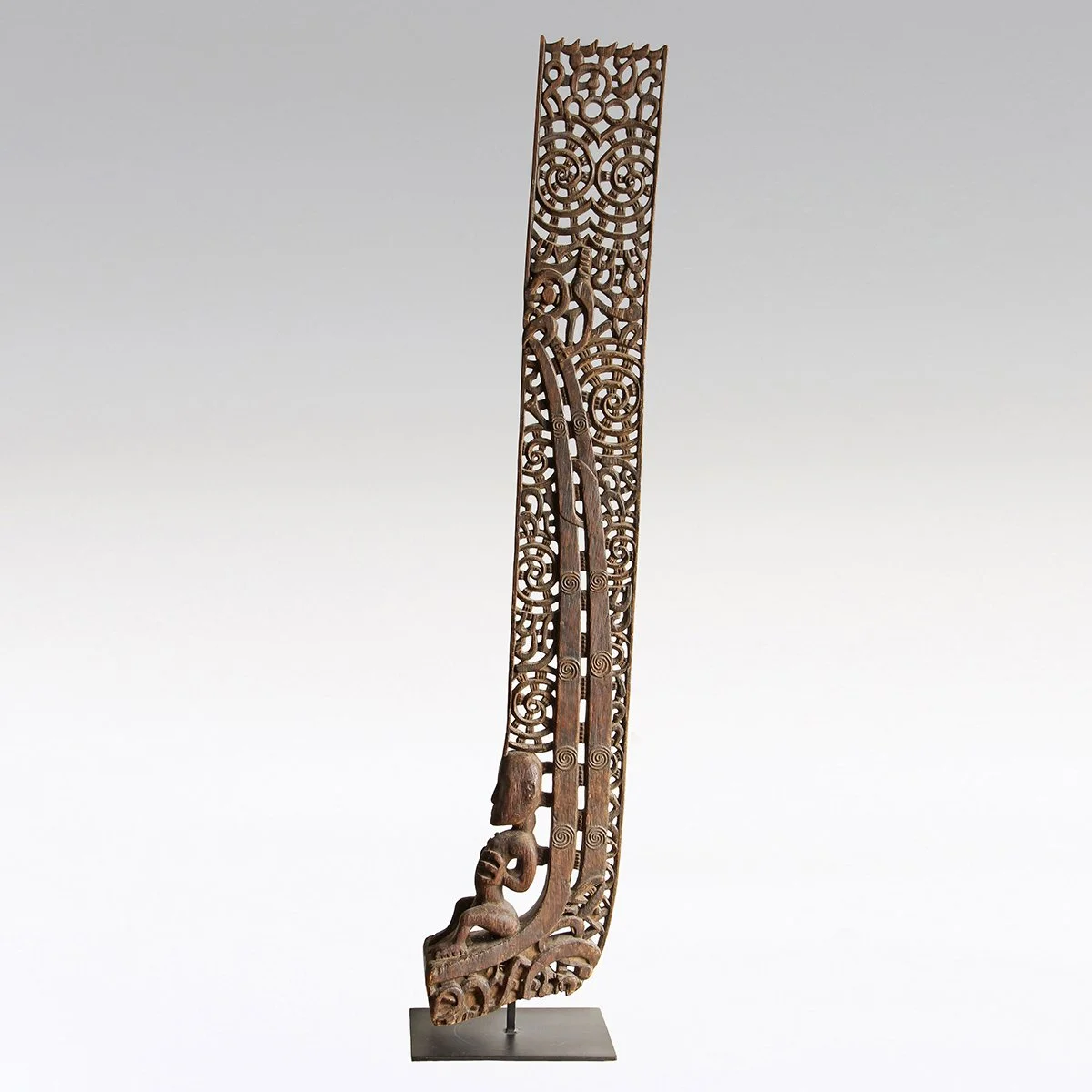 Image 1 of 8
 Image 2 of 8
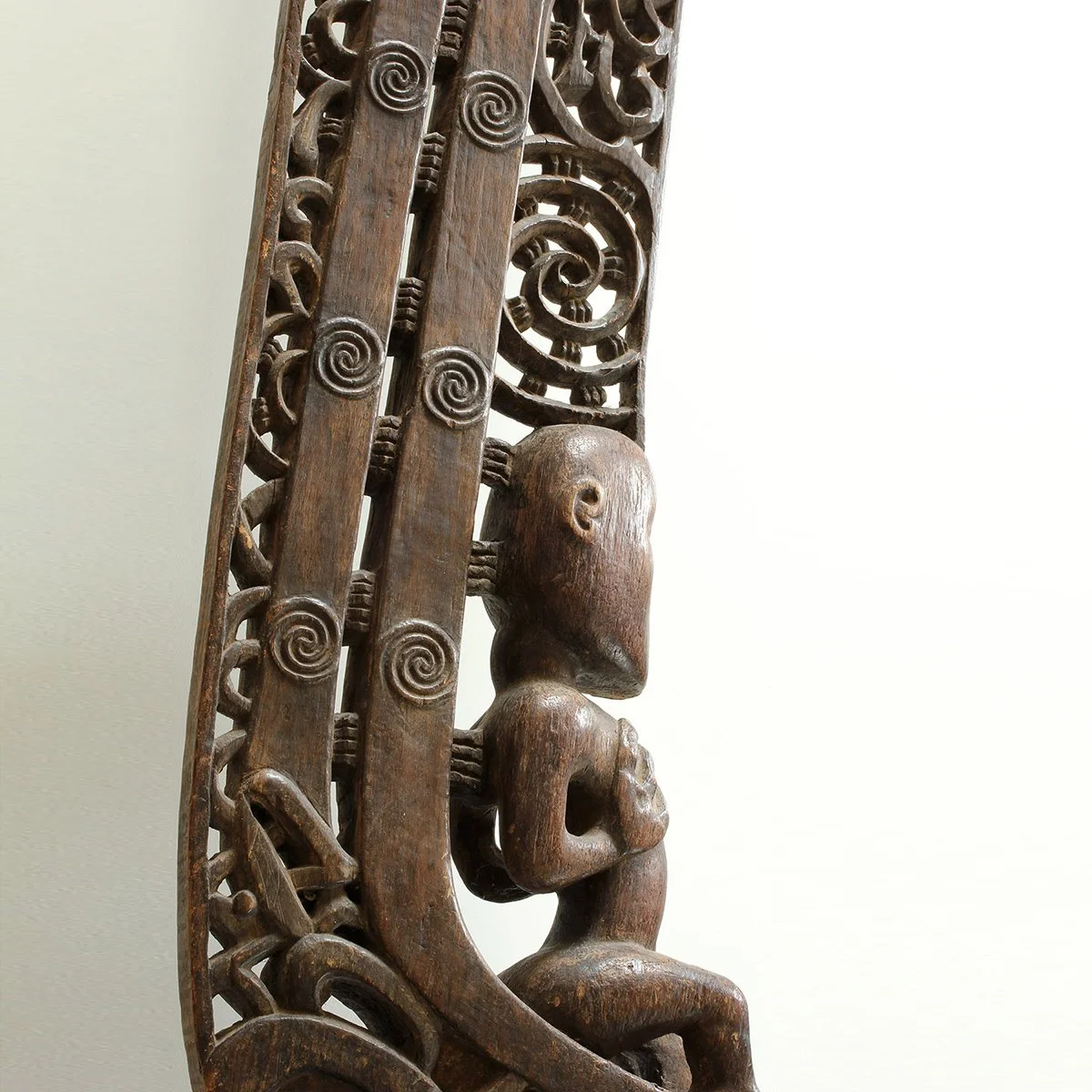 Image 3 of 8
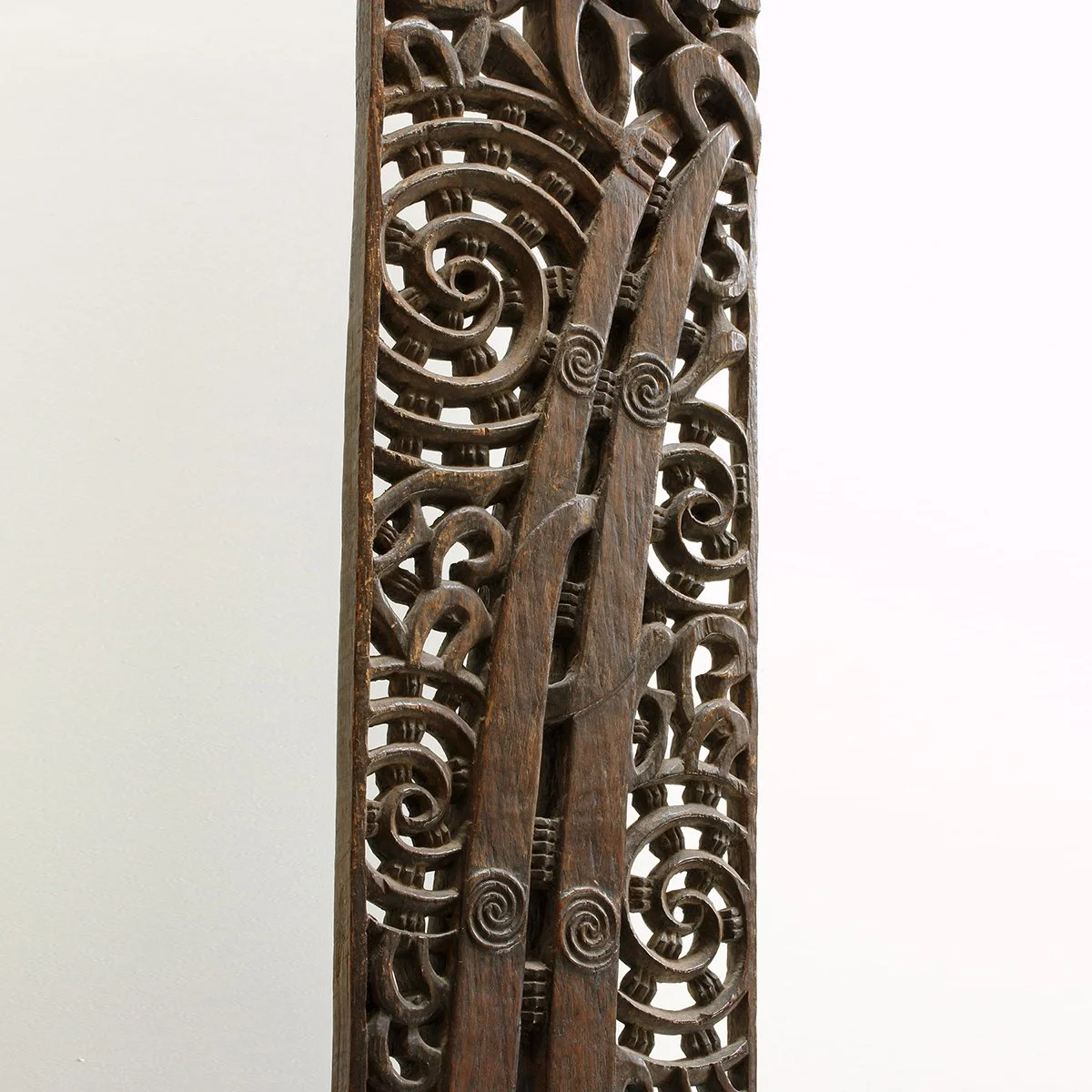 Image 4 of 8
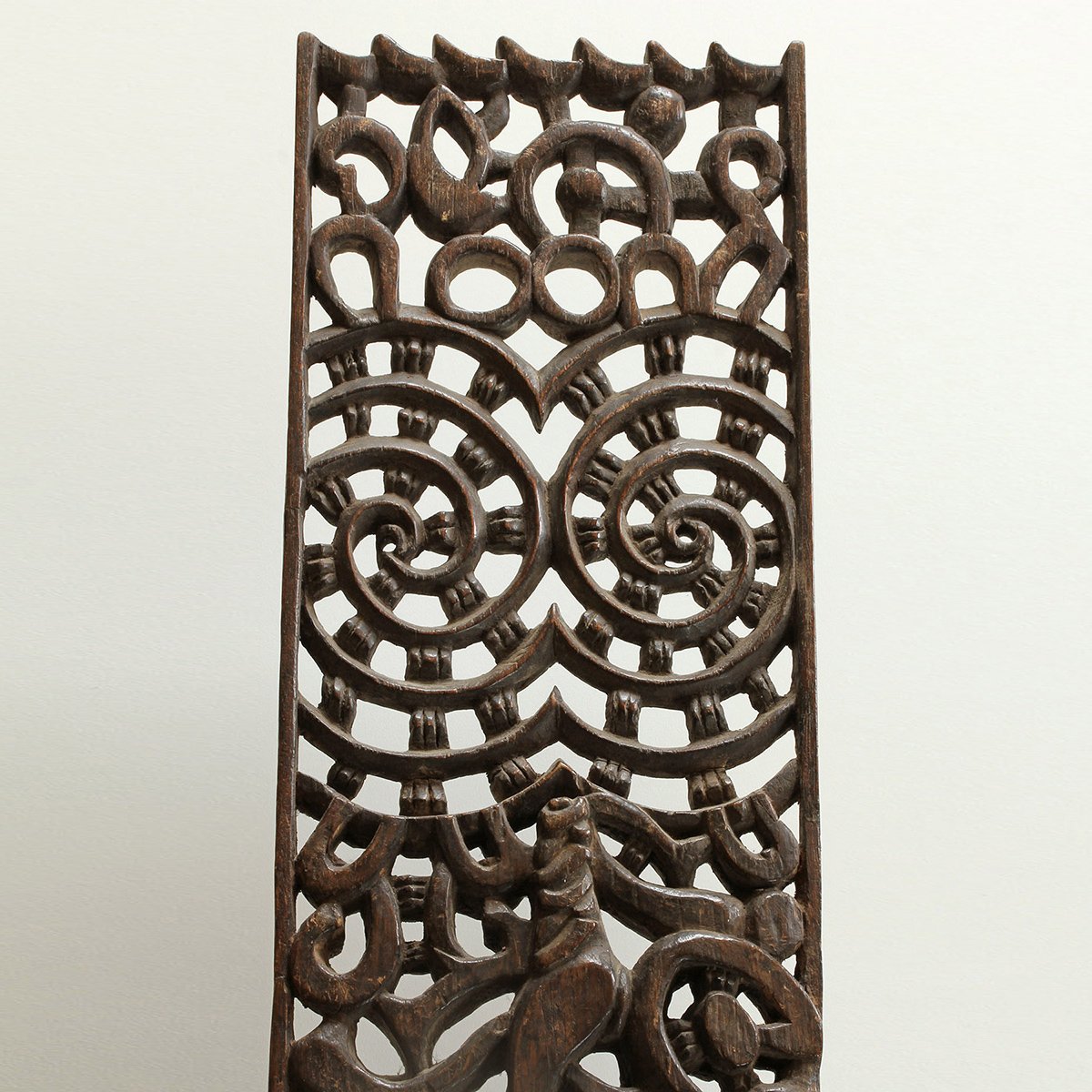 Image 5 of 8
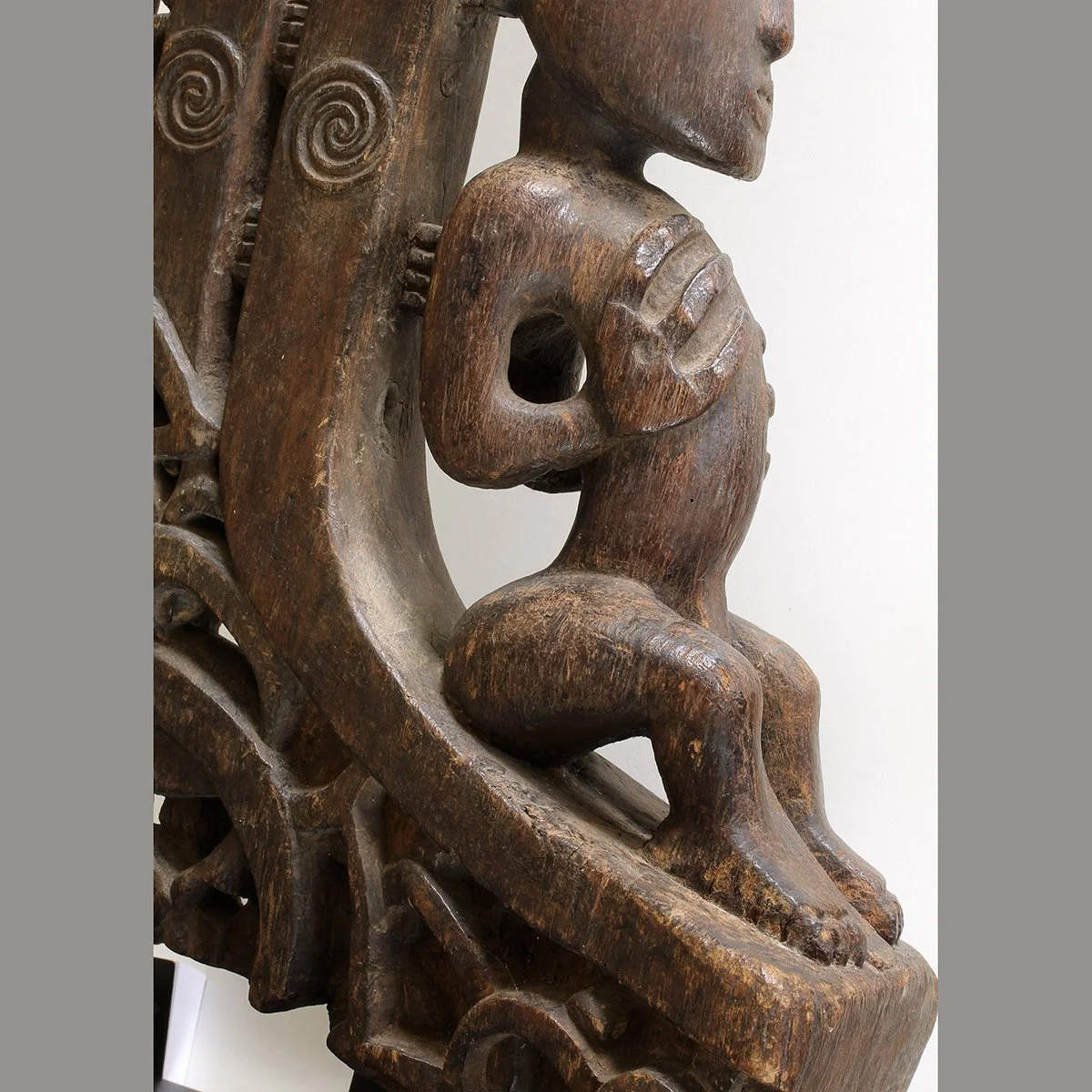 Image 6 of 8
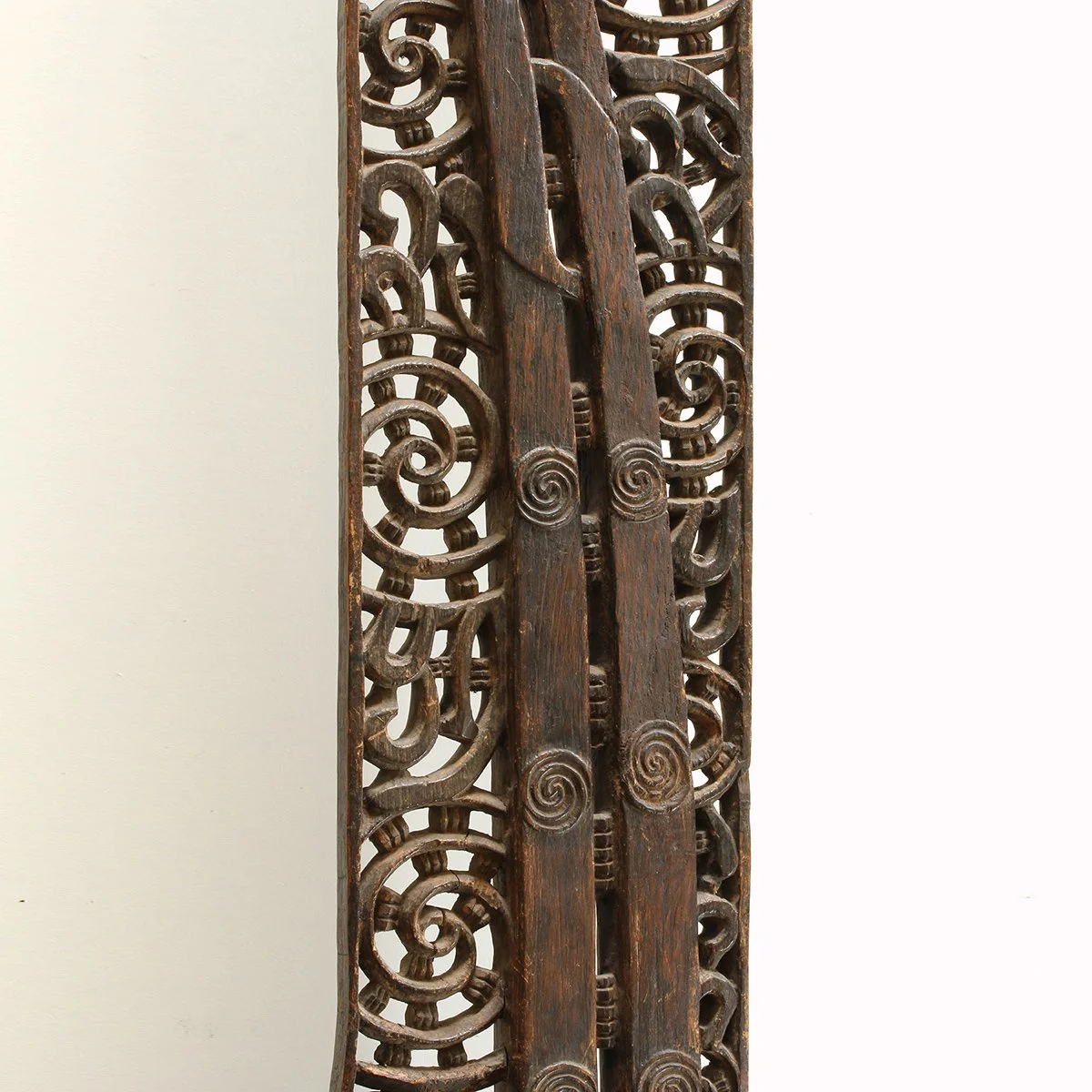 Image 7 of 8
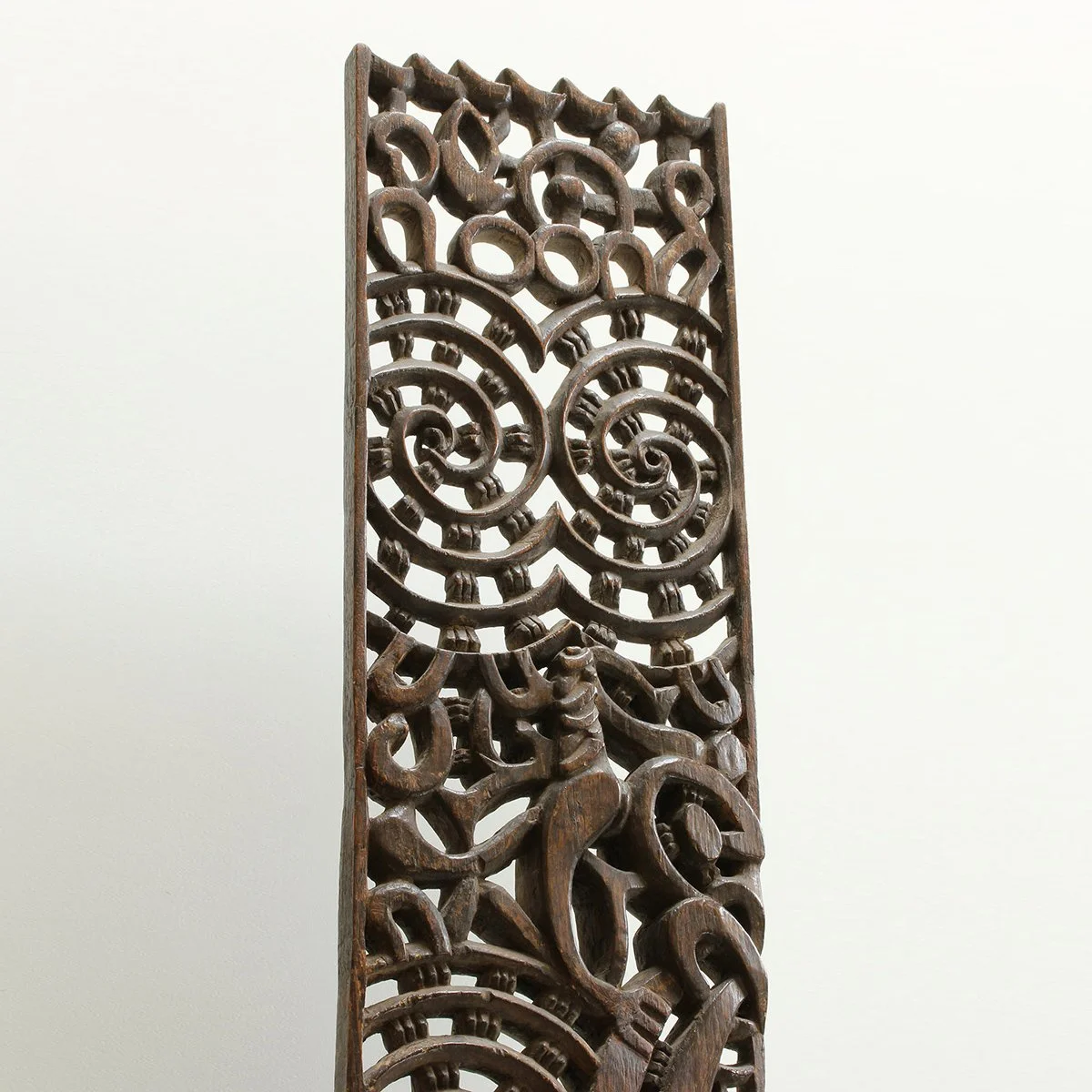 Image 8 of 8