Cook Islands
1840s
Wood, sennit, shark skin with wood blade
Height 29"
Provenance: Alan May, London, UK
Adzes with finely decorated shafts and intricate lashings, from the island of Mangaia in the Southern Cook Islands, are distinct to those found anywhere else in the Pacific. Some decorated adzes with shafts that can be maneuvered with one hand were used as weapons as well as objects of art that marked social distinction. Other adzes with larger shafts and more elaborate designs were more ceremonial. The unique features of these Mangaian adzes are the finely polished adze heads, the intricate ‘triple-triangle pattern’ lashing and the detailed carved pedestal like shafts.
Adzes were prized not only as tools but as material property of wealth. An adze maker is a ta’unga (expert) who enjoyed a position of social and economic importance. His work is sought after and is paid in food and cloth for his services and he could buy protection with his skills. With a collection of adzes the conquered could buy life and protection from a powerful chief.
The carved Mangaian adzes were made in several styles based on size and form. Pedestal adzes, know as ruatangaeo, such as this one are said to be descended from or related to carved deities.
In the 1800s, Mangaian carvers made adzes not only for their own cultural practices but also for foreign trade. Due to the shortage of traditional basalt blades the artisans replaced them with wood copies such as in this rare example.
INQUIRE HERE
Cook Islands
1840s
Wood, sennit, shark skin with wood blade
Height 29"
Provenance: Alan May, London, UK
Adzes with finely decorated shafts and intricate lashings, from the island of Mangaia in the Southern Cook Islands, are distinct to those found anywhere else in the Pacific. Some decorated adzes with shafts that can be maneuvered with one hand were used as weapons as well as objects of art that marked social distinction. Other adzes with larger shafts and more elaborate designs were more ceremonial. The unique features of these Mangaian adzes are the finely polished adze heads, the intricate ‘triple-triangle pattern’ lashing and the detailed carved pedestal like shafts.
Adzes were prized not only as tools but as material property of wealth. An adze maker is a ta’unga (expert) who enjoyed a position of social and economic importance. His work is sought after and is paid in food and cloth for his services and he could buy protection with his skills. With a collection of adzes the conquered could buy life and protection from a powerful chief.
The carved Mangaian adzes were made in several styles based on size and form. Pedestal adzes, know as ruatangaeo, such as this one are said to be descended from or related to carved deities.
In the 1800s, Mangaian carvers made adzes not only for their own cultural practices but also for foreign trade. Due to the shortage of traditional basalt blades the artisans replaced them with wood copies such as in this rare example.
INQUIRE HERE


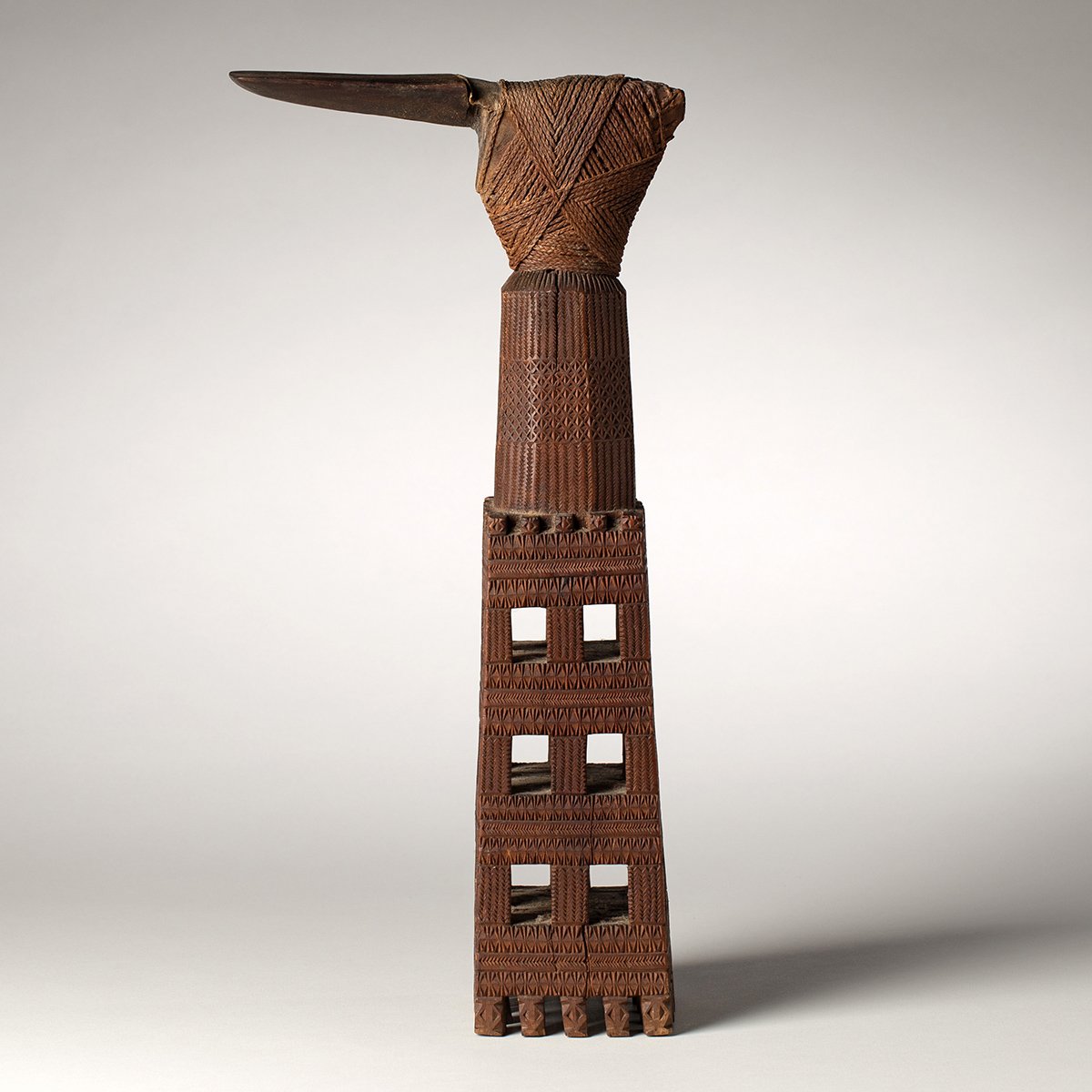 Image 1 of 7
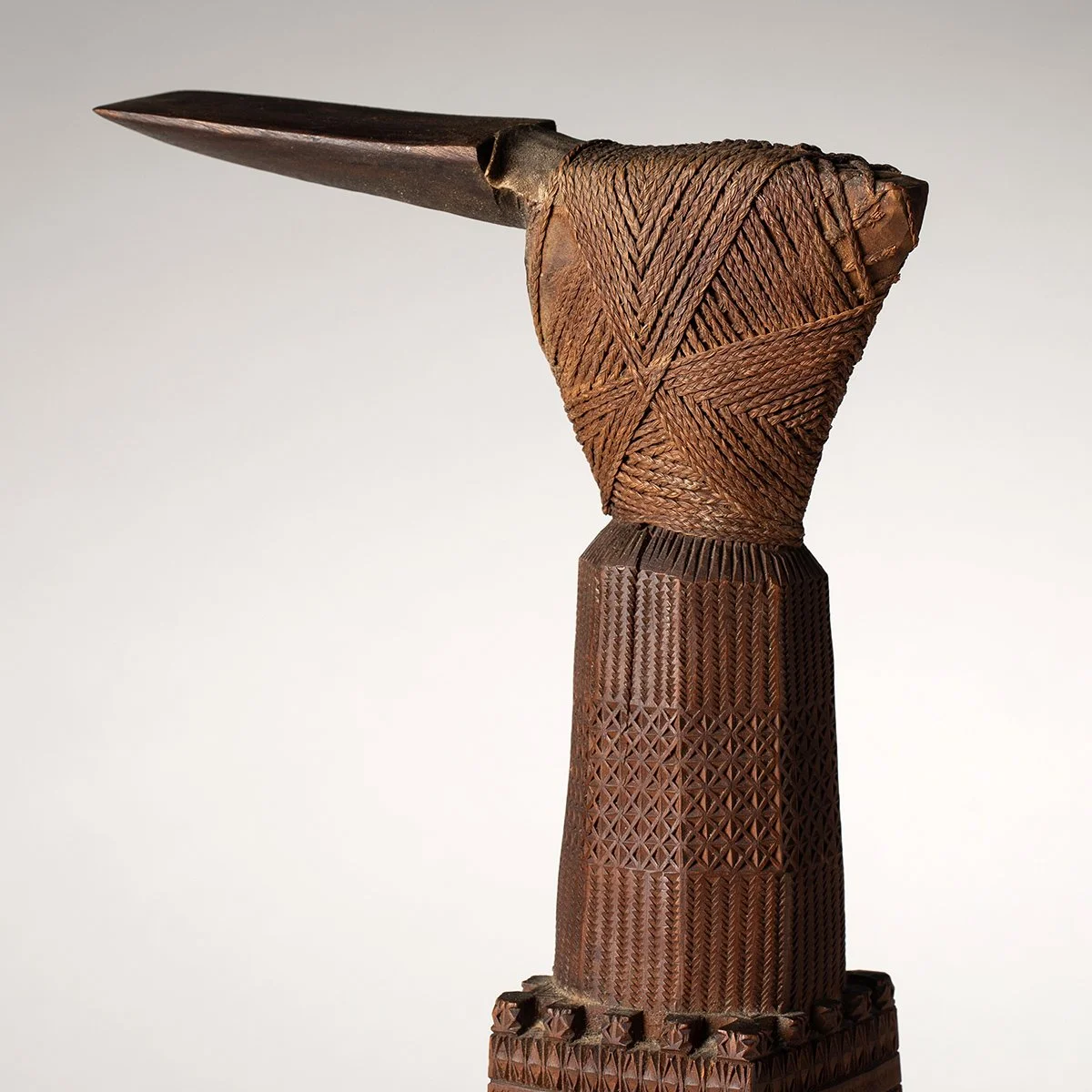 Image 2 of 7
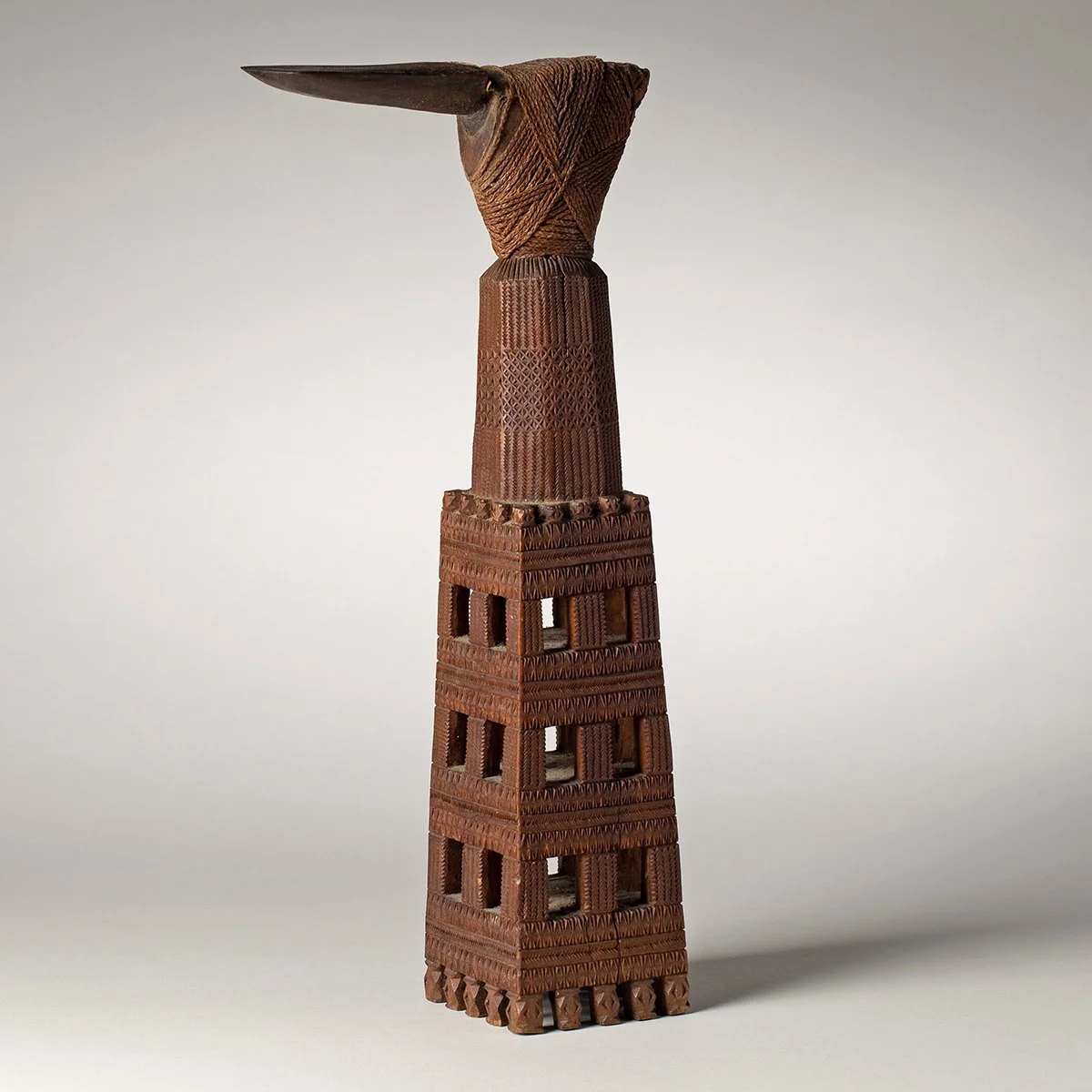 Image 3 of 7
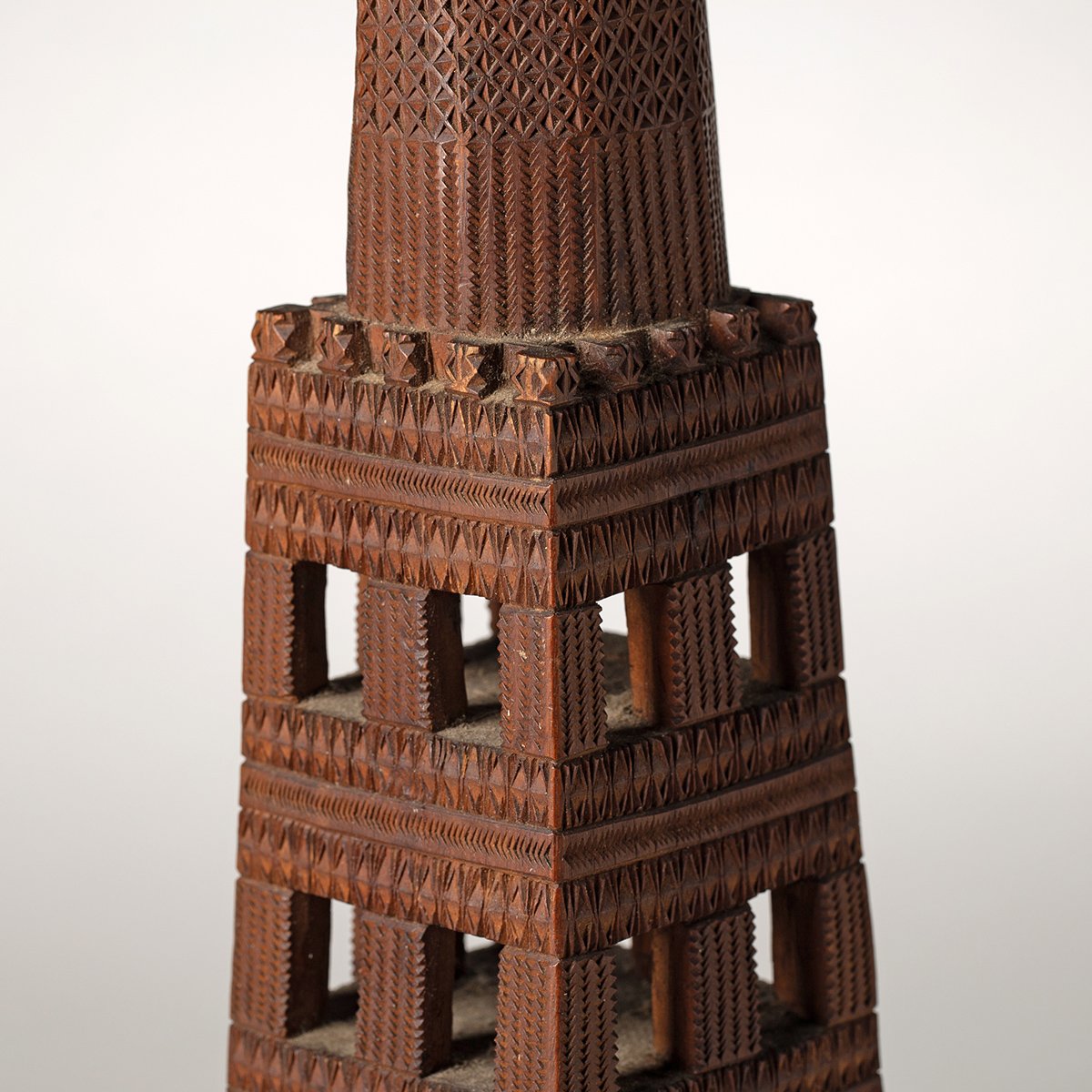 Image 4 of 7
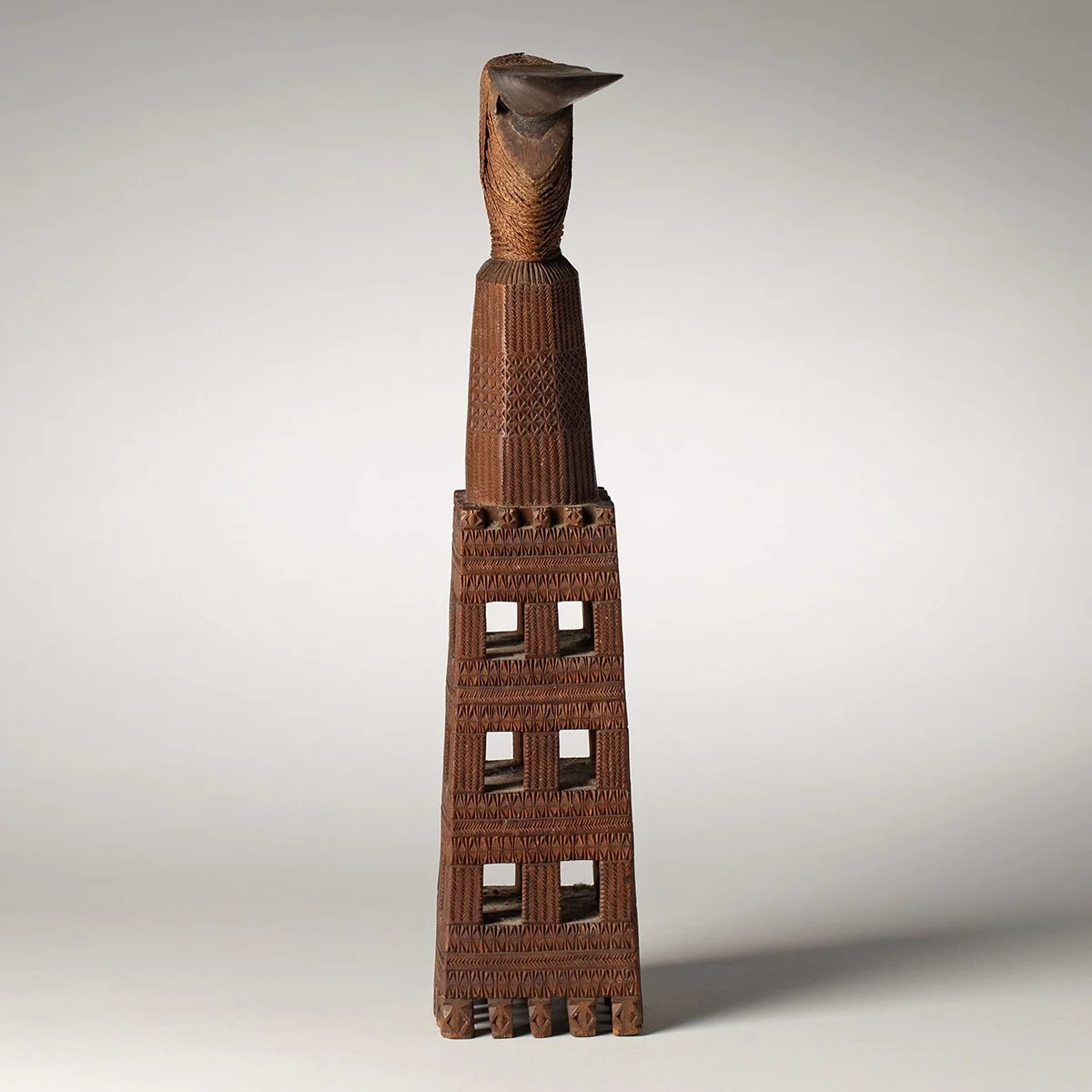 Image 5 of 7
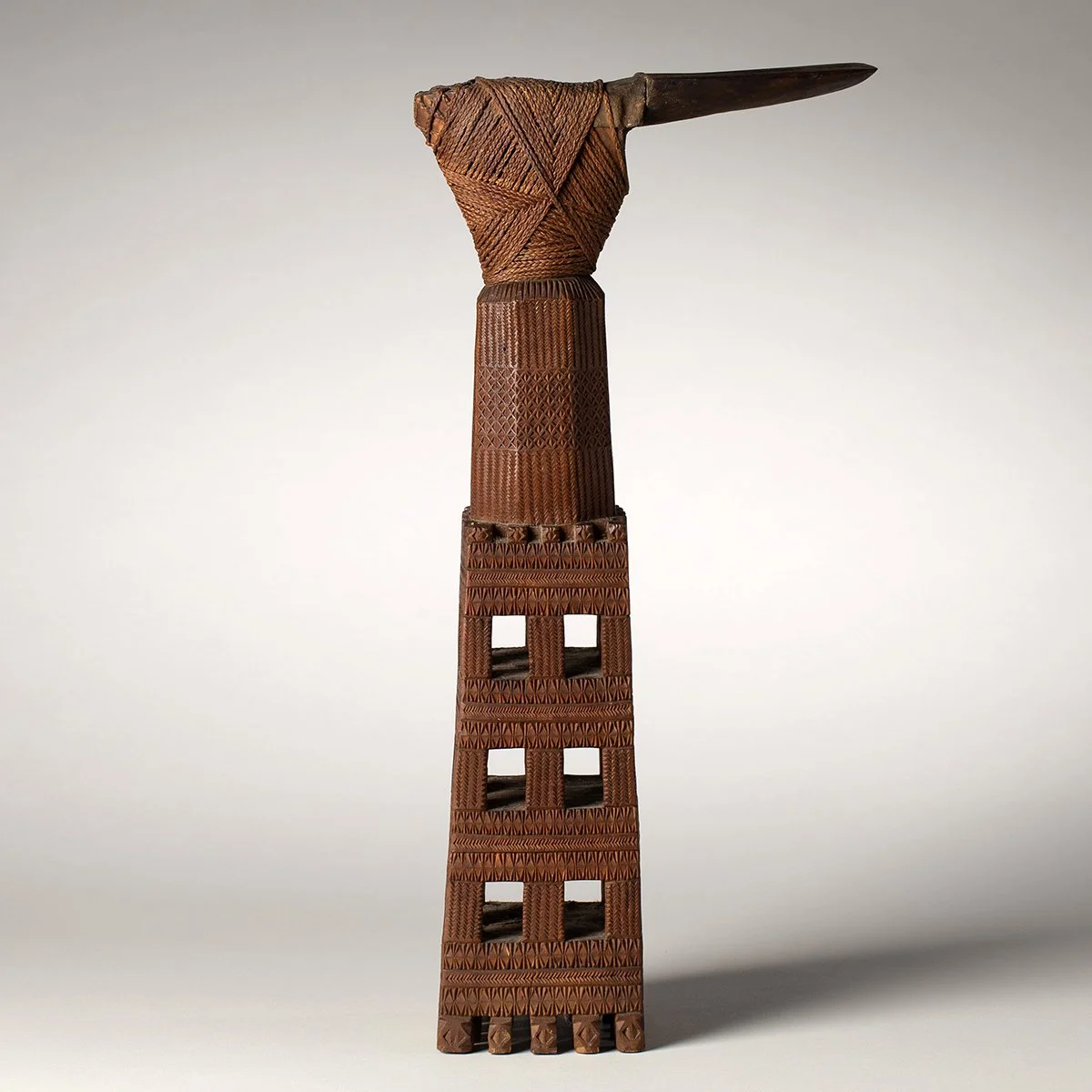 Image 6 of 7
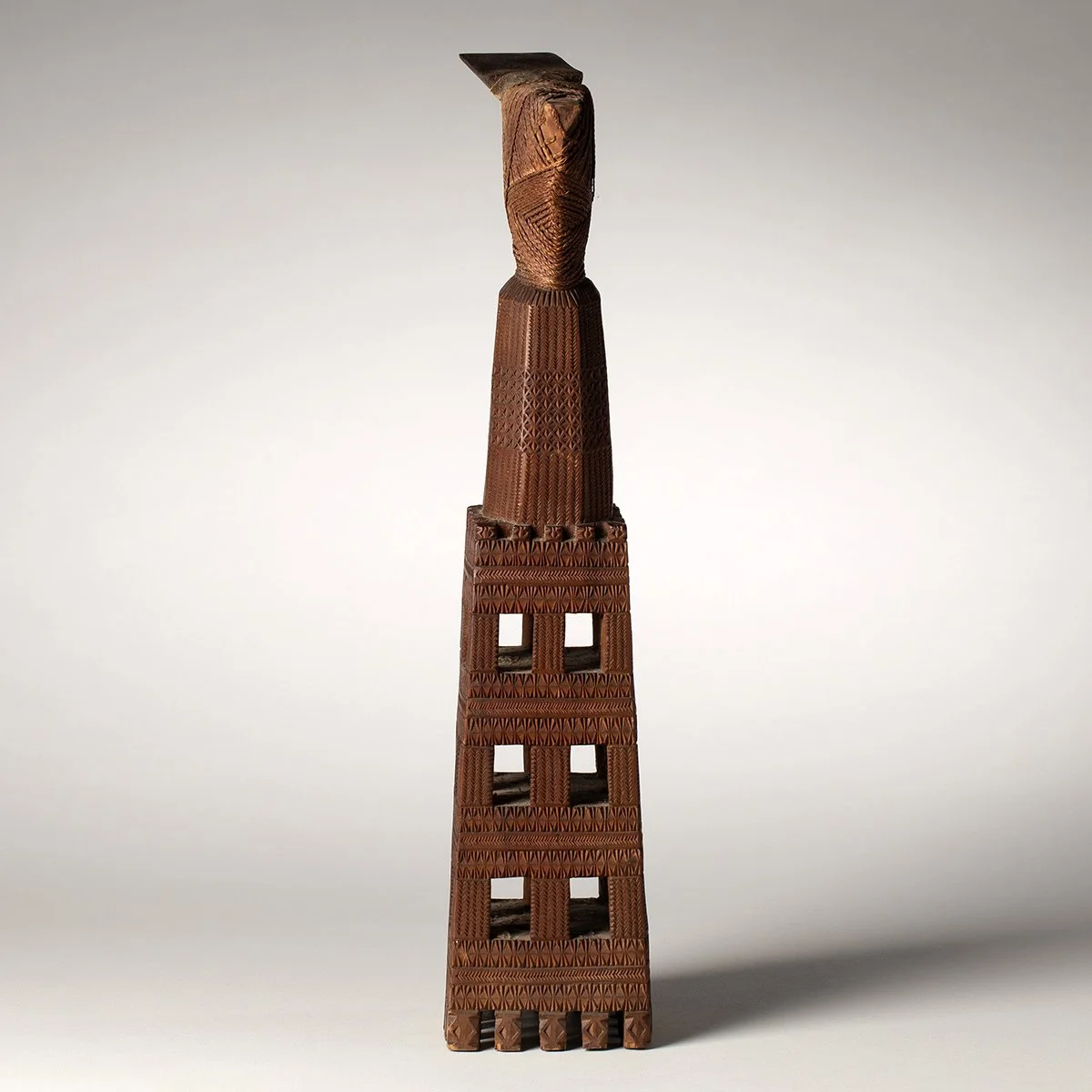 Image 7 of 7