East Sepik River, Papua New Guinea
Early 20th century
Height: 26.5 inches (67.25 cm)
Provenance: The figure entered the collection of Frank Hodgkinson of Sydney, Australia (1919-2001) in the 1960’s, and remained in their Sydney home for 65 years as a part of their important Oceanic art collection.
In the East Sepik River Region northwest of Ambunti, live the Warasei people. The culture of the Warasei, as with other neighboring Sepik cultures, regarded the yam as central to economic and spiritual life, and enacted ceremonies to ensure the plant’s fertility and to encourage its growth. After the yams had been harvested and stored, the Warasei considered them too powerful to be eaten until three yam harvest ceremonies had been properly performed in sequence. The first being the yena ceremony, followed by the minja, and finally the third and most important ceremony – the nogwi, attended by the most powerful men in the region.
The Nogwi figure presented here portrays the female spirit Hameiyau and Sanggriyau and would have been installed on an elevated platform in front of a mound of baskets containing yams and decorated with shell ornaments, hair from clan members, and attached to a headband, two bags holding nuts, fish, meat and eggs. The figures were then later danced with during the ensuing ceremony, and it was believed that the two female spirits would dance together. When the carvings were removed, the food from the headband bags was distributed to women to bring about success in fishing. After the ceremony was completed, the figures were carefully wrapped in black palm bark and hidden away in a remote hut, until the next ceremonial cycle, upon which the faces were reinitiated with freshly applied pigments
This wonderfully expressive Nogwi figure is rendered in classic form, her sinuous twisted arms arching backwards with her hands secured around her narrow waist, accentuating the vulva, the source of female fertility and power. The head is tilted upwards in an animated stance, the face beautifully painted in bright red ocher, with the eyes, mouth, and forehead accentuated with white lime pigment. The ears and the septum are pierced for ceremonial attachments. A careful look at this figure reveals multiple layers of paint, indicating the figure was used during several ceremonial occasions, resulting in a well-worn glossy patina.
INQUIRE HERE
East Sepik River, Papua New Guinea
Early 20th century
Height: 26.5 inches (67.25 cm)
Provenance: The figure entered the collection of Frank Hodgkinson of Sydney, Australia (1919-2001) in the 1960’s, and remained in their Sydney home for 65 years as a part of their important Oceanic art collection.
In the East Sepik River Region northwest of Ambunti, live the Warasei people. The culture of the Warasei, as with other neighboring Sepik cultures, regarded the yam as central to economic and spiritual life, and enacted ceremonies to ensure the plant’s fertility and to encourage its growth. After the yams had been harvested and stored, the Warasei considered them too powerful to be eaten until three yam harvest ceremonies had been properly performed in sequence. The first being the yena ceremony, followed by the minja, and finally the third and most important ceremony – the nogwi, attended by the most powerful men in the region.
The Nogwi figure presented here portrays the female spirit Hameiyau and Sanggriyau and would have been installed on an elevated platform in front of a mound of baskets containing yams and decorated with shell ornaments, hair from clan members, and attached to a headband, two bags holding nuts, fish, meat and eggs. The figures were then later danced with during the ensuing ceremony, and it was believed that the two female spirits would dance together. When the carvings were removed, the food from the headband bags was distributed to women to bring about success in fishing. After the ceremony was completed, the figures were carefully wrapped in black palm bark and hidden away in a remote hut, until the next ceremonial cycle, upon which the faces were reinitiated with freshly applied pigments
This wonderfully expressive Nogwi figure is rendered in classic form, her sinuous twisted arms arching backwards with her hands secured around her narrow waist, accentuating the vulva, the source of female fertility and power. The head is tilted upwards in an animated stance, the face beautifully painted in bright red ocher, with the eyes, mouth, and forehead accentuated with white lime pigment. The ears and the septum are pierced for ceremonial attachments. A careful look at this figure reveals multiple layers of paint, indicating the figure was used during several ceremonial occasions, resulting in a well-worn glossy patina.
INQUIRE HERE


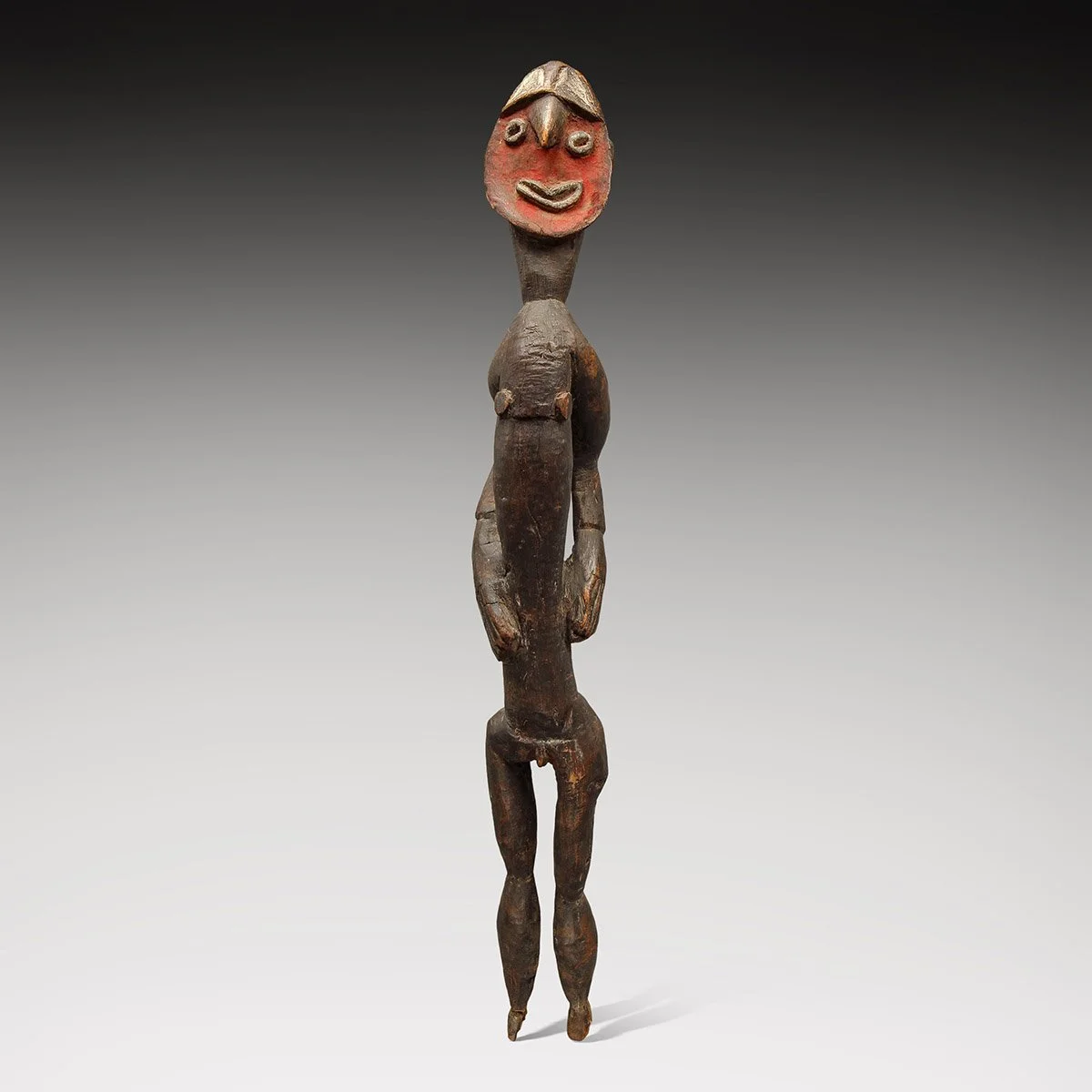 Image 1 of 6
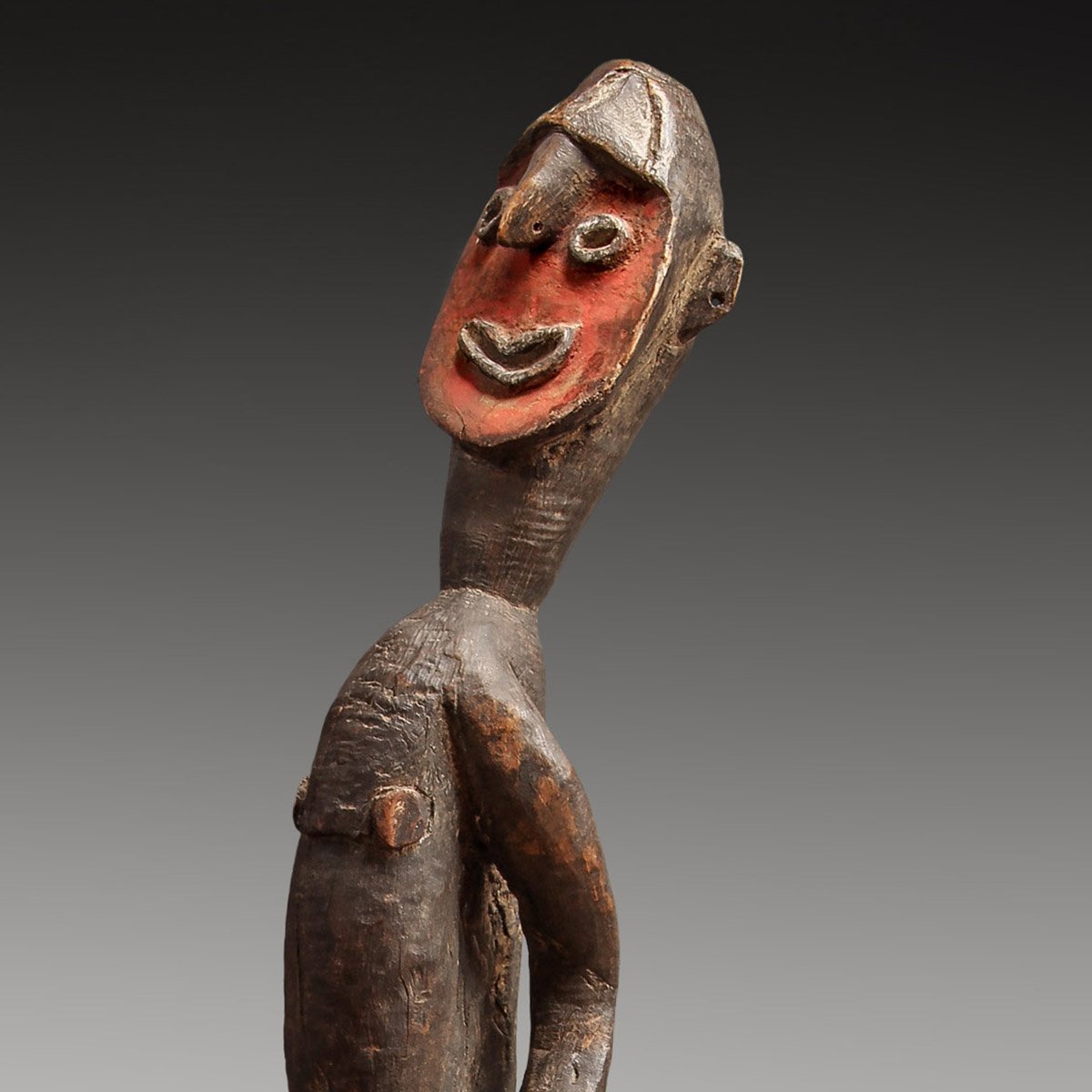 Image 2 of 6
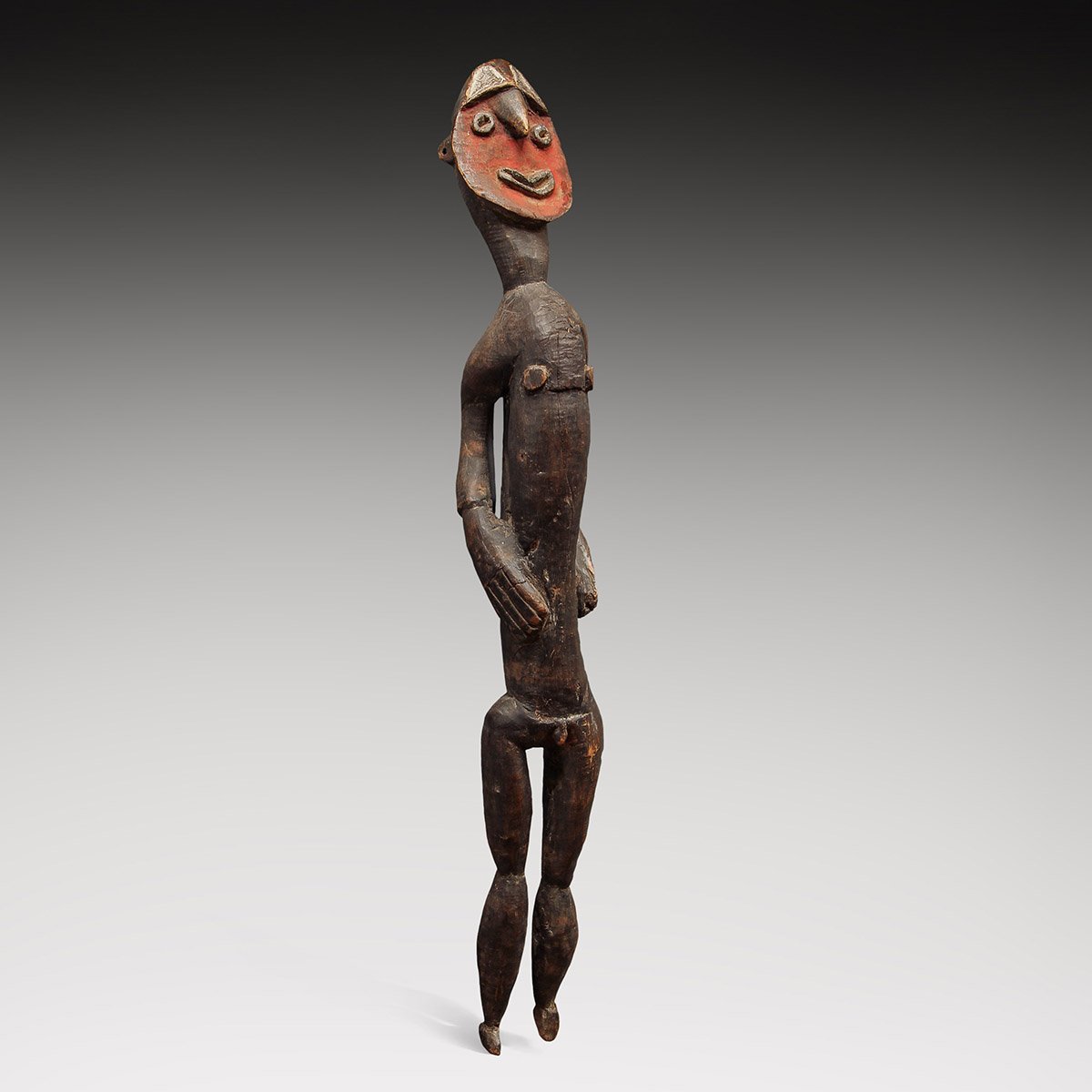 Image 3 of 6
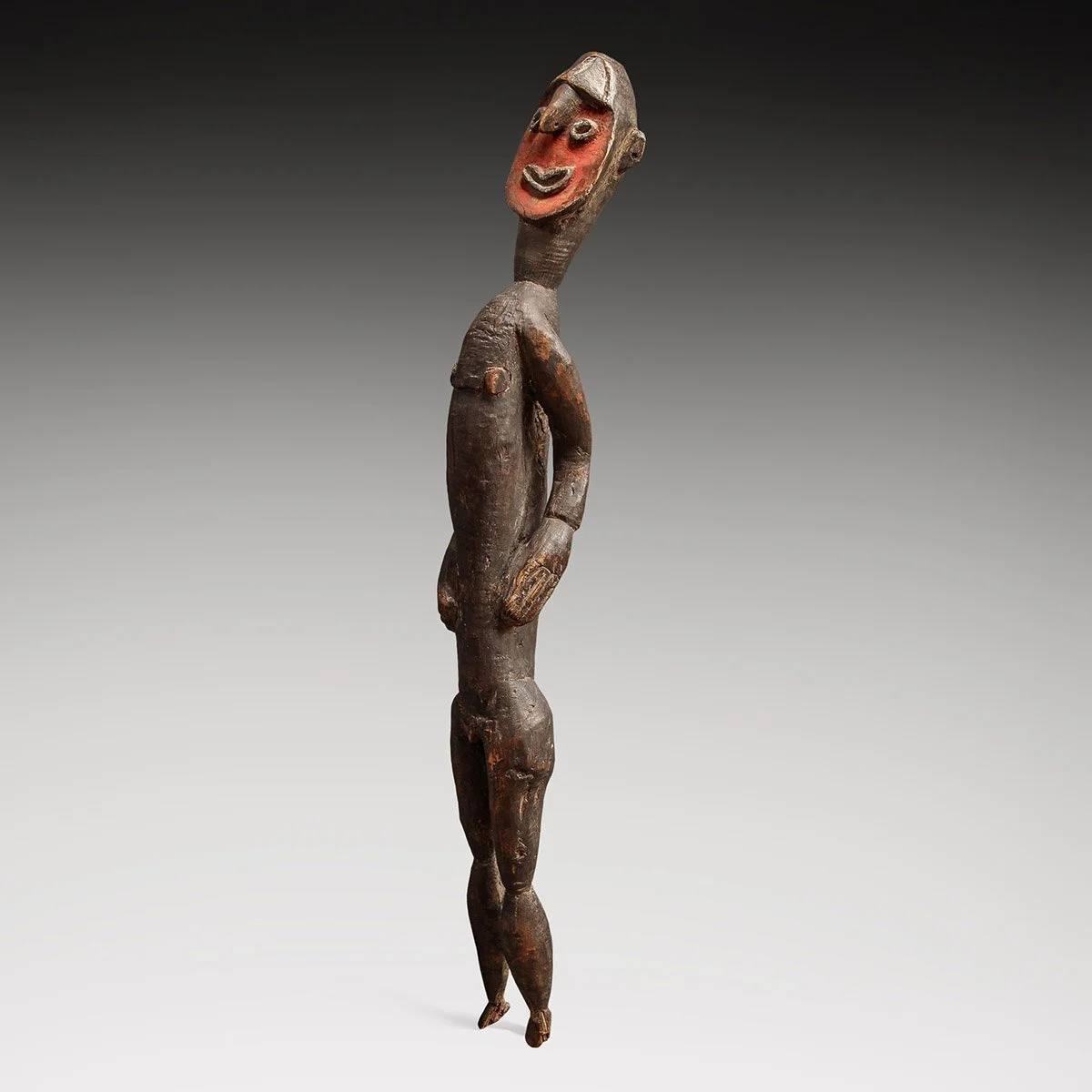 Image 4 of 6
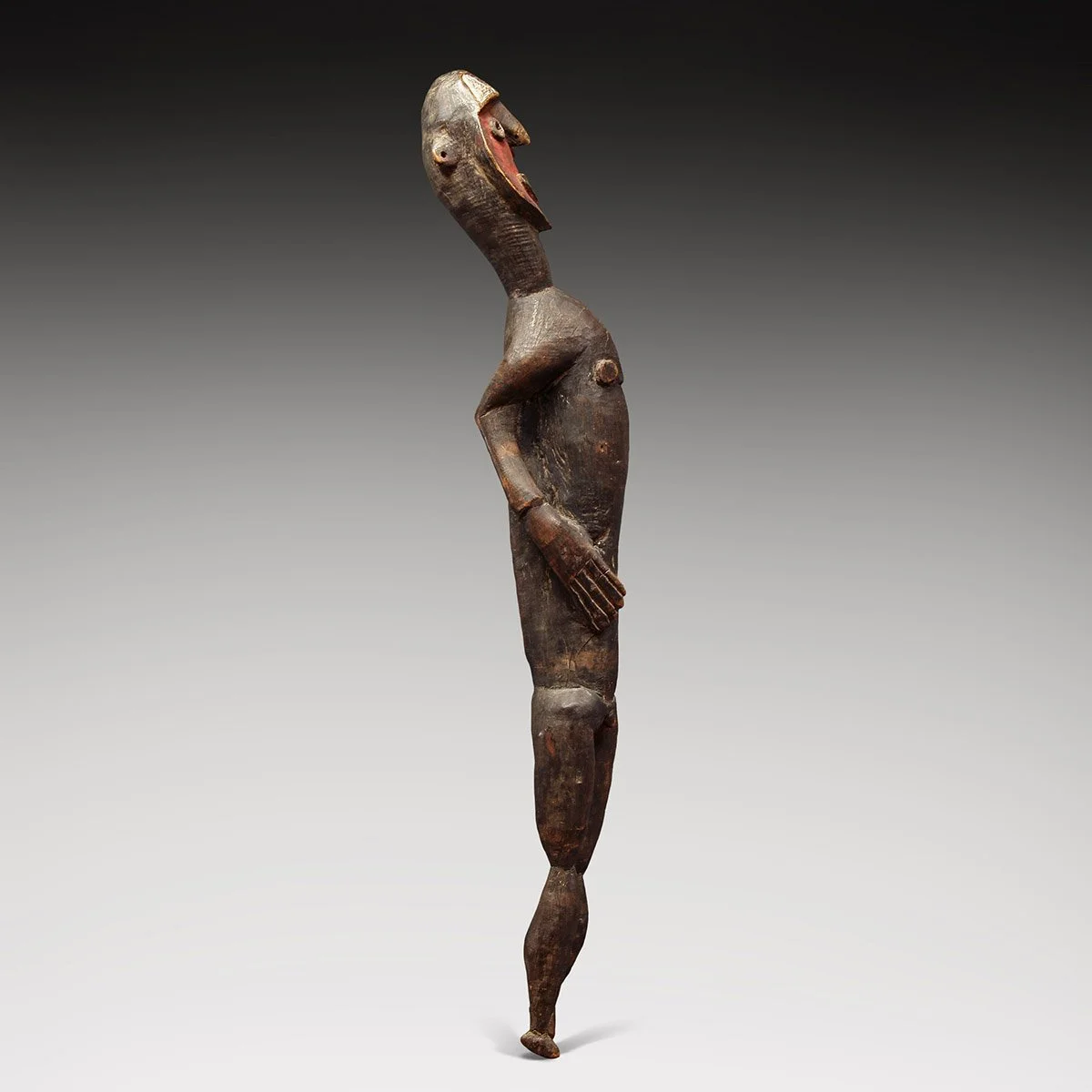 Image 5 of 6
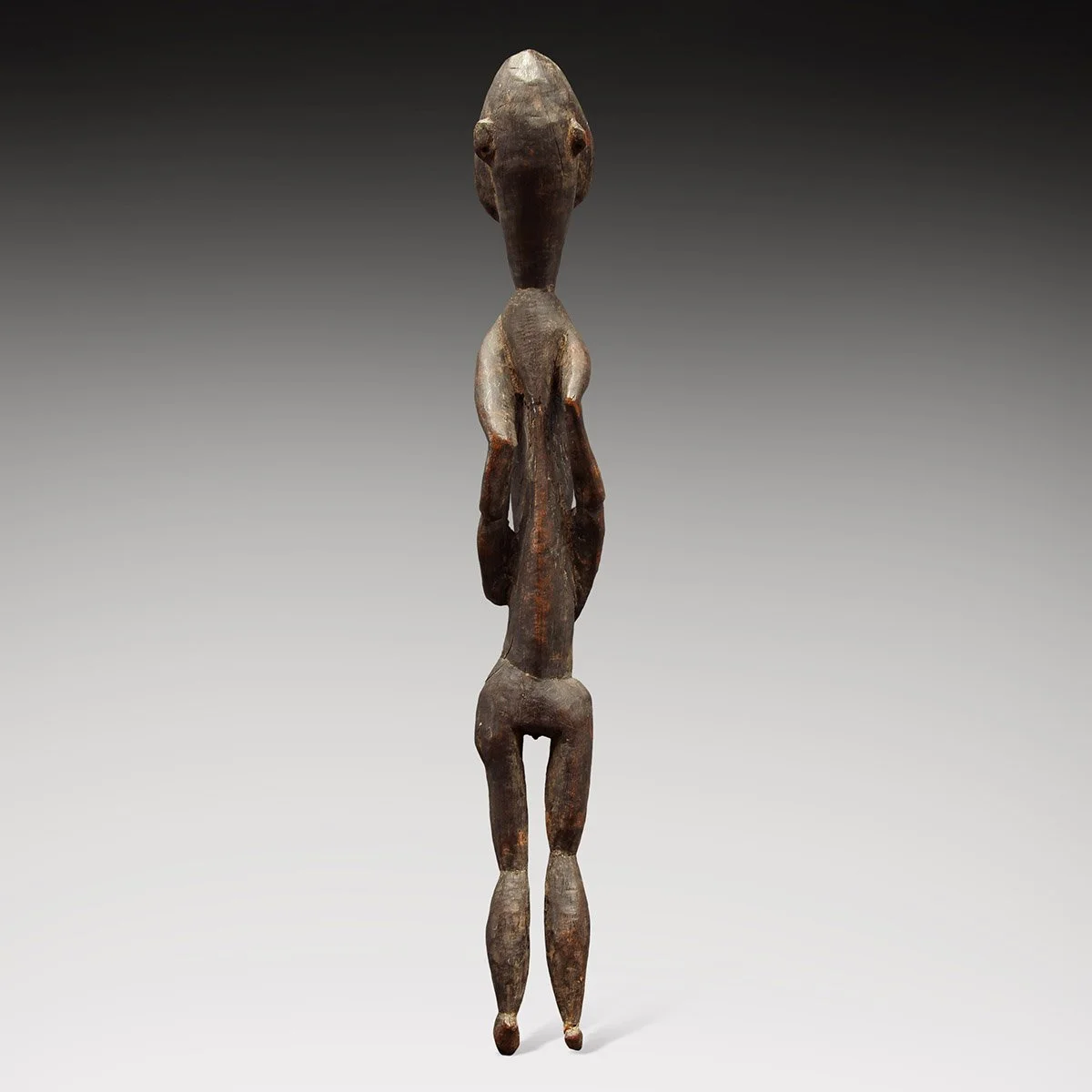 Image 6 of 6