Madang Province, Papua New Guinea
19th century
Wood, ocher and earth pigments
Diameter: 31 inches (78 cm)
Provenance: Morand & Morand Auction – Hotel Drouot, Paris, June 24, 2016 / Chris and Anna Thorpe personal collection – Sydney, Australia
Art Loss Register certificate # S00255086
Astrolabe Bay…the name evokes a mythical aura for collectors. Art from the area is rare, extremely old, and elusive; having been collected by German colonials, and visiting Hungarian and Russian ethnographers during some of the first explorations of New Guinea in the late 19th century. Among the objects collected from the region were a limited number of distinctive circular wooden war shields or gubir, most of which remain today in museum collections. As noted in 1895 by the Hungarian explorer and collector Lajos Bíró, the shields’ centrally carved motifs represent a radically stylized conception of the human female form. In the center of the shields, typically are depicted a highly stylized vulva in the shape of a four-pointed star and radiating from this are the four appendages from which are extended fingers and toes. Positioned in the four quadrants are often depicted carved leaf shaped motifs representing feather adornments. The war shield presented here is of classic Astrolabe Bay form and design. Rendered from the buttress root of a large tree and carved with the use of precontact stone tooling, the surface of the shield is deeply carved in relief, it’s ingenious and highly stylized depiction of the female form highlighted with applications of red and black earth pigments with traces of white lime.
INQUIRE HERE
Madang Province, Papua New Guinea
19th century
Wood, ocher and earth pigments
Diameter: 31 inches (78 cm)
Provenance: Morand & Morand Auction – Hotel Drouot, Paris, June 24, 2016 / Chris and Anna Thorpe personal collection – Sydney, Australia
Art Loss Register certificate # S00255086
Astrolabe Bay…the name evokes a mythical aura for collectors. Art from the area is rare, extremely old, and elusive; having been collected by German colonials, and visiting Hungarian and Russian ethnographers during some of the first explorations of New Guinea in the late 19th century. Among the objects collected from the region were a limited number of distinctive circular wooden war shields or gubir, most of which remain today in museum collections. As noted in 1895 by the Hungarian explorer and collector Lajos Bíró, the shields’ centrally carved motifs represent a radically stylized conception of the human female form. In the center of the shields, typically are depicted a highly stylized vulva in the shape of a four-pointed star and radiating from this are the four appendages from which are extended fingers and toes. Positioned in the four quadrants are often depicted carved leaf shaped motifs representing feather adornments. The war shield presented here is of classic Astrolabe Bay form and design. Rendered from the buttress root of a large tree and carved with the use of precontact stone tooling, the surface of the shield is deeply carved in relief, it’s ingenious and highly stylized depiction of the female form highlighted with applications of red and black earth pigments with traces of white lime.
INQUIRE HERE


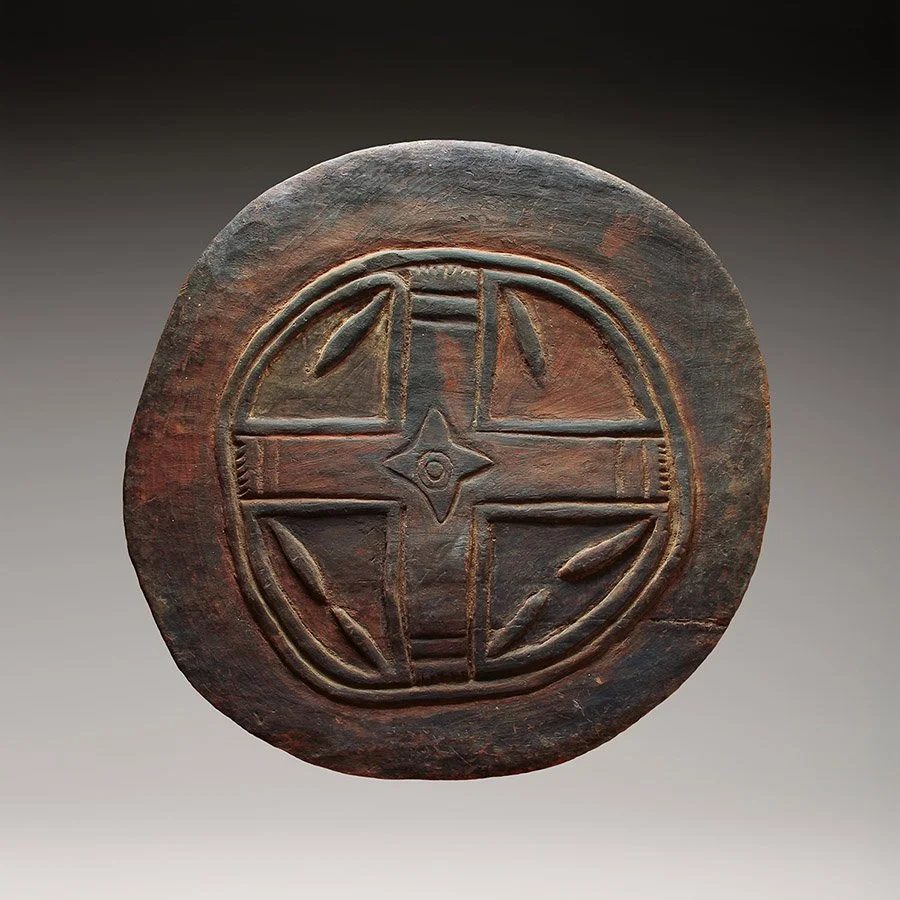 Image 1 of 7
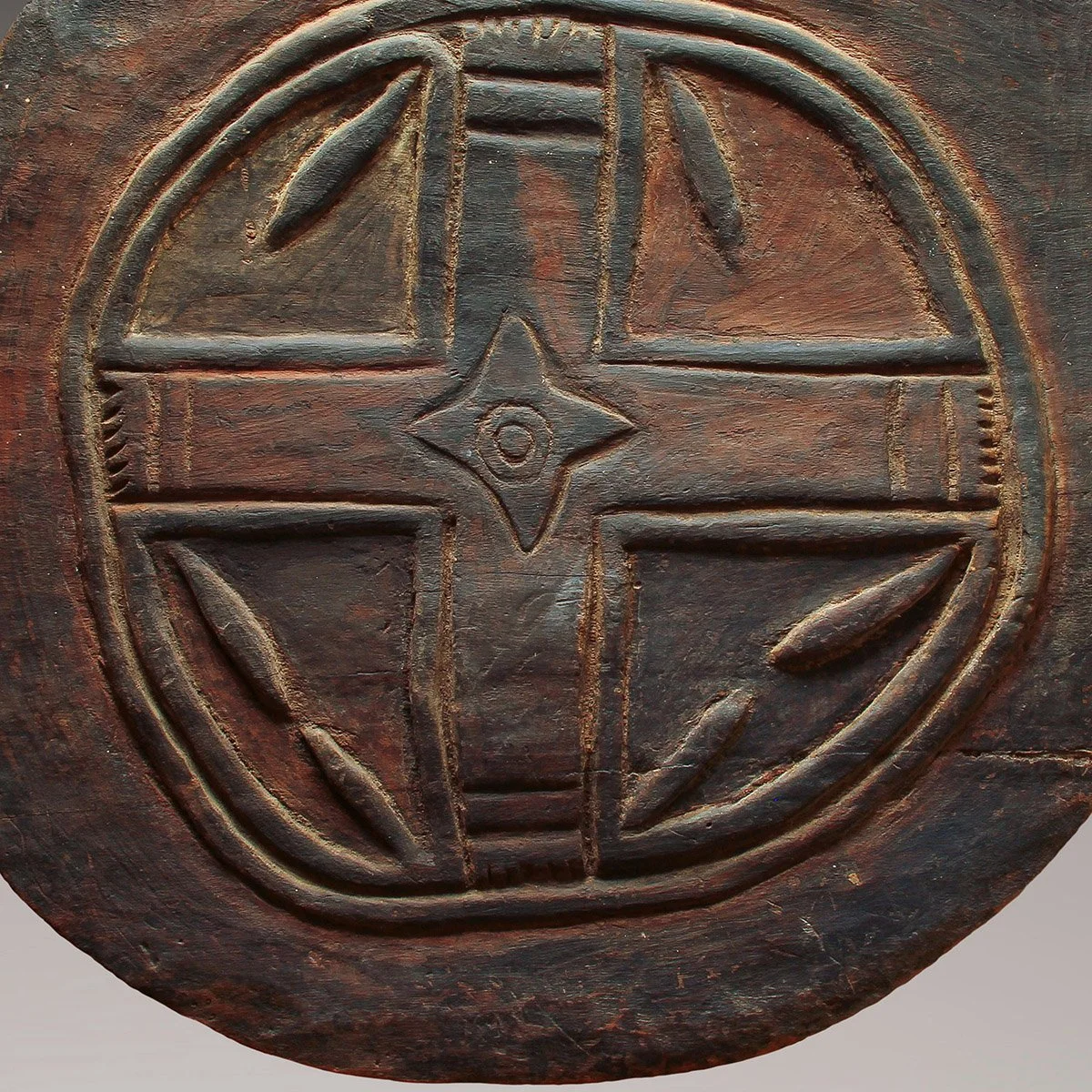 Image 2 of 7
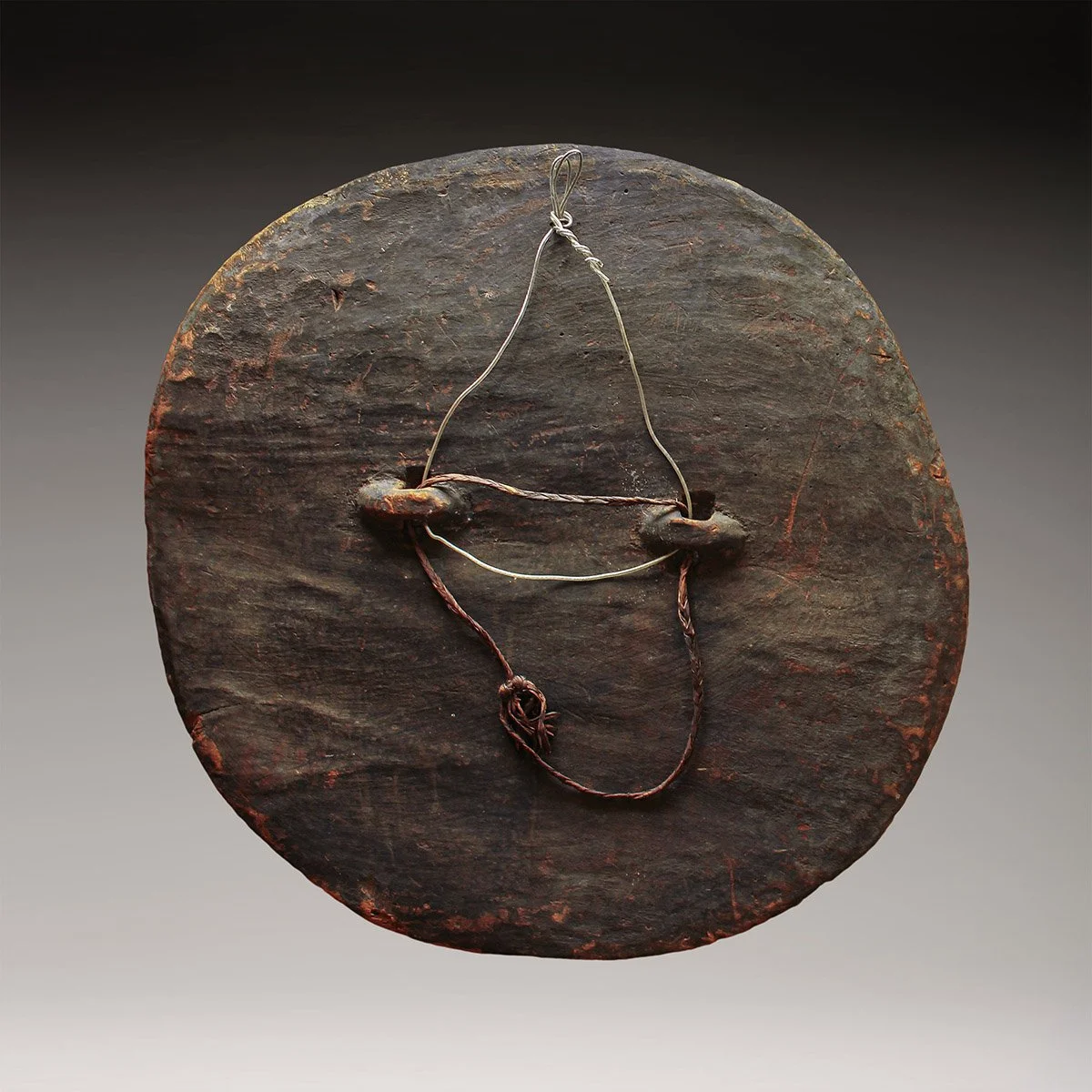 Image 3 of 7
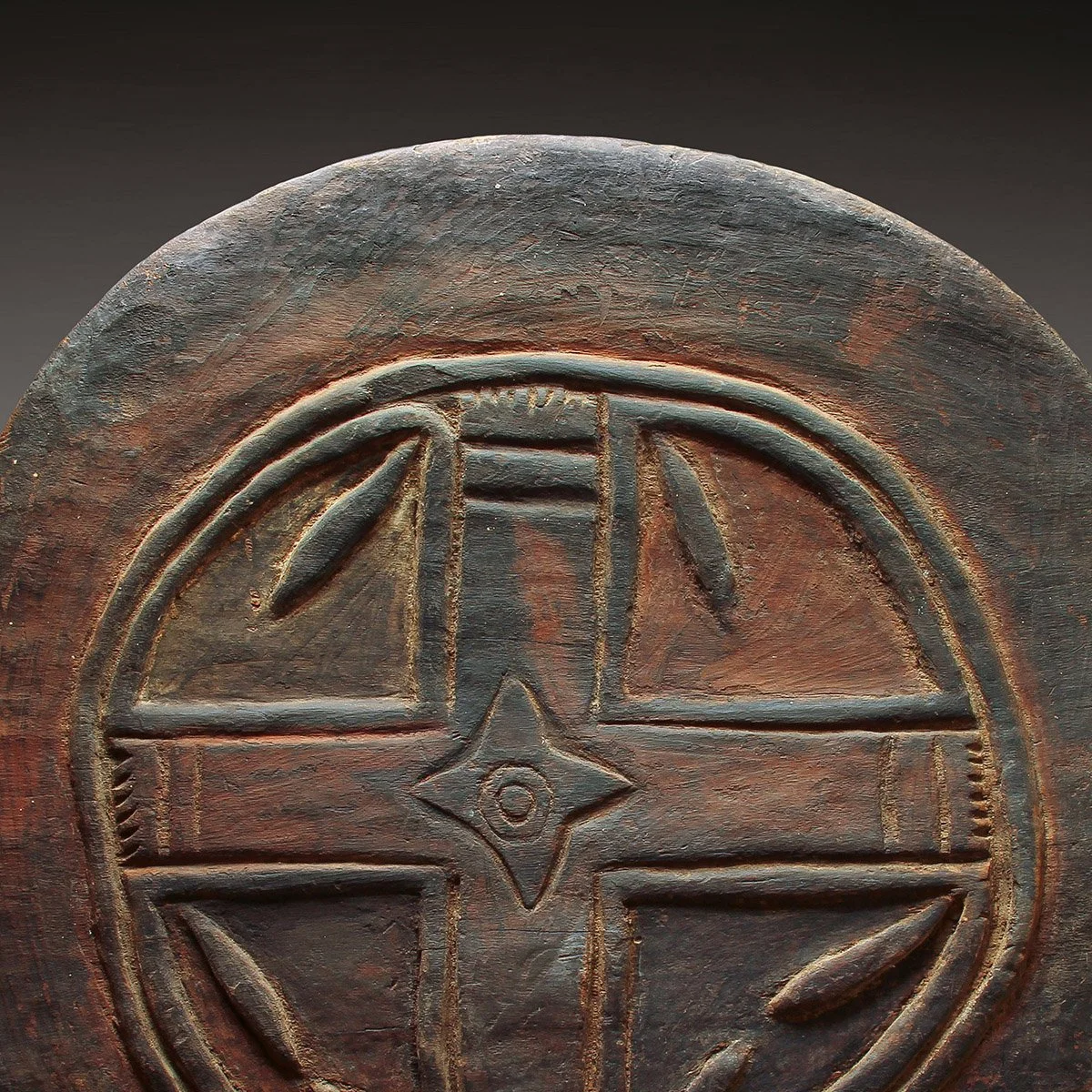 Image 4 of 7
 Image 5 of 7
 Image 6 of 7
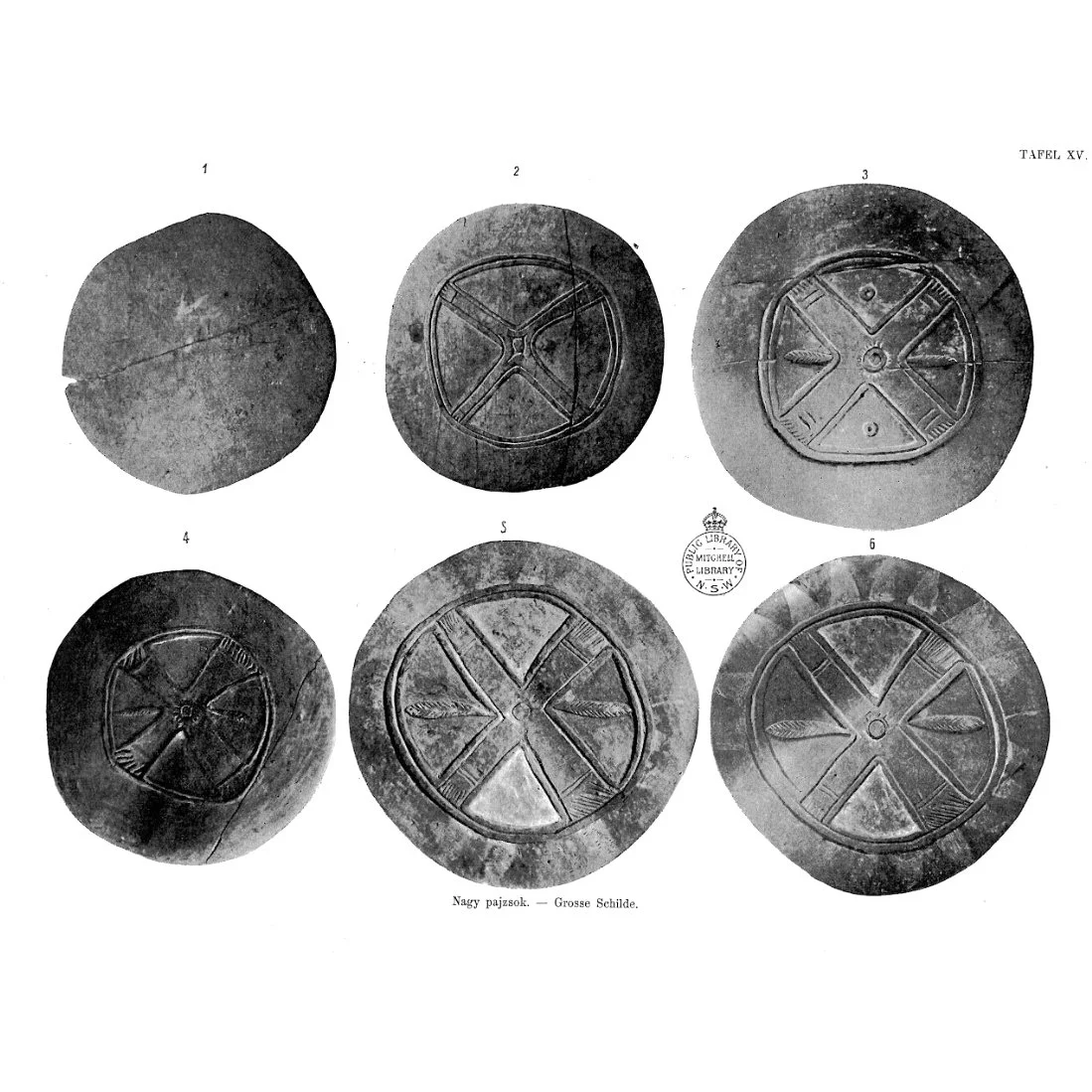 Image 7 of 7