

 Image 1 of 5
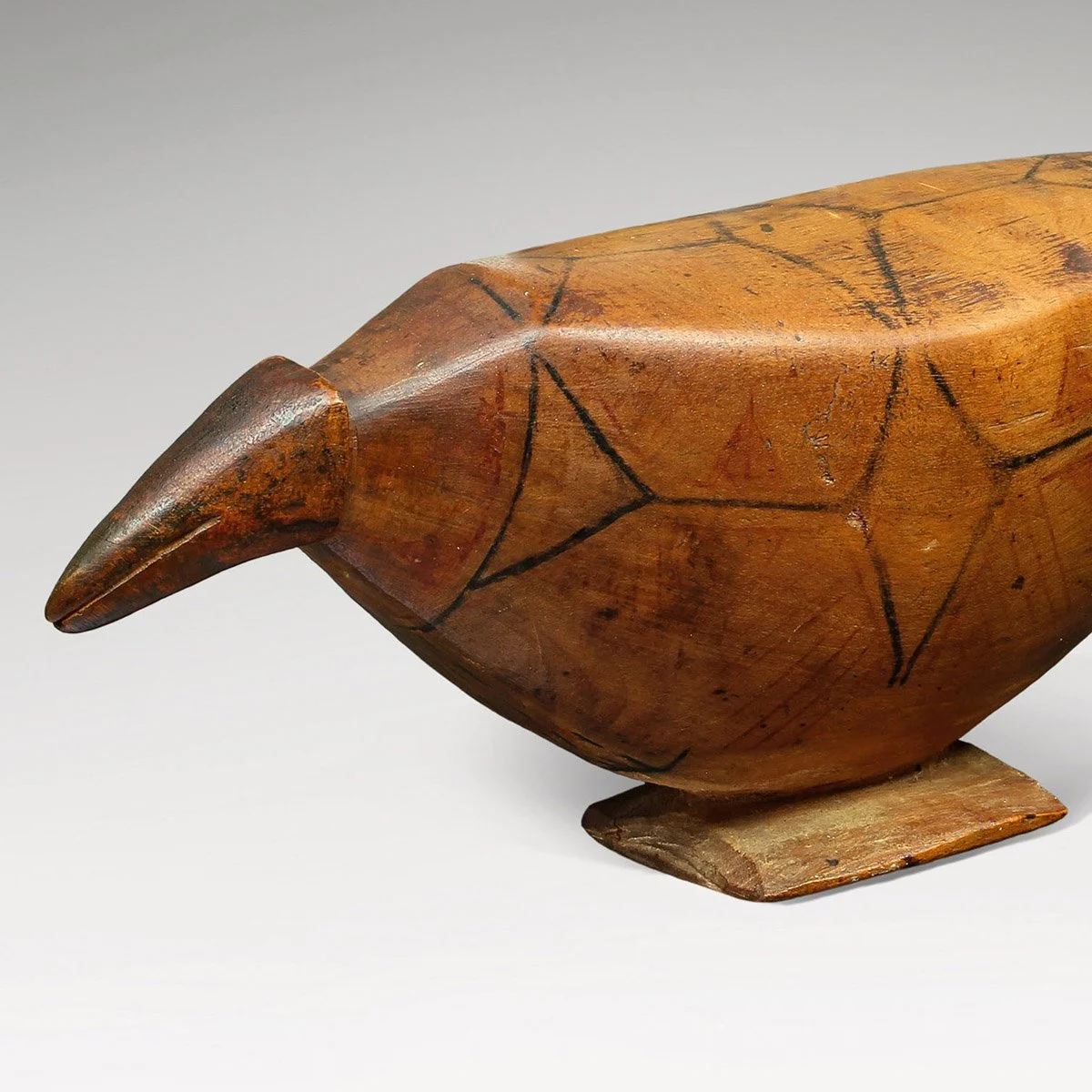 Image 2 of 5
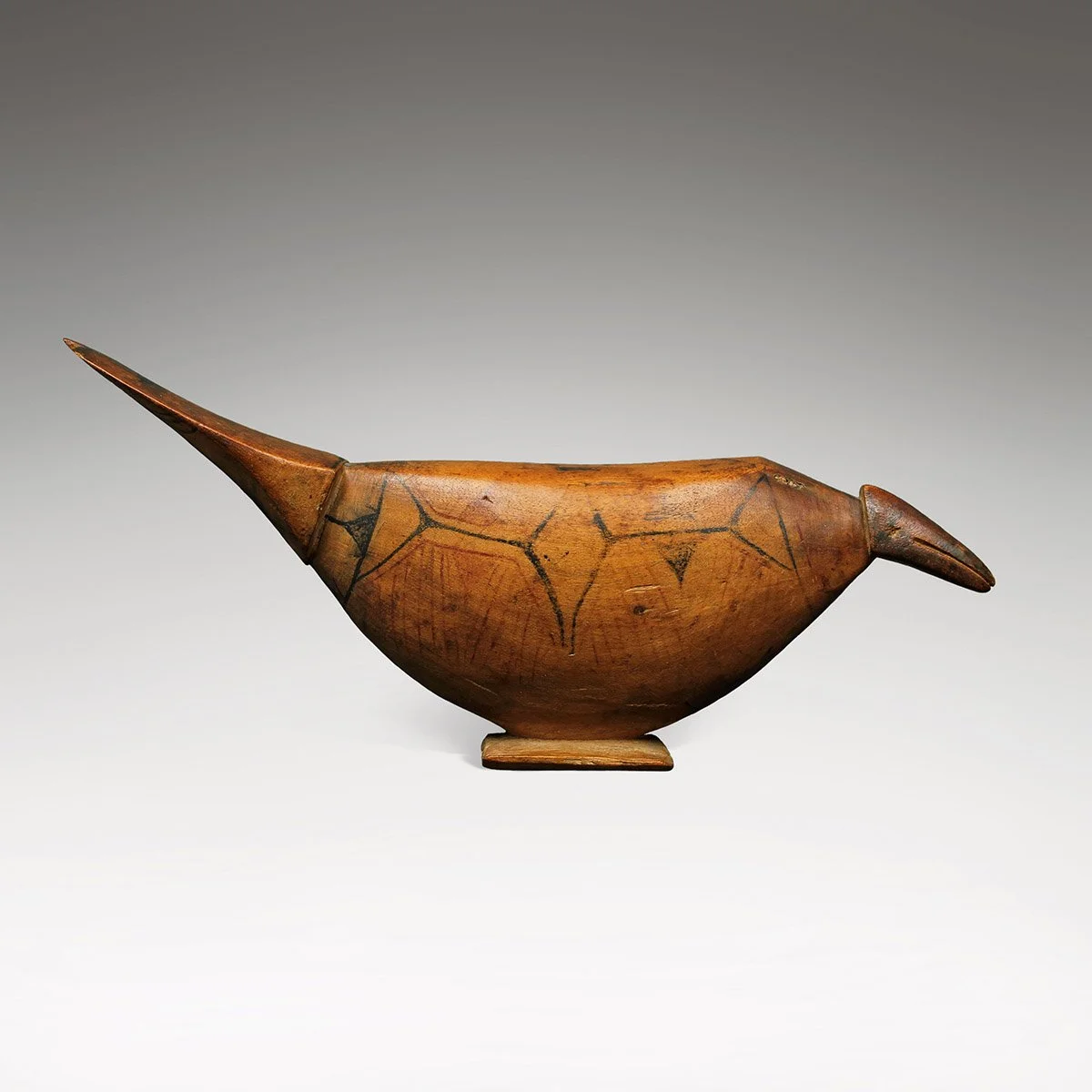 Image 3 of 5
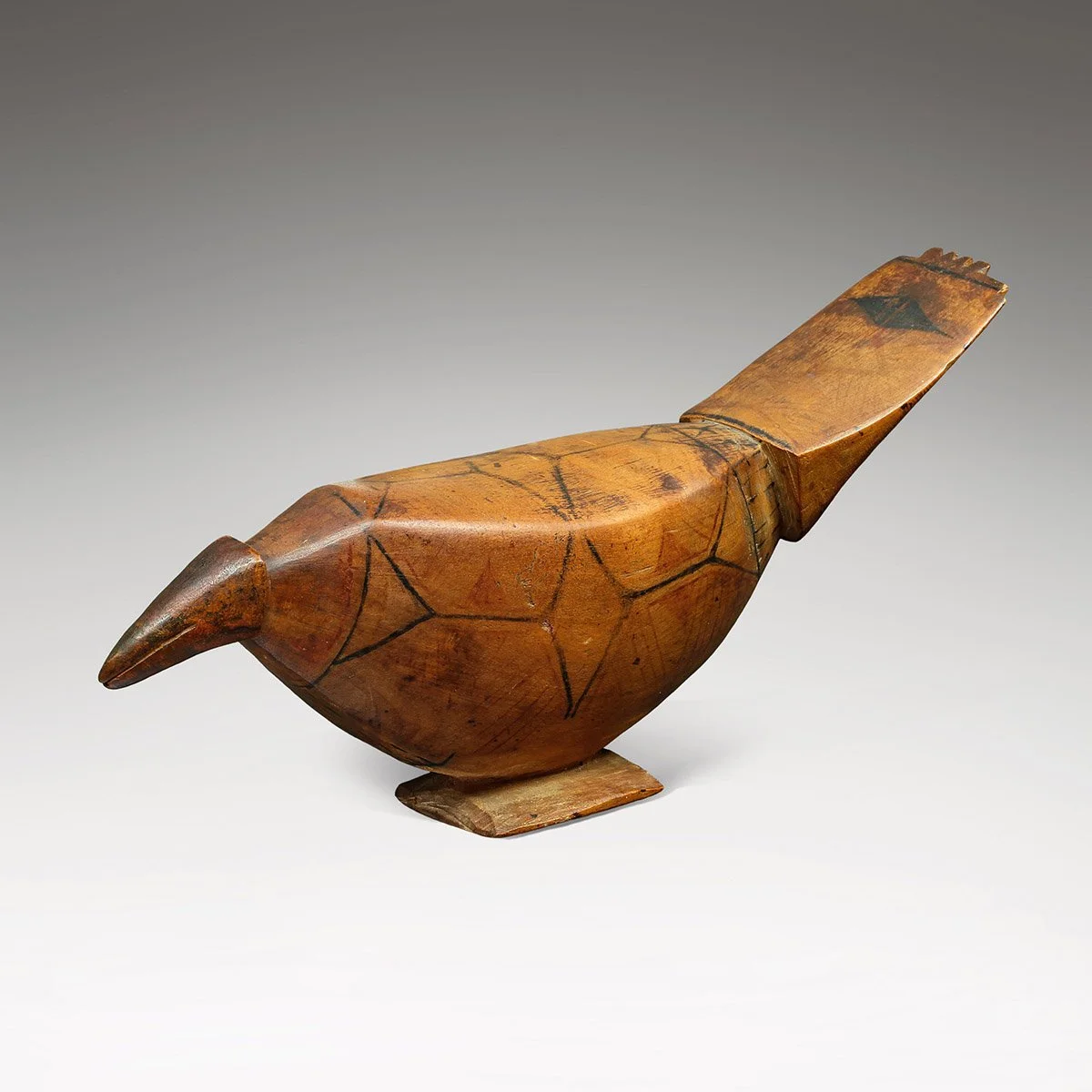 Image 4 of 5
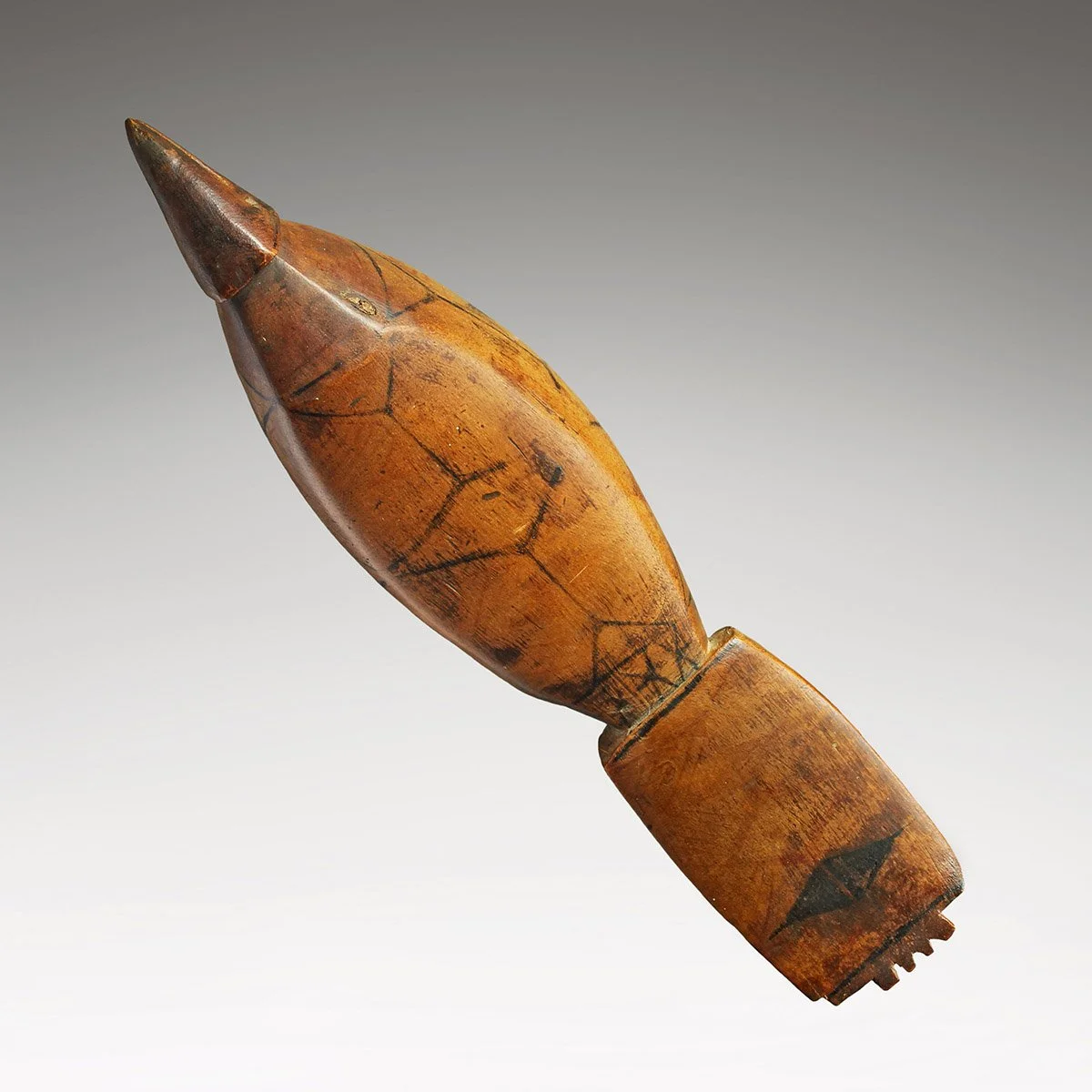 Image 5 of 5
Nendӧ or Reef Islands, Temotu Province, Eastern Solomon Islands
19th century
Length: 12.25 inches (31 cm)
Wood, native pigments
Provenance: Ben Hunter - Auckland, New Zealand
In the Eastern Solomon Islands lies a remote region referred to as Parapolynesia, consisting of numerous small coral atolls and reef islands that were settled by Polynesian pioneers between 900-1200 AD. Guided by the stars, the sacred frigate bird, and the subtle language of the waves, these seafaring populations from Polynesian homelands including Samoa, Tonga, and Tuvalu, travelled back westward against prevailing winds to settle these tiny isolated islands known as the Polynesian Outliers. There they developed a rich and distinct culture, producing figurative sculpture prized for its artistic purity and minimalist abstract style.
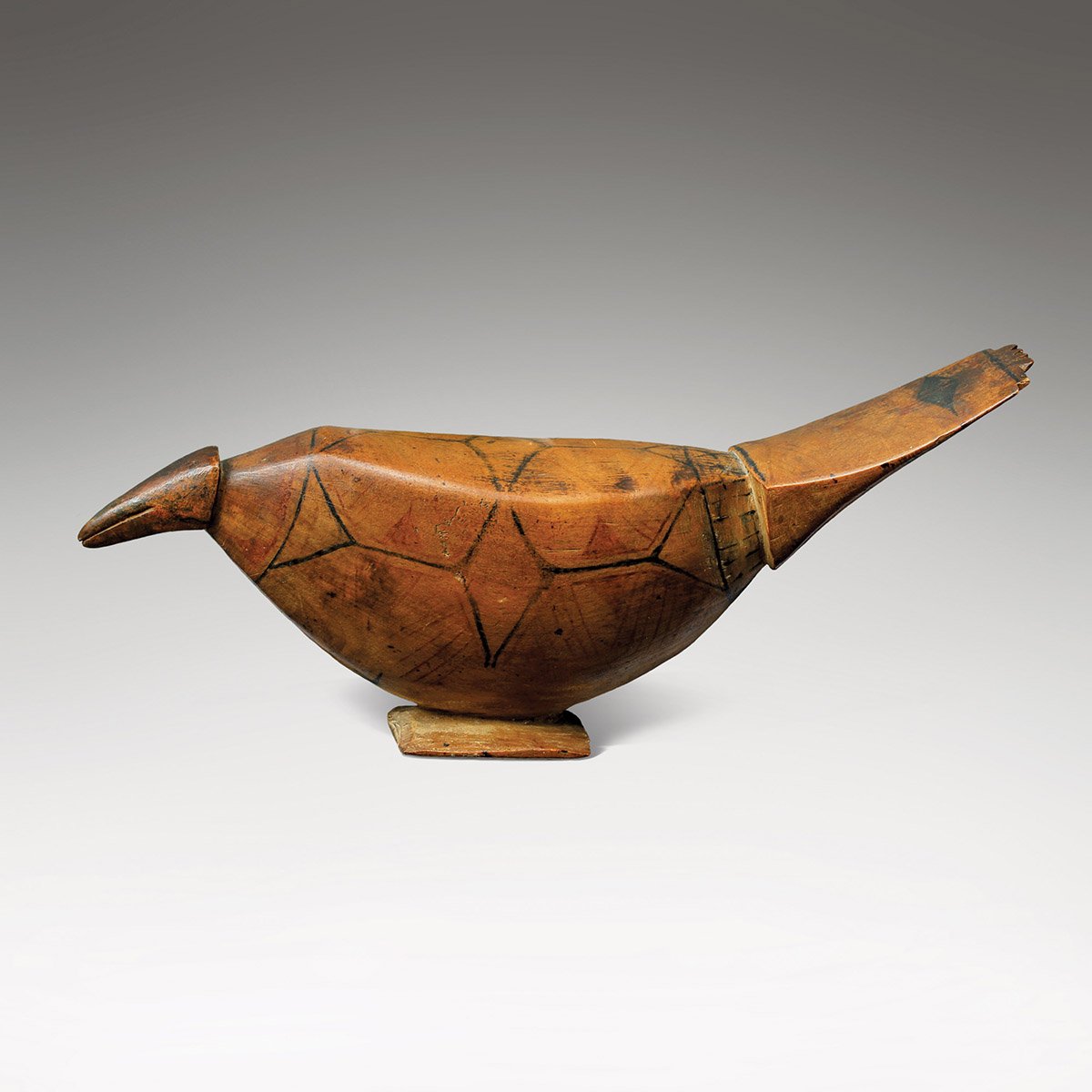
Portraying a stylized frigate bird, this charming headrest perfectly embodies the abstract form and artistic restraint characteristic of sculpture from the remote Polynesian Outliers. Delicately painted with native red and black pigments, the time-worn polished surface is adorned with an array of finely rendered geometric motifs that serve to enhance the visual rhythm of the headrest’s avian form. The application of these painted patterns, representing fish, hermit crab tracks, and feathers, was reserved for sacred objects designated for ritual use including deities and napa dance staffs. Ritual headrests, like the present example, were intended to be used only within the sacred men’s house, and only by senior initiated men. On some occasions, such headrests would be dedicated to a man’s personal or tutelary deity, called dukna, and were regarded as the physical image of the deity. In one ritual performed in the men’s houses, a sacred space was prepared for the tutelary deity to sleep, for which these venerated headrests were provided.
Nendӧ or Reef Islands, Temotu Province, Eastern Solomon Islands
19th century
Length: 12.25 inches (31 cm)
Wood, native pigments
Provenance: Ben Hunter - Auckland, New Zealand
In the Eastern Solomon Islands lies a remote region referred to as Parapolynesia, consisting of numerous small coral atolls and reef islands that were settled by Polynesian pioneers between 900-1200 AD. Guided by the stars, the sacred frigate bird, and the subtle language of the waves, these seafaring populations from Polynesian homelands including Samoa, Tonga, and Tuvalu, travelled back westward against prevailing winds to settle these tiny isolated islands known as the Polynesian Outliers. There they developed a rich and distinct culture, producing figurative sculpture prized for its artistic purity and minimalist abstract style.
Portraying a stylized frigate bird, this charming headrest perfectly embodies the abstract form and artistic restraint characteristic of sculpture from the remote Polynesian Outliers. Delicately painted with native red and black pigments, the time-worn polished surface is adorned with an array of finely rendered geometric motifs that serve to enhance the visual rhythm of the headrest’s avian form. The application of these painted patterns, representing fish, hermit crab tracks, and feathers, was reserved for sacred objects designated for ritual use including deities and napa dance staffs. Ritual headrests, like the present example, were intended to be used only within the sacred men’s house, and only by senior initiated men. On some occasions, such headrests would be dedicated to a man’s personal or tutelary deity, called dukna, and were regarded as the physical image of the deity. In one ritual performed in the men’s houses, a sacred space was prepared for the tutelary deity to sleep, for which these venerated headrests were provided.