Western Province, Solomon Islands
Mid-19th century or before
Wood, nautilus shell, paranarium glue
Height 27 inches (69 cm)
Provenance: Private collection, Scotland / Chris and Anna Thorpe Collection - Sydney, Australia
Published: War Art and Ritual-Shields from the Pacific, n. 139
The distinctive lave-lave war shields of the Western Solomons were the quintessential defensive weapons for traditional warfare both on land and at sea; a vital element of the warrior’s fighting equipment from which their owners, according to 19th century accounts, were nearly inseparable. The shields, being comparatively small, were designed not for protective shelter but for the purpose of deflecting and parrying incoming arrows and strikes. The exacting skills required were the result of the warrior’s apprenticeship during their youth with experienced fighters, from whom they learned and practiced specific shield movements and techniques. Most all surviving shields from the region are constructed of tightly woven wicker, but a dozen examples carved from wood are known to exist, held by notable museums including the British Museum and the Australian Museum. The 19th century wooden shield presented here is exceptionally rare and is perhaps unique, owing to the additional embellishments of luminous shell inlays applied to the borders and to the shield’s central motif depicting a chiefly pectoral pendant. Along with its utility as a defensive weapon, this shield likely served as an emblem of prestige for an important warrior chief, accompanying him into battle and signaling his revered status.
INQUIRE HERE
Western Province, Solomon Islands
Mid-19th century or before
Wood, nautilus shell, paranarium glue
Height 27 inches (69 cm)
Provenance: Private collection, Scotland / Chris and Anna Thorpe Collection - Sydney, Australia
Published: War Art and Ritual-Shields from the Pacific, n. 139
The distinctive lave-lave war shields of the Western Solomons were the quintessential defensive weapons for traditional warfare both on land and at sea; a vital element of the warrior’s fighting equipment from which their owners, according to 19th century accounts, were nearly inseparable. The shields, being comparatively small, were designed not for protective shelter but for the purpose of deflecting and parrying incoming arrows and strikes. The exacting skills required were the result of the warrior’s apprenticeship during their youth with experienced fighters, from whom they learned and practiced specific shield movements and techniques. Most all surviving shields from the region are constructed of tightly woven wicker, but a dozen examples carved from wood are known to exist, held by notable museums including the British Museum and the Australian Museum. The 19th century wooden shield presented here is exceptionally rare and is perhaps unique, owing to the additional embellishments of luminous shell inlays applied to the borders and to the shield’s central motif depicting a chiefly pectoral pendant. Along with its utility as a defensive weapon, this shield likely served as an emblem of prestige for an important warrior chief, accompanying him into battle and signaling his revered status.
INQUIRE HERE


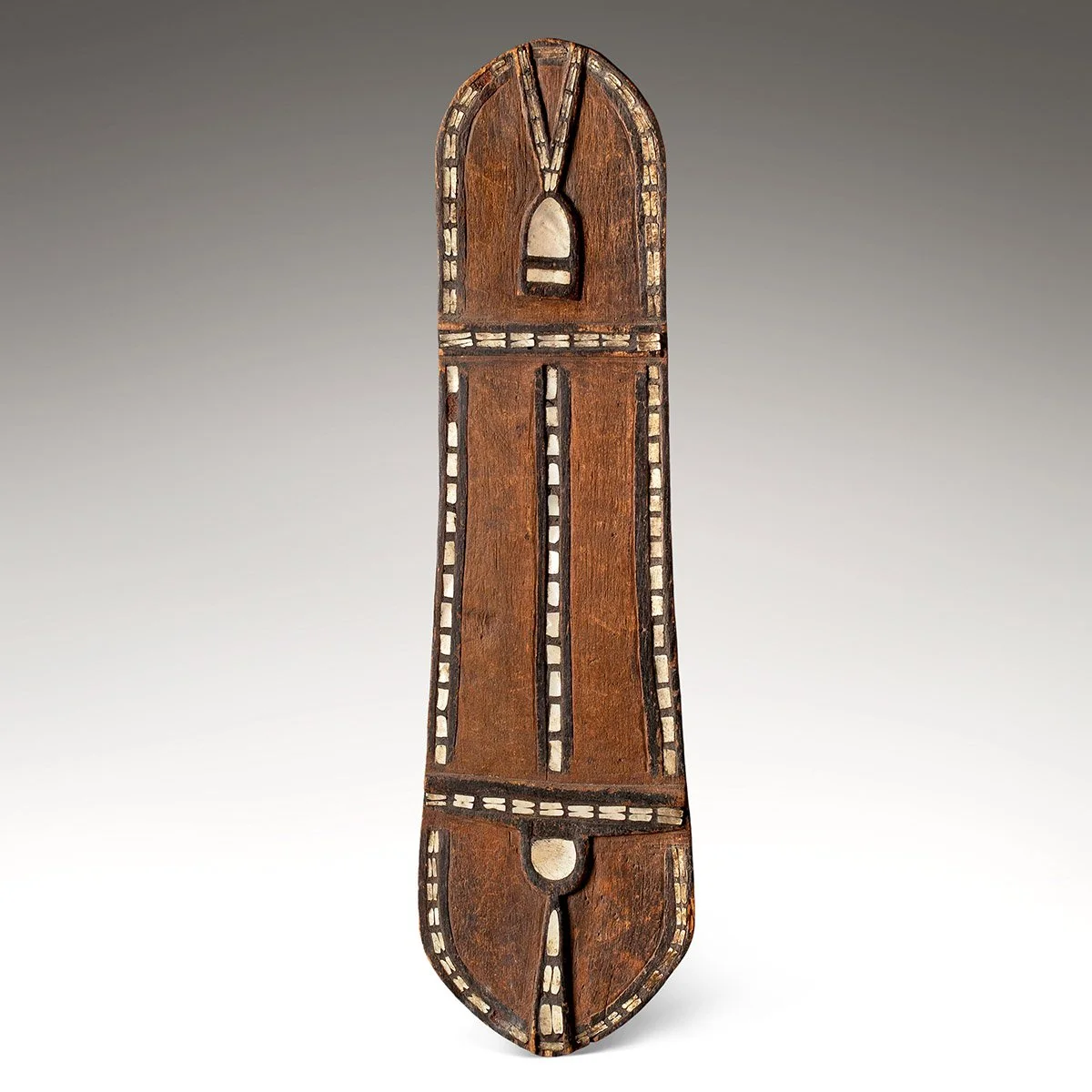 Image 1 of 6
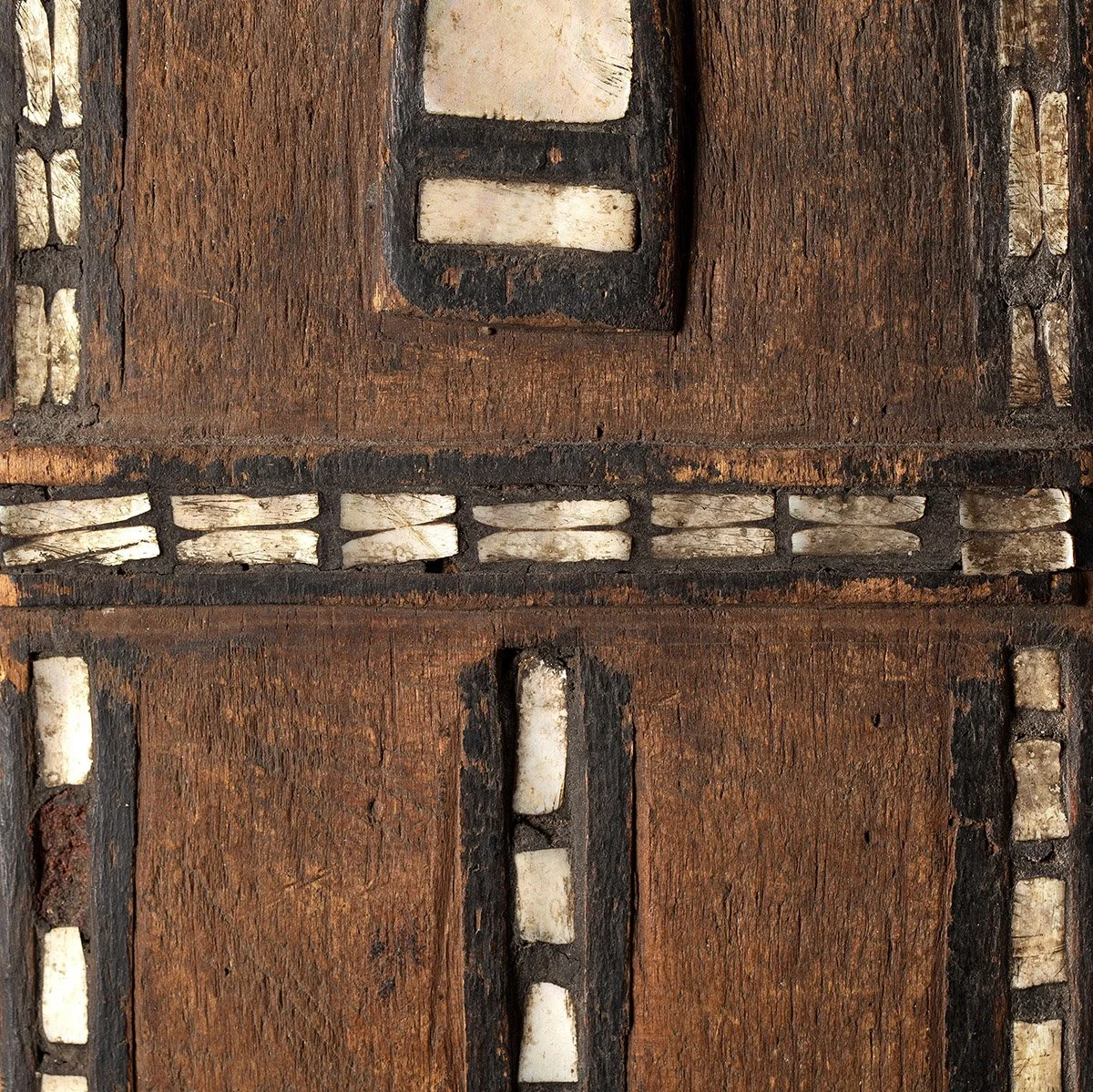 Image 2 of 6
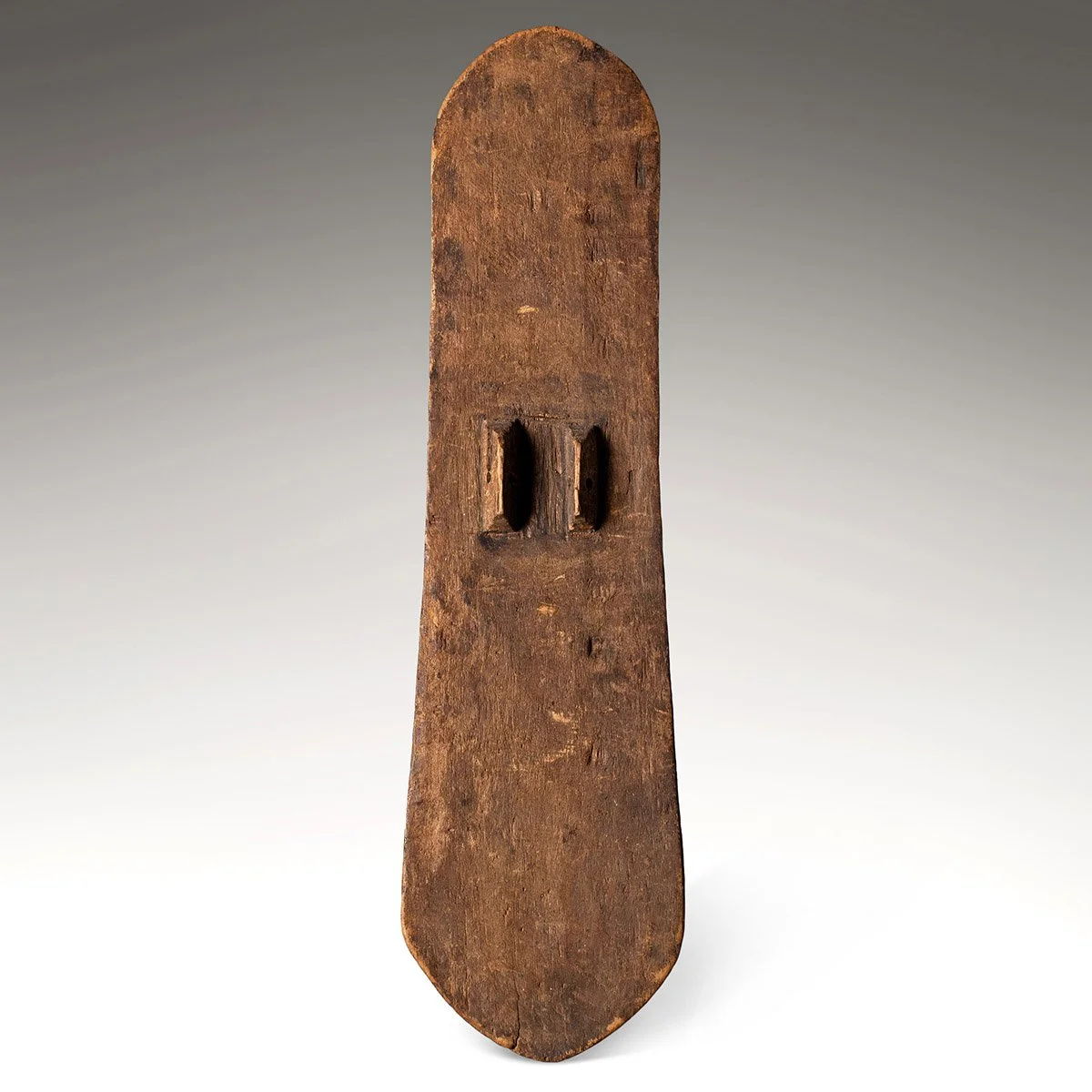 Image 3 of 6
 Image 4 of 6
 Image 5 of 6
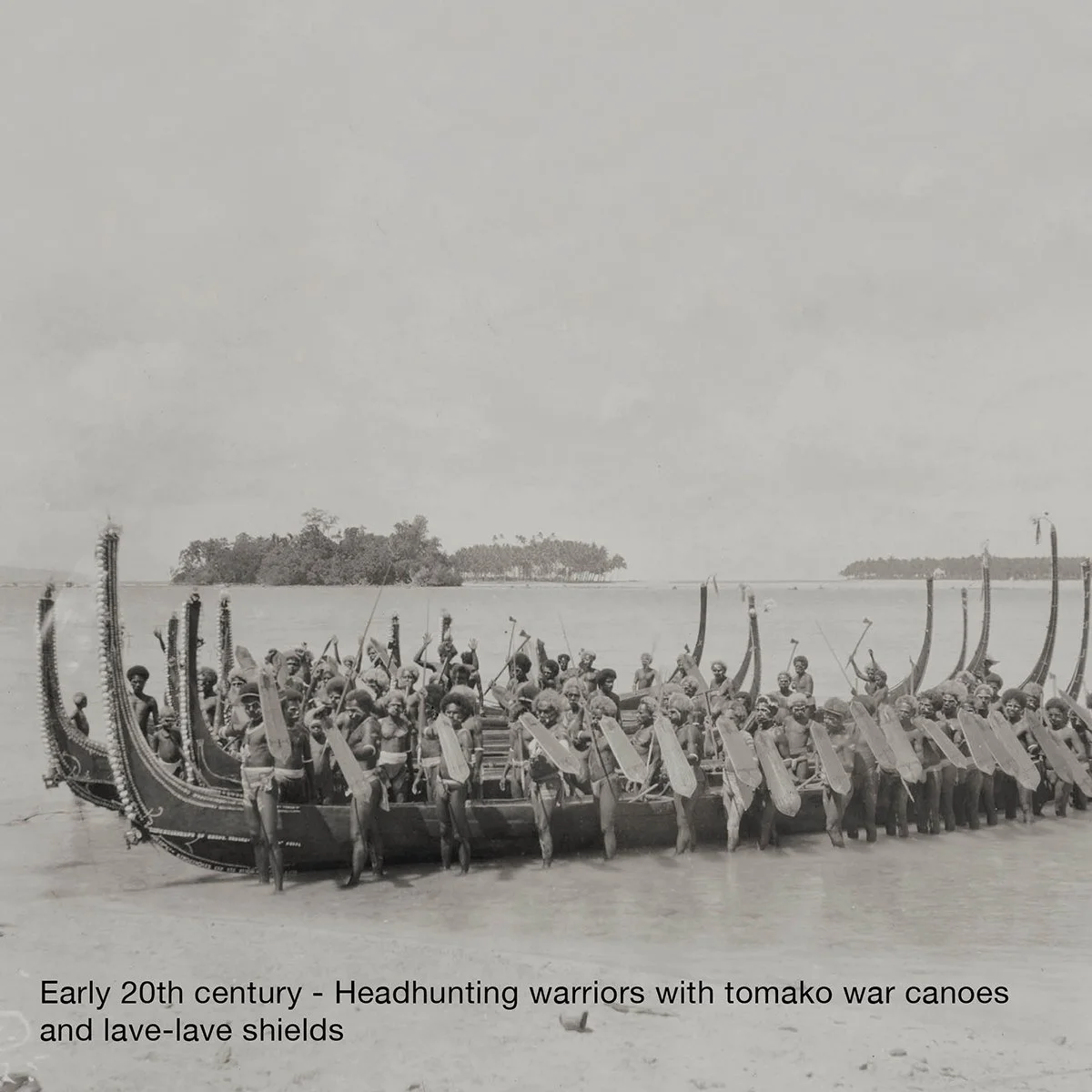 Image 6 of 6