

 Image 1 of 5
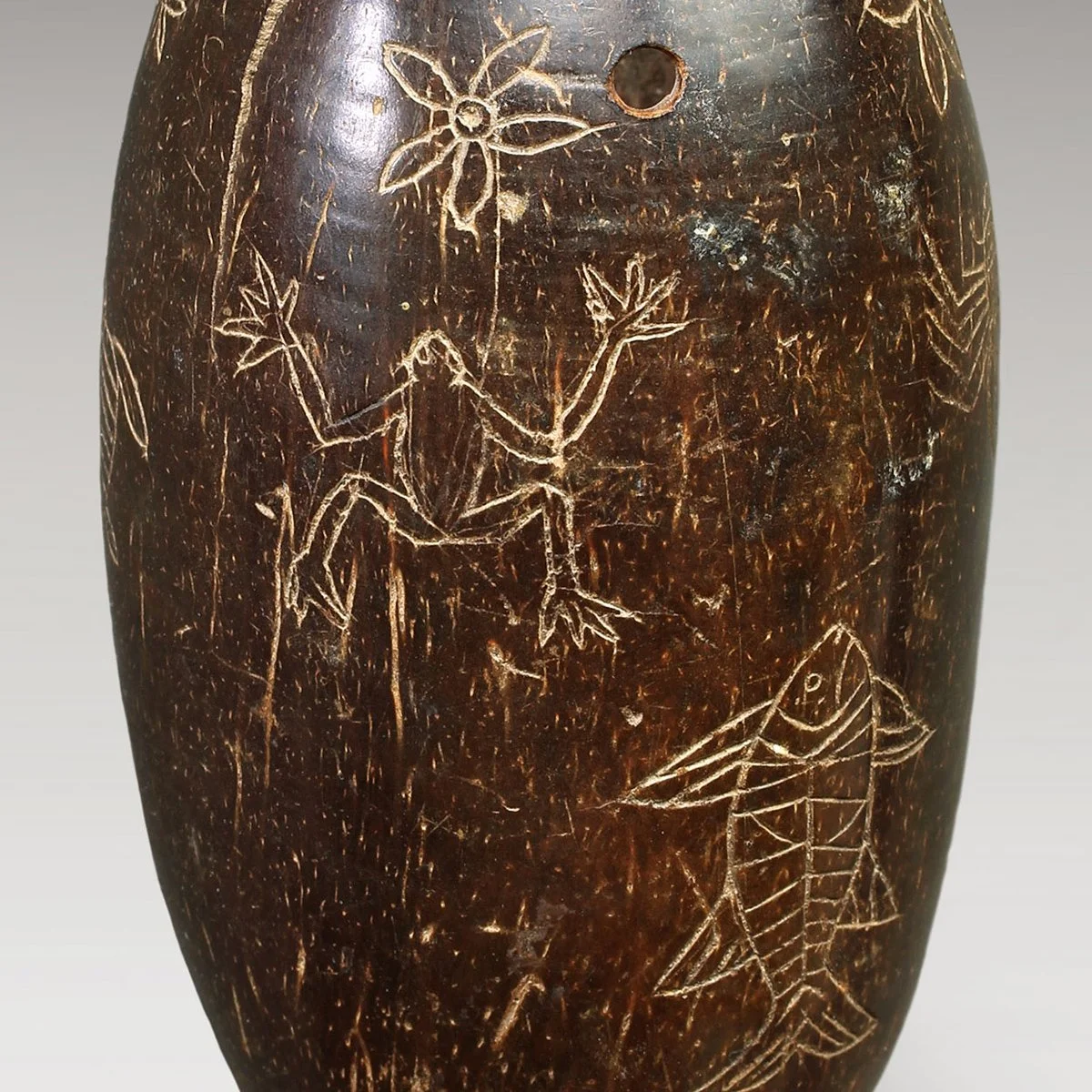 Image 2 of 5
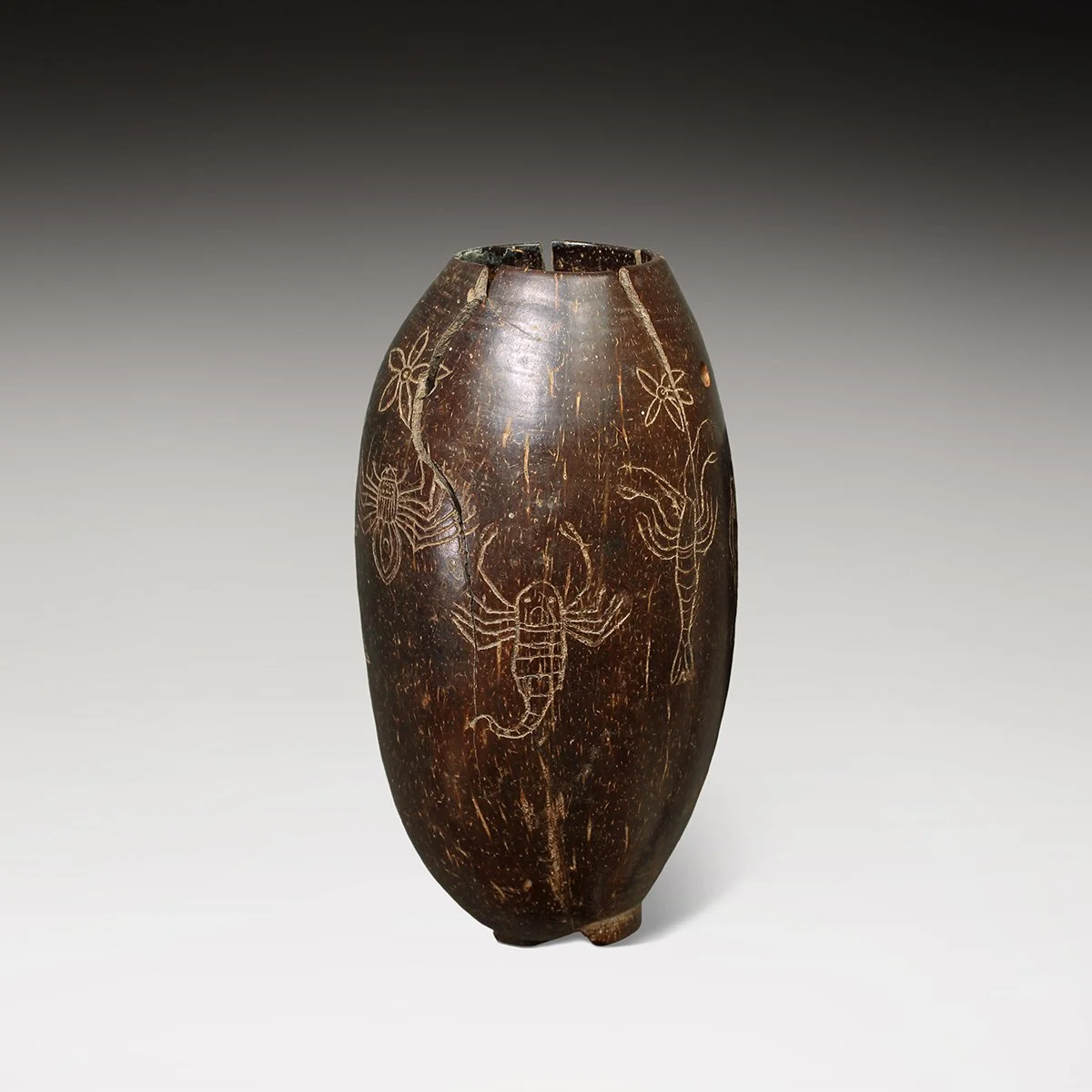 Image 3 of 5
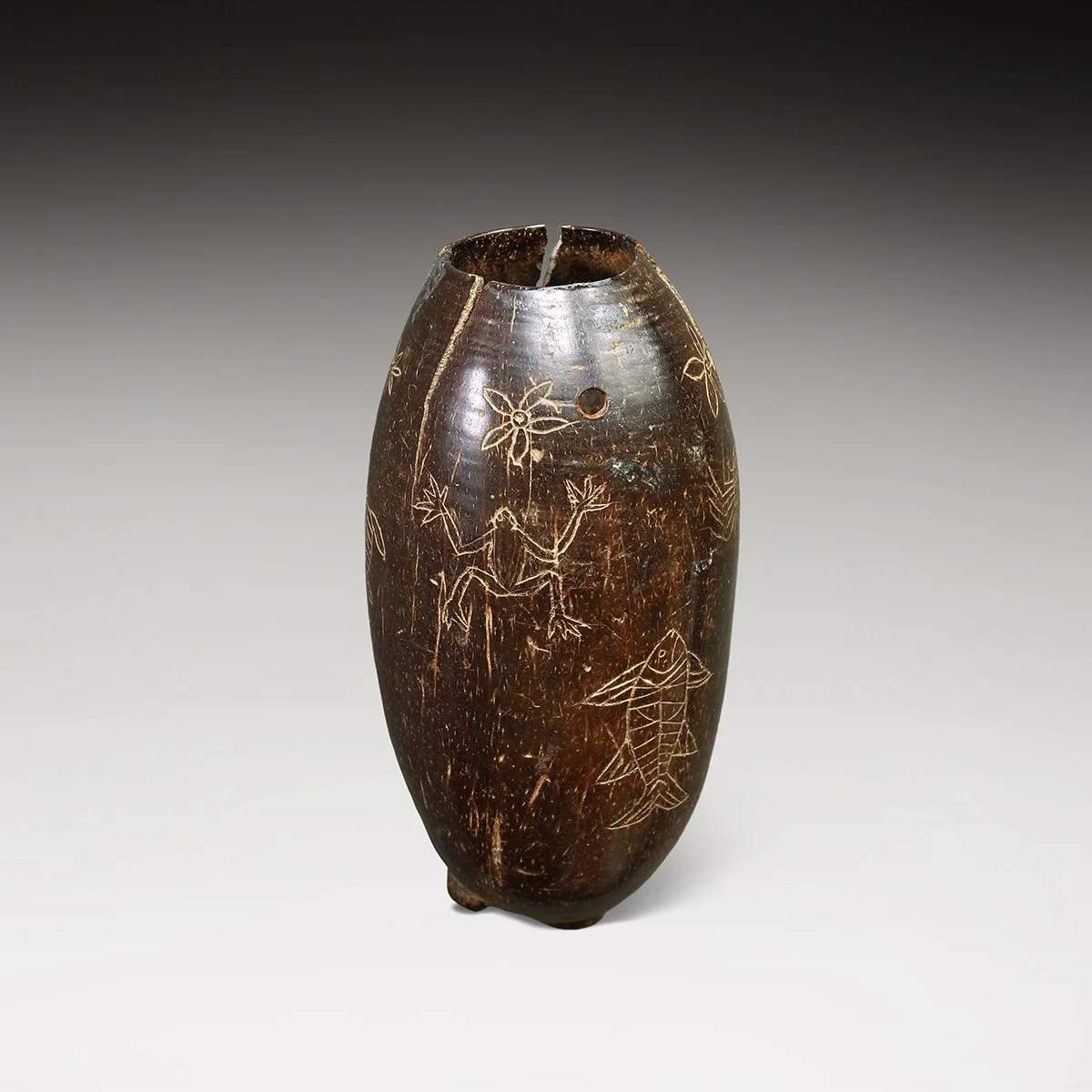 Image 4 of 5
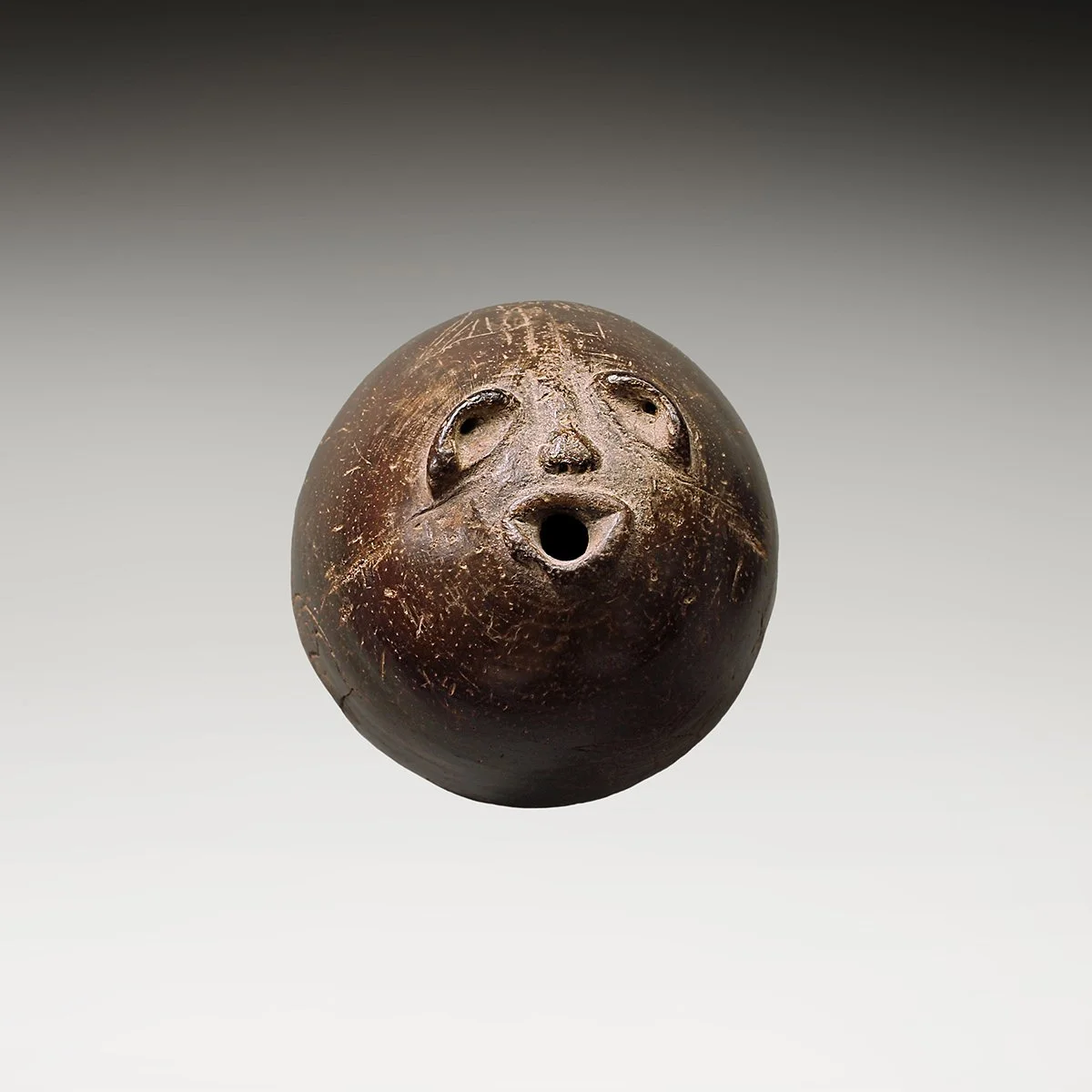 Image 5 of 5
Torres Strait, Cape York Peninsula, Australia
Early to Mid-19th century
Coconut
Length: 4.85 inches (12.3 cm)
Provenance: John and Marcia Friede Collection – Rye, New York / Jean-Edouard Carlier – Paris
Fashioned from a polished young coconut, this remarkable container served to store and transport magical substances related to hunting at sea for turtles and dugong, as well as other marine animals. These substances could include specific plants, burned bones, dugong marine grass, and fatty substances, to "smell" the animals and draw them near. The tiny ear bones from dugongs and turtles were also used as magical elements to facilitate communication with the prey.
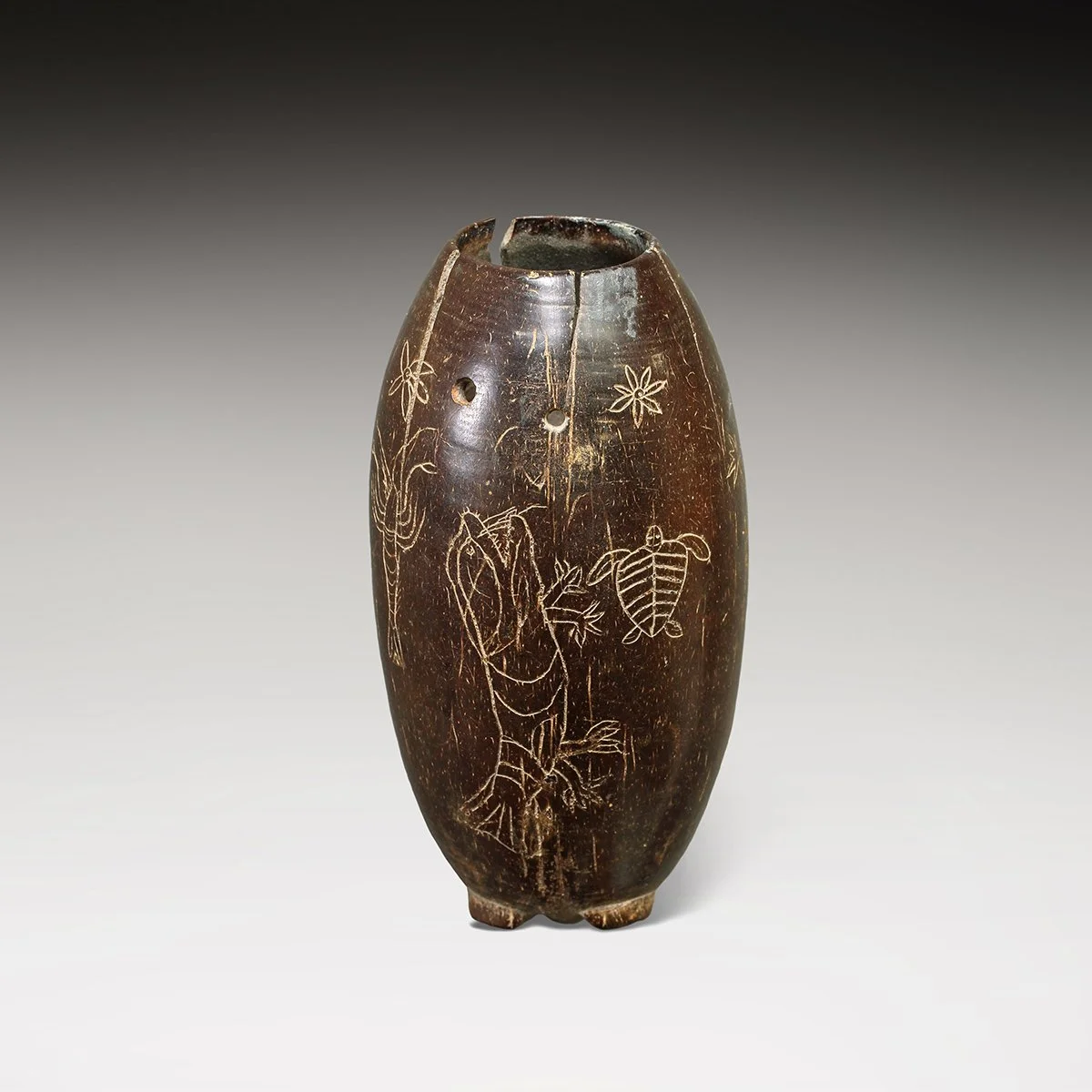
The coconut’s richly decorated surface is finely inscribed with charming depictions of a fish and turtle, and a variety of crustaceans, starfish, and a single frog. At the bottom of the container, the coconut’s three carpel structures have been cleverly rendered into an ancestral face, with delicately pierced eyes and nostrils, and an open mouth that has been carefully hollowed out to merge with the interior of the container. The inner upper rim of the container shows polished wear consistent with a wooden stopper, and the coconut is pierced with three suspension holes. A rare and stellar object from an extraordinary culture.
Torres Strait, Cape York Peninsula, Australia
Early to Mid-19th century
Coconut
Length: 4.85 inches (12.3 cm)
Provenance: John and Marcia Friede Collection – Rye, New York / Jean-Edouard Carlier – Paris
Fashioned from a polished young coconut, this remarkable container served to store and transport magical substances related to hunting at sea for turtles and dugong, as well as other marine animals. These substances could include specific plants, burned bones, dugong marine grass, and fatty substances, to "smell" the animals and draw them near. The tiny ear bones from dugongs and turtles were also used as magical elements to facilitate communication with the prey.
The coconut’s richly decorated surface is finely inscribed with charming depictions of a fish and turtle, and a variety of crustaceans, starfish, and a single frog. At the bottom of the container, the coconut’s three carpel structures have been cleverly rendered into an ancestral face, with delicately pierced eyes and nostrils, and an open mouth that has been carefully hollowed out to merge with the interior of the container. The inner upper rim of the container shows polished wear consistent with a wooden stopper, and the coconut is pierced with three suspension holes. A rare and stellar object from an extraordinary culture.