

 Image 1 of 10
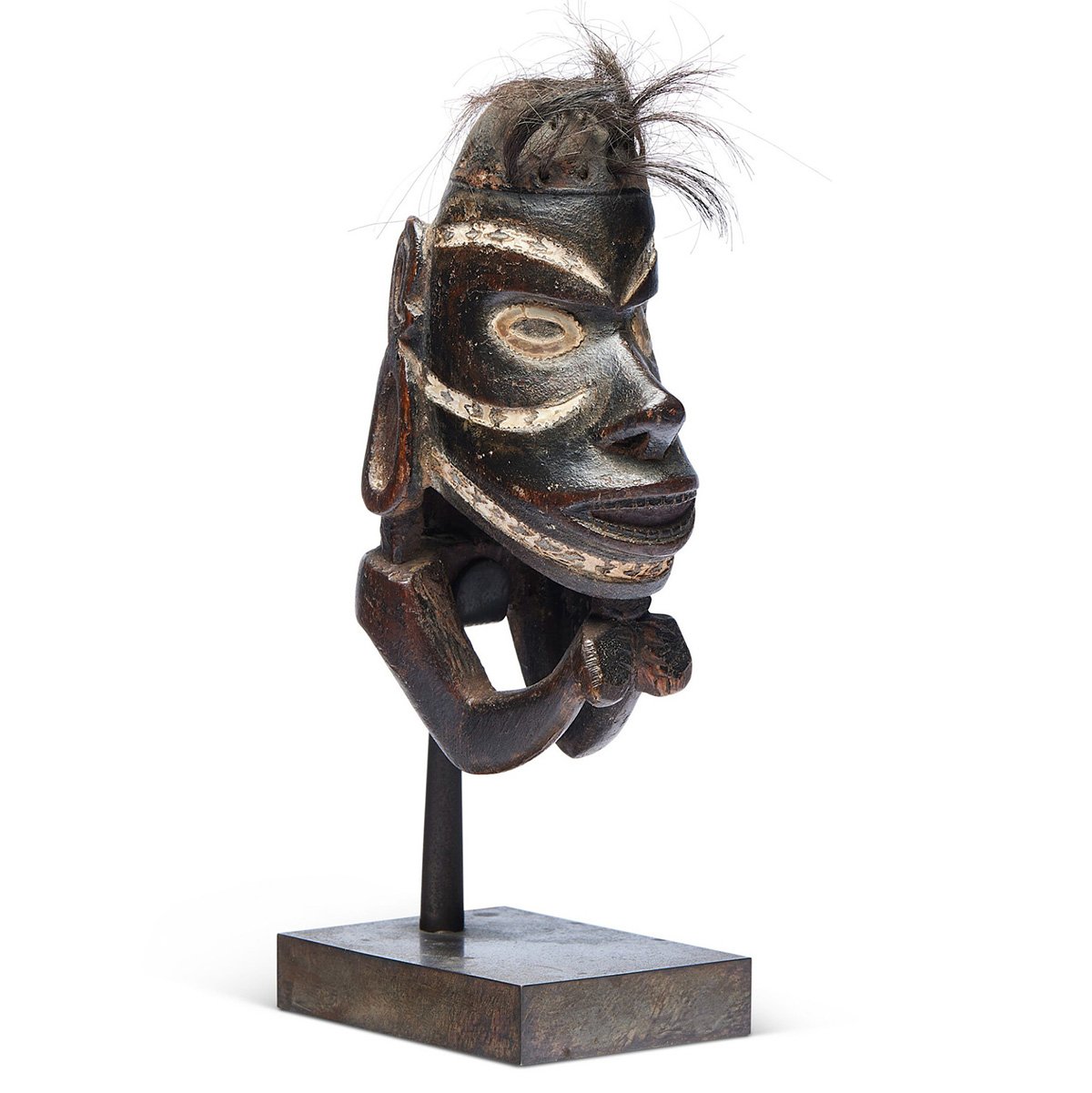 Image 2 of 10
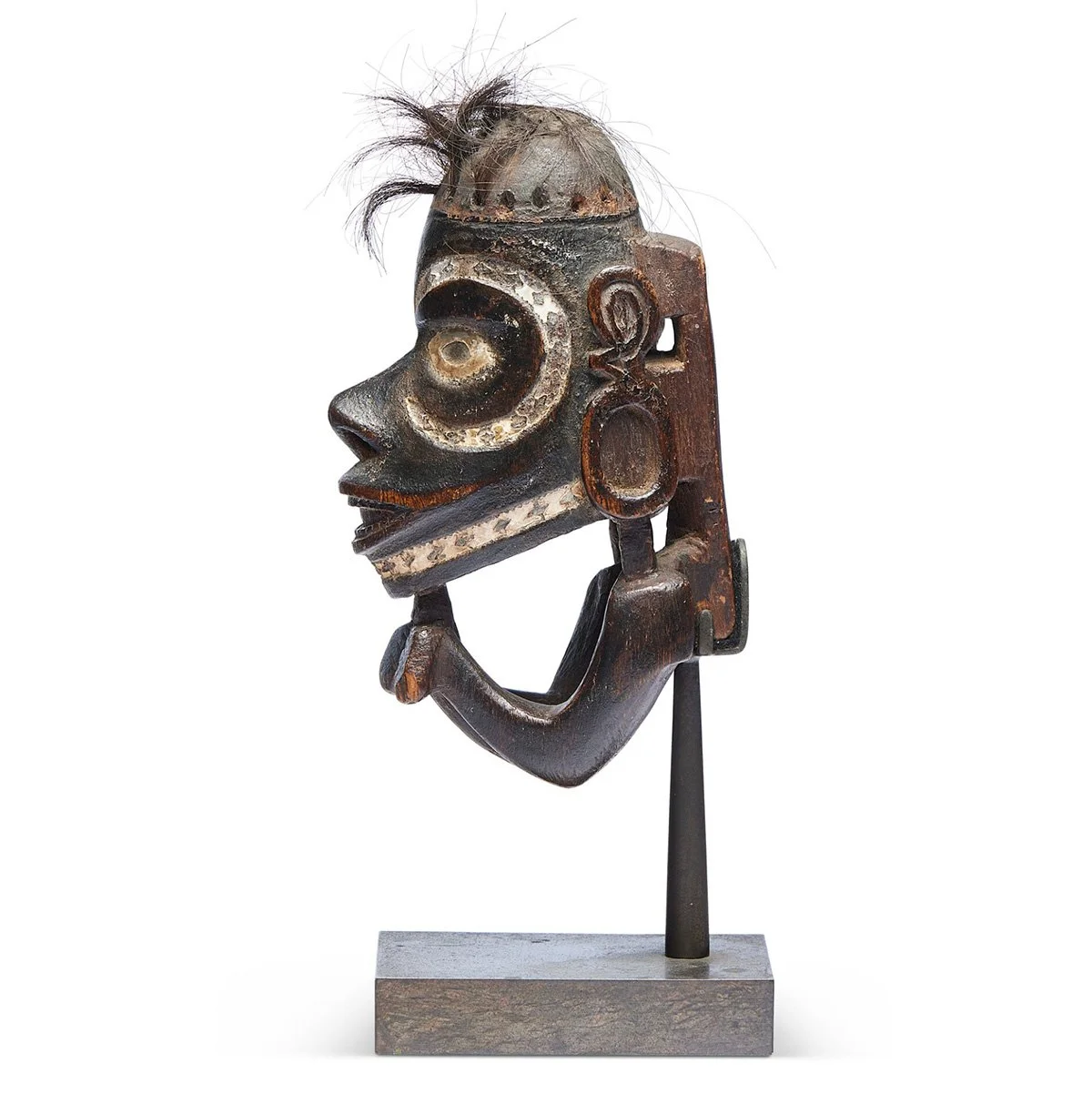 Image 3 of 10
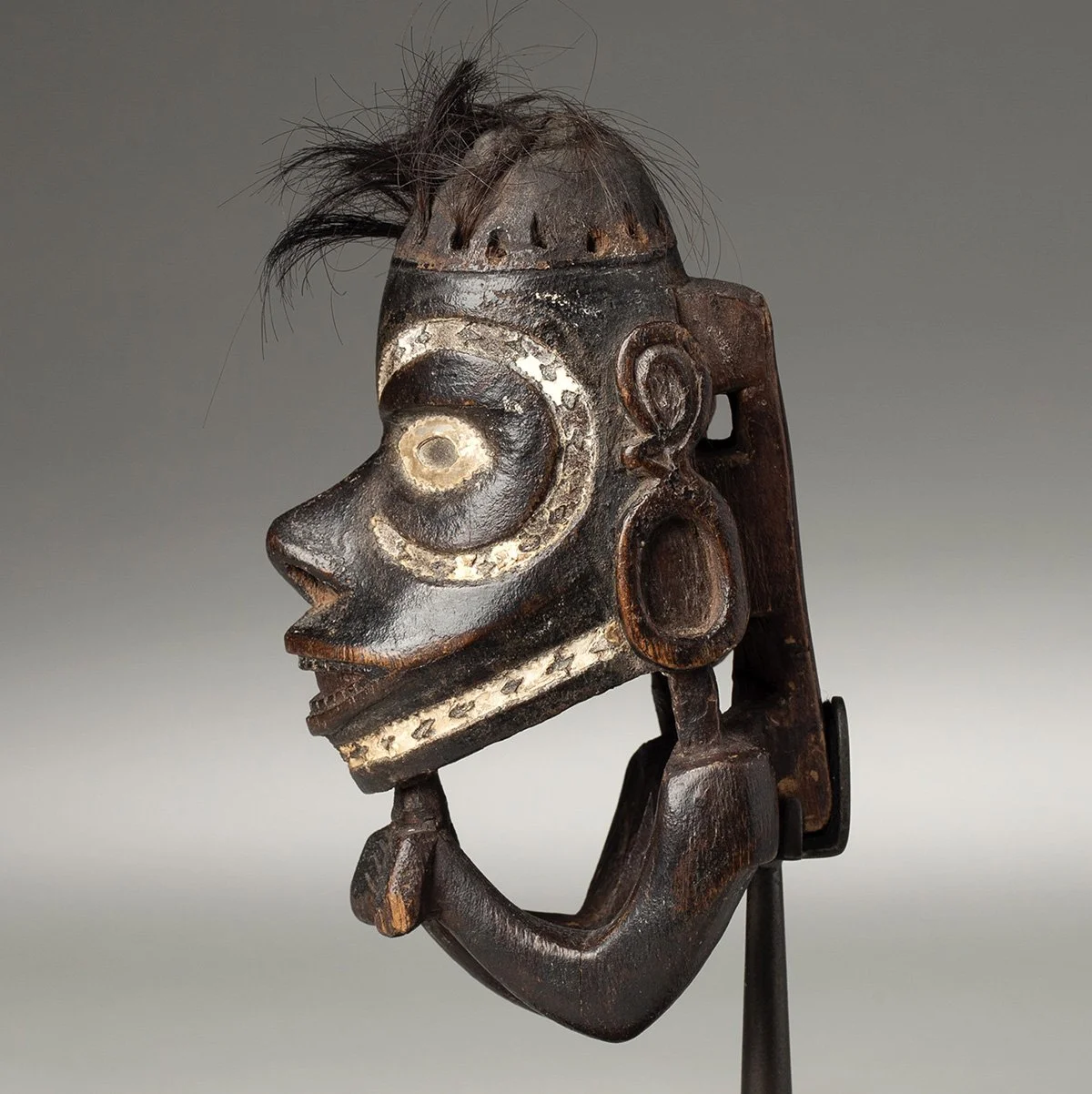 Image 4 of 10
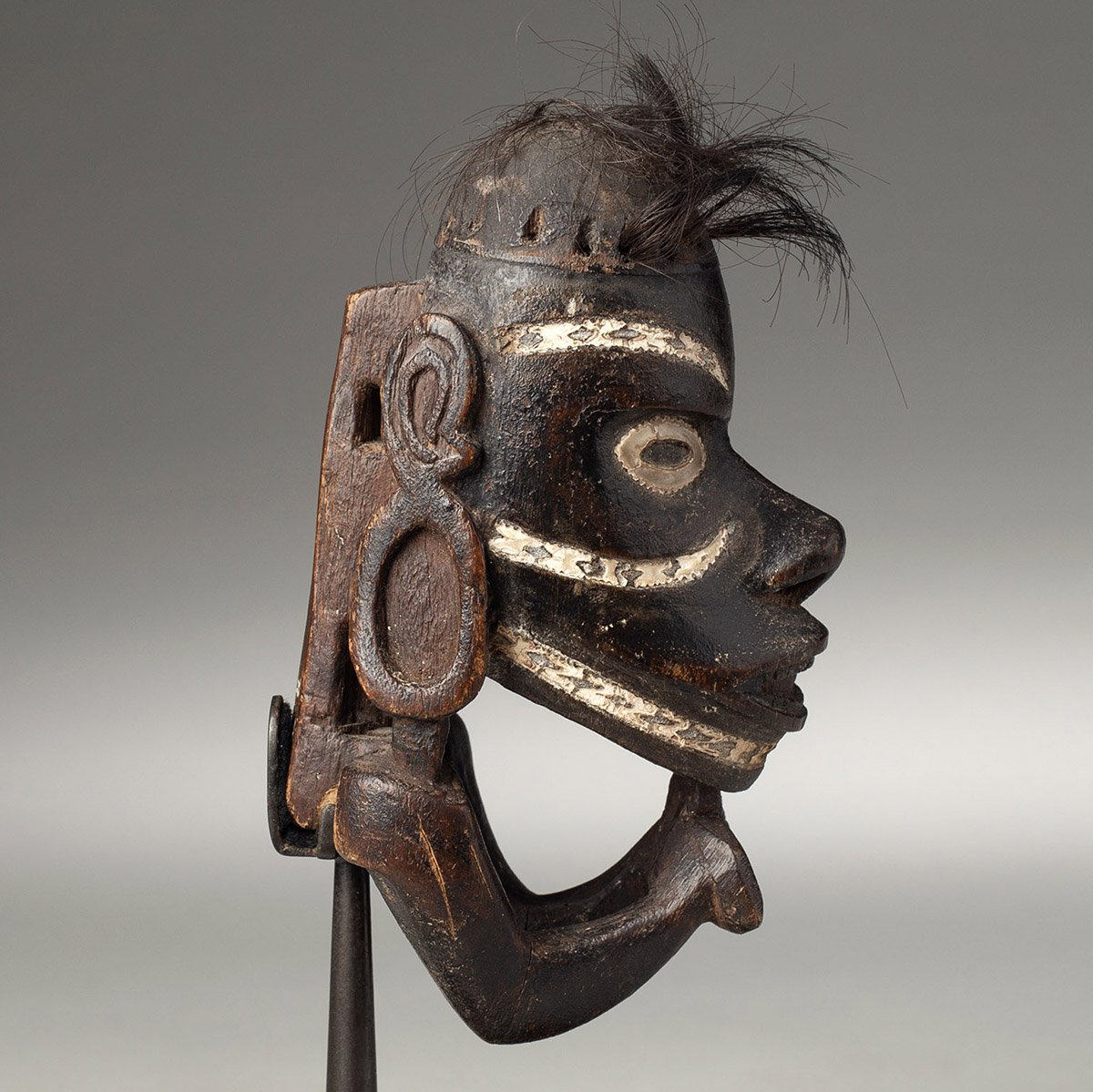 Image 5 of 10
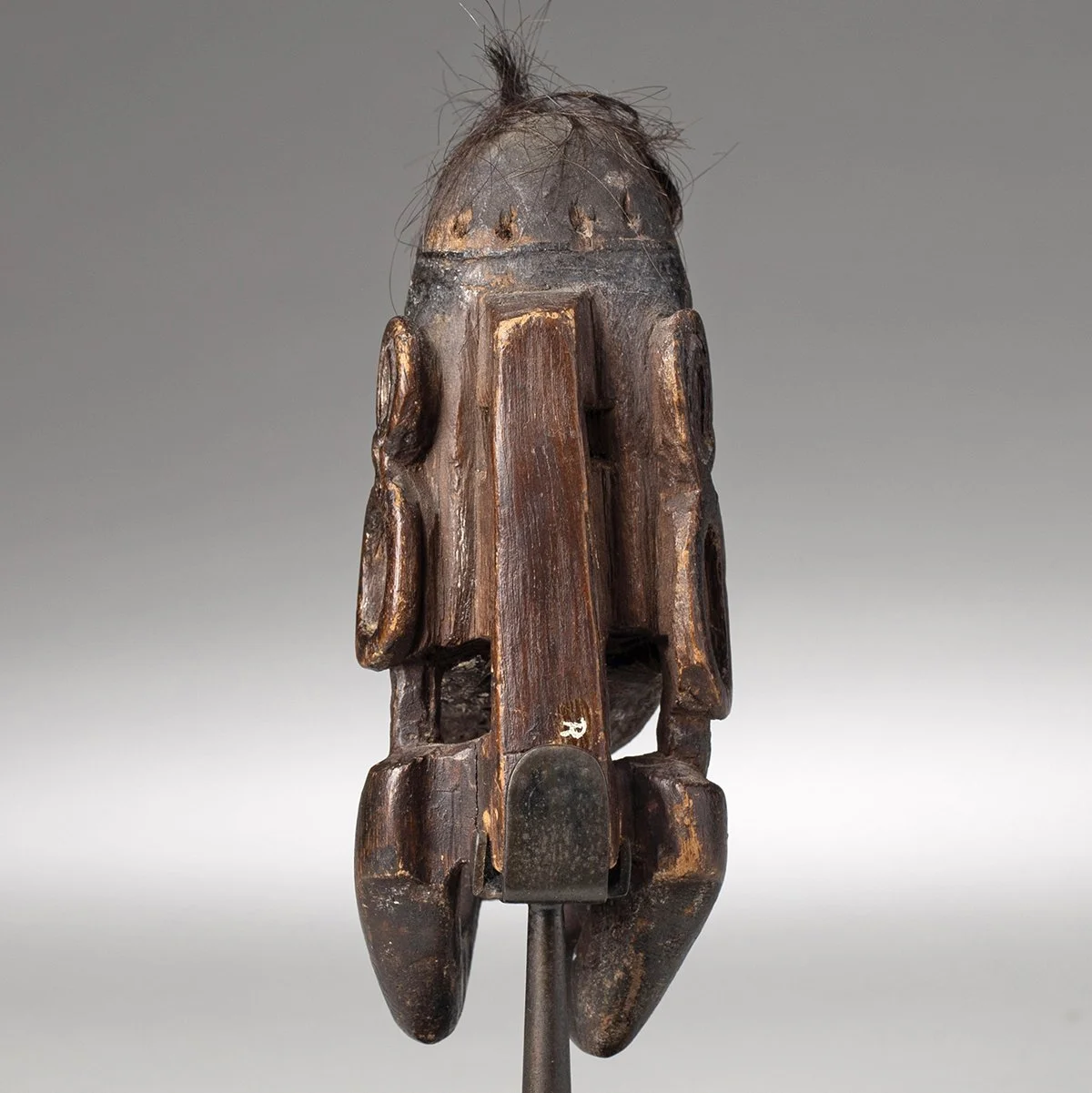 Image 6 of 10
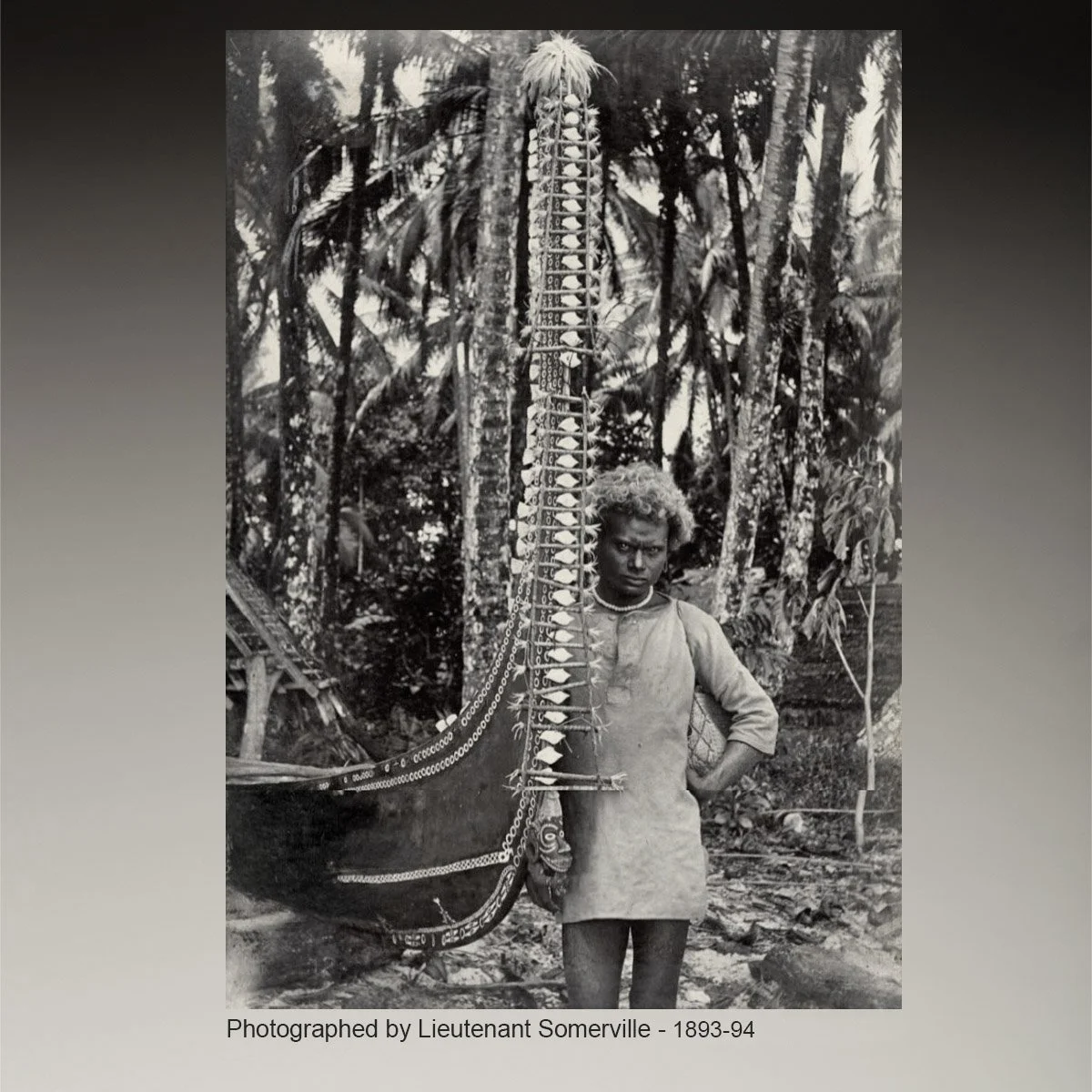 Image 7 of 10
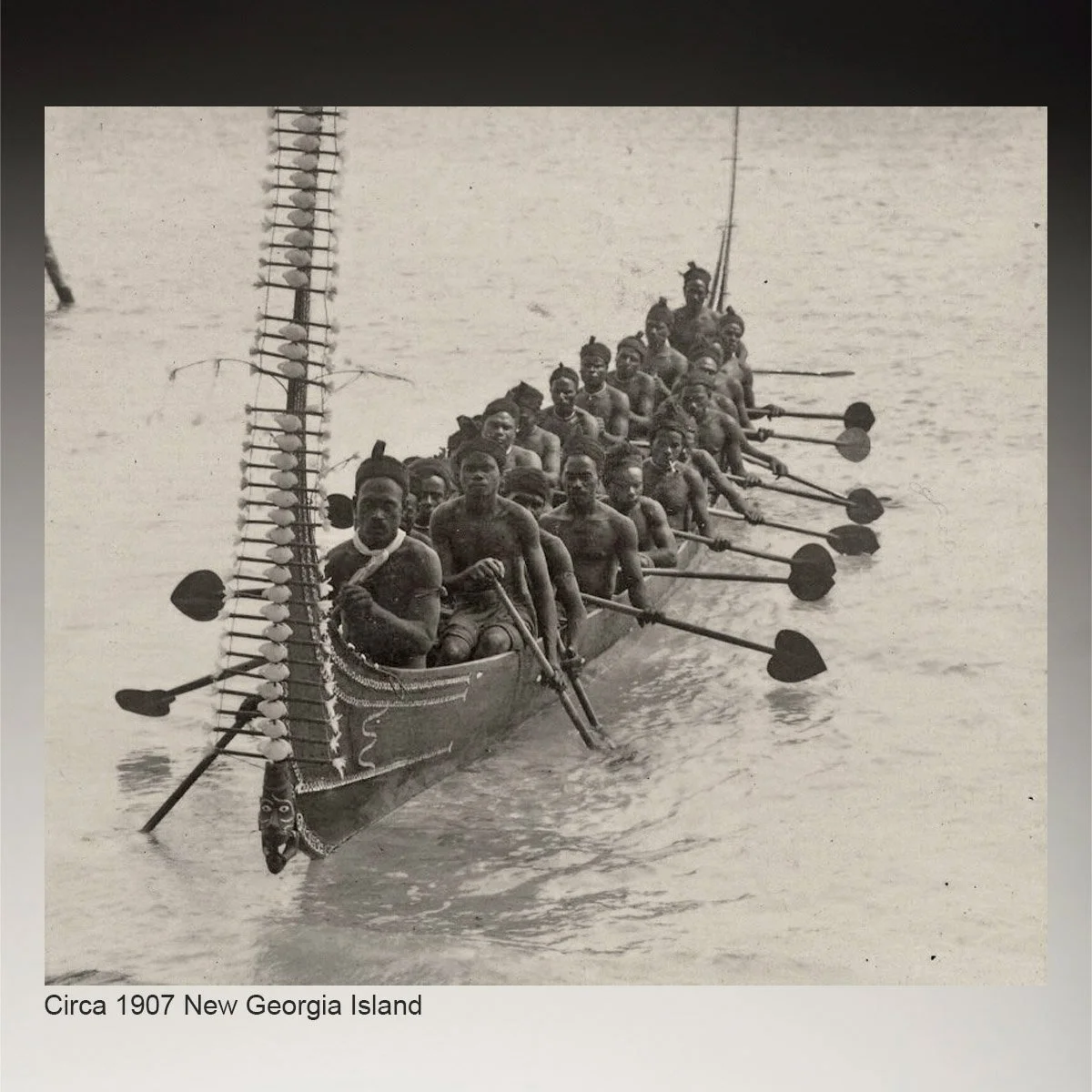 Image 8 of 10
 Image 9 of 10
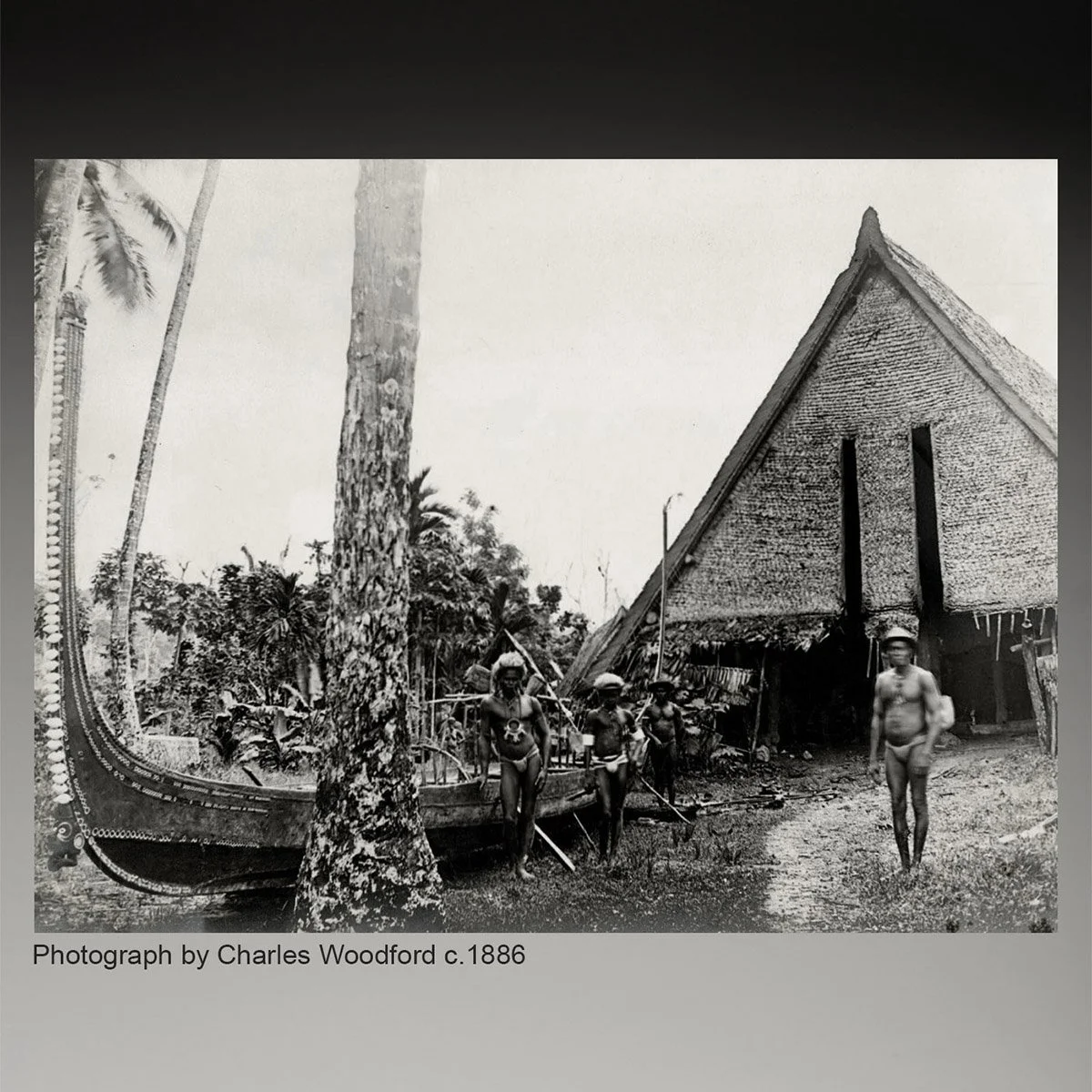 Image 10 of 10
Superb War Canoe Figurehead Toto-isu
New Georgia, Western Province, Solomon Islands
Circa 1820-1870
Wood, nautilus shell inlay, human hair, natural pigments
Height: 5.85 inches (15 cm)
Provenance: Collection of Line and Hippoliet Verbeemen - Bonheiden, Belgium / Phillippe Guimiot – Brussels, Belgium
VIEW VIDEOS AT THE END
Essential to transportation, fishing, and in former times ritualized warfare and head-hunting, canoes in the Western Solomon Islands were also an important vehicle of artistic expression.Massive war canoes, or tomako, measured up to fifty feet, or fifteen meters, in length and according to early accounts, held a crew of thirty-five men. Their tall and elegantly curved prows and sterns were inlaid with white shell and adorned with vertical rows of cowrie shells. The centerpiece of these impressive canoes was a separately carved figurehead, called a toto isu or nguzu nguzu, depending on the island of origin.The figurehead was attached to the canoe prow at the waterline, so that it dipped into the sea as the vessel rode the ocean swells and intimately connected it to the waters in which the canoe moved. Drawing primarily from sight, but also from speech, hearing, and smell, the figurehead called upon its faculties to observe, intercept, react, and interact with any malicious maritime spirit met during the voyage and served as a supernatural guardian, protecting the crew during the hazardous voyage and helped to ensure the success of the expedition in the pursuit of enemy heads. The aim of ritualized headhunting in the region was to acquire mana, or spiritual power, from the individual who was killed, which could in turn be channeled into the construction and consecration of war canoes, and to the overall protection and health of the home village.
Because they were attached to the front of canoes, the figureheads were often the first carved artifacts from the Western Solomons to be observed by outsiders, who noted the beauty, construction and speed of the large war canoes, with early surviving photographs and written accounts consistently portraying and describing anthropomorphic figureheads lashed the prows of these large vessels. Their existence was documented as early as the mid-18th century in the journal of the French navigator and explorer Louis de Bougainville, who gave his name to the northernmost island. The most extensive historical account of the role of the figurehead is that of Lieutenant Boyle Somerville, a British naval officer, who described its use on the island of New Georgia in 1893: “Low down on the prow above the waterline the head and shoulders of a spirit called toto isu is suspended; it is so placed as to dip in the water in front of the canoe. The function of the toto isu is to keep off Kesoko, or water fiends, which might otherwise cause the winds and waves to overset the canoe, so that they might fall and devour its crew. The toto isu has a more or less human face, of malevolent and prognathous countenance.”Although the exact identity of the being, or beings, portrayed in individual figureheads is uncertain, the conical heads and strongly prognathous jaws were believed to be attributes of spirits. According to one origin story from Roviana Lagoon, the figurehead is carved in the image of Tiola, a mythological ancestorwho took the form of an anthropomorphic dog and taught the people of Roviana how to build the first tomako war canoe. A similar origin was told to Lieutenant Somerville by a native informant stating that the figureheads portrayed non-human spirits of the sea and land who had the “power over the affairs of nature”. One of these spirits “was about as big as a man, with an enormous head and long black hair. He had a long nose, and the lower part of his face stuck out, making his mouth and chin protrude like a dog’s face. He lived in a hole in a large tree.”
Surviving photographs portray the figureheads as attached to the prows by means of lashing. The typical means of attachment was a rectangular or triangular projection extending from the back of the head, usually bored with two holes for lashing. When in position, the shape and angle of the projection allowed for the carved figurehead to project directly forward into space. The figureheads ranged in height from 10-25 cm and early photographs reveal that a figurehead of any size always appeared diminutive relative to the tall, upraised prow of the war canoe. Despite their small size and low placement, the figureheads were visible enough to be noticed by early observers who noted “To the stern of the canoe just above the water line is sometimes attached a small misshaped wooden figure, which is the little tutelary deity that sees the hidden rock and gives warning of an approaching foe.” The figureheads are most often portrayed as a partial human figure, consisting of an enlarged head and prognathous jawline, with smaller arms extended forward and the hands raised to the chin, or in rare instances, clasping a bird. Shell inlay is a prominent feature of most figureheads. Often adorning each check, curvilinear bands of carved and serrated pieces of shell from the chambered nautilus are set into narrow troughs filled with paranarium nut glue. These inlaid bands reproduce decorative patterns applied to people’s faces particularly on ceremonial occasions including during warfare and headhunting raids.
The war canoe figureheads from the Western Solomons, and the head-hunting tradition to which they belonged, were an endless source of fascination for early European explorers. Head-hunting as a ritual practice is believed to have developed in the Roviana Lagoon area of New Georgia before the 16th century and was restricted to the islands of the Western and Central Solomons, with the peoples of the Eastern Solomons not engaging in the practice. It was in the 19th century however, with an explosion of activity, that head-hunting took on a much greater presence, for it was the introduction of European trade goods that set in motion decades of headhunting conflict. European iron axe-heads were hafted into long wooden shafts to produce very effective and efficient weapons which quickly disrupted any established balance of power between communities. Whole villages could be ransacked, more heads than ever could be acquired, and more captives taken and put to work as slaves, further increasing the power base of the victorious raiding communities. Axes also assisted in the efficient creation of more war canoes, enabling raiding parties to grow exponentially in size. The construction of new canoes itself was a further impetus for head-hunting, as the consecration of a newly finished war canoe generally required the dedication from a fresh human head. A head-hunting expedition could take up to two weeks to complete a round trip, and the distances between the raiding parties and their quarry became greater during the 19th century, as more proximal communities had been largely wiped out by the practice. The inhabitants of nearby islands who could no longer defend themselves were wiped out or moved further inland, away from the coast, for the protection provided by the difficult terrain. For a Solomon Islander living in the Western regions during the mid to late 19th century, the turmoil and fear brought about by warfare conducted to sustain the practice of headhunting was ever present. For the British, French, and German colonists, traders and missionaries who bravely attempted to settle in the Western Solomons during this period, life was also perilous and uncertain, with many murdered by members of neighboring indigenous communities still active in the practice of head-hunting. It was the murders of these European citizens that led to a series of effective British naval punitive expeditions in which war canoes and their elaborate canoe houses were destroyed, two very labor-intensive items to replace, and war clubs and tomahawk axes were confiscated in an attempt to curb the violence, finally bringing an end to the era of head-hunting in the Western Solomon Islands.
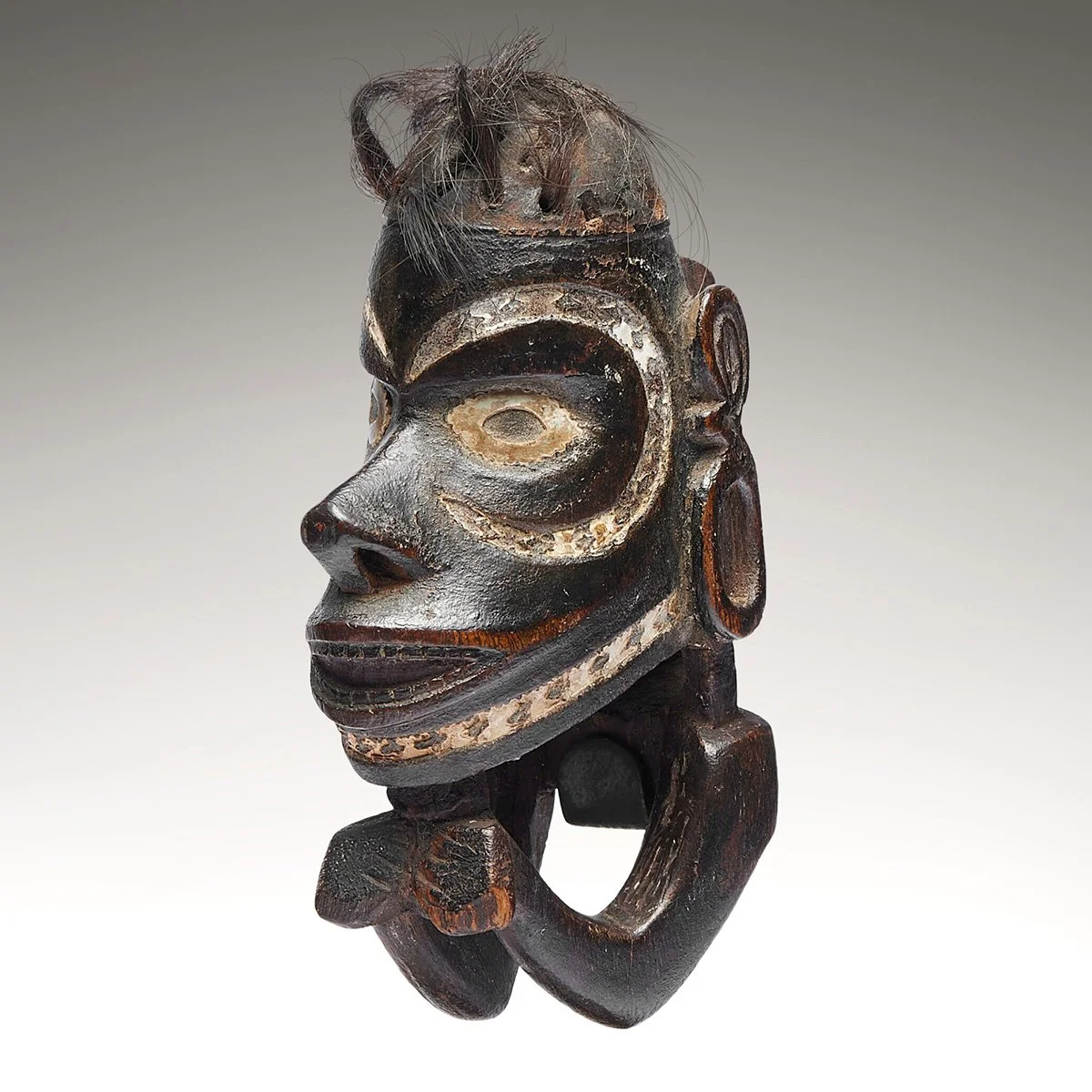
In sharp contrast to the brutal role that tomako war canoes served in the region’s historic head-hunting raids and tribal warfare, the exceptional 19th century war canoe figurehead presented here exudes a sublime beauty that represents one of the finest expressions of art from the Western Solomon Islands. While many war canoe figureheads portray an elongated prognathous form associated with the canine appearing Tiola spirit, the most prized examples, like the present figurehead, further draw upon an aesthetically pleasing naturalism and sculptural harmony. The comparative small scale of the figurehead highlights the refinement of the sculpture and the intricacy of the chiseled shell inlays and is indicative also of a very early date of manufacture. The eyes of the figurehead are inset with serrated shell inlays that emphasize the ever-watchful and piercing gaze of the toto-isu, and the prominent ears further emphasize the spirit’s supernatural senses. The shell inlays encircling the eye orbits and chin are rendered in z-shaped sections called asepaleo, or “small baitfish’s mouth”. At the back of the figure can be found an old collection number “R 315” inscribed in white text. The perfectly formed mouth of the figure is finely carved with individual teeth indicated behind gently curved lips. A unique and intriguing feature of the present figurehead is the additional embellishment of inset plugs of human hair. While several other 19th century figureheads feature small tufts of tightly curled indigenous hair, or hair-like fibers secured to the crown with paranarium paste, the present example is the only known figurehead to feature long, straight strands of human hair. When one considers the widespread murder of European traders, whaling ship’s crews, colonists and missionaries by indigenous head-hunting warriors during the 19th century, it is plausible, even likely, that the hair adorning the crown of the figurehead is that of a unfortunate European; who’s head would have been an unparalleled source of sought after mana in the eyes of the head-hunting communities of the Western Solomons. The surface patina of the figurehead is ancient; the naturally light-colored wood darkening to a reddish-brown hue, the result of centuries of oxidative changes to the wood’s surface. The painted black surface of the figure shows extensive wear and handling, reflecting the extraordinary living history imbued within this artifact; from the consecration of the figurehead, the perilous ocean-going journeys, and the fear and menace of the head-hunter’s raids. In addition to being a masterpiece of Solomon Islands art, the figurehead presented here is a potent reminder of the complex capacities of human expression, from the macabre to the sublime.
New Georgia, Western Province, Solomon Islands
Circa 1820-1870
Wood, nautilus shell inlay, human hair, natural pigments
Height: 5.85 inches (15 cm)
Provenance: Collection of Line and Hippoliet Verbeemen - Bonheiden, Belgium / Phillippe Guimiot – Brussels, Belgium
VIEW VIDEOS AT THE END
Essential to transportation, fishing, and in former times ritualized warfare and head-hunting, canoes in the Western Solomon Islands were also an important vehicle of artistic expression.Massive war canoes, or tomako, measured up to fifty feet, or fifteen meters, in length and according to early accounts, held a crew of thirty-five men. Their tall and elegantly curved prows and sterns were inlaid with white shell and adorned with vertical rows of cowrie shells. The centerpiece of these impressive canoes was a separately carved figurehead, called a toto isu or nguzu nguzu, depending on the island of origin.The figurehead was attached to the canoe prow at the waterline, so that it dipped into the sea as the vessel rode the ocean swells and intimately connected it to the waters in which the canoe moved. Drawing primarily from sight, but also from speech, hearing, and smell, the figurehead called upon its faculties to observe, intercept, react, and interact with any malicious maritime spirit met during the voyage and served as a supernatural guardian, protecting the crew during the hazardous voyage and helped to ensure the success of the expedition in the pursuit of enemy heads. The aim of ritualized headhunting in the region was to acquire mana, or spiritual power, from the individual who was killed, which could in turn be channeled into the construction and consecration of war canoes, and to the overall protection and health of the home village.
Because they were attached to the front of canoes, the figureheads were often the first carved artifacts from the Western Solomons to be observed by outsiders, who noted the beauty, construction and speed of the large war canoes, with early surviving photographs and written accounts consistently portraying and describing anthropomorphic figureheads lashed the prows of these large vessels. Their existence was documented as early as the mid-18th century in the journal of the French navigator and explorer Louis de Bougainville, who gave his name to the northernmost island. The most extensive historical account of the role of the figurehead is that of Lieutenant Boyle Somerville, a British naval officer, who described its use on the island of New Georgia in 1893: “Low down on the prow above the waterline the head and shoulders of a spirit called toto isu is suspended; it is so placed as to dip in the water in front of the canoe. The function of the toto isu is to keep off Kesoko, or water fiends, which might otherwise cause the winds and waves to overset the canoe, so that they might fall and devour its crew. The toto isu has a more or less human face, of malevolent and prognathous countenance.”Although the exact identity of the being, or beings, portrayed in individual figureheads is uncertain, the conical heads and strongly prognathous jaws were believed to be attributes of spirits. According to one origin story from Roviana Lagoon, the figurehead is carved in the image of Tiola, a mythological ancestorwho took the form of an anthropomorphic dog and taught the people of Roviana how to build the first tomako war canoe. A similar origin was told to Lieutenant Somerville by a native informant stating that the figureheads portrayed non-human spirits of the sea and land who had the “power over the affairs of nature”. One of these spirits “was about as big as a man, with an enormous head and long black hair. He had a long nose, and the lower part of his face stuck out, making his mouth and chin protrude like a dog’s face. He lived in a hole in a large tree.”
Surviving photographs portray the figureheads as attached to the prows by means of lashing. The typical means of attachment was a rectangular or triangular projection extending from the back of the head, usually bored with two holes for lashing. When in position, the shape and angle of the projection allowed for the carved figurehead to project directly forward into space. The figureheads ranged in height from 10-25 cm and early photographs reveal that a figurehead of any size always appeared diminutive relative to the tall, upraised prow of the war canoe. Despite their small size and low placement, the figureheads were visible enough to be noticed by early observers who noted “To the stern of the canoe just above the water line is sometimes attached a small misshaped wooden figure, which is the little tutelary deity that sees the hidden rock and gives warning of an approaching foe.” The figureheads are most often portrayed as a partial human figure, consisting of an enlarged head and prognathous jawline, with smaller arms extended forward and the hands raised to the chin, or in rare instances, clasping a bird. Shell inlay is a prominent feature of most figureheads. Often adorning each check, curvilinear bands of carved and serrated pieces of shell from the chambered nautilus are set into narrow troughs filled with paranarium nut glue. These inlaid bands reproduce decorative patterns applied to people’s faces particularly on ceremonial occasions including during warfare and headhunting raids.
The war canoe figureheads from the Western Solomons, and the head-hunting tradition to which they belonged, were an endless source of fascination for early European explorers. Head-hunting as a ritual practice is believed to have developed in the Roviana Lagoon area of New Georgia before the 16th century and was restricted to the islands of the Western and Central Solomons, with the peoples of the Eastern Solomons not engaging in the practice. It was in the 19th century however, with an explosion of activity, that head-hunting took on a much greater presence, for it was the introduction of European trade goods that set in motion decades of headhunting conflict. European iron axe-heads were hafted into long wooden shafts to produce very effective and efficient weapons which quickly disrupted any established balance of power between communities. Whole villages could be ransacked, more heads than ever could be acquired, and more captives taken and put to work as slaves, further increasing the power base of the victorious raiding communities. Axes also assisted in the efficient creation of more war canoes, enabling raiding parties to grow exponentially in size. The construction of new canoes itself was a further impetus for head-hunting, as the consecration of a newly finished war canoe generally required the dedication from a fresh human head. A head-hunting expedition could take up to two weeks to complete a round trip, and the distances between the raiding parties and their quarry became greater during the 19th century, as more proximal communities had been largely wiped out by the practice. The inhabitants of nearby islands who could no longer defend themselves were wiped out or moved further inland, away from the coast, for the protection provided by the difficult terrain. For a Solomon Islander living in the Western regions during the mid to late 19th century, the turmoil and fear brought about by warfare conducted to sustain the practice of headhunting was ever present. For the British, French, and German colonists, traders and missionaries who bravely attempted to settle in the Western Solomons during this period, life was also perilous and uncertain, with many murdered by members of neighboring indigenous communities still active in the practice of head-hunting. It was the murders of these European citizens that led to a series of effective British naval punitive expeditions in which war canoes and their elaborate canoe houses were destroyed, two very labor-intensive items to replace, and war clubs and tomahawk axes were confiscated in an attempt to curb the violence, finally bringing an end to the era of head-hunting in the Western Solomon Islands.
In sharp contrast to the brutal role that tomako war canoes served in the region’s historic head-hunting raids and tribal warfare, the exceptional 19th century war canoe figurehead presented here exudes a sublime beauty that represents one of the finest expressions of art from the Western Solomon Islands. While many war canoe figureheads portray an elongated prognathous form associated with the canine appearing Tiola spirit, the most prized examples, like the present figurehead, further draw upon an aesthetically pleasing naturalism and sculptural harmony. The comparative small scale of the figurehead highlights the refinement of the sculpture and the intricacy of the chiseled shell inlays and is indicative also of a very early date of manufacture. The eyes of the figurehead are inset with serrated shell inlays that emphasize the ever-watchful and piercing gaze of the toto-isu, and the prominent ears further emphasize the spirit’s supernatural senses. The shell inlays encircling the eye orbits and chin are rendered in z-shaped sections called asepaleo, or “small baitfish’s mouth”. At the back of the figure can be found an old collection number “R 315” inscribed in white text. The perfectly formed mouth of the figure is finely carved with individual teeth indicated behind gently curved lips. A unique and intriguing feature of the present figurehead is the additional embellishment of inset plugs of human hair. While several other 19th century figureheads feature small tufts of tightly curled indigenous hair, or hair-like fibers secured to the crown with paranarium paste, the present example is the only known figurehead to feature long, straight strands of human hair. When one considers the widespread murder of European traders, whaling ship’s crews, colonists and missionaries by indigenous head-hunting warriors during the 19th century, it is plausible, even likely, that the hair adorning the crown of the figurehead is that of a unfortunate European; who’s head would have been an unparalleled source of sought after mana in the eyes of the head-hunting communities of the Western Solomons. The surface patina of the figurehead is ancient; the naturally light-colored wood darkening to a reddish-brown hue, the result of centuries of oxidative changes to the wood’s surface. The painted black surface of the figure shows extensive wear and handling, reflecting the extraordinary living history imbued within this artifact; from the consecration of the figurehead, the perilous ocean-going journeys, and the fear and menace of the head-hunter’s raids. In addition to being a masterpiece of Solomon Islands art, the figurehead presented here is a potent reminder of the complex capacities of human expression, from the macabre to the sublime.
Fleet of Tomako war canoes with Toto-isu figureheads
Warriors returning after a headhunting expedition