Republic of Palau
Late 19th century
Height 4 1/2" not counting museum mount
Width 7 1/4"
Provenance: Sheik Saud Bin Mohammed Bin Ali Al - Thani
On the island of Belau, turtleshell "money," known as toluk, is exchanged between women to mark significant moments in their lives. Made from the shell of sea turtles, these shallow, oval-shaped bowls were originally used as serving vessels but eventually evolved into ceremonial objects that function as a traditional form of currency.
The process of making women's money begins with the capture of a sea turtle, whose individual shell plates are heated in freshwater and formed into bowls using a wooden mold. Once it has cooled, the bowl is removed from the mold and an artist polishes its surface and carves ornamental projections around its edges. The objective is to keep surface decoration to a minimum so as to highlight the natural patterns inherent in the turtleshell. As seen in this example, decoration is typically limited to abstract forms around the edges of the bowl, which may represent the wings of a frigate bird in flight. A wonderful example.
This is an ESA antique exempt piece of turtle shell and cannot be sold internationally, or to anyone residing in the states of California, Hawaii, Illinois, Nevada, New Hampshire, New Jersey, New York, Oregon, and Washington. We guarantee that the piece was made prior to 1972.
INQUIRE HERE
Republic of Palau
Late 19th century
Height 4 1/2" not counting museum mount
Width 7 1/4"
Provenance: Sheik Saud Bin Mohammed Bin Ali Al - Thani
On the island of Belau, turtleshell "money," known as toluk, is exchanged between women to mark significant moments in their lives. Made from the shell of sea turtles, these shallow, oval-shaped bowls were originally used as serving vessels but eventually evolved into ceremonial objects that function as a traditional form of currency.
The process of making women's money begins with the capture of a sea turtle, whose individual shell plates are heated in freshwater and formed into bowls using a wooden mold. Once it has cooled, the bowl is removed from the mold and an artist polishes its surface and carves ornamental projections around its edges. The objective is to keep surface decoration to a minimum so as to highlight the natural patterns inherent in the turtleshell. As seen in this example, decoration is typically limited to abstract forms around the edges of the bowl, which may represent the wings of a frigate bird in flight. A wonderful example.
This is an ESA antique exempt piece of turtle shell and cannot be sold internationally, or to anyone residing in the states of California, Hawaii, Illinois, Nevada, New Hampshire, New Jersey, New York, Oregon, and Washington. We guarantee that the piece was made prior to 1972.
INQUIRE HERE


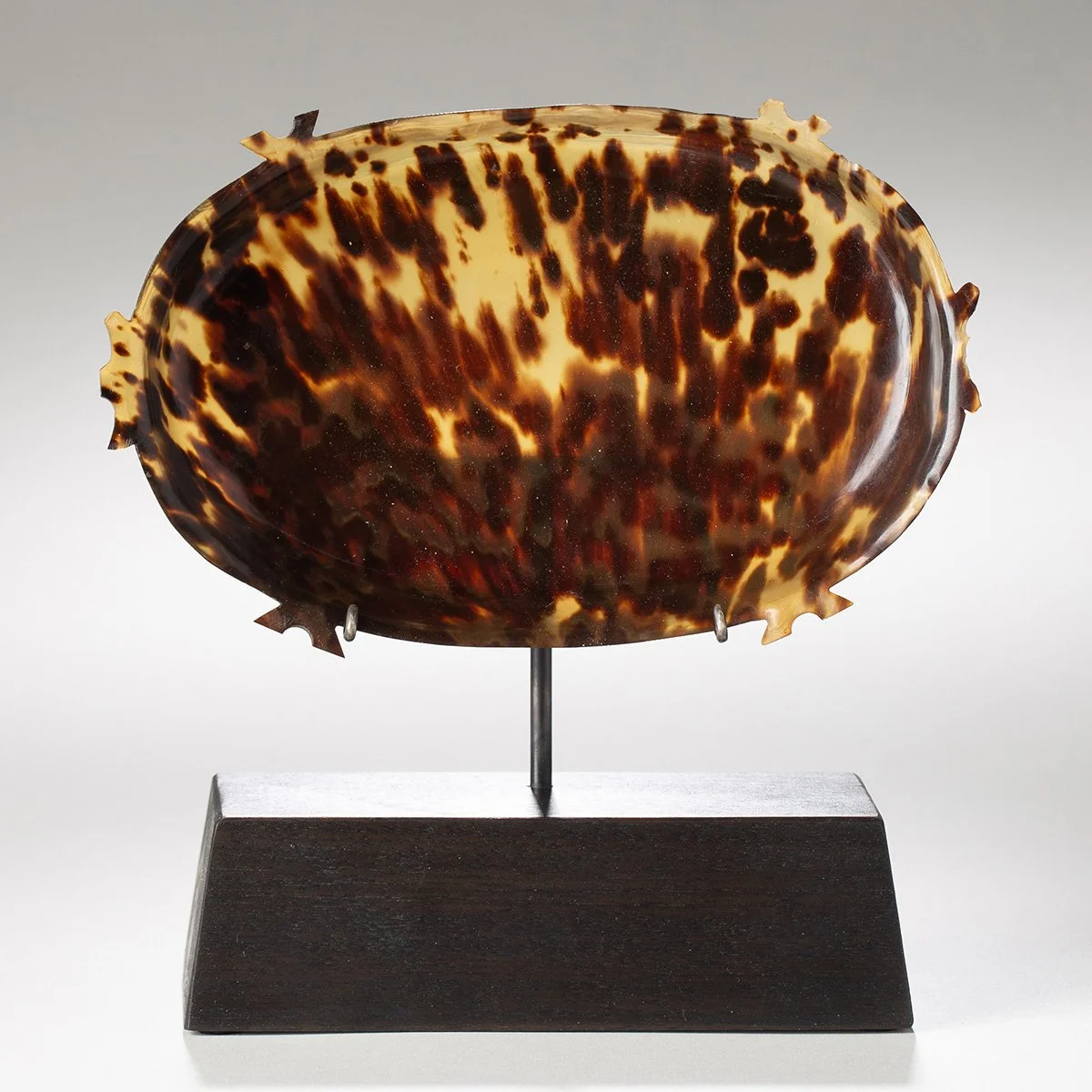 Image 1 of 6
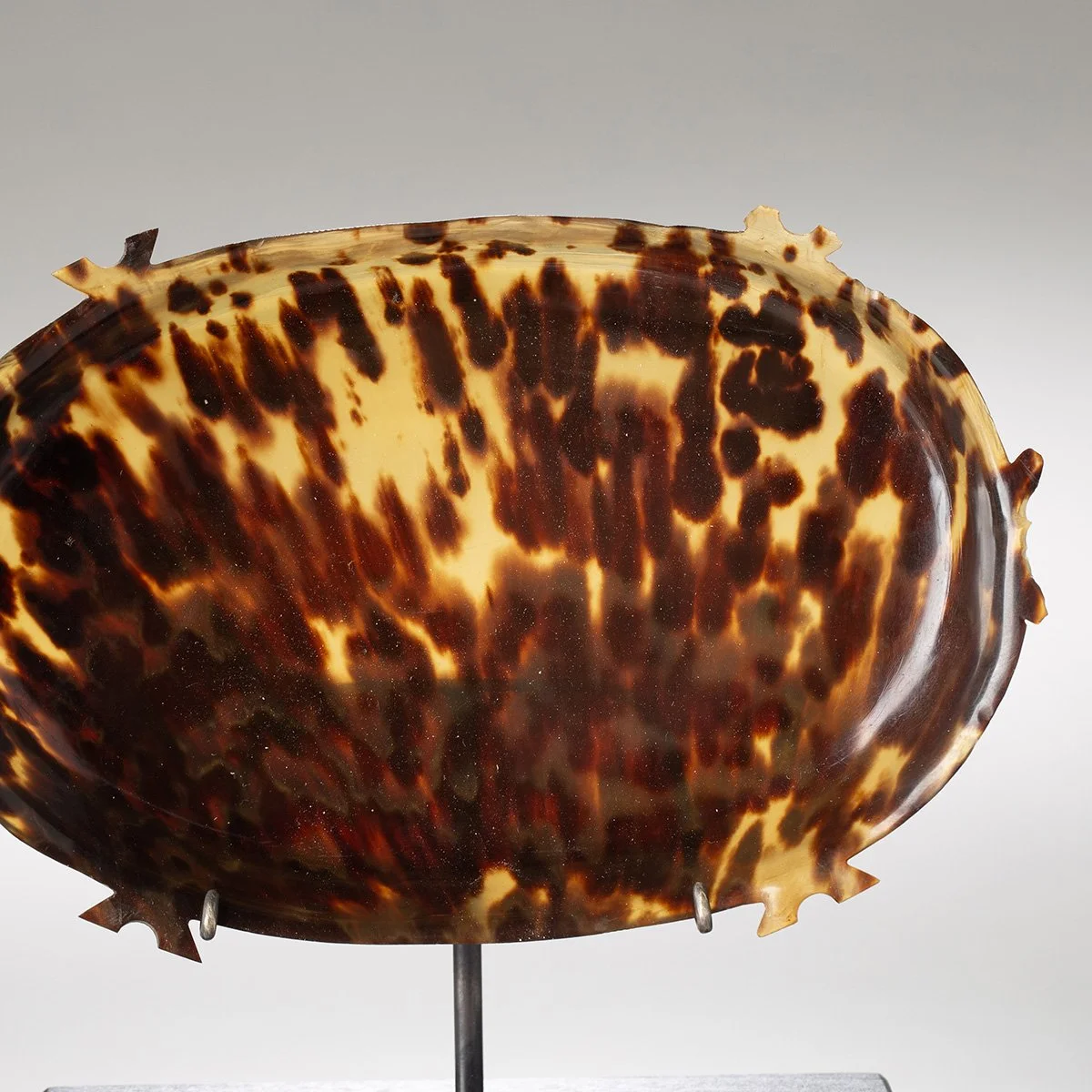 Image 2 of 6
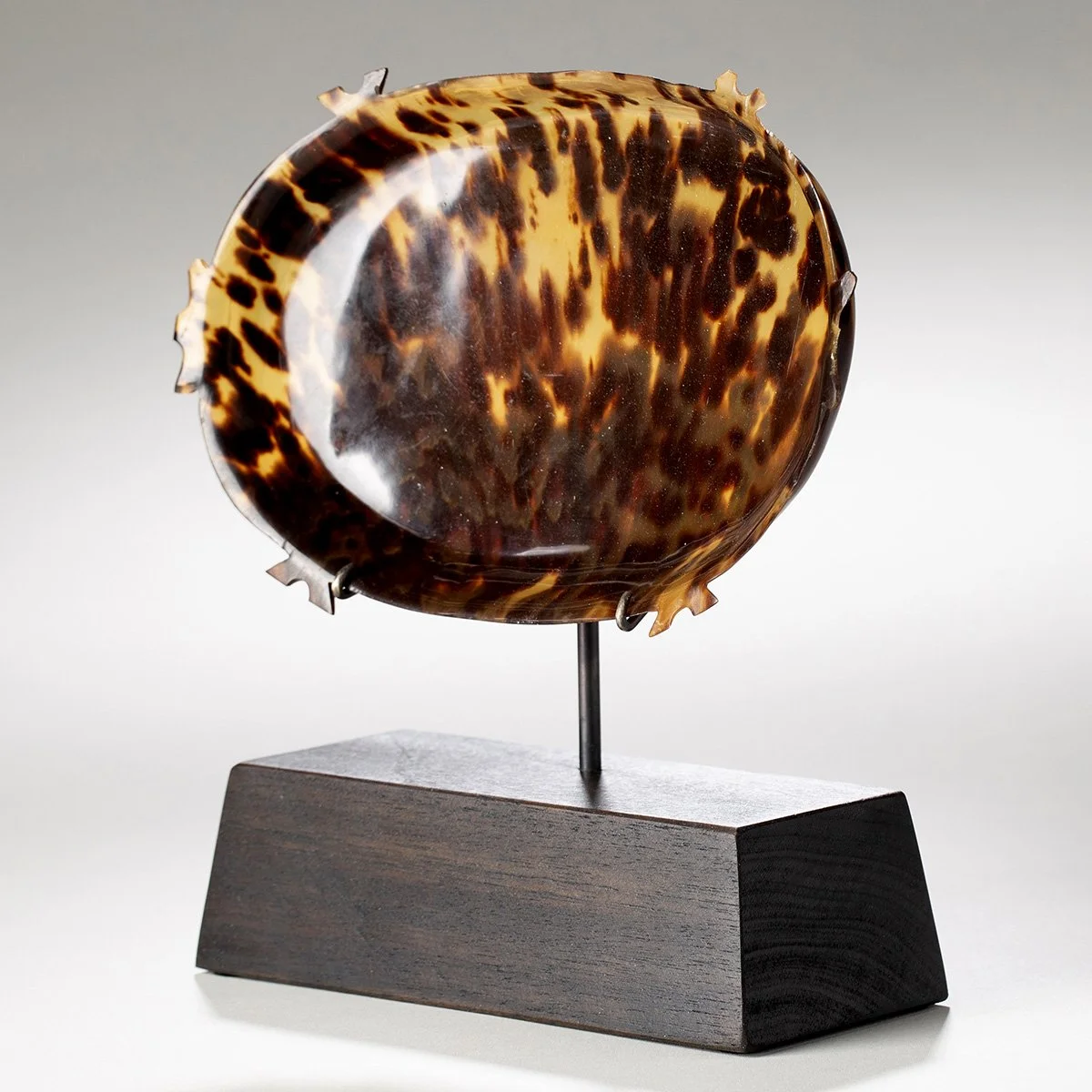 Image 3 of 6
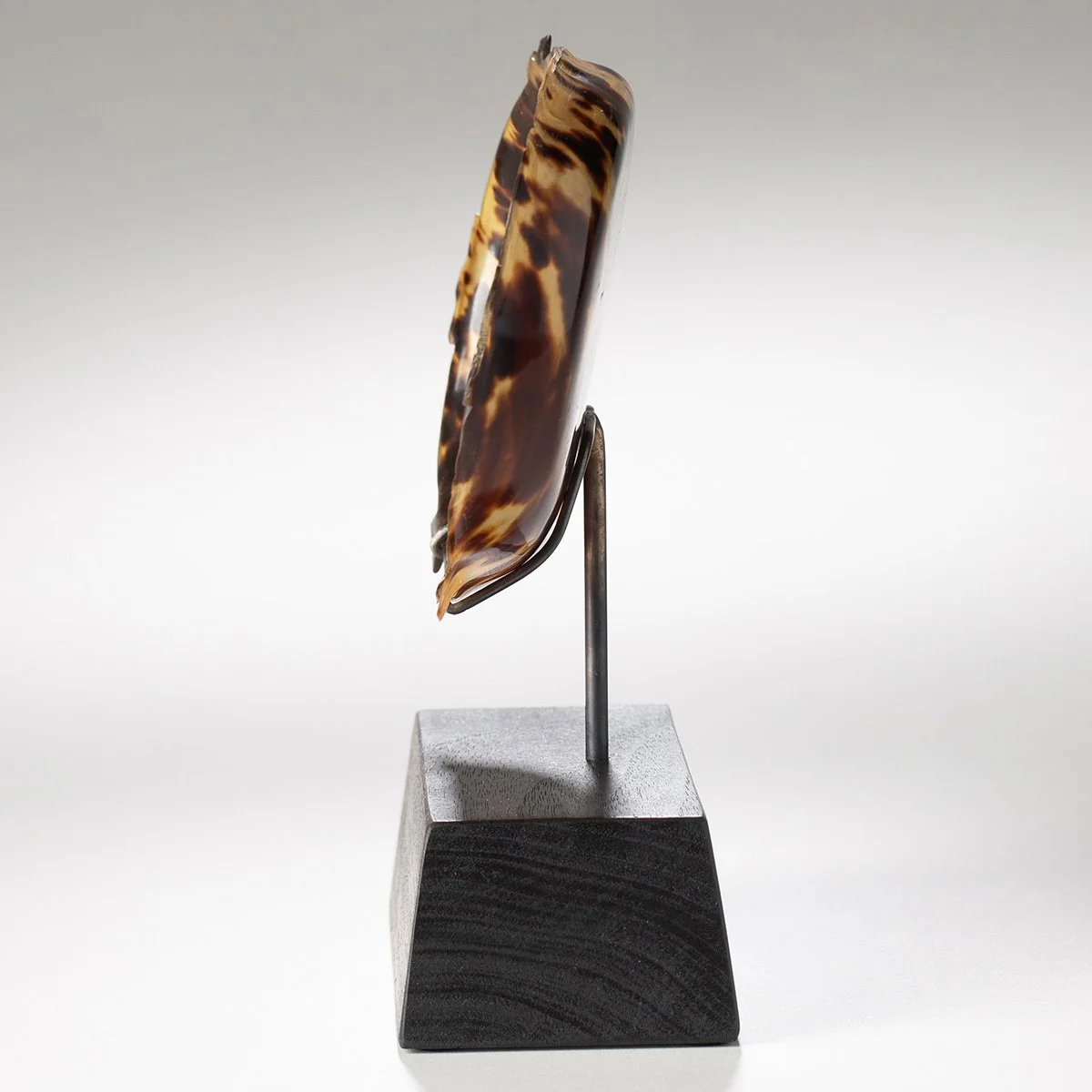 Image 4 of 6
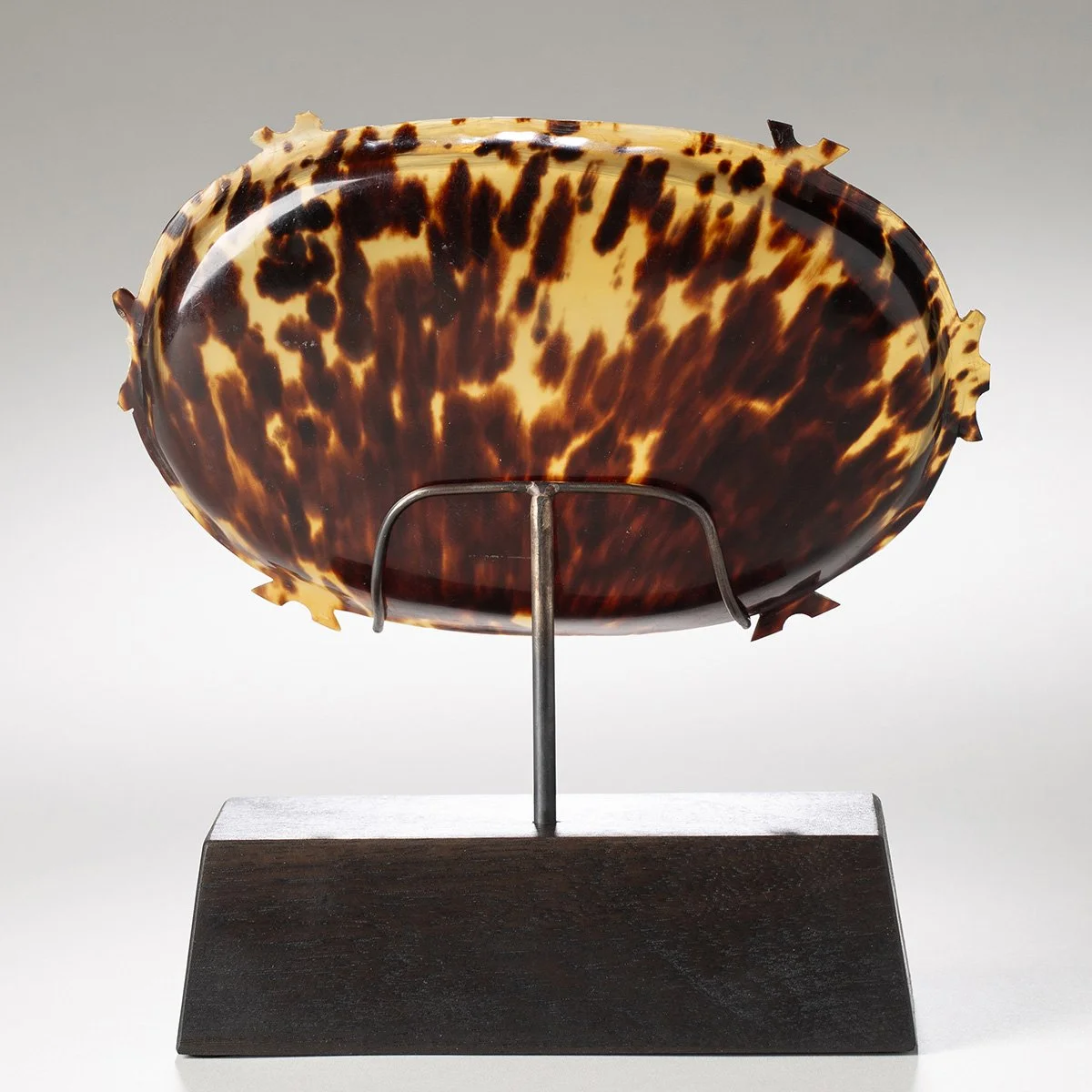 Image 5 of 6
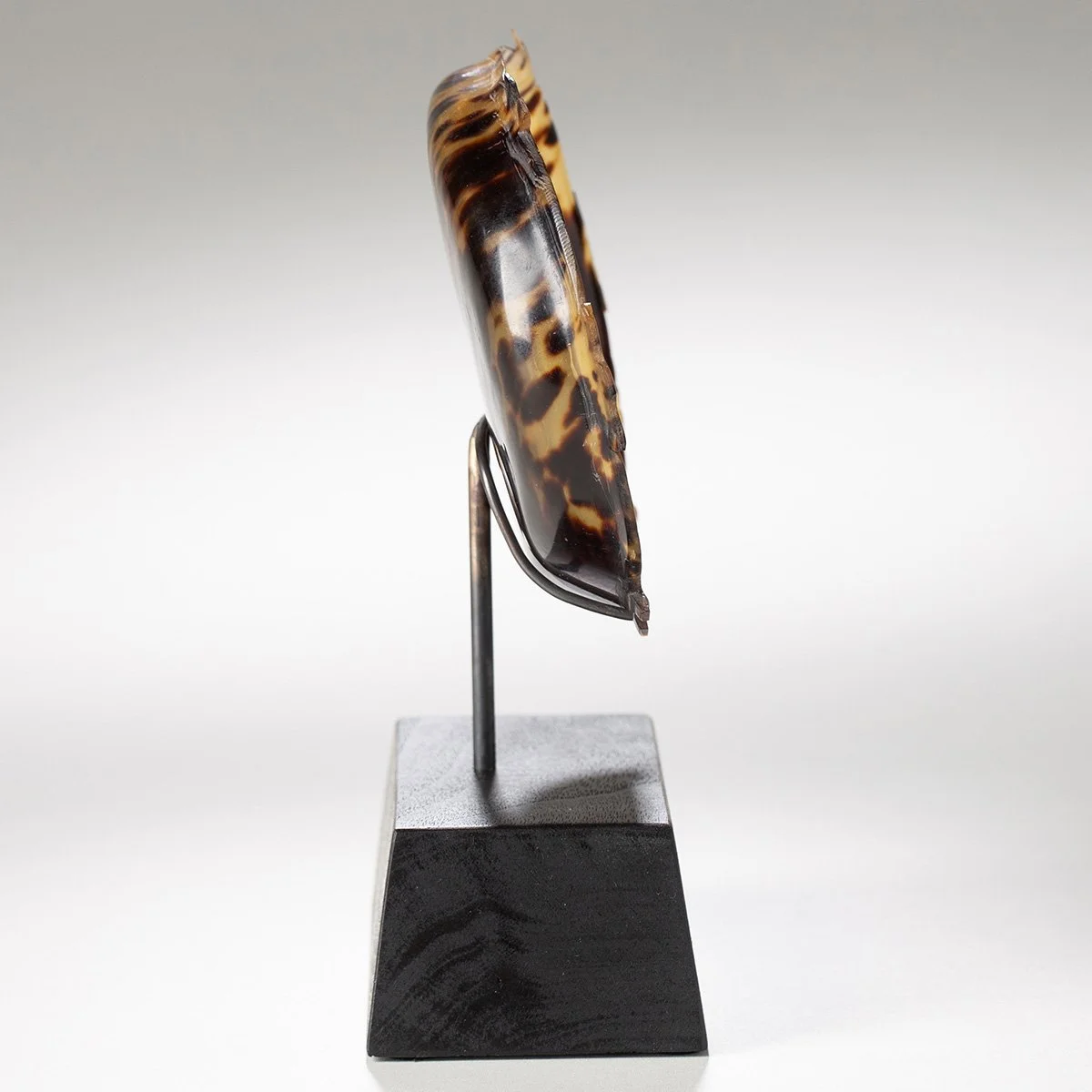 Image 6 of 6