Torres Strait, Cape York Peninsula, Australia
Early to Mid-19th century
Hardwood, sennit, stone
Height as pictured: 16.5 inches (42 cm)
Length of lower dugong: 9 inches (23 cm)
Provenance: Chris and Anna Thorpe personal collection – Sydney, Australia
Many Western Pacific peoples hunted dugongs, large marine mammals related to the manatee. For the islanders of the Torres Strait, the dugong was an animal of great significance, providing both an important source of protein, and serving as a sacred totemic animal within traditional rites and rituals. Reaching lengths greater than nine feet, or nearly three meters, dugong travelled in herds traversing the deeper waters of the strait and frequented shallow waters when feeding on marine grasses. To provide supernatural aid in the capture of these elusive animals, the Torres Strait islanders formerly created dugong hunting charms. By day, dugongs were hunted from canoes; the charms mounted or suspended from the bow, were said to point in the direction of the quarry. Dugongs were also hunted at night from offshore platforms on which the hunter stood, harpoon in hand. A dugong charm, suspended beneath the platform, helped to magically lure the animal within range.
Most surviving dugong charms consist of a single animal carved out of wood or stone. The dugong charm presented here, however, depicts two animals; a smaller carving of a calf has been positioned above an adult dugong…for catching both a dugong and her calf was considered particularly lucky. This charm is also one of the few surviving examples with the sennit cord and suspension stones still preserved and fully intact. The dugong’s essence has been brilliantly captured by the artist. The subtle contours of the downturned snout and the muscular upper cleft lip, both adaptations to feeding on seagrass, reflect the carver’s intimate knowledge of this sacred animal.
INQUIRE HERE
Torres Strait, Cape York Peninsula, Australia
Early to Mid-19th century
Hardwood, sennit, stone
Height as pictured: 16.5 inches (42 cm)
Length of lower dugong: 9 inches (23 cm)
Provenance: Chris and Anna Thorpe personal collection – Sydney, Australia
Many Western Pacific peoples hunted dugongs, large marine mammals related to the manatee. For the islanders of the Torres Strait, the dugong was an animal of great significance, providing both an important source of protein, and serving as a sacred totemic animal within traditional rites and rituals. Reaching lengths greater than nine feet, or nearly three meters, dugong travelled in herds traversing the deeper waters of the strait and frequented shallow waters when feeding on marine grasses. To provide supernatural aid in the capture of these elusive animals, the Torres Strait islanders formerly created dugong hunting charms. By day, dugongs were hunted from canoes; the charms mounted or suspended from the bow, were said to point in the direction of the quarry. Dugongs were also hunted at night from offshore platforms on which the hunter stood, harpoon in hand. A dugong charm, suspended beneath the platform, helped to magically lure the animal within range.
Most surviving dugong charms consist of a single animal carved out of wood or stone. The dugong charm presented here, however, depicts two animals; a smaller carving of a calf has been positioned above an adult dugong…for catching both a dugong and her calf was considered particularly lucky. This charm is also one of the few surviving examples with the sennit cord and suspension stones still preserved and fully intact. The dugong’s essence has been brilliantly captured by the artist. The subtle contours of the downturned snout and the muscular upper cleft lip, both adaptations to feeding on seagrass, reflect the carver’s intimate knowledge of this sacred animal.
INQUIRE HERE


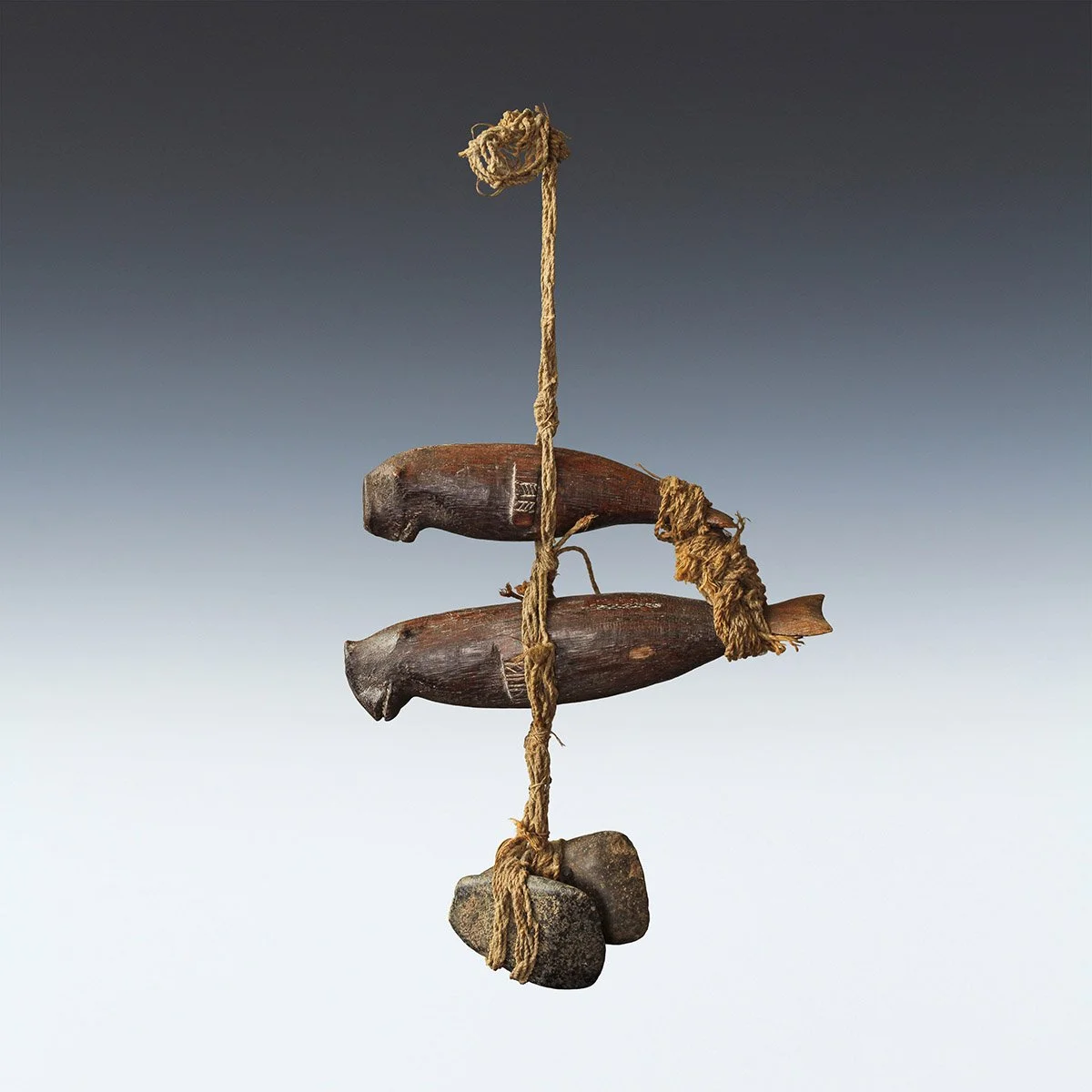 Image 1 of 8
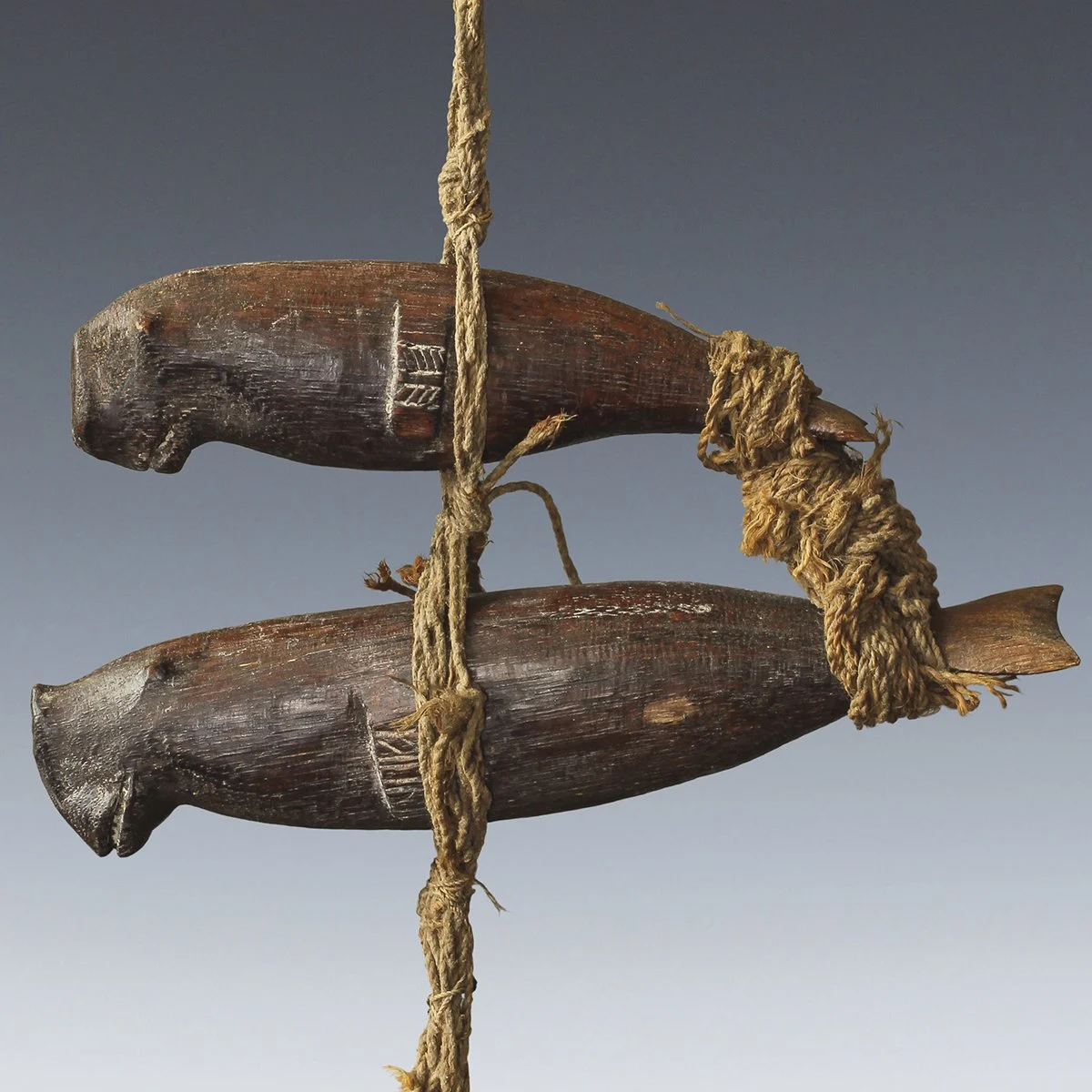 Image 2 of 8
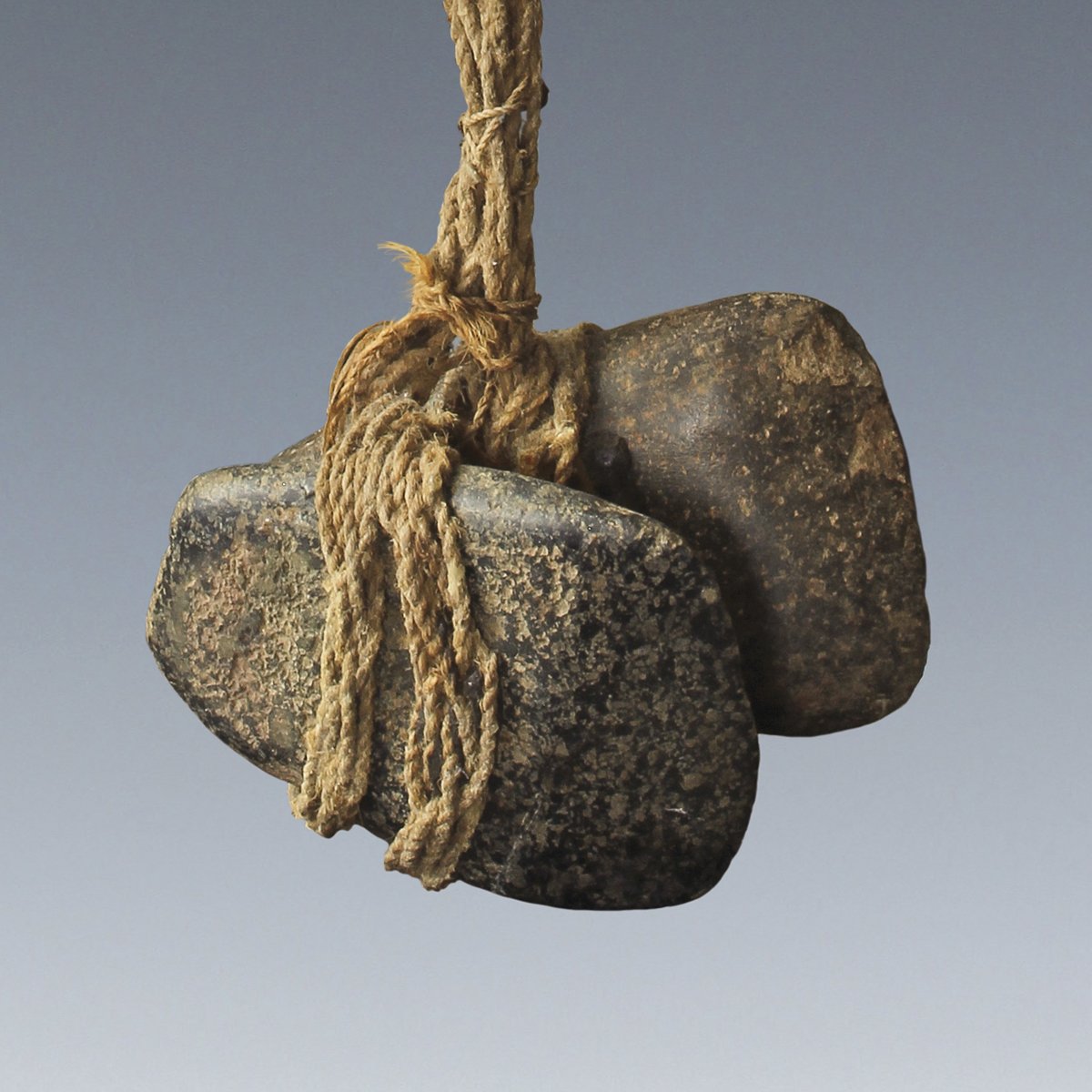 Image 3 of 8
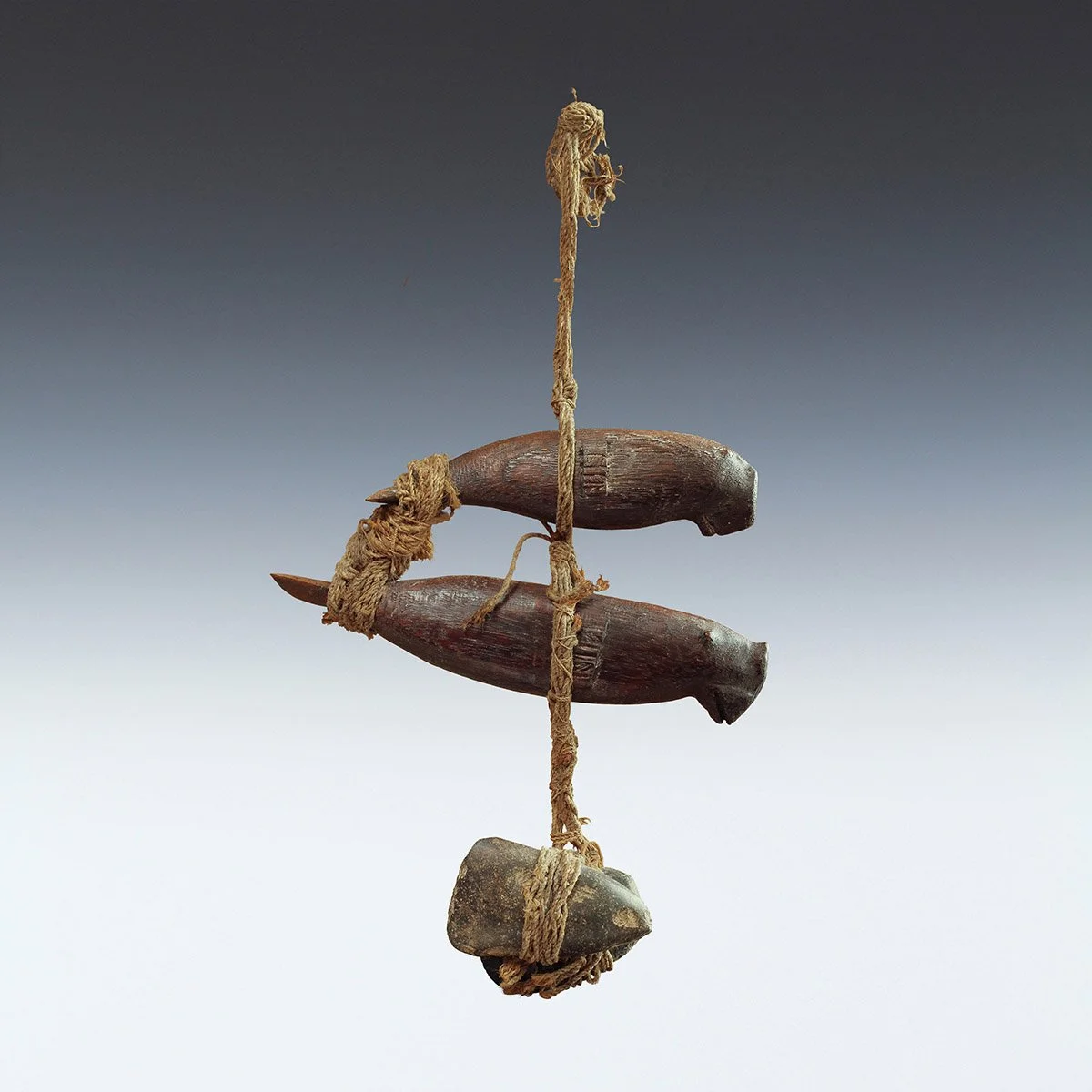 Image 4 of 8
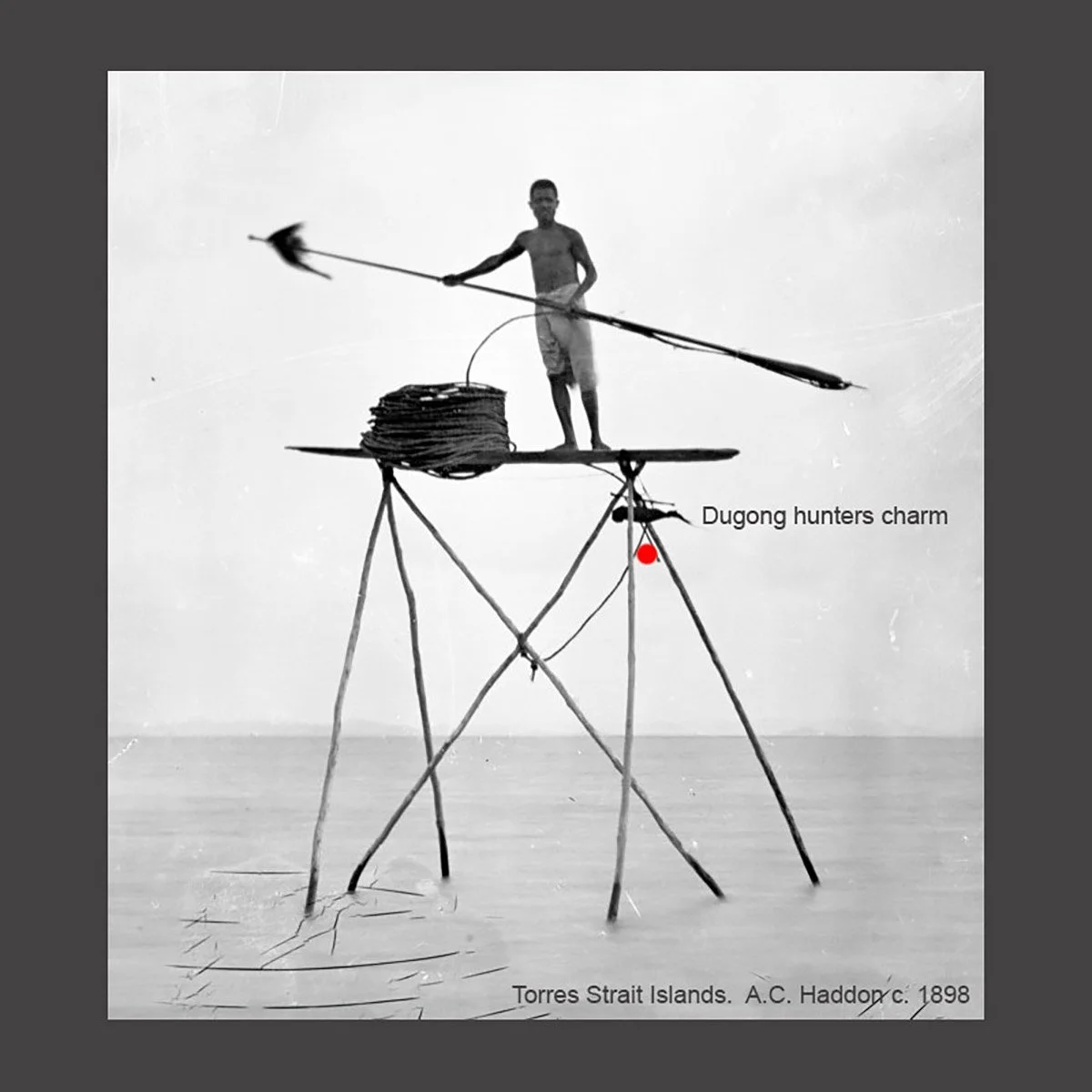 Image 5 of 8
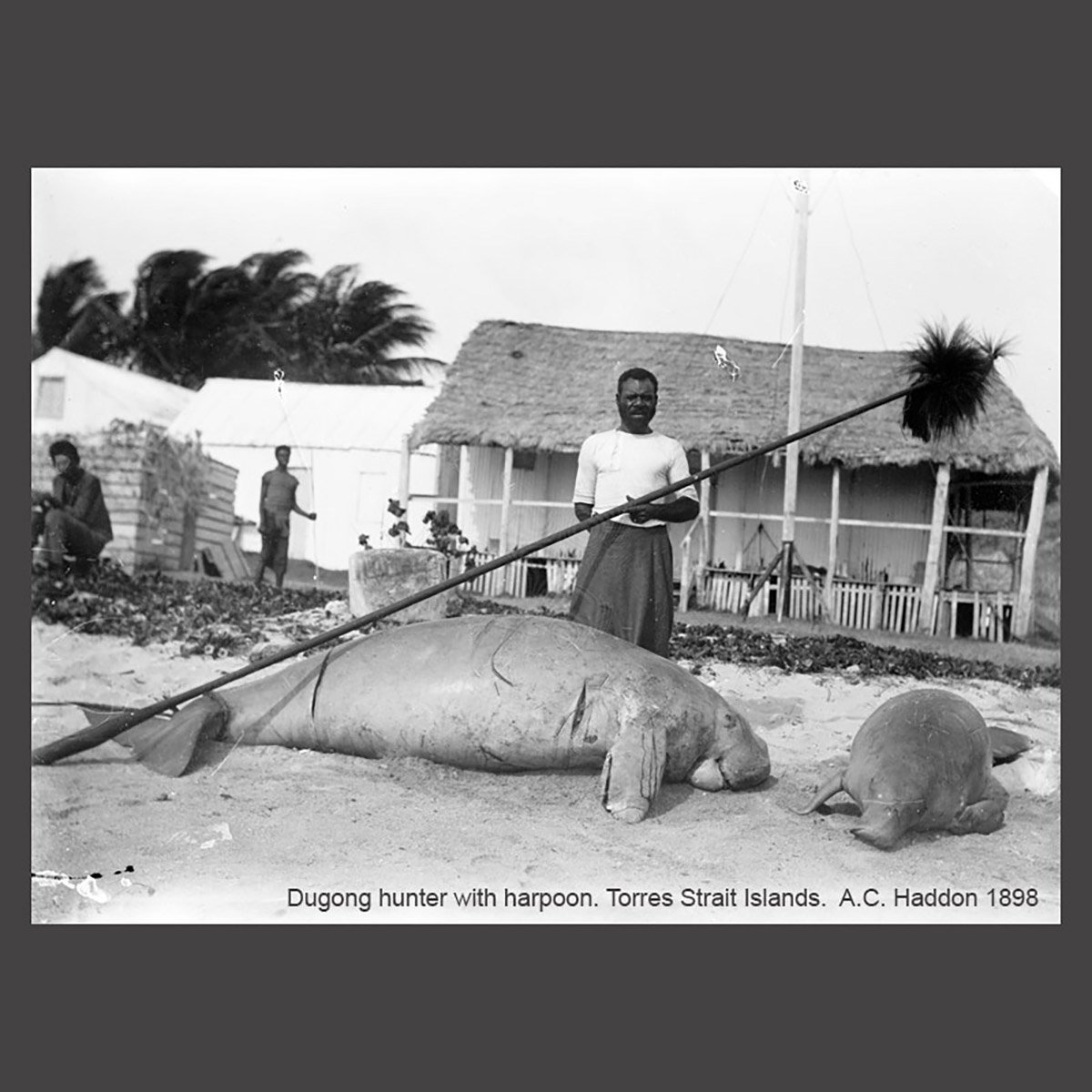 Image 6 of 8
 Image 7 of 8
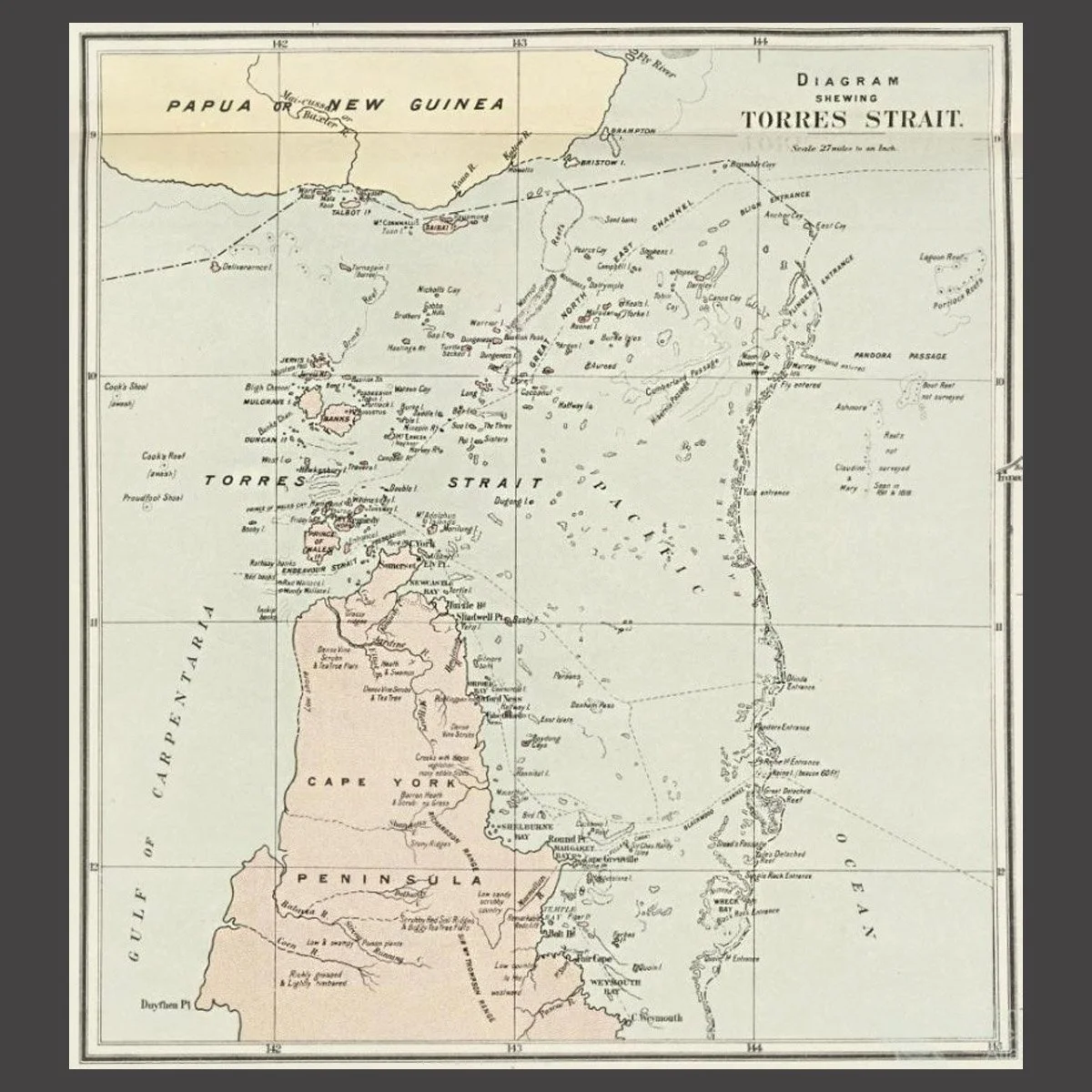 Image 8 of 8