Torres Strait, Cape York Peninsula, Australia
Early 19th century
Hardwood
Length: 13.75 inches (35 cm)
Provenance: Richard Berry – Melbourne, Australia / Jean-Edouard Carlier – Paris
THE TORRES STRAITS ISLANDS - A LIFE AQUATIC. Named after Luis Baéz de Torres, the first Westerner to explore the sea-passage between mainland Australia and the island of New Guinea in 1606, the Torres Strait is comprised of 274 small islands that served as ancient maritime stepping stones, and were home to one of the most fascinating culture-clusters of island Melanesia. The inhabitants of the Torres Strait Islands developed a distinctive series of rich artistic traditions and powerful art forms associated with fertility, marine hunting magic, and rites of passage whereby myths were reenacted and heroic events recounted. Recognized for a proliferation of artistic production, works of art from the Torres Straits, however, are extremely rare by virtue of the small population of these scattered islands. The complex turtle shell masks of the Torres Straits are considered one of the outstanding art forms of the primitive world. In turtle shell, a medium universally prized for its beauty of color and surface, the craftsmen of Torres Straits achieved what is unquestionably the most expressive development of this material in the entire world. To obtain these precious sections of turtle shell, Green sea turtles were harpooned or captured with the aid of magical wooden hunting charms skillfully rendered in the likeness of the turtle. Lashed to the bow of the canoe or to a long projecting stick, these hunting charms supernaturally guided the hunter’s canoe towards the turtle’s location.
Carved from dense hardwood, the rare turtle hunting charm presented here is remarkable for its realism and fluid sculptural form. As a hunter himself, the carver would have held intimate knowledge of the animal and its movement through the undersea environment. With its flippers tucked alongside the body and feet gracefully extended behind, we are given a sense of the streamlined turtle surging forward, perhaps attempting to flee its human pursuers. Positioned behind the flipper joints are two deeply pierced holes that originally served to secure a pair of cassowary feather stick ornaments, intended to magically charge the sculpture and to further animate the charm as it traveled through the ocean breezes.
INQUIRE HERE
Torres Strait, Cape York Peninsula, Australia
Early 19th century
Hardwood
Length: 13.75 inches (35 cm)
Provenance: Richard Berry – Melbourne, Australia / Jean-Edouard Carlier – Paris
THE TORRES STRAITS ISLANDS - A LIFE AQUATIC. Named after Luis Baéz de Torres, the first Westerner to explore the sea-passage between mainland Australia and the island of New Guinea in 1606, the Torres Strait is comprised of 274 small islands that served as ancient maritime stepping stones, and were home to one of the most fascinating culture-clusters of island Melanesia. The inhabitants of the Torres Strait Islands developed a distinctive series of rich artistic traditions and powerful art forms associated with fertility, marine hunting magic, and rites of passage whereby myths were reenacted and heroic events recounted. Recognized for a proliferation of artistic production, works of art from the Torres Straits, however, are extremely rare by virtue of the small population of these scattered islands. The complex turtle shell masks of the Torres Straits are considered one of the outstanding art forms of the primitive world. In turtle shell, a medium universally prized for its beauty of color and surface, the craftsmen of Torres Straits achieved what is unquestionably the most expressive development of this material in the entire world. To obtain these precious sections of turtle shell, Green sea turtles were harpooned or captured with the aid of magical wooden hunting charms skillfully rendered in the likeness of the turtle. Lashed to the bow of the canoe or to a long projecting stick, these hunting charms supernaturally guided the hunter’s canoe towards the turtle’s location.
Carved from dense hardwood, the rare turtle hunting charm presented here is remarkable for its realism and fluid sculptural form. As a hunter himself, the carver would have held intimate knowledge of the animal and its movement through the undersea environment. With its flippers tucked alongside the body and feet gracefully extended behind, we are given a sense of the streamlined turtle surging forward, perhaps attempting to flee its human pursuers. Positioned behind the flipper joints are two deeply pierced holes that originally served to secure a pair of cassowary feather stick ornaments, intended to magically charge the sculpture and to further animate the charm as it traveled through the ocean breezes.
INQUIRE HERE


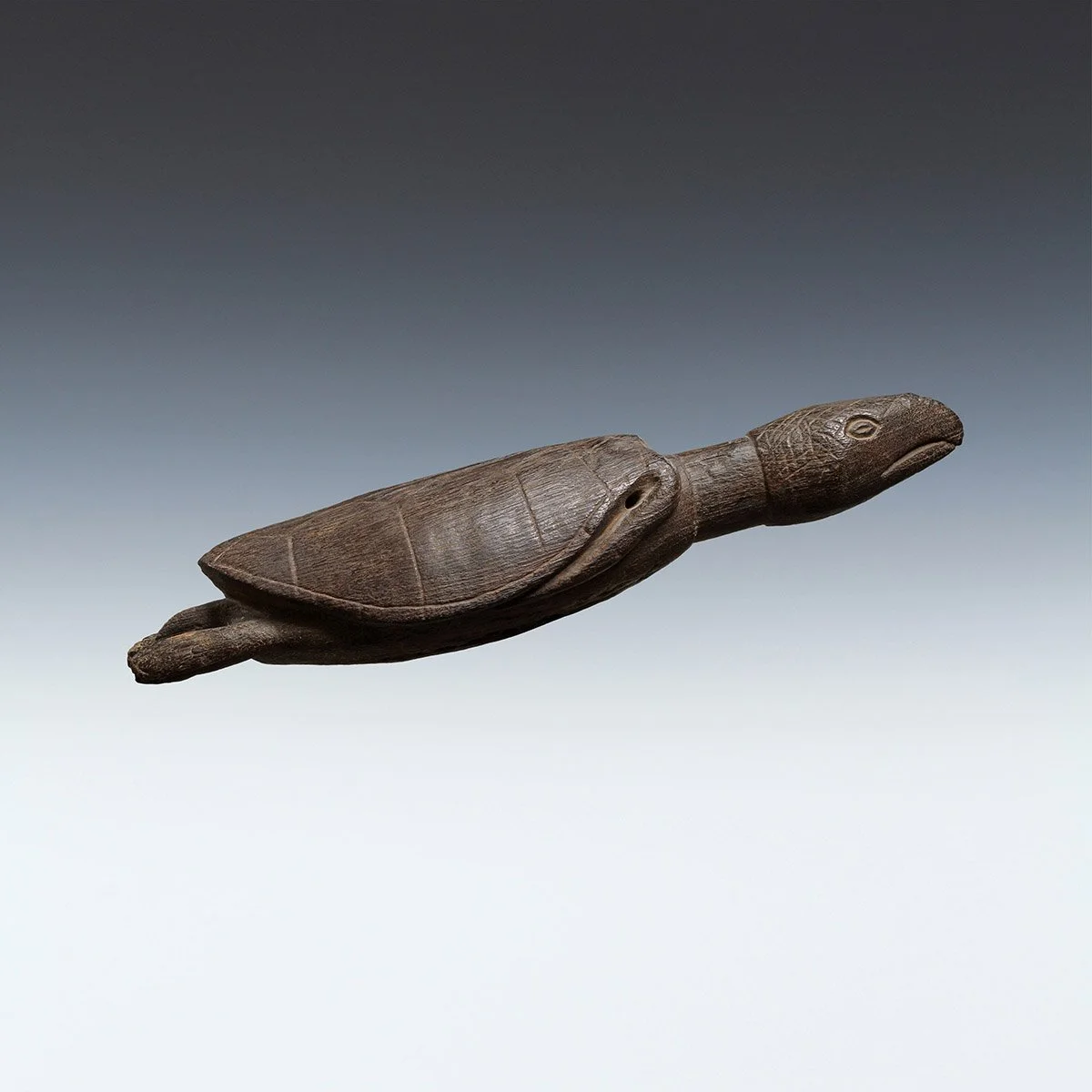 Image 1 of 11
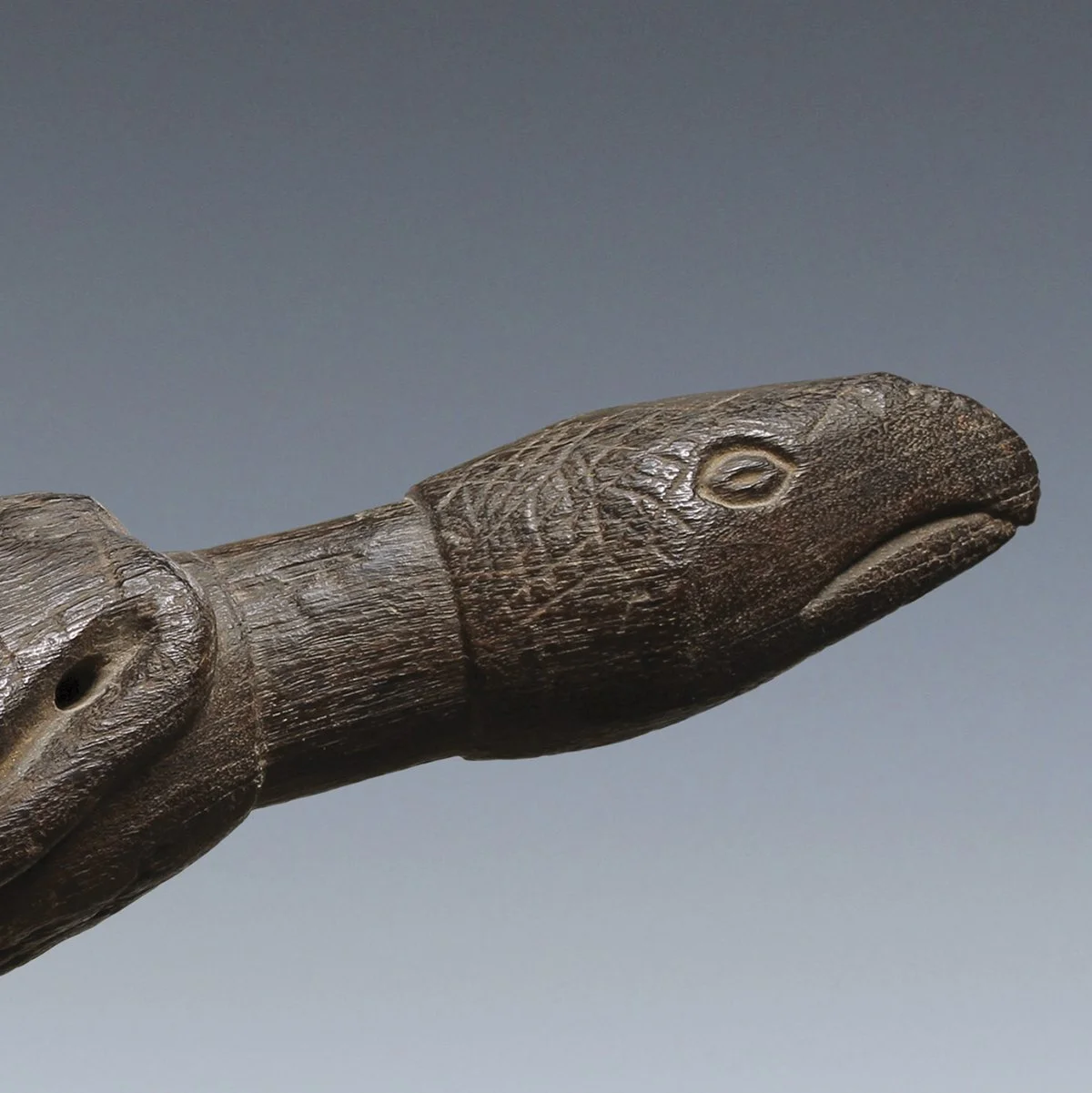 Image 2 of 11
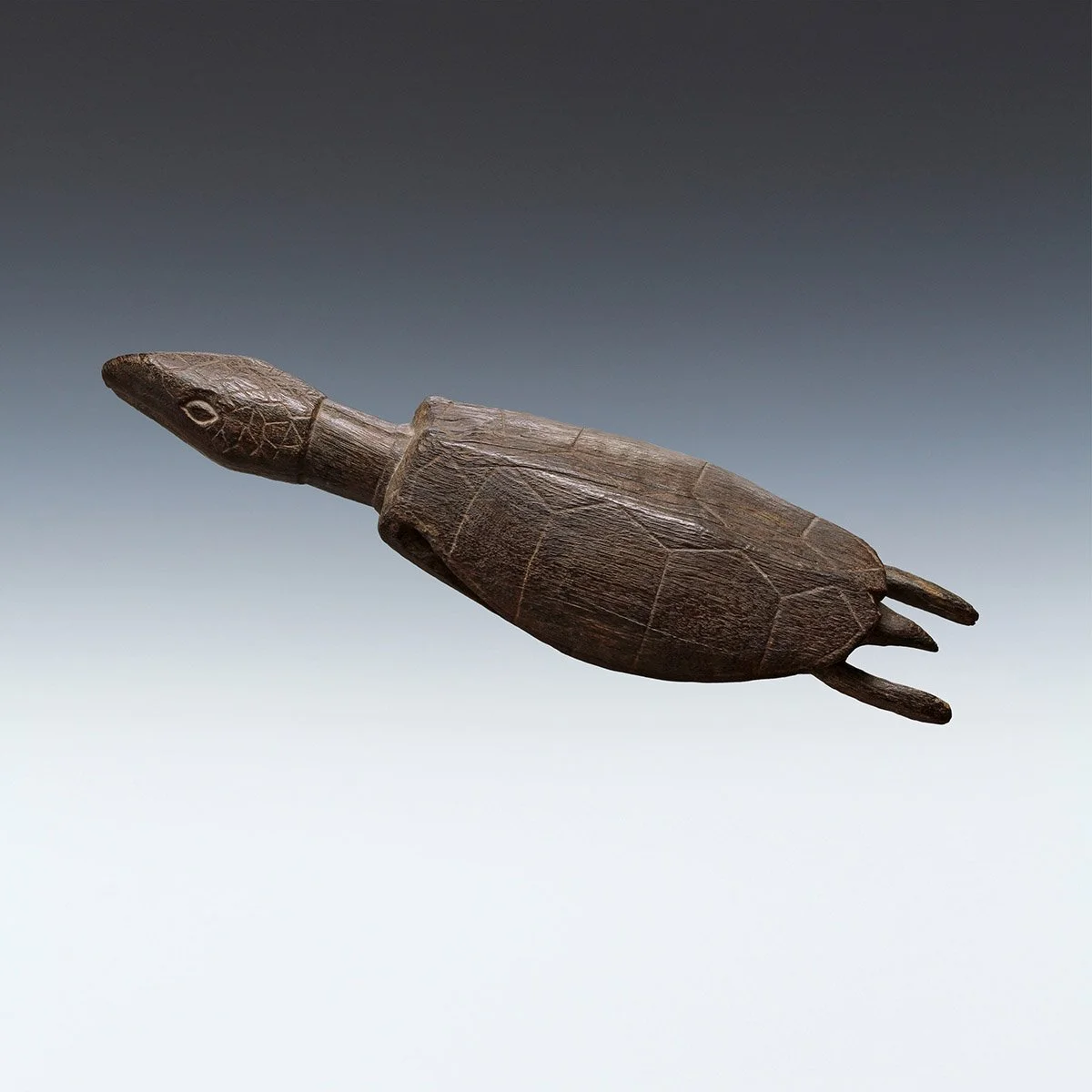 Image 3 of 11
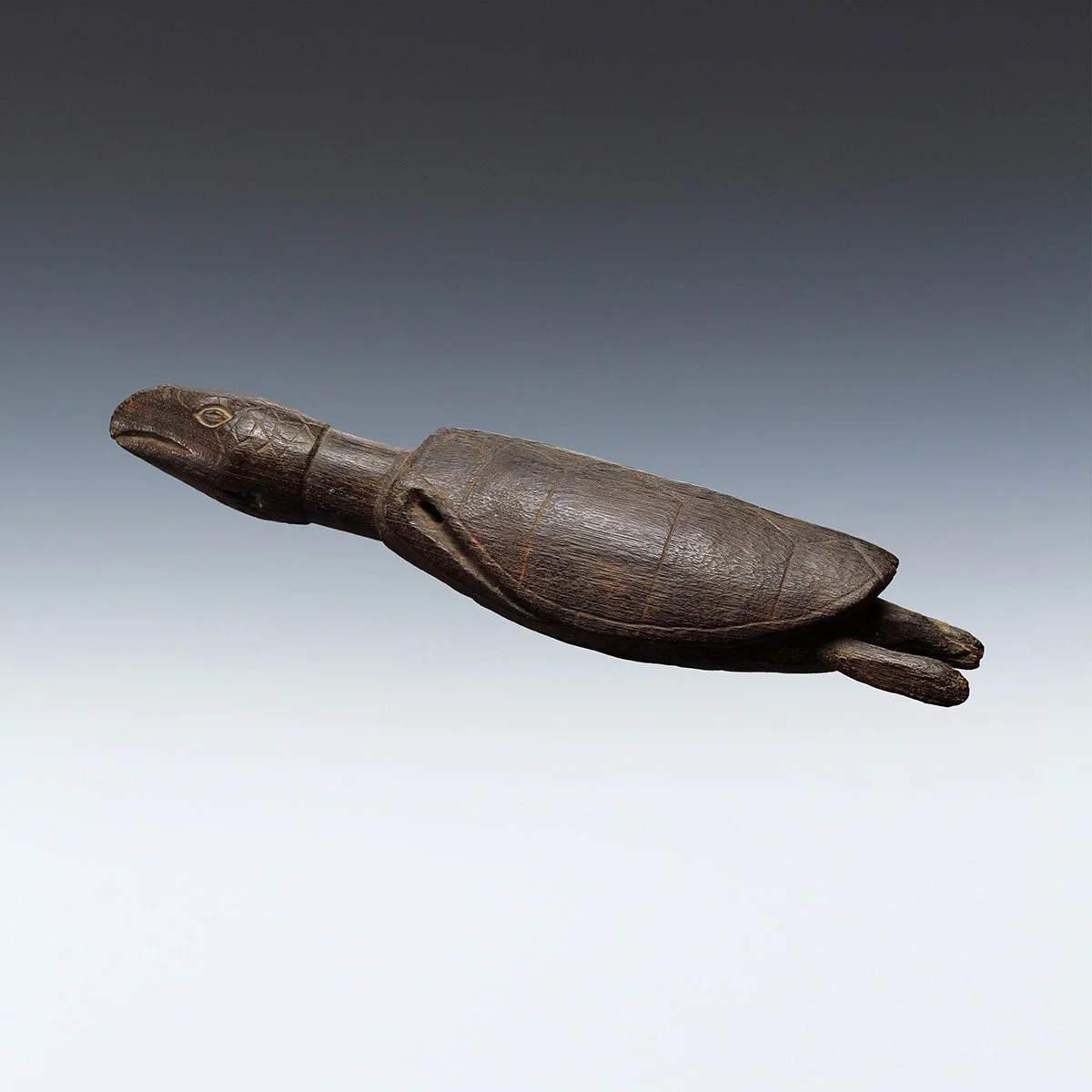 Image 4 of 11
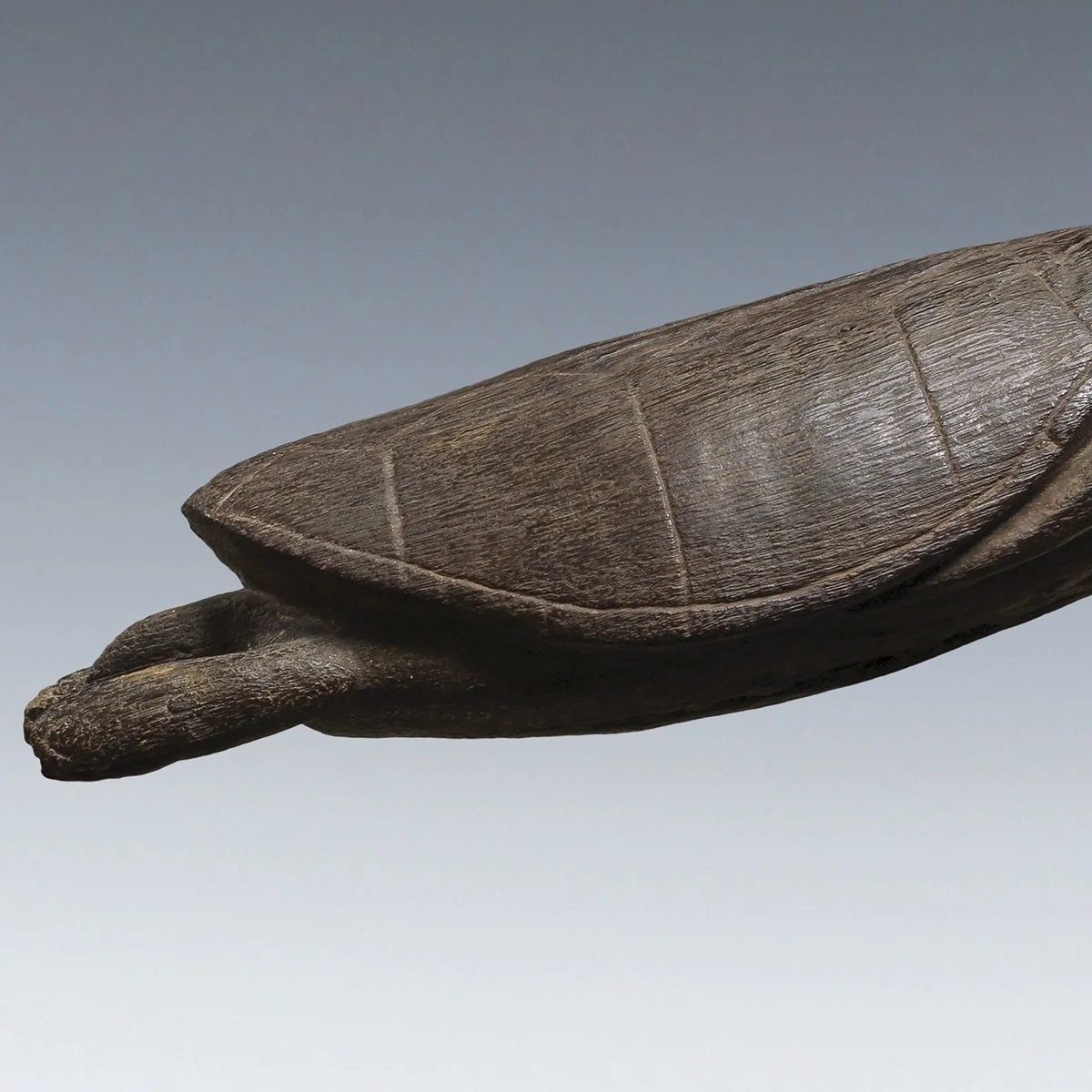 Image 5 of 11
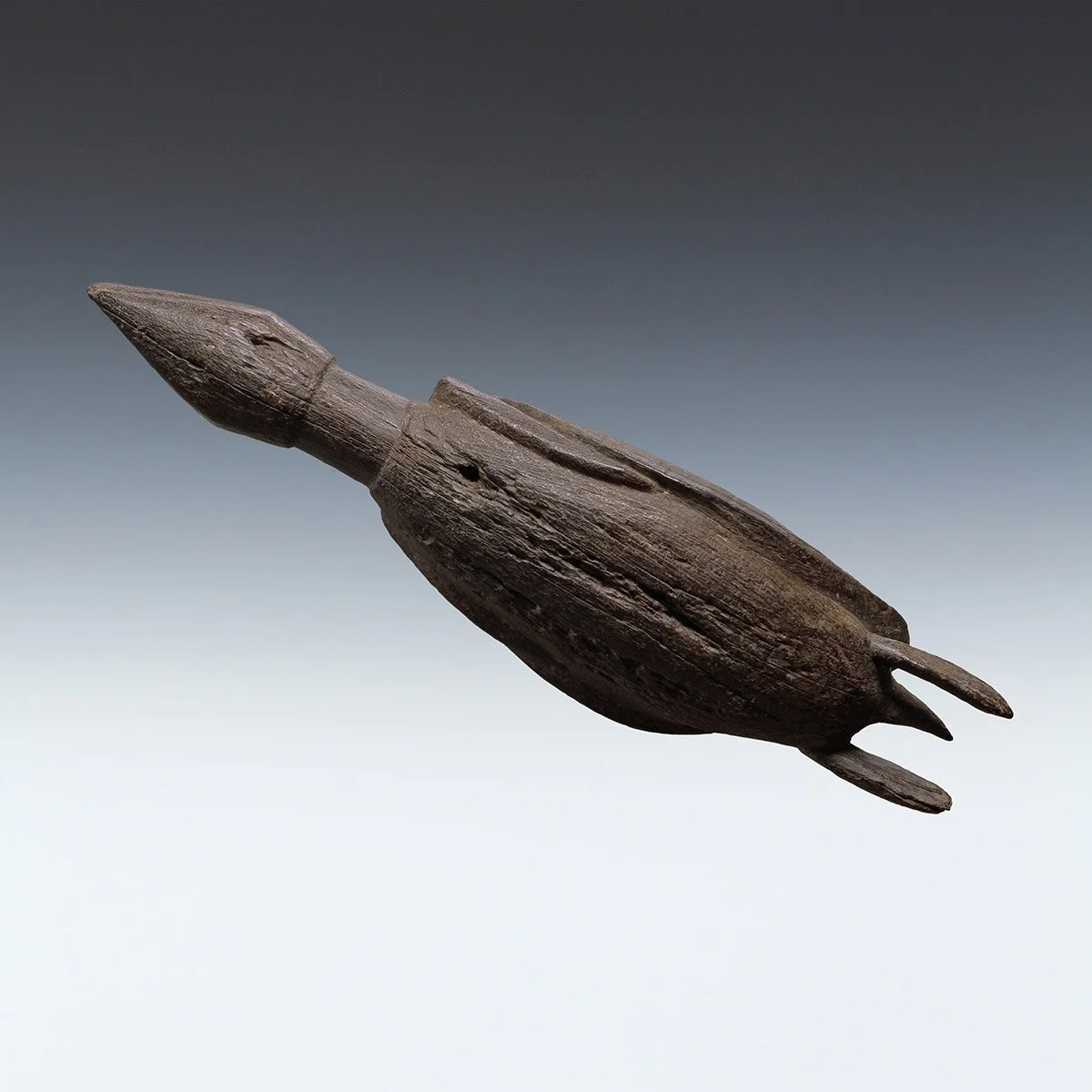 Image 6 of 11
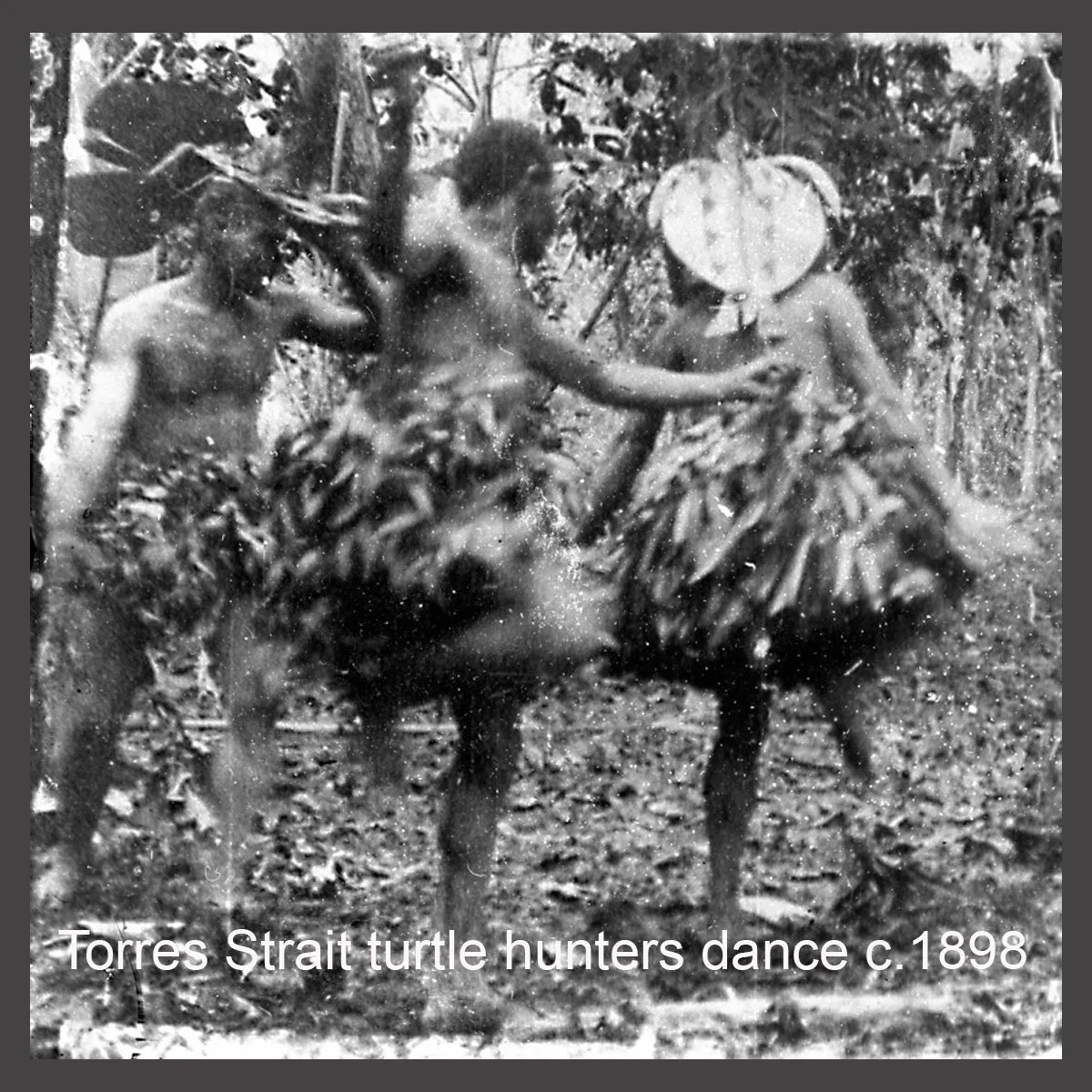 Image 7 of 11
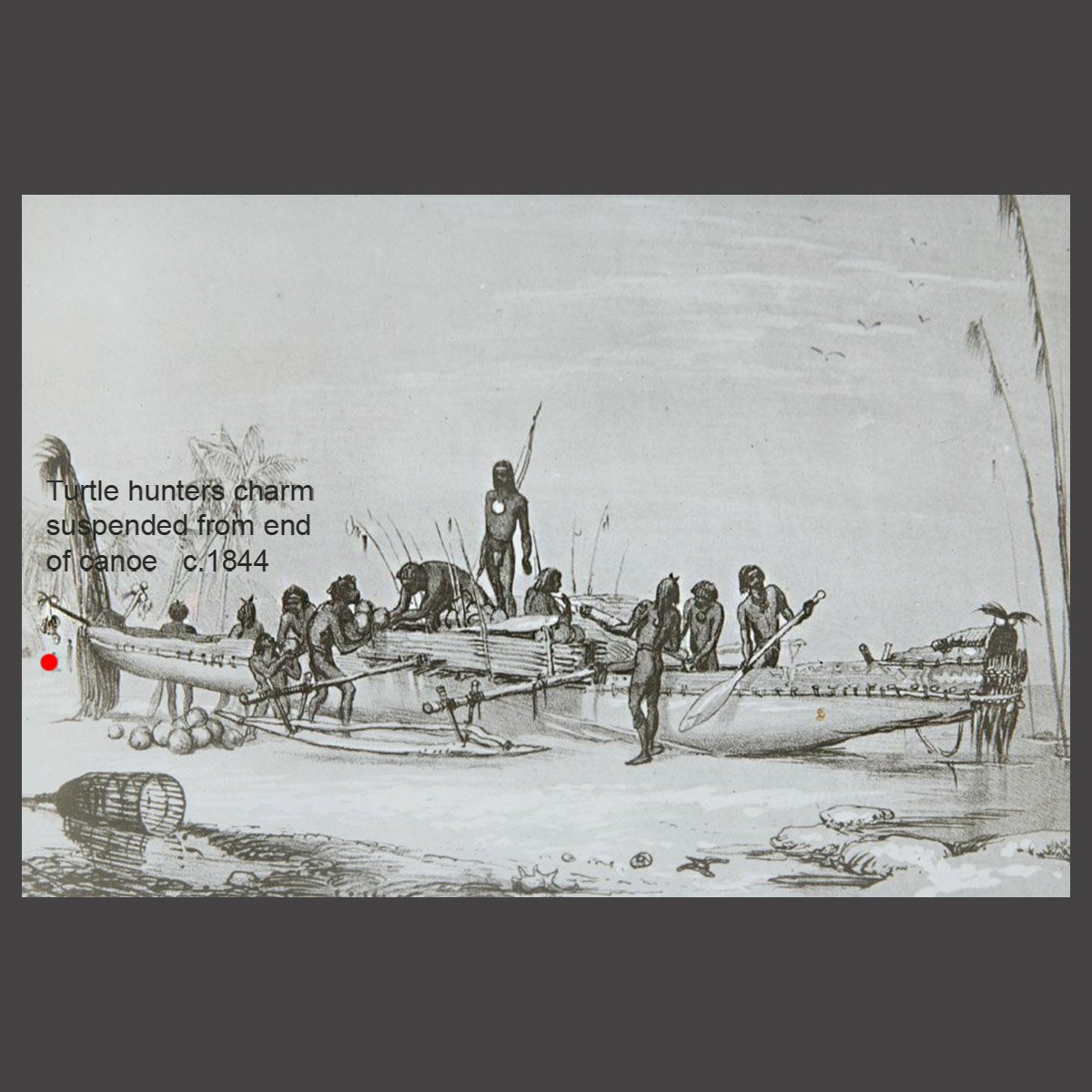 Image 8 of 11
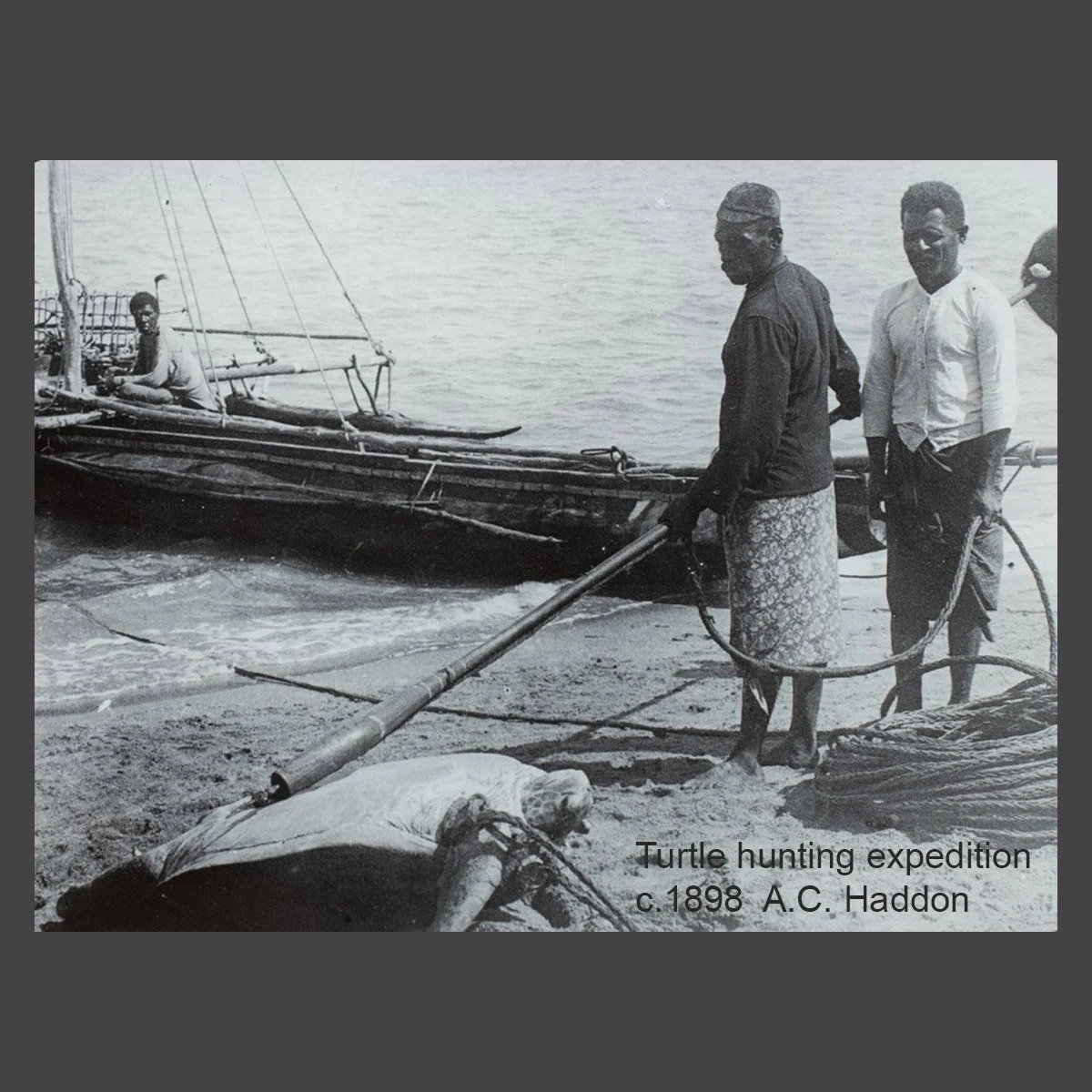 Image 9 of 11
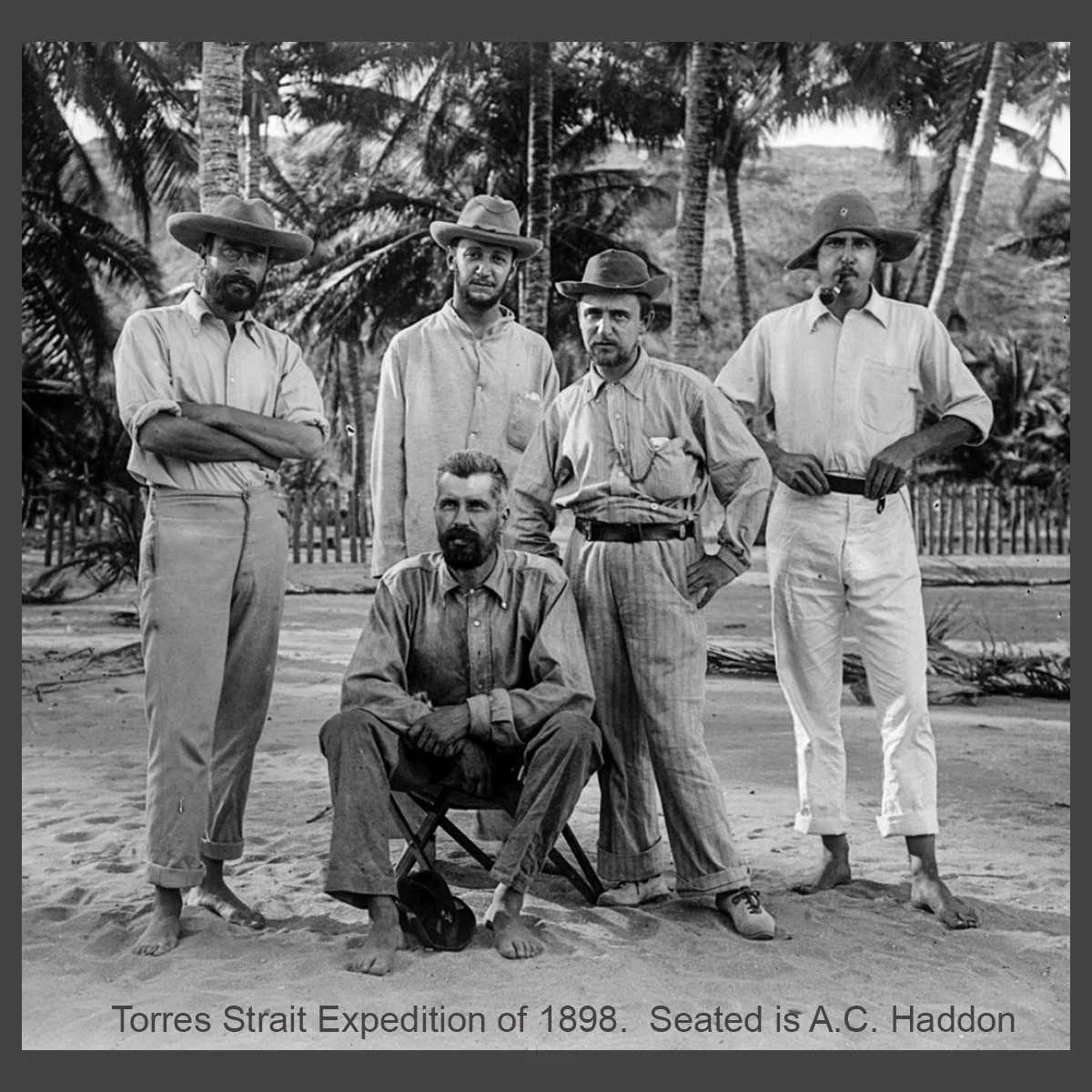 Image 10 of 11
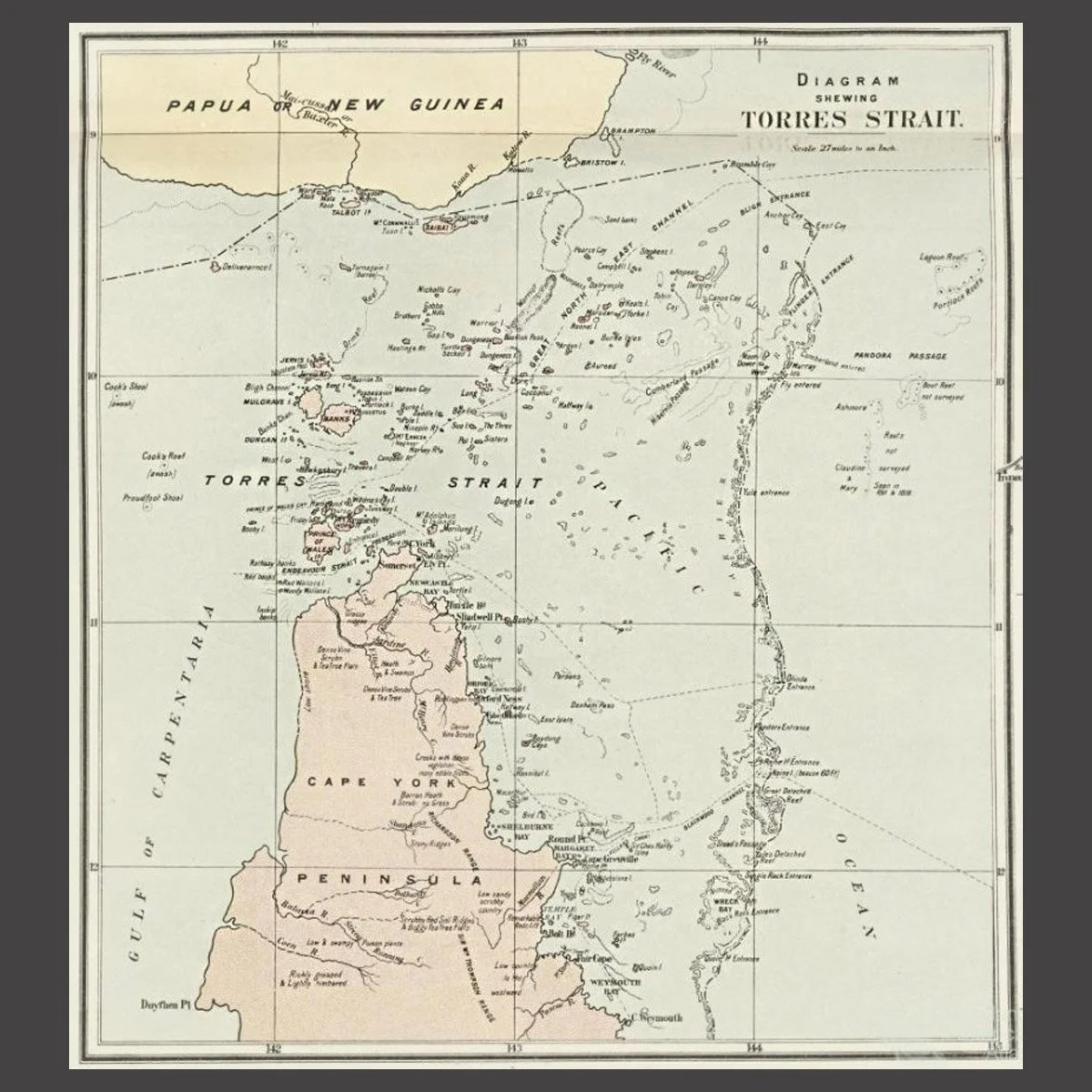 Image 11 of 11