

 Image 1 of 5
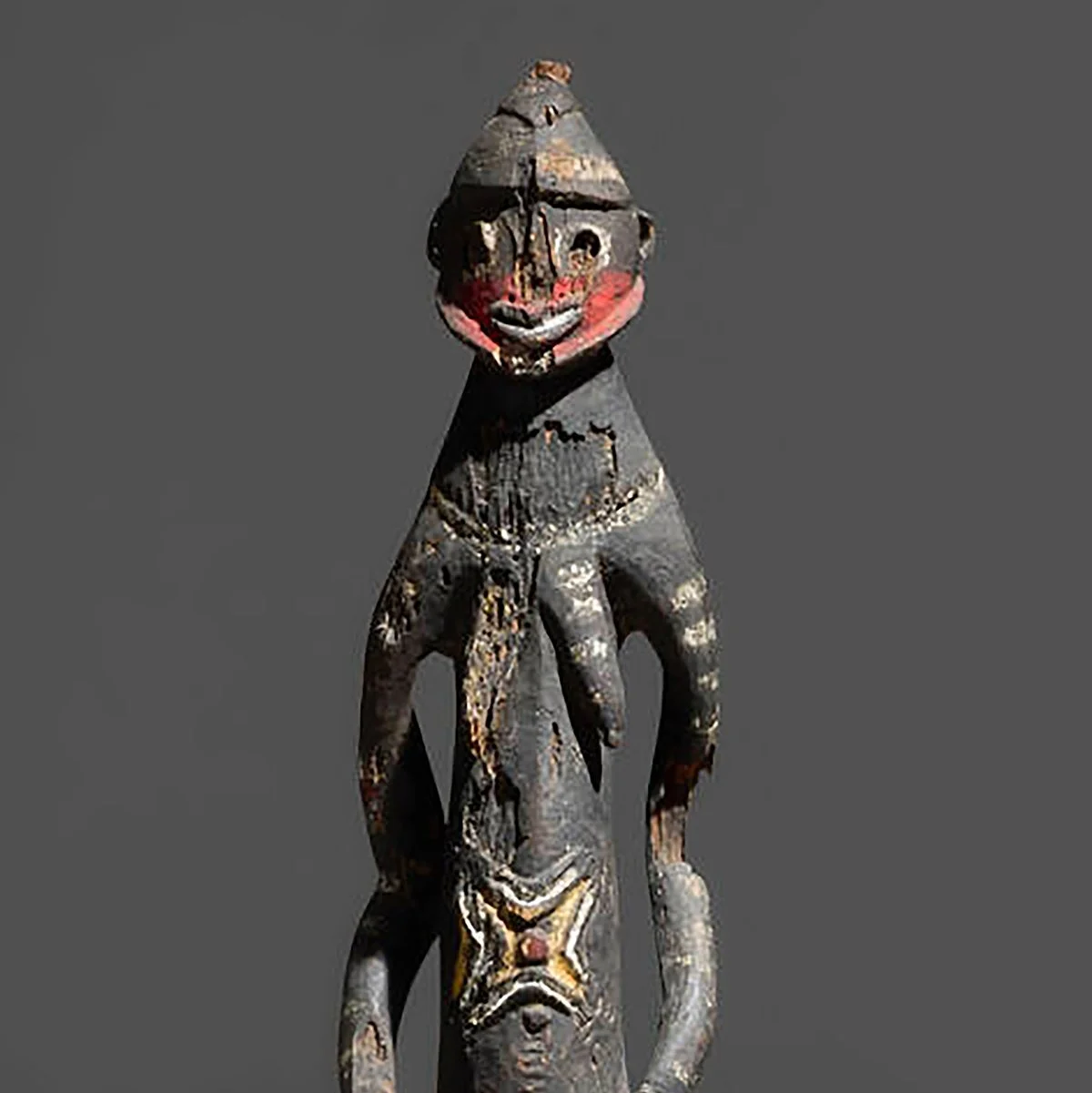 Image 2 of 5
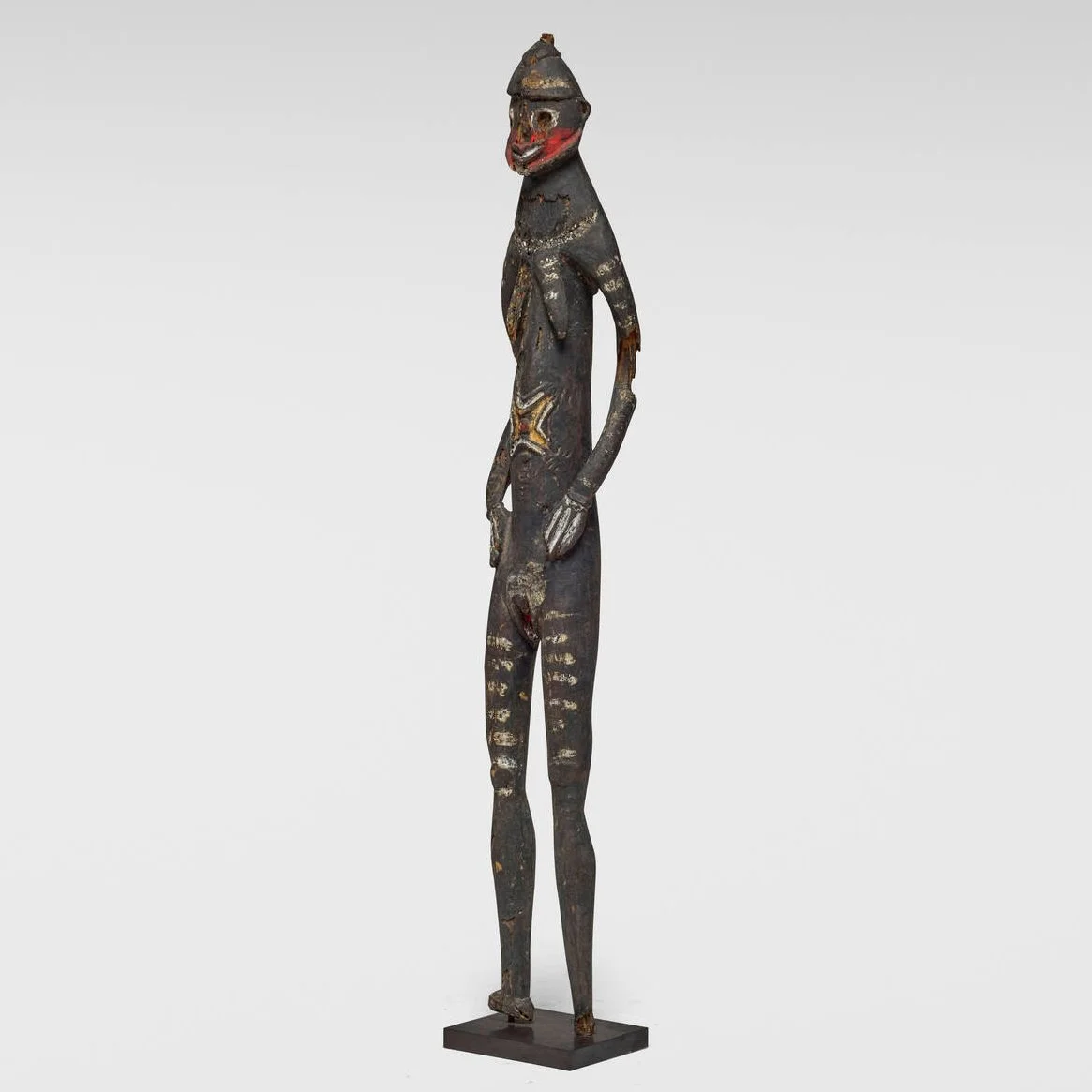 Image 3 of 5
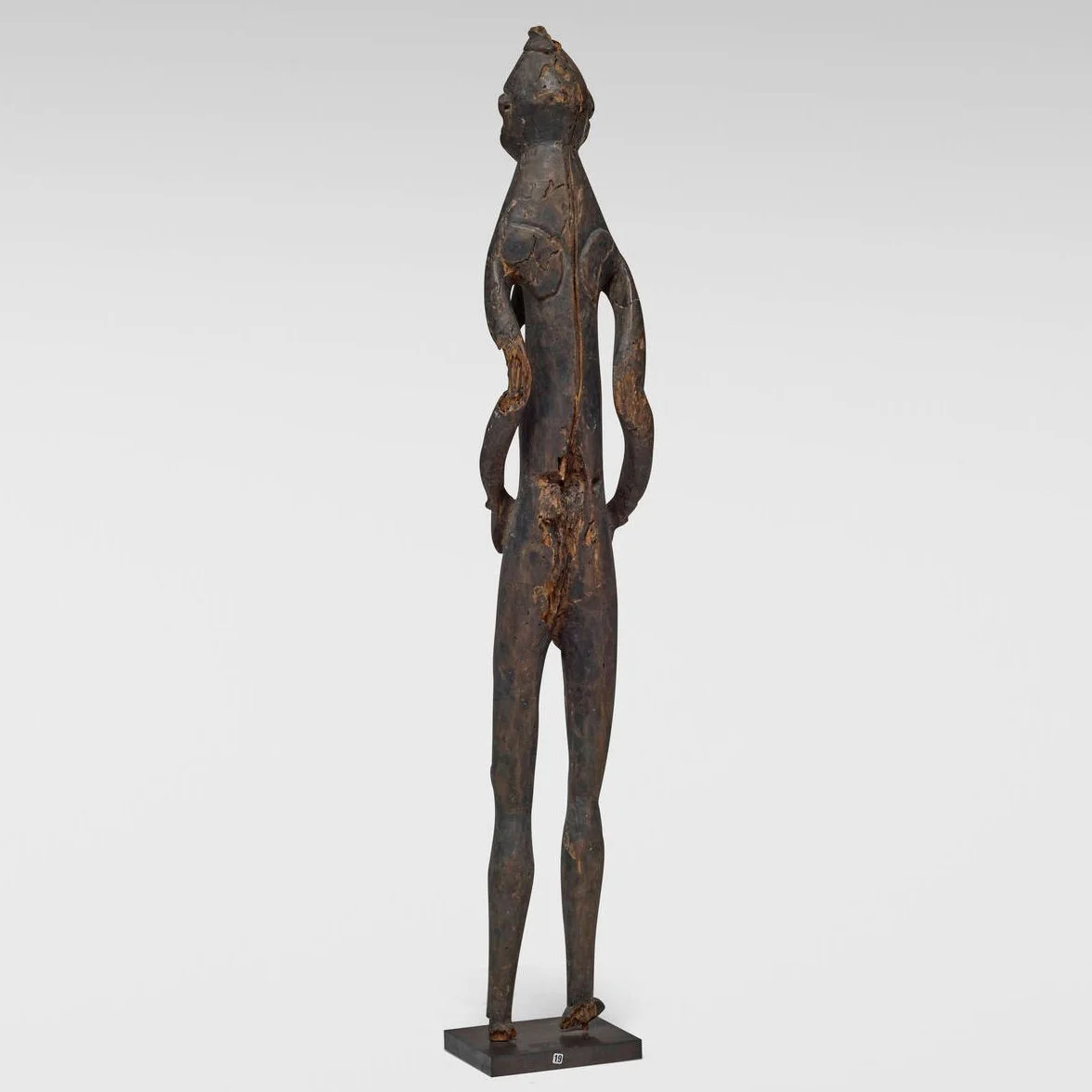 Image 4 of 5
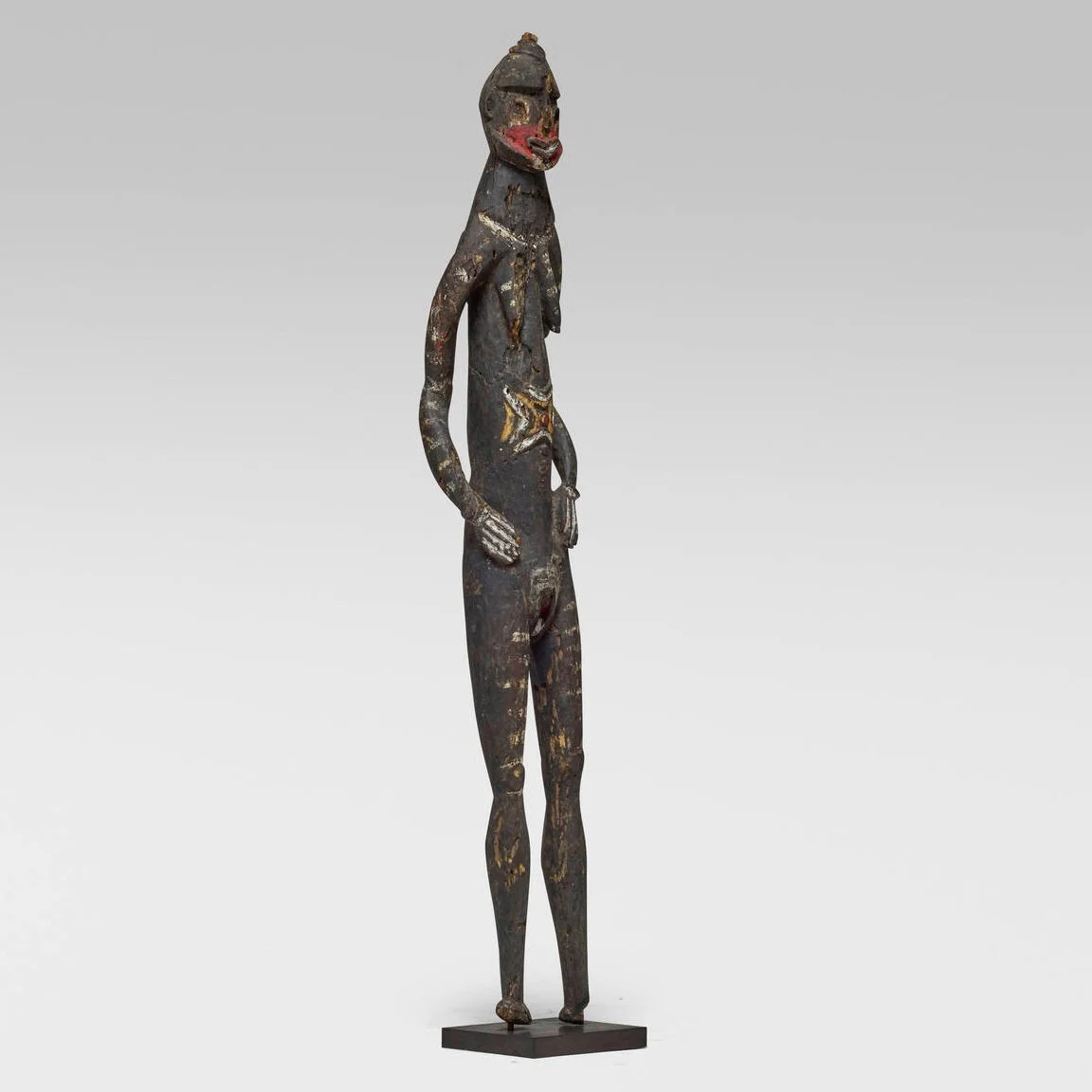 Image 5 of 5
East Sepik Province Papua New Guinea
Height 50"
Provenance: Phillip Goldman, field collected in the 1950's
Marcia and John Freide Collection, Rye New York
Bonhams Fine African and Oceanic Art, San Francisco Lot 38 May 5 - 6 2015
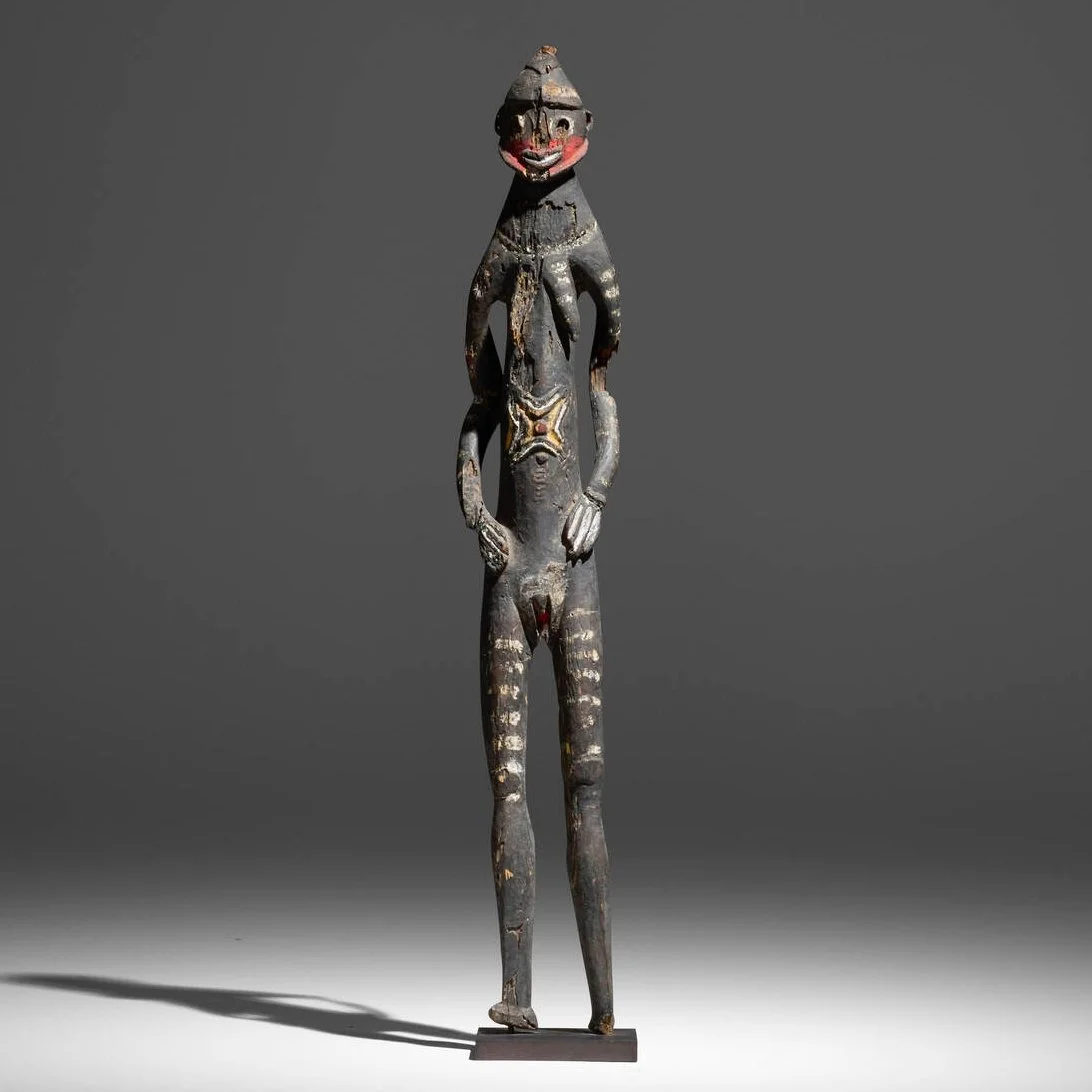
Carved from light wood, the face with a sharply angled jaw line and expressive face with upturned mouth, straight nose with pierced septum and large circular eyes, the cylindrical torso decorated with a central geometric motif carved in low relief, the protruding breasts beneath rounded shoulders pitched forward with arms held to the sides with hands resting at the hips, the arms and legs with white banded decoration, the legs separated, the feet now missing; weathered surface with black, white, yellow and red pigments.
Cf. Wardwell (1994: fig. 27)
According to Wardwell (ibid.), "This figure was used in conjunction with the third and last Warasei yam harvest ceremony, nogwi, which was attended only by the most powerful men of the community. After the yams had been harvested and stored, because they were so powerful, they could not be eaten until all three ceremonies had been performed in sequence (Newton 1971, p. 84).
This carving represents a female spirit. It was one of two representing the female spirit Hameiyau or Sanggriyau that was set up on a platform in front of a basket containing yams and decorated with shell ornaments, hair from clan members, and, attached to a headband, two bags holding nuts, fish, meat, and eggs. During the ensuing ceremonies which lasted until dawn, it was believed that the two figures danced with each other. When the carvings were put away, the food from the headband bags was distributed to women to bring abut success in fishing (ibid., pp. 88-89).
Upper Sepik art is somewhat cruder than that made along the lower and middle regions, and human figure sculptures are not common. Here, the facial features, breasts, navel, and vagina are shown as geometric forms in high relief. The other designs probably represent body painting."
East Sepik Province Papua New Guinea
Height 50"
Provenance: Phillip Goldman, field collected in the 1950's
Marcia and John Freide Collection, Rye New York
Bonhams Fine African and Oceanic Art, San Francisco Lot 38 May 5 - 6 2015
Carved from light wood, the face with a sharply angled jaw line and expressive face with upturned mouth, straight nose with pierced septum and large circular eyes, the cylindrical torso decorated with a central geometric motif carved in low relief, the protruding breasts beneath rounded shoulders pitched forward with arms held to the sides with hands resting at the hips, the arms and legs with white banded decoration, the legs separated, the feet now missing; weathered surface with black, white, yellow and red pigments.
Cf. Wardwell (1994: fig. 27)
According to Wardwell (ibid.), "This figure was used in conjunction with the third and last Warasei yam harvest ceremony, nogwi, which was attended only by the most powerful men of the community. After the yams had been harvested and stored, because they were so powerful, they could not be eaten until all three ceremonies had been performed in sequence (Newton 1971, p. 84).
This carving represents a female spirit. It was one of two representing the female spirit Hameiyau or Sanggriyau that was set up on a platform in front of a basket containing yams and decorated with shell ornaments, hair from clan members, and, attached to a headband, two bags holding nuts, fish, meat, and eggs. During the ensuing ceremonies which lasted until dawn, it was believed that the two figures danced with each other. When the carvings were put away, the food from the headband bags was distributed to women to bring abut success in fishing (ibid., pp. 88-89).
Upper Sepik art is somewhat cruder than that made along the lower and middle regions, and human figure sculptures are not common. Here, the facial features, breasts, navel, and vagina are shown as geometric forms in high relief. The other designs probably represent body painting."