Mexico
400 - 100 BC
Largest Height 7 1/4"
Provenance: Private Arizona collection
Esther Scheinman, Brooklyn NY (1950s)
These gingerbread like ceramic figurines feature a unusual stylized type of figures not often seen. Hand-modeled, figurines of this type are often female like in this grouping and come in a variety of styles displaying regional characteristics such as the coffee-bean eyes typical of figurines from Chupícuaro. Potters emphasized the faces and heads of these figures while often minimally indicating the bodies, yet it was important to gender the figurines as female by indicating the genitalia. Small ceramic figurines were made by most ancient peoples in Mesoamerica from as early as the second millennium to the time of the Aztec in the early sixteenth century. They were placed as funerary offerings in burials or in other dedicatory assemblages. Some link the figurines to fertility cults; others view them as companions for the deceased. In this rare grouping you have a mother and child that is not often seen even in museum collections.
INQUIRE HERE
Mexico
400 - 100 BC
Largest Height 7 1/4"
Provenance: Private Arizona collection
Esther Scheinman, Brooklyn NY (1950s)
These gingerbread like ceramic figurines feature a unusual stylized type of figures not often seen. Hand-modeled, figurines of this type are often female like in this grouping and come in a variety of styles displaying regional characteristics such as the coffee-bean eyes typical of figurines from Chupícuaro. Potters emphasized the faces and heads of these figures while often minimally indicating the bodies, yet it was important to gender the figurines as female by indicating the genitalia. Small ceramic figurines were made by most ancient peoples in Mesoamerica from as early as the second millennium to the time of the Aztec in the early sixteenth century. They were placed as funerary offerings in burials or in other dedicatory assemblages. Some link the figurines to fertility cults; others view them as companions for the deceased. In this rare grouping you have a mother and child that is not often seen even in museum collections.
INQUIRE HERE


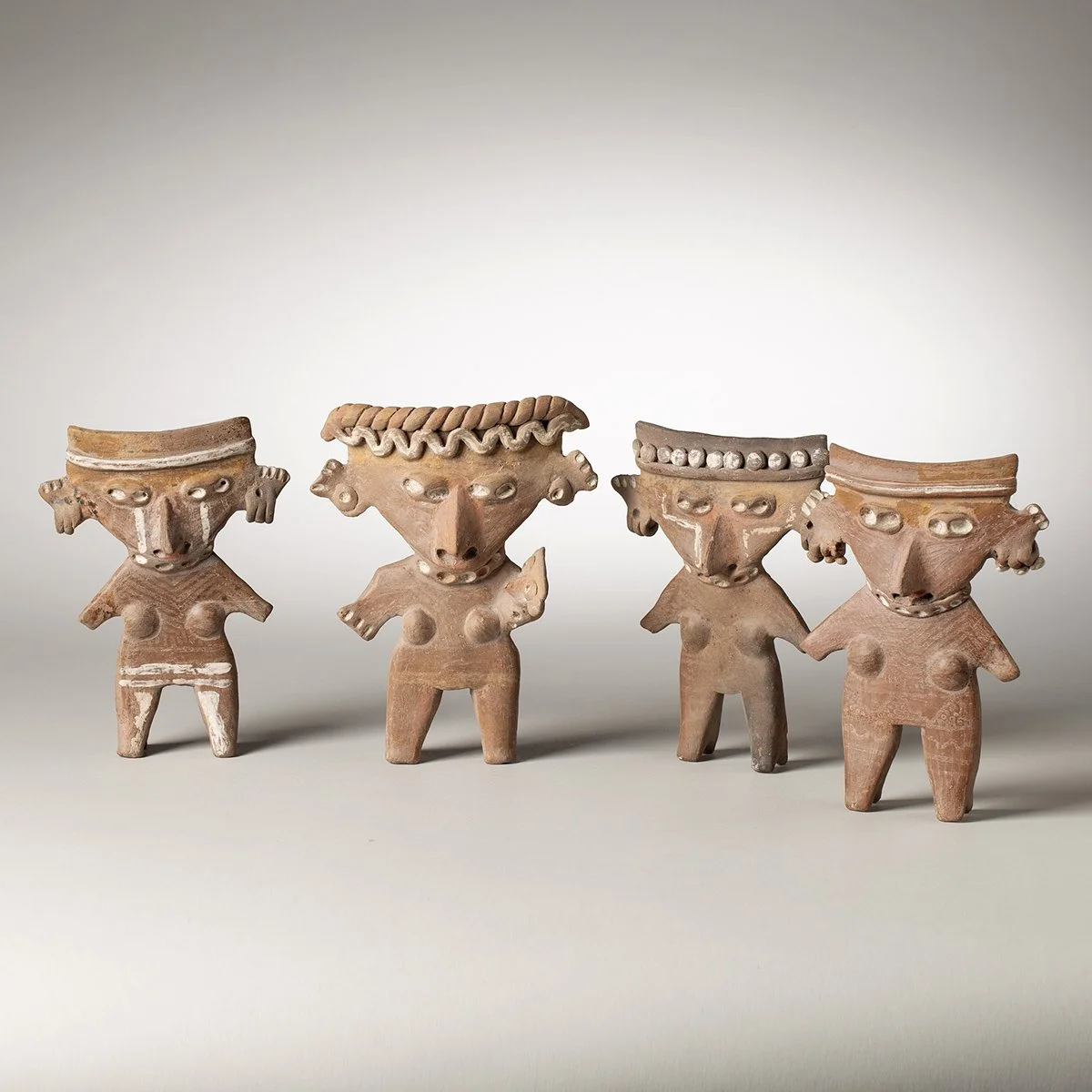 Image 1 of 7
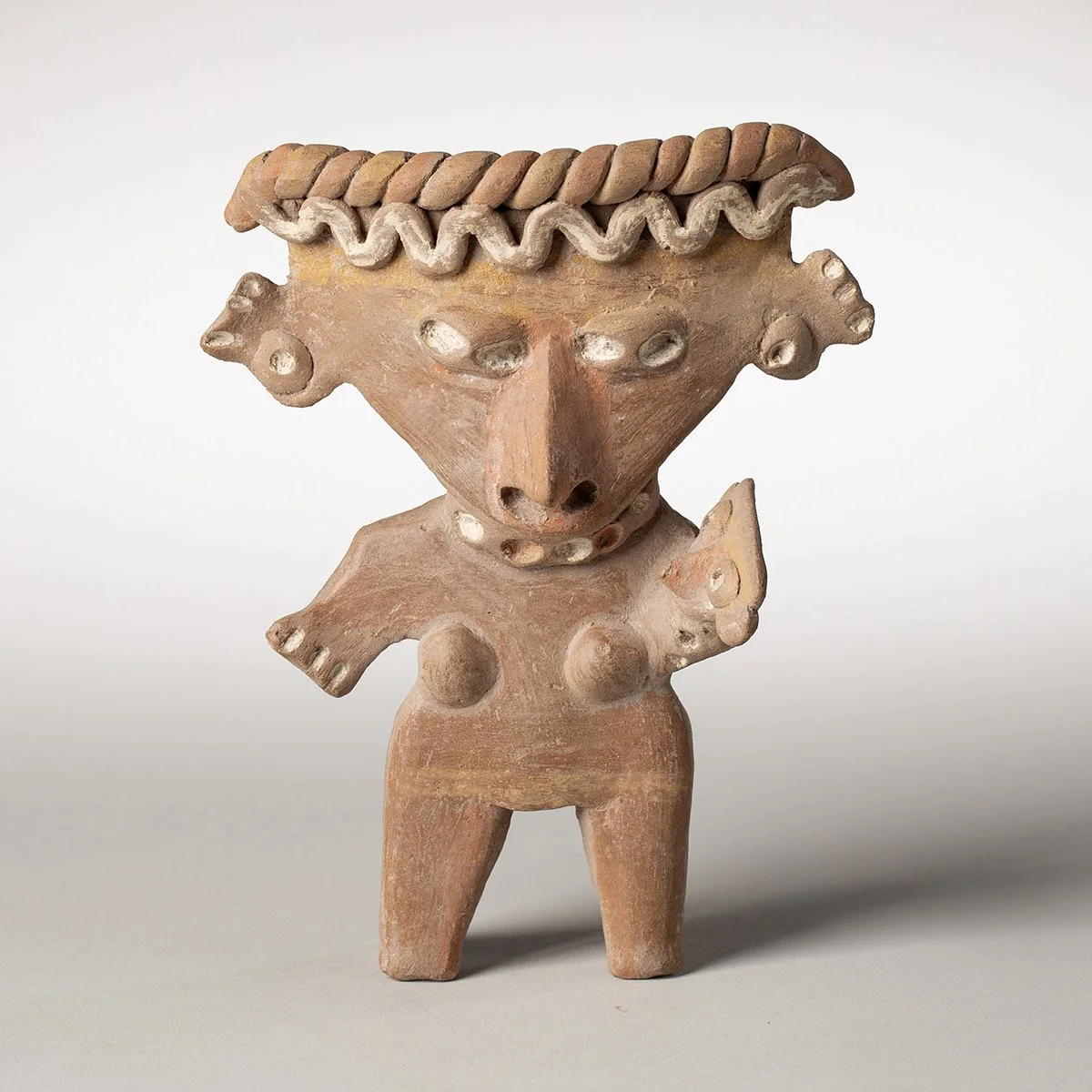 Image 2 of 7
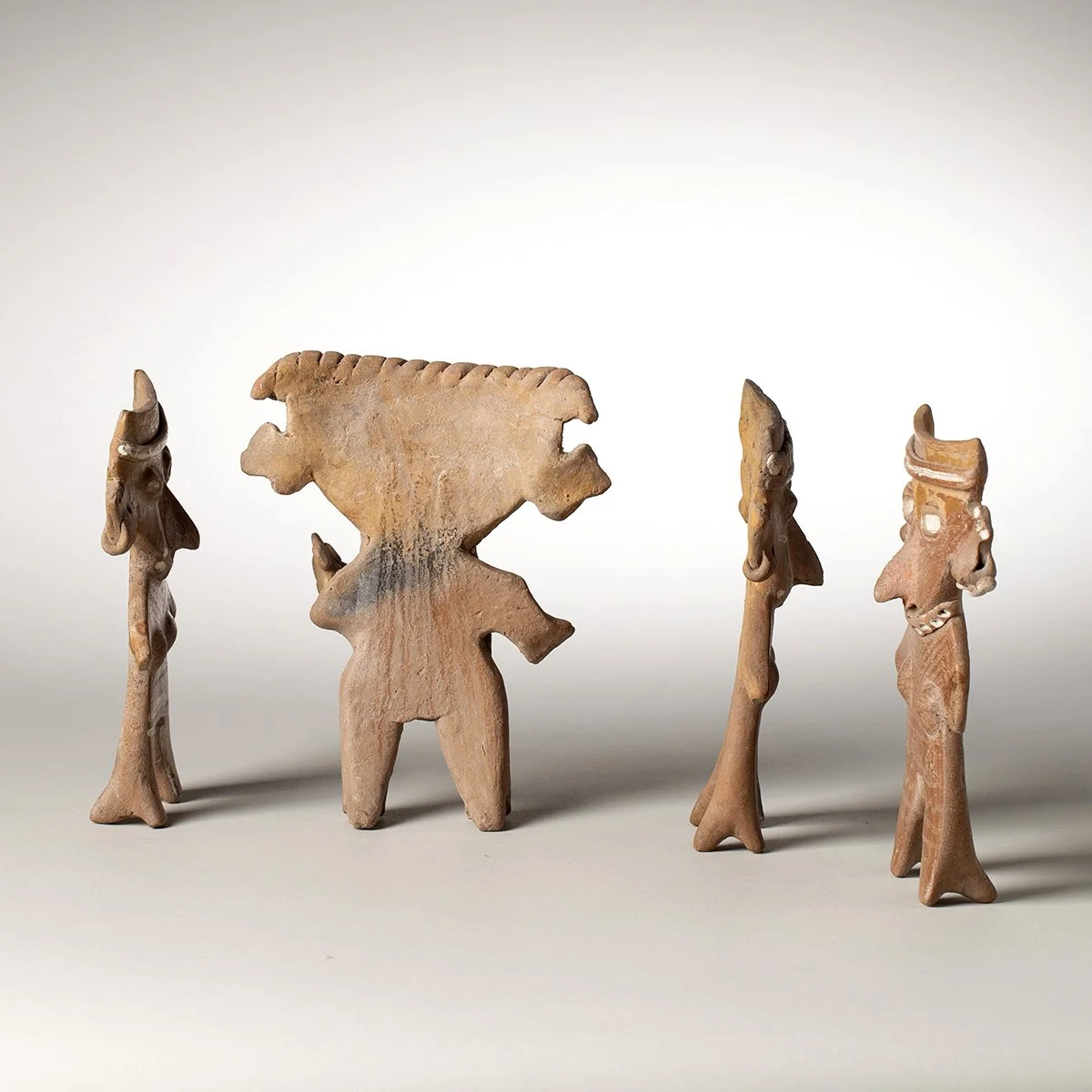 Image 3 of 7
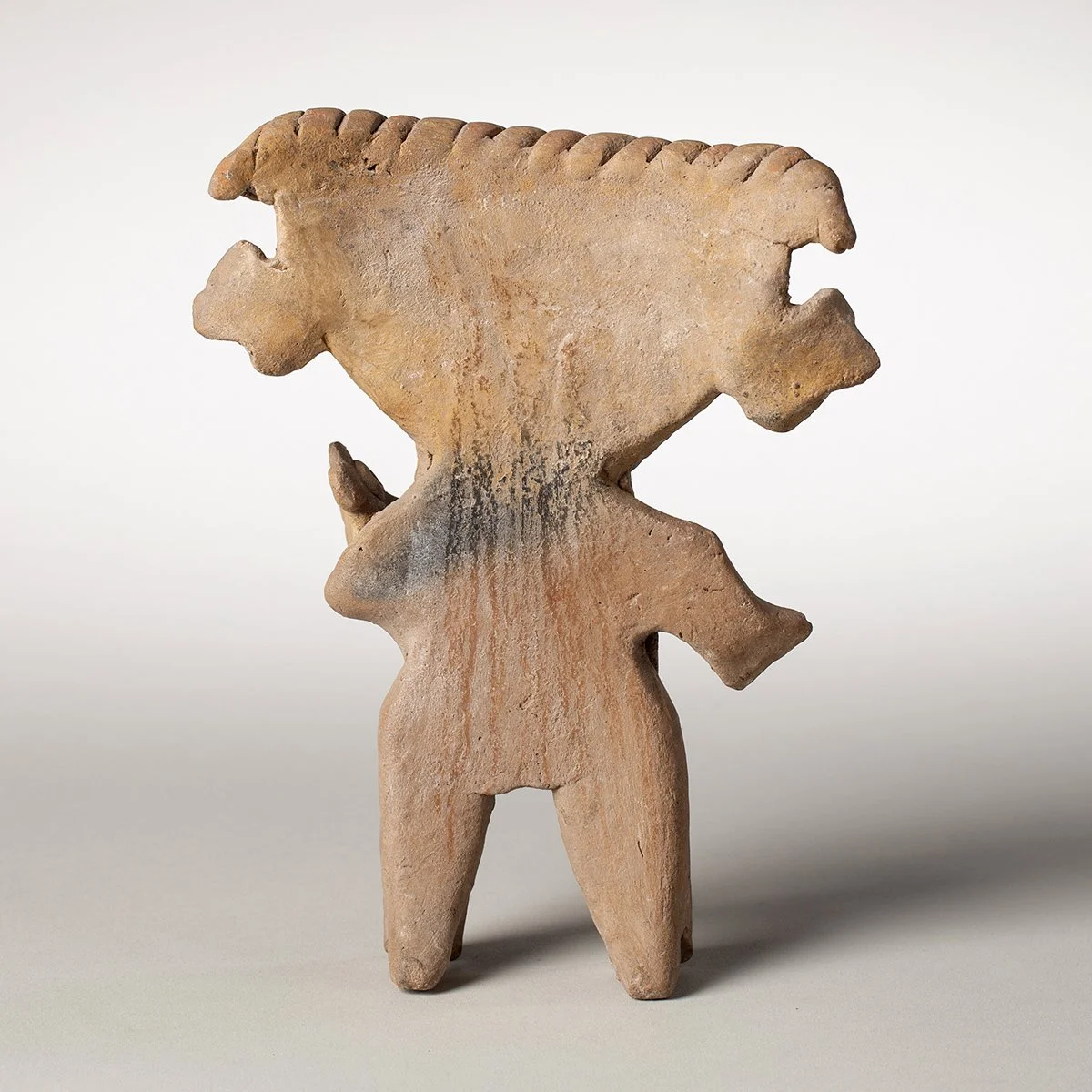 Image 4 of 7
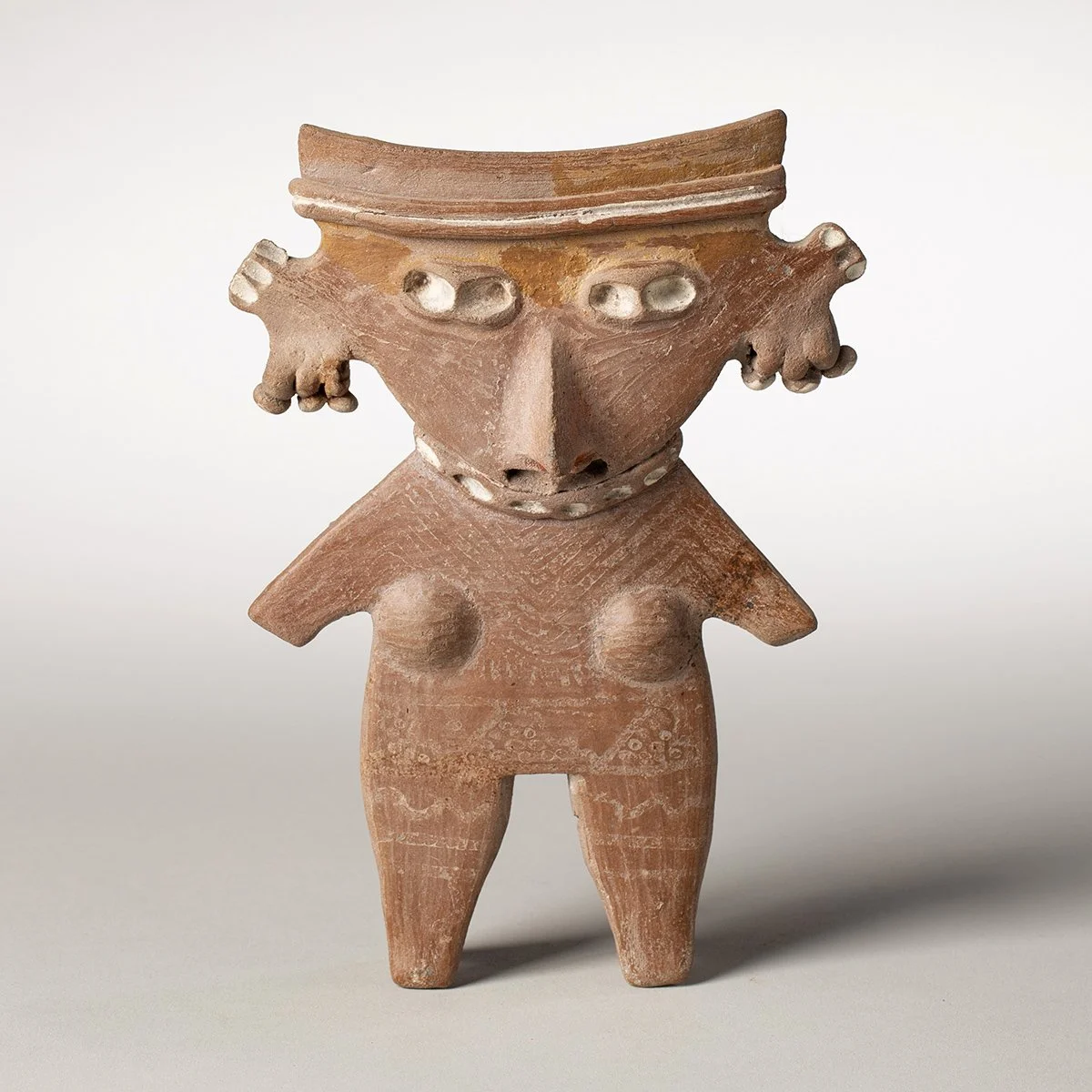 Image 5 of 7
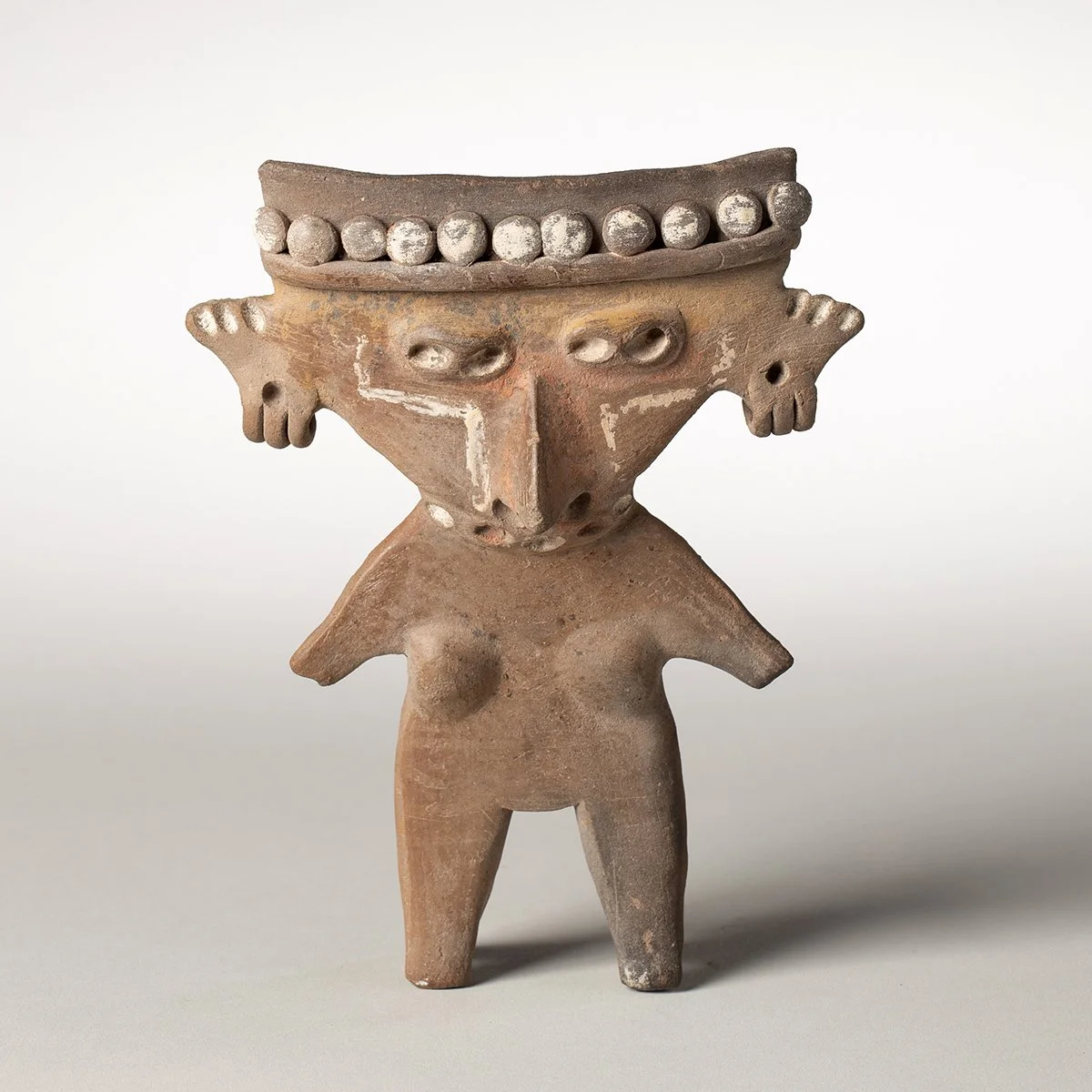 Image 6 of 7
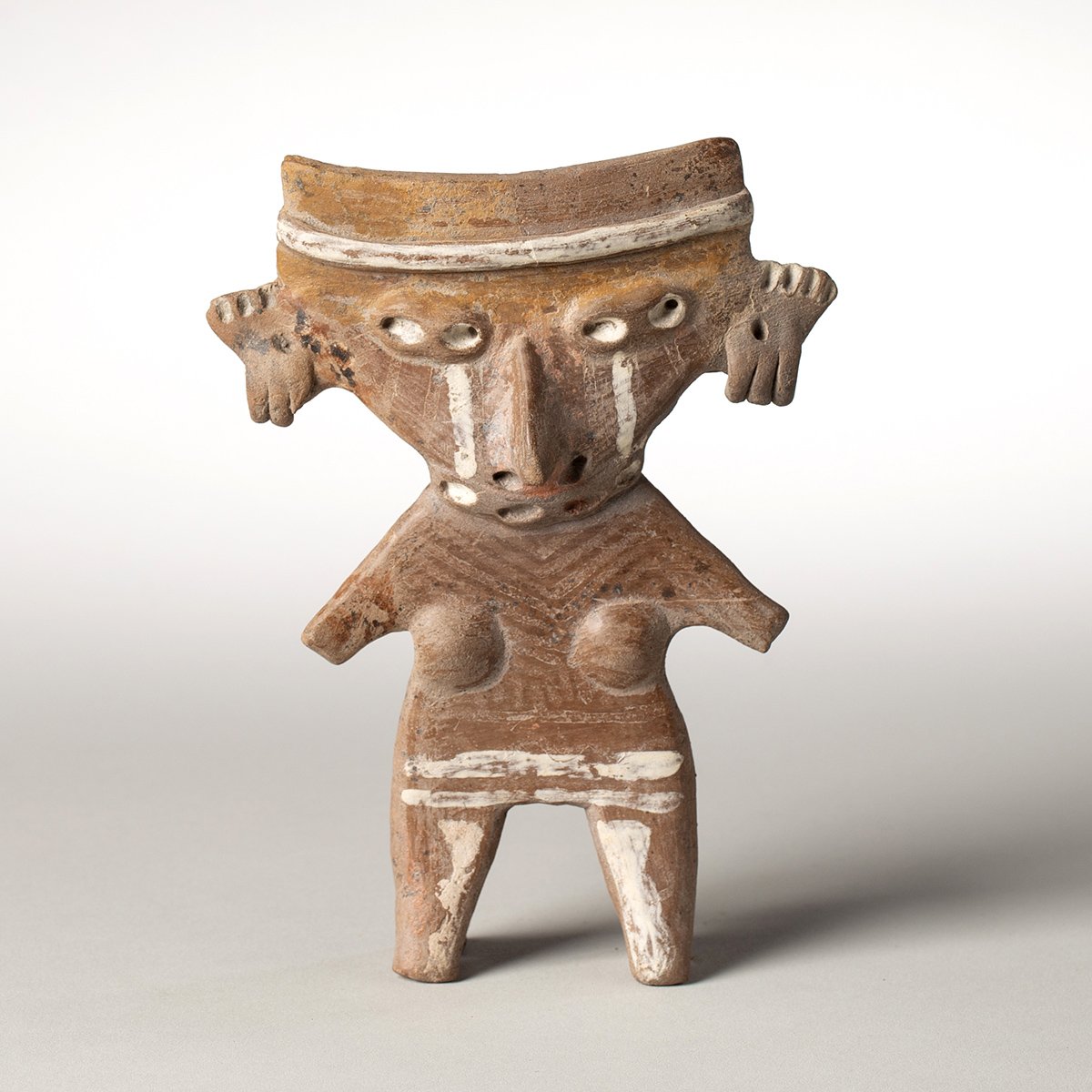 Image 7 of 7