400 BC - 100 AD
Height 3 1/4"
Provenance: Alain Schoffel, Brussels
Private Paris collection
While most artists working in western Mexico created colorful ceramic figures, drawing their inspiration from lively community events and the natural world around them, artworks in the Mezcala style exhibit a highly stylized and conceptual approach to sculpture in stone. Architectural models suggest rather than depict buildings, and greatly simplified renderings of the human form like this one give no indication of either gender or hierarchy. Although the figure is nude, there is no representation of breasts or genitalia to indicate sex. Without the usual signs of social status, such as dress, jewelry, or body modification, the resulting image is simply and directly human. Miniature versions of figures like this are found on some Mezcala architectural models. Shown standing or lying down, they may represent priests or sacrificial victims, thus transforming abstract renderings of place into narrative scenes of undefined ritual events.
To create this sculpture, the artist has gently modified a rectangular piece of hard greenstone to create a nearly solid rendering of a standing human, with negative space forming the legs and deep gauges indicating the eyes and mouth. There is no depiction of either hands or feet and only sharp incisions set diagonally across the chest suggest arms held close to the torso. The sculpture’s back is flat which, together with the sharp projection of the nose, chin, and torso, gives the sculpture its axe-like shape. It is not possible for this figure or others like it to stand on their own. Mezcala-style stone figures, architectural models, and masks were originally placed in burials. Several centuries after their creation, a number were deposited as offerings in the Templo Mayor, the principal temple in the Mexica (Aztec) capital of Tenochtitlan. There they served to represent the great empire’s geographic breadth and roots in antiquity.
INQUIRE HERE
400 BC - 100 AD
Height 3 1/4"
Provenance: Alain Schoffel, Brussels
Private Paris collection
While most artists working in western Mexico created colorful ceramic figures, drawing their inspiration from lively community events and the natural world around them, artworks in the Mezcala style exhibit a highly stylized and conceptual approach to sculpture in stone. Architectural models suggest rather than depict buildings, and greatly simplified renderings of the human form like this one give no indication of either gender or hierarchy. Although the figure is nude, there is no representation of breasts or genitalia to indicate sex. Without the usual signs of social status, such as dress, jewelry, or body modification, the resulting image is simply and directly human. Miniature versions of figures like this are found on some Mezcala architectural models. Shown standing or lying down, they may represent priests or sacrificial victims, thus transforming abstract renderings of place into narrative scenes of undefined ritual events.
To create this sculpture, the artist has gently modified a rectangular piece of hard greenstone to create a nearly solid rendering of a standing human, with negative space forming the legs and deep gauges indicating the eyes and mouth. There is no depiction of either hands or feet and only sharp incisions set diagonally across the chest suggest arms held close to the torso. The sculpture’s back is flat which, together with the sharp projection of the nose, chin, and torso, gives the sculpture its axe-like shape. It is not possible for this figure or others like it to stand on their own. Mezcala-style stone figures, architectural models, and masks were originally placed in burials. Several centuries after their creation, a number were deposited as offerings in the Templo Mayor, the principal temple in the Mexica (Aztec) capital of Tenochtitlan. There they served to represent the great empire’s geographic breadth and roots in antiquity.
INQUIRE HERE


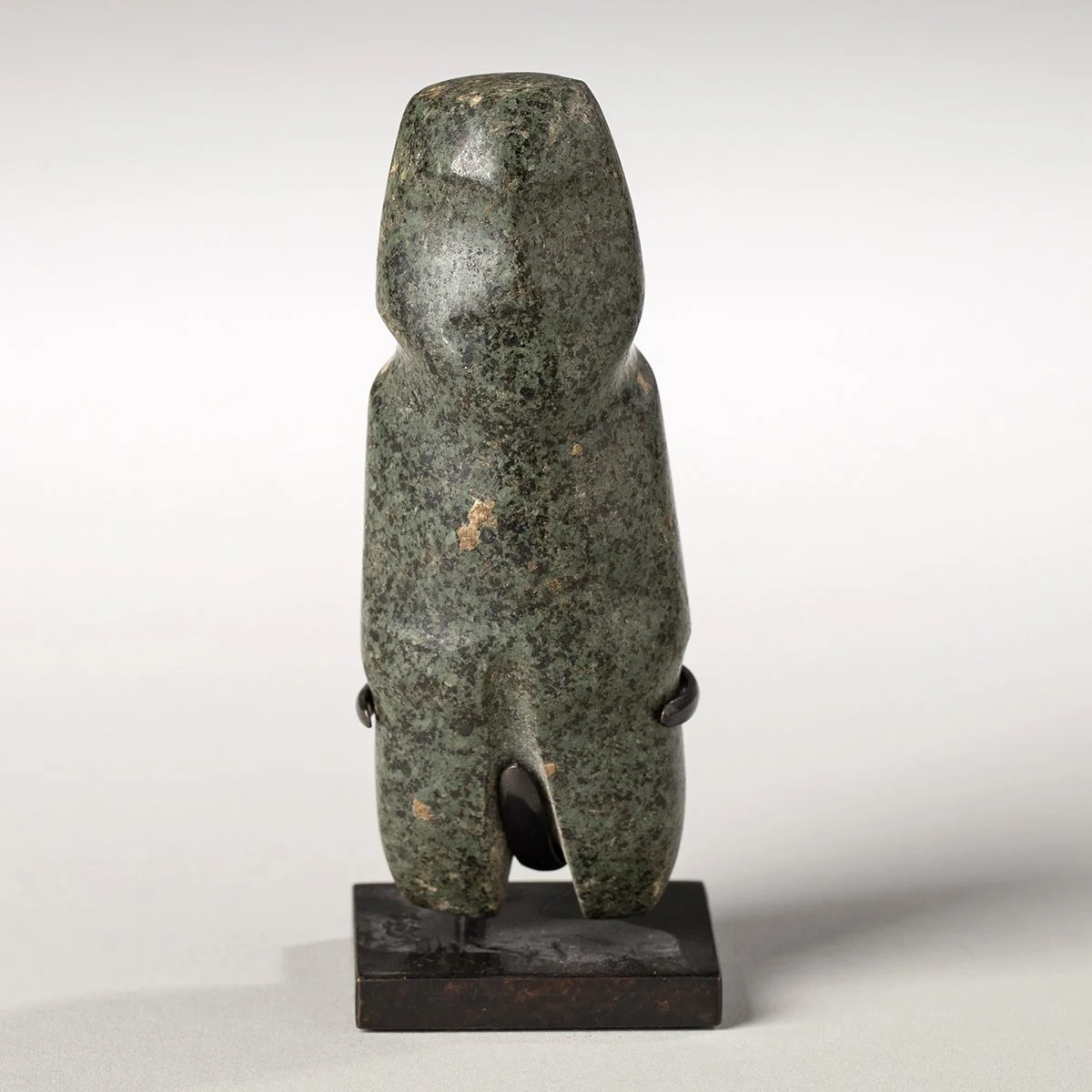 Image 1 of 6
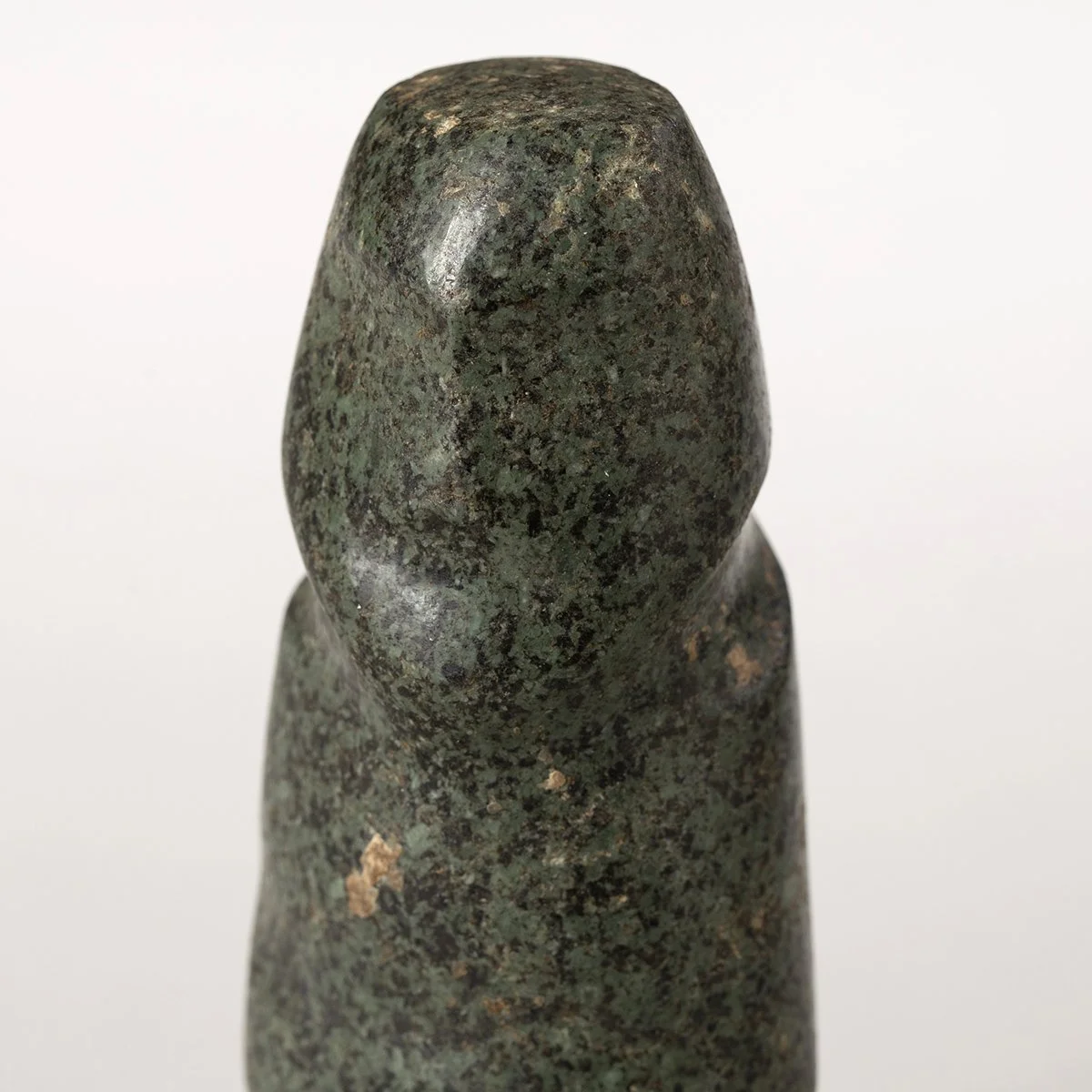 Image 2 of 6
 Image 3 of 6
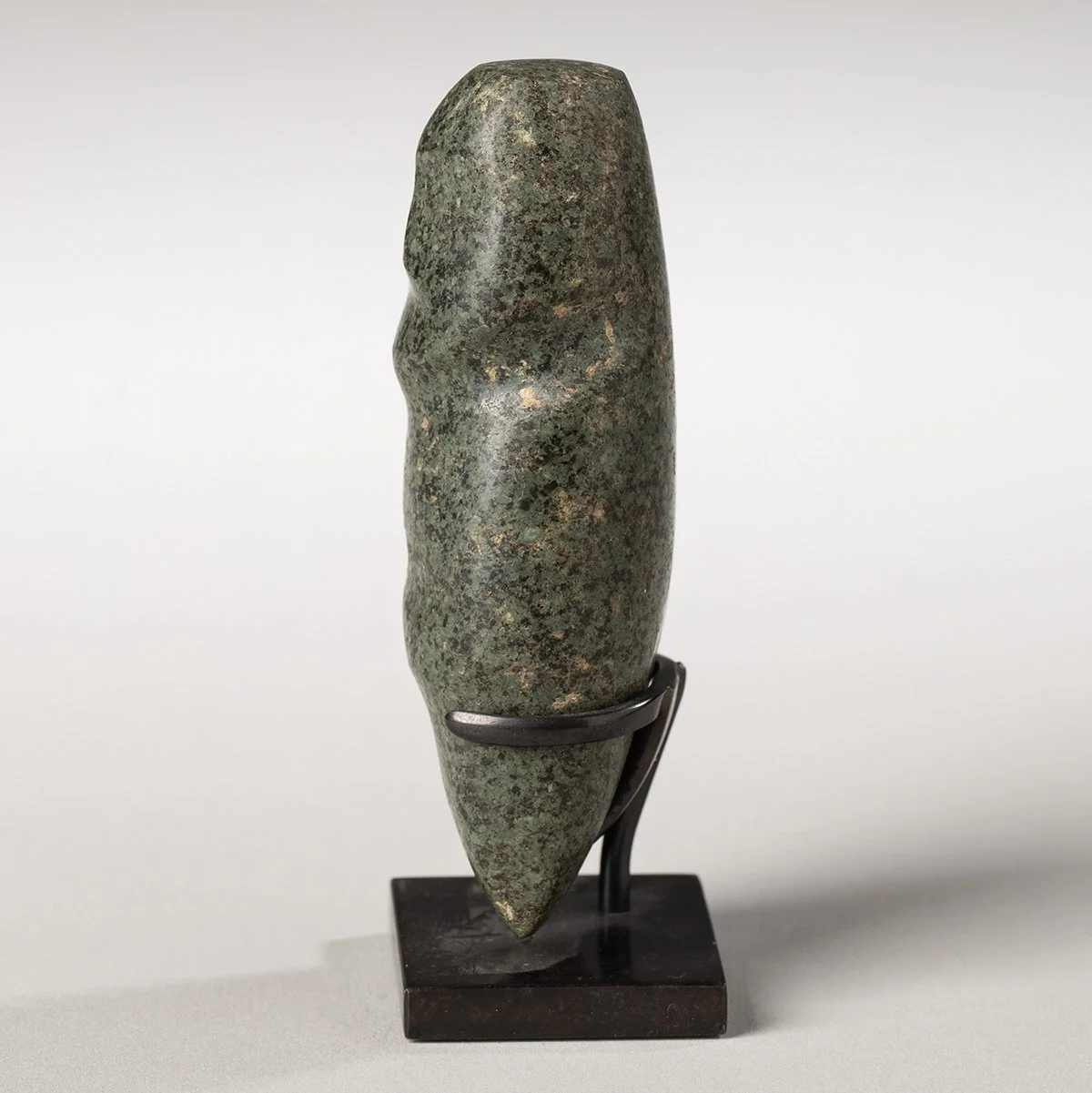 Image 4 of 6
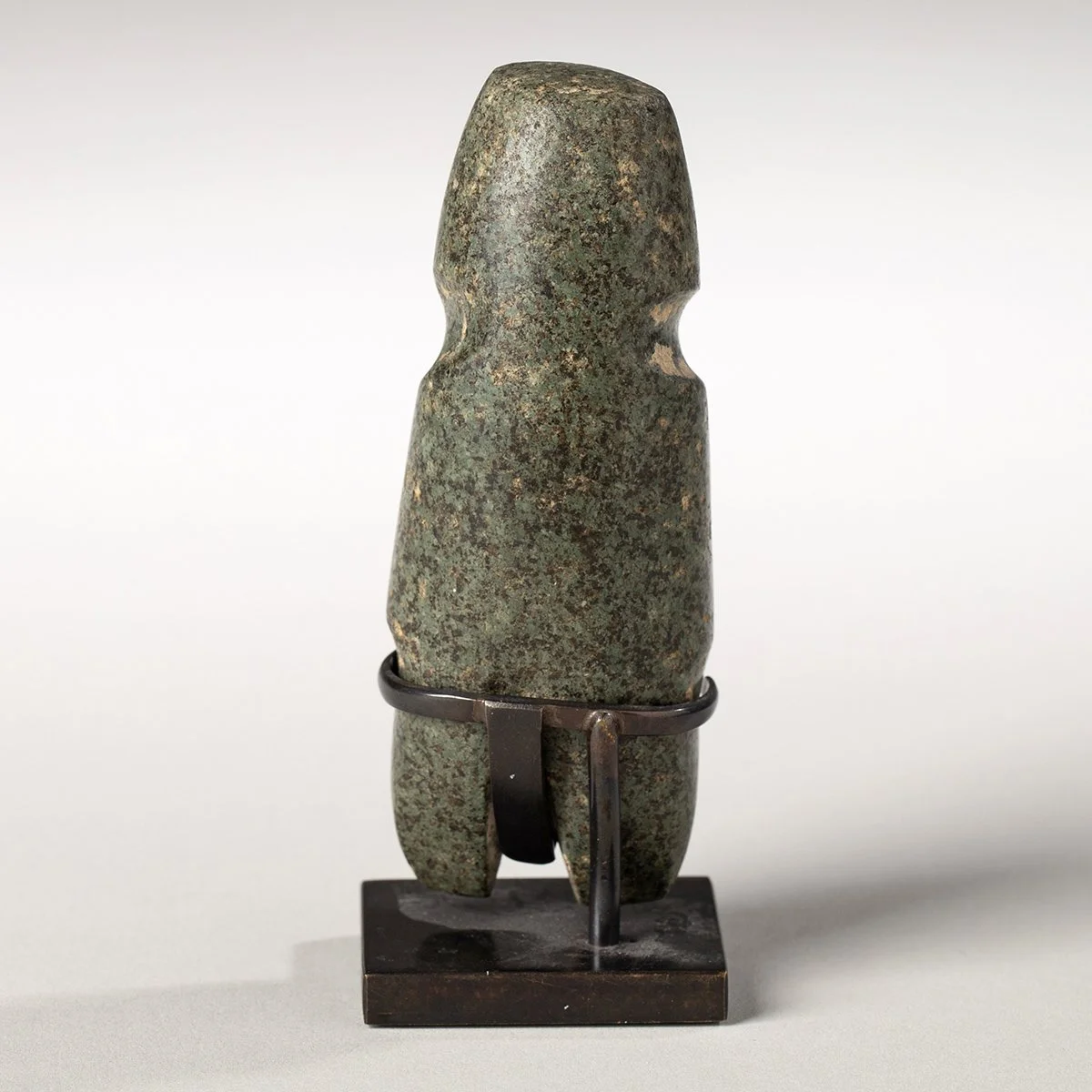 Image 5 of 6
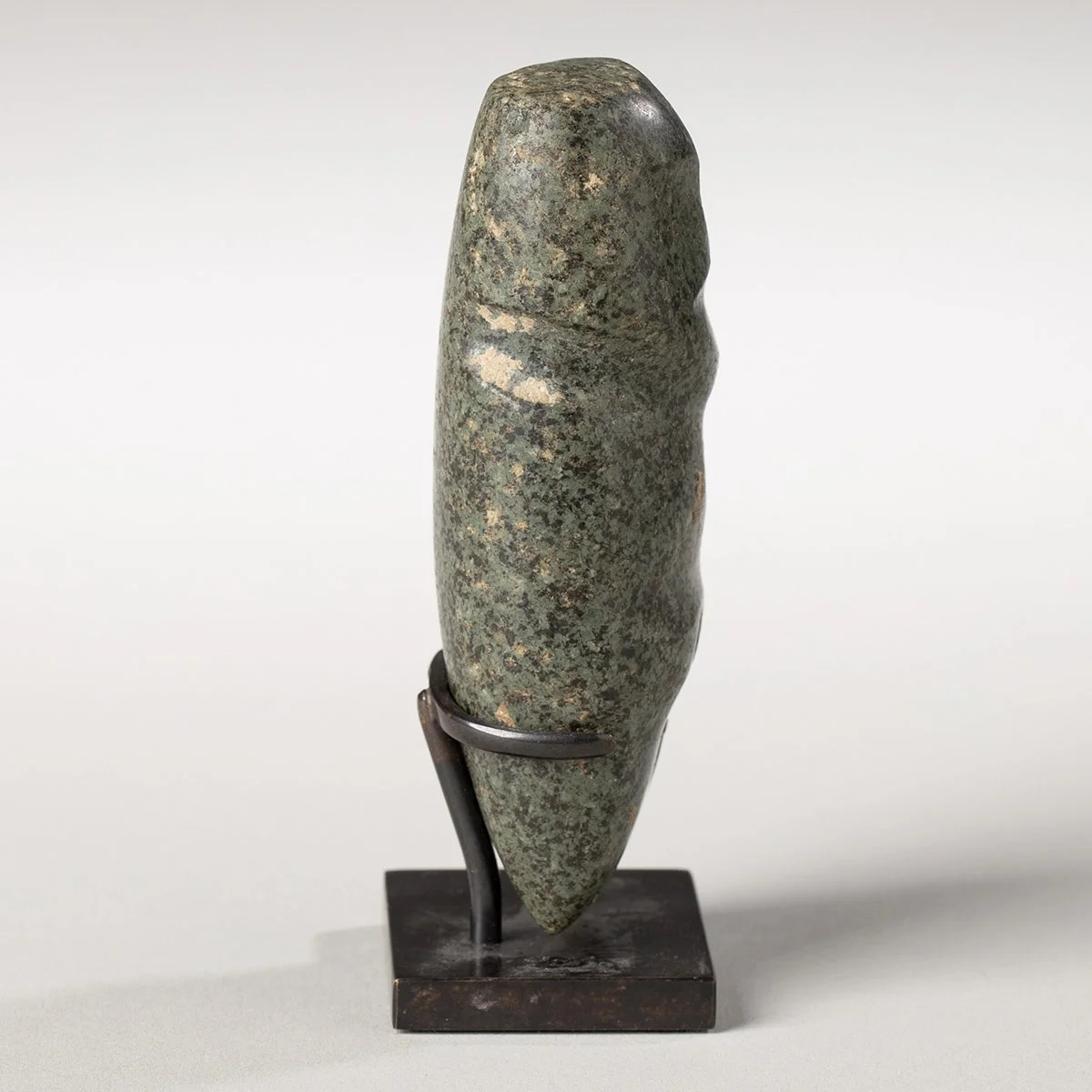 Image 6 of 6