Yentchanmangua Village, Middle Sepik River, East Sepik Province, Papua New Guinea
Wood natural pigments
19th Century
Height 57 1/8”
Provenance: Carlebach Gallery, Julius Carlebach Inc 937 Third Ave NY (The original Bill of Sale from the Carlebach Gallery, no 9073, November 1956, to Ronald Clyne, accompanies this shield.)
Publications:
-Asch, Margaret et.al, Video interview with Ronald Clyne, Smithsonian Institution, 2005/2006, shield shown. Designer Ronald Clyne on His Work for Folkways Records [Interview Video]
Newsome, Richard, efanzines, “Six Hours With Ronald Clyne”, December 2008, vol 7 no 6, original interview by R. Newsome with Ronald Clyne on January 18, 2004, shield illustrated.
http://www.efanzines.com/EK/e141/index.htm#sixb
- Interior Design Magazine, “Art and Soul - the spiritual quality of Oceanic art fills the Brooklyn Heights residence designed by by Ronald Clyne for himself and his wife Hortense” vol 71, no. 10 August 2000,pp. 166-171, illus p 169 (full page) The magazine accompanies this shield.
The Clyde Iatmul War Shield presents and early form, especially for the Nyaura-Iatmul (Western) and Palimbei Iatmul (central) groups. The stylized face elements (eyes, nose, and tongue) are carved in high relief with other motifs completely carved in bas-relief on a rectangular plank form, wider at the top. Having a pierced nose and a raised, perforated tongue. The mouth is raised, including carved teeth. The pigments overall being brown (roasted ochre), white (lime/ground seashells) and black (fine, ground charcoal).
The large, raised, protruding eyes looming from concentric ovals and the tongue sticking out of the mouth are two clear allusions to waken (founding ancestor or guardian figure) characteristics. These features can apply to a mode of representation, that of ancestors communicating with men, where the motifs render the realm of ancestors, forest spirits, and winshumbu (individualized ancestor-beings). The same waken motif featured on the shield also adorned the war canoe returning victorious from a headhunting mission. The message was clear: ancestral forces were in action. Ref; Barbier-Mueller Museum, Geneva, Switzerland.
Around the vertical perimeters and the nose are raised, crocodilian scale carvings: “Crocodiles play a central role in the art and culture of the Iatmul people. According to one creation account, an ancestral crocodile was responsible for forming the land. In the beginning, the earth was covered by primordial ocean, into whose depths the crocodile dived. Reaching the bottom, it brought up on its back a load of mud, which became an island when it surfaced. From that island, the land grew hardened, but it continues to rest on the back of the ancestral crocodile, which occasionally moves, causing earthquakes.” Metropolitan Museum of Art, New York.
The remaining handle, verso; being tiered with pierced ridges, carved from the solid. This type of handle accepted lashed bamboo to have various heights for holding, available to the warrior during travel and battle. They were able to crouch and hide behind the shield by holding the lowest strut and when on the move, either of the upper two.
“If the wooden shields allowed the more experienced warriors to protect themselves, the central position of the face was intended to frighten the enemy. Although in a stylized form, the ancestor represented merged with the wearer to form only one person: the paint allowed to transfer the power of the ancestor in the shield. Other motives materialize the presence of influential mythical beings.” Museum fur Volkerkunde, Munich.
The shield exhibits much use and wear, recto and verso. A small cavity, located in the circular motif on the top, center portion of the shield with sloping upper and lower internal edges, rounded upper and lower corners are characteristic of a spear point or bone (cassowary/humena), dagger hole; indicative of the shield being used in battle. Having an old, partial collection number, verso. The shield retains a substantial degree of pigment for a shield of this early date. The Clyde Iatmul War Shield, along with a very small known number of additional Iatmul War Shields are unique in having all motifs carved, as opposed to having only painted forms, is among the rarest and most beautiful.
INQUIRE HERE
Yentchanmangua Village, Middle Sepik River, East Sepik Province, Papua New Guinea
Wood natural pigments
19th Century
Height 57 1/8”
Provenance: Carlebach Gallery, Julius Carlebach Inc 937 Third Ave NY (The original Bill of Sale from the Carlebach Gallery, no 9073, November 1956, to Ronald Clyne, accompanies this shield.)
Publications:
-Asch, Margaret et.al, Video interview with Ronald Clyne, Smithsonian Institution, 2005/2006, shield shown. Designer Ronald Clyne on His Work for Folkways Records [Interview Video]
Newsome, Richard, efanzines, “Six Hours With Ronald Clyne”, December 2008, vol 7 no 6, original interview by R. Newsome with Ronald Clyne on January 18, 2004, shield illustrated.
http://www.efanzines.com/EK/e141/index.htm#sixb
- Interior Design Magazine, “Art and Soul - the spiritual quality of Oceanic art fills the Brooklyn Heights residence designed by by Ronald Clyne for himself and his wife Hortense” vol 71, no. 10 August 2000,pp. 166-171, illus p 169 (full page) The magazine accompanies this shield.
The Clyde Iatmul War Shield presents and early form, especially for the Nyaura-Iatmul (Western) and Palimbei Iatmul (central) groups. The stylized face elements (eyes, nose, and tongue) are carved in high relief with other motifs completely carved in bas-relief on a rectangular plank form, wider at the top. Having a pierced nose and a raised, perforated tongue. The mouth is raised, including carved teeth. The pigments overall being brown (roasted ochre), white (lime/ground seashells) and black (fine, ground charcoal).
The large, raised, protruding eyes looming from concentric ovals and the tongue sticking out of the mouth are two clear allusions to waken (founding ancestor or guardian figure) characteristics. These features can apply to a mode of representation, that of ancestors communicating with men, where the motifs render the realm of ancestors, forest spirits, and winshumbu (individualized ancestor-beings). The same waken motif featured on the shield also adorned the war canoe returning victorious from a headhunting mission. The message was clear: ancestral forces were in action. Ref; Barbier-Mueller Museum, Geneva, Switzerland.
Around the vertical perimeters and the nose are raised, crocodilian scale carvings: “Crocodiles play a central role in the art and culture of the Iatmul people. According to one creation account, an ancestral crocodile was responsible for forming the land. In the beginning, the earth was covered by primordial ocean, into whose depths the crocodile dived. Reaching the bottom, it brought up on its back a load of mud, which became an island when it surfaced. From that island, the land grew hardened, but it continues to rest on the back of the ancestral crocodile, which occasionally moves, causing earthquakes.” Metropolitan Museum of Art, New York.
The remaining handle, verso; being tiered with pierced ridges, carved from the solid. This type of handle accepted lashed bamboo to have various heights for holding, available to the warrior during travel and battle. They were able to crouch and hide behind the shield by holding the lowest strut and when on the move, either of the upper two.
“If the wooden shields allowed the more experienced warriors to protect themselves, the central position of the face was intended to frighten the enemy. Although in a stylized form, the ancestor represented merged with the wearer to form only one person: the paint allowed to transfer the power of the ancestor in the shield. Other motives materialize the presence of influential mythical beings.” Museum fur Volkerkunde, Munich.
The shield exhibits much use and wear, recto and verso. A small cavity, located in the circular motif on the top, center portion of the shield with sloping upper and lower internal edges, rounded upper and lower corners are characteristic of a spear point or bone (cassowary/humena), dagger hole; indicative of the shield being used in battle. Having an old, partial collection number, verso. The shield retains a substantial degree of pigment for a shield of this early date. The Clyde Iatmul War Shield, along with a very small known number of additional Iatmul War Shields are unique in having all motifs carved, as opposed to having only painted forms, is among the rarest and most beautiful.
INQUIRE HERE


 Image 1 of 9
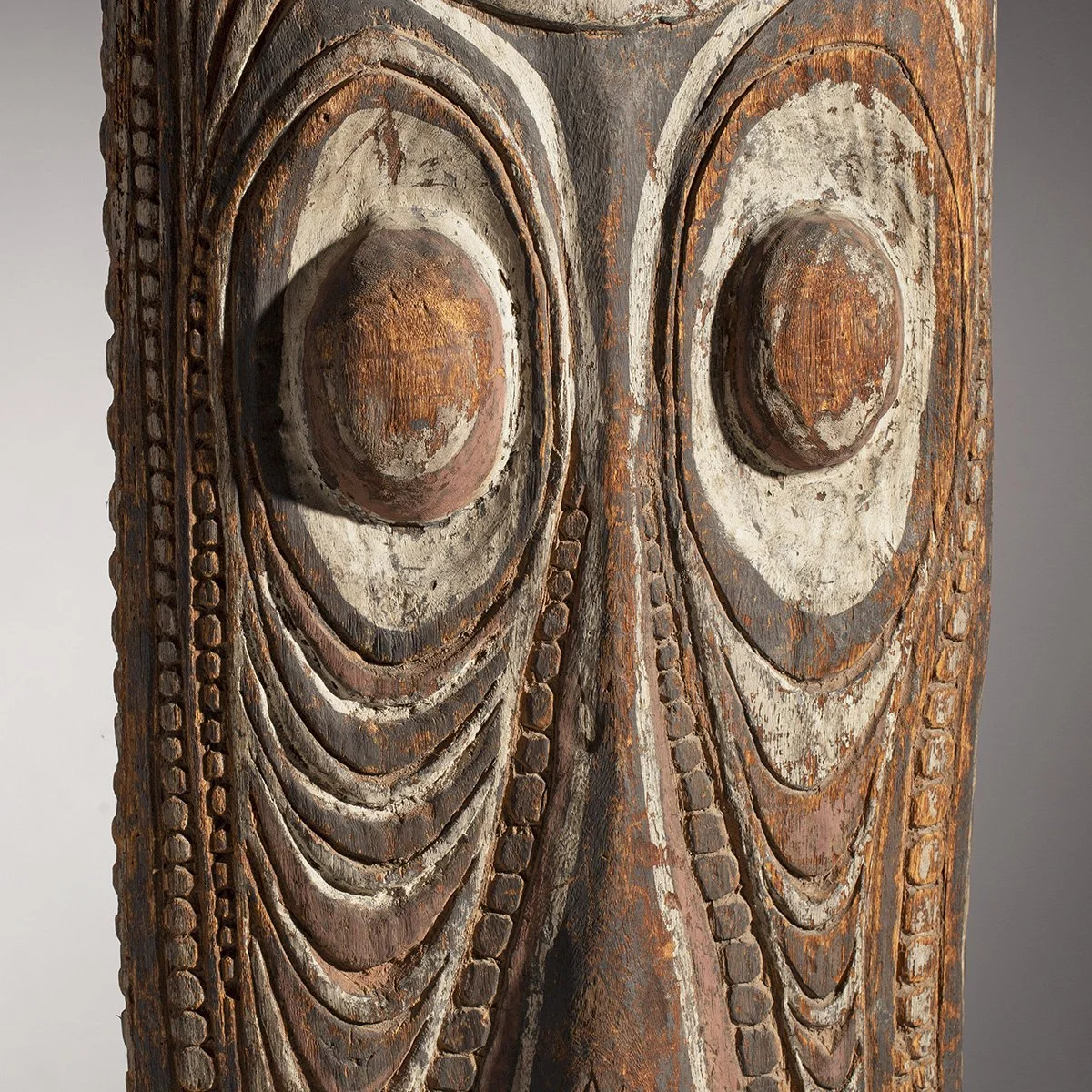 Image 2 of 9
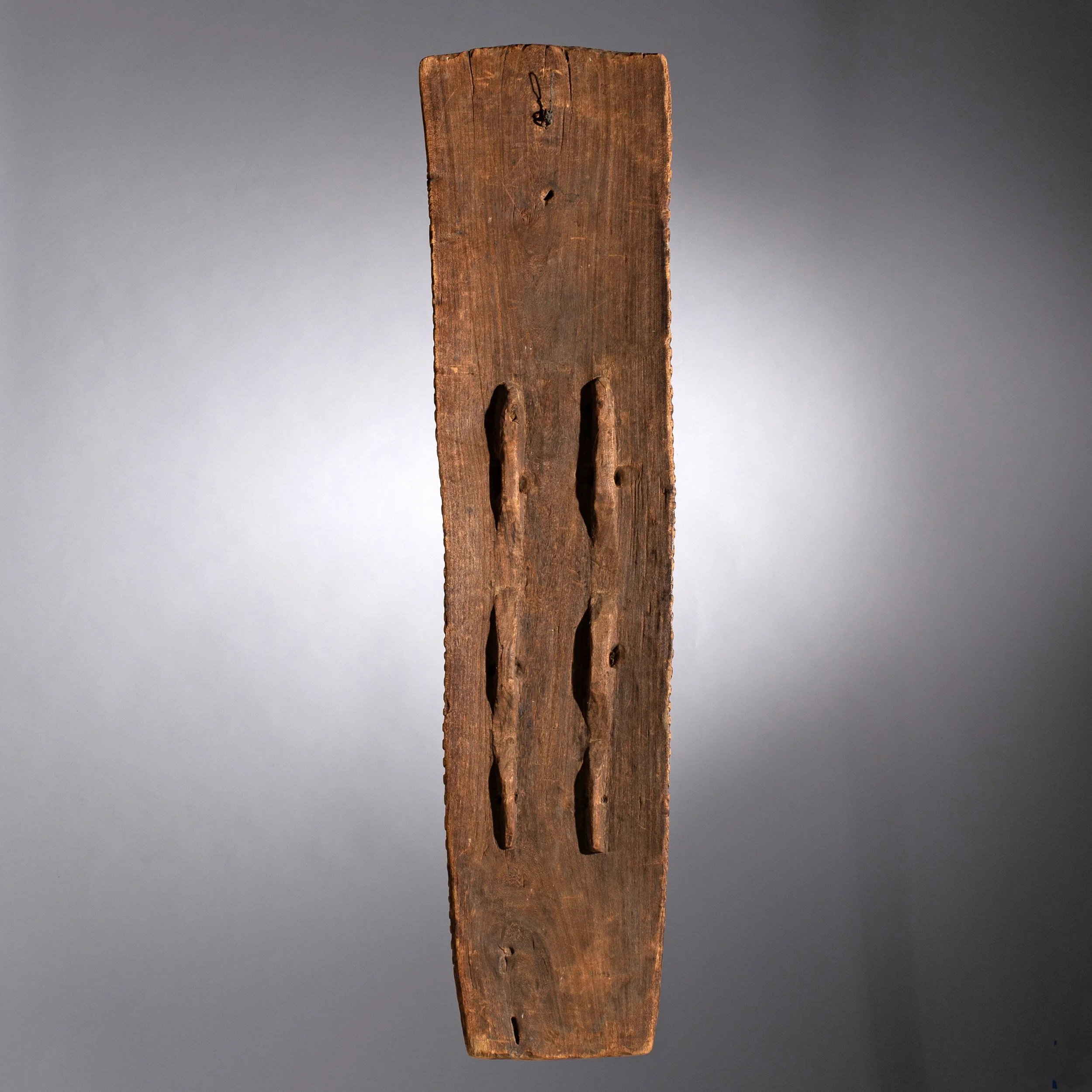 Image 3 of 9
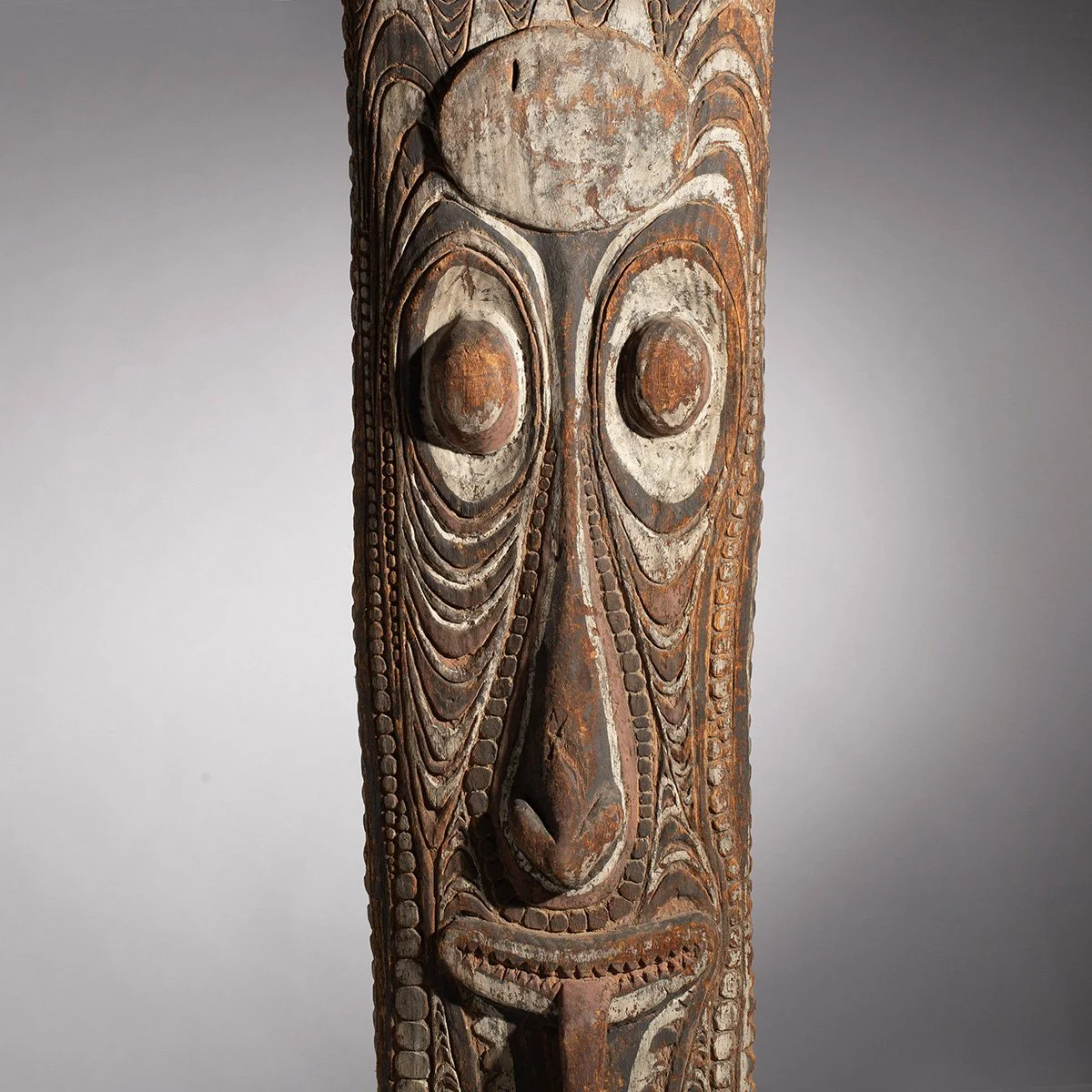 Image 4 of 9
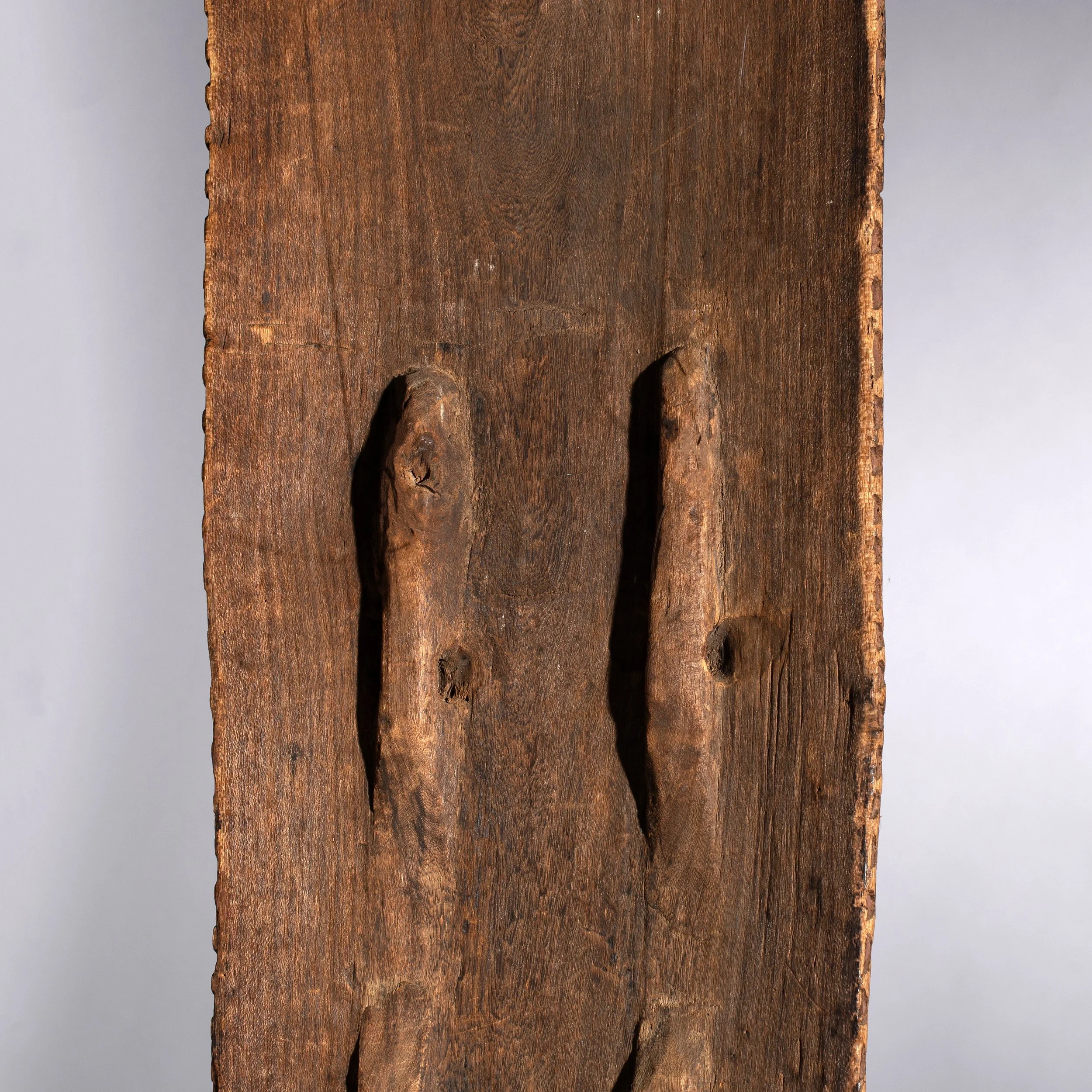 Image 5 of 9
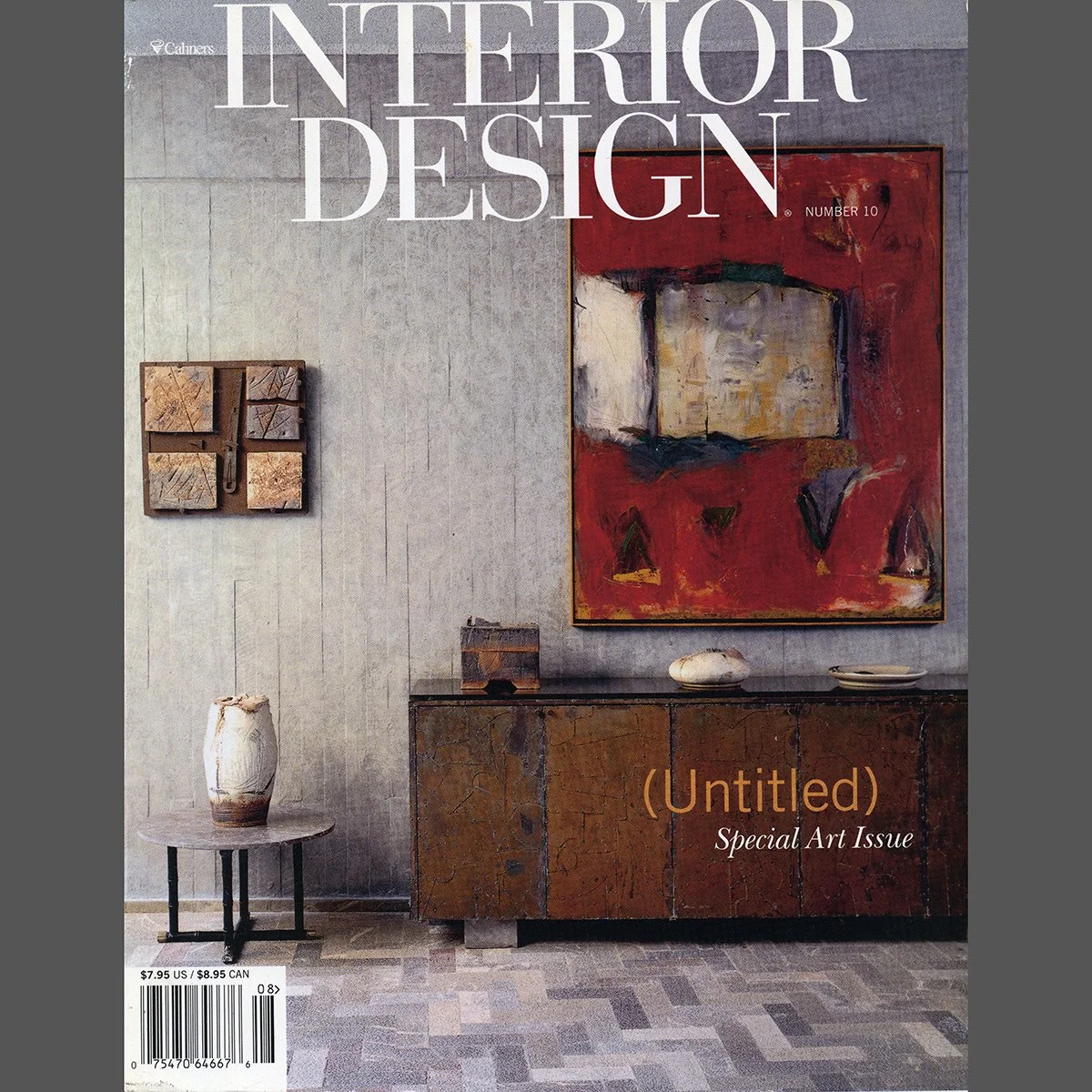 Image 6 of 9
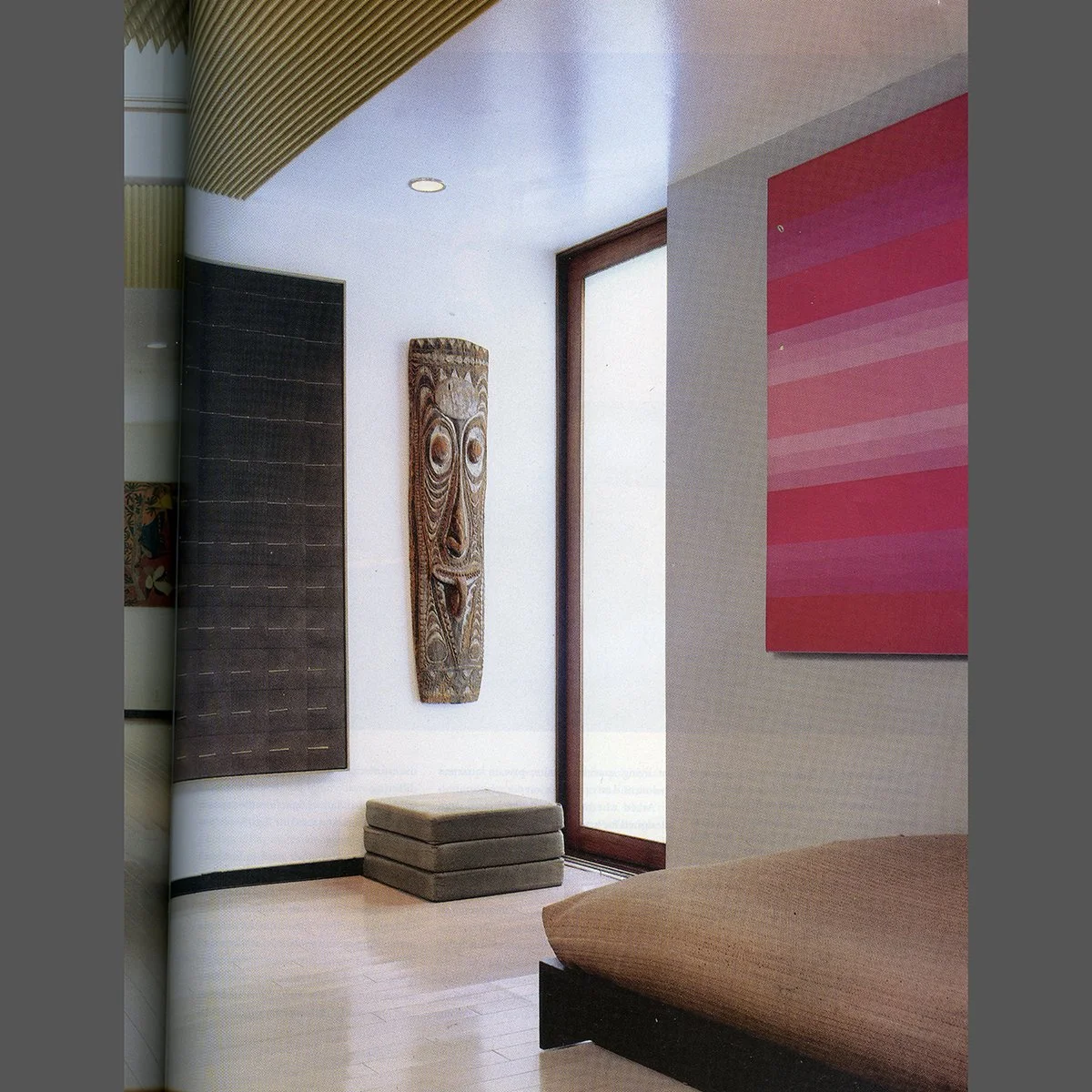 Image 7 of 9
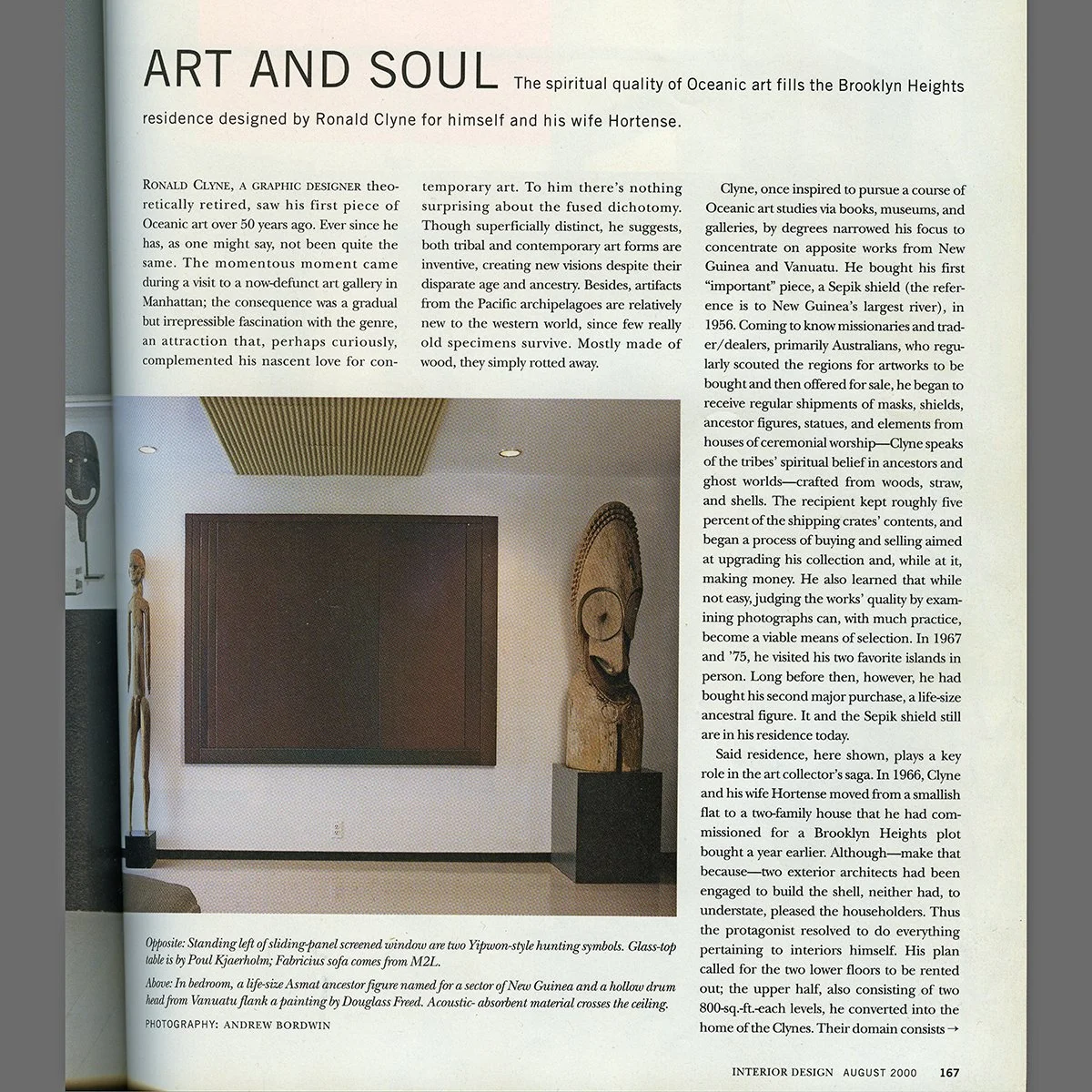 Image 8 of 9
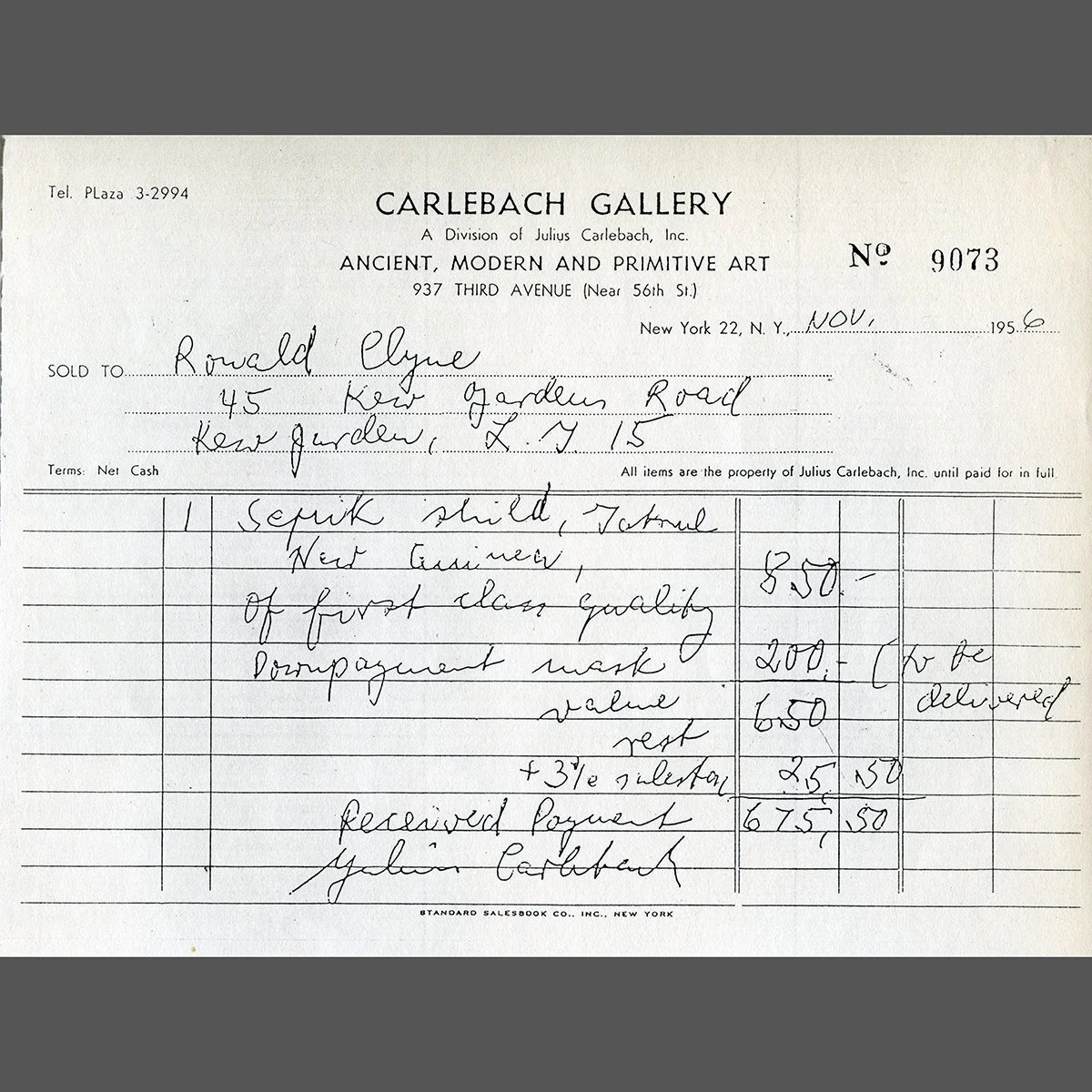 Image 9 of 9