Teotihuacan culture, Mexico
Classic period, A.D. 200-750
Listwanite stone, traces of iron pyrite
Height: 8 inches (20.3 cm) Width: 9.5 inches (24 cm) Weight: 5.2 kg
CIRAM report included - click here to view
Provenance: Axel Mejia Mata, Anaheim, California
At the archaeological site of Teotihuacan, located approximately 50 kilometers from Mexico City in the north-eastern part of the Mexico Valley, visitors marvel at the sight of the extraordinary remains of one of the most emblematic and enigmatic civilizations of the Mesoamerican era. Though the city’s original name and the language spoken by its inhabitants remain unknown, the name Teotihuacan, a term that literally means “the place where gods are made” was given by the Aztecs to the long-abandoned city some six hundred years later; the magnificent site then serving as a unique ritual pilgrimage for the Aztecs, including the ruler Montecuhzoma II.As newcomers, the Aztecs regarded that the site of these impressive remains was the birthplace of the Fifth Sun – giving rise to the era of their domination. According to this myth, it was in Teotihuacan that two gods, Nanahuatzin and Tecciztecatl spent four days in fasting and abstinence before throwing themselves into a great blaze and emerging transformed into the Sun and Moon.
Teotihuacan was the most systematically planned city in the whole of Mesoamerica. Well-ordered streets, gigantic pyramid-temple platforms, and numerous administrative and residential compounds comprise the city, which is estimated to have maintained a population of over 125,000 in A.D. 600, making it the sixth largest city in the world at the time. The city was planned and developed according to a predetermined grid, thought to be based upon the alignment of the surrounding sacred mountains and caves in the region, and was conceived to accommodate an ever-increasing population. Arranged upon this rigorous grid, the city was centered around two main axis that intersected at right angles at the sacred center, delineating four large districts. The Avenue of the Dead is the name given to the wide road that bisects the city from north to south because it is lined with temples and palaces first mistakenly identified as funeral structures. Nearly 3 km long, the avenue is flanked by the city’s major monuments: at the northern end, the majestic Pyramid of the Moon; to the east the monumental Pyramid of the Sun; to the south the vast enclosed esplanade of the Citadel, with the Pyramid Temple of the Feathered Serpent and its burial tunnels positioned within. The second axis cuts across the city from east to west following the course of the San Juan River.
Not only were the inhabitants of Teotihuacan accomplished architects and sophisticated civic planners, but they were also master sculptors, stonemasons, mural painters and ceramists. Highly regarded for its beauty and exquisite flair, Teotihuacan art was intended to support the religious beliefs and the existing power structures of the metropolis.Teotihuacan artists modeled and decorated complex vases and incensarios and painted elaborate colorful murals throughout the city. The city’s most skilled artists produced fine statues of standing figures and sculpted exquisite stone masks imbued with great serenity and noble divinity. Treasured by outsiders since the 14th century, as evidenced by the Aztec offerings of Teotihuacan stone masks unearthed in the Templo Mayor excavations in Mexico City, the remarkable stone masks of Teotihuacan are today universally recognized for their transcendent beauty and are regarded as some of the finest works of art ever produced in Mesoamerica.
Characteristic of the city’s lapidary art, the stone masks of Teotihuacan share similar features, fashioned according to a classical and stylized canon which include a wide, straight forehead; horizontal or slightly curved eyebrows created by the intersection of the forehead and upper eye sockets; narrow ovoid eyes parallel with an open mouth; simple rectangular ears; and fleshy modeled cheeks and lips.Many of these characteristics likely reflect a Teotihuacan aesthetic ideal, as excavated skulls, for example, indicate that heads were broadened through artificial deformation. While these similarities give the faces a unifying appearance at first glance, a closer examination and a familiarity with Teotihuacan stylization in fact reveals many variations, with each mask capturing even the smallest facial nuance of stylized portraiture and illustrating the individual genius of the artist who created them. In addition, the faces were individualized by striking decorative elements not fully visible today.The orange stains around the eyes of some faces, including the present example, indicate that they once held inlays of iron pyrite and black obsidian pupils, giving them an extraordinarily lifelike appearance and providing the mask with the breath of life. Iron pyrite, also known as fool’s gold, was polished by Teotihuacan artists into a dazzling mirror like surface that served as a portal to the underworld or other cosmic realms. In the context of a darkened interior or subterranean offering chamber lit only by flickering lamps, this otherworldly reflective aspect emanating from the eyes would have provided a powerful visual element. Additionally, traces of face painting found on the surfaces of some masks may once have indicated specific individuals or groups of people.
Though long described as funerary masks (the first Teotihuacan archaeological mission was recorded in 1676), none have ever been found in a documented burial context at Teotihuacan.Nearly all the stone masks have been discovered lying on the floors of temples, patios, or interior rooms aligning the Avenue of the Dead.More recent studies suggest that these often-weighty stone masks were instead used in daily rituals and were displayed as the centerpiece of a perishable construction similar to, but larger than, the elaborately decorated ceramic incense burners known as “theater” incensarios.These perishable shrine constructions are particularly legible on the large polychrome murals of the Tetitla and Tepantitla palaces in Teotihuacan. The placement of the peripheral holes at the edges of the mask could afford a variety of ways to secure the stone masks to the construction. Alternatively, the holes may have been used to attach materials to the mask in a manner similar to those faces seen in theater incensarios, which often wear nose and ear ornaments and elaborate headdresses.The central faces portrayed in the incensarios are stylistically very similar to the stone masks, and some provide a clear impression that the face is placed freestanding on a shelf or niche, which could easily have been the case with the larger stone masks that sit quite nicely on their chins.Analysis of excavated soil surrounding stone masks in situ reveal microscopic remnants of fabric, feathers and wood, leading some scholars to speculate that the stone masks may also have been attached to wooden armatures fashioned to represent deities who are in the process of becoming gods.
The artistic genius of Teotihuacan lapidary masters can be seen in the workmanship and formal balance of the remarkable mask presented here. The sensitively carved face depicts a noble and majestic personage, whose features embody the Teotihuacan ideal. The gently curved philtrum supports the boldly sculpted full lips parted as if in speech, the defined aquiline nose bridge broadening to a mature fleshy tip with gently expanded nostrils, imbuing the mask with a sense of breath and life. The confident carving of the subtle contoured brows forms perfectly balanced arcs, beneath which wide set and deeply hollowed ovoidal eyes reveal the distinctive orange staining consistent with dazzling iron pyrite inlays, adding to the mask’s individual character. The large rectangular ears are incised and the lobes pierced with a single solid bit hole. The gently flattened lateral facial planes further emphasize the high cheekbones and extend down to the sharply defined chin line on which the substantial mask rests perfectly balanced.The mask was carved with the skillful use of simple stone tools and abrasive solid and hollow reed drills and later polished with fine granite sand and diatomaceous earth.Five abrasive bit holes that served for attachment, and drilled from one side only, are located with one hole at the central top of the mask and one above and below each ear.Two imprints of large hollow reed drills are found at the back of the mask; the abrasive drills utilized by the artisans to assist in carving out the typical U shaped formation. The mask was rendered from Listwanite, a warm amber hued stone related to serpentine and characterized by mixtures and veins of magnesite, quartzite and calcite, and traditionally quarried by Teotihuacan artisans from deposits located in the neighboring Puebla region. The mask reveals areas of appropriate erosion due to preferential weathering of the carbonates within the stone yet still retains many areas of the original highly polished surface.It is indeed remarkable that Teotihuacan artists produced such exquisite carvings with such relatively uncomplicated technology.
Teotihuacan occupies a prominent place in Mesoamerican history and always arouses admiration and curiosity; the great city serving as a testament to the ambition of its people who erected in the city center the greatest expanse of monumental public architecture of its time in the New World.Around A.D. 550, nearly four hundred years after the city’s founding, Teotihuacan was ravaged by a fire that was deliberately set.Archaeological evidence points to the violent and widespread destruction of monumental buildings and elite residences around the city’s center, indicated by extensive burn marks on elite compounds along the Avenue of the Dead. Temple and palace complexes were destroyed, along with many of the sculptures and images they held within. The dominant theory suggests a rebellion by the general populace against the ruling, religious, and military classes. Growing inequality, power struggles between elite factions, and resource scarcity creating social tensions that culminated in violent riots and the deliberate burning of the city’s core. Evidence indicates that the city was then partially abandoned, and in time, over the next two centuries, its occupants gradually departed the once great metropolis. Due to the absence of royal graves, and the as-of-yet undeciphered hieroglyphs, the governing system of the city remains elusive to scholars and very little is known of the people who built Teotihuacan beyond what has been derived from Aztec sources.Today we are offered a glimpse inside the minds and the spiritual world of the Teotihuacan people by beholding the unearthed artworks they created and left behind. The exquisitely carved stone mask presented here transcends its physical form as a mere relic of a lost civilization, the Teotihuacan artist providing us a profound encounter with the eternal and the divine. The mask’s serene countenance draws us in, its parted mouth and drawn lips set to speak to us, frozen for eternity as they are.
INQUIRE HERE
Teotihuacan culture, Mexico
Classic period, A.D. 200-750
Listwanite stone, traces of iron pyrite
Height: 8 inches (20.3 cm) Width: 9.5 inches (24 cm) Weight: 5.2 kg
CIRAM report included - click here to view
Provenance: Axel Mejia Mata, Anaheim, California
At the archaeological site of Teotihuacan, located approximately 50 kilometers from Mexico City in the north-eastern part of the Mexico Valley, visitors marvel at the sight of the extraordinary remains of one of the most emblematic and enigmatic civilizations of the Mesoamerican era. Though the city’s original name and the language spoken by its inhabitants remain unknown, the name Teotihuacan, a term that literally means “the place where gods are made” was given by the Aztecs to the long-abandoned city some six hundred years later; the magnificent site then serving as a unique ritual pilgrimage for the Aztecs, including the ruler Montecuhzoma II.As newcomers, the Aztecs regarded that the site of these impressive remains was the birthplace of the Fifth Sun – giving rise to the era of their domination. According to this myth, it was in Teotihuacan that two gods, Nanahuatzin and Tecciztecatl spent four days in fasting and abstinence before throwing themselves into a great blaze and emerging transformed into the Sun and Moon.
Teotihuacan was the most systematically planned city in the whole of Mesoamerica. Well-ordered streets, gigantic pyramid-temple platforms, and numerous administrative and residential compounds comprise the city, which is estimated to have maintained a population of over 125,000 in A.D. 600, making it the sixth largest city in the world at the time. The city was planned and developed according to a predetermined grid, thought to be based upon the alignment of the surrounding sacred mountains and caves in the region, and was conceived to accommodate an ever-increasing population. Arranged upon this rigorous grid, the city was centered around two main axis that intersected at right angles at the sacred center, delineating four large districts. The Avenue of the Dead is the name given to the wide road that bisects the city from north to south because it is lined with temples and palaces first mistakenly identified as funeral structures. Nearly 3 km long, the avenue is flanked by the city’s major monuments: at the northern end, the majestic Pyramid of the Moon; to the east the monumental Pyramid of the Sun; to the south the vast enclosed esplanade of the Citadel, with the Pyramid Temple of the Feathered Serpent and its burial tunnels positioned within. The second axis cuts across the city from east to west following the course of the San Juan River.
Not only were the inhabitants of Teotihuacan accomplished architects and sophisticated civic planners, but they were also master sculptors, stonemasons, mural painters and ceramists. Highly regarded for its beauty and exquisite flair, Teotihuacan art was intended to support the religious beliefs and the existing power structures of the metropolis.Teotihuacan artists modeled and decorated complex vases and incensarios and painted elaborate colorful murals throughout the city. The city’s most skilled artists produced fine statues of standing figures and sculpted exquisite stone masks imbued with great serenity and noble divinity. Treasured by outsiders since the 14th century, as evidenced by the Aztec offerings of Teotihuacan stone masks unearthed in the Templo Mayor excavations in Mexico City, the remarkable stone masks of Teotihuacan are today universally recognized for their transcendent beauty and are regarded as some of the finest works of art ever produced in Mesoamerica.
Characteristic of the city’s lapidary art, the stone masks of Teotihuacan share similar features, fashioned according to a classical and stylized canon which include a wide, straight forehead; horizontal or slightly curved eyebrows created by the intersection of the forehead and upper eye sockets; narrow ovoid eyes parallel with an open mouth; simple rectangular ears; and fleshy modeled cheeks and lips.Many of these characteristics likely reflect a Teotihuacan aesthetic ideal, as excavated skulls, for example, indicate that heads were broadened through artificial deformation. While these similarities give the faces a unifying appearance at first glance, a closer examination and a familiarity with Teotihuacan stylization in fact reveals many variations, with each mask capturing even the smallest facial nuance of stylized portraiture and illustrating the individual genius of the artist who created them. In addition, the faces were individualized by striking decorative elements not fully visible today.The orange stains around the eyes of some faces, including the present example, indicate that they once held inlays of iron pyrite and black obsidian pupils, giving them an extraordinarily lifelike appearance and providing the mask with the breath of life. Iron pyrite, also known as fool’s gold, was polished by Teotihuacan artists into a dazzling mirror like surface that served as a portal to the underworld or other cosmic realms. In the context of a darkened interior or subterranean offering chamber lit only by flickering lamps, this otherworldly reflective aspect emanating from the eyes would have provided a powerful visual element. Additionally, traces of face painting found on the surfaces of some masks may once have indicated specific individuals or groups of people.
Though long described as funerary masks (the first Teotihuacan archaeological mission was recorded in 1676), none have ever been found in a documented burial context at Teotihuacan.Nearly all the stone masks have been discovered lying on the floors of temples, patios, or interior rooms aligning the Avenue of the Dead.More recent studies suggest that these often-weighty stone masks were instead used in daily rituals and were displayed as the centerpiece of a perishable construction similar to, but larger than, the elaborately decorated ceramic incense burners known as “theater” incensarios.These perishable shrine constructions are particularly legible on the large polychrome murals of the Tetitla and Tepantitla palaces in Teotihuacan. The placement of the peripheral holes at the edges of the mask could afford a variety of ways to secure the stone masks to the construction. Alternatively, the holes may have been used to attach materials to the mask in a manner similar to those faces seen in theater incensarios, which often wear nose and ear ornaments and elaborate headdresses.The central faces portrayed in the incensarios are stylistically very similar to the stone masks, and some provide a clear impression that the face is placed freestanding on a shelf or niche, which could easily have been the case with the larger stone masks that sit quite nicely on their chins.Analysis of excavated soil surrounding stone masks in situ reveal microscopic remnants of fabric, feathers and wood, leading some scholars to speculate that the stone masks may also have been attached to wooden armatures fashioned to represent deities who are in the process of becoming gods.
The artistic genius of Teotihuacan lapidary masters can be seen in the workmanship and formal balance of the remarkable mask presented here. The sensitively carved face depicts a noble and majestic personage, whose features embody the Teotihuacan ideal. The gently curved philtrum supports the boldly sculpted full lips parted as if in speech, the defined aquiline nose bridge broadening to a mature fleshy tip with gently expanded nostrils, imbuing the mask with a sense of breath and life. The confident carving of the subtle contoured brows forms perfectly balanced arcs, beneath which wide set and deeply hollowed ovoidal eyes reveal the distinctive orange staining consistent with dazzling iron pyrite inlays, adding to the mask’s individual character. The large rectangular ears are incised and the lobes pierced with a single solid bit hole. The gently flattened lateral facial planes further emphasize the high cheekbones and extend down to the sharply defined chin line on which the substantial mask rests perfectly balanced.The mask was carved with the skillful use of simple stone tools and abrasive solid and hollow reed drills and later polished with fine granite sand and diatomaceous earth.Five abrasive bit holes that served for attachment, and drilled from one side only, are located with one hole at the central top of the mask and one above and below each ear.Two imprints of large hollow reed drills are found at the back of the mask; the abrasive drills utilized by the artisans to assist in carving out the typical U shaped formation. The mask was rendered from Listwanite, a warm amber hued stone related to serpentine and characterized by mixtures and veins of magnesite, quartzite and calcite, and traditionally quarried by Teotihuacan artisans from deposits located in the neighboring Puebla region. The mask reveals areas of appropriate erosion due to preferential weathering of the carbonates within the stone yet still retains many areas of the original highly polished surface.It is indeed remarkable that Teotihuacan artists produced such exquisite carvings with such relatively uncomplicated technology.
Teotihuacan occupies a prominent place in Mesoamerican history and always arouses admiration and curiosity; the great city serving as a testament to the ambition of its people who erected in the city center the greatest expanse of monumental public architecture of its time in the New World.Around A.D. 550, nearly four hundred years after the city’s founding, Teotihuacan was ravaged by a fire that was deliberately set.Archaeological evidence points to the violent and widespread destruction of monumental buildings and elite residences around the city’s center, indicated by extensive burn marks on elite compounds along the Avenue of the Dead. Temple and palace complexes were destroyed, along with many of the sculptures and images they held within. The dominant theory suggests a rebellion by the general populace against the ruling, religious, and military classes. Growing inequality, power struggles between elite factions, and resource scarcity creating social tensions that culminated in violent riots and the deliberate burning of the city’s core. Evidence indicates that the city was then partially abandoned, and in time, over the next two centuries, its occupants gradually departed the once great metropolis. Due to the absence of royal graves, and the as-of-yet undeciphered hieroglyphs, the governing system of the city remains elusive to scholars and very little is known of the people who built Teotihuacan beyond what has been derived from Aztec sources.Today we are offered a glimpse inside the minds and the spiritual world of the Teotihuacan people by beholding the unearthed artworks they created and left behind. The exquisitely carved stone mask presented here transcends its physical form as a mere relic of a lost civilization, the Teotihuacan artist providing us a profound encounter with the eternal and the divine. The mask’s serene countenance draws us in, its parted mouth and drawn lips set to speak to us, frozen for eternity as they are.
INQUIRE HERE


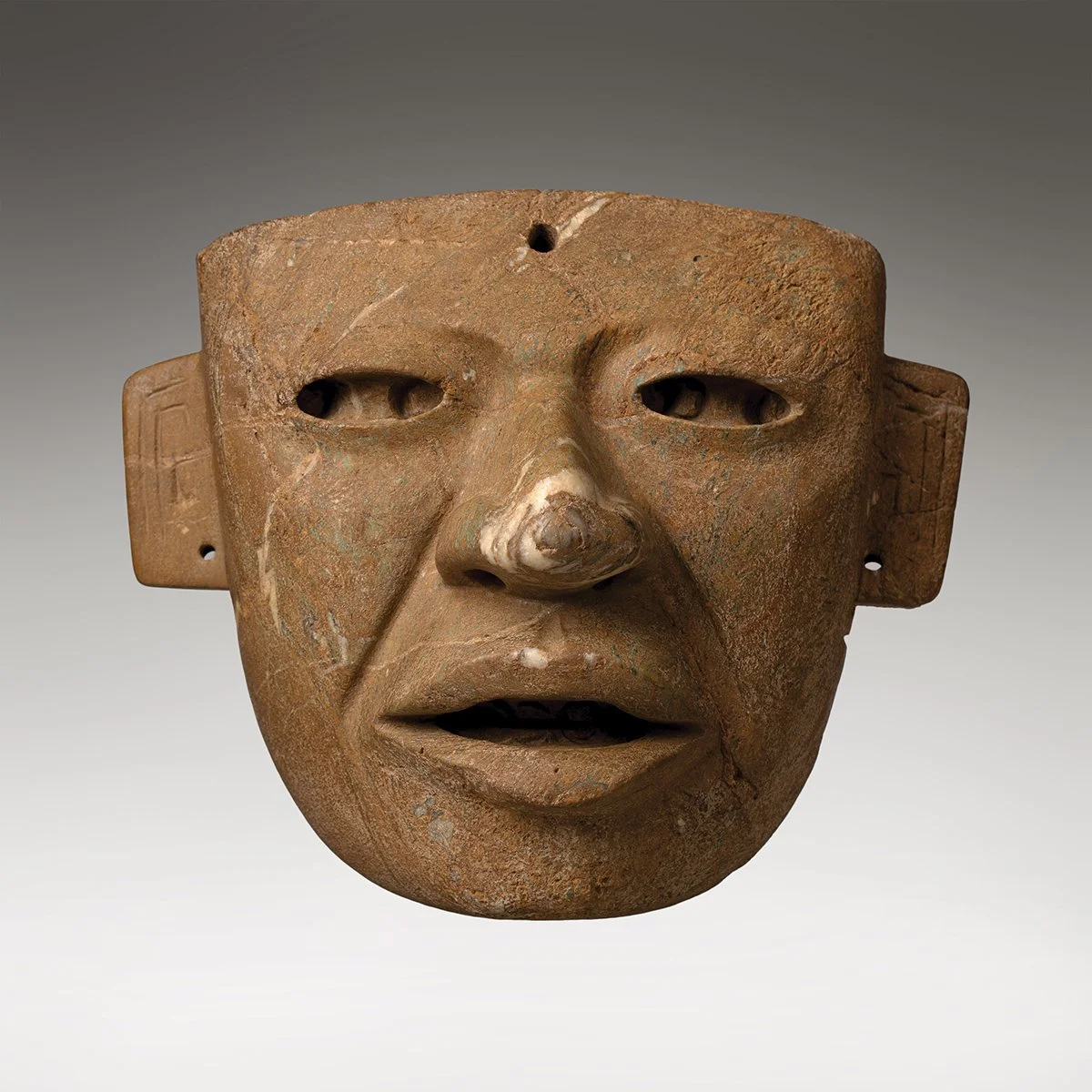 Image 1 of 14
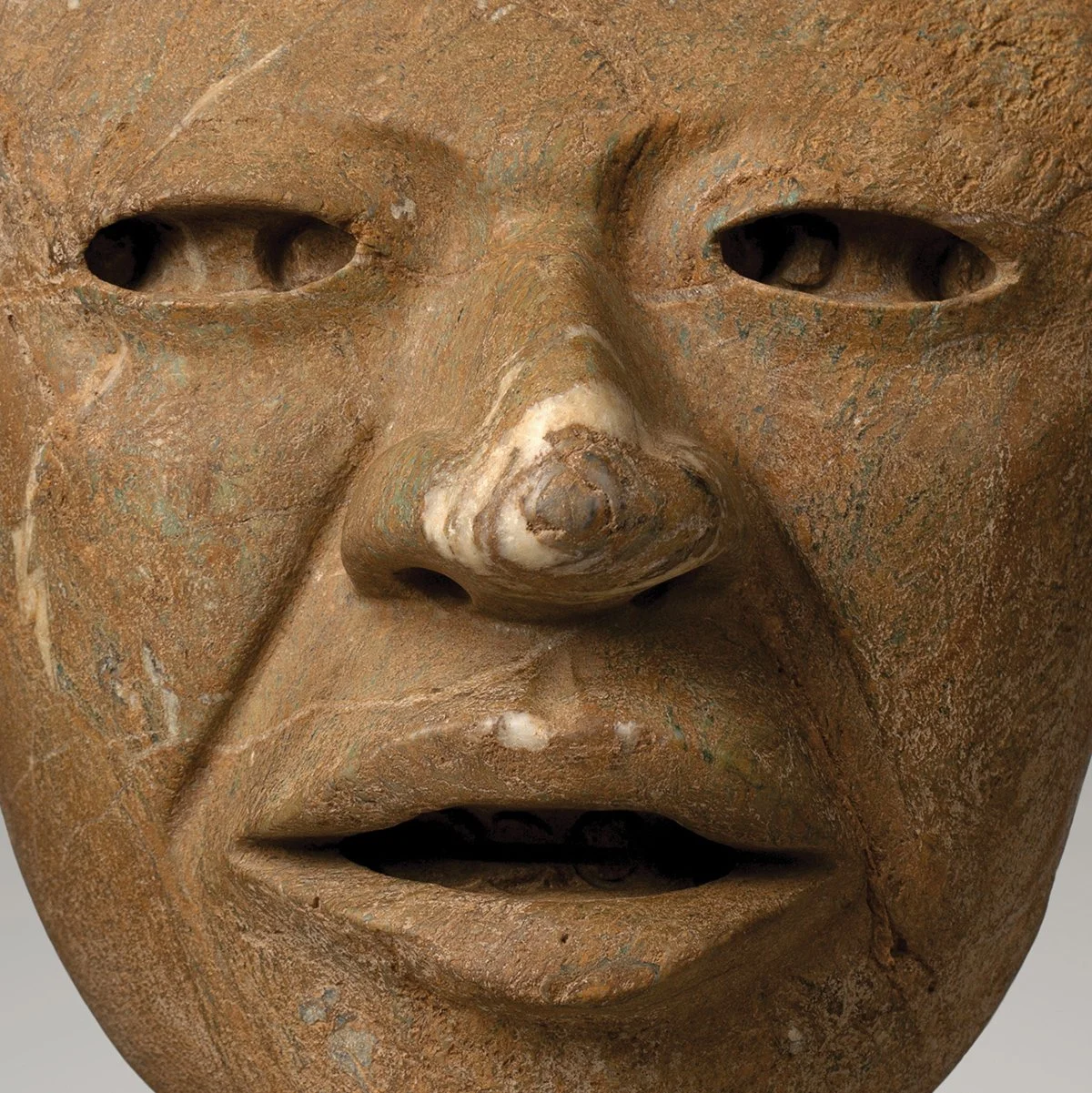 Image 2 of 14
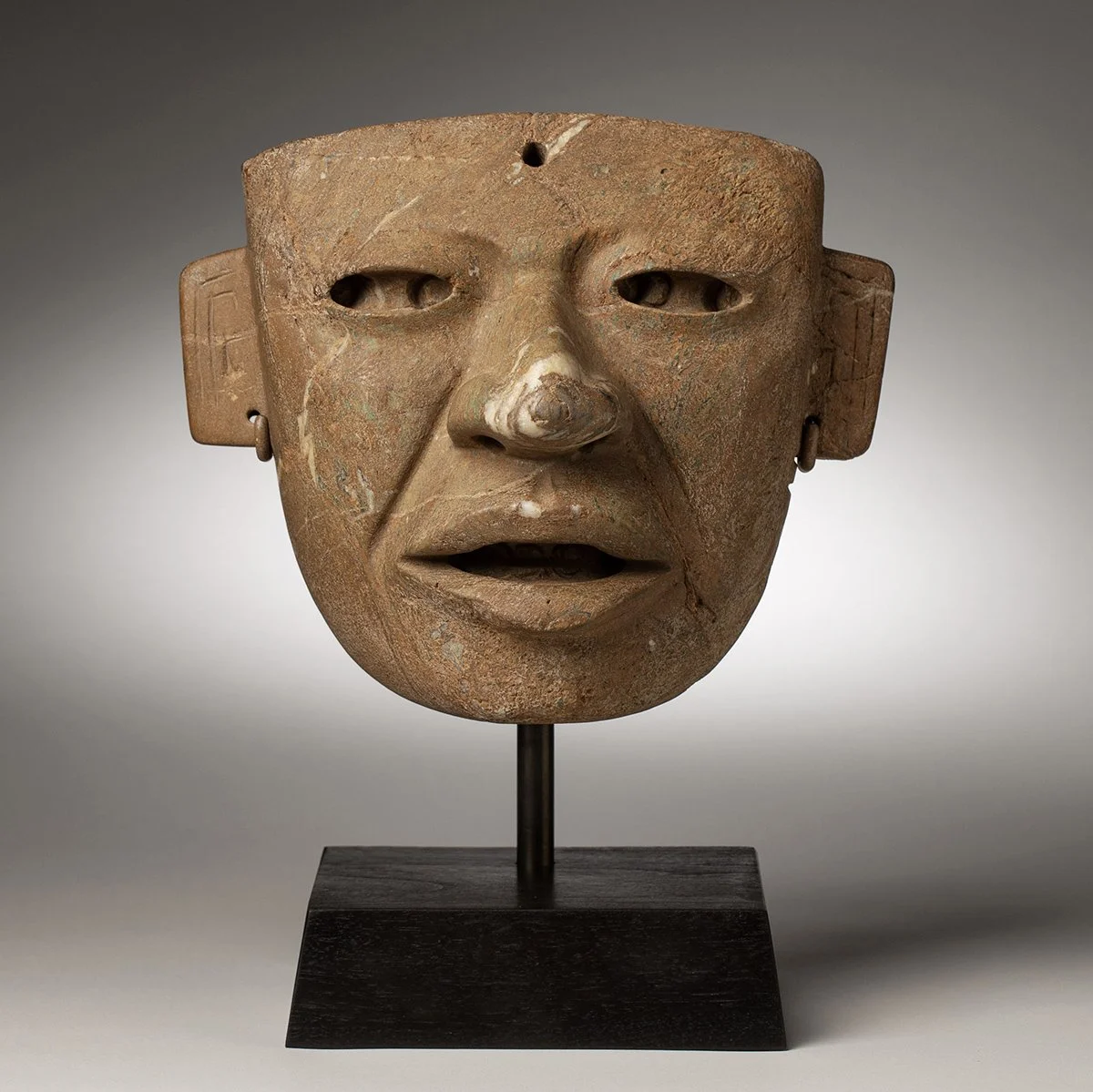 Image 3 of 14
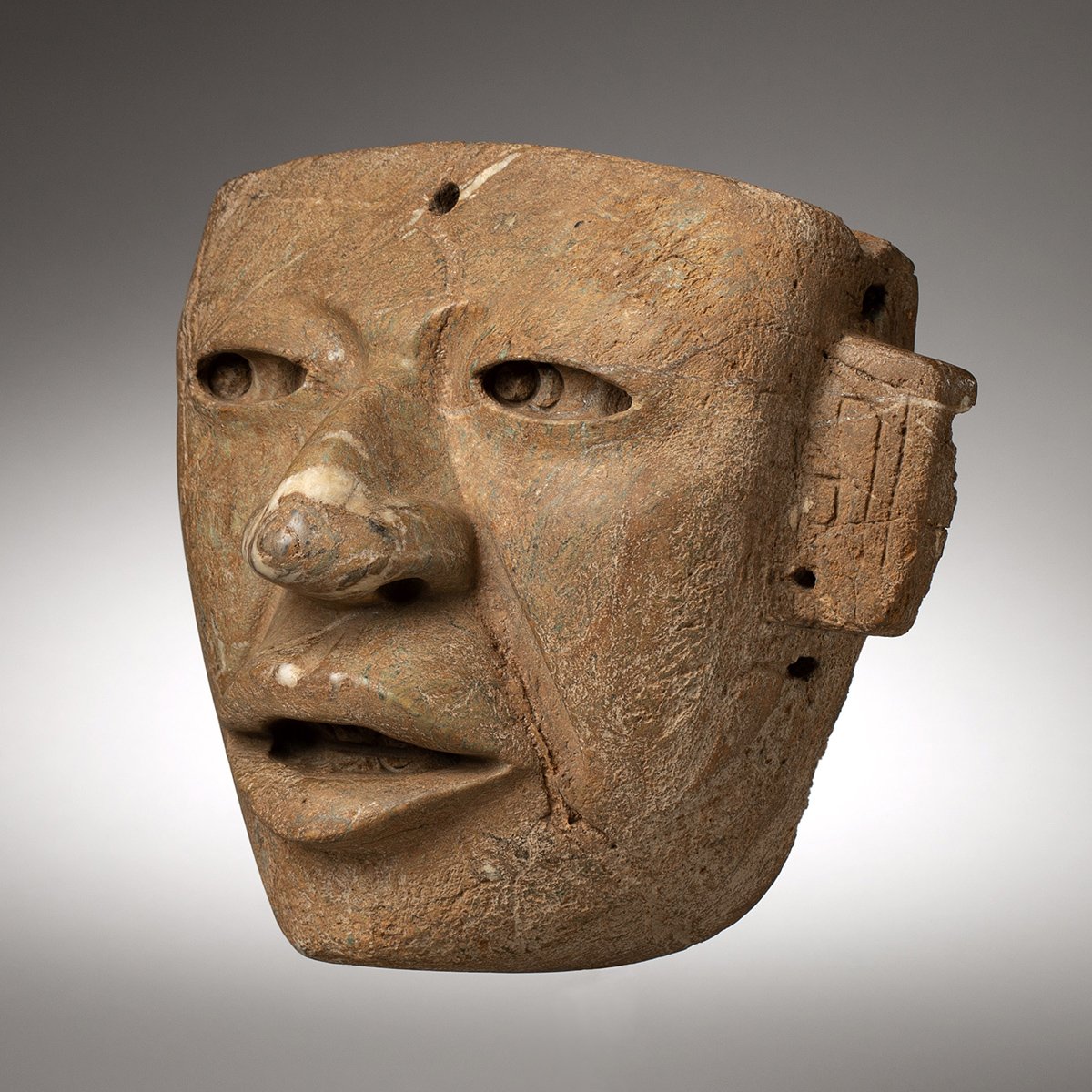 Image 4 of 14
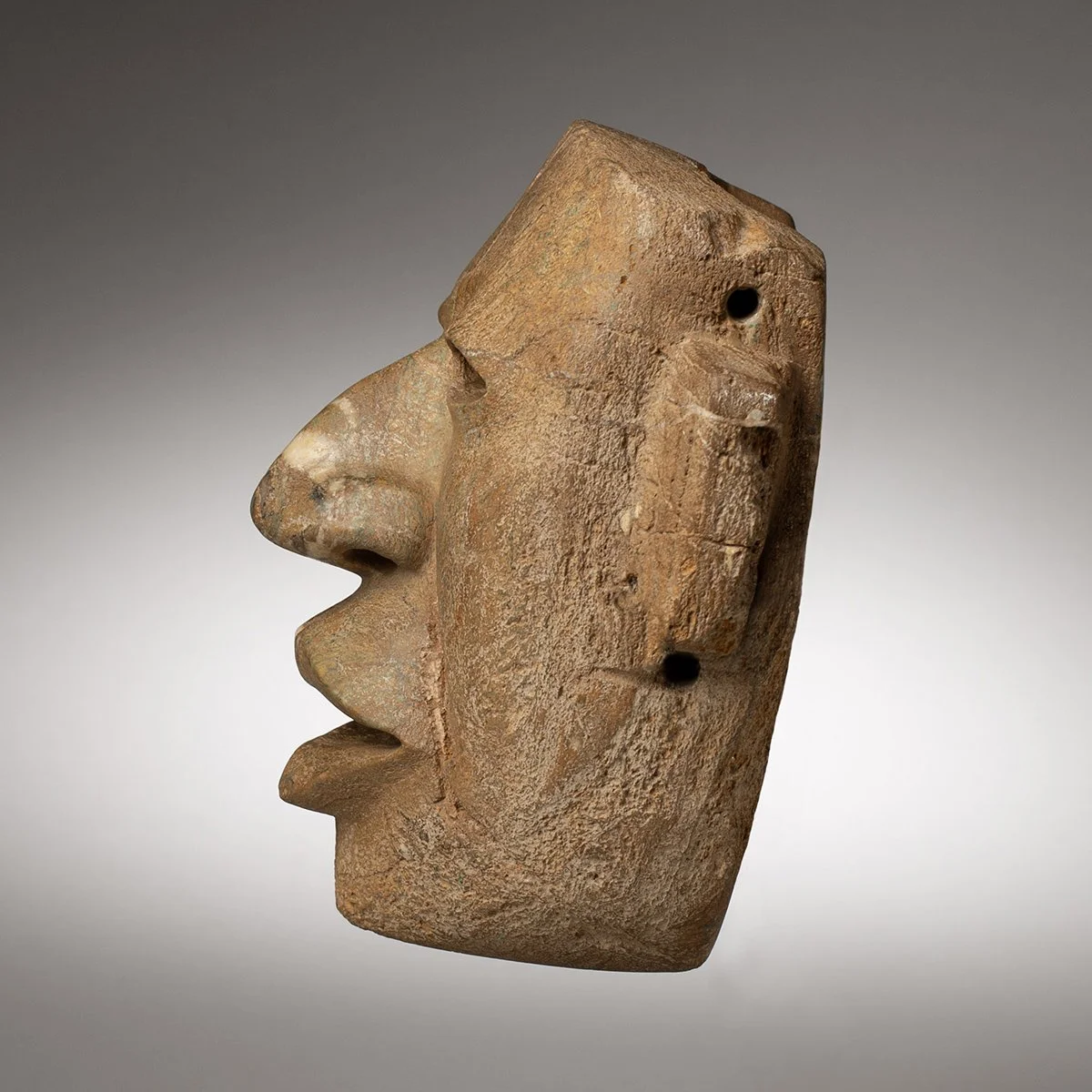 Image 5 of 14
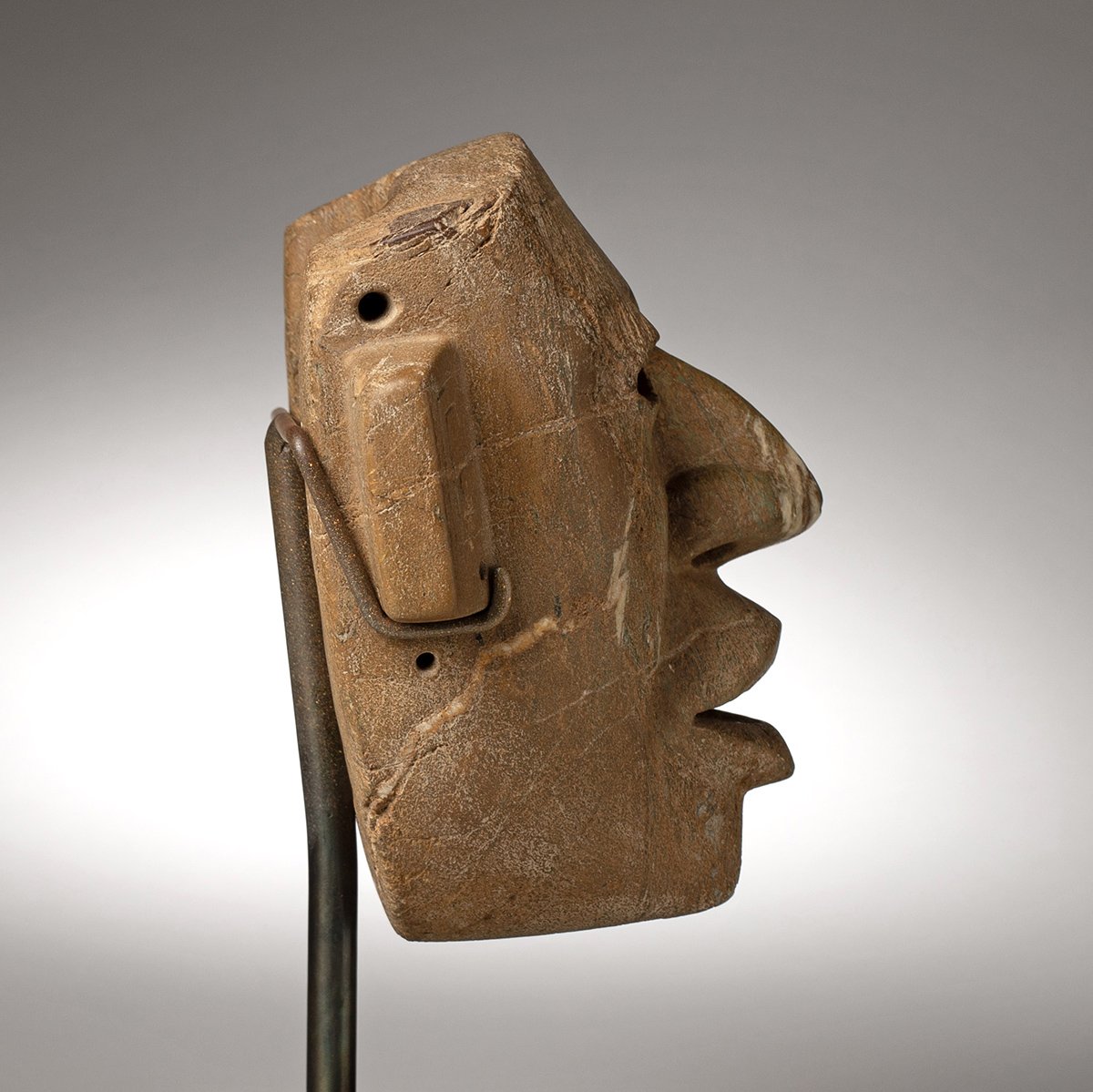 Image 6 of 14
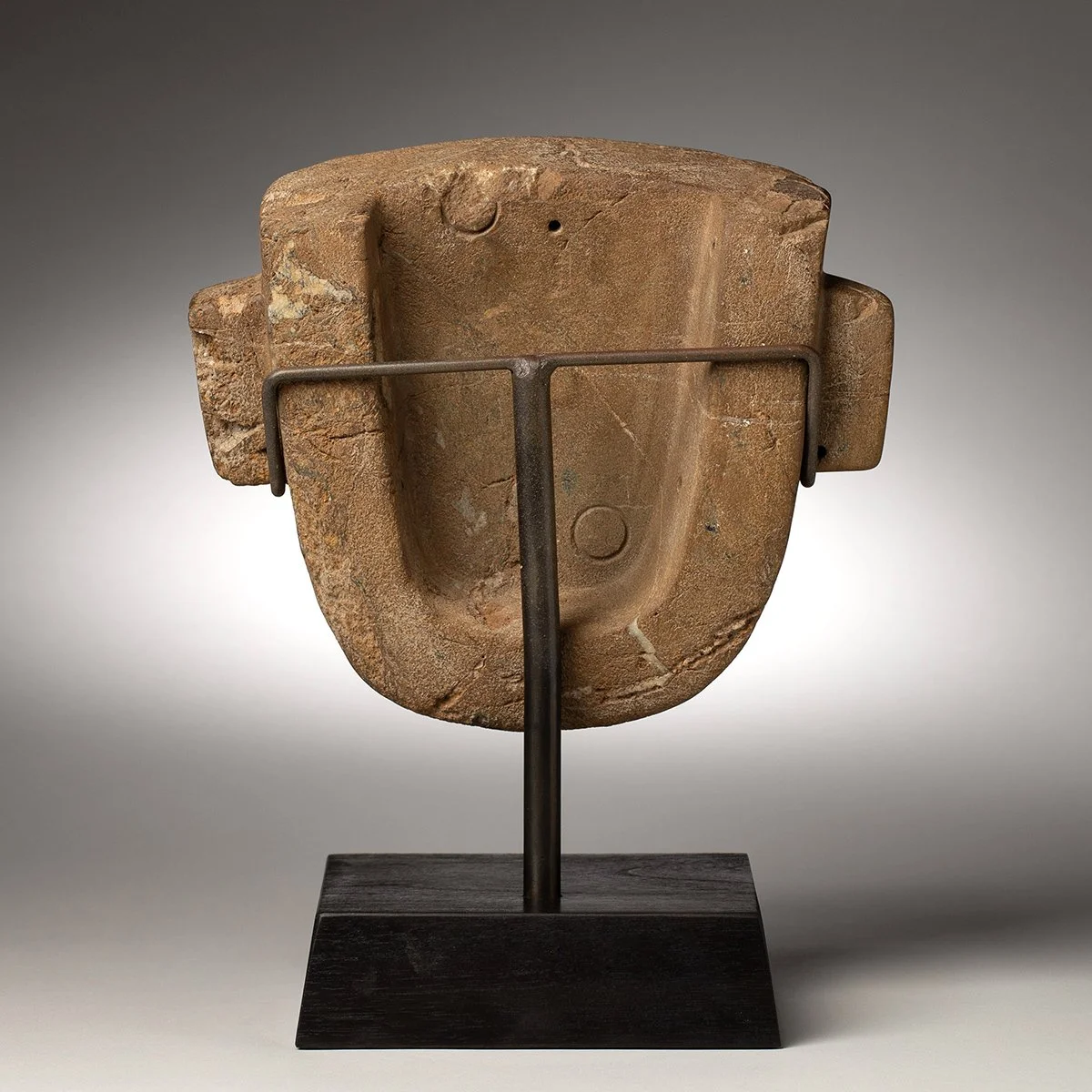 Image 7 of 14
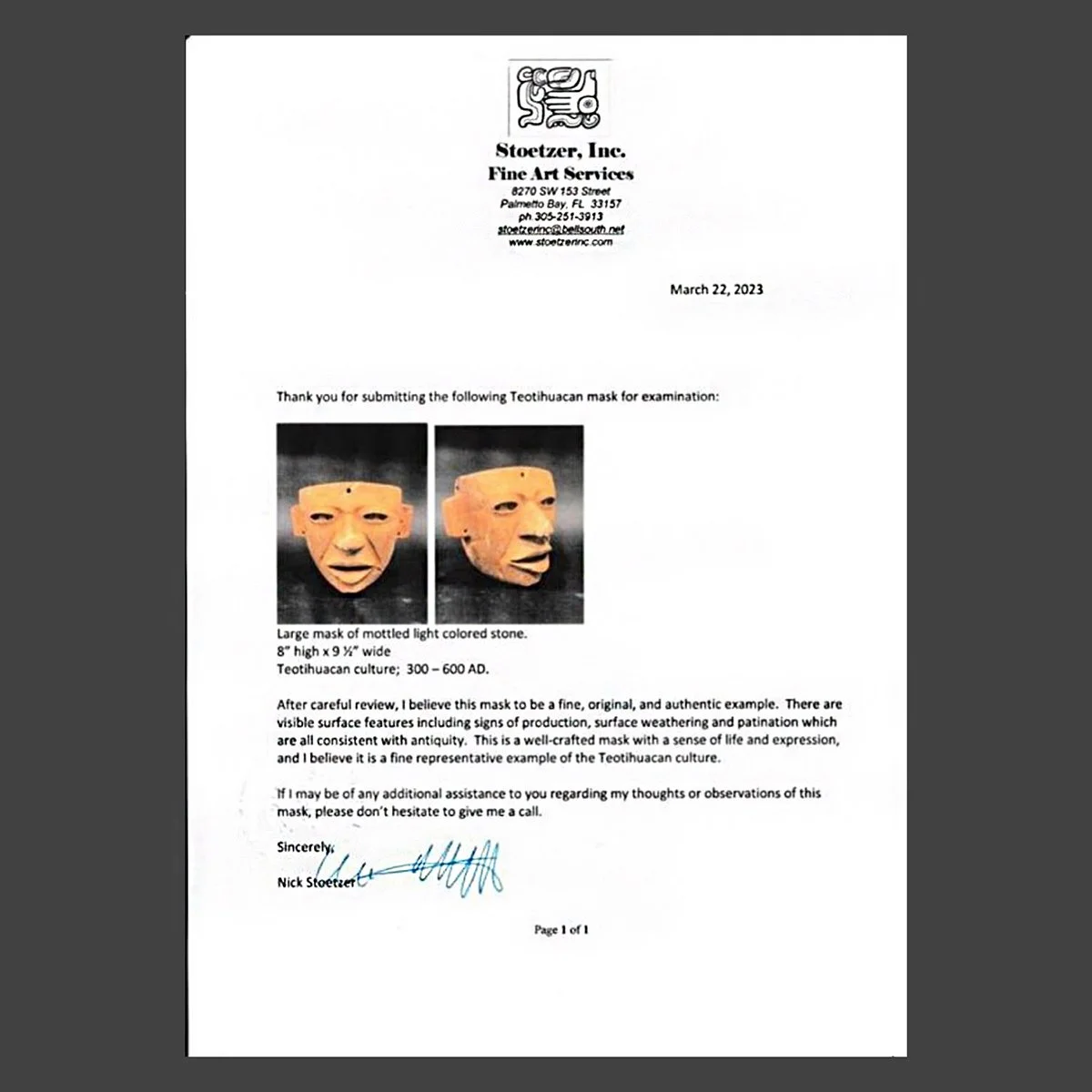 Image 8 of 14
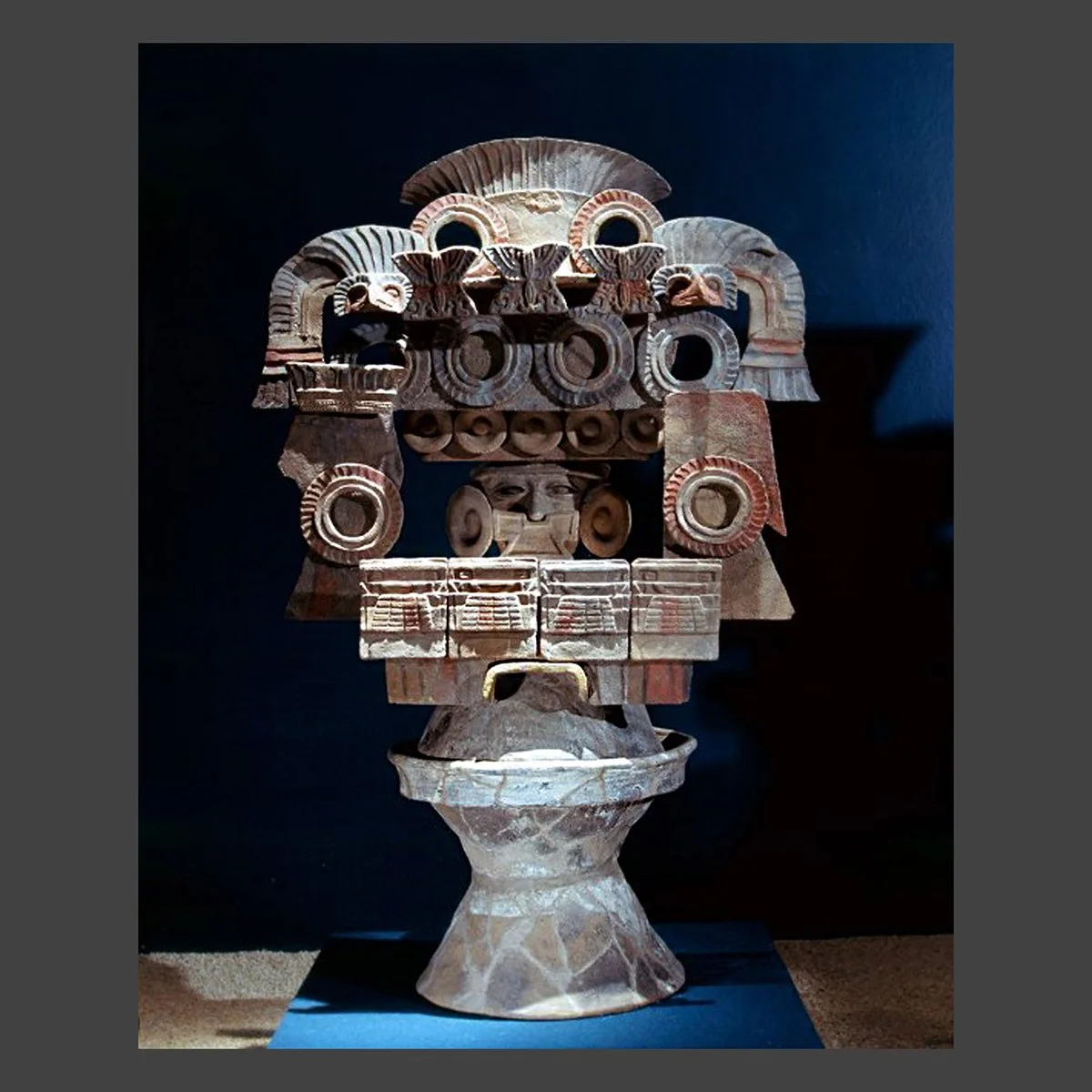 Image 9 of 14
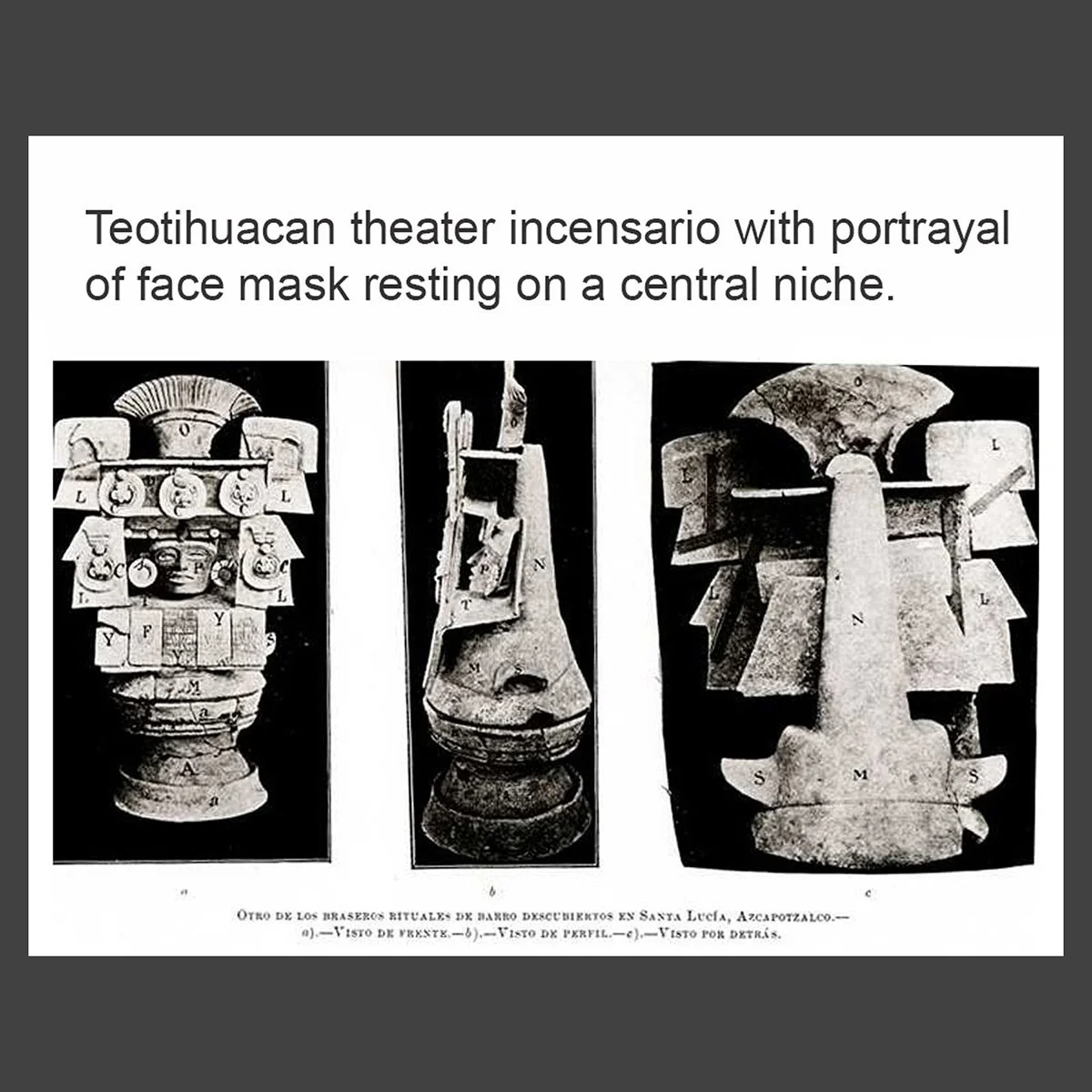 Image 10 of 14
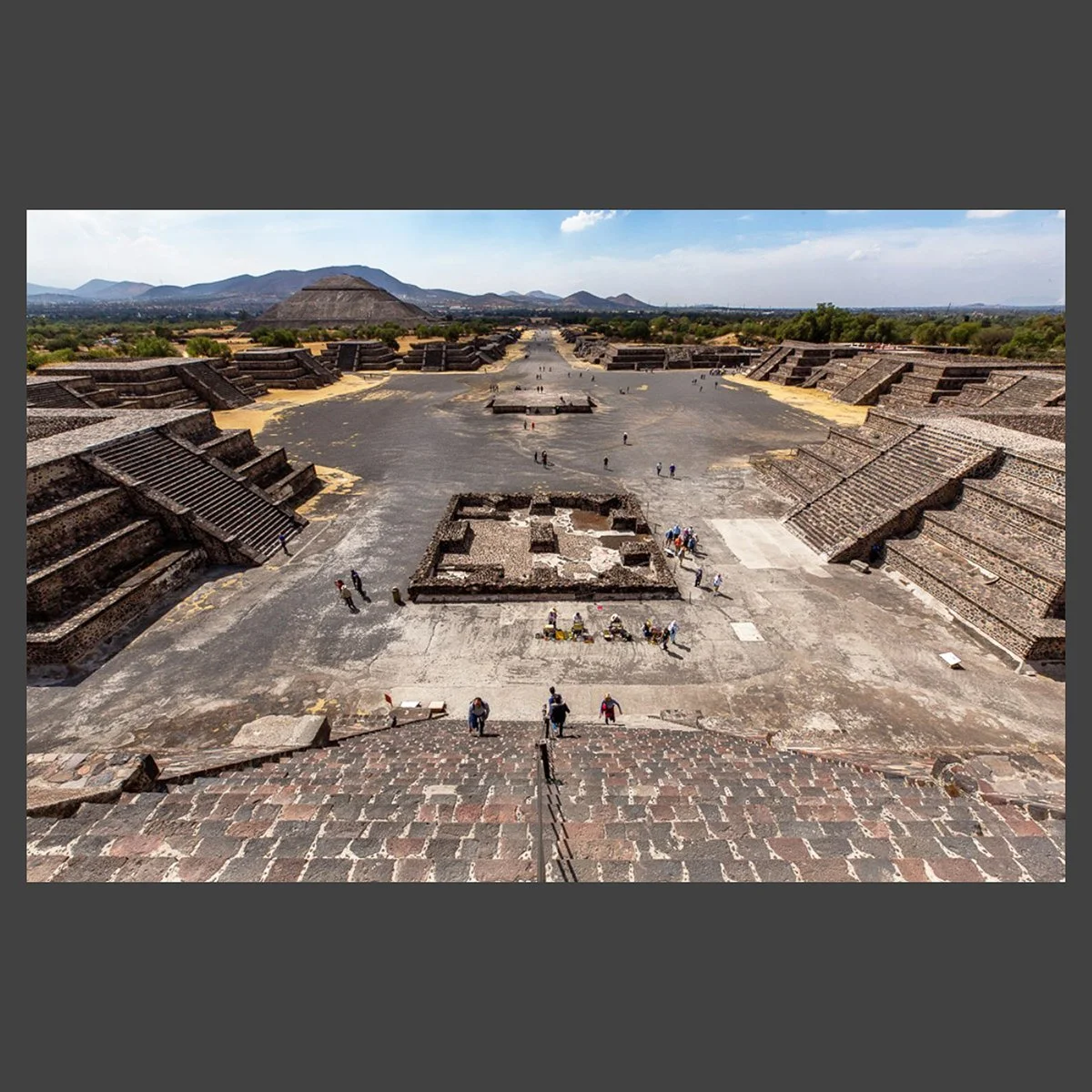 Image 11 of 14
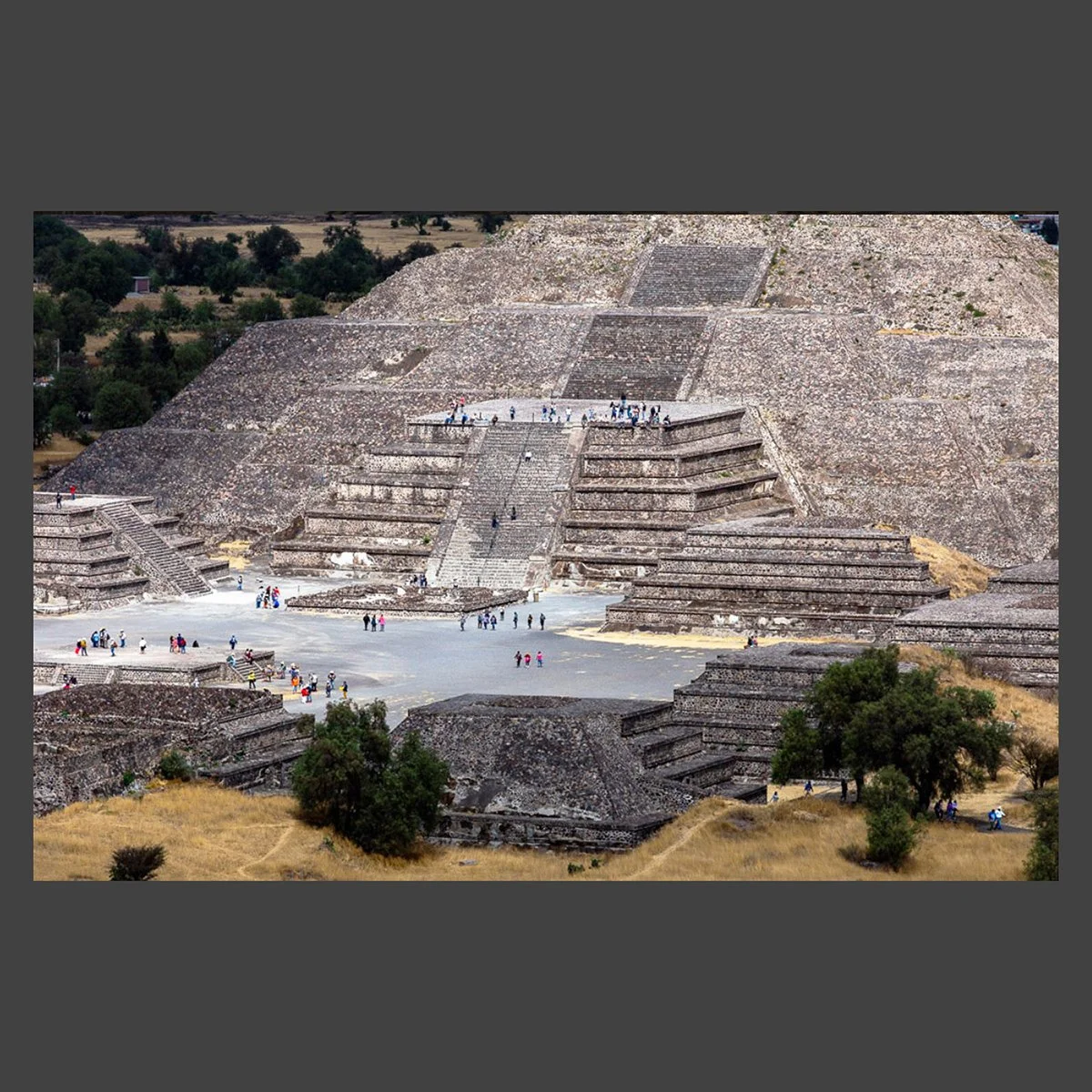 Image 12 of 14
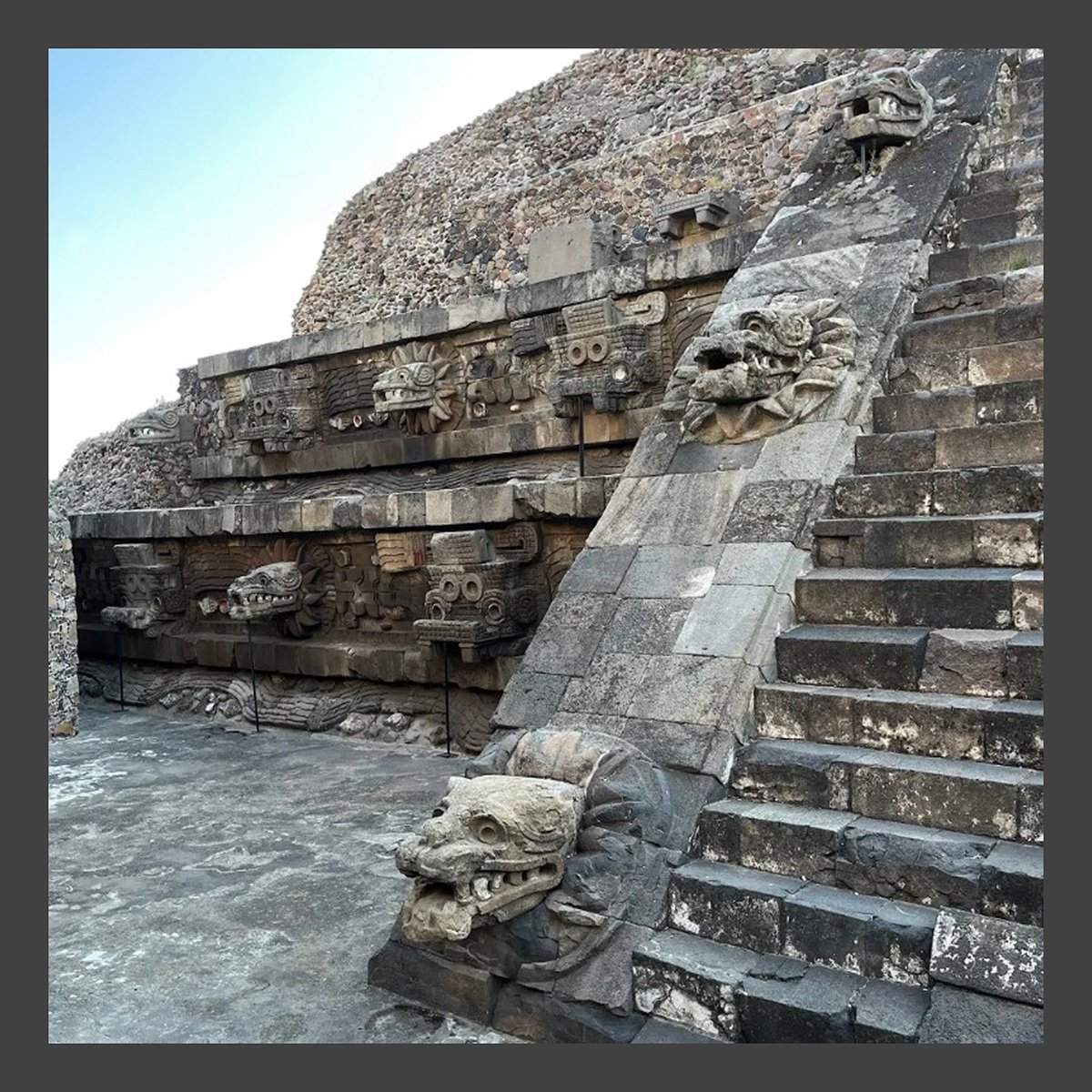 Image 13 of 14
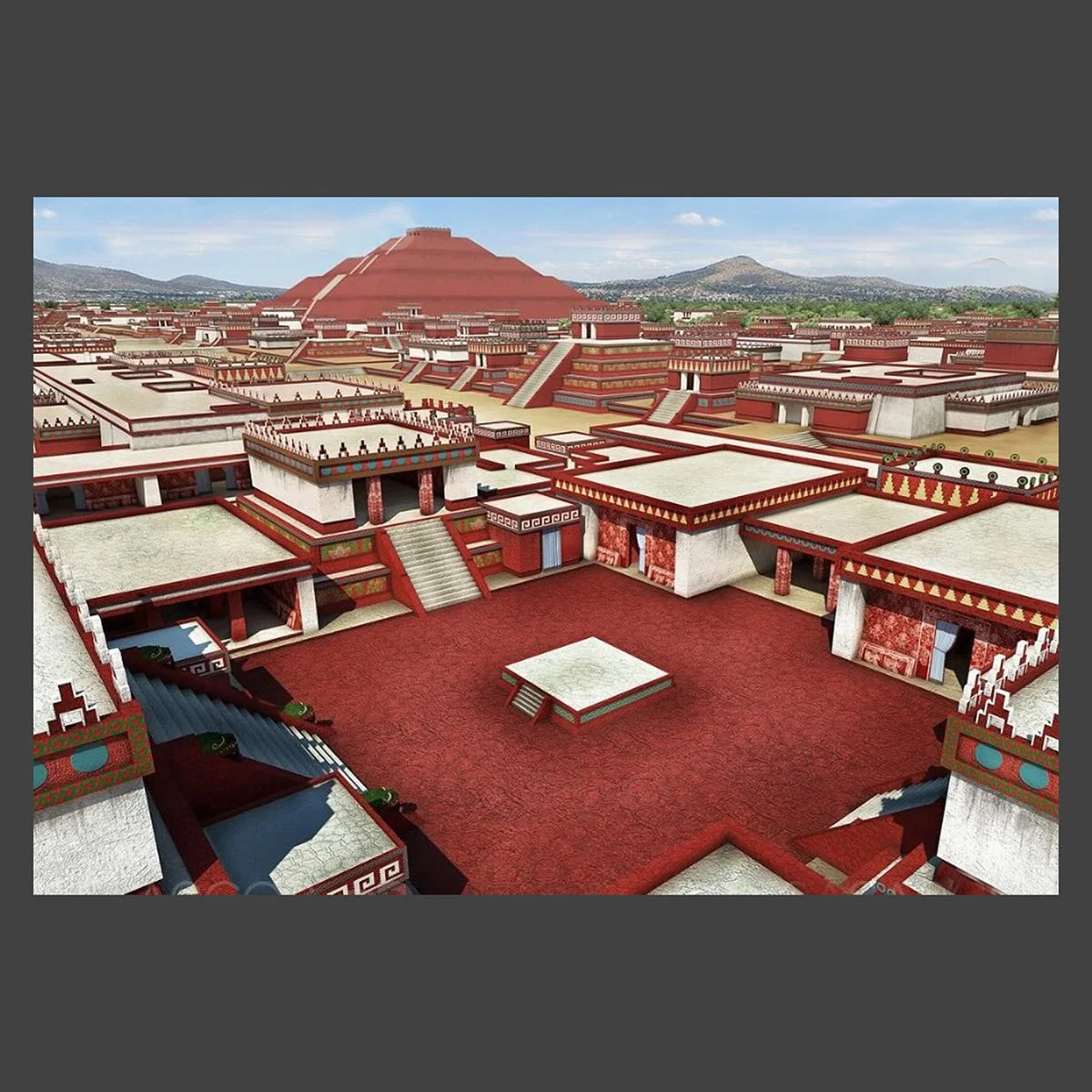 Image 14 of 14