Circa 1900
Height 8"
Provenance: From the Collection of Elizabeth Willis De Huff (1886-1983), thence by descent
An artist, educator, and author, Elizabeth Willis De Huff is perhaps best known as one of the primary contributors to the development of Native American easel painting in Santa Fe in the first quarter of the 20th century. As a result of the Bureau of Indian Affairs prohibiting arts training at the Santa Fe Indian School (where her husband John D. De Huff was for a time superintendent), De Huff taught painting to students out of her own home. Among her first students were Hopi artists Fred Kabotie and Otis Polelonema, Velino Shije Herrera of Zuni, and Awa Tsireh of San Ildefonso Pueblo. The education De Huff's students received from her has been described as a seminal event in the evolution of the so-called "Southwest Movement of Native American painting." While her collection of nearly 200 original drawings and watercolors by Pueblo, Navajo, Apache, Cheyenne, and Kiowa artists is at the Beinecke Rare Book and Manuscript Library at Yale University, her personal collection of katsina figures has remained within the family until now. See Kabotie, Fred and Belknap, Bill, Fred Kabotie: Hopi Indian Artist, 1977, Museum of Northern Arizona with Northland Press, Flagstaff, AZ, p. 28, where Kabotie recounts: "That was how my painting began, in the school year of 1916-17. Mrs. De Huff got me some drawing paper and watercolors and I started painting things I remembered from home, mostly kachinas. When you're so remote from your own people you get lonesome. You don't paint what's around you, you paint what you have in mind. Loneliness moves you to express something of your home, your background. The first time Mrs. De Huff saw my kachinas, she asked, 'What are these?' She didn't know anything about them."
An old collection tag attached identifying the figure as "Kau-a-Kachin Mana" and referencing Wright, Barton, Kachinas: A Hopi artist's documentary, 1973, Northland Press, Flagstaff with Heard Museum, Phoenix, AZ, p. 179. See also Colton, Harold S., Hopi Kachina Dolls with a Key to their Identification, 1959 (revised edition), University of New Mexico Press, Albuquerque, NM, p. 61, number 176. In a period photograph likely dating to circa 1920, Elizabeth De Huff is pictured with a selection of the figures in the collection. The present Katsina can be seen hanging above the lintel, midway left from center.
INQUIRE HERE
Circa 1900
Height 8"
Provenance: From the Collection of Elizabeth Willis De Huff (1886-1983), thence by descent
An artist, educator, and author, Elizabeth Willis De Huff is perhaps best known as one of the primary contributors to the development of Native American easel painting in Santa Fe in the first quarter of the 20th century. As a result of the Bureau of Indian Affairs prohibiting arts training at the Santa Fe Indian School (where her husband John D. De Huff was for a time superintendent), De Huff taught painting to students out of her own home. Among her first students were Hopi artists Fred Kabotie and Otis Polelonema, Velino Shije Herrera of Zuni, and Awa Tsireh of San Ildefonso Pueblo. The education De Huff's students received from her has been described as a seminal event in the evolution of the so-called "Southwest Movement of Native American painting." While her collection of nearly 200 original drawings and watercolors by Pueblo, Navajo, Apache, Cheyenne, and Kiowa artists is at the Beinecke Rare Book and Manuscript Library at Yale University, her personal collection of katsina figures has remained within the family until now. See Kabotie, Fred and Belknap, Bill, Fred Kabotie: Hopi Indian Artist, 1977, Museum of Northern Arizona with Northland Press, Flagstaff, AZ, p. 28, where Kabotie recounts: "That was how my painting began, in the school year of 1916-17. Mrs. De Huff got me some drawing paper and watercolors and I started painting things I remembered from home, mostly kachinas. When you're so remote from your own people you get lonesome. You don't paint what's around you, you paint what you have in mind. Loneliness moves you to express something of your home, your background. The first time Mrs. De Huff saw my kachinas, she asked, 'What are these?' She didn't know anything about them."
An old collection tag attached identifying the figure as "Kau-a-Kachin Mana" and referencing Wright, Barton, Kachinas: A Hopi artist's documentary, 1973, Northland Press, Flagstaff with Heard Museum, Phoenix, AZ, p. 179. See also Colton, Harold S., Hopi Kachina Dolls with a Key to their Identification, 1959 (revised edition), University of New Mexico Press, Albuquerque, NM, p. 61, number 176. In a period photograph likely dating to circa 1920, Elizabeth De Huff is pictured with a selection of the figures in the collection. The present Katsina can be seen hanging above the lintel, midway left from center.
INQUIRE HERE


 Image 1 of 10
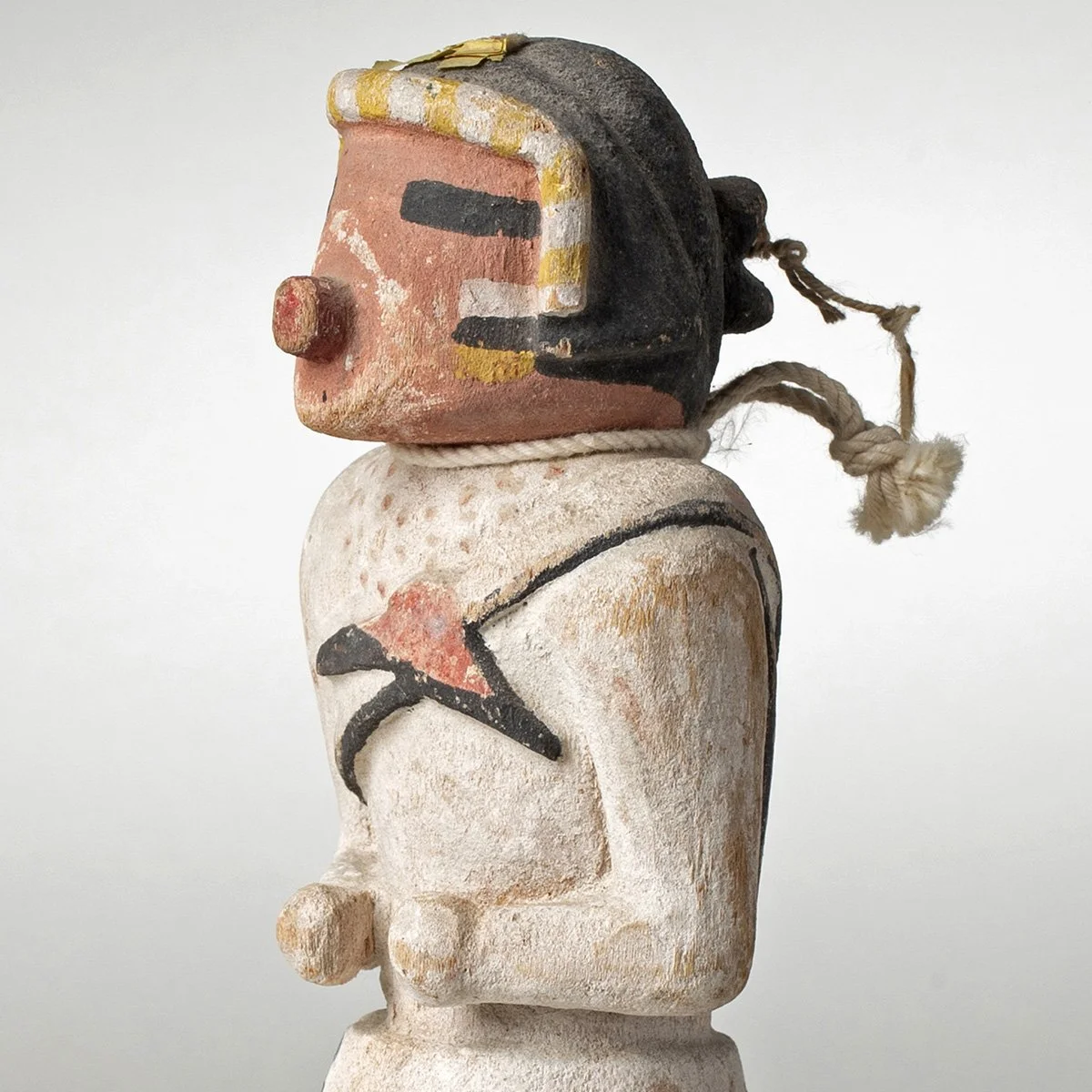 Image 2 of 10
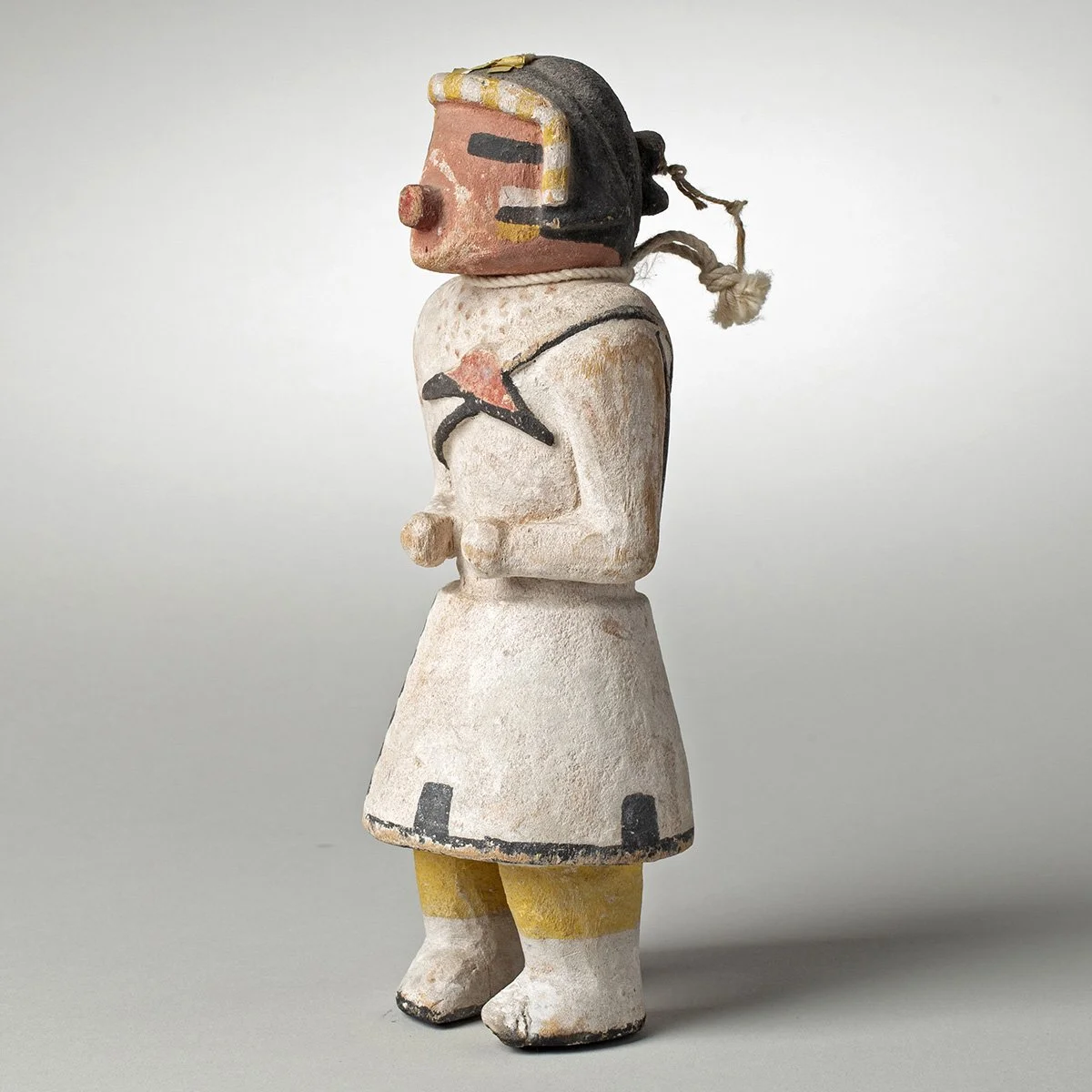 Image 3 of 10
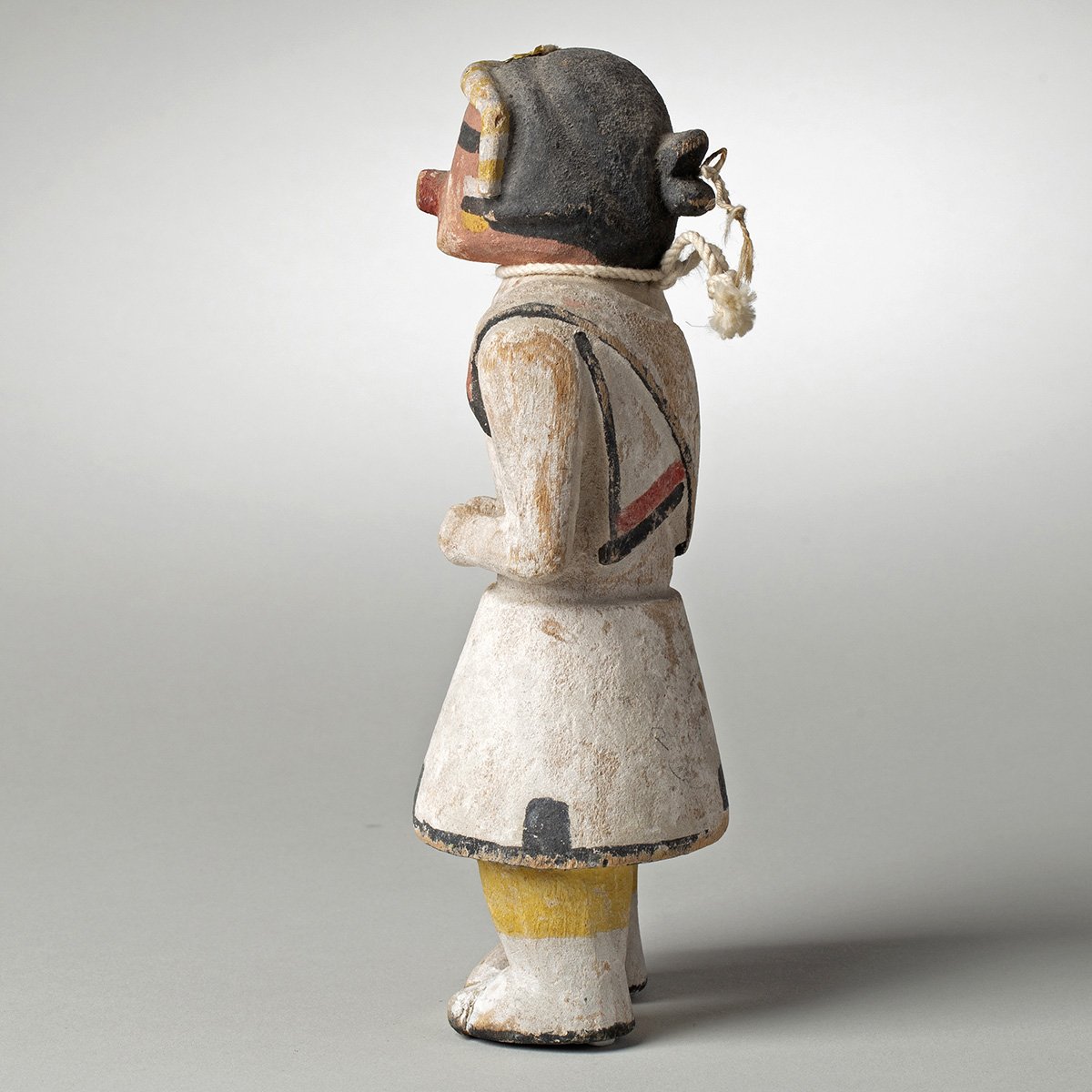 Image 4 of 10
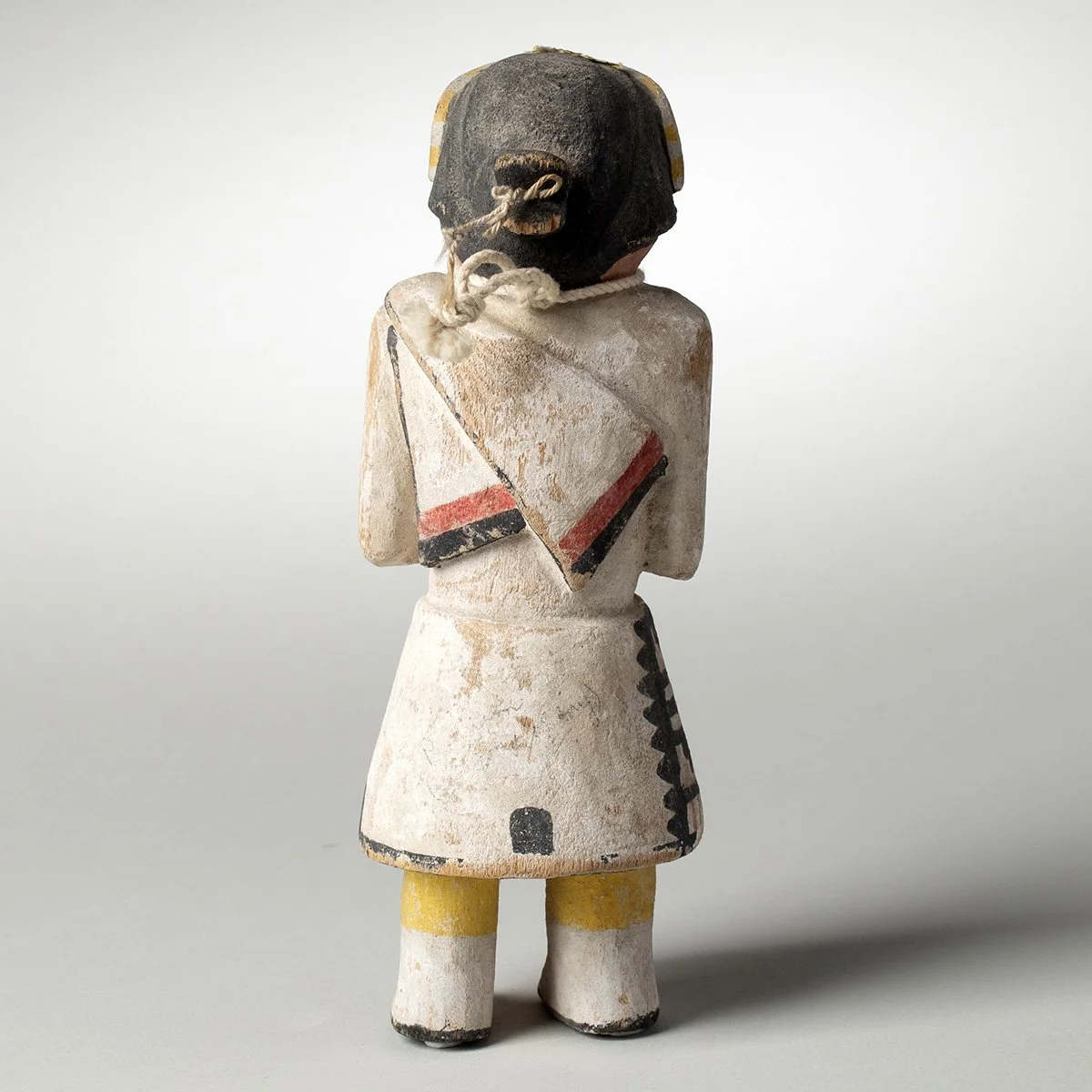 Image 5 of 10
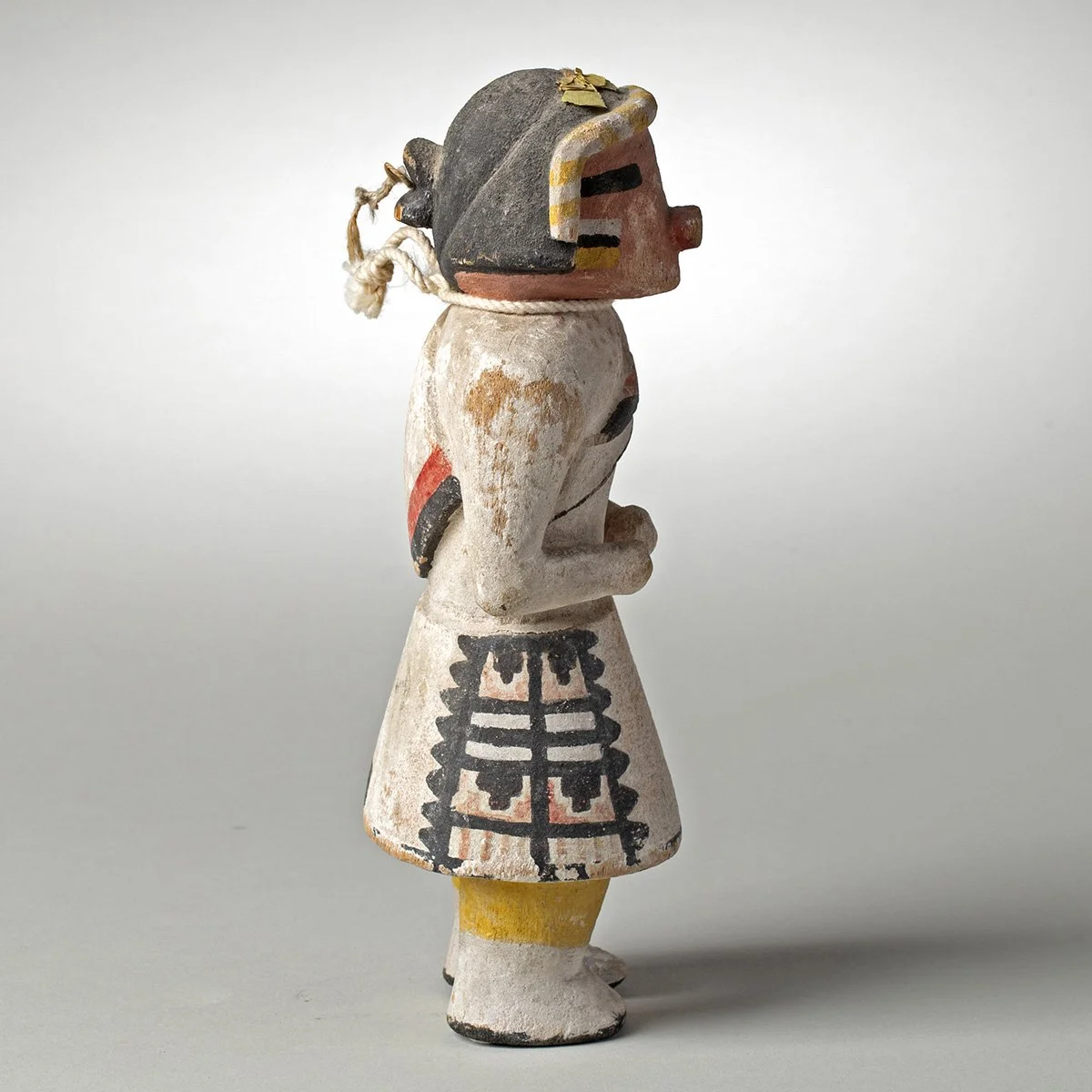 Image 6 of 10
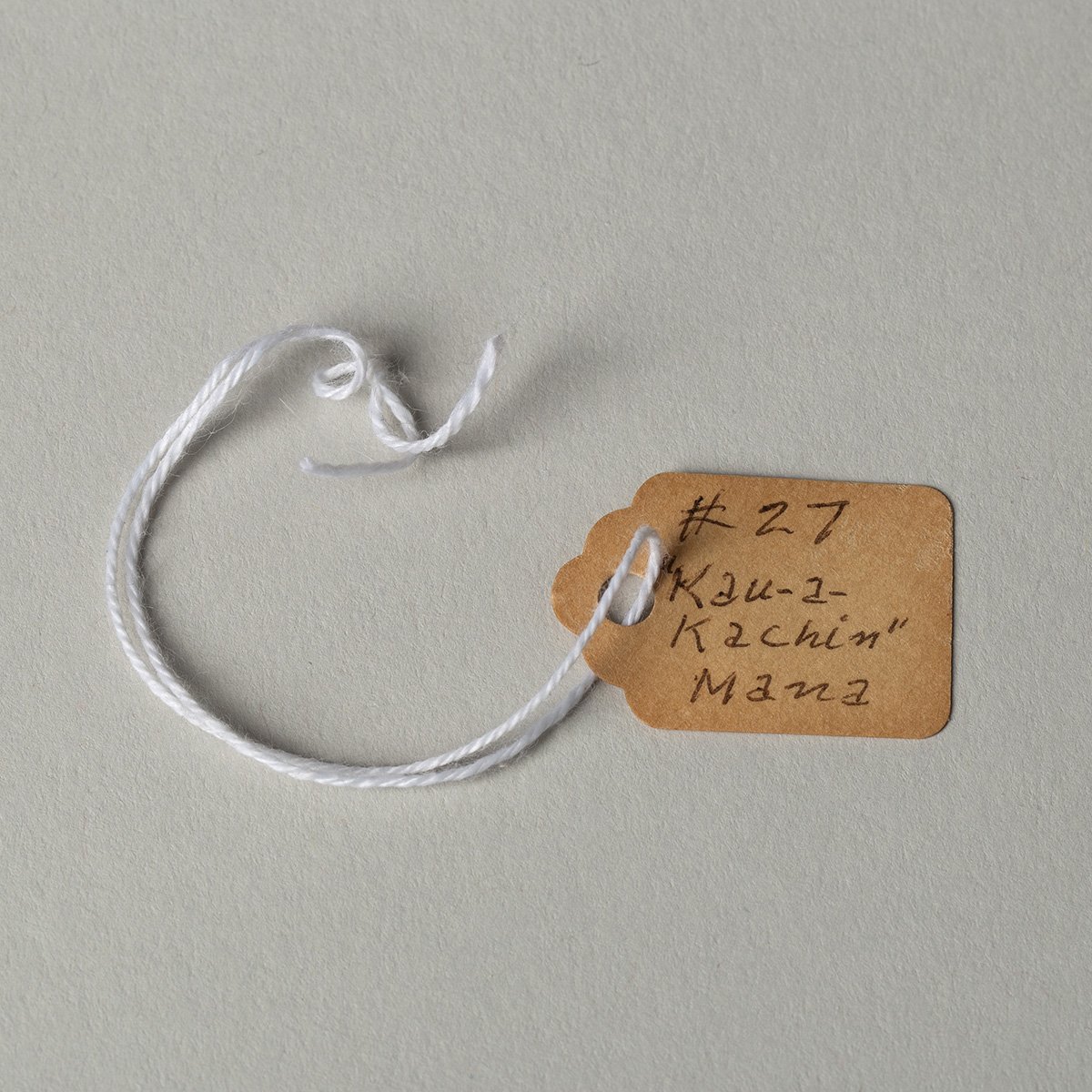 Image 7 of 10
 Image 8 of 10
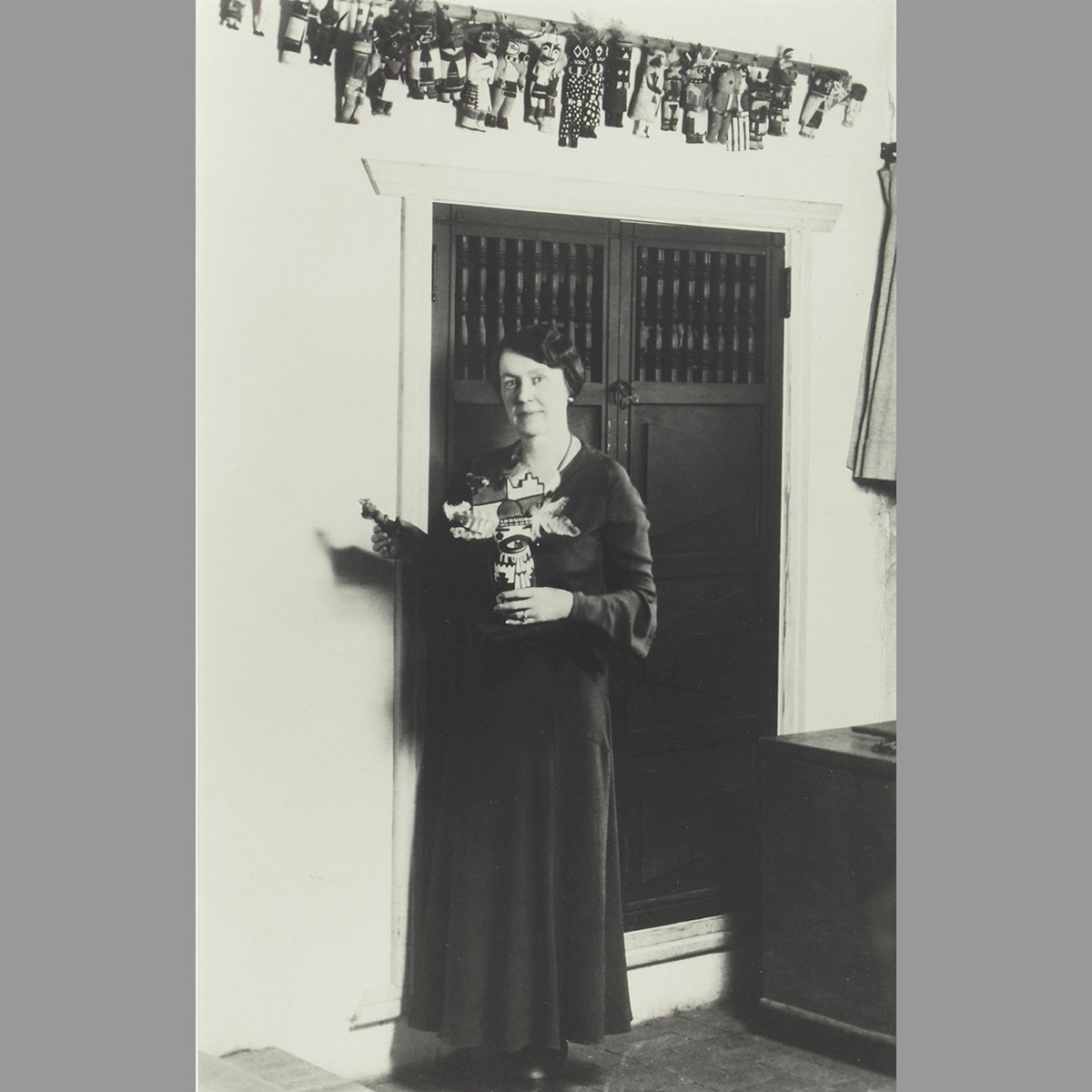 Image 9 of 10
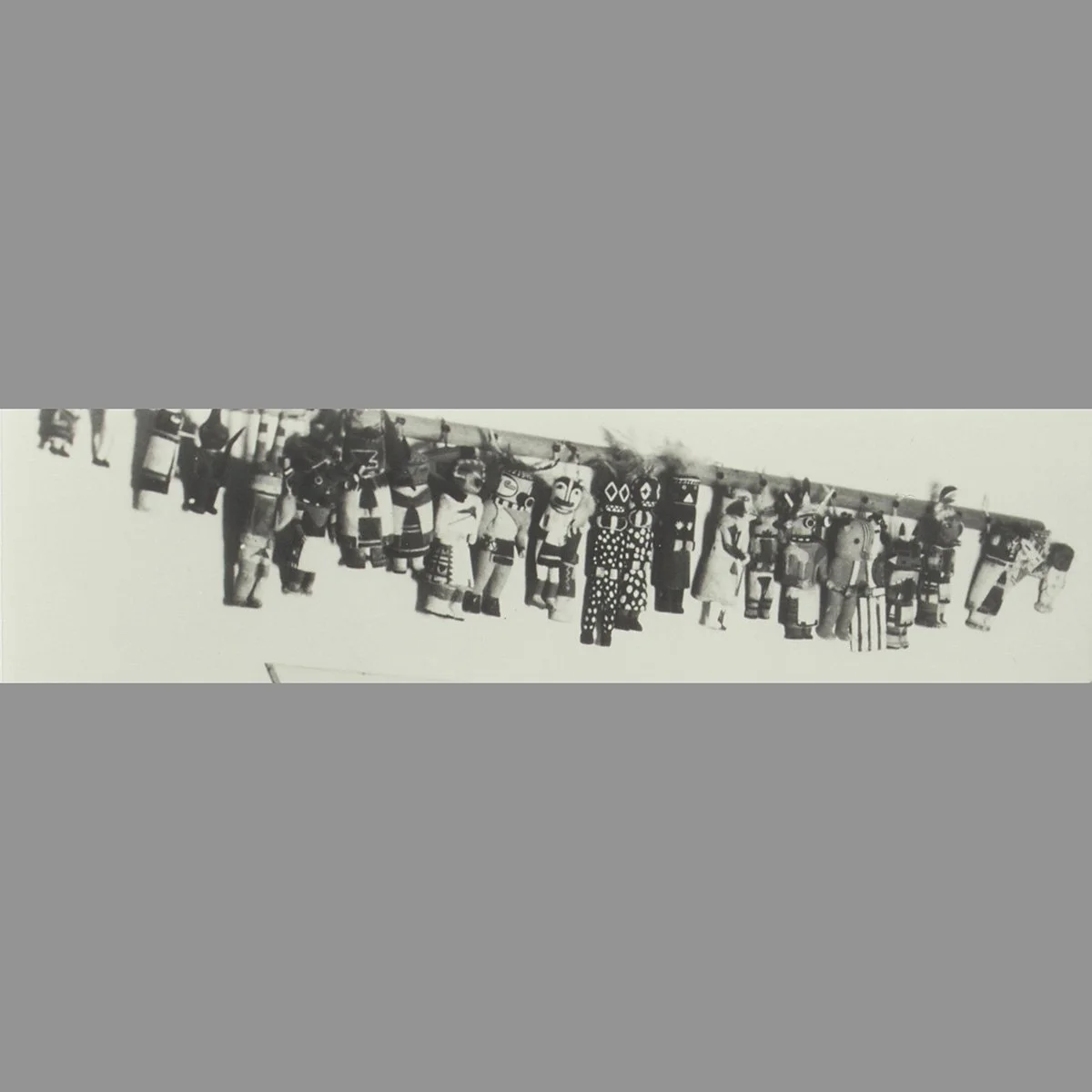 Image 10 of 10