

 Image 1 of 2
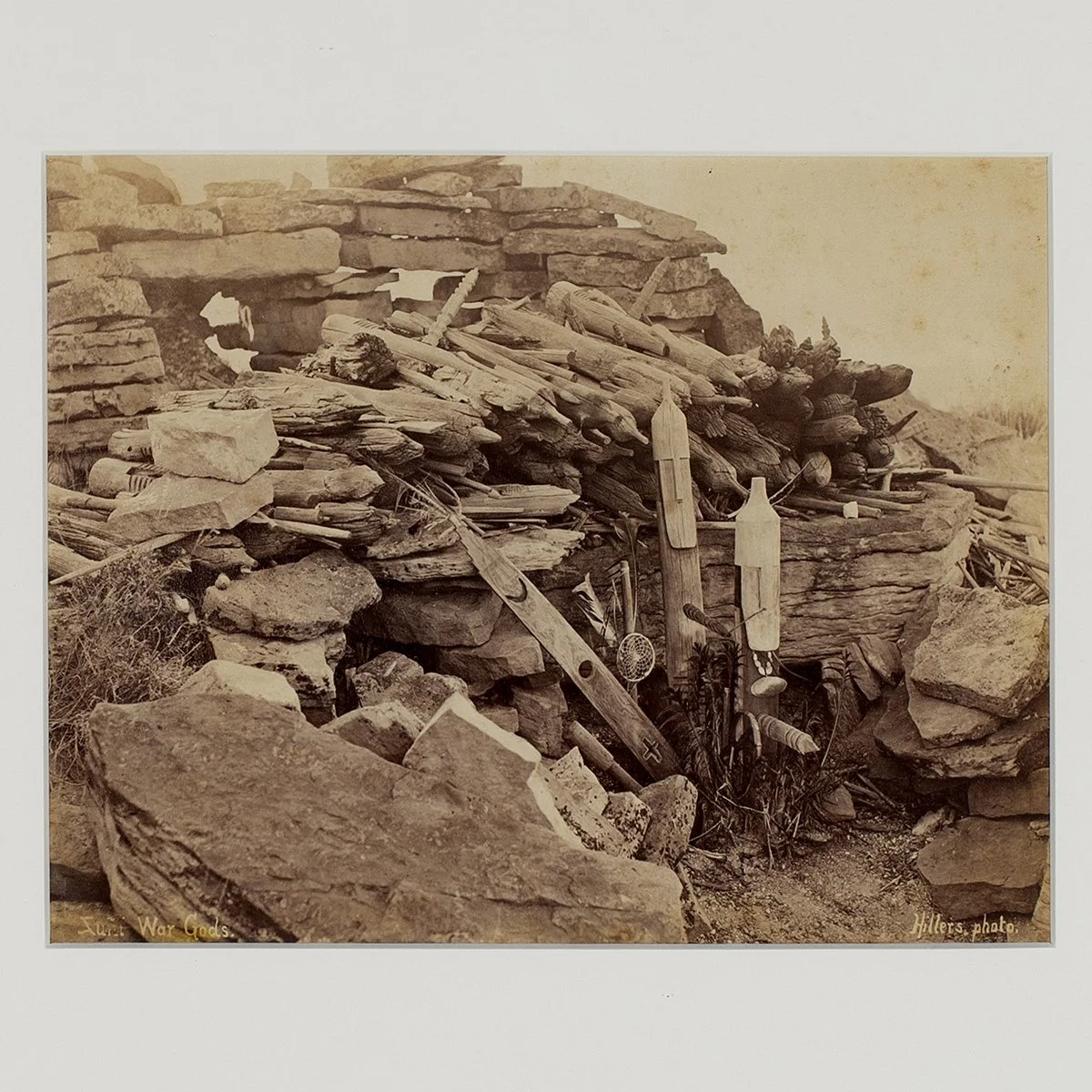 Image 2 of 2
Albumen print
1879
Height 22" Width 23" including archival frame
Image Height 7" Width 9"
Provenance: Private collection, Santa Fe, NM
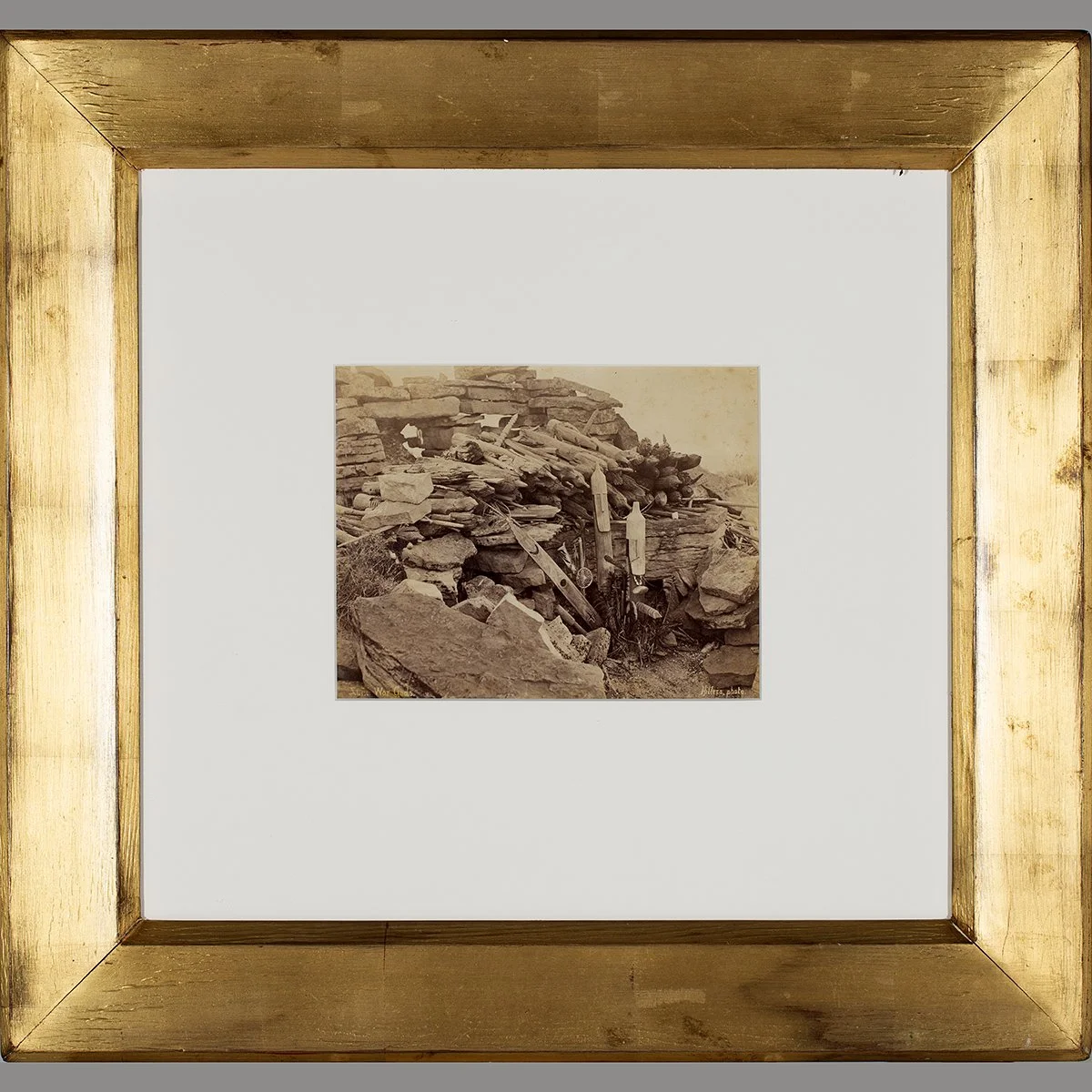
As an oarsman on John Wesley Powell's Grand Canyon expedition of 1871, Hillers first took up the camera in order to substitute for the party's unruly photographer. Powell later became the director of the Smithsonian Institution's Bureau of Ethnology, and in 1879 he assigned Hillers to photograph the indigenous settlements of New Mexico before they were changed by the completion of the Southern Pacific Railroad. Hillers's vision, free of either sensationalism or nostalgia, is typified by this photograph of figures representing the Zuni war god Ahayuda. After their ceremonial use, these sacred carvings, made from lightning-struck pine trees, were installed in an exposed mountain shrine such as shown here, where they stood upright in front of an ever-growing chancel wall composed of their predecessors.
Albumen print
1879
Height 22" Width 23" including archival frame
Image Height 7" Width 9"
Provenance: Private collection, Santa Fe, NM
As an oarsman on John Wesley Powell's Grand Canyon expedition of 1871, Hillers first took up the camera in order to substitute for the party's unruly photographer. Powell later became the director of the Smithsonian Institution's Bureau of Ethnology, and in 1879 he assigned Hillers to photograph the indigenous settlements of New Mexico before they were changed by the completion of the Southern Pacific Railroad. Hillers's vision, free of either sensationalism or nostalgia, is typified by this photograph of figures representing the Zuni war god Ahayuda. After their ceremonial use, these sacred carvings, made from lightning-struck pine trees, were installed in an exposed mountain shrine such as shown here, where they stood upright in front of an ever-growing chancel wall composed of their predecessors.