

 Image 1 of 2
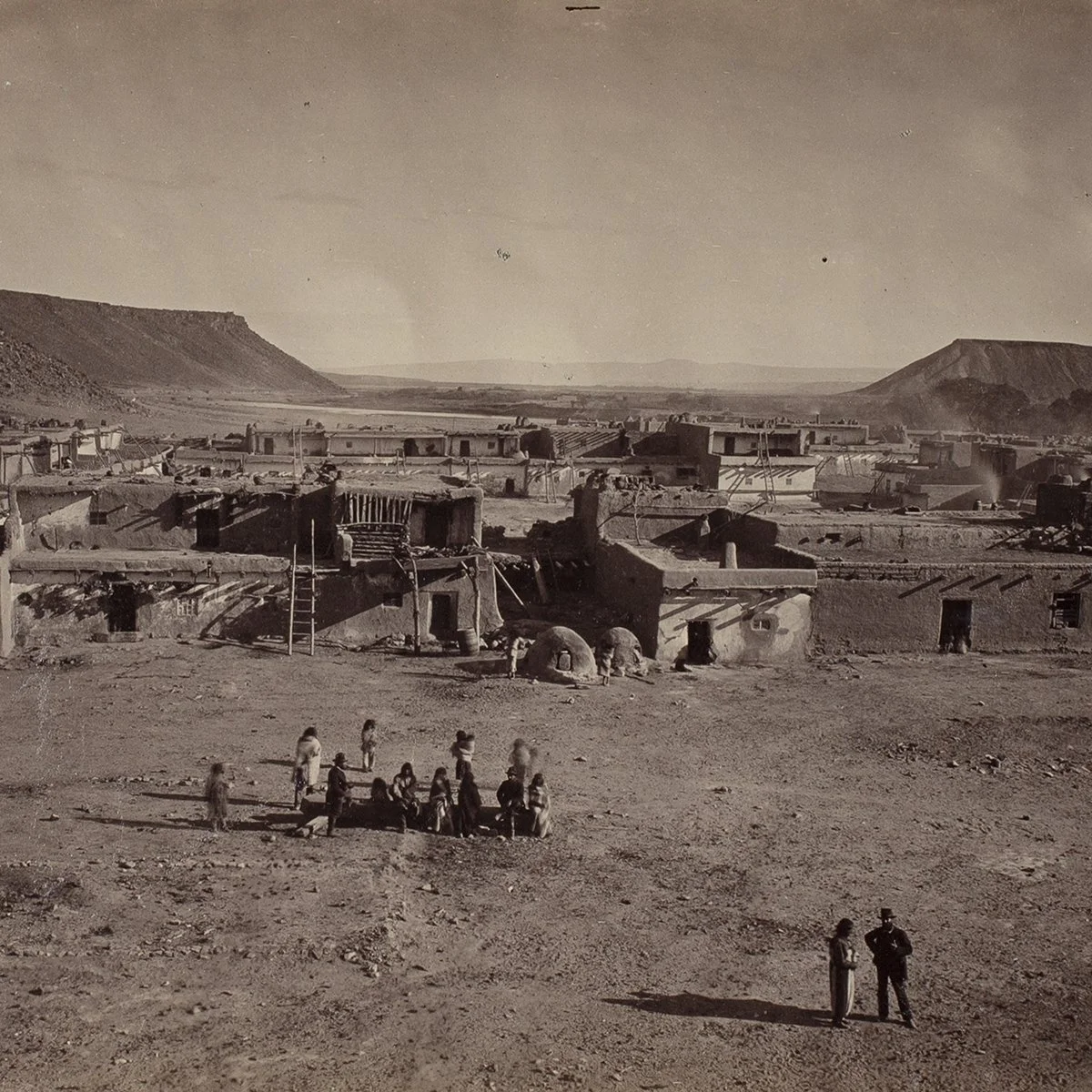 Image 2 of 2
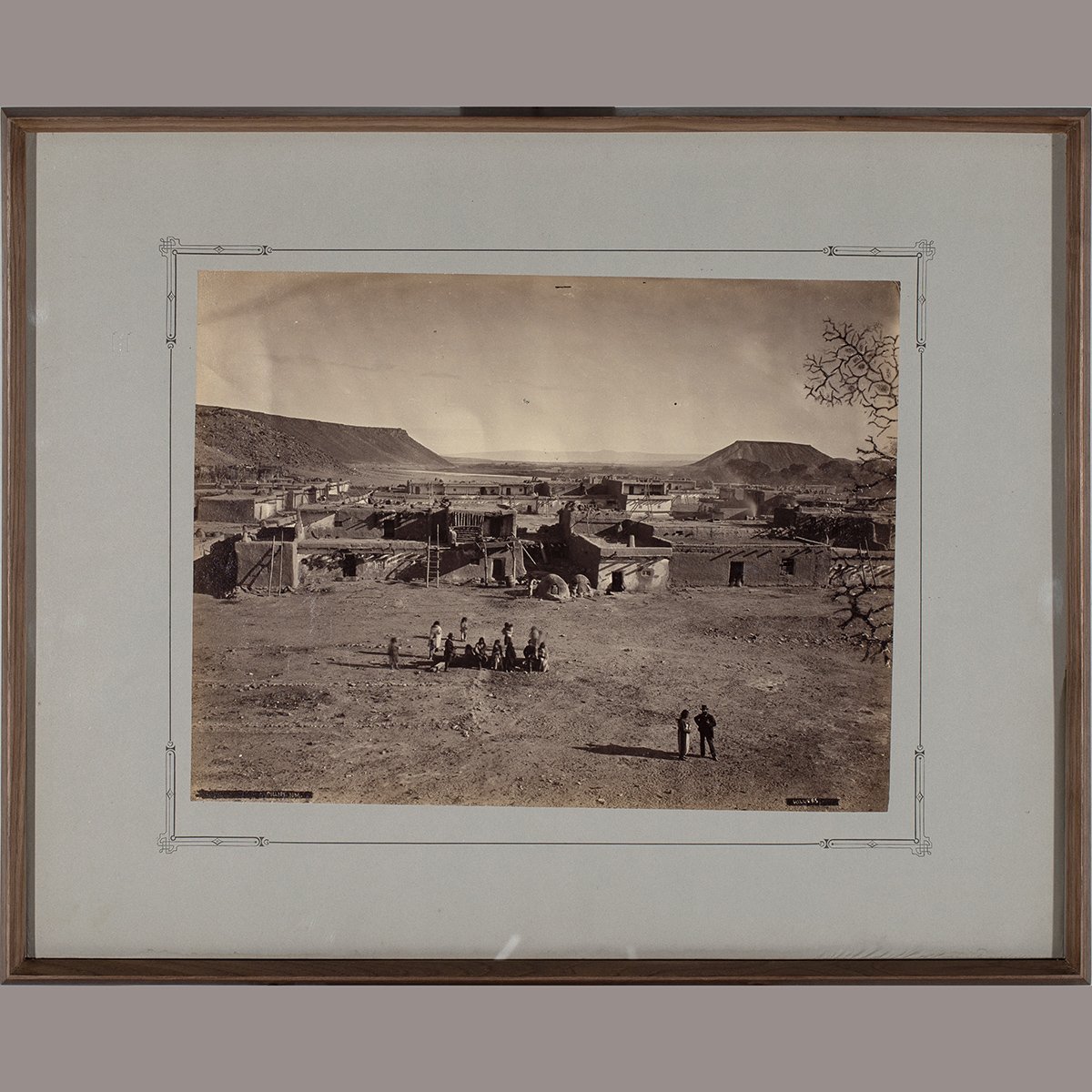
Albumen print on period mount
1879 - 80
Height 16 1/2" Width 20 1/2" including archival frame
Provenance: Larry Frank, Taos, NM
John Karl Hillers (1843–1925), pioneer photographer of the American Southwest. Born in Brinkum near Hanover Germany, Hillers emigrated with his family to the United States in the 1850s and spent much of the next decade enlisted in the Fourth Artillery Regiment, seeing limited action during the Civil War. After his discharge from the army he worked a succession of jobs, including a stint as a boatman on the Colorado River, and from 1879 was employed as a photographer for the United States Geological Survey and newly established Bureau of Ethnology. His remarkable photographs of Zuni and Hopi pueblos in New Mexico and Arizona are among the earliest visual records made in the region, and they remain a reference point for the study of these cultures, documenting the numerous settlements and their inhabitants at the time of the ‘second opening’ of the West.
Hillers was a self-taught photographer who learned the techniques of the craft when he accompanied John Wesley Powell on his 1871 expedition to map the Colorado River. An important scientific figure and a powerful patron, Power subsequently became, in 1879, the first Director of the Bureau of Ethnology – established at the Smithsonian Institution ‘to organize anthropological research in America’ – and he took on Hillers as a staff photographer at a salary of $1,800 per year. (Two years later Hillers was transferred to the payroll of the U.S. Geological Survey, the Directorship of which Powell had by this time also been given.) Employed alongside the collector James Stevenson – and also anthropologist Frank Hamilton Cushing, who lived for five years with the Zuni – Hillers was charged to make an extensive photographic record of the historic pueblos and the archaeological ruins of the Southwest. Using the heavy and unwieldy equipment of the day, and recording his images on large glass plates, Hillers produced many scenes which have proved invaluable for generations of scholars and have at the same time exerted a strong pull on the American imagination.
Albumen print on period mount
1879 - 80
Height 16 1/2" Width 20 1/2" including archival frame
Provenance: Larry Frank, Taos, NM
John Karl Hillers (1843–1925), pioneer photographer of the American Southwest. Born in Brinkum near Hanover Germany, Hillers emigrated with his family to the United States in the 1850s and spent much of the next decade enlisted in the Fourth Artillery Regiment, seeing limited action during the Civil War. After his discharge from the army he worked a succession of jobs, including a stint as a boatman on the Colorado River, and from 1879 was employed as a photographer for the United States Geological Survey and newly established Bureau of Ethnology. His remarkable photographs of Zuni and Hopi pueblos in New Mexico and Arizona are among the earliest visual records made in the region, and they remain a reference point for the study of these cultures, documenting the numerous settlements and their inhabitants at the time of the ‘second opening’ of the West.
Hillers was a self-taught photographer who learned the techniques of the craft when he accompanied John Wesley Powell on his 1871 expedition to map the Colorado River. An important scientific figure and a powerful patron, Power subsequently became, in 1879, the first Director of the Bureau of Ethnology – established at the Smithsonian Institution ‘to organize anthropological research in America’ – and he took on Hillers as a staff photographer at a salary of $1,800 per year. (Two years later Hillers was transferred to the payroll of the U.S. Geological Survey, the Directorship of which Powell had by this time also been given.) Employed alongside the collector James Stevenson – and also anthropologist Frank Hamilton Cushing, who lived for five years with the Zuni – Hillers was charged to make an extensive photographic record of the historic pueblos and the archaeological ruins of the Southwest. Using the heavy and unwieldy equipment of the day, and recording his images on large glass plates, Hillers produced many scenes which have proved invaluable for generations of scholars and have at the same time exerted a strong pull on the American imagination.