

 Image 1 of 5
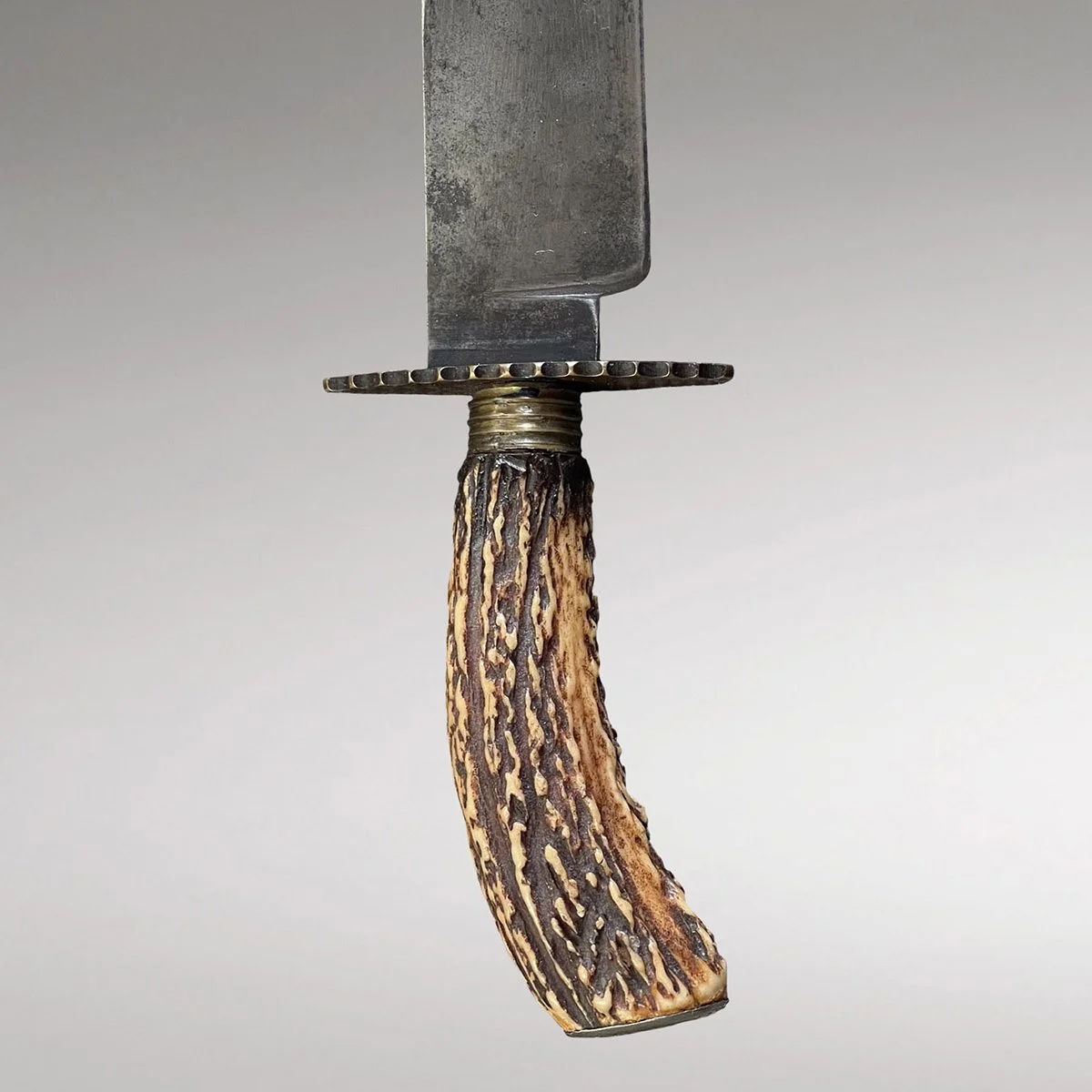 Image 2 of 5
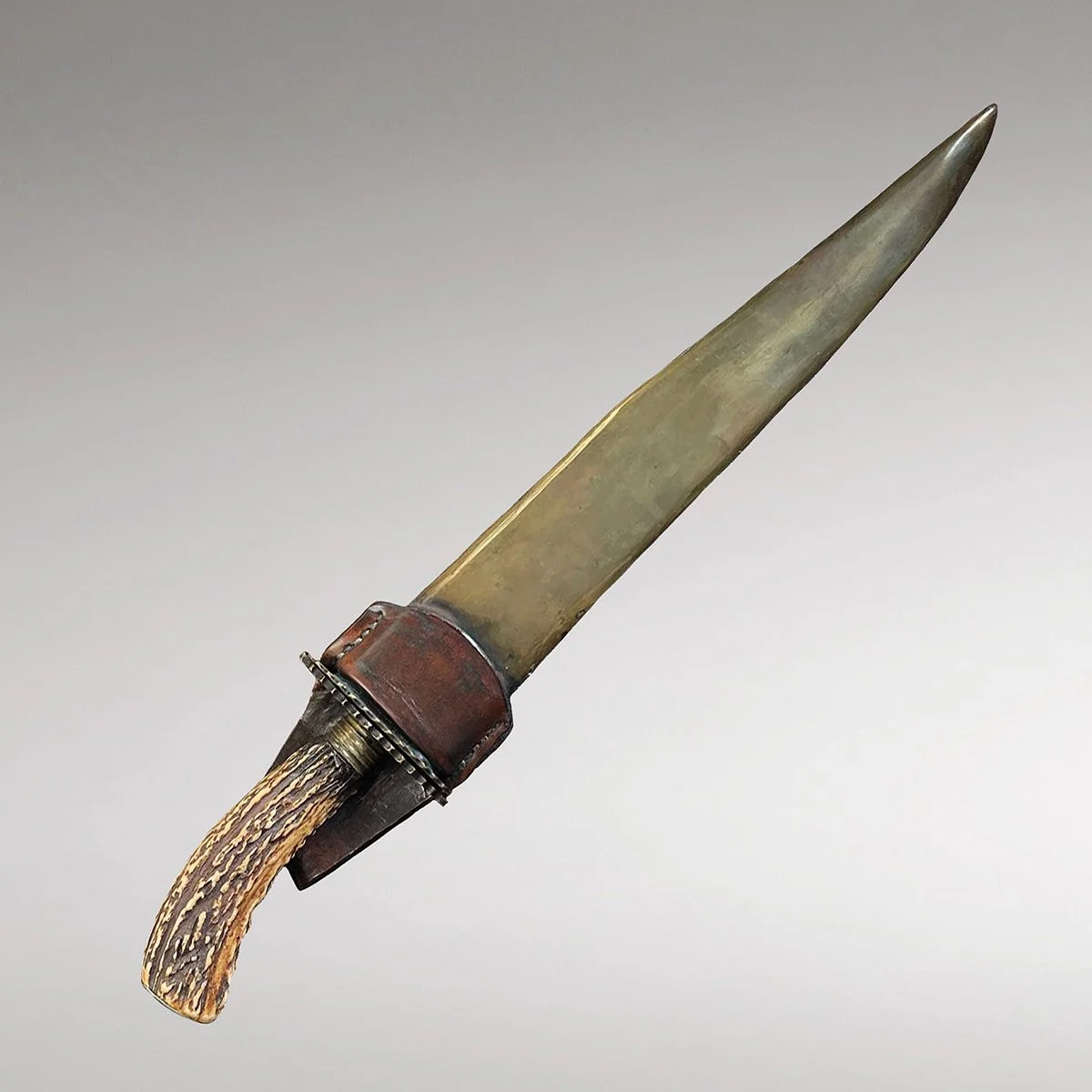 Image 3 of 5
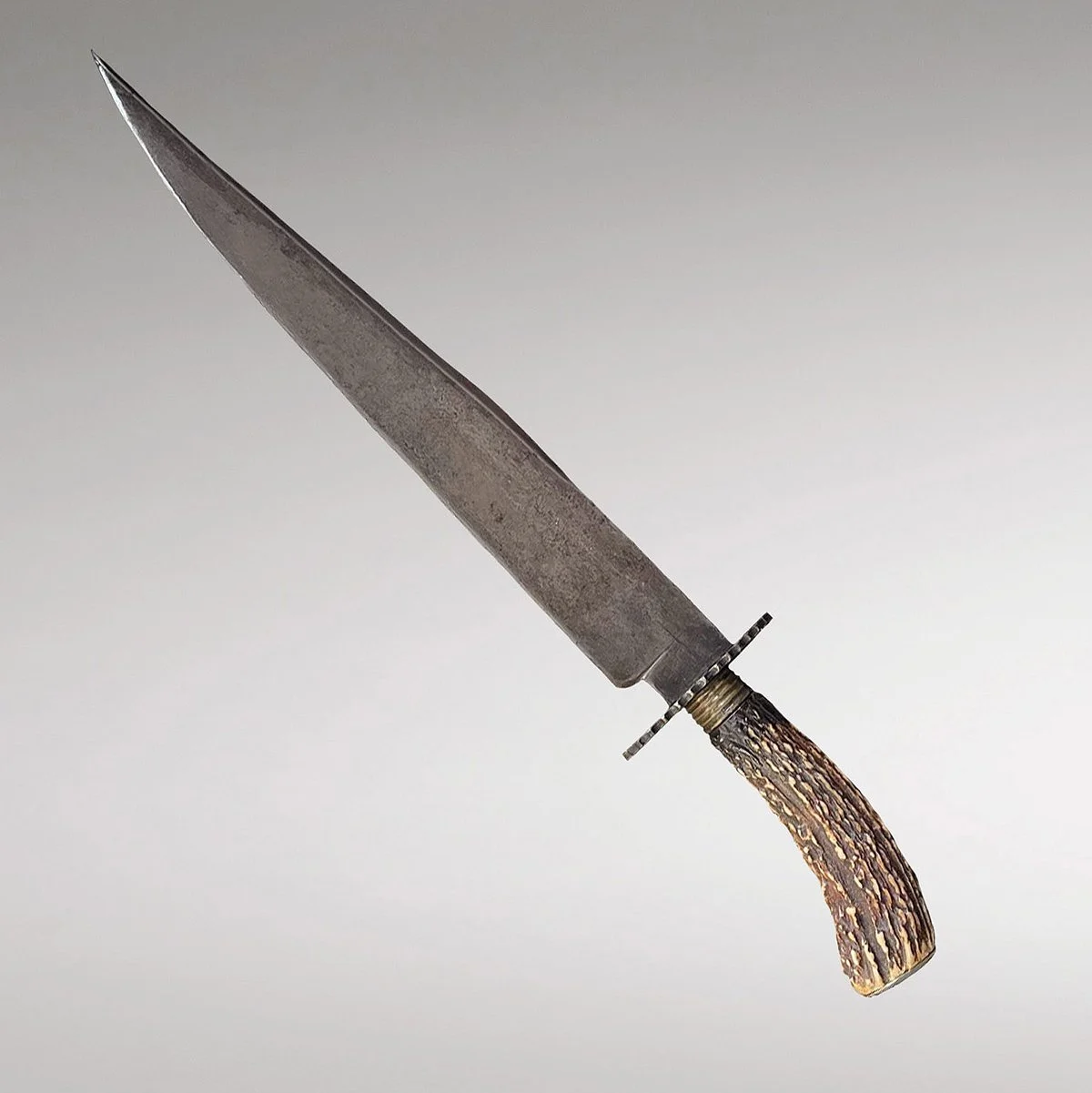 Image 4 of 5
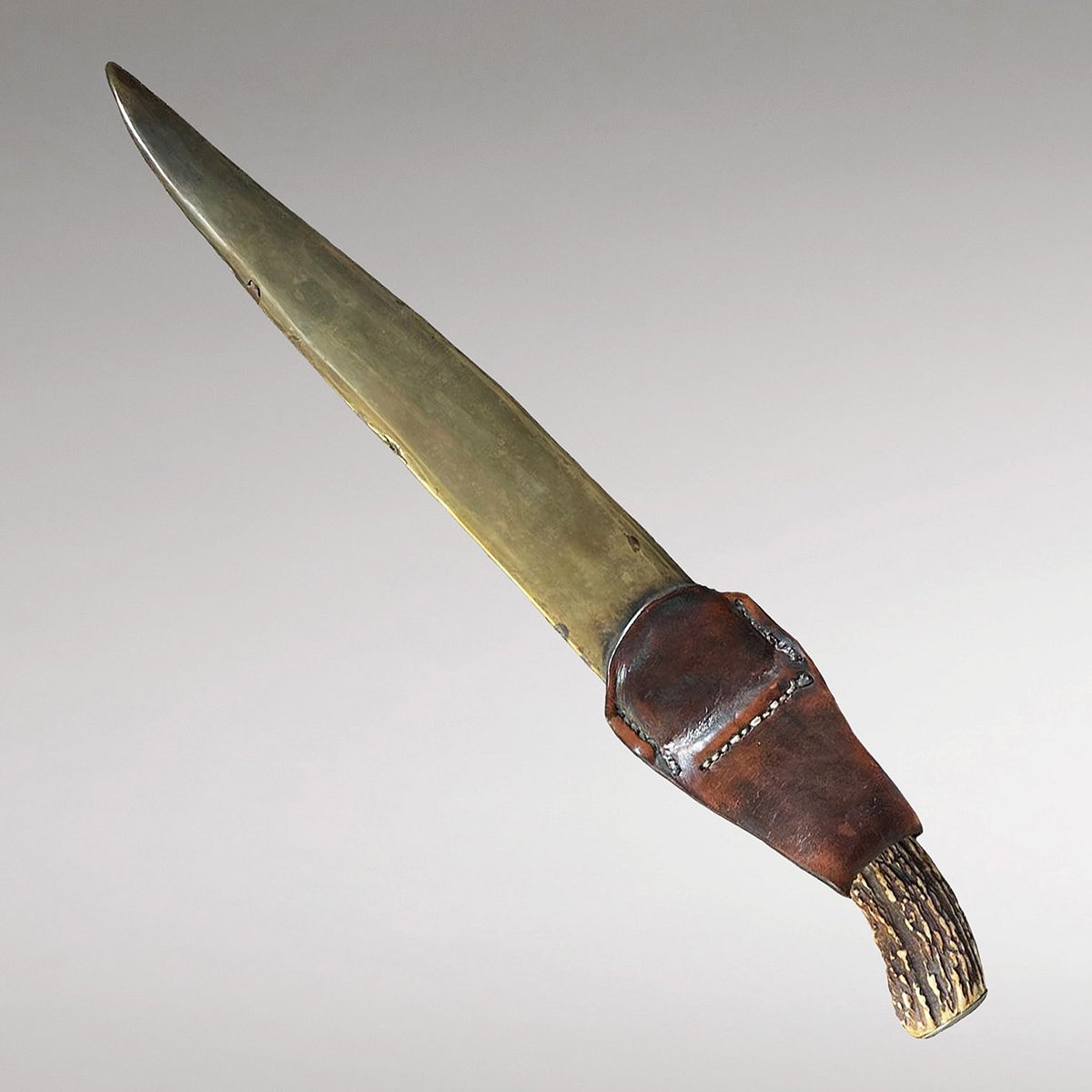 Image 5 of 5
1830 - 1850 Post Colonial Texas
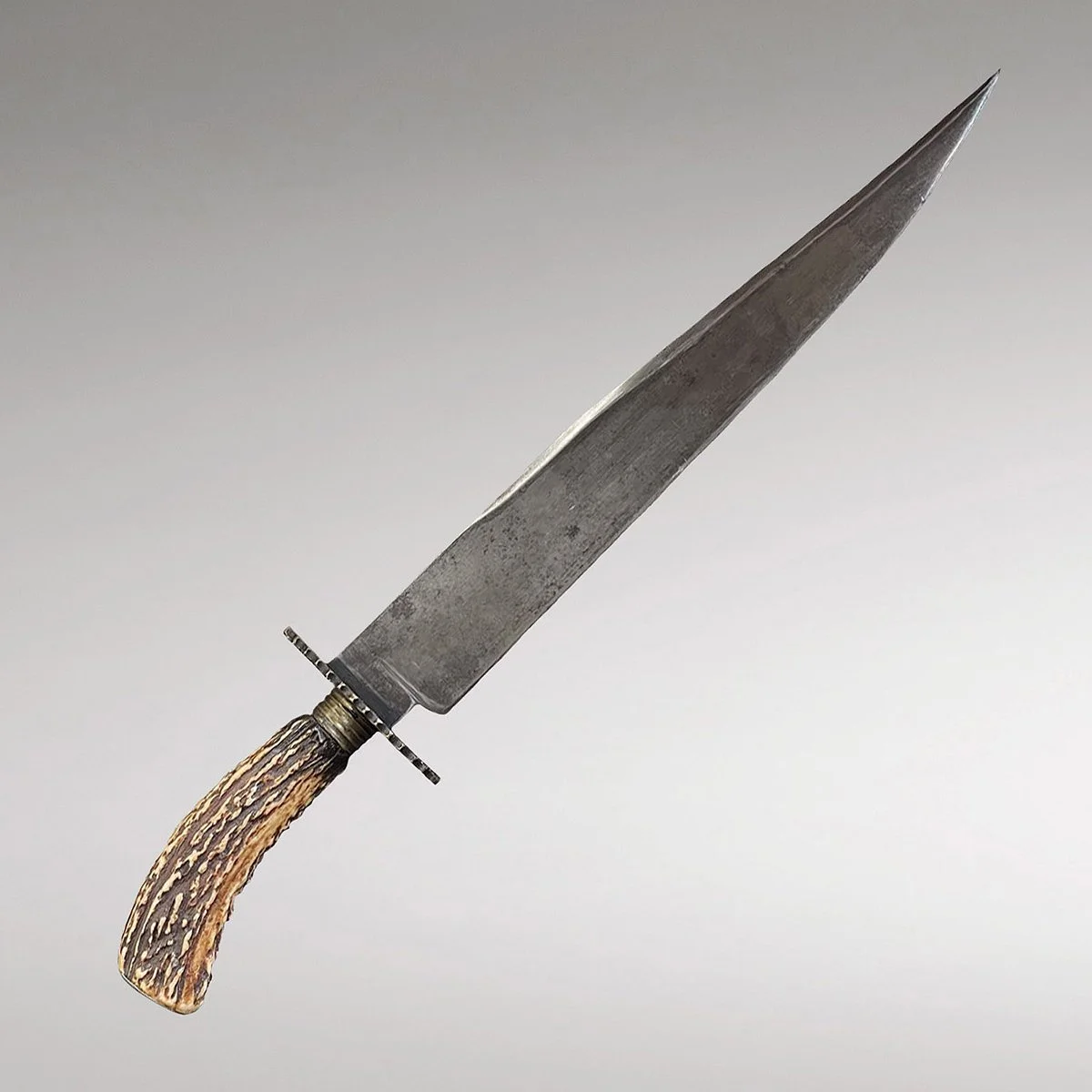
Stag horn, brass, leather, with hand forged blade
Total length: 16.25 inches (41.25 cm) Blade length: 12 inches (30.5 cm) Sheath length: 14.25 inches (36.25 cm)
Provenance: George Jackson, Texas
Charlie Schreiner III - Y.O. Ranch, Texas. Found in South Texas in the 1960's. He later had a custom sheath carefully recreated to fit the original knife.
Representing a quintessential piece of 19th century American frontier history, antique Bowie knives were first popularized by the legendary Jim Bowie after his famous Sandbar Fight in 1827. Jim Bowie’s original knife, likely designed by his brother Rezin, was initially a thin bladed hunting tool similar to a butcher knife. Following Bowie’s death at the Alamo in 1836, the knife evolved from a rugged tool of survival into an iconic symbol of the American spirit. By the 1850s, Bowie knives were prized possessions for gold seekers, soldiers, and pioneers and were especially vital during the Civil War, where they served as both formidable weapons and indispensable camp tools.
The superb Bowie knife presented here features a staghorn handle, preferred for its natural, rough texture that provided a secure, non-slip grip even when wet or when bloodied during hunting and field dressing.
1830 - 1850 Post Colonial Texas
Stag horn, brass, leather, with hand forged blade
Total length: 16.25 inches (41.25 cm) Blade length: 12 inches (30.5 cm) Sheath length: 14.25 inches (36.25 cm)
Provenance: George Jackson, Texas
Charlie Schreiner III - Y.O. Ranch, Texas. Found in South Texas in the 1960's. He later had a custom sheath carefully recreated to fit the original knife.
Representing a quintessential piece of 19th century American frontier history, antique Bowie knives were first popularized by the legendary Jim Bowie after his famous Sandbar Fight in 1827. Jim Bowie’s original knife, likely designed by his brother Rezin, was initially a thin bladed hunting tool similar to a butcher knife. Following Bowie’s death at the Alamo in 1836, the knife evolved from a rugged tool of survival into an iconic symbol of the American spirit. By the 1850s, Bowie knives were prized possessions for gold seekers, soldiers, and pioneers and were especially vital during the Civil War, where they served as both formidable weapons and indispensable camp tools.
The superb Bowie knife presented here features a staghorn handle, preferred for its natural, rough texture that provided a secure, non-slip grip even when wet or when bloodied during hunting and field dressing.